



Tokyo to Kyoto via Mt. Fuji: 2-Day Transit Itinerary & Route Guide
- Written by: Kei Suzuki
The Tokaido Shinkansen gets you from Tokyo to Kyoto in a little over two hours. But if Mt. Fuji is also on your itinerary, you can turn the journey into a two-day stopover and see one of Japan’s most famous sights along the way.
The Fuji Five Lakes sit north of Mt. Fuji, while the Tokaido Shinkansen runs along the southern side of the mountain, so traveling from Tokyo to Kyoto via the Fuji area takes a little more planning than simply hopping on a direct bullet train. With the routes below, you can spend your first day around Lake Kawaguchi or Lake Yamanaka, stay overnight near Mt. Fuji, then continue west to Kyoto the following day.
Below, we compare the main transport options, where to stay, luggage tips, and two flexible sample itineraries to help you work Mt. Fuji naturally into your journey from Tokyo to Kyoto.
(This article contains affiliate links)
- Table of Contents
-
- Before You Go: Planning the Perfect Trip
- Two 2-Day Itineraries around Kawaguchiko and Kyoto
- Plan 1: Tokyo → Kawaguchiko / Yamanakako → Overnight Bus → Kyoto
- Plan 2: Tokyo → Kawaguchiko / Yamanakako → Gotemba → Kyoto
- Which Plan Should You Choose?
- Fuji FAQs
- A 2-Day Trip from Tokyo to Kyoto with a Fun Fuji Side Quest
Before You Go: Planning the Perfect Trip
1) Plan Where and How You Want to Spend the Night
Before comparing trains and buses, you’ll first need to decide where you actually want to wake up on Day 2. That choice determines how late you can stay around the lakes, how many transfers you need, and whether Day 2 begins near Mt. Fuji or in Kyoto.
It helps to pick one main priority around Fuji. Lake Kawaguchi, Lake Yamanaka, Fuji-Q Highland, hiking Mt. Fuji, and shopping at Gotemba Premium Outlets are all great attractions, but trying to squeeze everything into one day would mean spending more time on the road than actually enjoying the trip.
Luckily, you can work all of these into different route variations, so think about what you want most from your trip, then choose one of the following overnight plans.
Option 1: Night Around Mt. Fuji or Near Mishima
If you want a proper night’s sleep before continuing to Kyoto, stay around the Fuji area and continue the journey the next morning. Kawaguchiko and Yamanakako are the best choices for an evening near Mt. Fuji, with everything from hotels and ryokan to villas and glamping around the lakes.
If your priority is catching the earliest Shinkansen, however, consider staying in Mishima instead, which is where the Tokaido Shinkansen stops.
Option 2: Night in Kyoto
If you’d rather wake up in Kyoto, head to Mishima after your Fuji sightseeing and take an evening Tokaido Shinkansen west. Leave enough time for the highway bus from the Fuji Five Lakes to Mishima before your train.
This gives you a full night of sleep and lets you start Kyoto sightseeing bright and early. If planning to arrive late, confirm your hotel’s check-in policy before booking. Staying near Kyoto Station can also make things easier when you arrive, especially since local transportation winds down at night.
Option 3: Night on the Road (Night Bus to Kyoto)
If you’d rather save the cost of a hotel and keep the morning free for sightseeing, the Fujiyama Liner is an overnight bus that takes you directly from Kawaguchiko Station to Kyoto Station.
The obvious trade-off is sleep, however, and since you’ll be arriving before most shops and attractions have opened, we’ll also cover options for a quick nap or just a shower and a quick meal.
2) Plan Your Route Between Both Stops
Once you know where you plan to sleep, the next step is choosing how to travel between Tokyo, Mt. Fuji, and Kyoto. But one more question is worth answering first: do you want to see Mt. Fuji from the lakes and viewpoints below, or do you want to head partway up Mt. Fuji itself?
- Several stations around Mt. Fuji have similar names, which can be confusing when planning a trip from Tokyo. Mt. Fuji Station (Fujisan Station) is on the Fujikyu Railway Line in Fujiyoshida, one stop before Kawaguchiko Station, while Fuji Station and Shin-Fuji Station are on the southern, Shizuoka side of the mountain. Fuji Station is served by the JR Tokaido Main Line, and Shin-Fuji Station by the Tokaido Shinkansen.
- If you’re heading from Tokyo to the Fuji Five Lakes area, Lake Kawaguchi, or the Fuji Subaru Line 5th Station, Kawaguchiko Station is generally the most useful destination. Direct trains and highway buses from Tokyo serve the area, and buses for the Fuji Subaru Line 5th Station depart from Kawaguchiko Station, making it the main transport hub for many first-time visitors.
From Tokyo to Kawaguchiko (Day 1)
You can get from Tokyo to the Lake Kawaguchi area by highway bus, the Fuji Excursion train, the Shinkansen (via Mishima), or a private car. Each works better for a different type of trip.
Option 1: Highway Bus
For budget travelers, the highway bus is usually the cheapest direct option from Shinjuku. Services run to Fuji-Q Highland, Kawaguchiko Station, Mt. Fuji Station, and parts of the Lake Yamanaka area without a train transfer. You can generally reserve seats up to a month before travel.
This is a standard seated highway bus, not an overnight sleeper, so if you leave Tokyo the evening before, note that you will still need accommodation around Fuji. Other direct buses also serve the Fuji area from Tokyo and nearby cities, so check which departure point works best with your hotel.
| Highway Bus | Details |
|---|---|
| Travel Time | Approx. 1 hour 45 min |
| Price | Adults: 2,200 yen Children: 1,100 yen |
| Boarding Location | Shinjuku Expressway Bus Terminal (Busta Shinjuku) |
| Official Websites | Shinjuku / Kawaguchiko Highway Bus (Fujikyu) ↗︎ |
| Tickets | See below |
Option 2: JR Limited Express Fuji Excursion
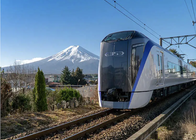
The Fuji Excursion is the simplest rail option from central Tokyo. It runs directly from Shinjuku onto the Fujikyu Railway Line, stopping at Shimoyoshida, Mt. Fuji Station, Fuji-Q Highland, and Kawaguchiko.
Regular morning departures are great if you want to start sightseeing before lunch. All seats are reserved, so book ahead on weekends, holidays, and other peak periods.
(Traveling with a large suitcase? Check JR East’s Oversized Luggage Guide before departure.)
| JR Limited Express Fuji Excursion | Details |
|---|---|
| Travel Time | Approx. 1 hour 50 min |
| Price | Adults: 4,200 yen Children: 2,100 yen |
| Boarding Location | Shinjuku (JR Chuo Line side) |
| Departure Times |
7:30 AM / 8:30 AM / 9:30 AM / 10:30 AM *Current as of March 2026 via Official Fuji Excursion Timetable Seasonal extra trains may also operate at other times. |
| Official Websites |
Official Website ↗︎ Official Fuji Excursion Timetable ↗︎ Oversized Luggage Guide ↗︎ |
| Tickets | See below |
Option 3: Book a Private Charter
A private charter is the most flexible option for families, groups, or travelers with more luggage. You can arrange pickup from your hotel and travel directly to your first Fuji stop without hauling bags through several stations.
Prices vary widely by vehicle, operator, route, tolls, and travel time, so compare current quotes before booking.
Klook and KKday list private transfer options if you want to compare current vehicle types and prices, so we recommend searching through the links below.
| Private Charter / Car | Details |
|---|---|
| Travel Time | Approx. 1.5–2 hours (depends on traffic) |
| Price | Varies by vehicle, company, and travel time |
| Boarding Locations | Your selected pickup point |
| Official Website | Varies by company |
| Tickets | See below |
Option 4: Bullet Train
Of course, you can still use the bullet train, especially if you are starting near Tokyo Station or Shinagawa. Take the Tokaido Shinkansen to Mishima, exit on the south side of the station, then transfer to the direct highway bus for Kawaguchiko. The bus crosses the southern side of Mt. Fuji before continuing through the Lake Yamanaka area to Fuji-Q Highland and Kawaguchiko, so that you can use the same route for either lake.
| Shinkansen + Highway Bus via Mishima | Details |
|---|---|
| Travel Time | Approx. 2.5 hours (depends on line and transfers) |
| Prices |
Shinkansen EX Hayatoku 7: Adults: 4,070 yen / Children: 2,030 yen Hikari/Kodama: Adults: 4,400 yen / Children: 2,200 yen Highway Bus (via Mishima) Regular Fare: Adults: 2,700 yen / Children: 1,350 yen Web Fare: Adults: 2,500 yen / Children: 1,250 yen Total (EX Hayatoku 7 + Regular Bus Fare) Adults: 6,770 yen / Children: 3,380 yen Total (Regular Shinkansen + Regular Bus Fare) Adults: 7,100 yen / Children: 3,550 yen *Shinkansen prices reflect regular season amounts and are subject to change; check official websites for latest updates and info. *EX Hayatoku 7 must be booked at least seven days in advance. Seat availability is limited, and blackout periods apply. *Mishima–Kawaguchiko Liner web fare applies to online reservations. |
| Official Websites & Reservations |
Mishima to Kawaguchiko Bus Info (EN) ↗︎ JR Central Tokaido Shinkansen Timetable ↗︎ SmartEX Fare Information ↗︎ |
From Kawaguchiko to Kyoto (Day 2)
Getting from Kawaguchiko to Kyoto takes a little more planning since the Fuji Five Lakes are north of the Tokaido Shinkansen. You can take the overnight Fujiyama Liner or a highway bus to Mishima to catch the Shinkansen.
Option 1: Highway Bus (Overnight Fujiyama Liner)
The Fujiyama Liner is the only option here that takes you straight from the Fuji area to Kyoto. It boards in Kawaguchiko and stops at several other points around Fuji before continuing to Kyoto.
Current fares depend on your seat choice: the two-seater costs 8,200 yen one way, while the single-seater goes for 10,200 yen. Both bus types have a toilet and luggage storage. Note that Kintetsu specifically asks passengers to keep mobile batteries with them on board rather than leaving them in stored luggage.
| Highway Bus (Overnight Fujiyama Liner) | Details |
|---|---|
| Travel Time | Approx. 9 hours 25 minutes |
| Price |
Single Seater: Adults: 10,200 yen / Children: 5,100 yen Double Seater: Adults: 8,200 yen / Children: 4,100 yen |
| Departure Times |
8:32 PM: Kawaguchiko Station 8:44 PM: Mt. Fuji Station 9:01 PM: Fuji-Q Highland Bus Terminal |
| Arrival | 5:57 AM (Kyoto Station Hachijo Exit) |
| Official Website | Kintetsu Bus Official Website ↗︎ |
| Tickets |
Kawaguchiko to Osaka Bus Search ↗︎ (Or see our link below!) |
Option 2: Bullet Train
For a Shinkansen trip, you’ll still need to ride a highway bus to the station. Take the Mishima–Kawaguchiko Liner south to Mishima (80–90 min), where you can transfer to the Tokaido Shinkansen bound for Kyoto. Available Shinkansen Lines are Kodama, plus a limited number of Hikari trains.
Route: Kawaguchiko → Mishima → Kyoto
| Highway Bus + Shinkansen (via Mishima) | Details |
|---|---|
| Travel Time |
Bus: 80–90 minutes (Kawaguchiko to Mishima) Shinkansen: 1 hour 50 minutes (Hikari) / 2.5 hours (Kodama) |
| Prices |
Highway Bus Adults: 2,700 yen (2,500 yen w/ web discount) Children: 1,350 yen (1,250 yen w/ web discount) Shinkansen Lines EX Hayatoku 7: Adults: 10,660 yen / Children: 5,330 yen Kodama/Hikari: Adults: 11,110 yen / Children: 5,550 yen *Prices reflect regular season amounts and are subject to change; check official websites for latest updates and info. *EX Hayatoku 7 must be booked at least seven days in advance. Seat availability is limited, and blackout periods apply. *Mishima–Kawaguchiko Liner web fare applies to online reservations. |
| Official Websites & Reservations |
Mishima-Kawaguchiko Liner (EN) ↗︎ JR Central Tokaido Shinkansen Timetable ↗︎ SmartEX EX Hayatoku 7 ↗︎ |
3) Plan Your Accommodation
If you want another night around Mt. Fuji, Kawaguchiko and Lake Yamanaka offer the widest range of stays, from hotels and ryokan to villas and glamping.
Option 1: Night in/around Fuji:
Staying around Fuji is the most practical choice if you plan to use the buses again the next morning. There are lots of accommodations around the lakes, including glamping and private villa rentals.
For those planning to catch a morning bullet train, however, we recommend staying in nearby Mishima, as it’s right next to the Shinkansen station. We go into more detail on each accommodation below.
Option 2: Night in Kyoto:
For a late Day 1 arrival in Kyoto, take the evening Shinkansen and stay near Kyoto Station to keep the final leg simple. Check your hotel’s final check-in time before booking. Kyoto Station also has coin lockers, staffed luggage storage, and delivery counters listed through Kyoto City’s Hands Free Kyoto service.
Option 3: Night on the Road (Highway Bus):
Technically, you don’t need accommodation at all if the Fujiyama Liner is your bed for the night. The catch is that it arrives at 5:57 AM, so plan somewhere to eat, shower, or rest if you need time before sightseeing. We cover these options in more detail below.
4) Plan How to Handle Your Luggage
No matter which option you choose above, deal with your luggage first!
Send Your Suitcase to Kyoto Beforehand
To make your trip less cumbersome, we recommend sending your main suitcase to Kyoto and traveling with an overnight bag.
Yamato Transport Hands Free can deliver luggage to participating hotels or temporary storage counters. For Hotel to Hotel Delivery, send it early enough to match your accommodation’s receiving schedule.
Another option is JR Central’s LUGGAGE EXPRESS, with same-day delivery between selected Tokyo and Kyoto properties. Check participating locations before relying on it.
- If you’re keeping your suitcase with you, pack a smaller day bag inside so you can store it while sightseeing and carry only what you need. On the overnight bus, passengers are asked to keep valuables and mobile batteries with them on the bus and not leave them in stored luggage.
- Once in Kyoto, check Hands Free Kyoto for info on coin lockers and luggage storage/delivery counters around Kyoto Station. ASTY Kyoto has 24-hour lockers on the Hachijo side, perfect for travelers arriving by Shinkansen or night bus.
- If bringing a suitcase onto the Shinkansen, measure it before you go. Baggage with combined length, width, and height over 160 cm (up to 250 cm max) will require booking an oversized baggage seat, and can incur a 1,000 yen fee at the station if not accounted for ahead of time. See the JR Central Shinkansen Luggage Info for more info.
Two 2-Day Itineraries around Kawaguchiko and Kyoto
Now that you have an idea of where to stay and how to get between each stop, it’s time to put everything together! Below are two sample routes that leave Tokyo in the morning, spend most of Day 1 around Mt. Fuji, and continue west to Kyoto.
Plan 1: Tokyo → Kawaguchiko / Yamanakako → Overnight Bus → Kyoto
Plan 1 is the more active, budget-friendly route, spending most of Day 1 around Mt. Fuji, using the night for transportation, and arriving in Kyoto before breakfast.
Plan 2: Tokyo → Kawaguchiko / Yamanakako → Gotemba → Kyoto
Plan 2 emphasizes comfort and flexibility, with the option to shop at Gotemba Premium Outlets or add another night around Fuji or Mishima before continuing to Kyoto.
Plan 1: Tokyo → Kawaguchiko / Yamanakako → Overnight Bus → Kyoto
Want as much Fuji time as possible without losing most of the day to transportation? Start with sightseeing around Kawaguchiko or Yamanakako, return to the Kawaguchiko area in the evening, then take the overnight Fujiyama Liner and arrive in Kyoto before breakfast.
Day 1:
7:30 AM: Take the Fuji Excursion (or Shinkansen) from Tokyo
One of the easiest ways to reach Mt. Fuji from Tokyo is the direct Fuji Excursion train from Shinjuku. All seats are reserved, with tickets available up to one month before your travel date. Book ahead for weekends, holidays, and peak sightseeing periods.
The 7:30 AM service gets you to the stops below:
| Fuji Excursion Arrival Times | Details |
|---|---|
| Shimoyoshida | 9:13 AM |
| Mt. Fuji Station | 9:23 AM |
| Fuji-Q Highland | 9:26 AM |
| Kawaguchiko | 9:28 AM |
| Official Website | Fuji Excursion Timetable and Fare Information ↗︎ |
The trip from Shinjuku to Kawaguchiko costs 4,200 yen, and all seats are reserved. Tickets go on sale at 10 AM one month before the travel date, so booking ahead is particularly worthwhile on weekends, holidays, and during busy sightseeing seasons.
Taking the Shinkansen instead?
Alternatively, you can take the Tokaido Shinkansen to Mishima and transfer to the Mishima-Kawaguchiko Liner highway bus. The departure/route below reaches Kawaguchiko at 9:40 AM.
The Shinkansen is also a good chance to grab an Ekiben for breakfast! Ekibenya Matsuri (Gransta Tokyo) opens from 5:30 AM with a large selection from around Japan, while Ekibenya Odori opens at 6 AM near the Central Passage and Shinkansen transfer gates.
| Shinkansen + Highway Bus Route | Details |
|---|---|
| 6:57 AM | Kodama 803 departs Tokyo Station |
| 7:04 AM | Departs Shinagawa Station |
| 7:50 AM | Arrives at Mishima Station |
| 8:20 AM | Mishima–Kawaguchiko Liner departs Mishima Station South Exit |
| 9:30 AM | Arrives at Fuji-Q Highland |
| 9:40 AM | Arrives at Kawaguchiko Station |
This route gets you to Kawaguchiko only slightly later than the direct Fuji Excursion, but it requires an earlier start and one transfer at Mishima. The 30-minute connection gives you time to leave the Shinkansen area and reach the bus stop at the south exit.
It’s also a good chance to grab an Ekiben for breakfast! Ekibenya Matsuri (Gransta Tokyo) opens at 5:30 AM with a large selection from around Japan, while Ekibenya Odori opens at 6 AM near the Central Passage and Shinkansen transfer gates.
Optional Side Quest: Chureito Pagoda
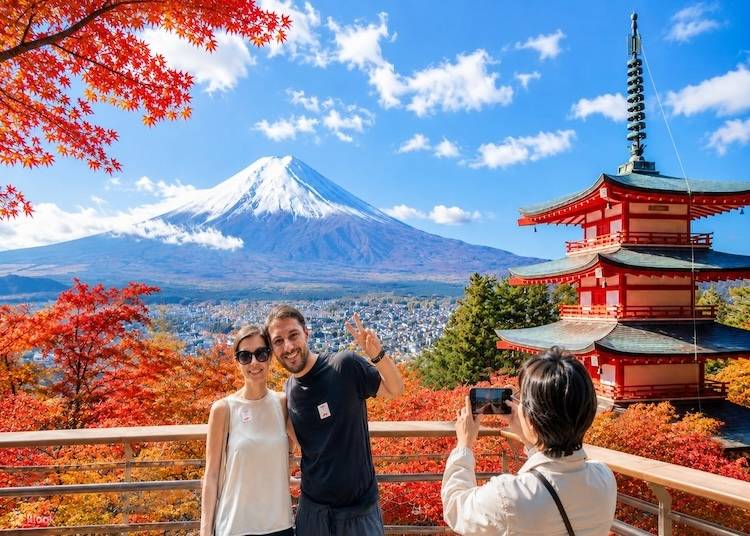
If that famous photo of a five-story pagoda with Mt. Fuji behind it is on your wish list, get off at Shimoyoshida. Arakurayama Sengen Park is close to the station, with the route up to Chureito Pagoda taking about 25 minutes. The climb includes the 398-step Sakuya Hime Stairway, so leave enough time for the walk, the stairs, and photos before continuing toward Kawaguchiko.
- Once you get off the Fuji Excursion, you cannot simply catch another one back later to continue the trip. You’ll need to rely on the regular Fujikyu Railway if you’re heading toward Kawaguchiko late.
- However, if visiting the Fuji Subaru Line 5th Station is one of your priorities, we recommend skipping this detour. Chureito can take a good chunk out of your Fuji sightseeing time, so staying aboard until Kawaguchiko make more sense if you’re set on either of the other major attractions.
Optional Mini Side Quest: Breakfast Around Chureito
If you left Tokyo without eating and want to spend more time around Chureito, there are also a bunch of great places nearby for a bite.
- FabCafe Fuji: Breakfast along downtown Honcho Street (8 AM–10 AM)
- The Pleasure Garden Cafe & Photo: Breakfast near Chureito Pagoda with a morning plate and onigiri plate (10 AM)
- Omusubi-ya Kon: A little specialty shop of freshly made onigiri, including vegan/vegetarian options (8:30 AM– PM)
- Million Cafe: Nice cafe in Shimoyoshida serving breakfast till 11 AM (8:30 AM–4 PM; closed Wed/Sun)
- Kimuraya: A long-running local bakery since 1958, with both indoor seating & outdoor terrace (9:30 AM)
-
Arakurayama Sengen Park / Chureito Pagoda新倉山浅間公園・忠霊塔
-
Address
2-4-1 Asama, Fujiyoshida, Yamanashi 403-0031
View Map
Open 24 hours
-
Address
2-4-1 Asama, Fujiyoshida, Yamanashi 403-0031
Around 9:30 AM: Start Exploring Kawaguchiko
If Mt. Fuji is visible when you arrive, photograph it immediately! Morning visibility is often better, while clouds can build later in the day. The general Fuji viewing rule is simple: never assume it will still be there after lunch.
If you skipped the Chureito Pagoda and breakfast detour, you should be in Kawaguchiko by 9:30 AM. The northern shore is a good first target for lake views of Mt. Fuji across the water.
If you want to grab a bite first, enico.cafe&bar Kawaguchiko is just two minutes from Kawaguchiko Station, and also has a great view of Fuji from the windows (opens 7 AM).
Around 10-11 AM: Oishi Park and the North Shore
Oishi Park sits on the northern shore of Lake Kawaguchi, with open views across the water toward Mt. Fuji and seasonal flower beds along the waterfront. Lavender is usually a summer highlight, while kochia turns red later in autumn.
The park is also home to the Kawaguchiko Natural Living Center, where you can stop for souvenirs, local fruit products, drinks, soft serve, and a café overlooking the lake and Mt. Fuji. (Opens 9 AM from March–October)
Plan around 1.5 to 2 hours for the park, waterfront, photos, and a café stop if you want.
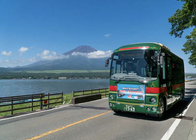
- Ride Kawaguchiko Sightseeing Bus Red Line toward Northern Shore.
- Get off at Kawaguchiko Natural Living Center.
- The ride takes around 25 to 30 minutes.
If you plan to use the sightseeing buses several times, the Mt. Fuji North Area 1 Day Pass covers unlimited rides on the Red, Green, and Blue sightseeing bus lines. See below for a summary of the routes.
| Main Sightseeing Bus Routes | Details |
|---|---|
| Routes |
Red Line: Kawaguchiko Sightseeing Bus: Covers Lake Kawaguchi, Oishi Park, Kawaguchiko Natural Living Center, Kawaguchiko Muse Museum, and other stops around the lakeshore. Green Line: Saiko Sightseeing Bus: Runs toward Lake Saiko, Saiko Iyashi no Sato Nenba, Aokigahara, and Narusawa Ice Cave. Blue Line: Narusawa, Shojiko & Motosuko Sightseeing Bus: Continues west toward Lake Shojiko, Lake Motosuko, and the Fuji Shibazakura Festival area. |
| Prices |
1 Day Pass Adults: 1,500 yen / Children: 750 yen 2 Day Pass Adults: 2,000 yen / Children: 1,000 yen |
| Official Websites |
Sightseeing Bus Routes ↗︎ Fuji Sightseeing Bus Passes ↗︎ |
Around Noon: Enjoy A Local Lunch
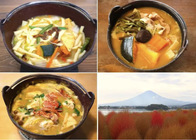
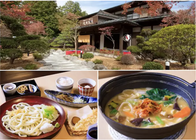
Two Yamanashi noodle dishes worth trying are hoto and Yoshida udon. Hoto is one of Yamanashi’s signature dishes, made with thick, flat noodles and vegetables simmered together in a miso-based broth. Yoshida udon comes from neighboring Fujiyoshida and is known for its firm, chewy noodles, soy sauce- and miso-based broth, and ingredients like cabbage, meat, and a spicy local condiment called suridane.
Below are a few popular options:
Houtou Lab (If Hanging Around North Shore)
If you’re already exploring northern Lake Kawaguchi, Houtou Lab Kawaguchiko is close by and specializes in seafood versions of the dish. (11 AM–6 PM)
Houtou Fudou (If Heading to Kawaguchiko Station)
For a more traditional option, Houtou Fudou is one of the area’s best-known hoto restaurants. Directly opposite Kawaguchiko Station, its signature Fudou Hoto is served in a large iron pot with vegetables and its house miso broth. (11 AM–7 PM; may close earlier when sold out)
Menkyo Kaiden (If Spending Time in Fujiyoshida)
If you stopped by Chureito Pagoda and wish to spend more time in the area, it’s a great opportunity to try Yoshida udon!
One popular option is Yoshida Udon Menkyo Kaiden (also recommended in LIVE JAPAN’s Dining in Kawaguchiko Guide). Its best-known dish is Yokubari Udon, topped with beef, fried chikuwa, tofu skin, and seaweed. (11 AM–2 PM; closed Sundays)
Around 1 PM: Choose Your Fuji Afternoon
Trying to cover the entire Fuji Five Lakes area in one afternoon will leave you spending more time on the road than actually enjoying your trip. Pick one main area, and give yourself enough time to fully enjoy it. We recommend choosing between heading to actual Mt. Fuji or hanging out around one of the lakes (Lake Kawaguchi or Lake Yamanaka).
Or, try the secret third option: foregoing the sightseeing for a day of thrills and roller coasters at Fuji-Q Highland!
Option 1: Head Up Mt. Fuji to Fuji Subaru Line 5th Station
If you want to actually set foot on Mt. Fuji without committing to a full climb, take the regular bus from Kawaguchiko Station to Fuji Subaru Line 5th Station. Sitting at around 2,300 meters, the 5th Station where the Yoshida Trail begins. But don’t worry, we’re not going to make you climb to the summit in this itinerary!
Short walking routes also start around 5th Station, and there’s plenty more to do that isn’t about climbing at all, like shops, restaurants, souvenirs, and Komitake Shrine by the station. Of course, there’s also the excitement of being able to see a different view of Fuji than what you’re used to at ground level.
Sightseeing around 5th Station and outside the trailhead gate is free, and it’s about 55 minutes from Kawaguchiko Station by regular bus. Note that local bus services often change by season, so always confirm the latest official timetables before your visit date.
| Fuji Subaru Line 5th Station Route Bus | Details |
|---|---|
| Route | Kawaguchiko Station → Fuji Subaru Line 5th Station |
| Travel Time |
Approx. 55 minutes (each way) Departures (from Kawaguchiko to 5th Station) 1 PM (Arrives 1:55 PM) 3:50 PM (Arrives 4:35 PM) *Note: Schedules change seasonally, and buses may be suspended or stop service below 5th Station. Always check official websites before leaving for latest info. |
| Price |
Adults: 2,000 yen (one way) / 3,400 yen (round trip) Children: 1,000 yen (one way) / 1,700 yen (round trip) |
| Official Websites |
Fuji Subaru Line 5th Station (Official Fujiyoshida Tourism Guide) ↗︎ Fuji Subaru Line 5th Station Bus Timetable & Fares ↗︎ |
Option 2: Pick A Lake
Both Lake Kawaguchi and Lake Yamanaka have enough to fill the rest of the afternoon, so choose whichever one sounds more fun from our suggestions below!
Lake Kawaguchi Area
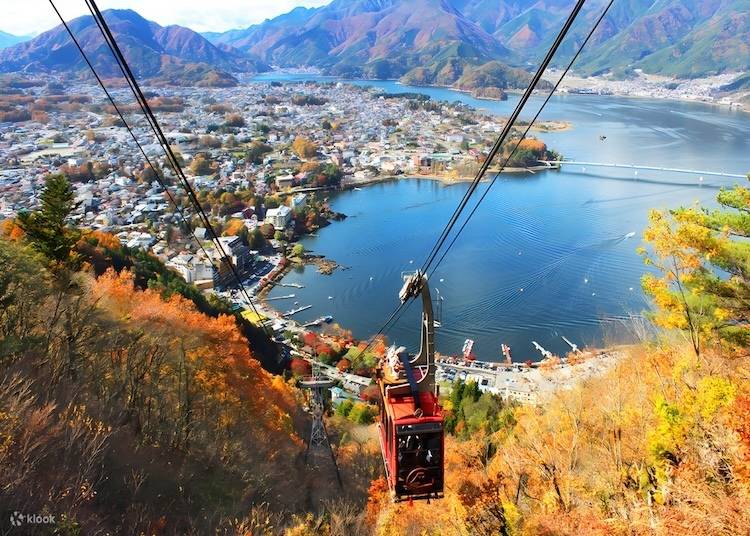
Around Lake Kawaguchi, you can ride the Mt. Fuji Panoramic Ropeway up Mt. Tenjo, explore the lakefront on foot or by bicycle, or stop at a café overlooking the water. The northern shore also has museums and galleries, or you can spend more time following the lakefront before heading back toward Kawaguchiko Station.
Below are some of our suggested activities in the area.
Mt. Fuji Panoramic Ropeway
The Mt. Fuji Panoramic Ropeway makes the three-minute climb from the eastern shore of Lake Kawaguchi to Mt. Tenjo, where the observation area sits 1,075 meters above sea level with views across Lake Kawaguchi toward Mt. Fuji. On clear days, you can see as far as the Southern Alps.
Mt. Tenjo is also the setting of Osamu Dazai’s Kachikachi-yama, so you’ll spot the story’s rabbit and tanuki characters around the gondolas and observation area.
| Mt. Fuji Panoramic Ropeway | Details |
|---|---|
| Hours |
March 1–July 19: 8:30 AM–5 PM (Last downhill service 5:20 PM) July 20–August 31: 8:30 AM–6 PM (Last downhill service 6:20 PM) |
| Price |
Through October 31, 2026: One Way: Adults: 600 yen / Children: 300 yen Round Trip: Adults: 1,000 yen / Children: 500 yen November 1, 2026 Price Increase: One Way: Adults: 600 yen / Children: 300 yen Round Trip: Adults: 1,200 yen / Children: 600 yen *Note: The official November 1st fare increase notice ↗︎ currently lists a revision for round-trips only. Please see official website for the latest updates and information. |
| 2026 Maintenance Notes |
October 21–22 & November 25–26: 8:30 AM–3 PM (Last downhill service 3:20 PM) December 7–18: Closed for inspection *Ropeway may also suspend service during strong winds, thunderstorms, and other unsafe weather. |
| Official Websites | Mt. Fuji Panoramic Ropeway (EN) ↗︎ |
Cycling Around the Lake
Lake Kawaguchi is also fun to explore by bike, since you can stop for photos wherever the view catches your attention. Rental shops around the area offer standard, cross, and electric assist bikes, while parks, cafés, museums, and viewpoints give you plenty of places to stop along the way.
One stretch worth including is the Kawaguchi Art Waterside Promenade, a relatively flat lakeside path near Kawaguchiko Museum of Art. Parts of the promenade look across the water toward Mt. Fuji, with cherry blossoms, summer greenery, and autumn foliage changing the scenery year-round. Fuji Kawaguchiko’s official electric assist cycling route also includes the promenade as one of its stops.
Cafés Overlooking the Lake
For some downtime after sightseeing, you can also stay put for a coffee or snack.
Kawaguchiko Natural Living Center has several food counters facing Lake Kawaguchi and Mt. Fuji, including Fuji View Café, which serves drinks with local blueberry juice and Yamanashi peach juice, and Oishi Park Café, which offers seasonal soft serve flavors alongside its regular blueberry and lavender options. Upstairs, Kitchen Fuji View has an even wider panoramic view over the lake.
If you end up on the southern shore, Doll Café inside Kawaguchiko Muse Museum looks across the lake through large glass windows and also has outdoor terrace seating. You don’t need a museum ticket to visit the café, so it’s a great break spot if you’re short on time.
Fall Option: Kawaguchiko Maple Corridor
If the weather’s nice, you can skip another major attraction entirely and continue exploring the northern shore.
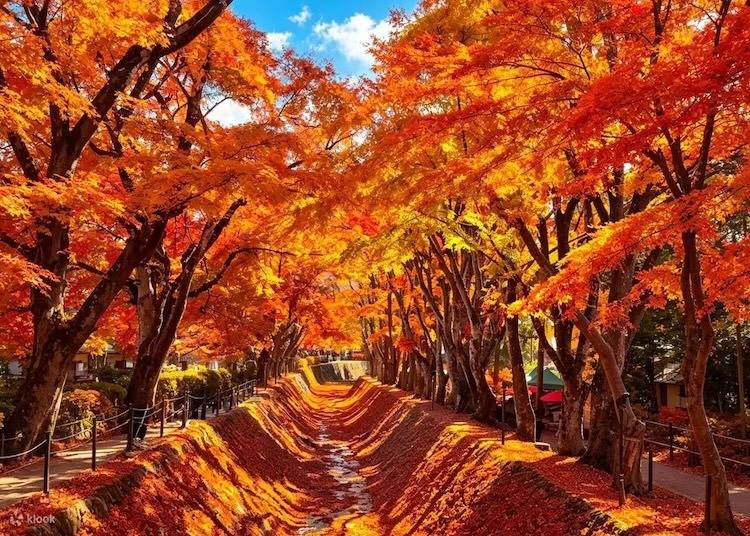
Autumn adds one more stop to the route. The Kawaguchiko Maple Corridor follows the Nashigawa River near the Itchiku Kubota Art Museum, with nearly 150 maple trees arching over the waterway. The leaves usually turn from late October into November, and you can visit the corridor at any time without an admission fee.
Lake Yamanaka Area
Around Asahigaoka, the Swan Lake sightseeing boat and Yamanakako no KABA both depart from the same area, with Yamanakako Literature Forest nearby. Nagaike Water Park sits along the northern shore, while Hana no Miyako Park is farther inland near the base of Mt. Fuji.
There’s also the Fujikko Sightseeing Bus running between Kawaguchiko, Fujiyoshida, Oshino, and Lake Yamanaka 11 times a day.
| Fujikko Sightseeing Bus | Details |
|---|---|
| Prices |
1 Day Pass: Adults 1,800 yen / Children 900 yen 2 Day Pass: Adults 2,200 yen / Children 1,100 yen |
| Official Website | Fujikko Sightseeing Bus ↗︎ |
Swan Lake Sightseeing Boat
The swan shaped Lake Yamanaka Swan Lake Sightseeing Boat leaves from Asahigaoka Pier for a short loop around Lake Yamanaka. It takes only around 20 to 25 minutes, and runs every 30 minutes, with extra services added during busy periods.
| Swan Lake Sightseeing Boat | Details |
|---|---|
| Hours |
9 AM–4:30 PM *Additional seasonal services may operate later. (Cruise Time: 20–25 minutes) |
| Price |
Adults 1,200 yen Children 600 yen Younger children are free |
| Boarding Venue | Asahigaoka Pier |
| Official Website | Lake Yamanaka Swan Lake Sightseeing Boat ↗︎ |
Yamanakako KABA Amphibious Bus
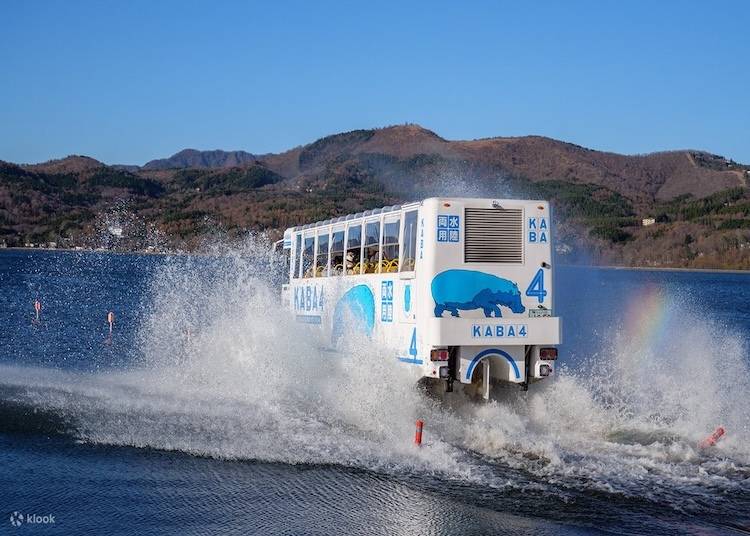
For something a little different, the Yamanakako no KABA is an amphibious sightseeing bus that travels on land before splashing straight into Lake Yamanaka and continuing as a boat.
| Yamanakako KABA Amphibious Bus | Details |
|---|---|
| Tour Times |
March: 9:15 AM–3:15 PM April–September: 9:15 AM–4 PM October–November: 9:15 AM–3:15 PM December–January: 10 AM–3:15 PM February: 10:45 AM–3:15 PM *Times above show the first and last scheduled departures; individual tours operate between them. |
| Price |
Regular Season: Adults (Middle School & Up): 2,800 yen Ages 4–12: 1,400 yen Ages 0–3: 400 yen July 1–August 31: Adults (Middle School & Up): 3,000 yen Ages 4–12: 1,500 yen Ages 0–3: 400 yen |
| Official Website | Yamanakako no KABA ↗︎ |
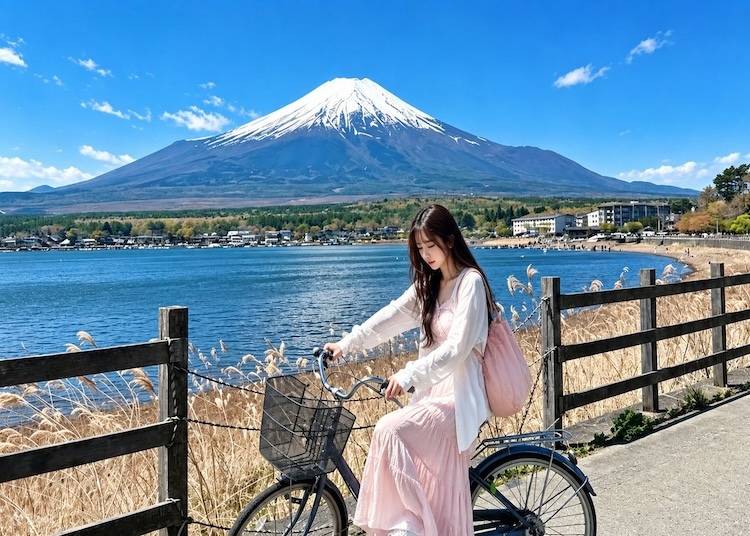
Cycling Around Lake Yamanaka
Lake Yamanaka is great for cycling, with a dedicated route covering almost the entire 14 km shoreline. Rental shops around the lake carry regular bikes, mountain bikes, electric assist bikes, children’s bikes, and even tandems, so you can choose the best one depending on how long you want to ride, and how many people you’re traveling with.
A complete circuit takes around 90 minutes before sightseeing stops, so we recommend using the bike to explore one section of the shoreline, and leaving time for another attraction.
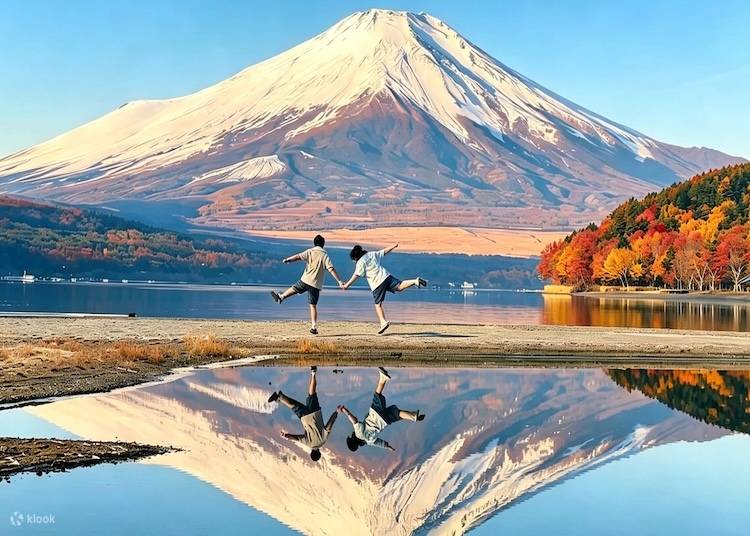
Nagaike Water Park
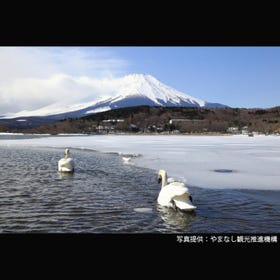
Nagaike Water Park is home to one of the most famous Fuji views, with Mt. Fuji looming directly across the lake from here. Around mid November and early February, photographers gather here for “Double Diamond Fuji,” when the setting sun aligns with the mountain and its reflection appears on the lake.
- Open 24 hours / Free entry
- Official Website: Nagaike Water Park
Yamanakako Hana no Miyako Park
Yamanakako Hana no Miyako Park spans roughly 300,000 square meters at the foot of Mt. Fuji, with large outdoor flower fields changing throughout the seasons. The paid Seiryu no Sato area includes Myojin Falls, Japanese gardens, and the indoor Floral Dome Furara, an all-weather greenhouse with tropical plants and orchids throughout the year.
- Hours:
April 16–October 15: 8:30 AM–5:30 PM
October 16–April 15: 9 AM–4:30 PM
(Closed Tuesdays from December 1–March 15, except public holidays) - Official Website: Yamanakako Hana no Miyako Park
Head up to Yamanakako Myojinyama Panorama-dai
For a higher view, Yamanakako Myojinyama Panorama-dai sits on the road toward Mikuni Pass, looking down over Lake Yamanaka below with Mt. Fuji rising behind it and the Southern Alps visible on clear days. In autumn, the surrounding slopes turn into vast fields of golden susuki grass, with viewpoints along the Takazasu/Myojin and Mikuni/Panorama hiking routes.
Note: This stop is a bit further, so it’s best for those using a car or taxi, or planning a longer bike ride or hike.
- Open 24 hours / Free entry
- Official Website: Yamanakako Myojinyama Panorama-dai
Option 3: Spend the Afternoon at Fuji-Q Highland
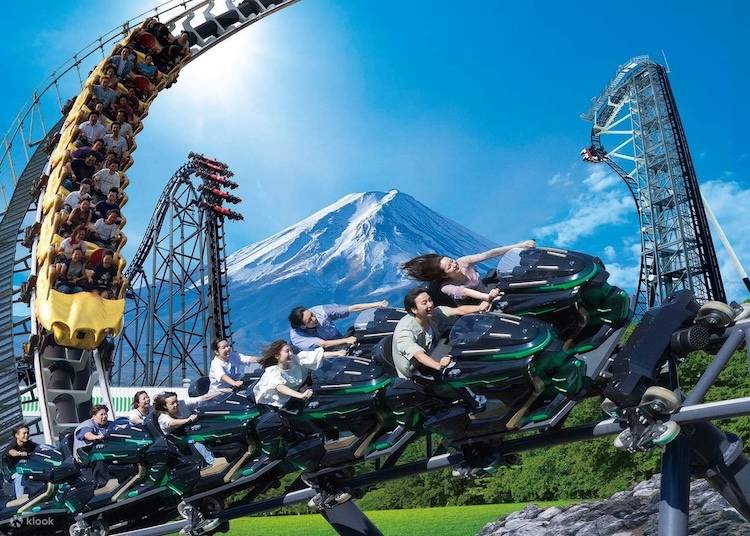
If roller coasters are higher on your list than lakeside sightseeing, spend the afternoon at Fuji-Q Highland! The park has several of Japan’s best known thrill rides, including FUJIYAMA, Eejanaika, Takabisha, and ZOKKON, along with indoor attractions, Thomas Land, and a Naruto x Boruto attraction.
Park admission itself is free, just pay for the attractions you want to ride, or buy the Afternoon Pass for unlimited rides on some ride (starts 1 PM). The Fujiyama Liner also stops at Fuji-Q Highland Bus Terminal, letting you board for Kyoto directly from the park.
Note: Fuji-Q also has around 700 coin lockers around the park, including extra large lockers for bigger bags.
Making Fuji-Q Your Main Fuji Stop?
If Fuji-Q is your main priority, make the trip even simpler by getting off the morning Fuji Excursion Bus at Fuji-Q Highland Station instead of continuing to Kawaguchiko. That gives you practically all of Day 1 inside the park before hopping on the overnight bus.
- Hours:
- *Note: Hours and scheduled ride closures vary by day/date, so check the calendar before your exact date of visit.
- Prices:
- General Park Admission:
Free
One Day Pass:
Adults (18–64): 6,000–7,900 yen
Middle / High School: 5,500–7,400 yen
Elementary School: 4,400–5,100 yen
Ages 1–Preschool: 2,100–2,600 yen
Seniors (65+): 2,100–2,600 yen
Afternoon Pass (from 1 PM):
Adults (18–64): 4,100–6,000 yen
Middle / High School: 3,800–5,700 yen
Elementary School: 3,500–4,200 yen
Ages 1–Preschool: 1,700–2,100 yen
Seniors (65+): 1,700–2,100 yen
Note: Actual ticket prices also vary by day, so be sure to check the official website for your exact date of visit.
- Official Websites:
- Fuji-Q Highland Hours & Ride Closures
Fuji-Q Highland Tickets
Fujiyama Liner
- Suggested Schedule
- Around 1 PM: Arrive at Fuji-Q Highland
1 PM–6 PM: Rides, food, and shopping
7 PM: Dinner / collect luggage / head to the bus terminal
By 8:40 PM: Be ready to board
9:01 PM: Fujiyama Liner departs for Kyoto
Making Fuji-Q Your Main Fuji Stop?
Make the trip even simpler by getting off the morning Fuji Excursion Bus at Fuji-Q Highland Station instead of continuing to Kawaguchiko. That gives you practically all of Day 1 inside the park before taking the overnight bus to Kyoto.
Around 5:30 PM: Return to Kawaguchiko
If you spent the afternoon around the lakes, aim to be back near Kawaguchiko Station well before the night bus. This gives you time for dinner, picking up anything you left in storage, using the restroom, and buying drinks or snacks for the overnight journey.
The Fujiyama Liner departs Kawaguchiko at 8:32 PM, so don’t be late! This bus doesn’t wait around for late comers.
Fuji-Q visitors can skip the trip back to Kawaguchiko, and board the Fujiyama Liner at Fuji-Q Highland Bus Terminal instead.
Optional Side Quest: Dinner Before the Bus
If you’re back in Kawaguchiko Station early enough for a meal, there are plenty of dinner options nearby, from hoto and tempura to sushi, ramen, Italian food, and yakiniku. Just leave enough time to collect your luggage and be at the bus terminal before departure.
- Houtou Fudou Kawaguchiko Station Delicious Hoto spot right in front of Kawaguchiko Station (11 AM–7 PM; may close earlier when sold out)
- Fuji Tempura IDATEN: Tempura sets and Mt. Fuji Tendon (10 AM–10 PM)
- IDATEN Bettei: A halal certified restaurant serving wagyu, seafood, ramen, and more (11 AM–10 PM)
- Shaw’s Sushi Bar & Dining: Sushi, colorful rolls, and drinks (5:30 PM–9:30 PM; closed Sundays and Mondays)
- Ramen Hachiyo: Shoyu ramen and wagyu rice bowls (11 AM–9 PM)
- Kushiage Sakaba Kingyo: Fresh kushikatsu skewers, ramen, and other casual izakaya dishes (5:30 PM–11 PM; closed Tuesdays)
- La Luce: Italian dishes made with Yamanashi ingredients (6 PM–9 PM; closed Mondays)
8:32 PM: Take the Fujiyama Liner Overnight Bus to Kyoto
Now it’s time to let the night take over and let the bus do the rest of the work for you.
The Fujiyama Liner runs directly from the Fuji area to Kyoto and Osaka, reaching Kyoto Station Hachijo Exit early the next morning. Reservations are accepted up to two months before travel, with the Kyoto bound stops listed below.
*Note: The Kintetsu Bus has recently stopped lending blankets, so carry a light layer with you; buses can get chilly at night.
| Fujiyama Liner Kyoto-Bound Route/Schedule | Details |
|---|---|
| Route / Departures |
8:32 PM: Kawaguchiko Station 8:44 PM: Mt. Fuji Station 9:01 PM: Fuji-Q Highland Bus Terminal 10:16 PM: Fujinomiya Station 10:41 PM: Fuji Station 11:36 PM: Higashi Shizuoka Station 5:57 AM: Kyoto Station Hachijo Exit Travel Time: 9.5–10 hours, depending on traffic |
| Price |
Single Seater: Adults: 10,200 yen / Children: 5,100 yen Double Seater: Adults: 8,200 yen / Children: 4,100 yen |
| Official Website | Fujiyama Liner Timetable, Fares, and Information ↗︎ |
Day 2: Sightseeing in Kyoto
5:57 AM: Arrive in Kyoto
You have fallen asleep near Mt. Fuji and woken up in Kyoto!
Before anything else, deal with any luggage you may be carrying. The bus arrives on the Hachijo side of Kyoto Station, where ASTY Kyoto has over 1,000 coin lockers right outside the station exit. They’re available 24 hours in all sizes.
After storing your luggage, either head straight to Fushimi Inari, or try one of our side quests: grab a quick bite around Kyoto Station, or if you barely slept on the bus, have a nap or quick shower at a net cafe.
Optional Side Quest A: Breakfast Around Kyoto Station
For a sit down breakfast, Cafe Restaurant Le Temps inside Hotel Granvia Kyoto opens from 6:30 AM with a Japanese and Western buffet that includes Kyoto style obanzai and yuba dishes.
For something quicker, SIZUYA Kyoto Station is a takeout bakery inside ASTY Road with breads and sandwiches, including the shop’s longtime Carne and beef cutlet sandwiches (opens 7 AM).
Optional Side Quest B: Rest Up at a Net Cafe
If you need a quick nap or just want to freshen up, Tops Cafe is a 24 hours net cafe right near the station, with flat booths, private rooms, showers, and more. Note that first-timers will need to register with a valid ID, so have your passport ready.
Around 7 AM: Head to Fushimi Inari
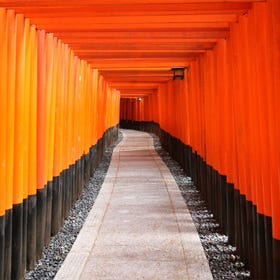
Fushimi Inari Taisha is one of the easiest major Kyoto sights to visit so early. The shrine grounds are open around the clock, so you can get a head start on sightseeing before the main attractions even open.
For a short visit, walk through the main shrine area and part of the Senbon Torii. Kyoto City's official tourism site lists the full route around Mt. Inari at about 4 km, which can take a few hours depending on your pacing, so leave more time if you plan to complete the circuit.
- Please remember that this is an active shrine. Fushimi Inari asks visitors not to block the paths for photographs, eat while walking the grounds, enter restricted areas, or disturb areas where people may be praying.
Optional Side Quest: Breakfast & Treats After Fushimi Inari
If you skipped breakfast or worked up an appetite on the shrine paths, this is a good time to eat before continuing toward Kiyomizu-dera.
Vermillion Cafe has an outdoor terrace overlooking a tree-lined pond near the shrine. Its brunch menu includes vegetarian and vegan choices, coffee and tea, Uji matcha drinks, and sweets.
KAFE INARI is another breakfast or brunch option near JR Inari Station, with coffee, matcha and hojicha drinks, and open sandwiches.
If you want a treat, then head to Kyozuan Fushimi Inari, grab one of their famous tofu soft serves, and...turn it upside down!? (No, seriously!) This treat is famous for being so thick that you can flip it completely upside down, and it won’t even fall out of the cone! They also have other soy sweets, including soy milk doughnuts. Kyozuan Fushimi Inari opens at 9 AM and is just steps away from JR Inari Station.
-

-
Address
68, Fukakusayabunouchicho, Fushimi-ku, Kyoto-shi, Kyoto, 612-0882
View Map -
Nearest Station
Inari Station (JR Nara Line)
- Phone Number 075-641-7331
-
Address
68, Fukakusayabunouchicho, Fushimi-ku, Kyoto-shi, Kyoto, 612-0882
Around 9 AM: Continue to Kiyomizu-dera and Higashiyama
From Fushimi Inari, take the Keihan Line north to Kiyomizu-Gojo and continue into Higashiyama. Kiyomizu-dera is about a 25-minute walk uphill from the station through the surrounding neighborhood, so give yourself enough time for the climb.
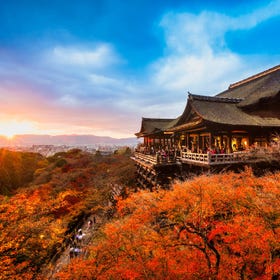
Kiyomizu-dera is best known for the wooden stage projecting from its Main Hall, supported by giant pillars and looking out over Kyoto. Below is Otowa Waterfall, where visitors use ladles to catch water from its three streams. The temple opens at 6 AM, so you can visit early before continuing downhill through Sannenzaka and Ninenzaka.
- Hours in 2026:
- September 1–November 20: 6 AM–6 PM
November 21–30: 6 AM–9:30 PM
December 1–31: 6 AM–6 PM
(2027 TBA)
- Price:
- Adults: 500 yen
Elementary/Middle School: 200 yen
- Official Websites:
- Kiyomizu-dera Visitor Guide
Kiyomizu-dera 2026 Hours & Access (JP)
Optional Side Quest 1: Explore Higashiyama in Kimono
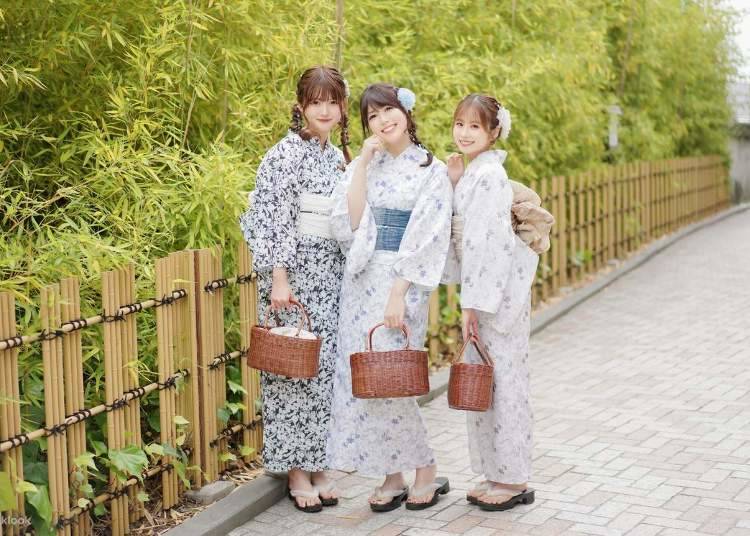
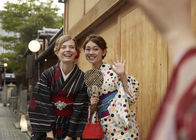
If you want to dress for the Kiyomizu-dera / Higashiyama walk, Aiwafuku Kiyomizu Main Store is about a minute from Yasaka Pagoda and Yasaka Koshindo, with more than 600 kimono choices and professional hair styling. You can also add a 30-minute tea ceremony and matcha-making session separately.
Optional Side Quest 2: Stop for Cloud Shaped Sweets
Kumo no Cha Kiyomizu Sannenzaka sits right along the walk down from Kiyomizu-dera. Its signature Cloud Mousse has matcha and azuki bean mousse inside, and it has indoor seating and a terrace overlooking a small dry landscape garden.
- Weekdays: 10 AM–6 PM
Weekends: 10 AM–6:30 PM - 3-317 Irishimizu, Sanneizaka Matsubaraagaru, Higashiyama-ku, Kyoto 605-0862
- Kumo no Cha Kiyomizu Sannenzaka
Kumo no Cha Cloud Mousse
-
-
Address
1-294 Kiyomizu, Higashiyama-ku, Kyoto City, Kyoto Prefecture, 605-0862
View Map -
Nearest Station
Gionshijo Station (Keihan Line)
25 minutes on foot
- Phone Number 075-551-1234
-
Address
1-294 Kiyomizu, Higashiyama-ku, Kyoto City, Kyoto Prefecture, 605-0862
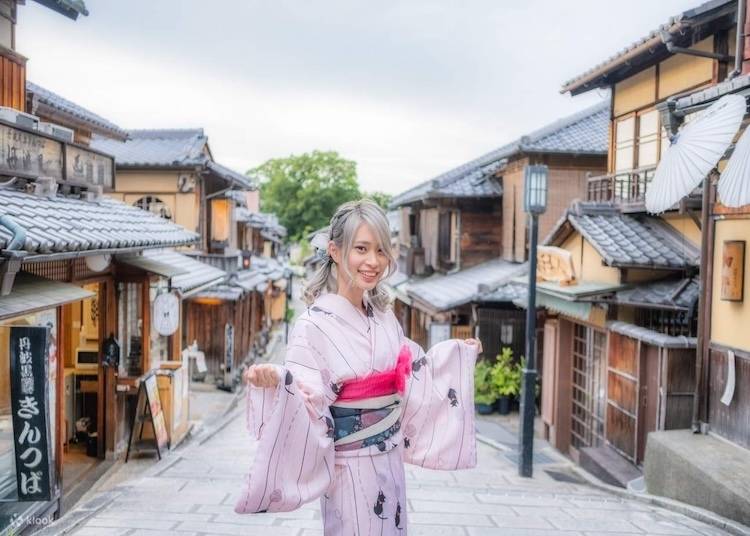
Sannenzaka and Ninenzaka
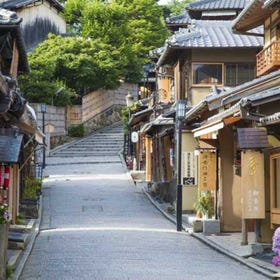
After Kiyomizu-dera, head downhill through Sannenzaka and Ninenzaka. The old streets are lined with machiya-style buildings, souvenir shops, sweets, cafes, and views of Yasaka Pagoda. But remember, these streets are also part of a residential neighborhood, so keep doorways and roads clear when stopping for photos, and stay out of private property.
-
-
Address
3, Kiyomizu, Higashiyama-ku, Kyoto-shi, Kyoto, 605-0862
View Map -
Nearest Station
Gionshijo Station (Keihan Line)
14 minutes on foot
-
Address
3, Kiyomizu, Higashiyama-ku, Kyoto-shi, Kyoto, 605-0862
Higashiyama to Yasaka Shrine
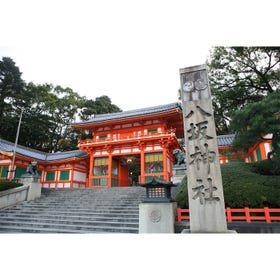
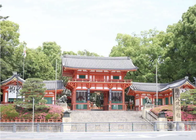
Next, continue north through Higashiyama to Yasaka Shrine at the eastern end of Shijo Street. After that, you can walk around Gion-Shijo and head toward the Kamo River. In this area, you can choose to stop for lunch in Gion, take a riverside stroll, or do some souvenir shopping.
-

-
Address
625, Gionmachikitagawa, Higashiyama-ku, Kyoto-shi, Kyoto, 605-0073
View Map -
Nearest Station
Gionshijo Station (Keihan Line)
5 minutes on foot
- Phone Number 075-561-6155
-
Address
625, Gionmachikitagawa, Higashiyama-ku, Kyoto-shi, Kyoto, 605-0073
Plan 2: Tokyo → Kawaguchiko / Yamanakako → Gotemba → Kyoto
Prefer trains and a hotel bed to sleeping on a bus? This itinerary still starts with a Fuji Five Lakes stop, then lets you choose between shopping in Gotemba, spending time at your accommodation, or continuing to Mishima and Kyoto.
The basic route is:
Tokyo → Kawaguchiko / Yamanakako → Gotemba → Numazu → Mishima → Kyoto
You can reach Kyoto that evening, spend the night in Mishima and catch an early Shinkansen, or enjoy your time in one of the many Fuji accommodations and continue your journey in the morning.
Day 1: Leisure Activities Around Mt. Fuji
7:30 AM: Take the Fuji Excursion (or Shinkansen) from Tokyo
This version starts the same way as Plan 1. Take the Fuji Excursion train from Shinjuku, which operates on the schedule below. Remember, you must reserve all seats in advance, and tickets go on sale up to one month before your travel date.
| Fuji Excursion Times | Details |
|---|---|
| Arrival Times |
Shimoyoshida: 9:13 AM Mt. Fuji Station: 9:23 AM Fuji-Q Highland: 9:26 AM Kawaguchiko: 9:28 AM |
| Official Website | Fuji Excursion Timetable and Fare Information ↗︎ |
Taking the Shinkansen
If taking the bullet train, start at Tokyo Station, ride the Tokaido Shinkansen to Mishima, and transfer to the Mishima–Kawaguchiko Liner highway bus for Kawaguchiko.
| Shinkansen + Highway Bus Route (Tokyo to Kawaguchiko) | Details |
|---|---|
| Schedule |
6:57 AM: Kodama 803 departs Tokyo Station 7:04 AM: Kodama 803 departs Shinagawa Station 7:50 AM: Arrives at Mishima Station 8:20 AM: Mishima–Kawaguchiko Liner departs Mishima Station South Exit 9:30 AM: Arrives at Fuji-Q Highland 9:40 AM: Arrives at Kawaguchiko Station |
Around 9:30 AM–1 PM: Choose Kawaguchiko or Yamanakako
Plan 2 gives you the morning for either Lake Kawaguchi or Lake Yamanaka before you continue south. If Gotemba is part of the afternoon, check the bus time before you start sightseeing so you know when to leave the lakes.
Option 1: Lake Kawaguchi
On the Lake Kawaguchi side, Oishi Park gives you the north shore view across the lake toward Mt. Fuji, along with seasonal flower beds and the Kawaguchiko Natural Living Center for souvenirs, local fruit products, drinks, and soft serve.
If you have time for another stop, consider adding the Mt. Fuji Panoramic Ropeway (or any of the other activities introduced in Plan 1), or check out one of the museums and galleries introduced below!
Museums and Galleries
If the weather turns cloudy or you want an indoor stop, the northern shore has several museums. The Itchiku Kubota Art Museum presents textile and kimono works by artist Itchiku Kubota.
The Kawaguchiko Music Forest Museum goes in a completely different direction, with historic music boxes and instruments, live performances, gardens, and other special programs. The 2026 schedule also includes concerts and hourly fountain shows.
A Lakeside Walk: Kawaguchi Art Waterside Promenade
Not every museum needs an admission ticket. The Kawaguchi Art Waterside Promenade runs along the lake near the Kawaguchiko Museum of Art, accessible 24/7 with a relatively flat path that’s easy to explore on foot or by bicycle.
Mt. Fuji is visible across the water from parts of the route, while cherry blossoms, summer greenery, and autumn foliage change the scenery throughout the year.
-
-
Address
Fujikawaguchiko-machi, Minamitsuru-gun, Yamanashi, 401-0301
View Map -
Nearest Station
Kawaguchiko Station (Kawaguchiko Line (Fujikyuko))
1 minute on foot
-
Address
Fujikawaguchiko-machi, Minamitsuru-gun, Yamanashi, 401-0301
Option 2: Lake Yamanaka
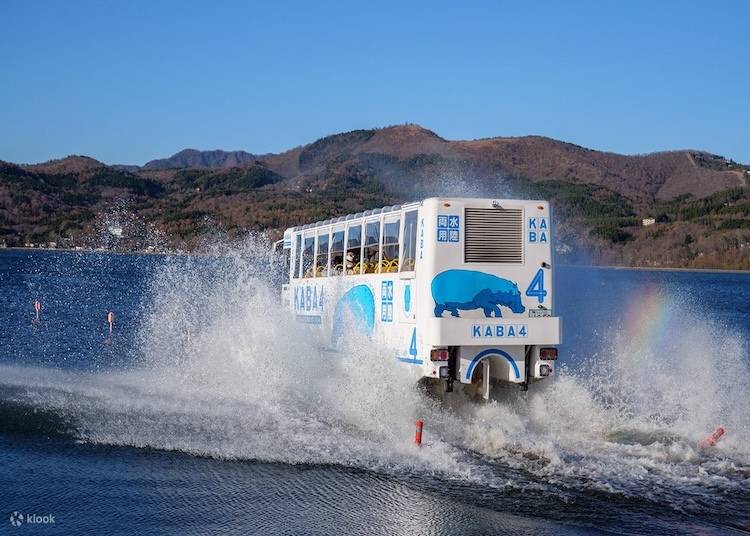
Around Asahigaoka, several Lake Yamanaka attractions sit close together. The Swan Lake sightseeing boat and Yamanakako no KABA both depart from the area. Nagaike Water Park sits along the northern shore with views across the lake toward Mt. Fuji, and cycling is another option if you want to explore more of the shoreline.
All of these were previously introduced in Plan 1, so go back and check them...and add them to your itinerary if they catch your eye!
Yamanakako Literature Forest: Mishima Yukio Literary Museum
There’s also the Yamanakako Literature Forest nearby, home to the Mishima Yukio Literary Museum, which covers Mishima's life and work through original manuscripts and creative notes for Confessions of a Mask, The Sound of Waves, and more. There’s also letters, photographs, clothing, and materials from film and stage adaptations. Altogether, the museum holds around 30,000 items!
The building's exterior and courtyard were modeled on Mishima's Tokyo home. Exhibition rooms are on the first floor, while the second floor has a reading and reference room.
- Hours:
- 10 AM–4:30 PM (Last entry 4 PM)
Closed:
Mondays & Tuesdays (the following day if public holiday); December 29–January 3; occasional collection inspection days
- Price:
- Adults: 700 yen
University / High School: 420 yen
Elementary / Middle School: 140 yen
- Address:
- Mishima Yukio Literary Museum
506-296 Hirano, Yamanakako, Minamitsuru District, Yamanashi 401-0502
0555-20-2655
- Official Website:
- Mishima Yukio Literary Museum Visitor Information
Lake Yamanaka also gives you another route toward Gotemba. Fujikyu's local Gotemba-Kawaguchiko line stops at Yamanakako Asahigaoka, with some southbound services continuing to Gotemba and Gotemba Premium Outlets, meaning travelers sightseeing around the Asahigaoka side can continue south without having to return to Kawaguchiko for the express bus.
-
-
Address
Yamanakako-mura, Minamitsuru-gun, Yamanashi, 401-0500
View Map -
Nearest Station
Kawaguchiko Station (Kawaguchiko Line (Fujikyuko))
- Phone Number 0555-62-3100
-
Address
Yamanakako-mura, Minamitsuru-gun, Yamanashi, 401-0500
Early Afternoon: Continue toward Gotemba (Optional)
If shopping is part of your plan, head toward Gotemba after lunch. From Lake Kawaguchi, the reserved express bus runs directly from Kawaguchiko Station and Fuji-Q Highland to Gotemba Premium Outlets in about an hour.
If you spent the morning around Lake Yamanaka, check the Fujikyu local bus from Yamanakako Asahigaoka. The outlet bound services below continue through Gotemba to Gotemba Premium Outlets, so you may be able to continue south directly from the lake.
| Gotemba Premium Outlets Express Bus | Details |
|---|---|
| Route | Kawaguchiko / Fuji-Q Highland → Gotemba Premium Outlets |
| Schedule |
Departures (from Kawaguchiko Station): Weekdays: 9:10 AM / 10:10 AM / 12:10 PM / 3:10 PM Weekends & Holidays: 10:10 AM / 12:10 PM / 3:10 PM (Travel Time: Approx. 60 minutes) |
| Price (One Way) |
Adults: 2,300 yen Children: 1,150 yen *Tickets sold from one month before travel date; see website for details |
| Official Websites |
Kawaguchiko / Fuji-Q Highland to Gotemba Premium Outlets Bus ↗︎ Gotemba Premium Outlets Bus Access ↗︎ |
| Fujikyu Local Bus (Gotemba-Kawaguchiko Line) | Details |
|---|---|
| Route | Yamanakako Asahigaoka → Gotemba Premium Outlets |
| Schedule |
Departures (from Yamanakako Asahigaoka): 11:23 AM (Arrives 12:30 PM) 1:23 PM (Arrives 2:30 PM) (Travel Time: Approx. 1 hour 7 minutes) |
| Price |
Adults: 1,130 yen Children: 570 yen *Reservations not required |
| Official Websites |
Fujikyu Local Bus Timetable (Gotemba/Kawaguchiko Route) ↗︎ Fujikyu Local Bus Fare Table ↗︎ |
Mid-afternoon: Gotemba Premium Outlets Shopping
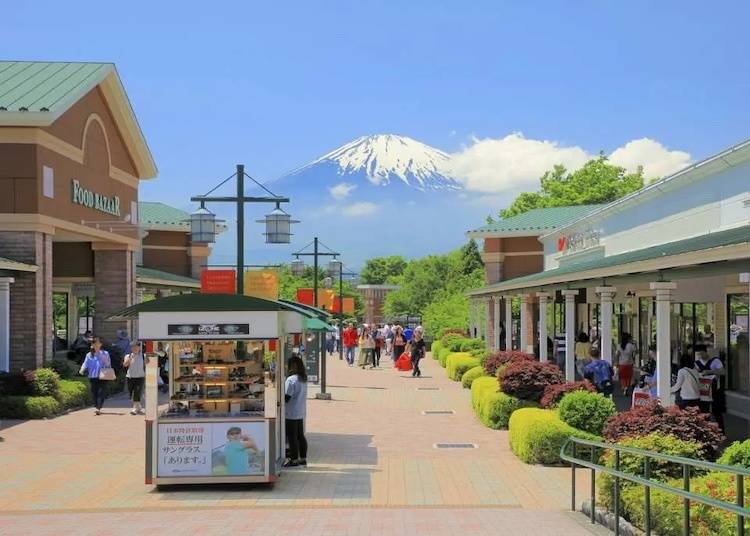
Gotemba Premium Outlets has around 290 stores spread across a huge open air complex, with fashion, sportswear, shoes, cosmetics, accessories, restaurants, and cafés. On clear days, Mt. Fuji is visible from parts of the center.
Allow yourself a couple of hours here, even if you already know which shops you want to hit. Time can disappear quickly here, so we recommend checking the store directory before you arrive.
- Hours:
- March–November: 10 AM–8 PM
December–February: 10 AM–7 PM
*Individual shops and restaurants may vary.
- Official Websites:
- Gotemba Premium Outlets Official Website
Gotemba Premium Outlets Store Directory
-
-
Address
1312 Fukazawa, Gotemba City, Shizuoka Prefecture, 412-0023
View Map -
Nearest Station
Gotemba Station (JR Gotemba Line)
20 minutes by bus
- Phone Number 0550-81-3122
-
Address
1312 Fukazawa, Gotemba City, Shizuoka Prefecture, 412-0023

After Shopping: Head to Gotemba Station
After shopping, take the Gotemba Premium Outlets Free Shuttle to JR Gotemba Station. Services leave regularly from the West Zone Bus Terminal, and the ride takes about 5 to 10 minutes.
If you’re staying in Mishima, continue to Numazu via the JR Gotemba Line, and transfer to the Tokaido Main Line for Mishima. Services on the Gotemba Line are less frequent than city trains, so check the timetables before leaving the outlet. (More on that in the Mishima section below!)
Head to Your Accommodation
Gotemba is optional, so if you’d rather skip the shopping spree in favor of more time to relax at your accommodation, head straight to your stay after your Kawaguchiko or Yamanakako activity.
Otherwise, shoppers, gather your hauls and head back to your accommodations right to pack! If you have a large haul, we recommend taking a cab to avoid inconveniencing other public transportation passengers.
Option 1: Staying Around Mt. Fuji
Those staying around the lakes can choose between Kawaguchiko and Yamanakako. Mount Fuji Panorama Glamping is within walking distance of Kawaguchiko Station, while Rakuten STAY VILLA Fuji Yamanakako has private villas near Lake Yamanaka.
Glamping Near the Station
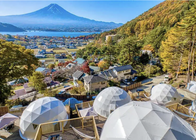
Mount Fuji Panorama Glamping has five separate accommodations overlooking Mt. Fuji, including a dome and four cabins. BBQ facilities, fire pits, kitchens in the cabins, and the Fuji view will make you want to spend the rest of your evening chilling out here in lieu of more sightseeing.
Breakfast can be added to selected plans, and the property is about an eight minute walk from Kawaguchiko Station. Check in runs from 3 PM to 6 PM, so keep that cutoff in mind if you are also planning to visit Gotemba that afternoon.
-
 Mount Fuji Panorama GlampingMount Fuji Panorama Glamping
- Address Funatsu 4329-1, Fujikawaguchiko, Yamanashi View Map
- Original source: Booking.com
Vacancy search, reservation
-
from 18,120JPY 1room, 2adults
Check with our partner site as the latest rates, rate details, and guest room requirements may vary.
A Private Villa with a View (and BBQ!)
If staying around Lake Yamanaka, Rakuten STAY VILLA Fuji Yamanakako is a great choice for rest, relaxation, and BBQ!
The property has five private villas near the lakeshore, each with two bedrooms, a living and dining area, kitchen, and wooden deck. Every villa has its own wooden deck with BBQ equipment, while select units have Mt. Fuji views from the second floor bath.
Check-in is from 3 PM to 10 PM and check-out is by 10 AM. Entry uses a smart lock, with check in and check out completed on the tablet inside the villa. The Yamanakako Hirano bus stop is about a 10 minute walk away.
Note: This accommodation does not offer luggage storage before check-in or after check-out.
-
Rakuten Stay Villa Fuji YamanakakoRakuten STAY VILLA 富士山中湖
-
Address
410-3 Hirano, Yamanakako-mura, Minamitsuru-gun, Yamanashi
View Map
・Check In: 3 PM–10 PM; Check Out: 10 AM
・Price: Varies by villa, date, and meal plan; see website for details.
・Official Website: https://stay.rakuten.co.jp/villa/fuji-yamanakako/ -
Address
410-3 Hirano, Yamanakako-mura, Minamitsuru-gun, Yamanashi
Option 2: Stay Overnight in Mishima
If you want more time at Gotemba, or simply want to catch some Z’s early and continue the journey in the morning, stay near Mishima Station and continue the journey in the morning. Fujisan Mishima Tokyu Hotel is right beside the station’s south exit, with a top floor bathing facility and some rooms facing Mt. Fuji.
The first Shinkansen from Mishima to Kyoto leaves at 6:14 AM and reaches Kyoto at 8:41 AM, so you’ll still arrive in Kyoto with plenty of time for a full day of sightseeing.
Note: If you skipped Gotemba and are traveling directly from Lake Kawaguchi or Lake Yamanaka, take the Mishima–Kawaguchiko Liner from Kawaguchiko Station or Fujisan Yamanakako (Hotel Mt. Fuji Entrance).
-
Fujisan Mishima Tokyu Hotel富士山三島東急ホテル
-
Address
Ichibancho 17-1, Mishima, Shizuoka
View Map
・Check In: 3 PM; Check Out: 11 AM
Bathing Facility: 3 PM–1 AM / 5 AM–10 AM
・Price: Varies by accommodation, date, and plan; see website for details.
・Official Website: https://www.tokyuhotels.co.jp/mishima-h/ -
Address
Ichibancho 17-1, Mishima, Shizuoka
Option 3: Continue to Kyoto
If you prefer to wake up in Kyoto, continue from Mishima on a westbound Tokaido Shinkansen and continue the journey and arrive at night.
Mishima is served by the Kodama line and select Hikari trains. At the time of this article, the JR Central Timetable lists the last direct Shinkansen to Kyoto as leaving Mishima at 8:54 PM, and reaching Kyoto at around 11:25 PM.
(If you are taking a late train, make sure your Kyoto hotel accepts late check-ins before booking!)
| Shinkansen Route + Schedule (Mishima → Kyoto) | Details |
|---|---|
| Schedule / Timetable |
6:14 AM → 8:41 AM: Kodama 865 9:46 AM → 11:37 AM: Hikari 705 5:46 PM → 7:37 PM: Hikari 721 7:46 PM → 9:49 PM: Hikari 659 8:54 PM → 11:25 PM: Kodama 855 *As of Sept 2026; see website for latest updates and information |
| Official Websites |
JR Central Tokaido Shinkansen Timetable ↗︎ Mishima / Kyoto Shinkansen Route Search ↗︎ |
Day 2: A Day of Kyoto Sightseeing & Shopping
If you slept in Kyoto, you can get up and start whenever you’re ready! But if you stayed in Mishima, you’ll have to take an early Shinkansen and drop off your luggage first. Choose one main morning stop, then use the afternoon for shopping, food, and an evening around the Kamo River and Gion.
Morning: Pick An Activity Theme
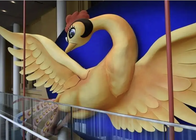
Option 1: Manga, Art & Pop Culture at the Kyoto International Manga Museum
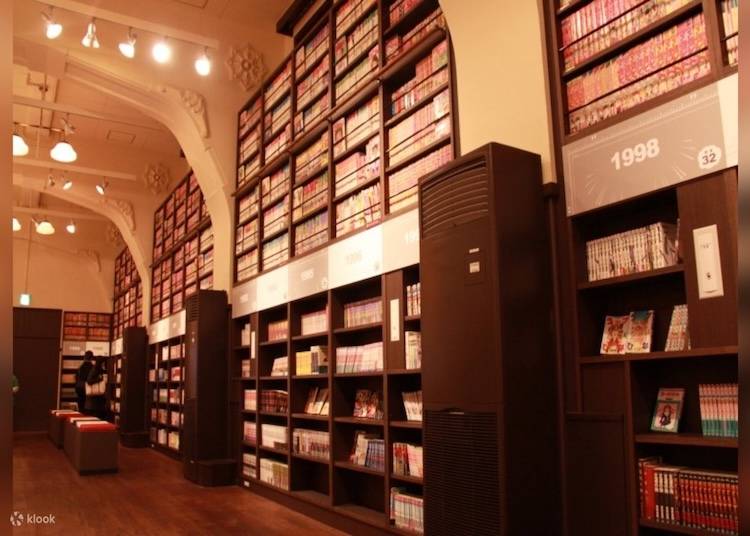
Manga fans can easily lose a few hours at the Kyoto International Manga Museum. Around 50,000 volumes line the public Wall of Manga, alongside permanent displays, rotating exhibitions, a Manga Studio, kamishibai performances, workshops, and a museum shop. There are reading areas throughout the former school building, and a grassy courtyard where visitors can take books outside.
Stop by for a short moment to check it out, or settle in, crack open a manga, and read for a while before heading downtown.
- Hours:
- 10 AM–5 PM (Last entry 4:30 PM)
Closed:
Wednesdays (or the following day when Wednesday is a public holiday)
- Price:
- Adults (19+): 1,200 yen
Ages 13–18: 400 yen
Ages 6–12: 200 yen
-

-
Address
Karasuma-dori Oike-agaru, Nakagyo-ku, Kyoto-shi, Kyoto, 604-0846
View Map -
Nearest Station
Karasumaoike Station (Karasuma Line / Tozai Line)
- Phone Number 075-254-7414
-
Address
Karasuma-dori Oike-agaru, Nakagyo-ku, Kyoto-shi, Kyoto, 604-0846
Option 2: A Day of History at Nijo Castle
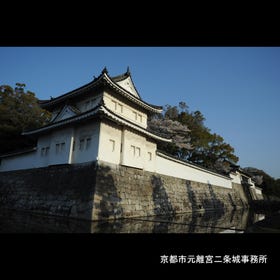
If castles and Japanese history are more your thing, spend the morning at Nijo Castle. Nijo Castle was built by Tokugawa Ieyasu at the beginning of the Edo period, and Ninomaru Palace remains the centerpiece of the visit. Inside, richly decorated rooms, painted screens, carved transoms, and the famous nightingale floors preserve the setting used by the Tokugawa shogunate.
Outside the palace, the grounds include Ninomaru Garden, gates, stone walls, and the Honmaru area. Honmaru Palace requires a separate timed reservation, so book ahead if you want to go inside. For a break during the visit, Waraku-an Tea House beside Seiryu-en Garden serves matcha, sencha, sweets, and light seasonal items.
- Hours:
- Castle Hours: 8:45 AM–5 PM (Last admission 4 PM)
Ninomaru Palace Reception: Ends 4:10 PM
Honmaru Palace: 9:30 AM–4 PM (advance reservation required)
Waraku-an Tea House:
Hours: 9:30 AM–4:30 PM (Last order 4 PM)
- Price:
- Castle Grounds:
Adults: 800 yen
Middle / High School: 400 yen
Elementary School: 300 yen
Castle Grounds + Ninomaru Palace:
Adults 1,300 yen
Honmaru Palace:
Adults: 1,000 yen
Middle / High School: 300 yen
Elementary School: 200 yen
Younger children are free (*Castle admission required.)
- Official Websites:
- Nijo Castle Official Website
Waraku-an Tea House
Nijo Castle Admission Info
-
-
Address
541 Nijojocho, Horikawa Nishiiri, Nijo-dori, Nakagyo-ku, Kyoto-shi, Kyoto, 604-8301
View Map -
Nearest Station
Nijojomae Station (Tozai Line)
- Phone Number 075-841-0096
-
Address
541 Nijojocho, Horikawa Nishiiri, Nijo-dori, Nakagyo-ku, Kyoto-shi, Kyoto, 604-8301
Option 3: A Leisurely Morning in Kyoto’s Nature
If you prefer to start the day outdoors in nature, choose between Shimogamo Shrine, Kyoto Botanical Gardens, or Kyoto Gyoen and the Imperial Palace.
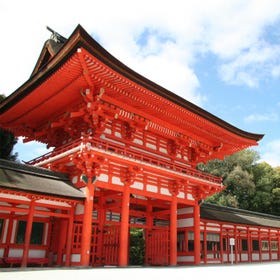
Shimogamo Shrine & Tadasu no Mori
Shimogamo Shrine’s approach runs through Tadasu no Mori, a forest where small streams cut through the path on the way to the shrine. The walk leads through the trees toward the vermilion gates and shrine buildings, giving you plenty to see before even reaching the main sanctuary.
After visiting, you can continue south through the forest toward Demachiyanagi and the Kamo River before heading back into central Kyoto.
- Main Hours: 6:30 AM–5 PM
(Prayer Reception: 9 AM–4:30 PM) - Free entry
*Some areas may have separate hours or fees. - Official Website: Shimogamo Shrine
-
-
Address
59, Shimogamoizumigawacho, Sakyo-ku, Kyoto-shi, Kyoto, 606-0807
View Map -
Nearest Station
Demachiyanagi Station (Eizan Dentetsu Eizan Line)
10 minutes on foot
- Phone Number 075-781-0010
-
Address
59, Shimogamoizumigawacho, Sakyo-ku, Kyoto-shi, Kyoto, 606-0807
Kyoto Botanical Gardens & the Kamo River
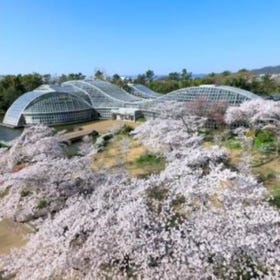
Kyoto Botanical Gardens sits across a large area of Kitayama with seasonal flower beds, themed gardens, wooded paths, lawns, and one of Japan’s largest conservatories. There’s plenty of space to wander about, or you can simply take a break on on a bench, or spend more time in whichever part of the garden is in season during your visit.
Kitayama Station is right next to the garden, with the Kamo River also nearby if you want to continue walking a bit longer.
- Hours: 9 AM–5 PM (Last entry 4 PM)
Conservatory: 10 AM–4 PM
(Closed December 28–January 4) - Price:
Adults: 500 yen
High School / Seniors (65+): 250 yen
Middle School & Under: Free - Official Websites:
Kyoto Botanical Gardens (EN)
Access & Visitor Information
-
-
Address
Shimogamo Hangi Town, Sakyo Ward, Kyoto City, Kyoto Prefecture, 606-0823
View Map -
Nearest Station
Kitayama Station (Karasuma Line)
- Phone Number 075-701-0141
-
Address
Shimogamo Hangi Town, Sakyo Ward, Kyoto City, Kyoto Prefecture, 606-0823
Kyoto Gyoen & Kyoto Imperial Palace
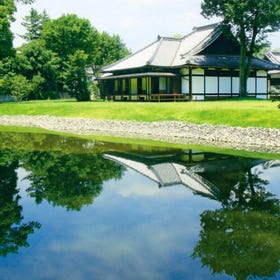
Kyoto Gyoen is a huge green space in the middle of the city, with wide gravel paths, lawns, wooded areas, historic sites, and rest houses around the former imperial district. Kyoto Imperial Palace sits inside the grounds and can be visited free of charge on regular opening days, no advance reservations required.
Free staff guided tours are also offered in English at 10 AM and 2 PM and take about 50 minutes. On Thursdays, Fridays, and Saturdays, you can also take a peek inside Shusui-tei, the nearly 200-year-old former Kujo family tea house sitting beside Kujo Pond.
- Hours: 9:30 AM–3:30 PM (Thurs/Fri/Sat)
*Closures apply around New Year and select event dates - Price: 300 yen
- Official Websites:
Kyoto Gyoen National Garden
Kyoto Gyoen Historic Sites & Shusui-tei
Kyoto Imperial Palace Visitor Information
-

-
Address
3, Kyotogyoen, Kamigyo-ku, Kyoto-shi, Kyoto, 602-0881
View Map -
Nearest Station
Imadegawa Station (Karasuma Line)
8 minutes on foot
- Phone Number 075-211-1215
-
Address
3, Kyotogyoen, Kamigyo-ku, Kyoto-shi, Kyoto, 602-0881
-
-
Address
3, Kyotogyoen, Kamigyo-ku, Kyoto-shi, Kyoto, 602-0881
View Map -
Nearest Station
Imadegawa Station (Karasuma Line)
8 minutes on foot
-
Address
3, Kyotogyoen, Kamigyo-ku, Kyoto-shi, Kyoto, 602-0881
Optional Lunch Side Quest: Vegan Ramen UZU Kyoto
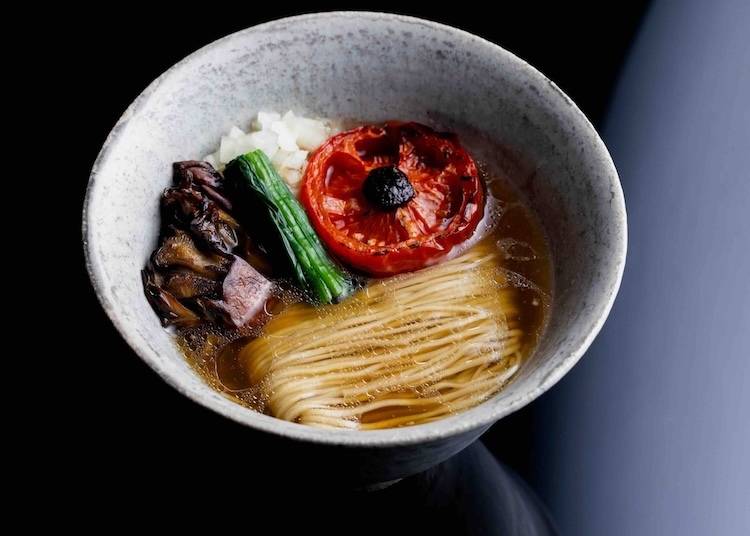
Just south of Kyoto Gyoen, Vegan Ramen UZU Kyoto combines a completely vegan tasting course with a dining room created around teamLab’s Reversible Rotation - Black in White. Digital calligraphy moves across the dark walls while the polished black table reflects the artwork, enveloping diners in the artistic installation as they eat. The restaurant received a Michelin Green Star for a second consecutive year in 2026, as well as its fifth consecutive Bib Gourmand.
The UZU Signature Course begins with a choice of hojicha or sake yuzu, followed by vegan cheese with yatsuhashi, and a hand rolled sushi course. For the ramen, choose between Soy Sauce & Fermented Mugwort, or Spicy Miso & Sake Kasu, wrapping up the mean with kinako ice cream for dessert.
The ramen broth is made from Rausu kelp, shiitake mushrooms, and vegetables steeped in water for 12 hours, reusing the ingredients left from the broth in other dishes in the course to reduce food waste.
Reservations receive priority and seating is limited, so if this looks like one side quest worth going out of your way for, be sure to book ahead. The UZU Signature Course is priced at 8,800 yen as of September 2026 onward.
Official Websites:
Vegan Ramen UZU Kyoto
teamLab 反転無分別 - Black in White / Reversible Rotation - Black in White
-
Vegan Ramen UZU Kyotoヴィーガンラーメン ウズ キョウト
-
Address
146 Umenokicho, Nakagyo Ward, Kyoto 604-0905
View Map - Phone Number 080-7603-6106
Hours:
12 PM–2:45 PM (Last entry 1:30 PM)
5:30 PM–10 PM (Last entry 9 PM)
Closed: Irregular; check official Instagram for current closures
Official Website:
https://vegan-uzu.com/pages/uzu-kyoto-en -
Address
146 Umenokicho, Nakagyo Ward, Kyoto 604-0905

Afternoon & Evening: Pick Your Downtown Plan
After your morning/early noon stop, head toward central Kyoto for food, shopping, or just a wander. Nishiki Market, Teramachi, Shinkyogoku, and Shijo Kawaramachi are all within walking distance of one another, while Gion-Shijo sits just across the Kamo River.
Option 1: Shopping, Eating, & Wandering Downtown
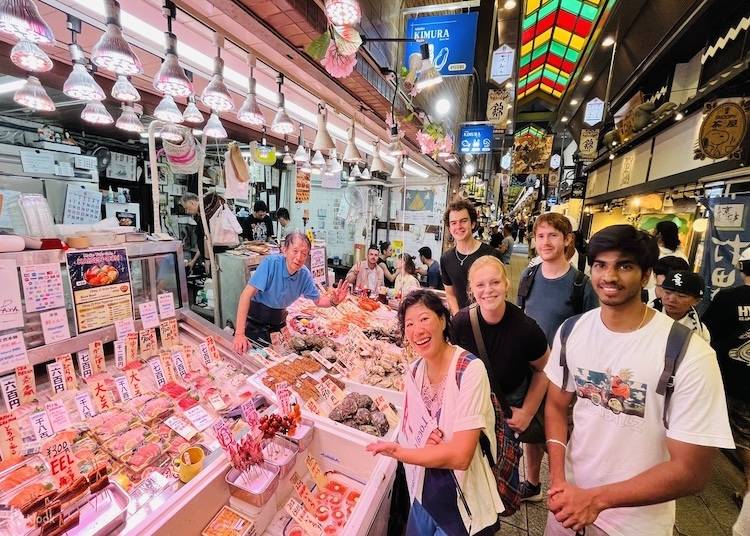
Start around Nishiki Market, where the narrow covered arcade is packed with food shops, specialty stores, sweets, tea, kitchenware, and Kyoto products. From there, continue through Shinkyogoku and Teramachi toward Shijo Kawaramachi for even more souvenirs, fashion, character goods, cafés, restaurants, and department stores.
Nishiki is best to visit earlier in the afternoon, since individual vendors keep their own hours and may close before evening. Teramachi, Shinkyogoku, and other department stores around Shijo Kawaramachi stay open much later into the evening, and are also good option on wetter days.
-
-
Address
609, Nishidaimonjicho, Tominokoji-dori Shijo-sagaru, Nakagyo-ku, Kyoto-shi, Kyoto, 604-8054
View Map -
Nearest Station
Shijo Station (Karasuma Line)
3 minutes on foot
- Phone Number 075-211-3882
-
Address
609, Nishidaimonjicho, Tominokoji-dori Shijo-sagaru, Nakagyo-ku, Kyoto-shi, Kyoto, 604-8054
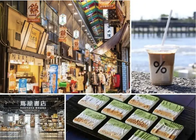
Dinner Ideas Around Downtown Kyoto
Downtown Kyoto has everything from tonkatsu and ramen to sushi, gyoza, omurice, and even vegan and vegetarian options! The choices below are all within the Nishiki, Teramachi, Shijo Kawaramachi, and Pontocho area.
- Katsukura Sanjo: A convenient tonkatsu stop near Teramachi
- Menya Inoichi: A Teramachi ramen shop known for dried seafood dashi based bowls
- Kichi Kichi Omurice: A Pontocho place known for its signature omurice
- Gyoza Hohei: A casual gyoza spot with two branches in Gion/Shijo area.
- Sushi no Musashi: A long running Kyoto kaiten-zushi shop at Kawaramachi Sanjo
- SHOKAKU NOODLE KYOTO A vegan ramen shop near Nishiki / Shijo Kawaramachi
- mumokuteki cafe KYOTO An entirely vegan menu of Japanese comfort food
Optional Side Quest: Evening Walk to Gion-Shijo
After dinner or shopping, cross Shijo Ohashi and follow the Kamo River toward Gion-Shijo for an evening finish. Between Shijo and Sanjo, the riverbank is a familiar Kyoto hangout, with couples and groups of friends sitting along the water.
From May 1 to October 15, restaurants along the Kamo River also open their seasonal Noryo Yuka terraces. It’s a great place to take a stroll, or simply sit by the water for a moment to catch your breath.
You can also continue east toward Hanamikoji or Tatsumi Bridge, where traditional wooden buildings and the canal offer a magical nighttime view of the district.
Please remember that Gion is also a neighborhood of local residents. Always follow posted photography rules, keep private entrances clear, and never chase down or disturb geiko or maiko for photos!
Which Plan Should You Choose?
Both routes use Mt. Fuji as a stopover on the way from Tokyo to Kyoto, so the main choice to make is how much time, effort, money, and comfort you’re willing to spend over the course of two days.
Plan 1 is the more active, budget friendly version of the trip, where you’ll spend most of Day 1 around Mt. Fuji, sleep on the night bus, and arrive in Kyoto before breakfast. While it does indeed save the cost of a hotel night, whether you can actually sleep well on an overnight bus is another question!
Plan 2 costs more when you add extra accommodation and transportation, but you’ll get a proper night of sleep and much more control over where and how to end Day 1.
- Want to keep accommodation costs down
- Are comfortable sleeping on an overnight bus
- Prefer an active day around Kawaguchiko/Yamanakako...
- Or a day of thrills and roller coasters at Fuji-Q Highland!
- Are okay arriving at Kyoto Station super early (6 AM!)
- Prefer a hotel and a full night of sleep
- Prioritize comfort and convenience over cost
- Want to go shopping at Gotemba Premium Outlets
- Want to relax and spend more time at your accommodation
- Want flexibility to stay around Fuji, Mishima, or Kyoto
- Don’t mind taking the Shinkansen for the final leg to Kyoto
In short, Plan 1 is best for active travelers who don’t mind a busier schedule and sleeping on the road to save money, while Plan 2 is best for those who prefer a relaxed, leisurely pace and don’t mind splurging a bit for a hotel, comfy sleep, and flexible, convenient travel.
Fuji FAQs
Q. Can I travel from Kawaguchiko to Mishima instead?
A. Yes. The Mishima-Kawaguchiko Liner takes about 80–90 min and costs 2,700 yen for adults (2,500 yen with the current web discount). All seats are reserved, and road traffic can cause delays, so leave extra time before your Shinkansen connection.
Q. Can I visit Kawaguchiko, Lake Yamanaka, and Gotemba in one day?
A. Technically, yes, but that doesn’t necessarily mean you should. You’d need to plan around the bus schedule, as well as how long you expect to spend in each area. For this two day route, we recommend choosing either Kawaguchiko or Lake Yamanaka as your main spot, then add Gotemba if the timing works.
Q. When is Mt. Fuji easiest to see?
Clear views are never guaranteed. JNTO recommends early morning or late afternoon for close views, while crisp winter days generally give the clearest conditions from farther away. The rainy season from early June to mid July is often cloudier, too. It’s best to check the weather or a live camera before setting out if the view is a priority.
Q. Is the Japan Rail Pass worth getting on this route?
A. It can cover eligible JR portions, including Hikari and Kodama trains on the Tokaido Shinkansen, but not if your main journey is Tokyo → Mt. Fuji → Kyoto. The Fujikyu Railway section of the Fuji Excursion and the Fuji area buses require separate fares, so we recommend comparing current pass prices with individual tickets first, and selecting based on how much transportation you expect to use on each line.
Q. What should I do with large luggage?
A. If possible, send your main suitcase ahead to Kyoto and carry a smaller overnight bag around Fuji. If taking luggage with you, check the luggage rules for each train or bus before departure, especially for the overnight Fujiyama Liner, and familiarize yourself with locker and storage locations at around each attraction ahead of time.
A 2-Day Trip from Tokyo to Kyoto with a Fun Fuji Side Quest
However you divide the two days, it’s always best to leave a little breathing room while exploring around Mt. Fuji. A sudden patch of cloud, an unexpectedly clear view, or a stop you end up liking more than expected can easily change the plan.
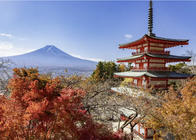
But that flexibility is exactly what’s so fun about turning the trip from Tokyo to Kyoto into a journey of its own. So enjoy Fuji while you have it in front of you, then keep heading west for the next part of your trip!
*Prices and options mentioned are subject to change.
*Unless stated otherwise, all prices include tax.
Popular Tours & Activities
-

Daikoku PA Car Meet: What Is JDM, and Why Do Enthusiasts Flock Here?
-

ANA’s Chiikawa Jet Is Taking Off—Here’s Everything You Need to Know About Exclusive Goods, In‑Flight Fun & Travel Tips
by: Guest Contributor
-

Haneda Airport Duty-Free Shopping Guide: What to Buy, How to Save & Where to Eat Before Your Flight
by: Guest Contributor
-

Seibu Group Launches New Chichibu Adventure Tourism Experience for International Travelers in 2026
by: Guest Contributor
-
Ad
Pocket WiFi Rental in Japan 2026: Complete Price Comparison & Where to Get the Best Deal
-
Japan's New GREEN LIFESTYLE TRAIN Connects Tokyo, Yokohama, and a Greener Future
by: Guest Contributor
Inspiration for Accommodations
-
Family-Friendly Hotels with Free Shuttle to Disneyland: Convenient Access for a Magical Stay
-
Top Ranked Hakone Hotels with Mt. Fuji View: Enjoy Stunning Scenery from Your Private Space
-
Convenient Tokyo Hotels with Airport Shuttle: Ideal for Families and Heavy Luggage
-
9 Family-Friendly Hotels with Comfortable Family Rooms in Asakusa
-
10 Open-air bath Onsen Ryokans in Hakone for Ultimate Relaxation
-
Shibuya Crossing: Getting the Best View from the Deck at Magnet by Shibuya109!
-
8 Unfamiliar (But Totally Normal) Customs in Japan!
-
Exploring Tokyo: 4 Must-Visit Spots around Tokyo Station
-
Essential Tokyo: The Complete Guide to Ikebukuro Station
-
Tokyo Roppongi: 5 Most Amazing Spots at Roppongi Hills and How to Make the Best of Them!
-
What to Pack for Japan in 2026: 15 Essentials for a Stress-Free Trip
- #best ramen tokyo
- #what to buy in ameyoko
- #what to bring to japan
- #new years in tokyo
- #best izakaya shinjuku
- #things to do tokyo
- #japanese nail trends
- #what to do in odaiba
- #onsen tattoo friendly tokyo
- #daiso
- #best sushi ginza
- #japanese convenience store snacks
- #best yakiniku shibuya
- #japanese fashion culture
- #best japanese soft drinks