



Japanese for Travel: 52 Useful Phrases You Can Use Right Away in Japan
- Written by: Yoko
- Translated by: Kei Suzuki
Even if you don’t speak Japanese, knowing a few key phrases can make traveling in Japan much easier. From ordering food and asking for directions to shopping, checking into hotels, and handling everyday situations, a little Japanese can go a long way.
Here are 52 useful Japanese phrases for travel, complete with meanings and examples, that you can start using right away during your trip.
Basic Greetings and Responses

Start with these everyday greetings and polite responses. They’re useful in shops, hotels, restaurants, and just about anywhere else.
1. Ohayou gozaimasu (おはようございます)
・Meaning: Good morning
・When to use it: Use this polite greeting in the morning when speaking to hotel staff, shop employees, or anyone you want to address respectfully.
2. Konnichiwa (こんにちは)
・Meaning: Hello / Good afternoon
・When to use it: A standard daytime greeting that can be used in a wide range of situations.
3. Konbanwa (こんばんは)
・Meaning: Good evening
・When to use it: Use this when greeting someone in the evening or at night.
In Japanese, the greeting you use changes depending on the time of day. In the morning, say “Ohayou gozaimasu,” during the day use “Konnichiwa,” and in the evening or at night, say “Konbanwa.”
4. Arigatou gozaimasu (ありがとうございます)
・Meaning: Thank you
・When to use it: This is the standard polite way to thank someone and works in almost any travel situation, including restaurants, shops, hotels, and stations.
In more casual situations, “Arigatou” can be used instead, but “Arigatou gozaimasu” is the safer and more polite choice when speaking with people you do not know.
Many Japanese language textbooks suggest replying to “Arigatou gozaimasu” with “Dou itashimashite (どういたしまして),” meaning “You’re welcome.” While correct, this expression is not always commonly used in casual conversation. You may instead hear responses such as “Iie, iie (いいえ、いいえ),” which has a nuance closer to “Not at all” or “Don’t mention it.”
- Because “Arigatou gozaimasu” is a bit long, locals sometimes shorten it to “Aza-su” (アザース) in casual speech. Note: Only use this with close friends. Using it with elders, strangers, or in business settings can be considered rude.
- You’ll also hear “Doumo” (どうも) used on its own to casually say both “hello” and “thanks.”
5. Hai (はい)
・Meaning: Yes
・When to use it: Use “hai” as a polite affirmative response in conversation.
6. Iie (いいえ)
・Meaning: No
・When to use it: Use “iie” to politely say no or give a negative response.
These are two of the most basic responses in Japanese. “Hai” generally indicates agreement or acknowledgment, while “iie” is used to disagree or say no.
7. Sumimasen (すみません)
・Meaning: Excuse me / Sorry
・When to use it: Use it to get someone’s attention, apologize, or politely address a stranger.
“Sumimasen” is one of the most useful Japanese phrases for travelers. Depending on the situation, it can mean “excuse me,” “sorry,” or even carry a sense of thanks when someone has gone out of their way to help you.
Asking for Directions in Japan

Lost your way or trying to find a station, attraction, or restaurant? These phrases can help you ask for directions, confirm where you are, and keep the conversation going even if your Japanese is limited.
8. O-tazune shite mo ii desu ka? (おたずねしてもいいですか?)
・Meaning: May I ask you a question?
・When to use it: Use this polite phrase to start a conversation before asking someone for directions or other information.
You can also simply begin with “Sumimasen” (Excuse me), which sounds natural and is easy to remember. If the person can help, they may respond with something like “Hai, ii desu yo” (Yes, of course). If they reply with “Gomen nasai” or “Sumimasen,” they may be indicating that they cannot help.
9. ~ wa doko desu ka? (~はどこですか?)
・Meaning: Where is ~?
・When to use it: Use this to ask where a station, attraction, restaurant, restroom, or other place is located.
Simply replace the ~ with the name of the place you are looking for. For example, “Tokyo-eki wa doko desu ka?” means “Where is Tokyo Station?”
10. Chizu o kaite moraemasu ka? (地図を書いてもらえますか?)
・Meaning: Could you draw me a map?
・When to use it: Use this if you are having trouble understanding spoken directions and would prefer someone to sketch the route.
“Chizu” means “map.” While smartphone maps make this phrase less essential than it once was, it can still be useful in areas where directions are complicated or landmarks are easier to explain visually.
11. Koko wa doko desu ka? (ここはどこですか?)
・Meaning: Where is this? / Where am I?
・When to use it: Use this if you are lost or unsure of your current location.
“Koko” means “here.” If you have a map open on your phone, you can show it while asking this question so the other person can point out where you are.
12. Nihongo wa hanasemasen (日本語は話せません)
・Meaning: I can’t speak Japanese.
・When to use it: Use this to let someone know that you are not able to communicate in Japanese.
You can follow it with “Eigo wa hanasemasu ka?” (英語は話せますか?), meaning “Can you speak English?” “Eigo” means English, and you can replace it with the name of another language if needed.
13. Mou ichido onegaishimasu (もう一度お願いします)
・Meaning: Could you say that again?
・When to use it: Use this when you did not hear or understand what someone said and would like them to repeat it.
You may also hear or use “Dou iu imi desu ka?” (どういう意味ですか?), meaning “What does that mean?” Starting with “Sumimasen ga” (すみませんが), roughly “Excuse me, but...,” can make the request sound a little softer and more polite.
14. Yukkuri onegaishimasu (ゆっくりお願いします)
・Meaning: Please speak slowly.
・When to use it: Use this when someone is speaking Japanese too quickly for you to follow.
This is especially useful when you understand some Japanese but need the other person to slow down.
Checking In and Asking Questions at Hotels and Ryokan

English support is increasingly common at hotels and ryokan in Japan, especially in major tourist areas. However, smaller properties or accommodations in more rural areas may have limited multilingual staff or signage, so knowing a few simple Japanese phrases can make check-in and other requests much smoother.
14. Check-in (check-out) o onegaishimasu (チェックイン(チェックアウト)をお願いします)
・Meaning: I’d like to check in / check out.
・When to use it: Use this at the front desk when you are ready to check in or check out.
“Onegaishimasu” means “please” and is commonly used when making a polite request. Simply say “Check-in o onegaishimasu” or “Check-out o onegaishimasu.”
15. Aiteiru heya wa arimasu ka? (空いている部屋はありますか?)
・Meaning: Are there any rooms available?
・When to use it: Use this if you arrive without a reservation and want to ask whether a room is available.
“Aiteiru heya” means an available or vacant room. If the accommodation is fully booked, you may hear “Manshitsu desu” (満室です), meaning “We’re full.”
16. Kore wa nan no ryokin desu ka? (これは何の料金ですか?)
・Meaning: What is this charge for?
・When to use it: Use this if you see a fee or charge on your bill that you do not recognize.
Some hotels and ryokan may have additional charges, such as bathing taxes or optional service fees. This phrase is useful when you want to confirm exactly what a charge is for.
17. Daiyokujou wa doko desu ka? (大浴場はどこですか?)
・Meaning: Where is the public bath?
・When to use it: Use this at a hotel or ryokan with a shared large bathing area.
“Daiyokujou” refers to a large communal bath. Some accommodations also have a “rotemburo” (露天風呂), or open-air bath. To ask where it is, say “Rotemburo wa doko desu ka?”
18. Chizu wa arimasu ka? (地図はありますか?)
・Meaning: Do you have a map?
・When to use it: Use this if you would like a local sightseeing map or information about the surrounding area.
The pattern “~ wa arimasu ka?” means “Do you have ~?” and can be used to ask for many other items as well.
19. Chikaku ni osusume no resutoran wa arimasu ka? (近くにおすすめのレストランはありますか?)
・Meaning: Are there any recommended restaurants nearby?
・When to use it: Use this when asking hotel or ryokan staff for a nearby place to eat.
You can also use the pattern “Chikaku ni ~ wa arimasu ka?” to ask whether something is nearby, such as a convenience store, station, or pharmacy.
20. Check-in mae ni nimotsu o azukatte moraemasu ka? (チェックイン前に荷物を預かってもらえますか?)
・Meaning: Can you hold my luggage before check-in?
・When to use it: Use this if you arrive before check-in time and would like the accommodation to store your luggage.
Many hotels will hold luggage before check-in, making it easier to start sightseeing without carrying your bags around.
21. Heya ni kagi o wasuremashita (部屋に鍵を忘れました)
・Meaning: I left my key in the room.
・When to use it: Use this at the front desk if you have left your room key or key card inside.
You can also replace “kagi” with another item and use the pattern “~ o wasuremashita,” meaning “I forgot ~.”
Ordering Food at a Japanese Restaurant

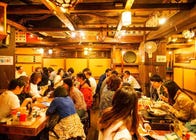
Many restaurants in Japan now offer English menus, multilingual tablets, or picture menus, especially in major tourist areas. Still, smaller restaurants and local spots may have limited English support, so knowing a few basic Japanese phrases can make ordering much easier and help you enjoy the experience with more confidence.
22. Menu o kudasai (メニューをください)
・Meaning: Please give me a menu.
・When to use it: Use this when you would like to see the menu.
You can also use the pattern “~ o kudasai,” meaning “Please give me ~,” to ask for other items. If you would like an English menu, say “Eigo no menu wa arimasu ka?” (英語のメニューはありますか?), meaning “Do you have an English menu?”
23. Chumon o onegaishimasu (注文をお願いします)
・Meaning: I’m ready to order.
・When to use it: Use this once you have decided what you would like to order.
To get a server’s attention, politely raise your hand and say “Sumimasen” before placing your order.
24. Osusume no menu wa dore desu ka? (おすすめのメニューはどれですか?)
・Meaning: Which menu item do you recommend?
・When to use it: Use this when you are unsure what to order or want to know what the staff recommends.
“Osusume” means “recommendation,” making this a handy phrase when you want to try a restaurant’s specialty.
25. Kore wa nan desu ka? (これは何ですか?)
・Meaning: What is this?
・When to use it: Use this when pointing to an unfamiliar dish, ingredient, or item on the menu.
“Kore” means “this,” so simply point to the item you want to ask about. This can be particularly helpful when you are unsure what a dish contains.
26. Kore o onegaishimasu (これをお願いします)
・Meaning: I’d like this, please.
・When to use it: Use this while pointing to an item on the menu when you want to order it.
This is one of the easiest restaurant phrases to remember and is especially useful when you cannot read or pronounce the name of a dish.
27. Kohi wa tsukimasu ka? (コーヒーはつきますか?)
・Meaning: Does this come with coffee?
・When to use it: Use this when ordering a set meal and you want to check whether coffee is included.
You can replace “kohi” with another item to ask whether it is included with the meal.
28. Omizu o moraemasu ka? (お水をもらえますか?)
・Meaning: Can I get some water?
・When to use it: Use this when you would like water or a refill.
Restaurants in Japan commonly provide water or tea at no extra charge. You can also simply say “Omizu o onegaishimasu” (お水をお願いします), meaning “Water, please.”
29. Toire wa doko desu ka? (トイレはどこですか?)
・Meaning: Where is the bathroom?
・When to use it: Use this when asking where the restroom is located.
This phrase is useful well beyond restaurants and works in stations, shopping centers, hotels, and other public places.
30. Itadakimasu (いただきます)
・Meaning: A phrase said before eating.
・When to use it: Say this just before starting your meal.
“Itadakimasu” literally carries the sense of “I humbly receive” and is a customary way of expressing appreciation for the food and those involved in preparing it.
31. Gochisosama deshita (ごちそうさまでした)
・Meaning: Thank you for the meal.
・When to use it: Say this after finishing your meal.
“Gochisosama deshita” expresses appreciation for the meal. You may also say it to restaurant staff as you leave, particularly at smaller or more traditional establishments.
32. O-kaikei o onegaishimasu (お会計をお願いします)
・Meaning: Check, please.
・When to use it: Use this when you have finished eating and are ready to pay.
At many restaurants in Japan, you take the bill to the register near the entrance rather than paying at the table. Some restaurants may also use self-service payment machines or tablet-based systems.
Tip
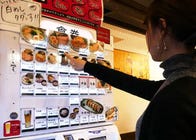
Many restaurants now use multilingual tablets, touchscreens, QR codes, or ticket vending machines for ordering. Even so, these basic phrases are still useful at smaller restaurants and whenever you need to ask staff a question.
Navigating Train Stations and Subways in Japan

Japan’s trains and subways are convenient, but large stations, multiple train lines, and unfamiliar transfers can still be confusing. Even if you are using a navigation app or IC card, these phrases can help when you need directions, want to confirm a train, or are unsure where to go.
33. Kippu uriba wa doko desu ka? (切符売り場はどこですか?)
・Meaning: Where can I buy tickets?
・When to use it: Use this when you are looking for a ticket machine or ticket counter.
Tickets are usually available from vending machines, while staffed counters can be helpful if you have questions about fares, routes, or certain types of tickets.
34. ~ made no kippu o kudasai (~までの切符をください)
・Meaning: A ticket to ~, please.
・When to use it: Use this at a staffed ticket counter when buying a ticket to a specific destination.
Replace the ~ with the name of your destination. For example, “Kyoto made no kippu o kudasai” means “A ticket to Kyoto, please.”
35. ~ ni wa dou ikeba ii desu ka? (~にはどう行けばいいですか?)
・Meaning: How do I get to ~?
・When to use it: Use this when you need help figuring out the route or where to transfer.
Replace the ~ with the name of the station or destination you are trying to reach.
36. ~ yuki no densha wa dore desu ka? (~行きの電車はどれですか?)
・Meaning: Which train goes to ~?
・When to use it: Use this when you are unsure which train or platform you need for your destination.
“~ yuki” means “bound for ~.” If the station has multiple platforms or train types, staff can point you toward the correct one.
37. Kono densha wa ~ ni ikimasu ka? (この電車は~に行きますか?)
・Meaning: Does this train go to ~?
・When to use it: Use this to confirm that a train will take you to your intended station before boarding.
Replace the ~ with the station name. This is especially helpful when local, rapid, express, and other train services use the same platform.
38. Tsugi no ~ yuki wa nanji desu ka? (次の~行きは何時ですか?)
・Meaning: What time is the next train to ~?
・When to use it: Use this when you want to know when the next train toward your destination departs.
Replace the ~ with the destination name. In most stations, departure times are also shown on electronic displays, but this phrase is useful if you need help confirming the schedule.
39. Koko wa nan eki desu ka? (ここは何駅ですか?)
・Meaning: What station is this?
・When to use it: Use this if you are unsure which station the train has arrived at.
If you want to ask about the next stop instead, say “Tsugi wa nan eki desu ka?” (次は何駅ですか?), meaning “What station is next?”
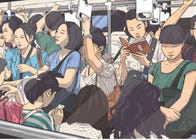
40. Orimasu (降ります)
・Meaning: I’m getting off.
・When to use it: Use this on a crowded train or bus when you need to move toward the door to get off.
Saying “Orimasu” while politely moving toward the exit lets nearby passengers know that you need to pass.
Tip
Many travelers now use IC cards such as Suica or PASMO together with navigation apps, so buying individual tickets is not always necessary. Still, these phrases are useful in large stations, during complicated transfers, or whenever you need help from station staff.

Asking for Information at Tourist Spots

At major attractions, museums, temples, and sightseeing areas, English support is often available, but knowing a few Japanese phrases can still help when asking about brochures, photos, transportation, or where to find tourist information.
41. Kankou-annai-jou wa doko desu ka? (観光案内所はどこですか?)
・Meaning: Where is the tourist information center?
・When to use it: Use this when looking for a tourist information center or visitor information counter.
Tourist information centers often provide maps, brochures, transportation information, and sightseeing advice. Some also offer multilingual assistance.
42. Pamfuretto wa arimasu ka? (パンフレットはありますか?)
・Meaning: Do you have any brochures?
・When to use it: Use this when asking for printed information about an attraction, event, or sightseeing area.
You can also ask whether an English-language version is available by saying “Eigo no pamfuretto wa arimasu ka?” (英語のパンフレットはありますか?), meaning “Do you have an English brochure?”
43. Shashin o totte mo ii desu ka? (写真を撮ってもいいですか?)
・Meaning: May I take a photo?
・When to use it: Use this when you want to confirm whether photography is allowed or ask someone for permission to photograph them.
Photography rules can vary at temples, museums, exhibitions, and other attractions, so it is always a good idea to check when you are unsure. If photographing another person, asking first is the polite choice.
44. Shashin o totte moraemasu ka? (写真を撮ってもらえますか?)
・Meaning: Could you take a photo for me?
・When to use it: Use this when asking someone nearby to take a photo of you or your group.
Afterward, simply say “Arigatou gozaimasu” to thank them.
45. Takushii noriba wa doko desu ka? (タクシー乗り場はどこですか?)
・Meaning: Where is the taxi stand?
・When to use it: Use this when looking for a taxi stand near a station, attraction, hotel, or other location.
To ask for a bus stop instead, say “Basu noriba wa doko desu ka?” (バス乗り場はどこですか?), meaning “Where is the bus stop?”
46. Koko ni itte kudasai (ここに行ってください)
・Meaning: Please take me here.
・When to use it: Use this in a taxi while showing the driver your destination on a map or your phone.
“Koko” means “here.” You can also replace it with the name of your destination and say “~ ni itte kudasai,” meaning “Please take me to ~.”
Tip
Taxi apps such as GO and S.RIDE can make things easier by letting you enter your destination digitally before the ride. Still, “Koko ni itte kudasai” is useful if you are hailing a taxi on the street or showing the driver a location on your phone.
Shopping in Japan

Many department stores, electronics retailers, and shops in major tourist areas offer multilingual signs or staff support, but smaller stores may still operate mainly in Japanese. These phrases can help when asking to see an item, checking sizes and prices, or paying at the register.
47. Kore o misete kudasai (これを見せてください)
・Meaning: Please show me this.
・When to use it: Use this when you would like a staff member to show you an item that is behind a counter or inside a display case.
Simply point to the item while saying the phrase to make it clear which product you mean.
48. Kichaku shite mo ii desu ka? (試着してもいいですか?)
・Meaning: Can I try this on?
・When to use it: Use this when you would like to try on clothing before buying it.
Sizing can vary between brands and countries, so trying an item on is often the easiest way to check the fit. Staff may direct you to a fitting room or ask you to remove your shoes before entering.
49. ~ wa arimasu ka? (~はありますか?)
・Meaning: Do you have ~?
・When to use it: Use this when asking whether a store carries a particular item.
Replace the ~ with the name of the product you are looking for.
50. ~ saizu wa arimasu ka? (~サイズはありますか?)
・Meaning: Do you have this in size ~?
・When to use it: Use this when asking whether clothing or shoes are available in a particular size.
Japanese clothing is commonly labeled S, M, L, and other standard sizes, while some items may be marked “FREE,” indicating a one-size design. Sizing can vary by brand, so checking measurements or trying items on is recommended.
51. Kore o kudasai (これをください)
・Meaning: I’ll take this, please.
・When to use it: Use this when you have decided to buy an item.
You can point to the product while saying “Kore o kudasai.”
52. Ikura desu ka? (いくらですか?)
・Meaning: How much is this?
・When to use it: Use this when you want to ask the price of an item.
Point to the item and ask “Ikura desu ka?” To ask for the total price of several items, say “Zenbu de ikura desu ka?” (全部でいくらですか?), meaning “How much is everything altogether?”
53. Kurejitto kaado wa tsukaemasu ka? (クレジットカードは使えますか?)
・Meaning: Can I use a credit card?
・When to use it: Use this when you want to check whether the store accepts credit cards.
Credit cards and other cashless payment methods are widely accepted in Japan, particularly at larger stores, but some smaller shops may still accept cash only.
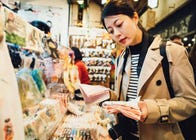
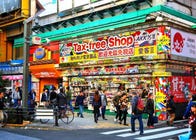
Knowing even a handful of these Japanese phrases can make everyday travel situations much easier, whether you are ordering dinner, navigating a station, checking into a hotel, or shopping for souvenirs. You do not need perfect pronunciation or fluent Japanese either. A simple phrase, a smile, and a little patience can go a long way.

After working as a ground hostess and web director, she became an independent writer in 2013. She writes extensively on topics such as relationships, family issues, and Japanese culture. Airports and military bases are her favorite relaxation spots.

Kei is a 2023 MEXT Research Scholar currently residing in Kyoto, Japan. She graduated Magna Cum Laude with a BA in Japanese Translation and Interpretation via the CUNY Baccalaureate Program from Hunter College in New York City. After working as an ALT with the JET Program from 2013-2015, she transitioned to freelance writing and translation in 2016. Since then, Kei has cumulatively translated and/or written about over 200 cities, towns, shrines, shops, and restaurants in various parts of Japan. She also has experience translating articles, manga, and light novels.
- Area
- Category
*Prices and options mentioned are subject to change.
*Unless stated otherwise, all prices include tax.
Popular Tours & Activities
Recommended places for you

-

Haneda Airport Duty-Free Shopping Guide: What to Buy, How to Save & Where to Eat Before Your Flight
by: Guest Contributor
-
Just 2 Hours from Tokyo! Escape to Yamanashi's NIPPONIA Kosuge, Where an Entire 700-Person Village Becomes Your Hotel
by: Alice Lee
-

Daikoku PA Car Meet: What Is JDM, and Why Do Enthusiasts Flock Here?
-
Ad
Pocket WiFi Rental in Japan 2026: Complete Price Comparison & Where to Get the Best Deal
-
ANA’s Chiikawa Jet Is Taking Off—Here’s Everything You Need to Know About Exclusive Goods, In‑Flight Fun & Travel Tips
by: Guest Contributor
-

Seibu Group Launches New Chichibu Adventure Tourism Experience for International Travelers in 2026
by: Guest Contributor
Inspiration for Accommodations
-

Family-Friendly Hotels with Free Shuttle to Disneyland: Convenient Access for a Magical Stay
-
Top Ranked Hakone Hotels with Mt. Fuji View: Enjoy Stunning Scenery from Your Private Space
-
Convenient Tokyo Hotels with Airport Shuttle: Ideal for Families and Heavy Luggage
-
9 Family-Friendly Hotels with Comfortable Family Rooms in Asakusa
-
10 Open-air bath Onsen Ryokans in Hakone for Ultimate Relaxation
-
Tokyo Station Top 10 Sweets Ranking!
-
The Story of Akihabara: How Tokyo’s Geek District Came to Be
-
Ad

What to do if you’re in Tokyo when a disaster strikes? Get familiar with evacuation sites and shelters
by: Miyu Shimada
-
6 Fun Things to Do at Tokyo's World-Famous Tsukiji Outer Market!
-
Tokyo Roppongi|Roppongi Station Area Map & Sightseeing Information
-

Best Views in Tokyo: Top 5 Spots for Seeing Tokyo's Iconic Skyline in 1 Day
- #best ramen tokyo
- #what to buy in ameyoko
- #what to bring to japan
- #new years in tokyo
- #best izakaya shinjuku
- #things to do tokyo
- #japanese nail trends
- #what to do in odaiba
- #onsen tattoo friendly tokyo
- #daiso
- #best sushi ginza
- #japanese convenience store snacks
- #best yakiniku shibuya
- #japanese fashion culture
- #best japanese soft drinks