



Autumn in Japan 2026: Fall Foliage Forecast & Where to Enjoy the Colorful Leaves (+Tour Info)
- Written by: LIVE JAPAN Editor
Planning a trip to Japan in autumn? Discover peak viewing times and top spots to see breathtaking fall foliage in Japan, from Tokyo to Kyoto and beyond, with our complete 2026 guide to autumn in Japan.
(This article contains affiliate links)
- Table of Contents
-
- When is the best time to see autumn leaves in Japan?
- 2026 Japan Autumn Color Forecast & Map
- Best Places to See Autumn Leaves by Region
- 1. Hokkaido (Sapporo) - Mid Sep-Late Oct
- 2. Tohoku (Aomori/Sendai) - Early Oct-Nov
- 3. Tokyo & Kanto - Late Nov-Early Dec
- 4. Hokuriku (Kanazawa/Fukui) - Mid-Late Nov
- 5. Chubu (Mt. Fuji/Nagoya) - Late Oct-Mid Nov
- 6. Kansai (Kyoto/Osaka) - Mid-Late Nov
- 7. Chugoku (Hiroshima) - Mid Nov-Early Dec
- 8. Shikoku (Takamatsu) - Mid Nov-Early Dec
- 9. Kyushu (Fukuoka/Nagasaki) - Mid Nov-Early Dec
- Autumn Illuminations & Festivals
- Travel Tips for Autumn in Japan
- When to start planning your autumn trip to Japan
- How to build a Japan autumn foliage itinerary
- 7 tips for planning an autumn foliage trip to Japan
- Recommended Autumn Tours & Activities
- Frequently Asked Questions (FAQ)
When is the best time to see autumn leaves in Japan?
For most travelers visiting the classic Tokyo-Kyoto route, mid-November to early December is the most useful window to target. However, Japan’s overall foliage season is much longer, generally stretching from late September in northern and high-altitude areas into early December and beyond in some warmer regions.
Here is the easiest way to plan:
| When You're Visiting | Where to Look for Autumn Leaves |
|---|---|
| Late September to mid-October | Hokkaido's mountains, Daisetsuzan, Tateyama Kurobe Alpine Route |
| Mid to late October | Hokkaido, Tohoku, Japanese Alps |
| Late October to early November | Tohoku, Kamikochi, Shirakawa-go, mountain areas |
| Mid-November | Nikko, Hakone, Lake Kawaguchi, northern and central Honshu |
| Late November | Tokyo, Nara, Kanazawa, Hiroshima, Shikoku |
| Late November to early December | Tokyo, Kyoto, Osaka, Nara, western Japan |
| Early to mid-December | Kyoto, Osaka and warmer parts of western Japan and Kyushu |
These are broad planning windows rather than guaranteed peak dates. Elevation, location, and autumn temperatures can shift the season considerably from year to year.

2026 Japan Autumn Color Forecast & Map
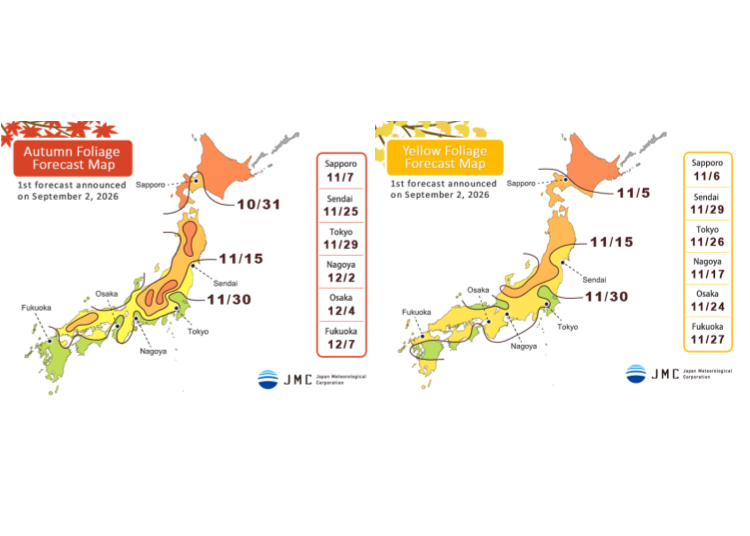
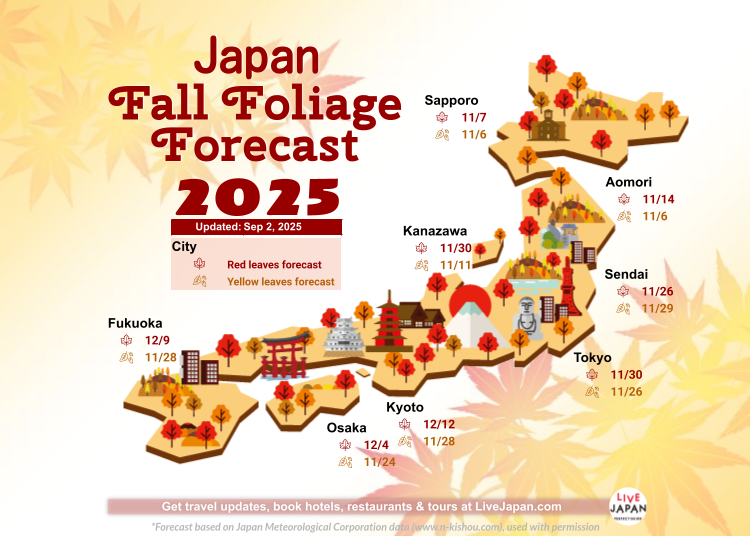
Unlike cherry blossoms, which begin in the warm south and move north, the autumn foliage front (koyo zensen) travels in the opposite direction. The leaves begin changing at the highest elevations of northern Hokkaido in mid-September and slowly sweep southward, reaching Tokyo and Kyoto by late November. Forecast and average peak dates are below.
| Location | Red Leaves | Yellow Leaves | ||
|---|---|---|---|---|
| 2026 Forecast | Avg Date | 2026 Forecast | Avg Date | |
| Sapporo | 11/7 | 10/28 | 11/6 | 11/4 |
| Aomori | 11/13 | 11/13 | 11/6 | 11/2 |
| Sendai | 11/25 | 11/21 | 11/29 | 11/23 |
| Tokyo | 11/29 | 11/28 | 11/26 | 11/23 |
| Kanazawa | 11/30 | 11/24 | 11/10 | 11/10 |
| Nagano | 11/21 | 11/12 | 11/14 | 11/10 |
| Nagoya | 12/2 | 11/28 | 11/17 | 11/18 |
| Kyoto | 12/11 | 12/5 | 11/27 | 11/24 |
| Osaka | 12/4 | 12/1 | 11/24 | 11/22 |
| Wakayama | 12/11 | 12/6 | 11/26 | 11/23 |
| Hiroshima | 11/28 | 11/22 | 11/20 | 11/15 |
| Kochi | 12/9 | 12/2 | 11/16 | 11/15 |
| Fukuoka | 12/7 | 12/1 | 11/27 | 11/20 |
| Kagoshima | 12/10 | 12/15 | 11/27 | 11/25 |
- Northern Japan
- Temperatures are expected to remain above average from September through November, with September especially warm. As a result, autumn colors are generally forecast to arrive around the usual time, although yellow leaves may appear somewhat later in some areas.
・Red leaves: Peak viewing is expected around the usual time, from early October to mid-November in mountainous areas and from mid-October to late November in lowland areas.
・Yellow leaves: Peak viewing is expected around the usual time or somewhat later, mainly from early to late November in lowland areas.
- Eastern Japan
- Temperatures are expected to stay above average from September through November. This will likely result in autumn colors arriving around the usual time or somewhat later than normal.
・Red leaves: Peak viewing is expected from late October to early December in mountainous areas and from late November to mid-December in lowland areas.
・Yellow leaves: Peak viewing is expected around the usual time or somewhat later, mainly from early November to early December in lowland areas.
- Western Japan
- Temperatures are expected to remain above average from September through October, while November should be around average or slightly warmer. Overall, autumn colors are forecast to arrive around the usual time.
・Red leaves: Peak viewing is expected from late October to early December in mountainous areas and from late November to mid-December in lowland areas.
・Yellow leaves: Peak viewing is expected around the usual time, mainly from mid-November to early December in lowland areas.

Best Places to See Autumn Leaves by Region
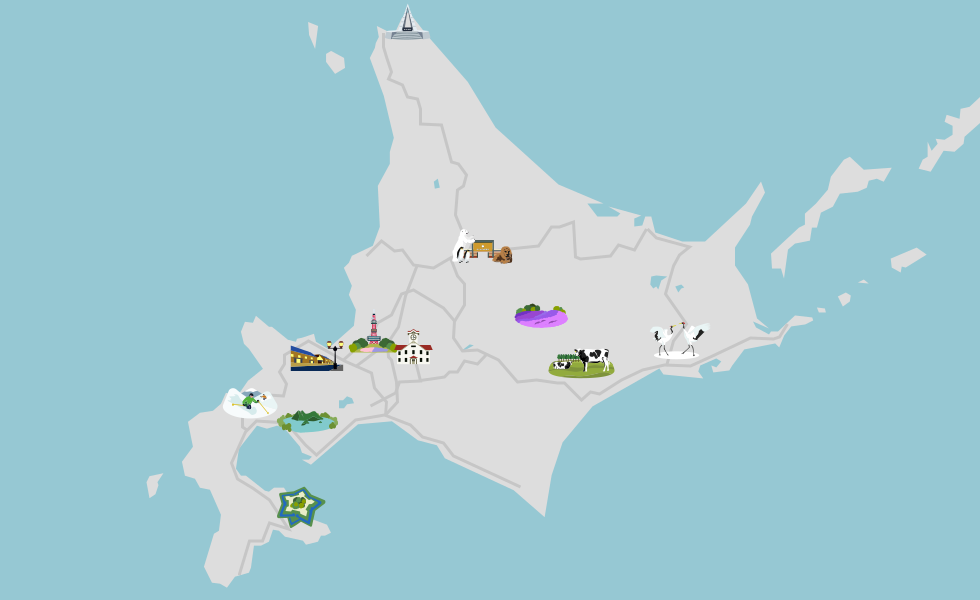
1. Hokkaido (Sapporo) - Mid Sep-Late Oct
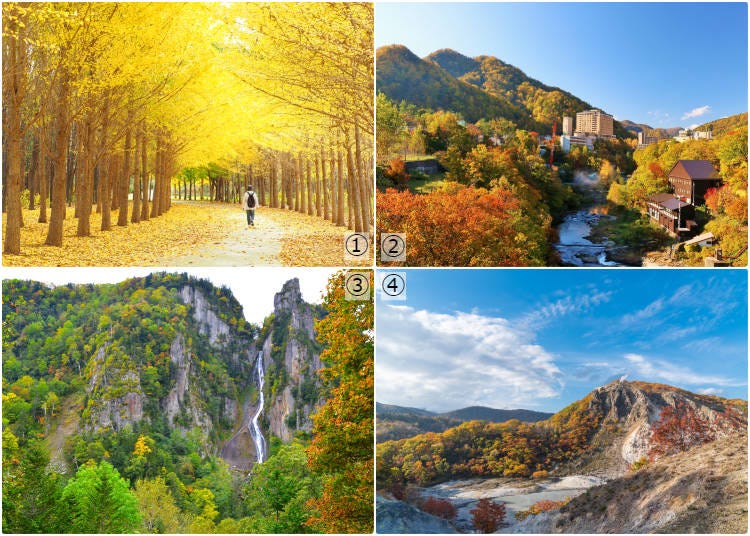
As Japan's northernmost island, Hokkaido sees the country's first autumn colors. The foliage begins at Mount Asahi and spreads southward, blending broadleaf trees and conifers—including maple, rowan, and spruce—into a striking landscape of red, yellow, and green.
- Sapporo City (Best in early November)
Hokkaido University and Nakajima Park offer stunning fall foliage. (See tours and hotels in Sapporo.) - Sounkyo (Best in mid October)
Located in central Hokkaido, this area captivates visitors with its towering cliffs, waterfalls, and vibrant foliage. (See tours and hotels near Sounkyo.) - Noboribetsu Onsen (Best from late October to early November)
A volcanic region in southwestern Hokkaido, where fiery foliage surrounds bubbling pools of water. (See tours and hotels in Noboribetsu Onsen.)
- 3 Hokkaido ryokan & hotels for autumn getaways with fall foliage views
- Hokkaido autumn foliage guide: 9 best places for fall leaves (and when to see them)
- 8 dreamy places to see autumn leaves in Hokkaido: highlights from Sapporo to Niseko
- Visiting Hokkaido in autumn: travel & weather guide for September-November
2. Tohoku (Aomori/Sendai) - Early Oct-Nov
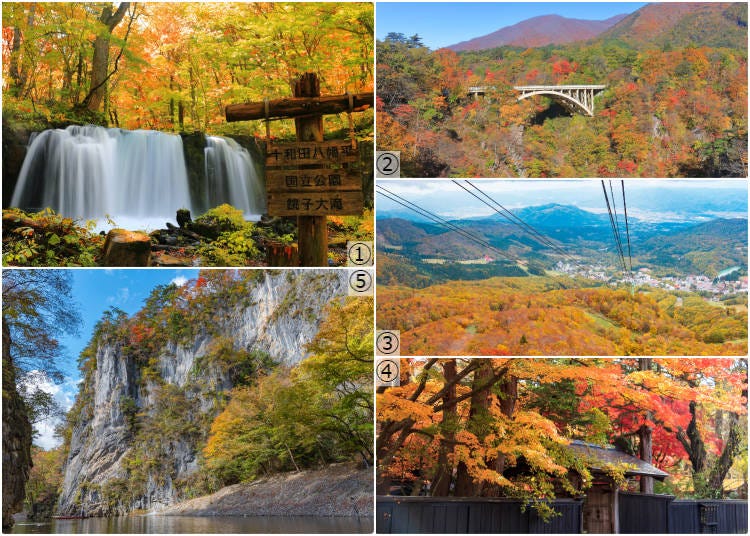
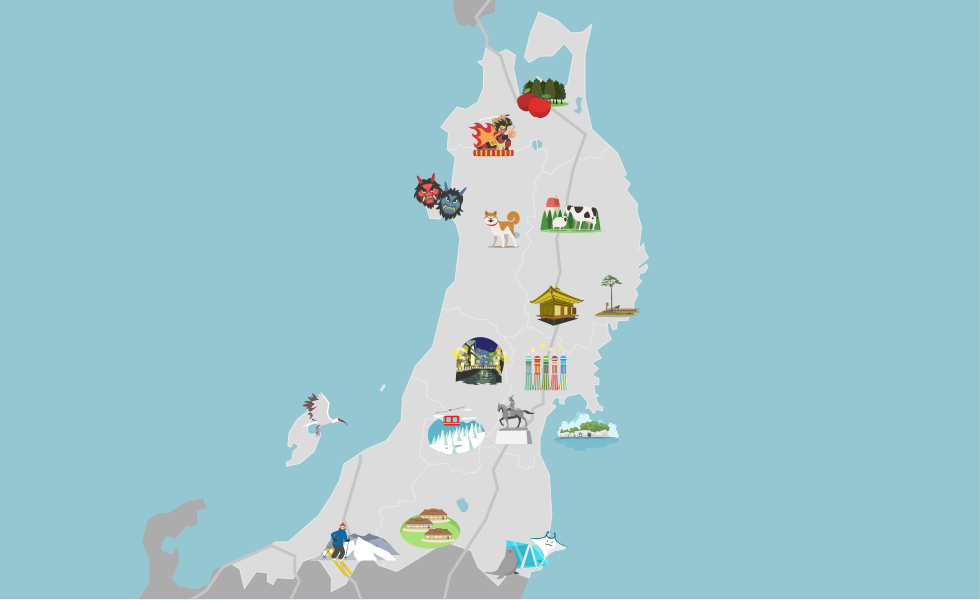
Tohoku, located in the northern part of Honshu, Japan's largest main island, offers a captivating autumn foliage experience.
The prime time to witness fall colors in Tohoku is from mid-October to late November, earlier than other regions in Japan, similar to Hokkaido.
- Oirase Gorge (Best in late October/early November)
Oirase Gorge is a breathtaking natural wonder located in Aomori Prefecture, Japan, renowned for its serene beauty and vibrant autumn foliage. It features a winding river flanked by lush forests, creating a stunning backdrop of vivid red, orange, and yellow leaves during the fall season. (See tours and hotels near Oirase Gorge.) - Naruko Gorge (Best in early November)
Located in Miyagi Prefecture, a 10-minute car ride from Naruko Onsen Station, this picturesque valley showcases breathtaking scenery with towering cliffs stretching for 2.5 kilometers. During autumn, the valley transforms into a vibrant display of red, gold, and orange hues. (See tours and hotels near Naruko Onsen.) - Miyagi Zao (Best in late October)
Straddling Yamagata and Miyagi prefectures, the Zao Mountain Range boasts magnificent fall foliage. (See tours and hotels in Zao Onsen.) - Kakunodate (Best in mid November)
Located in Akita Prefecture, Kakunodate is renowned for its well-preserved samurai district and picturesque streets lined with historic cherry trees. During autumn, the area comes alive with vibrant colors, creating a captivating ambiance. (See tours and hotels in Kakunodate.) - Geibikei Gorge (Best in early November)
Located in Iwate Prefecture, Geibikei Gorge features a serene river flanked by steep cliffs and vibrant forests, creating a backdrop of vivid red, orange, and yellow leaves during the fall season, making it an ideal destination for a picturesque autumn escape. (See tours and hotels near Geibikei Gorge.)
- 10 best spots to see autumn leaves in Tohoku: Naruko Gorge, Geibikei Gorge, and more
- 10 best places to see autumn leaves in Aomori Prefecture & when to enjoy
- Visiting Sendai in autumn: travel & weather guide for September-November
- 10 best places to see autumn leaves in Yamagata Prefecture & when to enjoy
- 10 best places to see autumn leaves in Fukushima Prefecture & when to enjoy
3. Tokyo & Kanto - Late Nov-Early Dec
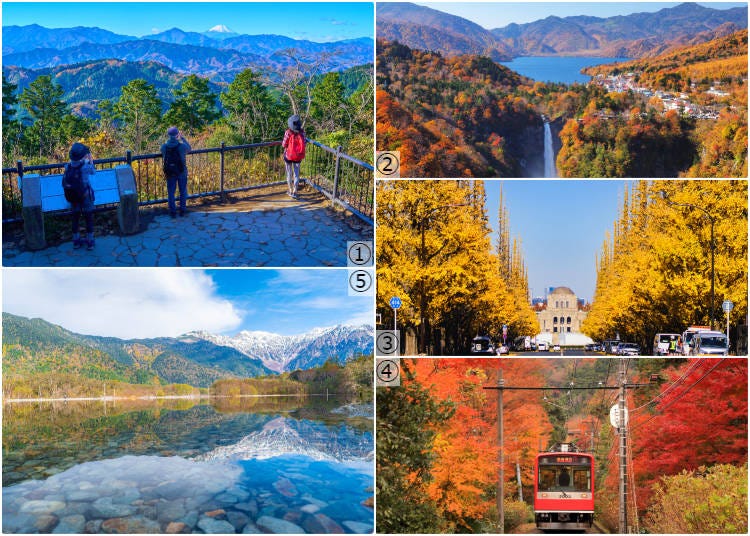
The greater Tokyo area offers a wealth of renowned autumn leaf spots, including the famous Nikko area and the Golden Ginkgo Avenue in Meijijingu Gaien (Meiji Shrine Outer Garden).
In addition, Japanese gardens throughout the area provide tranquil settings to immerse yourself in the vibrant colors of autumn, with peak viewing times varying from place to place, generally occurring from late November to mid-December.
- Mt. Takao (Best in late November)
Located to the west of downtown Tokyo, this popular mountain offers a perfect blend of nature and spirituality. Hiking trails adorned with colorful foliage provide a rejuvenating escape from the bustling city. (See tours and hotels in Tokyo.) - Meiji Jingu Gaien (Best in late November/early December)
Situated in the heart of Tokyo, the Meiji Shrine Outer Garden boasts a stunning ginkgo avenue that transforms into a golden paradise during autumn. Strolling along this picturesque pathway is a memorable experience. - Nikko (Toshogu Shrine area) (Best in mid November)
Known for its UNESCO World Heritage sites, Nikko captivates visitors with its majestic shrines and temples surrounded by magnificent autumn colors. The iconic Toshogu Shrine is a must-visit spot. (See recommended autumn tours and hotels in Nikko.) - Hakone (Best in mid November)
The Hakone Museum of Art in Hakone offers a peaceful and less crowded setting to appreciate autumn foliage. The museum's gardens are adorned with colorful trees, creating a serene and artistic ambiance. (See tours and hotels in Hakone.) - Kamikochi (Best in late October)
Situated in Nagano in the Japanese Alps, Kamikochi is a pristine gem lauded for its untouched beauty and resplendent fall foliage. The area boasts crystalline rivers, towering peaks, and a palette of rich red, orange, and golden leaves during autumn. (See tours and hotels in Kamikochi.)
- Autumn in Tokyo: 16 best places for fall foliage in Tokyo
- Fall in Tokyo: Tokyo's top 5 most beautiful night spots for autumn leaves
- 2-day fall foliage road trips from Tokyo: 3 unforgettable spots for refreshing autumn colors
- 4 best hotels in Nikko offering great experiences on a budget
- Autumn colors at their finest! 3 select hotels & ryokan near Tokyo with stunning fall foliage views
4. Hokuriku (Kanazawa/Fukui) - Mid-Late Nov
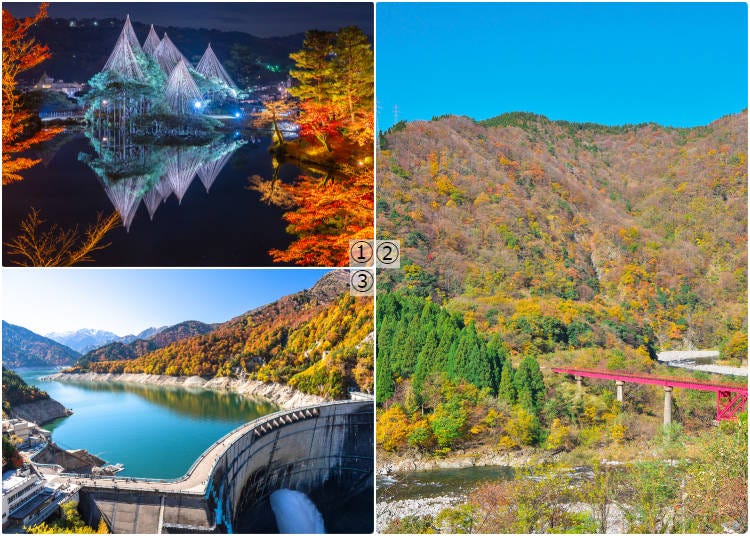
The Hokuriku area, spanning central and northern Honshu, is renowned for its vast mountain ranges and heavy snowfall during winter.
Mid-November is the best time to witness autumn leaves in Hokuriku, although some locations may experience peak colors earlier, so planning accordingly is recommended.
- Kenrokuen Garden (Best in late November)
Located in Kanazawa City, Ishikawa Prefecture, Kenroku-en Garden is a special scenic spot and one of Japan's Three Great Gardens. It dazzles visitors in every season, but autumn stands out with its vibrant foliage. The trees are beautifully illuminated after sunset, creating a captivating and magical atmosphere. (See tours and hotels in Kanazawa.) - Kuzuryu Gorge (Best in early November)
Situated in Toyama Prefecture, Kuzuryu Gorge offers a breathtaking display of fall colors. Visitors can take a scenic hike along the gorge, with vibrant foliage lining the path and the clear waters of the Kuzuryu River flowing beneath. (See tours and hotels in Toyama.) - Kurobe Dam area (Best in mid November)
The Kurobe Dam area, also in Toyama Prefecture, provides stunning autumn scenery. Surrounded by majestic mountains, the dam offers panoramic views of colorful foliage that reflect on the tranquil waters below.
5. Chubu (Mt. Fuji/Nagoya) - Late Oct-Mid Nov
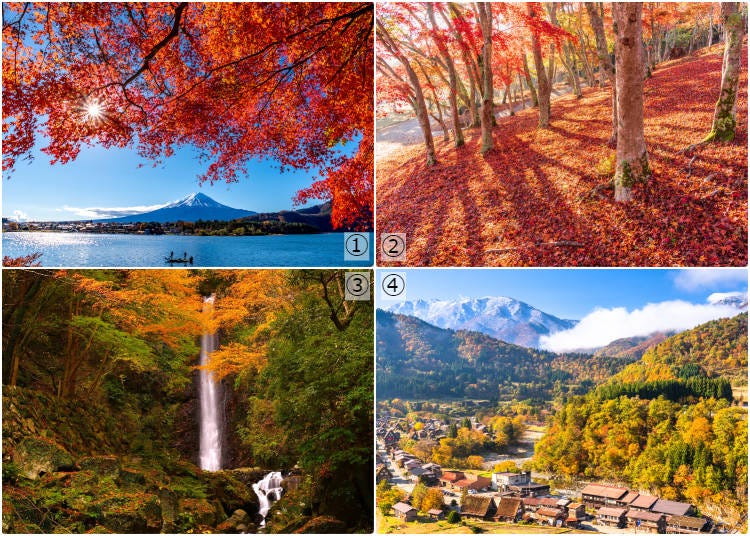
The Chubu region, home to Mount Fuji, Japan's highest mountain, offers an array of picturesque spots with beautiful autumn colors. The Fuji Five Lakes area, including Lake Kawaguchi, is particularly renowned for its stunning foliage.
Lake Kawaguchi, in November, hosts the Autumn Leaves Festival on its northern shores. A must-see attraction is the Momiji Corridor, where you can capture the breathtaking scenery of Mount Fuji and vibrant fall foliage in one frame. It's an iconic sight often featured on postcards and tourist websites, making it a highlight of any trip to the region.
- Lake Kawaguchi (Momiji Corridor) (Best in mid November)
One of the Fuji Five Lakes, Lake Kawaguchi captivates visitors with its tranquil waters and magnificent views of Mount Fuji. In autumn, the surrounding area bursts with color, with the famous Momiji Corridor (Maple Corridor) among the most popular spots for seeing vivid red and gold foliage. (See tours and hotels near Mt. Fuji.) - Shuzenji Nature Park (Best in late November/early December)
Located in Izu Peninsula, Shuzenji Nature Park is a serene escape known for its lush greenery. In autumn, the park is adorned with colorful foliage, providing a peaceful atmosphere for nature enthusiasts. - Shirakawa-go (Best in early November)
Located in Gifu Prefecture, Shirakawa-go is a UNESCO World Heritage site famous for its traditional thatched-roof houses. The surrounding mountains provide a stunning backdrop for autumn colors. (See tours and hotels near Shirakawa-go.) - Yoro Park (Best in late November/early December)
Situated in Gifu Prefecture, Yoro Park is renowned for its art installations and natural beauty. During autumn, the park showcases a vibrant display of foliage, offering a serene setting to appreciate the changing colors. The Site of Reversible Destiny is also a colorful destination nearby. (See tours and hotels in Gifu.)
6. Kansai (Kyoto/Osaka) - Mid-Late Nov
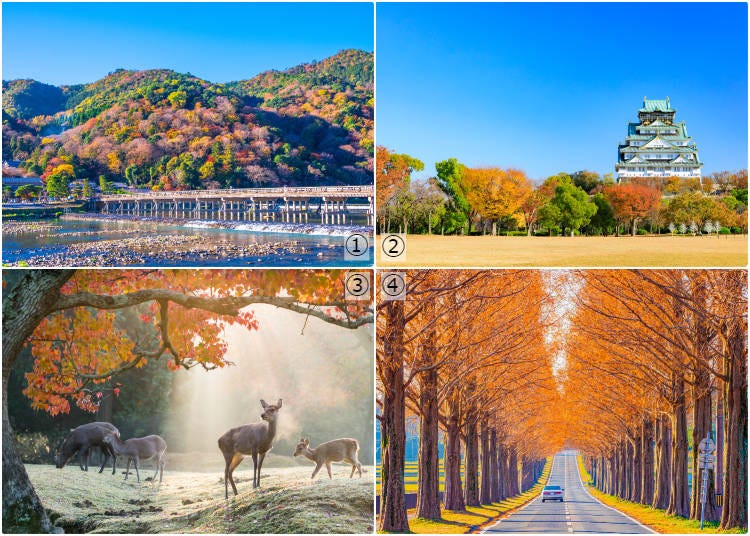
The Kansai region, home to major historic cities such as Kyoto and Osaka, offers a wealth of autumn foliage destinations.
- Kyoto (Best in mid December)
Renowned for its stunning autumn landscapes, Kyoto combines traditional Japanese architecture with vibrant fall colors. Highlights include Arashiyama, Kiyomizu-dera Temple, and Enko-ji Temple, among many other beautiful spots. (See tours and hotels in Kyoto.) - Osaka (Best in early December)
Experience the incredible autumn scenery in Osaka City. Iconic foliage spots include Osaka Castle Park, Minoh Falls, and the picturesque Midosuji Street. (See tours and hotels in Osaka.) - Nara (Best in late November)
The ancient city of Nara also delights visitors with its autumn foliage. Explore the vibrant colors at historic shrines and temples, Nara Park, or venture to Mount Yoshino for breathtaking scenery. (See tours and hotels in Nara.) - Shiga (Best in early December)
Hikone Castle is particularly beautiful in autumn. Another destination includes the Metasequoia Namiki Avenue in Takashima City. This avenue gained fame through a popular TV drama and features around 500 metasequoia trees along a 2.4 km road. Its stunning autumn colors led to its selection as one of Japan's "New 100 Scenic Avenues." (See tours and hotels in Shiga.)
- Beautiful scenery! 3 Kyoto hotels where you can enjoy dreamy autumn colors from your room
- 10 best places to see autumn leaves in Kyoto & when to enjoy
- Visiting Kyoto in autumn: travel & weather guide for September-November
- 10 best places to see autumn leaves in Osaka & when to enjoy
- Visiting Osaka in autumn: travel & weather guide for September-November
- 10 best places to see autumn leaves in Nara & when to enjoy
- 10 best places to see autumn leaves in Wakayama & when to enjoy
7. Chugoku (Hiroshima) - Mid Nov-Early Dec
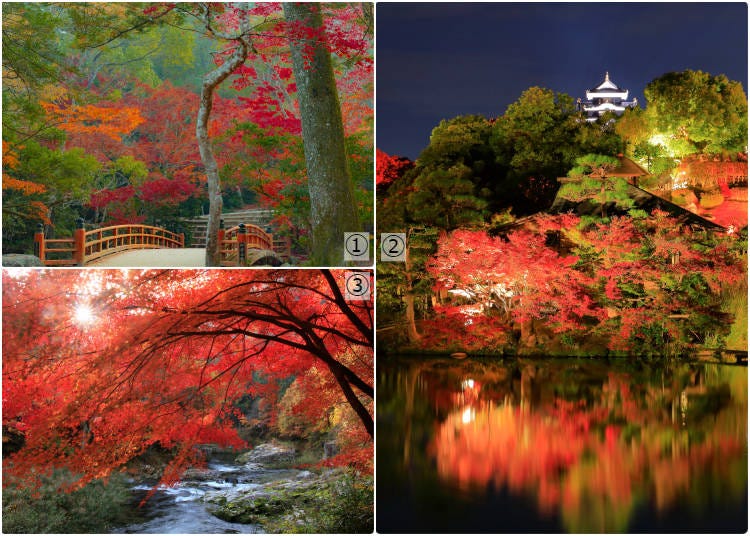
Chugoku, located in the western part of Honshu, comprises five prefectures, including Hiroshima and Okayama.
- Miyajima (Best in late November)
Most famous for its grand torii gate standing in the water, Miyajima (officially called Itsukushima) offers a stunning destination for a day trip. Its historic buildings and iconic spots become even more enchanting when adorned with autumn colors, captivating visitors from around the world. (See tours and hotels in Hiroshima.) - Okayama Korakuen Garden (Best in late November)
Another of the Three Great Gardens of Japan, Korakuen showcases exquisite landscaping and harmonious architecture. During autumn, the garden's foliage adds a touch of vibrant beauty to its serene atmosphere, providing a captivating experience. (See tours and hotels in Okayama.) - Okutsukei Valley (Best in mid November)
Found in Okayama Prefecture, the Okutsu Valley is a hidden treasure cherished for its serene charm and vibrant autumnal panorama. With its meandering river and dense forests, the valley transforms into a captivating canvas of deep red, warm orange, and brilliant yellow leaves in the fall.
8. Shikoku (Takamatsu) - Mid Nov-Early Dec
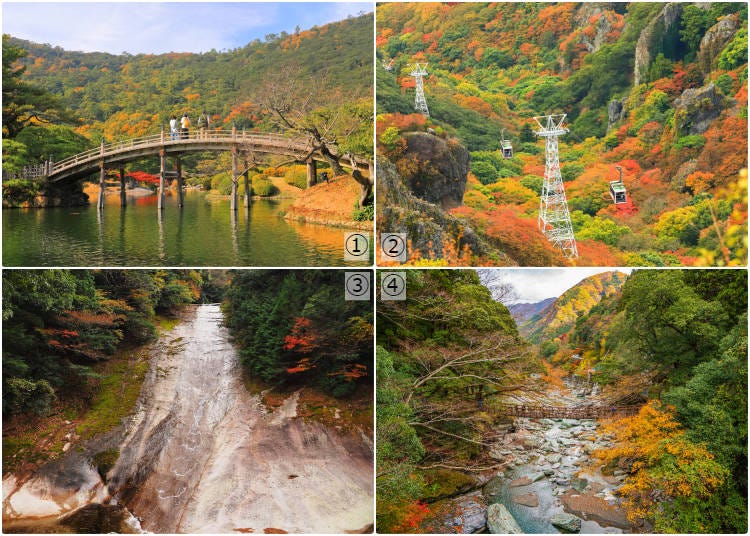
Shikoku, an island located southwest of Honshu, is a captivating region known for its untouched natural beauty.
- Ritsurin Garden (Best in late November/early December)
Located in Takamatsu, Kagawa Prefecture, Ritsurin Garden is a picturesque landscape garden renowned for its meticulous design. During autumn, the garden's foliage adds a colorful touch to its serene atmosphere. (See tours and hotels in Kagawa.) - Kankakei Gorge (Best in late November)
Situated in Kagawa Prefecture, Kankakei Gorge captivates visitors with its vibrant autumn foliage. As one of Japan's Three Beautiful Valleys, Kankakei transforms into a vivid foliage paradise during fall. The valley's ropeway, renovated in 2015, provides a mesmerizing panorama of the entire area, offering breathtaking views. - Nametoko Gorge (Best in late November)
Found in Ehime Prefecture, Nametoko Gorge entices with its stunning autumn colors. The gorge features scenic walking paths along the riverbank, surrounded by towering cliffs and radiant foliage. (See tours and hotels in Ehime.) - Iya Valley Located in Tokushima Prefecture, Iya Valley is a hidden gem known for its remote and untouched landscapes. The valley boasts enchanting autumn foliage, creating a picturesque setting for sightseeing during the fall season.
9. Kyushu (Fukuoka/Nagasaki) - Mid Nov-Early Dec
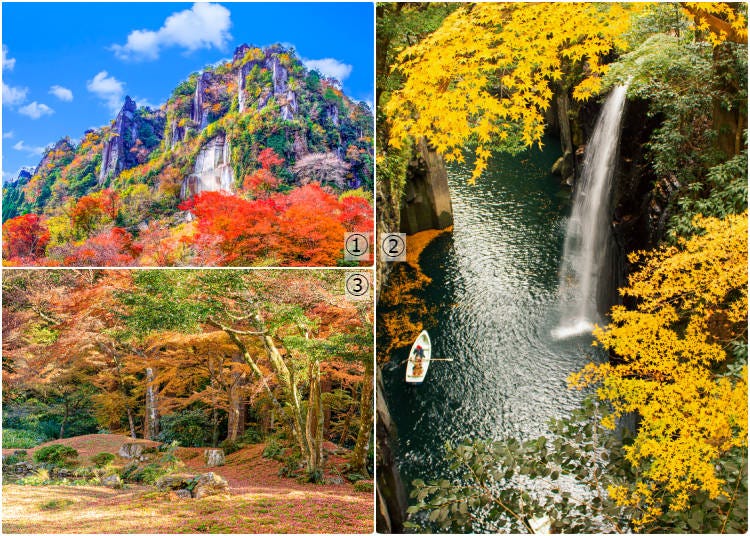
Kyushu, known for its relatively temperate climate and popularity as a hot springs destination, offers a variety of places to experience autumn leaves.
- Yabakei Gorge (Best in late November)
Located in Nakatsu City, Oita, Yabakei is one of the region's colorful autumn leaf spots. A pleasant promenade guides you through the gorge, allowing for a leisurely autumn walk. We recommend visiting just before sunset to witness the magical transformation from light to dark, as portions of the area are lit up at night. (See tours and hotels in Oita.) - Takachiho Gorge (Best in late November)
Found in Miyazaki Prefecture, Takachiho Gorge offers a breathtaking setting with towering cliffs and a pristine river. The gorge is adorned with vibrant foliage during autumn, creating a stunning backdrop for sightseeing and boat tours. (See tours and hotels in Miyazaki.) - Kiyomizu-dera Honbo Garden (Best in late November/early December)
Situated in Fukuoka City, Kiyomizu-dera Garden boasts a serene atmosphere and stunning autumn colors. The garden's tranquil ponds, traditional temple buildings, and lush foliage combine to create a peaceful and picturesque setting. (See tours and hotels in Fukuoka.)
Autumn Illuminations & Festivals
Many gardens and temples across Japan extend their hours in the autumn to host evening illuminations. Spotlights are angled to make the red and gold leaves glow brightly against the dark night sky.
Kyoto is the undisputed king of autumn illuminations. Kiyomizu-dera, Eikando, and Kodai-ji temples all host spectacular light-up events from mid-November to early December. (Tip: Crowds can be heavy, so try to go on a weekday or right before closing.)
Meanwhile, in Tokyo, the golden Ginkgo tree is celebrated with street fairs. The Jingu Gaien Ginkgo Festival usually takes place from mid-November to early December, featuring local food stalls set up along the dazzling yellow tree-lined avenue. Similarly, Showa Kinen Park comes into color around the same timing.
Travel Tips for Autumn in Japan
- September & October: Temperatures are still mild (15°C to 25°C / 59°F to 77°F). Bring light layers, comfortable walking shoes, and a light jacket for the evenings.
- November & December: The air gets crisp and chilly (10°C to 15°C / 50°F to 59°F). You will want a warm sweater, a medium-weight coat, and easily removable layers, as trains and indoor spaces are heavily heated.
Getting Around: Rail Passes & Booking Advance Trains
Autumn is peak domestic travel season in Japan. If you are traveling between major regions (like Tokyo to Kyoto, or up to Tohoku), bullet trains (Shinkansen) will be busy.
Regional Passes: If you are focusing on a specific area, look into regional passes like the JR East Pass (Tohoku area) or the Kansai Wide Area Pass, which offer incredible value for leaf-peeping excursions.
The Nationwide JR Pass: If you are traveling across multiple regions over 7, 14, or 21 days, the Japan Rail Pass might save you money and hassle.
Reserve Seats: Always book your Shinkansen seats in advance during November, especially on weekends! You can book tickets here.
When to start planning your autumn trip to Japan
Those wishing to enjoy momijigari in Japan are encouraged to start planning their autumn travel at least 4 months in advance.
As with cherry blossom season in the spring, hotels in Tokyo and Kyoto can fill up quickly for the fall foliage season, so it's ideal to book a stay as soon as your travel dates are set.
How to build a Japan autumn foliage itinerary
You do not need to organize an entire trip around one predicted peak date. In fact, building some flexibility into your itinerary gives you a better chance of seeing excellent colors.
If you have 7 days
For a first-time trip in late November or early December, a simple route works best:
・Tokyo: 3 days
・Lake Kawaguchi, Hakone or Nikko: 1 day
・Kyoto: 2 days
・Nara or Osaka: 1 day
This gives you city foliage, a mountain or countryside option, and Kansai without spending half the trip moving luggage.
If you have 10 to 14 days
Add destinations with slightly different climates or elevations. One example:
Tokyo → Nikko or Lake Kawaguchi → Kanazawa → Kyoto → Nara → Osaka
If one destination is slightly early or late, another part of the route may still be close to peak.
For October trips, shift the route northward instead:
Hokkaido → Aomori/Oirase → Sendai or Naruko → Japanese Alps → Tokyo
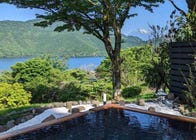
7 tips for planning an autumn foliage trip to Japan
1. Don’t book your entire trip around one forecast date
Peak foliage predictions are estimates, not appointments. A spell of warm weather can delay color, while strong wind or heavy rain can shorten the best viewing period.
2. Use elevation as your backup plan
If city leaves have not changed yet, look at nearby higher elevations. If mountain foliage has already fallen, travel downhill or farther south.
3. Check foliage conditions again shortly before each day trip
Live Japan regularly updates its foliage forecast using official sources, so check back here as your trip approaches and during your stay. Many temples and sightseeing spots also have official Instagram accounts, where they share updates on foliage progress.
4. Expect Kyoto to be extremely busy
Late November is one of Kyoto’s most popular travel periods. JNTO specifically notes that Kyoto can become particularly crowded toward the end of November.
Visit famous temples early, explore less central neighborhoods later in the day, and consider spending part of your trip in nearby Nara, Shiga or Osaka.
5. Stay overnight at popular day-trip destinations when possible
Places such as Nikko, Hakone and Lake Kawaguchi are busiest during the middle of the day when tour buses and day-trippers arrive.
Staying overnight gives you access to quieter early mornings and evenings while also reducing the pressure to squeeze everything into a few hours.
6. Book accommodation before the final foliage forecast
Waiting for an exact peak prediction before reserving accommodation in Kyoto or Tokyo can backfire. Popular hotels may already be heavily booked by the time September and October forecasts become more precise.
Reserve accommodation first, preferably with flexible conditions, and adjust individual sightseeing days later.
7. Don’t chase only red maple leaves
Golden ginkgo avenues, larch forests, mountain grasses and mixed forests can be just as impressive.
Having several different types of autumn scenery on your list gives you more options if the maples aren’t cooperating.
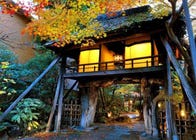
Recommended Autumn Tours & Activities
Discover the beauty of Japan in autumn with tours and activities from Klook and KKday, trusted affiliate partners of LIVE JAPAN. Book with confidence and enjoy the season’s highlights.

Recommended Tours & Activities on Klook
-
 (Kyoto) One-Day Kimono Rental
Details & Bookings ▶
(Image/Activity Partner: Klook) -
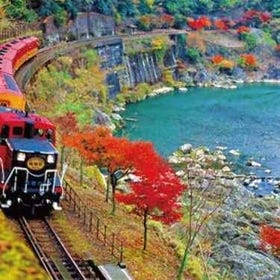 (Kyoto) Kyoto Arashiyama & Sagano Train & Sanzenin Temple Day Tour
Details & Bookings ▶
(Image/Activity Partner: Klook) -
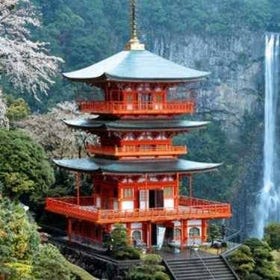 (Wakayama) World Heritage Kumano Ancient Road and Nachi Falls Day Tour
Details & Bookings ▶
(Image/Activity Partner: Klook) -
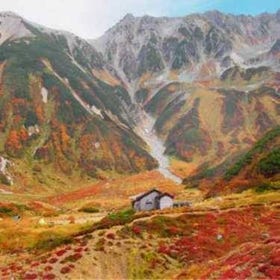 Tateyama Kurobe Autumn Foliage Two-Day Tour
Details & Bookings ▶
(Image/Activity Partner: Klook) -
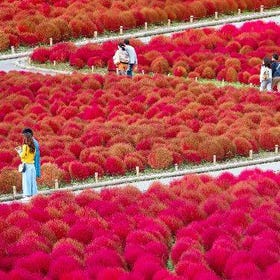 (Tokyo) Hitachi Seaside Park, Fukuroda Falls & Ryujin Bridge Tour
Details & Bookings ▶
(Image/Activity Partner: Klook) -
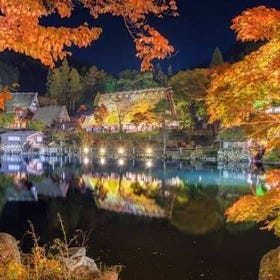 (Osaka) Shirakawago Stunning Autumn Colors 2Days Bus Tour
Details & Bookings ▶
(Image/Activity Partner: Klook)
Recommended Tours & Activities on KKday
-
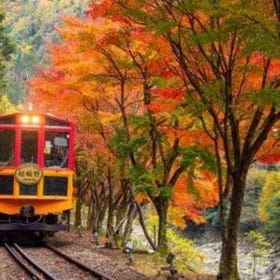 (Kyoto) Sagano Romantic Train One-Way Ticket
Details & Bookings ▶
(Image/Activity Partner: KKday) -
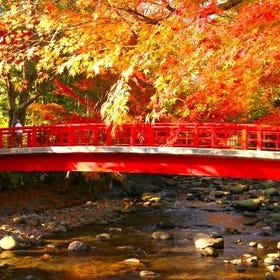 (Tokyo) Izu Peninsula Autumn Leaves 1-Day Tour
Details & Bookings ▶
(Image/Activity Partner: KKday) -
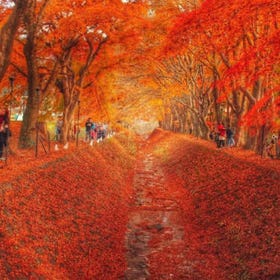 (Tokyo) 2-Day Mt. Fuji and Lake Kawaguchi Fall Foliage Tour
Details & Bookings ▶
(Image/Activity Partner: KKday) -
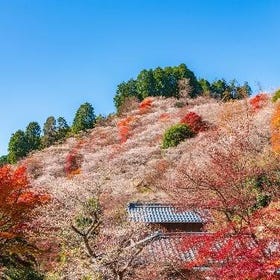 (Nagoya) Wonderful Spectacle of Cherry Blossoms and Fall Foliage
Details & Bookings ▶
(Image/Activity Partner: KKday)
Frequently Asked Questions (FAQ)
Are cherry blossoms or autumn leaves more crowded?
Both seasons are incredibly popular. While cherry blossom season tends to attract more international tourists and raucous party-goers (hanami), autumn foliage is massively popular with domestic Japanese travelers. Expect heavy crowds at major temples in Kyoto and Tokyo on weekends in November.
What happens if I miss the peak colors?
Don’t worry! If you arrive too early, head up into the mountains or take a day trip north. If you arrive too late and the leaves have fallen in the city, head further south to Kyushu or check out coastal, lower-elevation gardens. Because Japan is so mountainous, you can almost always find beautiful colors by taking a short train ride to a different elevation.
What month is best for autumn leaves in Japan?
November is the most versatile month overall, but it depends on where you are traveling. October is excellent for Hokkaido, Tohoku, and the Japanese Alps, while late November and early December are generally better for Tokyo, Kyoto, and Osaka.
What is the best time to visit Tokyo and Kyoto for fall foliage on the same trip?
If seeing foliage in both cities is your priority, late November through early December generally offers you the best overlap.
Tokyo’s ginkgo trees often become colorful from mid to late November, while Kyoto’s maple season generally reaches its strongest period later in November or around early December. Warm years can shift both later.
Can I see autumn leaves in Japan in October?
Absolutely. October is actually one of the best months for autumn scenery if you travel north or visit mountainous areas.
Hokkaido, Tohoku, and the Japanese Alps offer numerous options, while Tokyo and Kyoto are usually still waiting for their main foliage season.
Can I see autumn leaves in Japan in December?
Yes. Tokyo can retain autumn colors into early December, while Kyoto, Osaka and parts of western Japan sometimes peak during December, particularly after a warm autumn. Kyushu also has a comparatively late foliage season.
What does koyo mean?
Koyo (kōyō) broadly refers to leaves changing color in autumn.
Momiji can refer specifically to Japanese maple trees, but it is also associated more generally with red autumn leaves. Momijigari literally means “autumn leaf hunting” and refers to the Japanese tradition of going out to enjoy seasonal foliage.
How long does peak autumn foliage last?
There is no fixed period. A particular tree or small area may look its best for a relatively short time. In contrast, a large destination with different tree species and elevations can offer good foliage for considerably longer.
Weather also matters. Strong winds and heavy rain can quickly strip trees that are already near peak color.
Is Kyoto the best place to see autumn leaves in Japan?
Kyoto is one of the most beautiful and culturally distinctive places to experience autumn foliage, but it is certainly not the only option.
Travelers looking for mountains may prefer Hokkaido, Tohoku, or the Japanese Alps. Those hoping to combine foliage with hot springs can consider Hakone, Jozankei, or Naruko Onsen, while Tokyo offers some ofJapan’ss easiest urban autumn viewing.

The LIVE JAPAN editorial team is a multinational group made up of native editors who have lived in Japan for over five years and Japanese editors who love to travel. Together, we share the best of Japan, offering cultural insights, historical context, event updates, and travel-friendly deals, to support your journey every step of the way.
*Prices and options mentioned are subject to change.
*Unless stated otherwise, all prices include tax.
Popular Tours & Activities
Recommended places for you
-

Jukuseiniku-to Namamottsuarera Nikubaru Italian Nikutaria Sannomiya
Izakaya
Kobe, Sannomiya, Kitano
-
Appealing

Rukku and Uohei
Izakaya
Sapporo / Chitose
-
Tokyo Tower
Landmarks
Roppongi
-
Dotonbori
Other Sightseeing
Namba, Dotonbori, Shinsaibashi
-
ISHIDAYA Hanare
Yakiniku
Kobe, Sannomiya, Kitano
-
Goods
Yoshida Gennojo-Roho Kyoto Buddhist Altars
Gift Shops
Nijo Castle, Kyoto Imperial Palace
-

Top-Booked by International Visitors: Must-Try Italian & Pizza in Tokyo for First-Time Visitors
by: Guest Contributor
-

Haneda Airport Duty-Free Shopping Guide: What to Buy, How to Save & Where to Eat Before Your Flight
by: Guest Contributor
-

Daikoku PA Car Meet: What Is JDM, and Why Do Enthusiasts Flock Here?
-

The Best Sumo Experiences in Tokyo: Morning Practices vs. Sumo Shows
-
Ad

Pocket WiFi Rental in Japan 2026: Complete Price Comparison & Where to Get the Best Deal
-

Seibu Group Launches New Chichibu Adventure Tourism Experience for International Travelers in 2026
by: Guest Contributor
-
8 Unfamiliar (But Totally Normal) Customs in Japan!
-
Visiting Tokyo in September: Best of Autumn in Tokyo
by: Sohail Oz Ali
-

Visiting Osaka in Autumn: What to Wear & Must-Visit Attractions in September, October, and November
by: WESTPLAN
-

October in Kansai: Fun Festivals, Food, and Things to Do in Kyoto & Osaka
-
Hokkaido Travel Guide: Everything You Need to Know Before You Go (Transportation, Food, Souvenirs & Hidden Gems)
-
2026 Kansai Fall Foliage: Easy Kyoto & Nara Bus Tours on Klook and KKday
by: Guest Contributor
- #best sushi japan
- #what to do in odaiba
- #what to bring to japan
- #new years in tokyo
- #best ramen japan
- #what to buy in ameyoko
- #japanese nail trends
- #things to do japan
- #onsen tattoo friendly tokyo
- #daiso
- #best coffee japan
- #best japanese soft drinks
- #best yakiniku japan
- #japanese fashion culture
- #japanese convenience store snacks