



Hokkaido Travel Guide: Everything You Need to Know Before You Go (Transportation, Food, Souvenirs & Hidden Gems)
- Written by: LIVE JAPAN Editor
When you picture Hokkaido, you might think of endless winter snowfields, Furano’s vibrant summer lavender, or the glittering night view from Mount Hakodate. As Japan’s largest prefecture, it’s more than twice the size of Taiwan and vastly larger than Hong Kong. That scale is part of its appeal, but it also raises practical questions. How far apart are the sights? What’s new with transportation? Is driving in the snow safe?
This pre-trip Q&A guide covers the essentials. Along with seasonal highlights and must-try foods, we break down transport updates, payment options, and key self-drive tips. Whether you’re choosing between renting a car or taking the JR, or deciding what to pack, you’ll find clear answers here to help you plan with confidence.
Photo credit: PIXTA
This article includes affiliate links
- Table of Contents
1. Hokkaido Essentials Before You Go: Overview & Best Seasons to Visit
Q1: How Big Is Hokkaido? (Understanding Travel Distances at a Glance)
One of the most common mistakes first-time visitors make is underestimating Hokkaido’s size. Covering about 83,454 square kilometers, it’s roughly 2.3 times the size of Taiwan and 75 times larger than Hong Kong. In practical terms, distances between major sights are often measured in hundreds of kilometers.
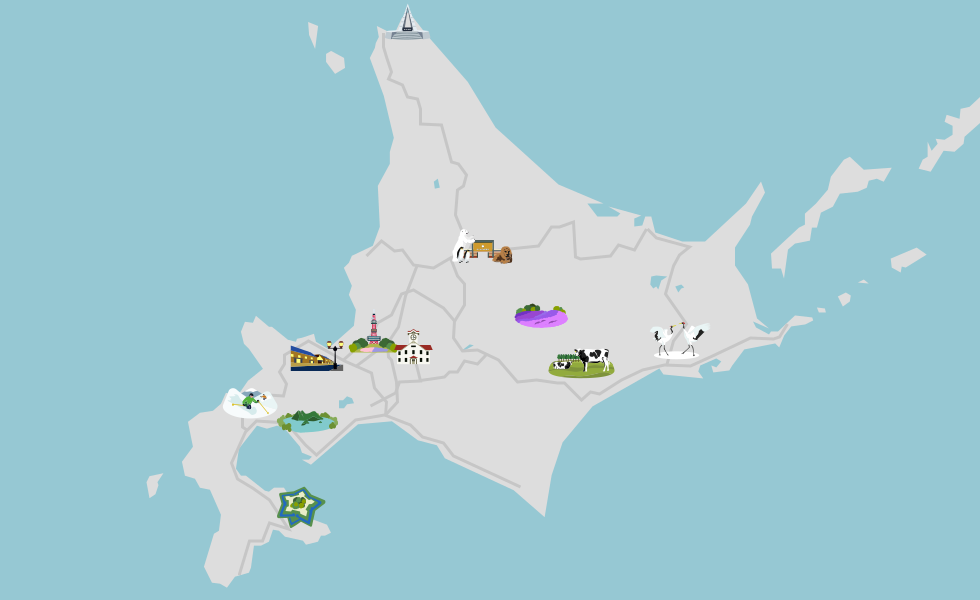
Driving from Sapporo to Hakodate for the famous night view takes about 4 to 5 hours one way. Heading east to the Shiretoko Peninsula can take 5 to 6 hours or more. When planning your trip, divide Hokkaido into four main regions: Central (Sapporo, Otaru, Furano), Southern (Hakodate, Lake Toya), Eastern (Kushiro, Shiretoko), and Northern (Wakkanai). If you only have 5 to 7 days, focus on one or two regions for a deeper, more relaxed experience instead of spending most of your time on the road.
- Otaru: about 40 km / 45 min
- Furano: about 115 km / 2 hrs
- Asahikawa: about 140 km / 1 hr 20 min
- Hakodate: about 305 km / 4 hrs 15 min
- Obihiro: about 215 km / 3 hrs
- Kushiro: about 342 km / 4 hrs 40 min
- Shiretoko (Utoro): about 377 km / 5 hrs 44 min
Q2: When Is the Best Time to Visit Hokkaido? (Seasonal Highlights & Peak Travel Periods)
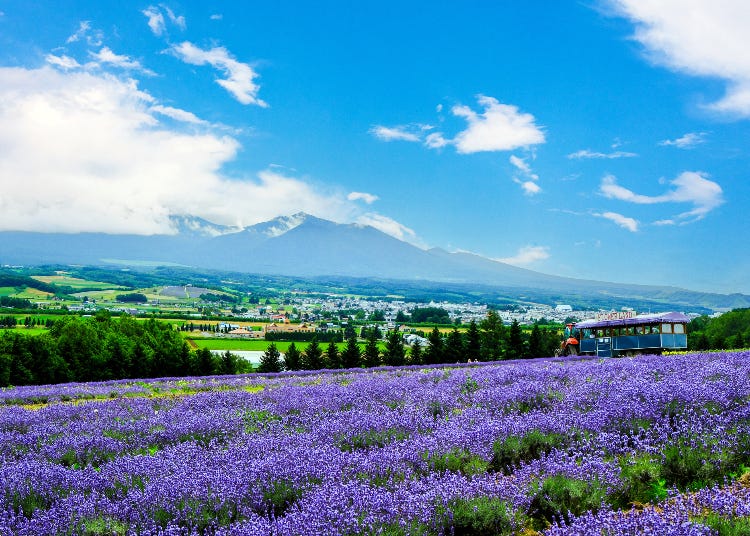
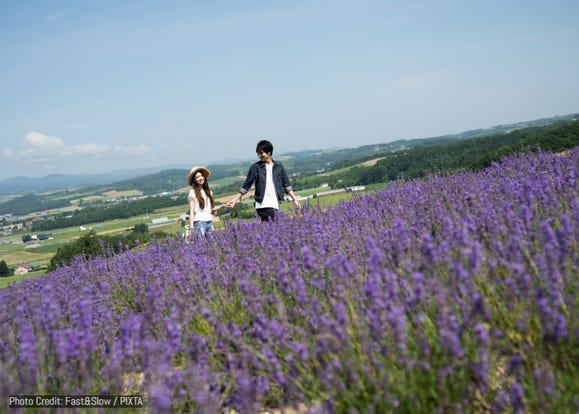
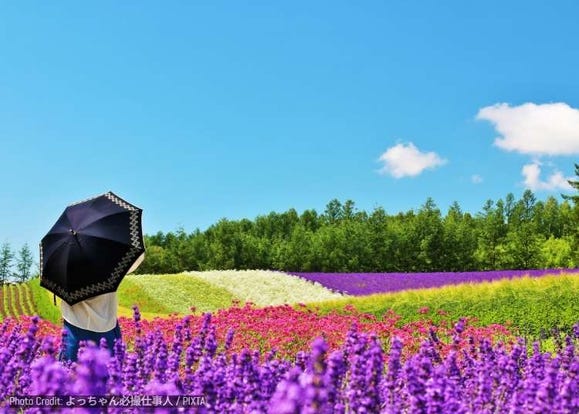
Hokkaido’s greatest appeal lies in its four distinct seasons, each offering a completely different experience. Summer (July–August) is perfect for escaping the heat. Furano’s lavender fields and Biei’s patchwork hills burst with color, while Sapporo’s average temperatures range from 20°C to 23°C (68–73°F), making it refreshingly cool. Because Hokkaido shares a similar latitude with cities like New York and Toronto, temperatures can drop quickly in the evenings, often below 20°C (68°F), so a light sweater or hoodie is recommended.
For dramatic snow scenery, winter (December–March) is the island’s signature season. Highlights include the Sapporo Snow Festival, world-class powder skiing in Niseko, and drift ice cruises in Abashiri. January and February bring the deepest snowfall, ideal for skiing and snowboarding. Average temperatures sit around -3.6°C (25°F), with some areas plunging to -20°C to -30°C (-4 to -22°F). In addition to a heavy coat, gloves, hats, and scarves are essential. Icy sidewalks are common, so wear winter boots with strong traction or purchase anti-slip shoe grips at local stations or airports.
Autumn (late September–October) begins with vivid foliage in the Daisetsuzan range, painting the mountains in layers of red and gold. In spring (May), Hokkaido hosts Japan’s latest cherry blossoms, sometimes blooming alongside lingering snow for a rare and beautiful contrast. Since climate conditions vary widely across regions, always check the weather for your destination and pack accordingly to fully enjoy Hokkaido’s seasonal beauty.
Q3: Where Are Hokkaido’s Main Tourist Areas? (Central, South, East & North Guide)
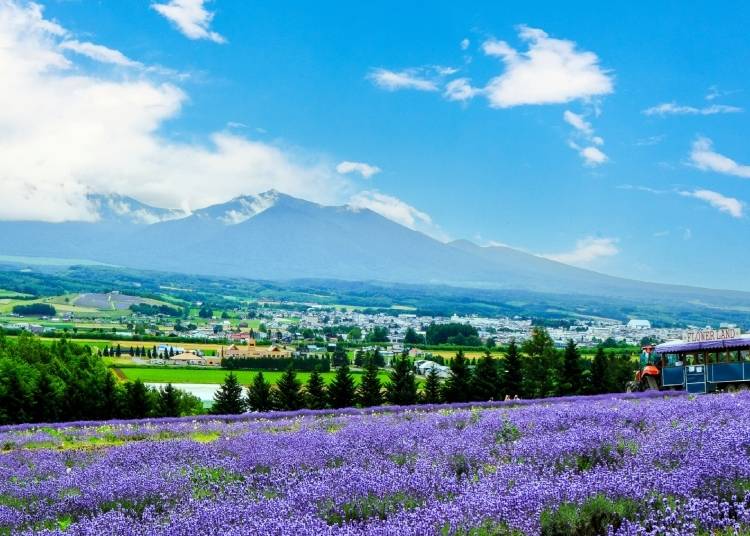
Sprawling and diverse, Hokkaido offers everything from city shopping and gourmet dining to vast, untouched wilderness. To make planning easier, it helps to divide the island into four main regions based on geography.
Central Hokkaido (Do-ou): The Island’s Heart & Entertainment Hub
This is the top choice for most visitors. Centered around Sapporo, you can sample specialties from across Hokkaido while visiting iconic sights such as the Sapporo Clock Tower and Hitsujigaoka Observation Hill. Nearby Otaru charms travelers with its romantic canal and delicate glass craftsmanship.
A little farther south, Niseko is world-renowned for its exceptional powder snow in winter and river rafting in summer. For rolling hills and vibrant flower fields, head to Biei and lavender-famous Furano, both especially stunning during the summer months.
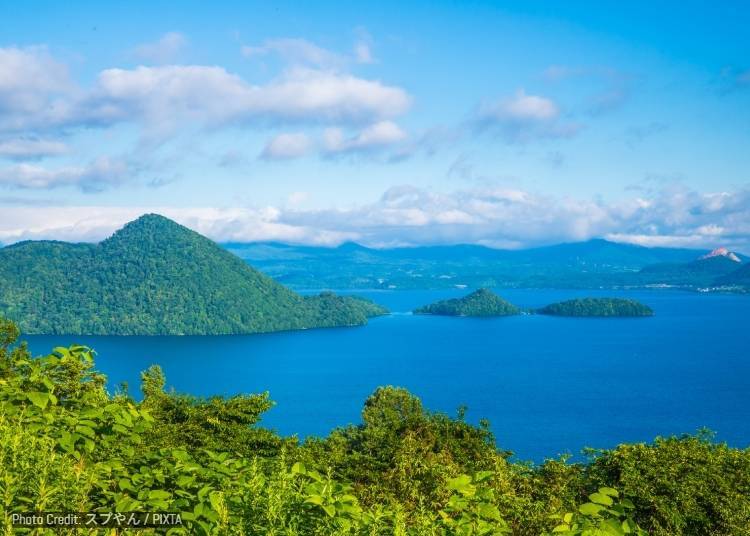
Southern Hokkaido (Do-nan): Historic Streets, Night Views & Hot Springs
Centered around Hakodate, this region is known for its dazzling “million-dollar” night view and charming streets lined with Western-style buildings that reflect its international past. Fresh seafood markets are another highlight, perfect for sampling local specialties.
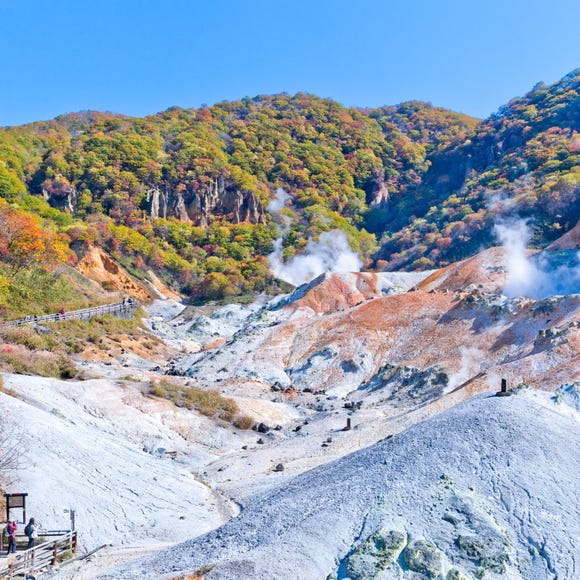
Donan is also a haven for hot spring lovers. Famous resort areas such as Noboribetsu Onsen and Lake Toya are located here, making it an ideal choice for travelers looking to unwind and recharge.
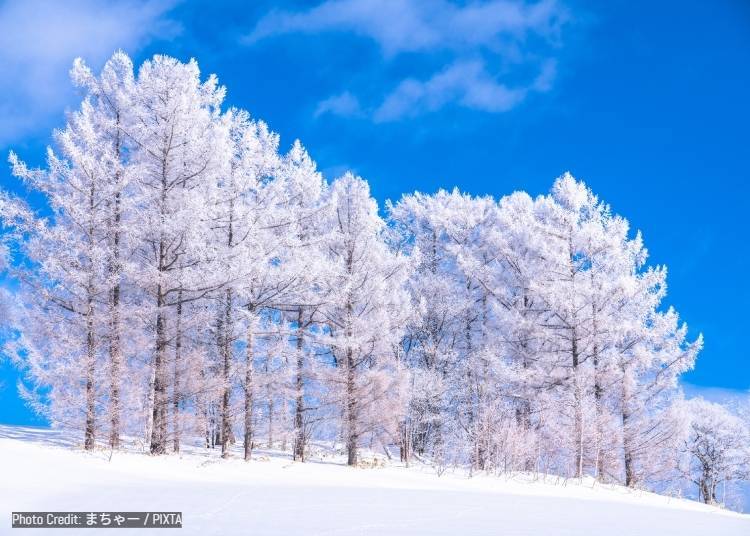
Northern Hokkaido (Do-hoku): Vast Frontiers & Wild Nature
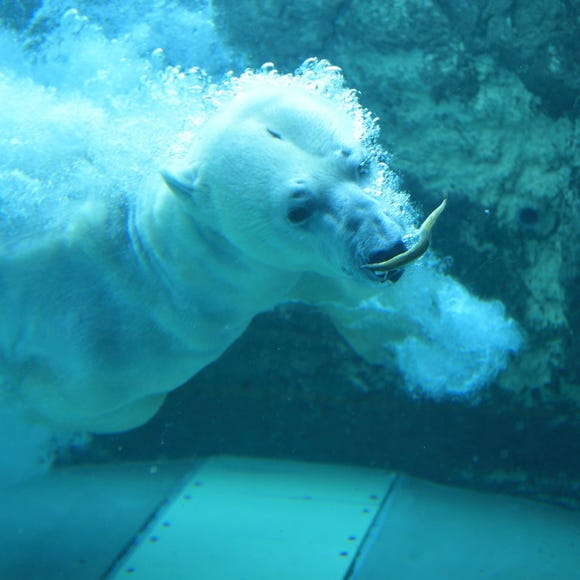
Anchored by Asahikawa, this region is home to the hugely popular Asahiyama Zoo, famous for its immersive animal exhibits. Nearby, Sounkyo Onsen offers scenic hot spring stays surrounded by dramatic gorge landscapes.
For those drawn to Japan’s northernmost edge, Wakkanai sits at the tip of the island, where on clear days you can glimpse Sakhalin across the sea. From here, ferries connect to Rishiri Island and Rebun Island, often called the “floating islands of flowers,” known for alpine blooms and rugged coastal scenery that capture Hokkaido’s remote, northern spirit.

Eastern Hokkaido (Do-to): World Heritage & Untamed Wilderness
If you’re drawn to raw, untouched nature, Eastern Hokkaido delivers. The Shiretoko Peninsula is a UNESCO World Natural Heritage site known for its dramatic cliffs and wildlife. The Kushiro Marsh offers vast, misty wetlands and rare birdlife, while in winter, Abashiri is famous for drift ice that transforms the sea into a surreal frozen landscape. It’s a dream destination for outdoor enthusiasts and travelers seeking deeper exploration.
Overall, each region of Hokkaido has its own character. Choose based on your travel style and available time, whether you prefer city dining and shopping or wide-open natural adventures.
2. Getting Around Hokkaido: New Pass Updates & Driving Tips
Q4: What’s the Best Way to Get Around Hokkaido? (JR, Bus, or Car Rental?)
How you travel around Hokkaido largely depends on your group size and destination. While renting a car is popular, public transportation is also well developed. Here’s a quick comparison to help you decide.
JR Trains
Best for city-based travel such as Sapporo, Otaru, Hakodate, and Asahikawa. Trains are comfortable, punctual, and remove the stress of winter driving. Large windows also make it easy to enjoy Hokkaido’s sweeping scenery. However, some rural routes have limited departures, and you may need to transfer to a bus to reach remote attractions, so checking schedules in advance is essential.
Highway Buses
A budget-friendly option. Although travel time is longer, fares are often about half the cost of JR, and routes can be frequent. Early morning or overnight departures allow you to maximize sightseeing time. Both buses and trains offer regional unlimited ride passes, which can significantly reduce transportation costs if planned well.
Domestic Flights
Ideal for long distances, such as traveling from Sapporo to eastern Hokkaido destinations like Kushiro or Nakashibetsu. Flights are the fastest and most comfortable option when available. While more expensive and less frequent, they can save many hours of overland travel in good weather.
Rental Car
Recommended for families or groups of three to four. Renting a car offers maximum flexibility and access to scenic spots that are difficult to reach by public transport, especially in eastern Hokkaido. That said, driving distances are long, so plan a relaxed itinerary with buffer time to avoid fatigue.
Q5: Is the JR Pass Still Worth It? (New Rules You Need to Know)
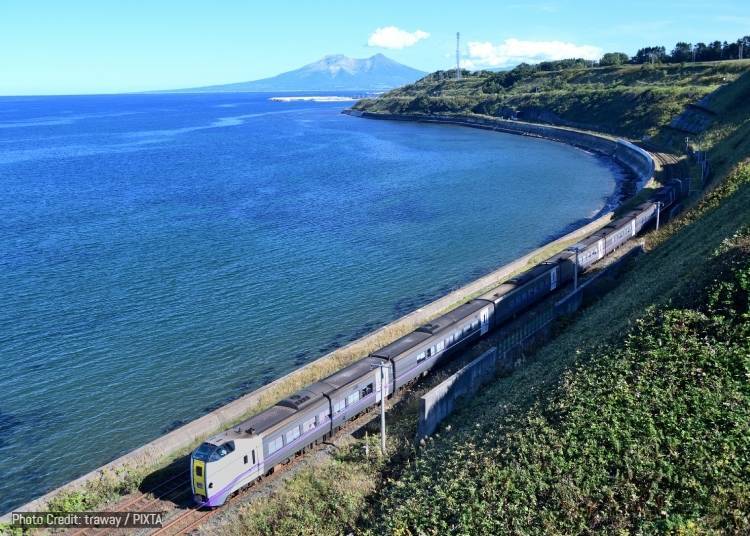
For travelers who don’t plan to rent a car, this is often the biggest dilemma. After the April 2025 price revision, the cost of the JR Hokkaido Pass increased significantly. Here are the latest 2026 online reservation prices:
・5-day pass: 22,000 yen
・7-day pass: 28,000 yen
・10-day pass: 37,000 yen
(Station purchases in Japan cost 1,000 yen more.)
Why do many travelers now find it less cost-effective? Take the popular 5-day pass at 22,000 yen as an example. If your itinerary includes:
・New Chitose Airport ↔ Sapporo: about 2,300 yen round trip
・Sapporo ↔ Otaru: about 1,500 yen round trip
・Sapporo ↔ Hakodate: about 19,000 yen round trip (limited express)
That totals roughly 22,800 yen, barely above the pass price. If you skip Hakodate or other longer trips like Asahikawa or Furano, buying individual tickets or using an IC card will almost certainly be cheaper.
Important Update
From March 14, 2026, JR Hokkaido introduced a major change: nearly all limited express trains within Hokkaido are now fully reserved seating. This includes routes to Asahikawa, Wakkanai, and Abashiri. Even if you have a JR Pass, you must reserve a seat before boarding. While seat reservations remain free with the pass, spontaneous travel is less convenient than before, as there are no longer non-reserved cars to simply hop onto.
Conclusion:
If your itinerary focuses on shorter routes such as Sapporo, Otaru, and Noboribetsu, paying per ride with an IC card or individual tickets is usually more economical. The pass makes sense mainly for longer intercity trips, such as traveling from Sapporo to Hakodate, Asahikawa, or eastern Hokkaido.
Q6: Planning to Rent a Car in Hokkaido? (Process & Required Documents)
Renting a car in Hokkaido is straightforward, but having the correct documents is essential.
Required documents:
Travelers from Taiwan must bring their original driver’s license along with an official Japanese translation. An international driving permit is not accepted in this case. Travelers from the US and most other regions must present a valid international driving permit along with their original license.
Choosing the right vehicle:
Roads in Hokkaido are generally wide and easy to drive, but luggage space is often the deciding factor. For four travelers, a seven-seater is usually recommended to ensure enough room for suitcases.
Booking tips:
Choose a rental company that offers multilingual navigation systems and MapCode search functionality. Major providers such as Nippon Rent-A-Car, Toyota Rent a Car, and Times Car Rental are widely available and reliable options across Hokkaido.
Q7: What Should You Watch Out for When Driving in Hokkaido?
When driving in Hokkaido, the biggest challenge isn’t unfamiliar roads, but the environment itself.
Black Ice:
This is the most dangerous winter hazard. The road may look like ordinary wet pavement, but it can actually be covered with a thin, nearly invisible layer of ice. Braking can become ineffective in an instant. Slow down well before bridges, tunnel exits, and intersections, where black ice is especially common.
HEP (Hokkaido Expressway Pass):
Expressway tolls in Hokkaido can be expensive. If you’re planning long-distance drives, consider adding the Hokkaido Expressway Pass through your rental company. For a fixed fee, you get unlimited highway use, and a single round trip between Sapporo and Hakodate can already make it worthwhile.
Wildlife Crossings:
In eastern Hokkaido and rural areas, watch for animals suddenly entering the road. Ezo deer and red foxes frequently appear, particularly at dusk and dawn. Warning signs are posted in high-risk areas, so stay alert and reduce speed when driving through open countryside.
3. Food & Shopping Notes: What to Eat and How to Pay
Q8: What Are the Must-Try Foods in Hokkaido? (Seafood, Meat, Produce & Dairy Guide)
Hokkaido is often called Japan’s culinary treasure house. Thanks to its vast land and cold climate, the island produces exceptional seafood, high-quality meat, fresh produce, and rich dairy products. Regional specialties vary widely, so here’s a quick guide to what you shouldn’t miss.

Top-Quality Seafood: Gifts from the Sea
In Hokkaido, crab is the undisputed star. Indulge in sweet, succulent king crab, richly flavored hairy crab, or firm, meaty snow crab, each showcasing the island’s pristine waters.
Beyond crab, every region has its own specialty: squid from Hakodate, sea urchin and mantis shrimp from Otaru, Pacific saury from Kushiro, and salmon from eastern Hokkaido. Along with seafood rice bowls and sashimi, be sure to try local comfort dishes like Ishikari nabe, a hearty salmon hot pot, and chan chan yaki, grilled salmon topped with miso and vegetables.
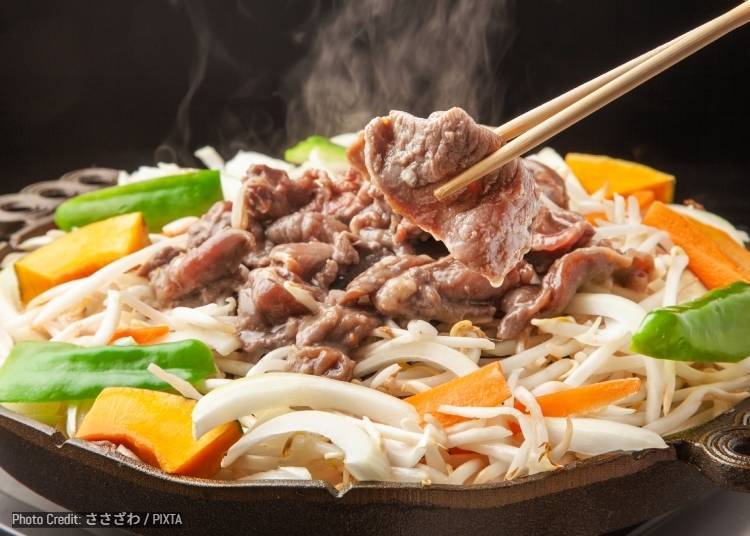
Hearty Meats: Jingisukan & Premium Brands
No trip to Hokkaido is complete without Jingisukan, the region’s signature grilled lamb. Some styles grill the meat first and dip it in sauce afterward, while others marinate it in advance. Either way, it pairs perfectly with a cold draft beer.
Hokkaido’s take on fried chicken, known as Zangi, is another local favorite, seasoned boldly and commonly found at izakaya. For premium cuts, look for Shiraoi beef, Tokachi beef, and Kamifurano pork, all prized by meat lovers for their rich flavor and quality.
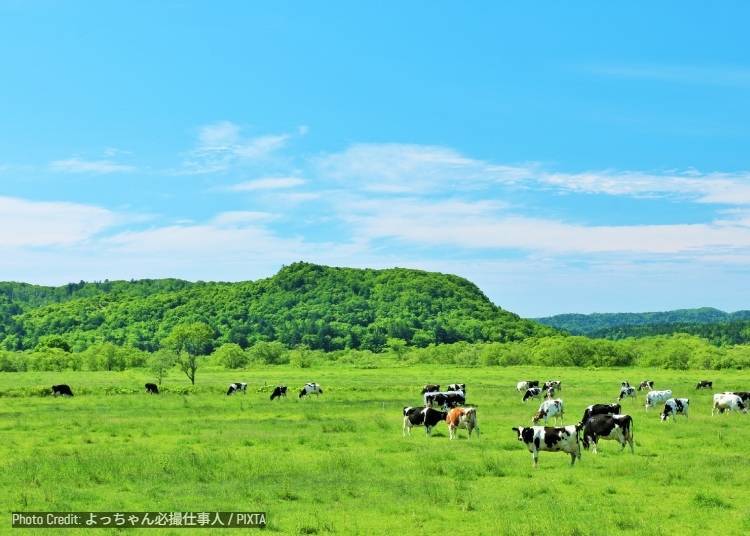
Dairy Kingdom: Milk, Cheese & Sweets
Hokkaido produces more than half of Japan’s milk, so it’s no surprise that the region is famous for its exceptionally rich soft-serve ice cream, cheese, and butter. The freshness and depth of flavor are on another level.
The Tokachi area, in particular, is known as a dessert paradise. Many beloved confectionery brands, including Rokkatei and Kitakaro, source their high-quality dairy from here, giving Hokkaido sweets their signature creamy taste.
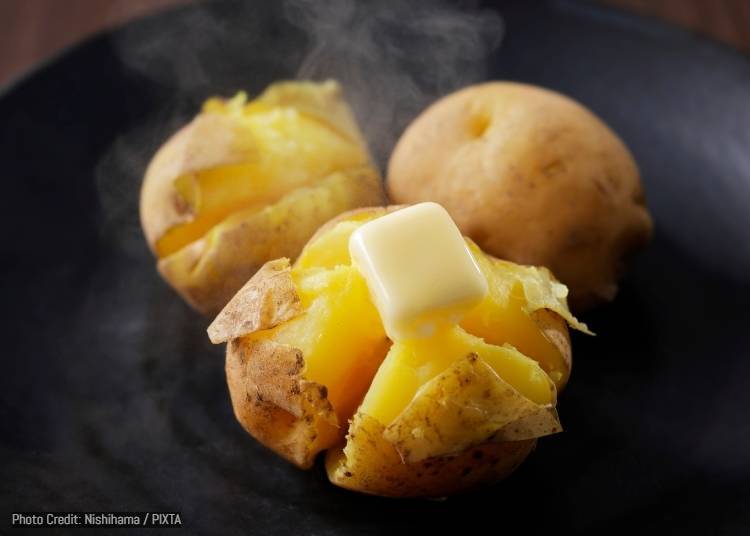
Seasonal Vegetables: Pure, Natural Flavor
Hokkaido’s produce is known for its natural sweetness and impressive variety. In summer, don’t miss juicy corn and crisp asparagus, while winter calls for a comforting baked potato topped with butter.
The region is also a major producer of wheat and rice. Bread made with locally grown wheat is a treat, and premium rice brands like Yumepirika and Nanatsuboshi are celebrated for their flavor and texture, sure to delight anyone who loves a perfect bowl of rice.
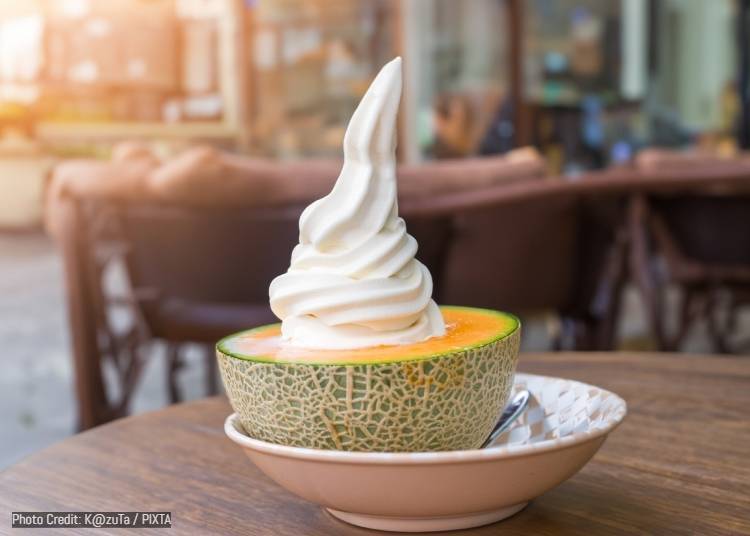
Dreamy Fruits: Yubari Melons & Seasonal Picks
The undisputed icon is the Yubari melon, prized for its fragrant aroma and intense sweetness. It’s a true taste of summer in Hokkaido and a must-try for fruit lovers.
Autumn brings cherry, apple, and plum picking, while the region’s unique haskap berries, small purple fruits with a pleasant tartness, are often turned into delicious sweets and refreshing juices.
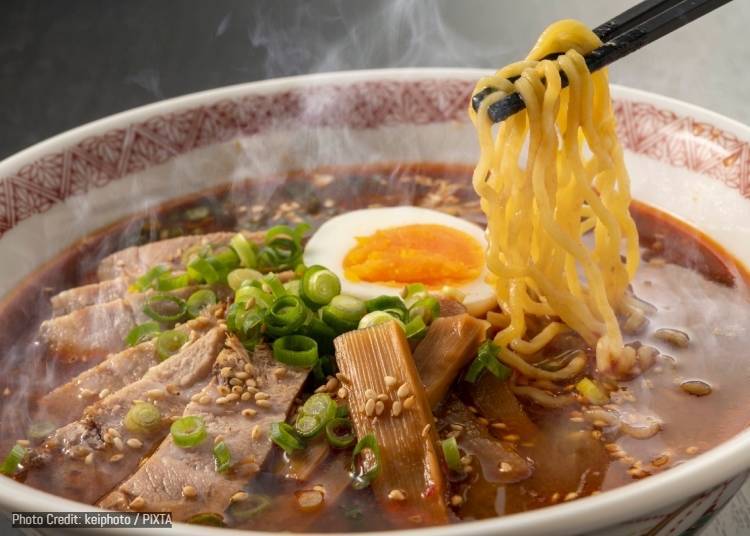
Bonus Bites: Hokkaido’s Three Great Ramen Styles
Noodle lovers should make it a mission to try all three iconic regional bowls: Sapporo’s rich miso ramen, Asahikawa’s savory soy sauce ramen, and Hakodate’s clear, delicate salt ramen.
Each style reflects its city’s climate and culinary heritage, with distinct broths and flavors that showcase the depth of Hokkaido’s ramen culture.
Q9: What Souvenirs Should You Buy in Hokkaido? (Snacks, Sake & Skincare Picks)
Hokkaido offers an incredible range of souvenirs, from iconic sweets to locally made specialties that make it hard to stop shopping. To make it easier, here are five must-check categories to guide your picks.
Classic Snacks & Famous Sweets (The Essentials):
When it comes to Hokkaido, Shiroi Koibito by Ishiya is still the timeless classic. If you prefer rich, creamy flavors, Rokkatei’s Marusei Butter Sandwich and Royce’ Nama Chocolate are also top-tier choices.
Seasoned snack lovers often go for Yanagiya’s baumkuchen Sanmanroku or Kitakaro’s Kaitaku Okaki rice crackers. In recent years, limited-edition treats like Snow Cheese and the popular Potato Farm “Jaga Pokkuru” series, which often spark long lines at Sapporo Station, have become stylish gift picks for 2026.
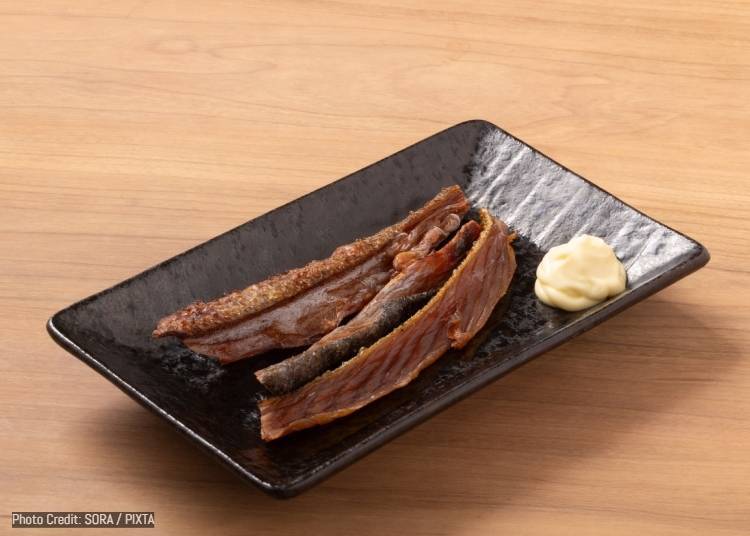
Processed Seafood: Bringing the Ocean Home
A favorite among international visitors is Hokkaido’s wide range of preserved seafood. Dried salmon strips, scallop adductor muscles, and smoked seafood are easy to find at airports and supermarkets. With their longer shelf life, they make perfect edible gifts and pair beautifully with Japanese sake.
Dairy Products: The Best of the Dairy Kingdom
Beyond freshly made soft-serve, you can take home vacuum-packed cheeses and cultured butter. Many local farms and major dairy brands offer long-life products designed for travel, and some even provide frozen cheesecake delivery services, with select options available for airport pickup.
Local Alcohol: A Taste of the North
Hokkaido’s regional sake scene is rich and diverse. Kunimare from Mashike, Chitosetsuru from Sapporo, and Kobayashi Shuzo from Kuriyama are all nationally recognized names. Beer lovers can stick with classic Sapporo Beer, or try the striking blue Abashiri Drift Ice Beer, known for its refreshing flavor and eye-catching color.
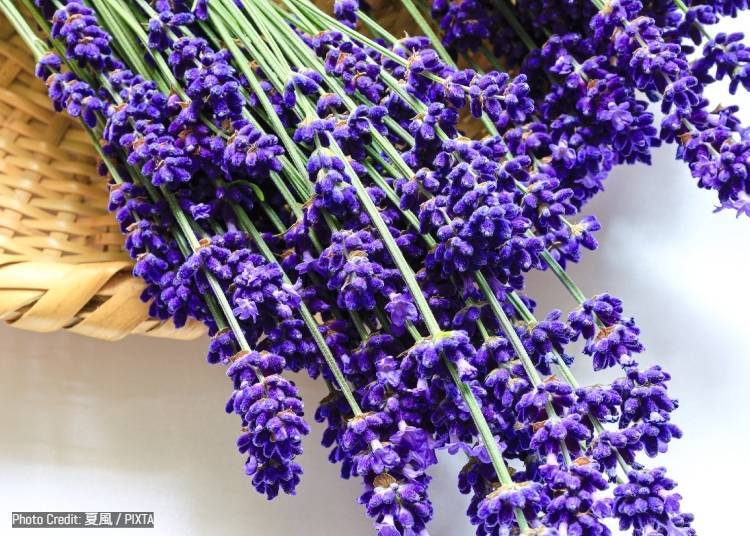
Lifestyle Goods & Skincare: Scents of the North
Lavender products from Furano, including essential oils and handmade soaps, are especially popular, offering a gentle floral fragrance that captures the spirit of Hokkaido’s summer fields.
Kitami’s mint oil is another well-loved essential, valued for its refreshing scent and practical uses, from repelling insects to easing tension. In recent years, skincare made with Hokkaido’s natural ingredients, such as horse oil, glacial clay, and local botanical extracts, has gained strong attention and often tops visitors’ repeat-purchase lists.
Q10: Is a Smartphone and Credit Card Enough for Hokkaido? The Reality of Cash vs. Cashless
As of 2026, Hokkaido’s payment landscape is increasingly divided. Before you travel, adjust your wallet strategy based on where you’re headed.
Urban Areas & New Landmarks
Going nearly cash-free. In major cities like Sapporo, Hakodate, and Asahikawa, department stores, drugstores such as BicCamera, convenience stores, and even taxis widely accept credit cards, Apple Pay, and IC transit cards like Suica or ICOCA.
New hotspots such as Es Con Field (F Village) operate as fully cashless venues, meaning no Japanese yen is accepted on-site. If you plan to visit, be sure your credit card or mobile payment is ready to go.
Rural Areas, Hidden Spots & Traditional Shops
Cash is still king. Venture into eastern or northern Hokkaido, stay at long-established hot spring ryokan, dine at family-run eateries, or ride certain local buses, and you may find that cash is the only option. Scenic cafés and local morning markets often continue to operate on a cash-only basis.
Making the Most of IC Cards
While major JR lines in Hokkaido accept Suica or ICOCA, especially if linked to your phone, some rural stations still lack automatic ticket gates. When taking local buses, it is wise to carry small change.
2026 Travel Tip: Aim for a 70 percent cashless and 30 percent cash mix. Even today, it is smart to keep 30,000 to 50,000 yen in cash in your luggage or day bag. In case of snowstorms, network outages, or system issues, cash can quickly become your most reliable backup.
4. Explore Hokkaido in Depth: Attractions, Culture & Night Views
Q11: What Festivals Are Recommended in Hokkaido? (Year-Round Event Guide & Dates)
Hokkaido hosts lively festivals in every season. From spectacular winter ice sculptures to energetic summer dance celebrations, these events are well worth building into your travel plans.

Winter: A Celebration of Ice & Snow Art
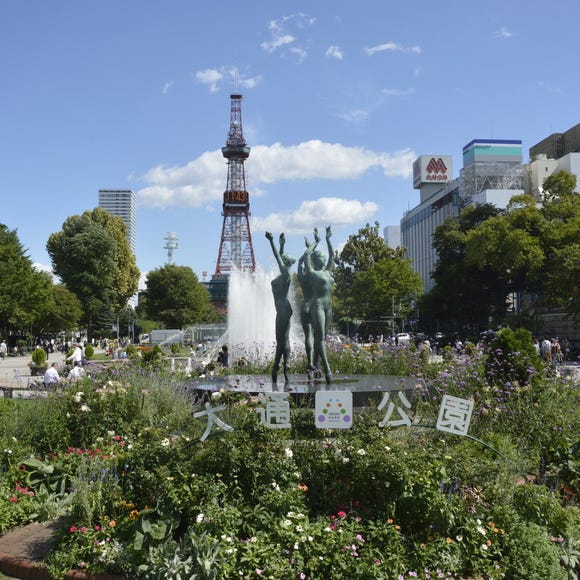
・Sapporo Snow Festival: February 4–11, 2026. Hokkaido’s most iconic winter event transforms Odori Park, Susukino, and Tsudome into a wonderland of towering snow sculptures and intricate ice carvings, beautifully illuminated at night.
・Sounkyo Onsen Ice Fall Festival: Late January to February. Stroll through a dazzling “ice museum” of frozen waterfalls and illuminated ice formations, with fireworks lighting up the winter sky on select evenings.
Spring: Where History Meets Blossoms
・Hakodate Goryokaku Festival (Hakodate): Early May. This historic event commemorates the end of the Boshin War, with costumed parades that recreate the atmosphere of the late samurai era. It also coincides with peak cherry blossom season at Goryokaku Park, when the star-shaped fort is framed in soft pink blooms.
Summer: High-Energy Dance & Playful Traditions
・YOSAKOI Soran Festival (Sapporo): June 3–7, 2026 (scheduled). Dance teams from across Japan take over the streets of Sapporo with dynamic performances blending traditional moves and modern choreography.
・Hokkai Heso Festival (Furano): Late July. One of Hokkaido’s most humorous events, where dancers paint large faces on their stomachs and perform with their bellies exposed, creating a lively and lighthearted spectacle.
・Otaru Ushio Festival (Otaru): Late July. The highlight is the grand Ushio Nerikomi street parade, and the final night concludes with a dazzling fireworks display over Otaru Port.
・Noboribetsu Jigoku Festival (Noboribetsu): Late August. Enma, the King of Hell, leads a dramatic procession of demons through the hot spring town, delivering a powerful and theatrical experience.
Autumn: A Season of Harvest & Flavor
・Kushiro Sanma Festival (Kushiro): September. A must for seafood lovers, featuring freshly grilled Pacific saury and even a playful sanma-catching contest that draws enthusiastic crowds.
Q12: Where Are the Best Night Views in Hokkaido?
Hokkaido’s night scenery is renowned across Japan. While Hakodate remains the classic choice, there are several other standout spots, including newer favorites gaining attention in 2026. Here are some top places to catch unforgettable city lights and sweeping after-dark views.
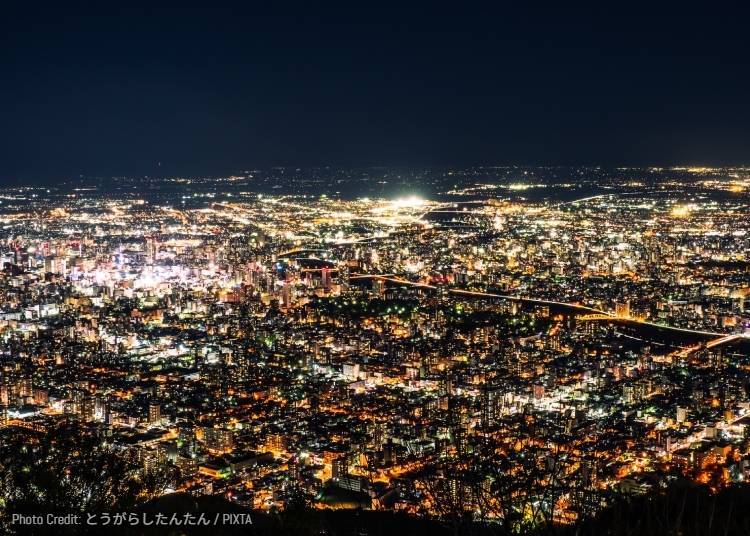
Sapporo: Mount Moiwa (One of Japan’s New Top Three Night Views)
Ranked among Japan’s “New Top Three Night Views,” Sapporo’s glittering skyline is best admired from Mount Moiwa. Ride the two-stage ropeway to the summit for a sweeping 360-degree view of the city’s grid-like streets glowing below, often compared to a field of shimmering stars. Round-trip tickets are about 2,100 yen, and couples often stop to ring the “Bell of Happiness” at the top.
Hakodate: Mount Hakodate (The Classic Million-Dollar View)
A timeless favorite. Hakodate’s distinctive double-curved coastline creates one of the most recognizable night views in the world. Arrive about an hour before sunset to watch the sky shift from deep blue to a sparkling sea of city lights.
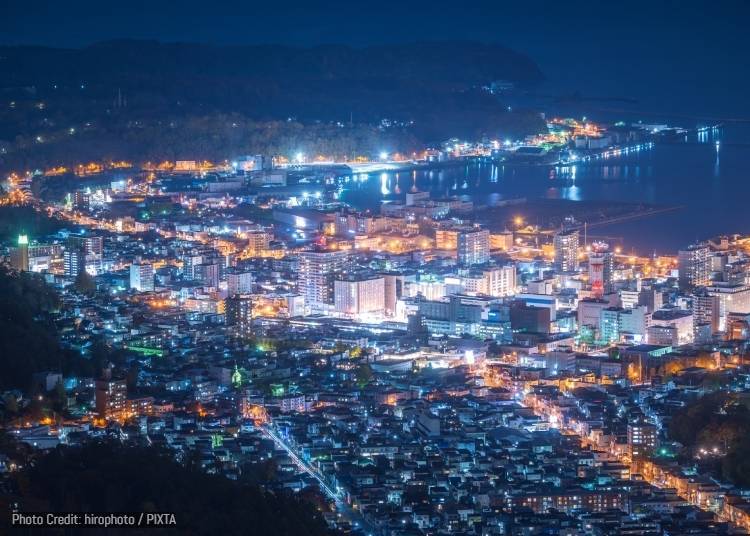
Otaru: Mount Tengu
Compared with the dramatic skylines of larger cities, Mount Tengu offers a quieter, more intimate night view. From the summit, you can look out over Otaru Port and the gentle glow of fishing lights in the distance. In winter, when the town is blanketed in snow, the illuminated streets below feel even more magical.
Q13: Where Can You Experience Ainu Culture?
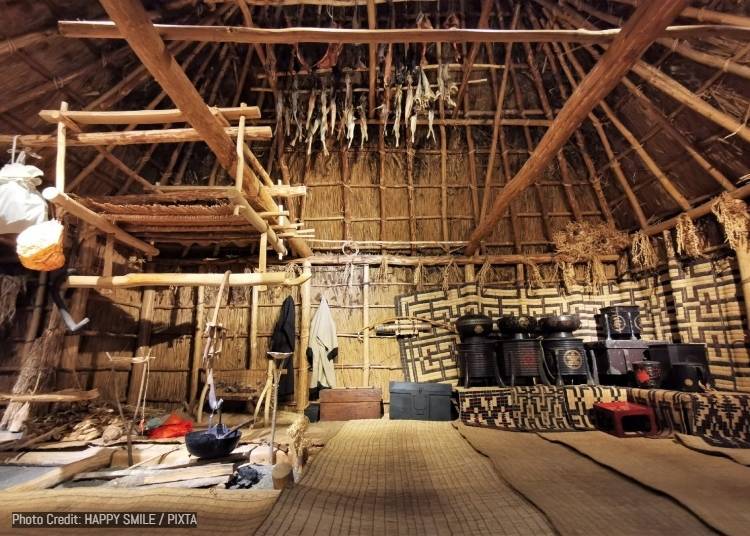
The Ainu are the Indigenous people of Hokkaido. To gain a deeper understanding of their history and close relationship with nature, the most recommended place to visit is Upopoy (National Ainu Museum and Park) in Shiraoi.
Highlights: Japan’s first national museum dedicated to the Ainu people, Upopoy features valuable historical exhibits alongside live cultural performances. Visitors can listen to the haunting sounds of the traditional mukkuri jaw harp and watch Ainu classical dance, recognized as an important cultural heritage tradition.
Hands-On Experiences: The park offers interactive programs such as traditional Ainu embroidery workshops and instrument-making sessions. You can also sample Ainu-inspired dishes made with local ingredients like salmon. It’s an opportunity to turn your Hokkaido trip from simple sightseeing into meaningful cultural discovery.
Q14: Is Joining a Tour in Hokkaido Worth It? (Free & Easy vs. Guided Travel)
It depends on your travel style. If you have a short 4–5 day trip, prefer not to worry about transportation, or are traveling with seniors or young children, a guided tour offers point-to-point transfers and professional commentary. In winter, when heavy snow can complicate driving and transfers, tours remove much of the stress.
However, if you value flexibility, want to linger at a scenic spot for half a day, or plan to explore remote areas such as eastern Hokkaido, independent travel is often the better choice. With transportation systems and payment methods becoming increasingly digital, planning a self-guided trip is more accessible than ever.
Q15: Can You Explore Sapporo Without a Map? Understanding the City’s “Grid Logic”
Surprisingly, yes. Central Sapporo is laid out in a clean grid pattern, making navigation far easier than in many Japanese cities.
Cross-Reference Method:
Odori Park divides the city into north and south, while the Sosei River separates east and west. Addresses follow a format such as “North X, West Y.” For example, “North 5 West 2” means five blocks north of Odori and two blocks west. Once you grasp this system, you can navigate much like a local, even without Google Maps.
Q16: Is That Japanese? Not Quite—It’s Hokkaido Dialect!
Most people in Hokkaido speak standard Japanese, but everyday conversations often include friendly regional expressions. Learning a few can earn you a smile from locals.
Namara: Means “very” or “extremely.” For example, “namara umai” means incredibly delicious.
Azumashii: Describes something comfortable or cozy. “Azumashikunai” can express feeling uneasy.
Nanmo nanmo: A casual response to thanks, similar to “no worries” or “don’t mention it.”
Menkoi: Means cute. The negative form is “menkokunai.”
Nageru (for trash): In standard Japanese, nageru means to throw. In Hokkaido dialect, it can also mean to throw away or discard.
Tokibi: The local word for corn.
Bring Your Curiosity and Begin Your Northern Story
After exploring this Q&A, you likely have a clearer picture of Hokkaido’s vast appeal. Yet its true charm goes beyond the sweeping landscapes on a map. It lives in the unexpected moments: spotting an Ezo deer around a quiet bend, sipping hot soup as snow falls softly, or exchanging a warm “namara” with a local.
Hokkaido is simply too big to experience in one trip. When planning your itinerary, leave a little space between destinations so you can savor the journey instead of rushing through it. Whether you come for the food, the winter scenery, or a stretch of peaceful time, Hokkaido in 2026 is ready to welcome you in its purest form.
Pack your guide, prepare your passport, and set out with an open mind. May your time in Japan’s great north become a travel story you will never forget.


The LIVE JAPAN editorial team is a multinational group made up of native editors who have lived in Japan for over five years and Japanese editors who love to travel. Together, we share the best of Japan, offering cultural insights, historical context, event updates, and travel-friendly deals, to support your journey every step of the way.
- Area
- Category
*Prices and options mentioned are subject to change.
*Unless stated otherwise, all prices include tax.
Popular Tours & Activities
Recommended places for you
-
Former Hokkaido Government Office Building (Red Brick Office)
Other Historic Sites
Sapporo / Chitose
-
Appealing
Rukku and Uohei
Izakaya
Sapporo / Chitose
-
Appealing
Asahiyama Zoo
Zoos, Aquariums & Botanical Gardens
Asahikawa
-
LakeAkan
Rivers, Lakes & Canyons
Abashiri
-
Appealing
Noboribetsu Onsen
Hot Springs (Onsen) & Bath Houses (Sento)
Noboribetsu / Lake Toya
-
Appealing
Odori Park
Parks
Sapporo / Chitose
-
Romantic Places in Hokkaido: Where to Honeymoon Across the Seasons
by: Himanshi Shah
-
10 Recommended Apartment Hotels in Hakodate for Families & Groups
by: Sae Haneda
-
Coming October 2026: JR Hokkaido Introduces Ticket Machines with Passport Readers for Easier Rail Pass Purchases
by: Guest Contributor
-
Hokkaido for Travelers from India: A Complete First-Trip Guide
by: Himanshi Shah
-

Feel the Power of Giant Draft Horses Racing with Iron Sleds at Banei Tokachi (Obihiro Racecourse)
by: Guest Contributor
-
Obihiro's Beloved 90-Year-Old Sweet Shop and the 'Milk Road' Treat Fans Keep Coming Back For
by: Guest Contributor
-
Hakodate 2-Day Itinerary for Exploring Japan's Foodie North!
-

Otaru Travel Guide: Inside Hokkaido's Leading Destination (Sightseeing, Food, and Shopping Tips)
-
Explore Japan in 7 Days: The Ultimate Local Rail Adventure with the Hokkaido & East Japan Pass
by: Guest Contributor
-
Transportation in Hokkaido: Travel Tips on Public Transport (Access, Cost, Distances)
-

6 Surprisingly Cheap Things in Japan
-
Toyako Onsen: Complete Guide to Hokkaido's Breathtaking Hot Springs (Access, Where to Stay, Events & More)
- #best sushi hokkaido
- #things to do hokkaido
- #best ramen sapporo
- #what to bring to japan
- #new years in tokyo
- #what to buy in ameyoko
- #japanese nail trends
- #what to do in odaiba
- #onsen tattoo friendly tokyo
- #daiso
- #best sweets otaru
- #japanese fashion culture
- #best nature furano
- #japanese convenience store snacks
- #best japanese soft drinks