





Japan Airport Immigration & Customs Guide: Entry and Exit Procedures Explained for Faster Clearance
- Written by: LIVE JAPAN Editor
Japan’s airport entry and departure procedures have become increasingly streamlined, with services such as Visit Japan Web allowing travelers to complete much of the necessary information before arriving.
This guide explains Japan’s immigration, customs, and airport procedures for international travelers in 2026, including how to use Visit Japan Web, what happens after landing, what you can and cannot bring into the country, and what to expect when flying home.
There is also an important change for shoppers to be aware of. From November 1, 2026, Japan is switching to a new refund-based tax-free shopping system, which changes what travelers need to do before leaving the country.
Main image source: PIXTA
This article contains affiliate links
- Table of Contents
-
- 1. What Do You Need to Enter Japan?
- 2. What to Check Before Entering Japan
- Detailed Steps for Entering Japan at the Airport
- Tax-Free Shopping During Your Stay in Japan: Important November 2026 Change
- 2. Leaving Japan: Departure Procedures and What to Expect
- Departure Procedures at Japanese Airports
- Luggage Delivery Services From and to the Airport
- Transportation To/From Major Airports in Japan
- Always Check Official Information Before You Go
1. What Do You Need to Enter Japan?

Arrival procedures in Japan are generally straightforward, particularly if you complete your immigration and customs information through Visit Japan Web before traveling.
After landing, travelers normally proceed through the following stages:
Health and quarantine screening if required → Immigration inspection → Baggage claim → Plant and animal quarantine if applicable → Customs declaration → Arrival lobby
How long this takes varies considerably depending on the airport, time of day, number of international flights arriving at once, and how quickly checked luggage is unloaded.
During busy travel periods, including cherry blossom season, Golden Week, summer holidays, and year-end travel, immigration and baggage collection may take considerably longer than usual. Avoid scheduling tight onward connections immediately after your international arrival.
2. What to Check Before Entering Japan
1. Check Whether You Need a Visa
Whether you need a visa to enter Japan depends on your nationality, passport, length of stay, and purpose of travel.
For short visits such as tourism, business, or visiting family and friends:
・Travelers covered by Japan’s visa-exemption arrangements can generally enter for a short stay without obtaining a visa in advance.
・Travelers who are not visa-exempt must obtain the appropriate visa before traveling.
・Depending on your nationality and country or region of residence, you may be eligible to apply online through JAPAN eVISA.
Visa-exemption conditions are not identical for every nationality. In some cases, requirements concerning passport type or maximum length of stay also apply.
Because these rules can change, check the latest information from the Ministry of Foreign Affairs of Japan before booking or departing.
Quick Note on JESTA: Japan has passed legislation establishing JESTA, a new electronic travel authorization system for visa-exempt visitors. However, it is not in operation in 2026. The government is currently aiming to introduce JESTA during fiscal 2028, so travelers visiting Japan in 2026 do not need to apply for it.
2. Register for Visit Japan Web in Advance
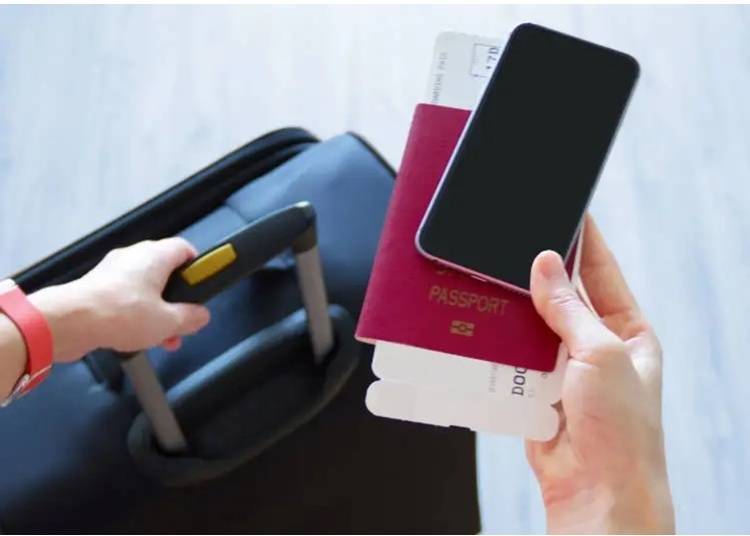
Visit Japan Web is an official online service that allows travelers to prepare information for immigration inspection and customs declaration before arriving in Japan.
Visit Japan Web is not mandatory, but completing the procedures before your flight can make arrival considerably smoother.
Once you have registered the required information, Visit Japan Web generates the QR code needed for the corresponding airport procedures. Keep your smartphone readily accessible after landing. It is also a good idea to make sure the QR code can be displayed even if you do not immediately have internet access.
Travelers who do not use Visit Japan Web can complete the necessary procedures using the available paper forms.
- Create an Account and Log In. Access the official Visit Japan Web website and create an account using your email address and a password. A verification code will be sent to your email address during registration.
- Register Your Information. Enter your passport and traveler information under the registered user section.
- Register Your Trip to Japan. Add your planned arrival date, airline, flight number, departure point, and accommodation or contact information in Japan. You can give the trip any name that makes it easy to identify in your account.
- Complete Immigration and Customs Information. Enter the information required for immigration inspection and the customs declaration before departure. This may include your occupation, home address, purpose of travel, planned length of stay, flight information, and address or accommodation in Japan.
Once registration is complete, you can display the required QR code when going through the relevant procedures after arrival.
(Note: Japanese nationals and some foreign residents re-entering Japan follow different immigration procedures, although a customs declaration is still required.)
Detailed Steps for Entering Japan at the Airport
1. Health and Quarantine Checks, If Required
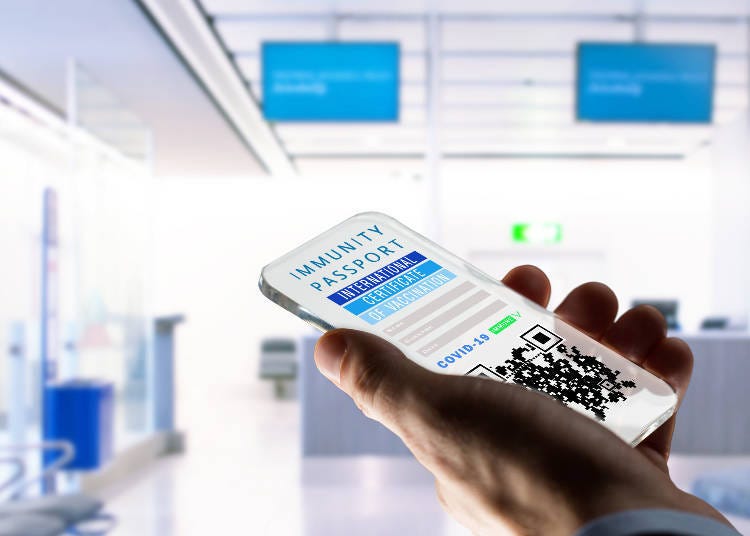
Japan no longer requires ordinary travelers to present COVID-19 vaccination certificates, undergo pre-departure testing, take an arrival test, or isolate after entering the country. Visit Japan Web is also not currently required for quarantine procedures.
However, Japan’s quarantine stations continue to monitor arriving travelers for infectious diseases. Travelers with symptoms such as fever or coughing, or those who have recently stayed in an area affected by certain infectious diseases, may be asked additional health questions or undergo further examination. If you feel unwell when arriving in Japan, inform a quarantine officer.
2. Immigration Inspection
After any necessary health screening, proceed to immigration. Foreign visitors normally present their passport and complete immigration inspection. If you registered through Visit Japan Web, have the relevant QR code ready on your smartphone.
Immigration officers may confirm information including your purpose of travel, intended length of stay, and accommodation in Japan.
After immigration clearance, proceed to baggage claim.
3. Baggage Claim
Collect your checked luggage from the carousel indicated on the airport information screens. Check the baggage tag carefully before leaving the area, particularly if your suitcase is a common color or design.
4. Plant and Animal Quarantine
Japan has strict rules concerning the import of meat, plants, fruit, animals, and certain other agricultural products in order to prevent animal diseases and agricultural pests from entering the country.
Many meat products cannot be brought into Japan without the required inspection certificates. This can include items such as:
・Jerky
・Ham and prosciutto
・Sausages and salami
・Other meat and meat-containing products
Restrictions can apply even when products are vacuum-sealed, cooked, or intended only as souvenirs. For details on what is not allowed, see MAFF's website here.
Many plants, fruits, vegetables, seeds, and other plant products are also prohibited or require inspection and phytosanitary certification.
If you are carrying an item that may be subject to animal or plant quarantine, declare it and visit the appropriate quarantine counter before passing through Customs.
For the latest rules, check the Animal Quarantine Service and Plant Protection Station websites before traveling.
Bringing Medication Into Japan
Rules also apply to medicines carried into Japan for personal use. As a general guideline, travelers can bring up to a one-month supply of prescription medication and up to a two-month supply of many other medicines without obtaining an Import Confirmation in advance. Different limits apply to certain external-use medicines, injectable drugs, controlled substances, and other regulated products.
Some medications require advance permission regardless of quantity.
If you regularly take prescription medicine, check the Ministry of Health, Labour and Welfare requirements before traveling rather than assuming that medication legally prescribed in your home country can automatically be brought into Japan.
5. Customs
After collecting your luggage and completing any necessary plant or animal quarantine procedures, proceed to Customs.
All travelers entering Japan are required to make a declaration concerning accompanied and unaccompanied articles.
If you completed the customs declaration through Visit Japan Web, scan your passport and QR code at an electronic declaration terminal where available. After completing the terminal procedure, eligible travelers can proceed through the electronic customs gate using facial recognition.
Travelers who do not use Visit Japan Web can complete a paper Declaration of Accompanied Articles and Unaccompanied Articles and submit it to Customs.
If you are carrying goods that exceed Japan’s duty-free allowance, restricted items, or cash and other means of payment that require declaration, additional procedures may be necessary. Goods exceeding the applicable allowance must be declared and may be subject to customs duties or taxes.
- Alcohol: Up to 3 bottles, approximately 760 ml each
- Tobacco: Allowances vary by product type; for example, up to 200 cigarettes or 50 cigars
- Perfume: Up to 2 oz
- Other goods: Generally up to a total overseas market value of 200,000 yen, subject to applicable conditions
6. Proceed to the Arrival Lobby
Once immigration, baggage collection, any necessary quarantine inspection, and Customs are complete, you can proceed into the airport arrival lobby.
From here, you can pick up a rental Wi-Fi device or SIM, exchange money, arrange luggage delivery, meet your pickup, or continue to your hotel by train, bus, taxi, or rental car.
Tax-Free Shopping During Your Stay in Japan: Important November 2026 Change
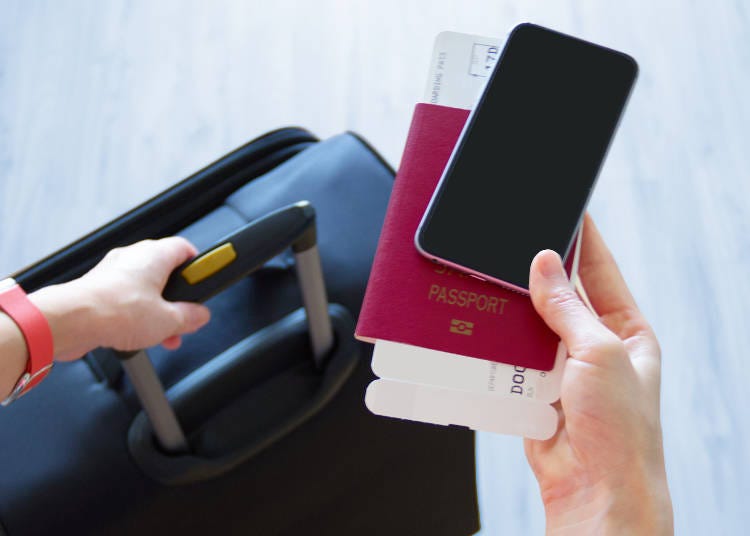
Japan’s tax-free shopping system changes significantly on November 1, 2026, so the procedure depends on when you make your purchase.
From November 1, 2026
Japan switches to a refund-based tax-free shopping system. Eligible travelers will:
・Pay the tax-inclusive price when purchasing goods
・Have their purchase information recorded by the participating tax-free retailer
・Take the eligible goods out of Japan within 90 days of purchase
・Receive Customs confirmation when departing Japan
・Receive the amount equivalent to the consumption tax from the retailer or its designated service provider after export has been confirmed
The precise refund method and timing may differ depending on the retailer or refund service used.
Important: Customs must be able to confirm that the purchased goods are leaving Japan. If Customs requests an inspection and you cannot present the items, the refund may not be processed.
Duty-Free vs. Tax-Free: What’s the Difference?
The terms are often used interchangeably in everyday English, but they can refer to different systems.
・Tax-free shopping in this guide generally refers to Japan’s consumption-tax exemption or refund system for eligible purchases made at participating stores during your stay.
・Duty-free shopping generally refers to goods sold free of customs duties and certain taxes, most commonly in international airport departure areas.
The purchase conditions and departure procedures are not necessarily the same.
2. Leaving Japan: Departure Procedures and What to Expect
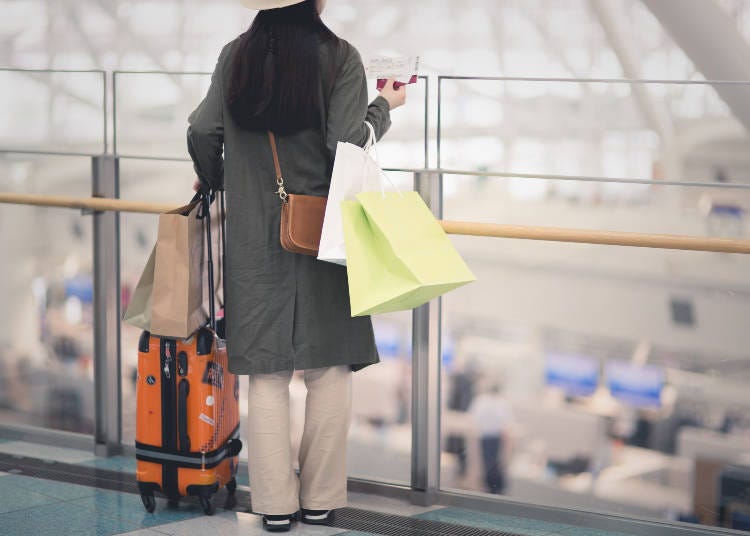
Departure from Japan is generally simpler than arrival. For most travelers, the basic sequence is:
Airline check-in and baggage drop → Security screening → Customs procedures if required → Departure immigration → Boarding gate → Departure
Visit Japan Web is not required for ordinary departure immigration procedures.
Important exception for tax-free purchases: If tax-free goods that Customs may need to inspect are packed in checked luggage, contact or complete the necessary Customs procedure before handing that luggage to the airline.
Before Leaving Japan: Check Your Destination’s Entry Requirements
Japan’s departure procedures are only one part of your return journey. Entry rules, required travel documents, customs regulations, and health requirements vary by destination and can change with little notice.
Before leaving Japan, check the latest official requirements for the country or region you are traveling to next.
Departure Procedures at Japanese Airports
1. Check In for Your Flight
After arriving at the airport, check in through your airline’s app, self-service kiosk, or staffed counter, depending on the carrier and airport.
If you have checked luggage, take it to the designated baggage-drop counter.
Before handing over your suitcase, make sure you have removed anything that must remain in your carry-on baggage, such as spare lithium batteries and portable chargers.
Travelers with tax-free purchases should also check whether Customs needs to inspect any goods packed in checked luggage before dropping off their bags.
Face Express
Some Japanese airports offer facial-recognition departure services such as Face Express on participating airlines and flights.
After registering your passport, boarding information, and facial image, the system may allow you to pass through supported baggage-drop, security, or boarding checkpoints without repeatedly showing your passport and boarding pass.
Availability depends on the airport, airline, route, and flight, so check whether your departure supports the service.
2. Security Screening
At the security checkpoint, place your carry-on baggage and any items requested by security staff into the screening trays.
Depending on the airport and screening equipment, you may also be asked to remove items such as laptops, tablets, jackets, or metallic objects.
For international flights, liquids carried into the cabin generally must be in individual containers of no more than 100 ml, with the containers placed inside a transparent, resealable plastic bag with a capacity of no more than one liter. Each traveler is generally limited to one such bag. Exceptions may apply to items such as necessary medicines and baby food.
Always check your airline and departure airport’s latest baggage and security rules before flying.
3. Customs Procedures and Tax-Free Purchases
Customs procedures may be required when leaving Japan depending on what you are carrying.
Carrying Large Amounts of Cash
If you are carrying cash, travelers’ checks, checks, promissory notes, securities, or other specified means of payment exceeding the equivalent of one million yen, you must declare them to Japan Customs. Separate rules apply to precious metals such as gold.
Taking Foreign-Made Goods Out of Japan
Travelers taking foreign-made goods such as expensive watches out of Japan may register them with Customs before departure. This can help demonstrate that the item was already in your possession when you left Japan if you later return with it, rather than having it treated as a new overseas purchase.
Duty-Free Goods
If you purchased goods under applicable duty-free arrangements, Customs may ask to see your passport and the goods when you leave Japan. If relevant items will be placed in checked baggage, contact Customs before handing the luggage to your airline.
Tax-Free Purchases Made in Japan
Tax-free purchases made at shops in Japan are handled under Japan’s consumption-tax system.
Until October 31, 2026, the existing tax-free shopping rules apply.
From November 1, 2026, eligible travelers pay the tax-inclusive price at the store and must receive Customs confirmation that the qualifying goods are being taken out of Japan within 90 days of purchase. Once export has been confirmed, the tax-free retailer or its designated service provider can process the amount equivalent to the consumption tax as a refund.
Important: If tax-free purchases are packed in checked baggage, complete any required Customs confirmation before handing your suitcase to the airline.
Customs may ask to physically inspect the purchased goods. If the items cannot be presented when requested, you may be unable to receive the refund.
4. Departure Immigration
After completing security and any necessary Customs procedures, proceed to departure immigration.
Foreign visitors generally present their passport and complete departure inspection. Automated facial-recognition gates are available to eligible travelers at major international airports.
Follow the instructions displayed at the gate or those given by immigration officers.
After immigration, you will enter the international departure area, where you can visit airport duty-free shops, restaurants, cafes, and lounges while waiting for your flight.
5. Proceed to the Boarding Gate
Check the boarding time and gate number shown on your boarding pass, airline app, or airport information screens.
Large international terminals can involve a considerable walk or shuttle ride between immigration and the gate, so allow plenty of time.
Do not rely on arriving a fixed number of minutes before departure. Follow the boarding and gate-closing deadlines specified by your airline, as passengers arriving after the deadline may not be allowed to board even if the aircraft has not yet departed.
Luggage Delivery Services From and to the Airport
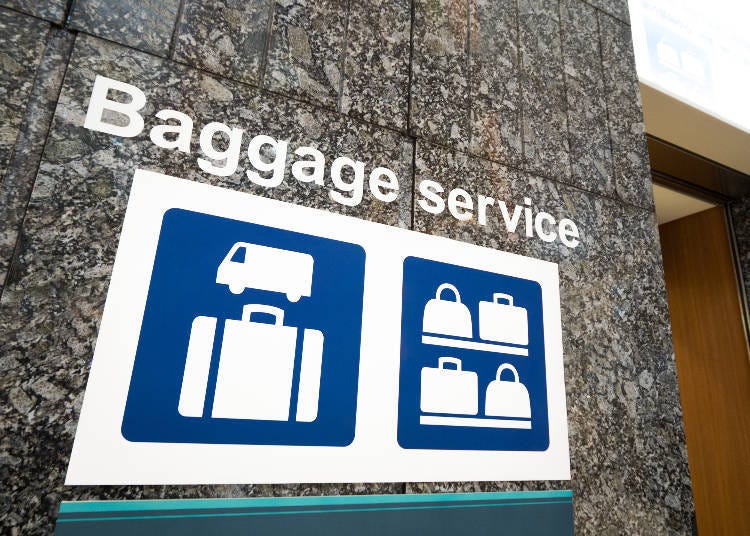
Most major international airports in Japan have luggage delivery counters where you can send suitcases directly to hotels and other eligible accommodations.
Depending on the destination, courier, and time you drop off your luggage, same-day or next-day delivery may be available.
Before sending your bags, check that your accommodation accepts luggage deliveries and whether there are any restrictions concerning the recipient name, reservation details, or delivery time.
Luggage delivery also works in the opposite direction. Near the end of your trip, you can arrange to send your suitcase from your hotel or another acceptance point to the airport, allowing you to travel more lightly on your final day.
Airport delivery requires advance time, and the necessary lead time varies considerably according to the departure airport, destination, courier company, and flight schedule. Arrange the service early enough to ensure your baggage reaches the airport before your flight.
Travel Hands-Free: Send Your Bags Straight to Your Hotel
save time and avoid dragging heavy suitcases onto crowded trains, consider using a luggage delivery service. You can easily book reliable hotel-to-airport or hotel-to-hotel baggage transfers online through Klook. Check out the options for major cities below.
Transportation To/From Major Airports in Japan
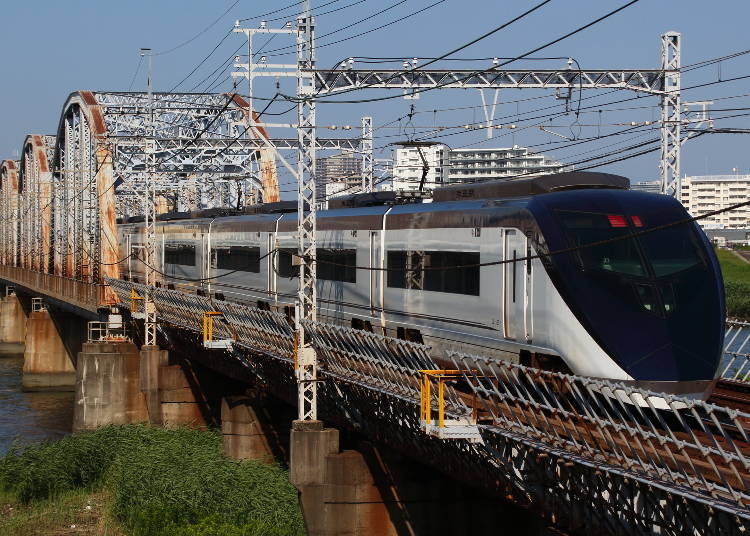
Below are transportation guides for several of Japan’s major airports, useful for travelers looking to reach popular sightseeing areas from the airport.
- Narita Airport to Tokyo Station
- Reach Tokyo From Narita Airport in Just 41 Minutes: Keisei Skyliner Guide With Fares and Ticket Info
- From Narita Airport to Shinjuku
- Narita Airport to Ueno Station
- Tokyo Airport Limousine Bus: Japan's Stress-Free Airport Transfer Explained (Routes, Tickets & Tips)
- Haneda Airport Transportation Guide: Get to Central Tokyo in Just 16 Minutes
Always Check Official Information Before You Go
Japan’s immigration, visa, customs, tax-free shopping, and airport procedures can change.
Before traveling, check the latest information from official sources including the Ministry of Foreign Affairs, Immigration Services Agency, Japan Customs, Ministry of Health, Labour and Welfare, and your departure or arrival airport.
It is also worth checking your airline shortly before departure for the latest check-in, baggage, security, and boarding requirements.
*Prices and options mentioned are subject to change.
*Unless stated otherwise, all prices include tax.
Popular Tours & Activities
Recommended places for you
-
Appealing
Rukku and Uohei
Izakaya
Sapporo / Chitose
-

Hachimantai Aspite Line
Landscapes
Morioka, Hiraizumi And Hachimantai
-
Appealing
Sapporo Ramen Yokocho
Ramen
Sapporo / Chitose
-
Goods
Yoshida Gennojo-Roho Kyoto Buddhist Altars
Gift Shops
Nijo Castle, Kyoto Imperial Palace
-

Jukuseiniku-to Namamottsuarera Nikubaru Italian Nikutaria Sannomiya
Izakaya
Kobe, Sannomiya, Kitano
-
ISHIDAYA Hanare
Yakiniku
Kobe, Sannomiya, Kitano
-

Haneda Airport Duty-Free Shopping Guide: What to Buy, How to Save & Where to Eat Before Your Flight
by: Guest Contributor
-

Seibu Group Launches New Chichibu Adventure Tourism Experience for International Travelers in 2026
by: Guest Contributor
-
Ad
Do’s and Don’ts: The Complete Guide to Sento Baths! Getting the Full Experience In Ueno’s Famous Kotobuki-yu
-
ANA’s Chiikawa Jet Is Taking Off—Here’s Everything You Need to Know About Exclusive Goods, In‑Flight Fun & Travel Tips
by: Guest Contributor
-

Daikoku Car Meet Guide: How to Visit, Best Times & Rules
-
Just 2 Hours from Tokyo! Escape to Yamanashi's NIPPONIA Kosuge, Where an Entire 700-Person Village Becomes Your Hotel
by: Alice Lee
-
Need a License?! Why You Should Never Bring Ride-on Luggage to Japan
by: Shingo Teraoka
-
Getting to Asakusa Made Easy: From Narita & Haneda Airports
-
4 Easiest Ways From Narita Airport to Shinjuku: Best Transport Options Compared
-
JR Edition: Visit all of Tokyo in one Day with the Tokyo Metropolitan District Pass!
-

Universal Studios Japan: Guide to Osaka's Giant Theme Park Attractions!
by: WESTPLAN
-
Narita Airport to Ueno: Skyliner, Keisei Line, or N'EX? Compare Travel Times, Transfers & Fares
- #best sushi japan
- #what to do in odaiba
- #what to bring to japan
- #new years in tokyo
- #best ramen japan
- #what to buy in ameyoko
- #japanese nail trends
- #things to do japan
- #onsen tattoo friendly tokyo
- #daiso
- #best coffee japan
- #best japanese soft drinks
- #best yakiniku japan
- #japanese fashion culture
- #japanese convenience store snacks