


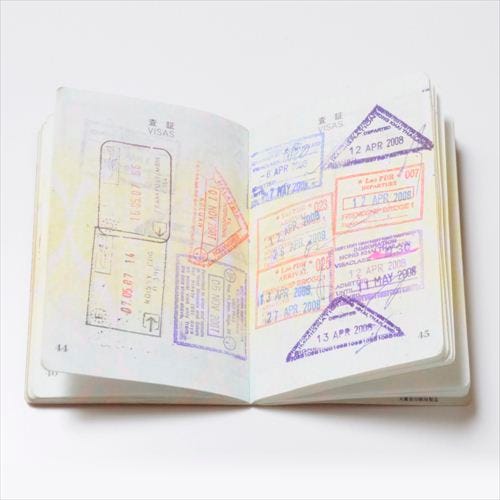




Japan Airport Immigration & Customs Guide: Entry and Exit Procedures Explained for Faster Clearance
- Written by: LIVE JAPAN Editor
Japan’s entry and exit procedures have become increasingly convenient in recent years, largely due to ongoing digitalization. For travelers, this means fewer paper forms and a smoother airport experience overall.
This guide offers the latest and most comprehensive overview of Japan’s immigration and departure process for 2026. It explains each stage clearly, with a special focus on the essential one-stop service Visit Japan Web (VJW), which international visitors are required to use.
From quarantine checks and immigration inspection to customs declarations and departure procedures, every key step is covered. Whether this is your first visit to Japan or a return trip, understanding these updated processes will help you move through the airport smoothly and start or end your journey with confidence.
Main image source: PIXTA
This article contains affiliate links
What Do You Need to Enter Japan? Latest Arrival Procedures and Immigration Time Estimates

Arrival procedures in Japan are now much simpler, thanks largely to advance preparation and the digital Visit Japan Web (VJW) system. If everything is completed online in advance, the process at the airport is generally straightforward.
From landing to officially entering Japan, travelers typically go through the following stages in order:
Quarantine → Immigration inspection → Baggage claim → Plant and animal quarantine → Customs declaration → Arrival lobby
The total time required depends on flight volume and arrival timing. In most cases, clearance takes around 30–60 minutes, but during peak periods it can exceed 90 minutes.
The longest waits at immigration usually occur between 10 AM and 2 PM, as well as from 5 PM to 8 PM. During cherry blossom season, Golden Week, and the summer holidays, waits of over 90 minutes are especially common.
To significantly reduce waiting time, travelers are strongly advised to complete all required declarations on VJW before departure. In the sections below, we explain what to check before arrival and walk through each step of the airport entry process in detail.
What to Check Before Entering Japan
1. Confirm Travel Restrictions
Entry requirements vary by country, so it is essential to confirm whether your passport requires a visa for entry into Japan and that it is still valid. These conditions can change at any time, including shortly before departure.
Before traveling, regularly check official sources such as your home country’s embassy or consulate, as well as Japanese government websites, for the latest entry requirements. Relying on official information is the safest way to avoid last-minute issues.
If you are entering Japan for tourism, business, or visiting family and staying no longer than 90 days, the general cases are as follows:
・Travelers from visa-exempt countries or regions do not need a visa
・Travelers from certain countries or regions, such as the UAE, the UK, Singapore, and Taiwan, entering Japan for tourism must apply for JAPAN eVISA
・Travelers from other countries must apply for a short-term stay visa in advance
JAPAN eVISA can be applied for online through the official website and is issued as an electronic visa. For those entering Japan for work or long-term stays, a different visa must be obtained in advance depending on the purpose of travel.
2. Register for Visit Japan Web in Advance
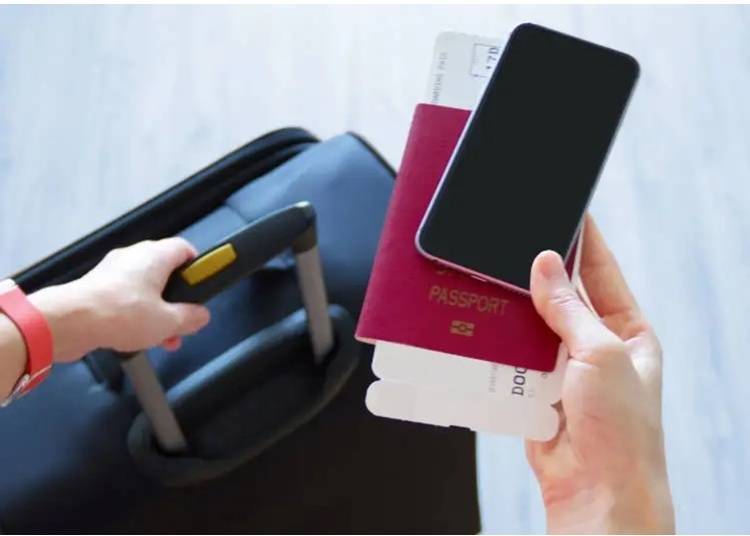
To make arrival procedures smoother, travelers are strongly encouraged to use the official online service Visit Japan Web. Immigration inspection and customs declarations for both carry-on and checked baggage can be completed online before departure.
The required information can be entered in advance using a computer. At the airport, you will need to present the generated QR code on a smartphone or tablet during immigration and customs checks.
Previously, Visit Japan Web was available only at select airports. As of March 2025, it can be used at all airports in Japan that handle international scheduled flights.
(Note: Visit Japan Web cannot currently be used at seaports. Travelers arriving by cruise ship must complete arrival procedures using paper forms.)
Visit Japan Web Usage Guide:
1. Create an Account and Log In to Visit Japan Web
Access the Visit Japan Web website and select “Create a new account.” After agreeing to the terms of service and privacy policy, enter your email address and set a password.
A six-digit verification code will be sent to your email address. Enter this code to continue.
2. Register User Information
Log in using your registered email address and password. Under “Registered users,” select “Your information” and enter the following details.
・Entry or re-entry registration
・Passport information
・Contact details in Japan, including your accommodation
3. Register Transportation Details for Entry into Japan
Enter details such as your airline name, flight number, and accommodation or hotel name. You can choose from several options, including reusing information from a travel agency, visa application, or a previously registered trip.
If none of these apply, select the option to continue without reusing information. You will then enter a trip name, planned arrival date, airline name, flight number, departure location, and related details. The trip name can be anything easy to recognize, such as a destination or itinerary note.
4. Register Arrival Procedure Information
Quarantine (health check) requires answering simple questions about your current health condition by selecting “Yes” or “No.”
For immigration inspection and customs declaration, you will need to enter details such as your occupation, current address, arrival date, flight information, departure location, contact details in Japan, purpose of travel, and length of stay. If registered in advance, you can proceed by presenting your QR code at immigration and customs counters equipped with QR scanners.
(Note: Japanese nationals and foreign residents re-entering Japan do not need to register immigration inspection details. They only need to complete the customs declaration for carried and checked items.)
Detailed Steps for Entering Japan at the Airport
1. Quarantine
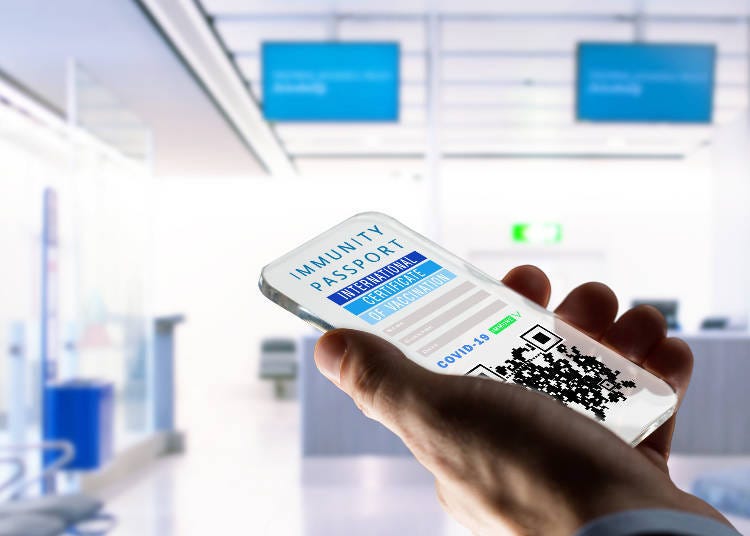
After landing at the airport, travelers must complete several procedures before reaching the arrival lobby. The first step in the entry process is quarantine.
To prevent the spread of infectious diseases across borders, Japan conducts mandatory quarantine checks for all travelers, regardless of nationality.
Using Visit Japan Web, you can answer health-related questions in advance under the “Quarantine (health check)” section. Completing this step beforehand can help speed up the process on arrival.
If you have not used Visit Japan Web, a quarantine questionnaire is usually distributed on the plane. Be sure to fill in all required fields and submit the completed form at the quarantine counter after landing.
2. Immigration Inspection
At the immigration counter, open Visit Japan Web and present your QR code. This QR code is used not only for immigration inspection, but also later during customs procedures.
When declaring items at customs, you can present the same QR code at an electronic declaration kiosk or inspection counter. If you complete customs using an electronic kiosk, you may proceed through the automated customs gate, which can further reduce waiting time.
3. Baggage Claim
After clearing immigration, proceed to the baggage claim area to collect your checked luggage. Be sure to check the baggage tag and claim ticket carefully to avoid picking up the wrong suitcase.
▼ View More Articles About Luggage ▼
4. Plant and Animal Quarantine
At the plant and animal quarantine stage, inspections are carried out to prevent infectious diseases, pests, and harmful substances from entering Japan. This applies to plants, animals, and food items brought in from overseas.
Meat products and plants are subject to strict import restrictions, even when carried as personal items. Products such as jerky, dried meat, ham, prosciutto, sausages, and salami are all regulated. Some regions, including Australia and New Zealand, may require inspection certificates for certain products exported to Japan.
Examples of items prohibited from being brought into Japan include:
・Counterfeit or imitation goods
・Meat products and animal-derived items
・Illegal drugs
・Plants and animals protected under international conservation agreements
All meat products and most plants are strictly prohibited, regardless of whether they are vacuum-sealed or fresh. Violations may result in fines of up to three million yen or imprisonment.
If you plan to bring prescription medication into Japan and the quantity exceeds a one-month supply, you must apply in advance for a medication import certificate through the Ministry of Health, Labour and Welfare.
For the most accurate and up-to-date information, be sure to check the relevant official government websites before traveling.
▼ View More Articles About Flight Safety ▼
5. Customs
At customs, all travelers arriving from overseas are checked to confirm whether they are carrying prohibited or restricted items, or amounts of cash that require declaration. Officers also verify that personal belongings fall within Japan’s duty-free allowances.
If you are using Visit Japan Web, scan your QR code and passport at an electronic declaration kiosk in the customs area. If everything is within the duty-free limit, no declaration is required and you can proceed through the automated customs gate.
If you exceed duty-free allowances or need additional procedures, you must go to a staffed inspection counter instead. Travelers who did not use Visit Japan Web must complete a paper “Declaration of Accompanied Articles and Unaccompanied Articles” form and submit it at a staffed counter.
Reference: Duty-Free Allowances (per person)
・Alcohol: up to 3 bottles
・Tobacco (limits apply to each category and cannot be combined): 50 cigars, 200 cigarettes, or 10 packs of individually packaged heated tobacco products
・Perfume: up to 2 oz
Exceeding these limits requires declaration and may be subject to duties or taxes.
6. Proceed to the Arrival Lobby
Once you have completed all entry procedures, collected your checked luggage, and cleared customs, you can proceed to the airport’s arrival lobby.
From here, your journey in Japan begins. You can head on to transportation, meet your pickup, or start exploring right away.
▼ View More Articles About Getting Around from Narita Airport ▼
Extra: Duty-Free Shopping During Your Stay in Japan
Foreign visitors entering Japan under temporary visitor, diplomatic, or official status can use the duty-free shopping feature in Visit Japan Web.
By completing registration on Visit Japan Web in advance, you do not need to present your passport when making duty-free purchases in stores. Instead, simply show the duty-free QR code on your smartphone for the staff to scan, which makes the process quick and convenient.
From the home screen, select “Prepare for duty-free procedures,” then choose “Create duty-free QR code.” Follow the on-screen instructions to enter the required information, and your QR code will be ready to use for shopping.
Leaving Japan: Departure Procedures and What to Expect

When departing Japan, the process is generally straightforward and follows a fixed sequence at the airport.
Check-in at the airline counter → Airport security screening → Customs inspection → Departure immigration → Proceed to the boarding gate → Takeoff
Unlike arrival procedures, Visit Japan Web is not required when leaving Japan. Simply follow the standard departure steps at the airport and allow sufficient time to complete security and immigration checks.
Before Leaving Japan: Check Your Home Country’s Entry Requirements
Just like when entering Japan, entry rules, required documents, and procedures can differ by country or region and may change without much notice.
Before departing Japan, be sure to check the latest entry requirements for your home country. Confirming official information in advance will help you avoid problems upon arrival and ensure a smooth return home.
Departure Procedures at Japanese Airports
1. Check In at the Airline Counter
After arriving at the airport, proceed to your airline’s check-in counter to complete check-in and drop off checked luggage. Some airports also offer self-service check-in kiosks, depending on the airline.
Be sure to confirm your airline’s carry-on baggage rules in advance. Any items that cannot be taken on board must be placed in your checked luggage before passing through security.
Some airports also offer the Face Express boarding service, which uses facial recognition technology. With Face Express, you can check in, drop off luggage, pass security, and enter the boarding gate simply by scanning your face, without presenting a boarding pass or passport.
Availability is limited to certain airlines and flights, but if your flight supports it, this service can make departure procedures much faster and more convenient.
▼ View More Articles About Japanese Airports ▼
2. Security Screening
At the security checkpoint, you will be asked to place items such as jackets, smartphones, laptops, metallic objects, and bags into trays for X-ray screening. You will also need to walk through a metal detector.
Liquids carried on board must be in containers of 100 milliliters or less and placed inside a transparent, resealable plastic bag with a total capacity of no more than one liter. Each passenger is allowed one bag.
For full and up-to-date rules, be sure to check the official airport or airline guidance before departure.
3. Customs Inspection
Customs inspection is also required when leaving Japan. If you plan to take foreign-made goods with a value equivalent to one million yen in cash or more, you must complete the designated form and declare them to customs.
If you purchased duty-free items in Japan, you may be asked to present your passport and the items at customs. When placing duty-free goods in checked luggage, be sure to complete the customs check before checking in your bags at the airline counter.
4. Departure Immigration
At departure immigration, present your passport and boarding pass. Japanese nationals and foreign visitors with IC chip passports traveling under temporary visitor status can use the automated facial recognition gates.
Once departure procedures are complete, you are free to spend any remaining time before boarding. This is a good opportunity to shop at duty-free stores or relax at airport restaurants and lounge areas.
5. Proceed to the Boarding Gate
Finally, make your way to your assigned boarding gate by the designated boarding time. Be sure to arrive no later than 10 minutes before departure to avoid missing your flight.
Luggage Delivery Services (From the Airport and to the Airport)
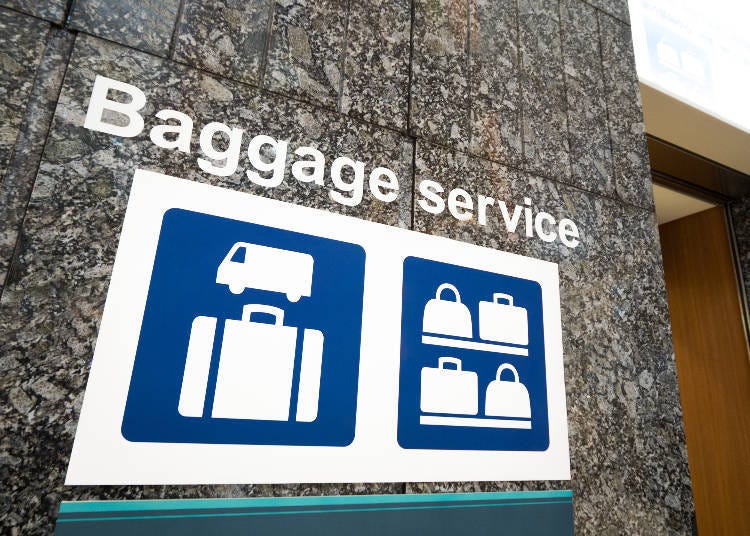
Most major airports in Japan offer luggage delivery counters, allowing you to send your bags directly from the airport to your accommodation upon arrival. Depending on the time you drop them off, same-day delivery to your hotel may even be possible.
Before using this service, be sure to confirm that your accommodation can receive luggage on your behalf. Some hotels and lodgings may have specific rules or cut-off times.
When preparing to return home, you can also send your luggage from your accommodation directly to the airport. This lets you travel light on your final day and makes getting to the airport much easier.
Delivery lead times vary depending on your flight schedule and the courier company used. Always check the luggage acceptance hours at the airport counter in advance to ensure your bags arrive on time.
▼ View More Articles About Luggage Delivery ▼
▼ You May Want to Book These ▼
從日本主要機場出發的交通方式
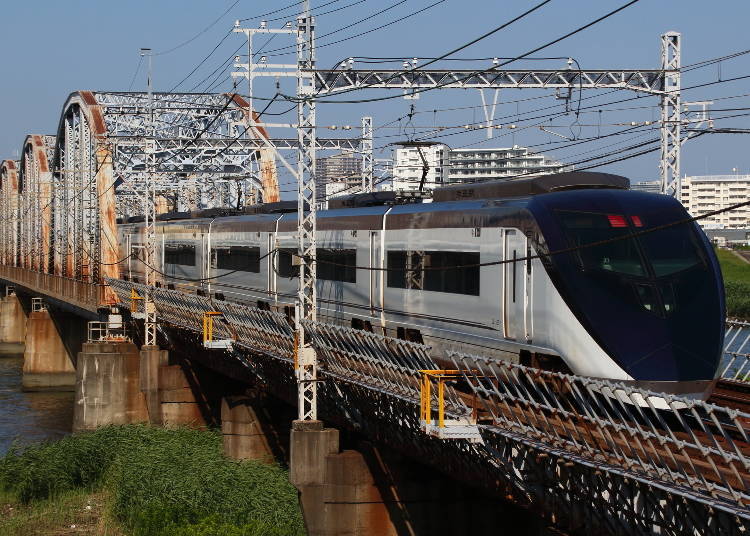
Below are transportation guides for several of Japan’s major airports, useful for travelers looking to reach popular sightseeing areas from the airport.



Always Check Official Information Before You Go
Airport procedures and entry or exit requirements can sometimes change without advance notice. To avoid unexpected issues, it is best to double-check the latest rules before departure.
Before traveling, visit official government sources such as embassies, consulates, or relevant agency websites to confirm the most up-to-date entry and exit requirements for both Japan and your home country.


*Prices and options mentioned are subject to change.
*Unless stated otherwise, all prices include tax.
Popular Tours & Activitiess
Recommended places for you
-

Kambei Sannomiyahonten
Yakiniku
Kobe, Sannomiya, Kitano
-
Appealing

Rukku and Uohei
Izakaya
Sapporo / Chitose
-
ISHIDAYA Hanare
Yakiniku
Kobe, Sannomiya, Kitano
-

Jukuseiniku-to Namamottsuarera Nikubaru Italian Nikutaria Sannomiya
Izakaya
Kobe, Sannomiya, Kitano
-
Goods

Yoshida Gennojo-Roho Kyoto Buddhist Altars
Gift Shops
Nijo Castle, Kyoto Imperial Palace
-

Kanzenkoshitsuyakinikutabehodai Gyugyu Paradise Sannomiya
Yakiniku
Kobe, Sannomiya, Kitano
-

This Winter, Godzilla Takes Over Haneda Airport
by: Guest Contributor
-
Ad
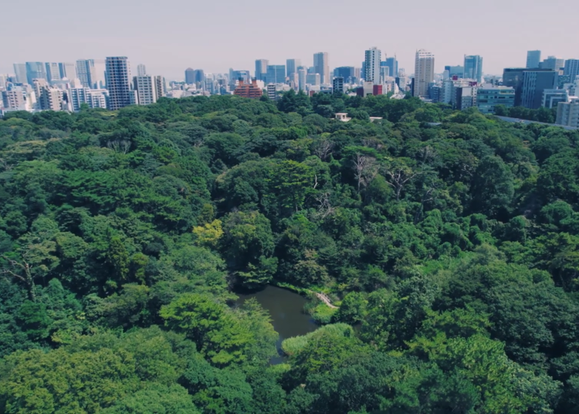
Discover the "Miraculous Forest" in the Heart of Tokyo: The Institute for Nature Study (9 Minutes from JR Meguro Station)
-
Ad
[Tokyo, Ueno] A Journey to the Sacred Grounds of the Tokugawa Shoguns: A Complete Guide to the "EDO SHOGUN’S LEGACY TRAIL TOUR" – Where Special Access, Modern Art, and Digital Innovation Converge
by: Guest Contributor
-

New in Ginza! Air BicCamera Ginza Opens with a Faster, More Convenient Shopping Experience
by: Guest Contributor
-
Ad

(Opening in Jan 2026) 'THE SUMO LIVE RESTAURANT HIRAKUZA GINZA TOKYO!' 5 Exciting Ways to Experience the World of Sumo!
-

Strawberries, Style, and Tokyo’s Coolest Neighborhood: Winter Afternoon Tea in Kichijoji
by: Guest Contributor
-
What to Do at Hakodate Airport (HKD/RJCH): Incredible Fresh Seafood and Authentic Japanese Souvenirs
-
Dakigaeri Gorge: Stroll Beside Aqua-Blue Streams and Brilliant Autumn Leaves in Akita
by: Guest Contributor
-
Find the Best Transport from New Chitose Airport to Sapporo
-
Sendai Airport (SDJ) Guide: Services, Must-Visit Spots, Food, Shopping, and Nearby Hotels
-
Japan Relaxes its Multiple-Entry Visa Requirements for Filipinos: What you need to know
-

10 Important Japanese Phrases to Know Before You Enter a Japanese Convenience Store!
by: Teni Wada
- #best sushi japan
- #what to do in odaiba
- #what to bring to japan
- #new years in tokyo
- #best ramen japan
- #what to buy in ameyoko
- #japanese nail trends
- #things to do japan
- #onsen tattoo friendly tokyo
- #daiso
- #best coffee japan
- #best japanese soft drinks
- #best yakiniku japan
- #japanese fashion culture
- #japanese convenience store snacks