



Getting to Asakusa Made Easy: From Narita & Haneda Airports
- Written by: LIVE JAPAN Editor
Asakusa is often the first stop for travelers looking to experience Tokyo’s old-town atmosphere. With landmarks like Senso-ji Temple, Kaminarimon Gate, and the lively shops along Nakamise Street, it remains one of the city’s most popular areas for both first-time visitors and repeat travelers.
Asakusa is also conveniently located near Tokyo Skytree, making it easy to combine both sights in a single day. In this guide, we break down how to get to Asakusa from Narita and Haneda Airports, as well as from major stations around Tokyo, so first-time visitors can plan their journey with confidence and avoid common transport pitfalls.
Main image source: PIXTA
This article contains affiliate links
- Table of Contents
-
- Asakusa: A Down-to-Earth Neighborhood with Old-Town Charm
- Four Major Rail Lines Serving Asakusa Temple and Kaminarimon
- From Narita Airport: Keisei Railway Is the Most Direct Option
- From Haneda Airport: Keikyu Line Is the Fastest Direct Option
- Getting to Asakusa from Tokyo’s Major Sightseeing Areas
- Experience Asakusa’s Old-Town Charm Through Its Unique Transport Options
- Get the Transport Right and Start Your Perfect Asakusa Trip

Asakusa: A Down-to-Earth Neighborhood with Old-Town Charm
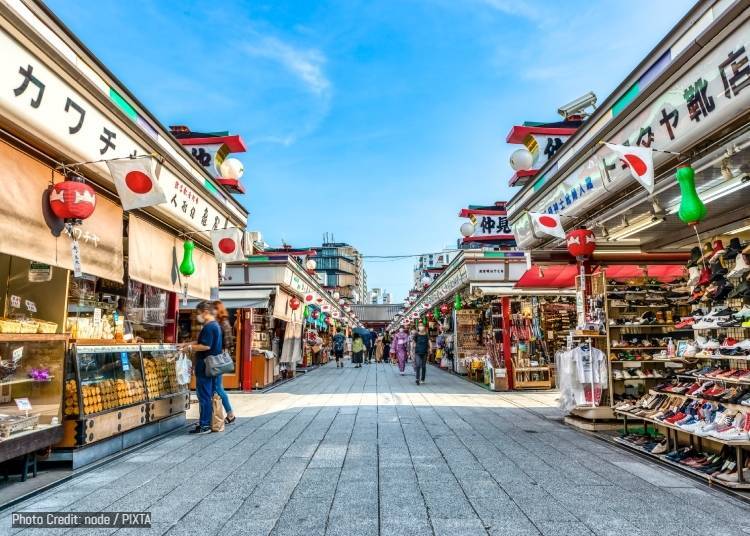
Located in Taito Ward, Asakusa is one of Tokyo’s most iconic sightseeing areas and has thrived as a center of everyday faith and culture since the Edo period. At its heart is Senso-ji Temple, Tokyo’s oldest temple, with a history of over 1,400 years and more than 30 million visitors each year.
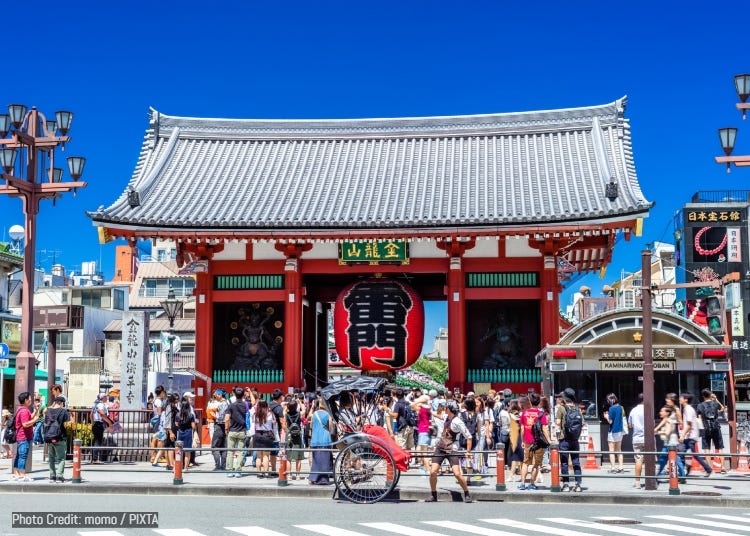
During the Edo period, Senso-ji served as a prayer temple connected to the Tokugawa shogunate, helping the surrounding area develop into a lively commercial hub. Today, landmarks such as the Kaminarimon Gate with its massive red lantern and Nakamise Street, Japan’s oldest shopping street lined with more than 90 shops, remain defining symbols of Asakusa’s enduring appeal.
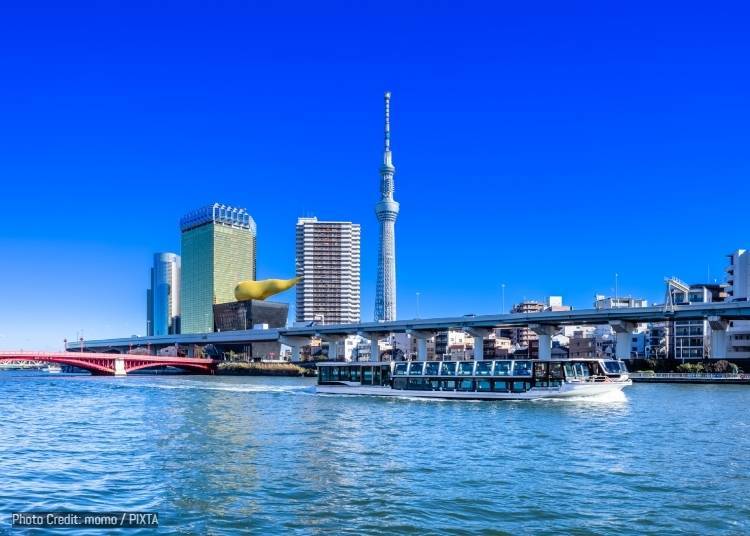
In addition, Tokyo Skytree is located just a short distance from Asakusa, giving the area a rare blend of old and new. Visitors can enjoy the warm, down-to-earth atmosphere of a traditional shitamachi neighborhood, then easily switch gears to explore one of Tokyo’s most futuristic landmarks, a contrast that continues to attract travelers from Japan and abroad.
- When planning an Asakusa visit, there are two common transport pitfalls to watch out for.
- First is Asakusa Station on the Tsukuba Express, which is more than a 10-minute walk from the Asakusa stations served by the Ginza Line and Toei Asakusa Line. When booking accommodation, always check which line the nearest station is on.
- The second is Asakusabashi Station, which sounds similar but is actually two stops away from Asakusa and over a 20-minute walk. Confirming the correct station in advance will help ensure a smoother and more relaxed Asakusa itinerary.
-

-
Address
2-3-1, Asakusa, Taitou-ku, Tokyo, 111-0032
View Map -
Nearest Station
Asakusa Station (Tokyo Metro Ginza Line / Toei Asakusa Line / Tobu Isesaki Line (Tobu Skytree Line) / Tsukuba Express)
5 minutes on foot
- Phone Number 03-3842-0181
-
Address
2-3-1, Asakusa, Taitou-ku, Tokyo, 111-0032
Four Major Rail Lines Serving Asakusa Temple and Kaminarimon
Although the stations around Senso-ji Temple and Kaminarimon Gate are all called “Asakusa Station,” they are actually served by four different rail lines. Each station has its own location and exit layout, which can make a big difference depending on where you are coming from or whether you are traveling with large luggage.
Below, we break down the key features of each line’s Asakusa Station, along with practical exit guidance, to help you choose the most convenient route for your itinerary.
1. Tokyo Metro Ginza Line - Asakusa Station
The Tokyo Metro Ginza Line connects Shibuya with Asakusa and stops at major sightseeing areas such as Shimbashi, Ginza, Mitsukoshimae, Akihabara, and Ueno. It is one of the most convenient lines for sightseeing in Tokyo. From Exit 1, Kaminarimon is just a 1–2 minute walk, making this the closest station to the main sights.
Important note
If you are traveling with large luggage or a stroller, be sure to use the elevator at Exit 1. This is the only exit at Ginza Line Asakusa Station with elevator access.
2. Toei Asakusa Line - Asakusa Station
The Toei Asakusa Line runs between Nishi-Magome and Oshiage. As Oshiage Station connects directly to Tokyo Skytree, this line is especially convenient for visiting both Asakusa and Skytree. From Exit A4, it is about a 2–3 minute walk to Senso-ji.
For heavy luggage
Elevators are located at Exit A2b. While it is slightly farther from Kaminarimon, it makes traveling with heavy bags much easier.
3. Tobu Skytree Line - Asakusa Station
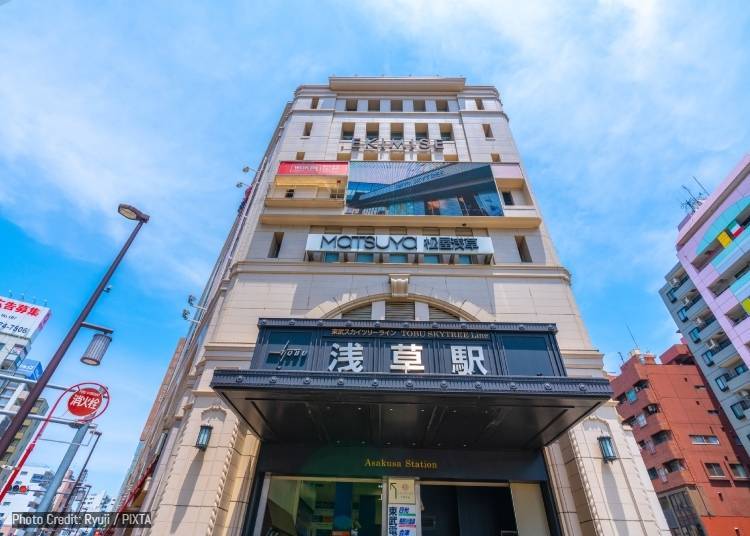
The Tobu Skytree Line (formerly the Tobu Isesaki Line) is an important route connecting Tokyo with nearby prefectures such as Saitama and Gunma. It is also just one stop from Tokyo Skytree Station. From the Tobu Line’s main exit, Kaminarimon is about a 2–3 minute walk.
This station is located inside the Asakusa Matsuyaya department store building. It is also a convenient transfer point for Tobu limited express trains bound for Nikko or Kinugawa Onsen.
4. Tsukuba Express -Asakusa Station
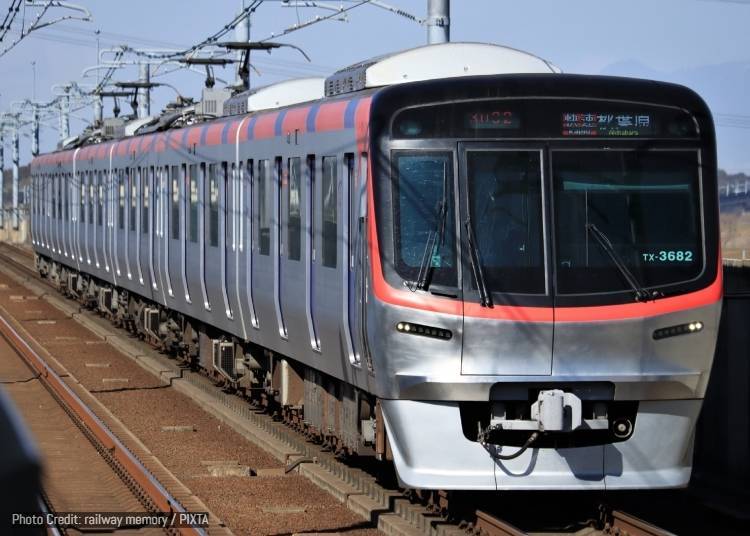
The Tsukuba Express (TX) runs between Akihabara and Tsukuba in Ibaraki Prefecture. One important thing to note is that TX Asakusa Station is a separate station, located more than a 10-minute walk from the other Asakusa stations. From Exit A1, it takes around 7–8 minutes on foot to reach Senso-ji.
If you arrive via the Tsukuba Express, consider adjusting your walking route. Starting at Senso-ji’s main hall, then continuing through Nakamise Street, and finishing at Kaminarimon makes sightseeing smoother and more efficient.
-

-
Address
1-1-3 Asakusa, Taito-ku, Tokyo, 111-0032
View Map -
Nearest Station
Asakusa Station (Tsukuba Express)
- Phone Number 03-3841-0603
-
Address
1-1-3 Asakusa, Taito-ku, Tokyo, 111-0032
From Narita Airport: Keisei Railway Is the Most Direct Option
When traveling from Narita International Airport to Asakusa, the most recommended and efficient route is the Keisei Access Express. The biggest advantage of this service is its through operation, as the train continues directly onto the Toei Asakusa Line after entering the city, allowing you to reach Asakusa Station without transferring.
The journey takes about 60–75 minutes, with a one-way adult fare of around 1,310 yen. If you accidentally board a Skyliner service bound for Ueno, you will need to transfer at Nippori Station or Keisei-Ueno Station.
Narita Airport → Keisei Access Express (through Toei Asakusa Line) → Asakusa Station
If you take the Keisei Skyliner, transfer at Nippori or Keisei-Ueno Station.
From Haneda Airport: Keikyu Line Is the Fastest Direct Option
Traveling from Haneda Airport to Asakusa is quick and straightforward. Take the Keikyu Airport Rapid Limited Express, which runs through directly onto the Toei Asakusa Line, allowing you to reach Asakusa Station without changing trains.
The journey takes about 35 minutes, with a one-way adult fare of around 530 yen. This makes it one of the most time-efficient and budget-friendly ways to travel between Haneda Airport and Asakusa.
Haneda Airport → Keikyu Airport Rapid Limited Express (through Toei Asakusa Line) → Asakusa Station
Getting to Asakusa from Tokyo’s Major Sightseeing Areas
Asakusa is located on the eastern side of central Tokyo and is close to popular areas such as Ueno and Akihabara. Whether you are coming from Tokyo Station, Shinjuku, or Shibuya, there are convenient train routes that make getting to Asakusa straightforward. Below, we outline the most recommended ways to reach Asakusa from key transport hubs.
From Ueno Station: The Fastest and Easiest Route
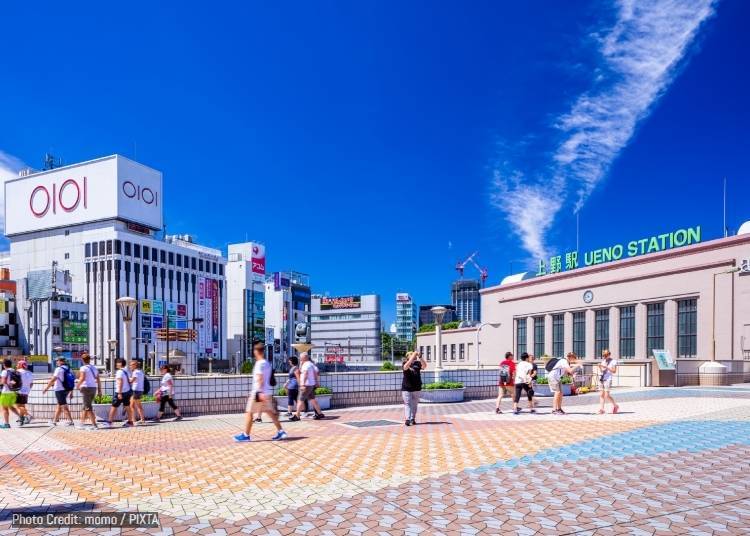
Ueno is just about 2 kilometers from Asakusa. Taking the Tokyo Metro Ginza Line gets you directly to Asakusa Station in around 5 minutes, with a one-way adult fare of 180 yen. This is the quickest and most foolproof option, especially for travelers staying in Ueno or arriving there by Shinkansen.
Ueno Station → Tokyo Metro Ginza Line → Asakusa Station
From Tokyo Station: Best for Travelers Making a Transfer
There are two main ways to get from Tokyo Station to Asakusa. The most recommended route is to take the JR Yamanote Line or JR Keihin-Tohoku Line to Ueno Station, then transfer to the Tokyo Metro Ginza Line. The total journey takes about 15 minutes, with a combined fare of around 350 yen.
Another option is to take the JR Chuo Rapid Line to Kanda Station and transfer to the Ginza Line. Travel time and cost are similar, so you can choose whichever route is more convenient at the time.
Tokyo Station → JR Yamanote Line or JR Keihin-Tohoku Line → Ueno Station → Tokyo Metro Ginza Line → Asakusa Station
From Shinjuku Station: An East–West Route Across Tokyo
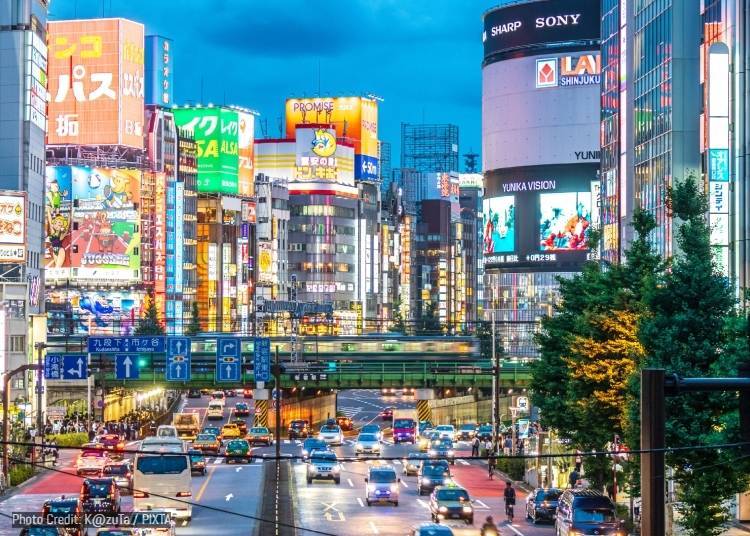
From the busy Shinjuku area, the fastest way to reach Asakusa is to take the JR Chuo Rapid Line to Kanda Station, then transfer to the Tokyo Metro Ginza Line. The total journey takes about 25–30 minutes, with a one-way fare of around 370 yen.
If you have a Toei Subway day pass, another option is to take the Toei Shinjuku Line to Bakuro-Yokoyama Station, then walk to Higashi-Nihombashi Station on the Toei Asakusa Line to reach Asakusa. This route involves a bit more walking and transfer time, but it can help save on JR fares.
Shinjuku Station → JR Chuo Rapid Line → Kanda Station → Tokyo Metro Ginza Line → Asakusa Station
From Shibuya or Ginza: The Ginza Line Is the Easiest Option
Travelers staying in Shibuya, Omotesando, or the Ginza area are especially well placed, as the Tokyo Metro Ginza Line starts at Shibuya and runs directly through Ginza. From Shibuya, the ride to the terminal station at Asakusa takes about 33 minutes, with a fare of 210 yen. From Ginza, it takes just 16 minutes, costing 180 yen.
Because these are end-of-line or near end-of-line routes, seats are often available on the return journey from Asakusa, making the trip back more comfortable.
Shibuya Station → Tokyo Metro Ginza Line (toward Asakusa terminus) → Asakusa Station
- If you plan to visit multiple sights in a single day, the Tokyo Subway Ticket is well worth considering. Available in 24-, 48-, and 72-hour versions, it allows unlimited rides on all Tokyo Metro and Toei Subway lines.
- With this pass, most trips to Asakusa are fully covered, making it a great value for travelers staying at hotels along subway lines and relying mainly on trains to get around the city.
Experience Asakusa’s Old-Town Charm Through Its Unique Transport Options
Beyond its role as a rail hub, Asakusa truly shines through the variety of ways you can get around. Ride a traditional rickshaw through atmospheric backstreets or hop on a water bus along the Sumida River to experience the area’s classic Edo-era waterfront scenery.
Below are a few transport experiences that let you soak up Asakusa’s distinctive shitamachi atmosphere at a slower, more memorable pace.
Sumida River Water Bus: See Tokyo Skytree from the Water
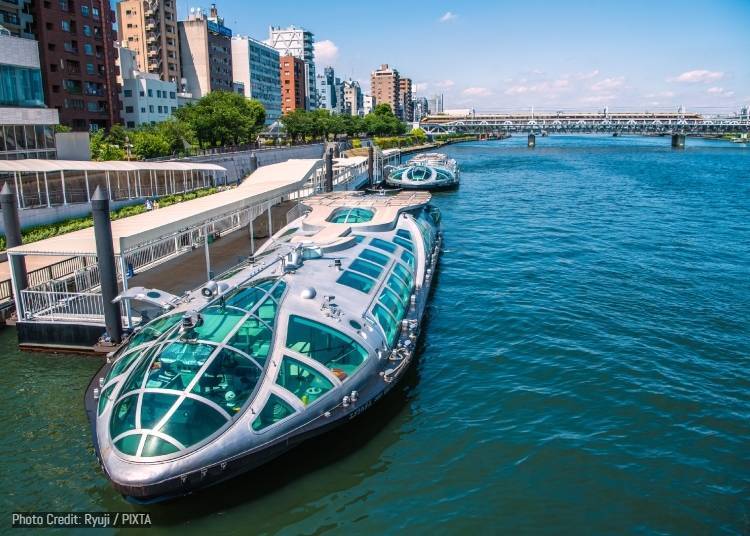
For a fresh perspective on Asakusa and Tokyo, taking a water bus along the Sumida River is a memorable choice. If you plan to travel from Asakusa to Odaiba, the standout options are the Himiko and Hotaluna vessels, both designed by renowned manga artist Leiji Matsumoto, with sleek, futuristic exteriors.
From the river, passengers can enjoy views of iconic landmarks such as Tokyo Skytree, Tokyo Tower, and the Odaiba Rainbow Bridge. The cruise from Asakusa to Odaiba Seaside Park takes around 70 minutes, with an adult fare of 2,000 yen. While pricier than the train, the scenery and relaxed pace make it well worth the experience.
Asakusa Rickshaw Rides: Explore Hidden Old-Town Spots with a Local Guide
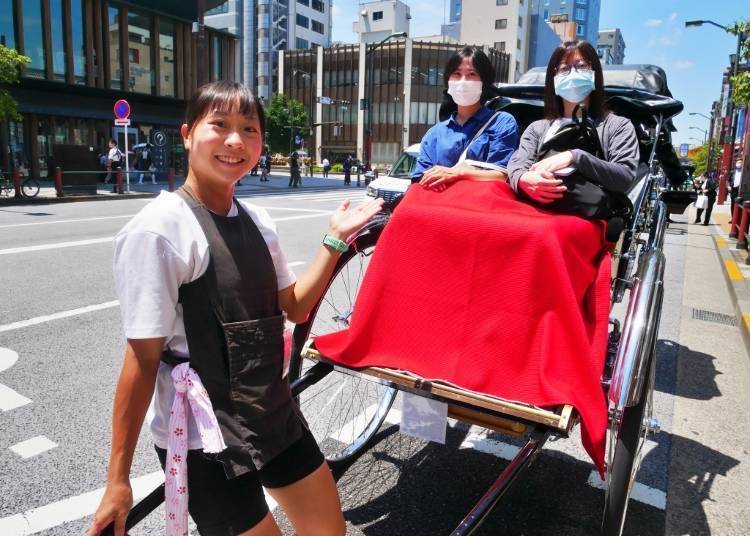
Along the streets of Asakusa, you will often see energetic rickshaw pullers dressed in traditional attire. More than just transportation, a rickshaw ride is a guided cultural experience led by locals who know the area’s history, stories, and hidden corners.
Rickshaw pullers take guests through quieter backstreets behind Nakamise Street and along nostalgic routes like Denboin Street, sharing insights you would likely miss on your own. Prices are based on time and number of riders. A short 10-minute ride for two costs around 5,000 yen, while the popular 30-minute standard course for two is about 15,000 yen.
Drivers also help take photos at the best viewpoints, making this a great option for travelers who want to save energy while enjoying a deeper look into Asakusa’s shitamachi atmosphere.
Taito City Loop Bus “MEGURIN:” The Most Budget-Friendly Way to Explore
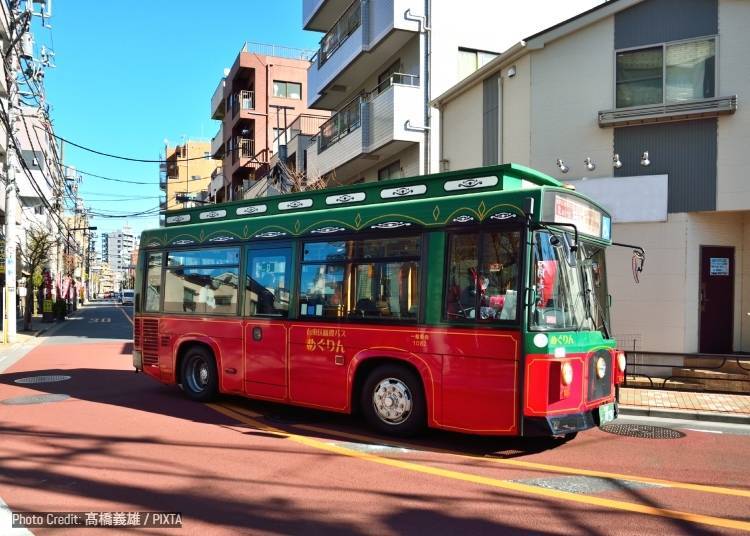
Operated by Taito City, the small loop bus MEGURIN is one of the easiest ways to explore Asakusa and nearby areas such as Ueno, Yanaka, and Kuramae. The bus runs on several routes, including north, south, east–west, and circular lines, with a flat adult fare of just 100 yen per ride regardless of distance.
If you plan to spend a full day sightseeing around Taito Ward, a one-day pass is also available for only 300 yen. With its retro, photo-friendly design, MEGURIN lets you move through local neighborhoods like a resident while keeping transport costs to a minimum.
Bike Sharing: Explore Asakusa Freely, One Ride at a Time
For travelers who value flexibility, bike sharing is a great way to explore Asakusa at your own pace. Docking stations for services such as HELLO CYCLING and Docomo Bike Share are easy to find around the neighborhood.
Most services charge by time. Initial rates typically range from around 130 to 165 yen for the first 30 minutes, with additional fees of about 100 to 150 yen every 15 or 30 minutes, depending on the system. Many bikes are electric-assisted, making it easy to reach slightly farther spots without much effort. Cycling through Asakusa’s backstreets in a light breeze is a relaxing way to discover small shops and hidden local gems.
Stroll the Sumida River Walk: The Shortest Link Between Asakusa and Tokyo Skytree
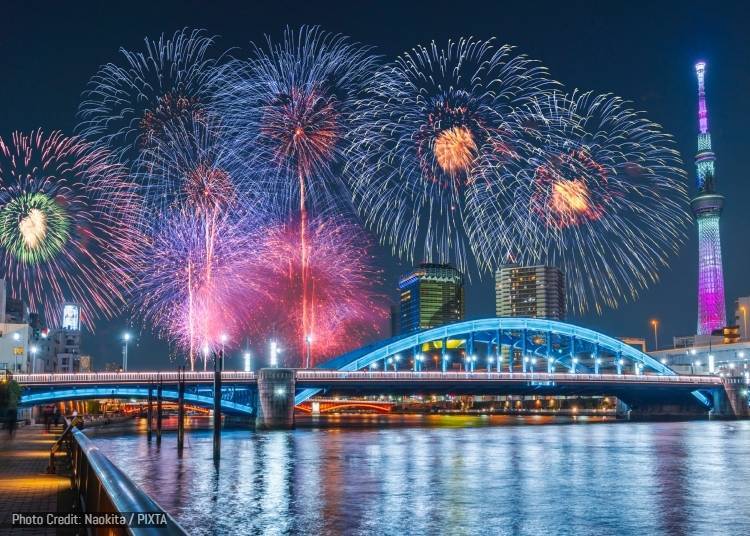
If you have time and energy to spare, exploring the area on foot is highly recommended. The Sumida River Walk is a pedestrian walkway added alongside the Tobu railway bridge, directly connecting Asakusa with the Oshiage area, home to Tokyo Skytree.
The walk takes around 10–15 minutes and offers views of trains crossing the steel bridge, along with seasonal scenery from Sumida Park. Popular with younger travelers, this route is a relaxed and scenic way to move between two of Tokyo’s most iconic sightseeing areas.
Get the Transport Right and Start Your Perfect Asakusa Trip
Asakusa is full of surprises, and the way you arrive can shape the experience. Whether you reach the area quickly via the Ginza Line or glide in by water bus, each transport option offers a different and memorable way to explore the neighborhood.
When planning your route, remember key details such as the elevator at Ginza Line Exit 1, the A2b elevator on the Toei Line, and the longer walking distance from Tsukuba Express Asakusa Station. Choose the option that best fits your needs and set off to discover this old-town district where Edo-era charm meets modern Tokyo.
- Area
- Category
*Prices and options mentioned are subject to change.
*Unless stated otherwise, all prices include tax.
Popular Tours & Activities
Recommended places for you
-
Skip the Stress in Japan: Meet the New "TOURIST PASMO" Travel Card
by: Guest Contributor
-
Enjoy Japanese Beauty and Healing with All Five Senses! A "Hana-Goshuin" Journey via Tokyu Lines & Buses
by: Guest Contributor
-

(2026) 18 Stories You Can Carry Home: Immersive Cultural Experiences in Tokyo, Kyoto, and Osaka
-

Magic at 320 km/h: The "Magical Jubilee Shinkansen" Celebrates Tokyo DisneySea®’s 25th Anniversary
by: Guest Contributor
-
Explore Tokyo and Kanagawa to the Fullest! A Seamless Journey with the Odakyu Digital 1-Day All-Line Pass
by: Guest Contributor
-

Explore Everyday Tokyo in 3 Hours from Haneda Airport! A New Travel Style Using the HANEDALL Digital Pass
by: Guest Contributor
Inspiration for Accommodations
-
Family-Friendly Hotels with Free Shuttle to Disneyland: Convenient Access for a Magical Stay
-
Top Ranked Hakone Hotels with Mt. Fuji View: Enjoy Stunning Scenery from Your Private Space
-
Convenient Tokyo Hotels with Airport Shuttle: Ideal for Families and Heavy Luggage
-
9 Family-Friendly Hotels with Comfortable Family Rooms in Asakusa
-
10 Open-air bath Onsen Ryokans in Hakone for Ultimate Relaxation
-
4 Easiest Ways From Narita Airport to Shinjuku: Best Transport Options Compared
-
Narita Airport to Ueno: Skyliner, Keisei Line, or N'EX? Compare Travel Times, Transfers & Fares
-
10 Important Japanese Phrases to Know Before You Enter a Japanese Convenience Store
by: Teni Wada
-
Healthcare in Japan for Tourists: What to Do When You Get Sick or Injured in Japan
-
Japan Relaxes its Multiple-Entry Visa Requirements for Filipinos: What you need to know
-
Easy Day Trip from Tokyo! Ultimate Sightseeing Guide for Hakone & Lake Ashinoko!
- #best ramen tokyo
- #what to buy in ameyoko
- #what to bring to japan
- #new years in tokyo
- #best izakaya shinjuku
- #things to do tokyo
- #japanese nail trends
- #what to do in odaiba
- #onsen tattoo friendly tokyo
- #daiso
- #best sushi ginza
- #japanese convenience store snacks
- #best yakiniku shibuya
- #japanese fashion culture
- #best japanese soft drinks