




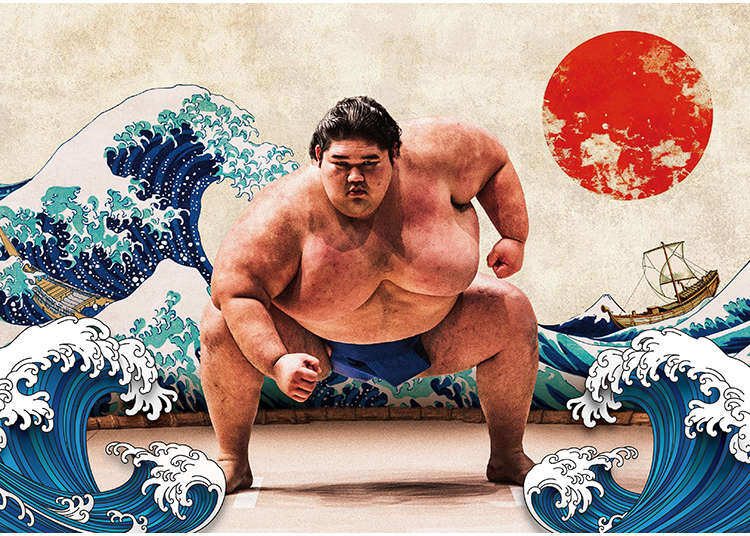
THE SUMO LIVE RESTAURANT HIRAKUZA GINZA TOKYO: Experience the World of Sumo and Taste Authentic Japanese Cuisine
- Written by: LIVE JAPAN Editor
THE SUMO LIVE RESTAURANT HIRAKUZA GINZA TOKYO, a sumo entertainment show restaurant, has recently opened in Ginza, Tokyo. This new spot is a rare opportunity to enjoy authentic Japanese cuisine while watching thrilling sumo performances up close.
We visited the restaurant with a model and covered everything from the show itself to dining and the venue's atmosphere. The live performance is conducted in English and designed to be accessible even to those new to sumo, making it a top-notch tourist attraction.
In this article, we will introduce HIRAKUZA’s highlights, the program content, the dining menu, and information on access and pricing based on our actual experience.
- Table of Contents
-
- The World of Sumo: Japan's Tradition and Its Allure
- The grand opening of THE SUMO LIVE RESTAURANT HIRAKUZA GINZA TOKYO
- The show finally begins! Discover a thrilling sumo show.
- Savor delicious Japanese cuisine, including hot pot and tempura rice bowls
- Discover the essence of sumo through practice demonstrations
- Introducing techniques and fouls with humor
- Who will win the three bouts? A 3-Match Tournament
- The highlight of the show! Step into the ring for the “Sumo Challenge”
- Capture the moment: Post-show photo op with the wrestlers
- About seat types, prices, and access
- A unique Japanese experience: Enjoy authentic sumo wrestling and Japanese cuisine
The World of Sumo: Japan's Tradition and Its Allure
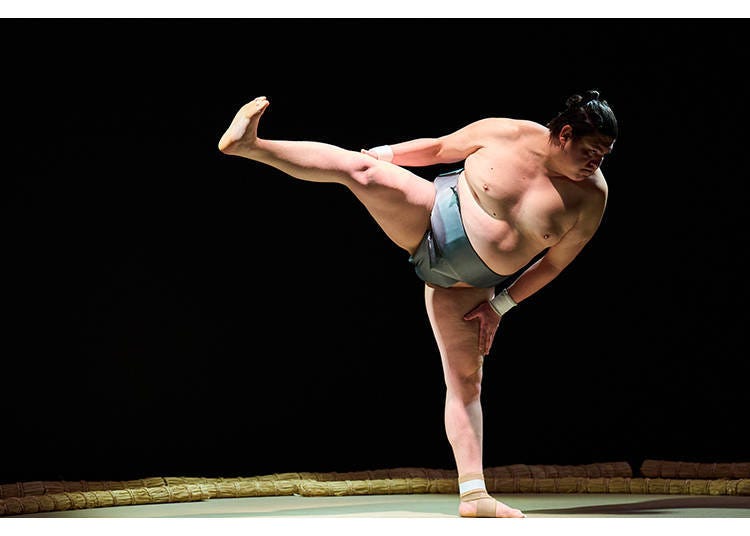
Sumo wrestling is one of Japan’s leading traditions, its origins tracing back to ancient Shinto rituals. It is said to have started during ceremonies praying for peace and bountiful harvests. Even today, sumo wrestlers compete atop the sacred Dohyo (ring). Through these contests, they represent the spirit, discipline, and etiquette that are central to the Japanese identity.
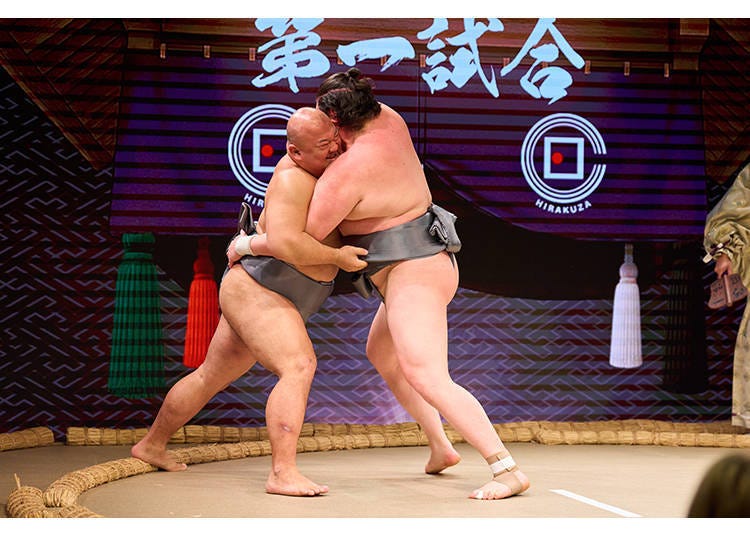
The rules are simple: two wrestlers face each other on a circular ring, and the one who forces his opponent out of the ring or makes them touch the ground with any part of their body wins. However, there are many different techniques and intense strategies condensed into this quick battle. The glares exchanged at the beginning of the match (tachiai), the sounds of muscular bodies colliding, the roars of the audience... All those elements draw the viewers in.
The main way to experience Sumo bouts is at the official "Honbasho" tournaments. But with limited schedules and a fierce scramble for tickets, it is notoriously difficult to find a chance to watch Sumo easily.
The grand opening of THE SUMO LIVE RESTAURANT HIRAKUZA GINZA TOKYO

Enter THE SUMO LIVE RESTAURANT HIRAKUZA GINZA TOKYO, a venue currently making headlines for making the world of Sumo more accessible to international visitors. This is a brand-new show facility where you can savor Japanese dining while immersing yourself in the intensity of Sumo, Japan’s national sport with over 1,500 years of history.
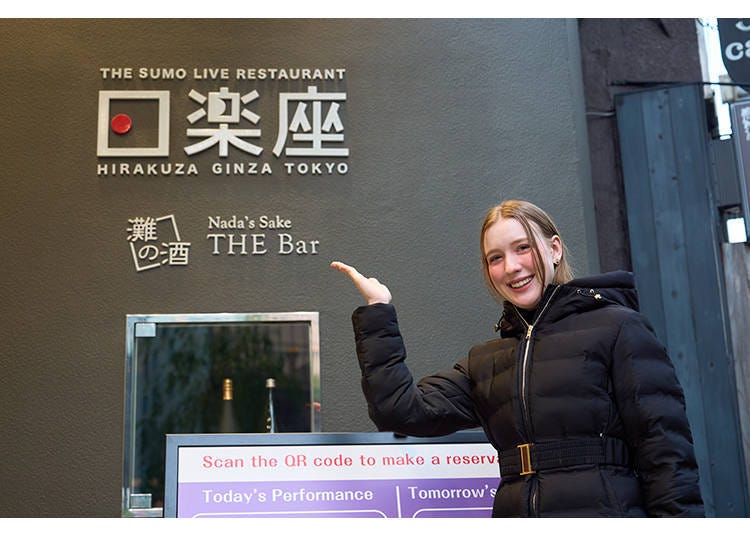
We visited the restaurant with Mia, a model who was experiencing sumo for the first time.
She told us, brimming with anticipation as we headed to the venue.

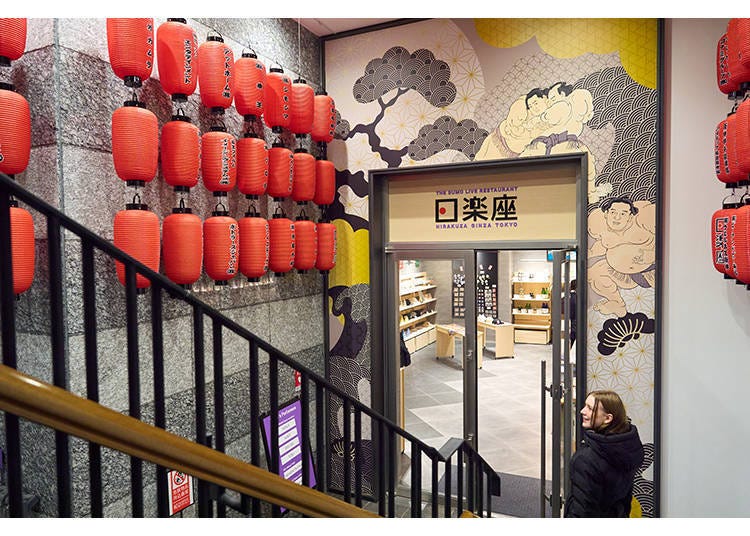
HIRAKUZA first opened in Osaka in 2024 and later expanded to Ginza in Tokyo. The venue is located near Ginza Chuo-dori Street, making it easy to stop by when you’re in the area for shopping. The concept of the restaurant is "EDO Spirit –Sumo & Culture Experience–." The approach to the basement floor is adorned with decorations that evoke the atmosphere of the Edo period, creating a feeling of stepping into another world before even entering the venue.
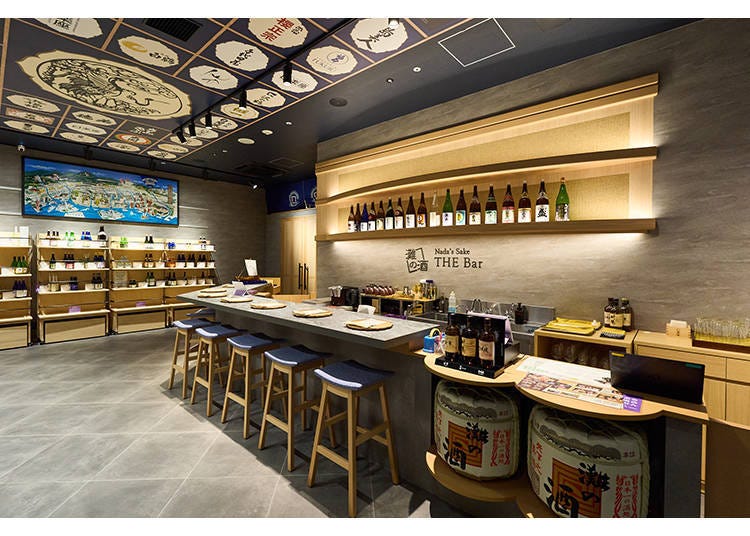
The entrance floor features the SAKE BAR “Nada's Sake THE Bar” and a souvenir corner. As we arrived a bit early, we decided to kill time at the sake bar until the venue opened.
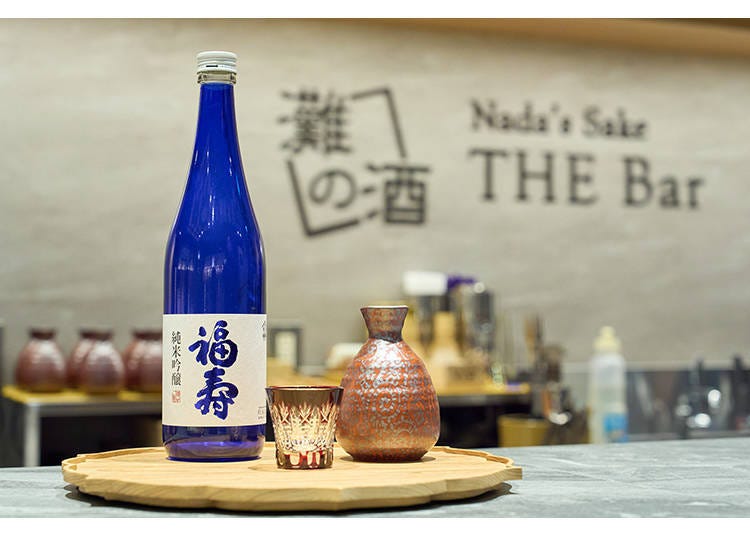
The sake bar serves sake from Nada, Hyogo, which was known as kudarizake during the Edo period and was offered to the Shogunate. The bar, which operates from 1 PM to 8 PM, offers twenty varieties from twenty breweries, allowing you to relax while savoring sake before the show.
*Business hours are subject to change.

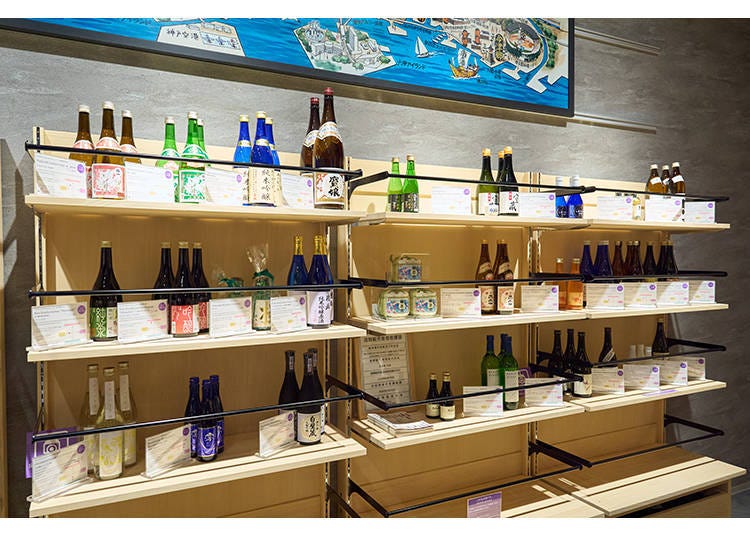
English descriptions of the various sake are available, and staff members are also ready to offer guidance. Today, Mia tried “Fukuju”, a smooth Junmai Ginjo sake known for its fruity aroma. “It is very easy to drink!”, she noted. Another great feature is that you can purchase any brand you like as a souvenir. Apparently many sake enthusiasts visit this location specifically to purchase Nada sake, which is hard to find in Tokyo.

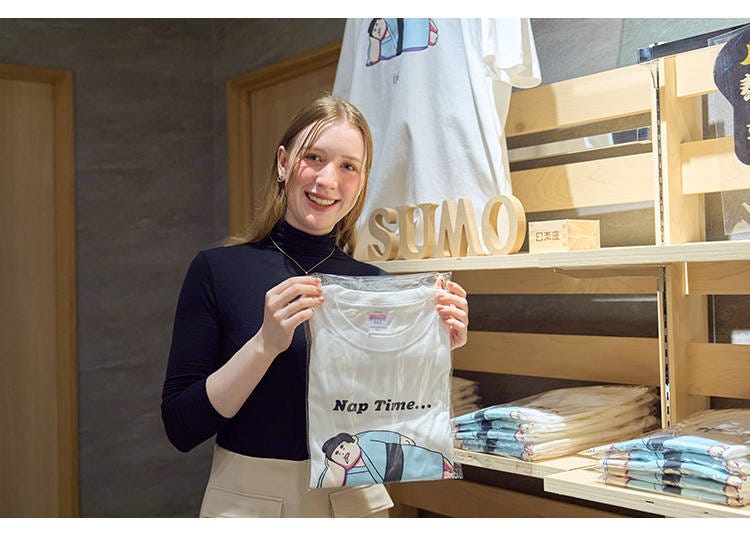
The souvenir corner features sumo-themed merchandise. You will find popular items, such as magnets and caps from the Osaka venue, as well as a wide selection exclusive HIRAKUZA goods. Keychains, towels, and small banners are available, but the T-shirts seem to be especially popular. “The designs are cute and look like something I could wear every day” Mia said.
The show finally begins! Discover a thrilling sumo show.

As we enter the venue, staff members greet us with warm smiles and guide us to our seats. The seating is arranged in a U-shaped counter surrounding the central Dohyo Stage. Because of the tiered layout, every seat offers a great view of the ring.
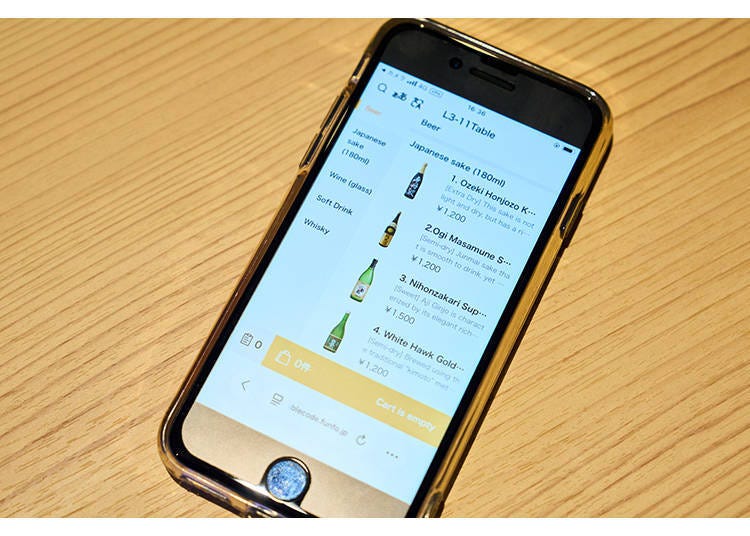
The staff members are proficient in English and come from diverse backgrounds. Additional drink orders can be placed via smartphone, making the process seamless.
Savor delicious Japanese cuisine, including hot pot and tempura rice bowls
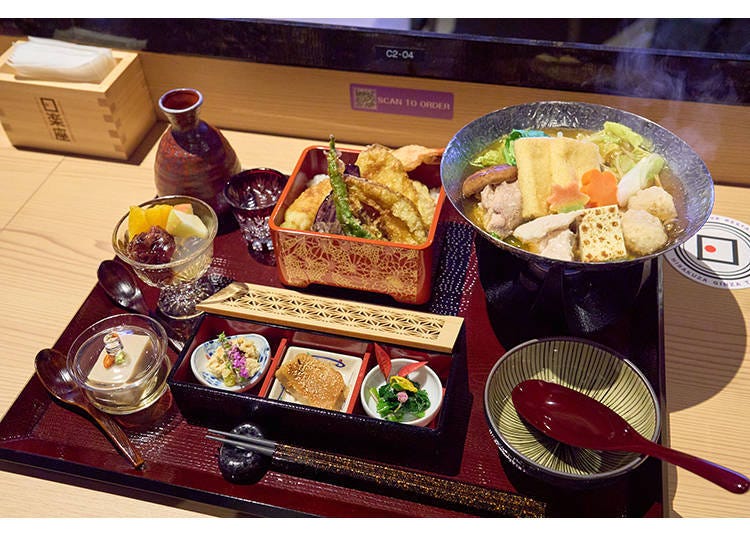

Freshly cooked Japanese food is served while waiting for the show to begin. The kitchen is glass-walled, allowing guests to watch the chefs at work . This offers a rare chance to see tempura being fried in copper pots.

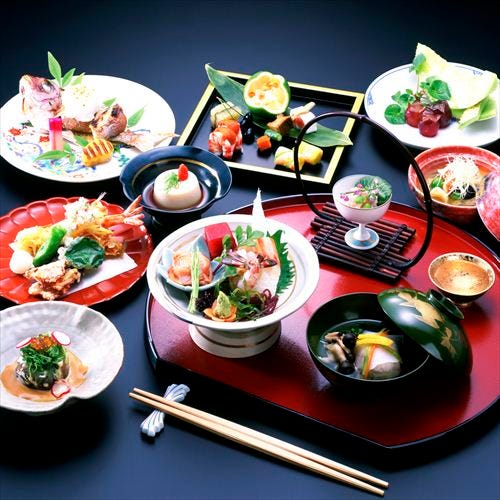
The food offered at the venue is authentic Kaiseki cuisine. Developed during the Edo period, it refers to a culinary style that represents Japanese banquet culture, with an emphasis on seasonal ingredients. HIRAKUZA embraces this principle while incorporating elements in line with the theme of sumo.
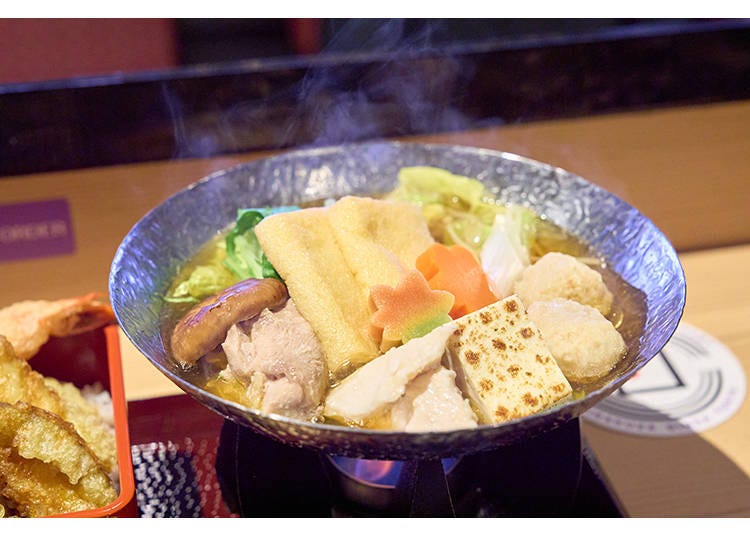
The signature dish is chanko nabe, a hot pot dish that sumo wrestlers eat daily to build their physique. It has a gentle flavor and is served with vegetables that bring sweetness to the light broth.
“It’s my first time trying chanko nabe. It’s really delicious, and I’m happy I was able to enjoy sumo and while eating the food associated with the sport,” Mia said, expressing her delight.
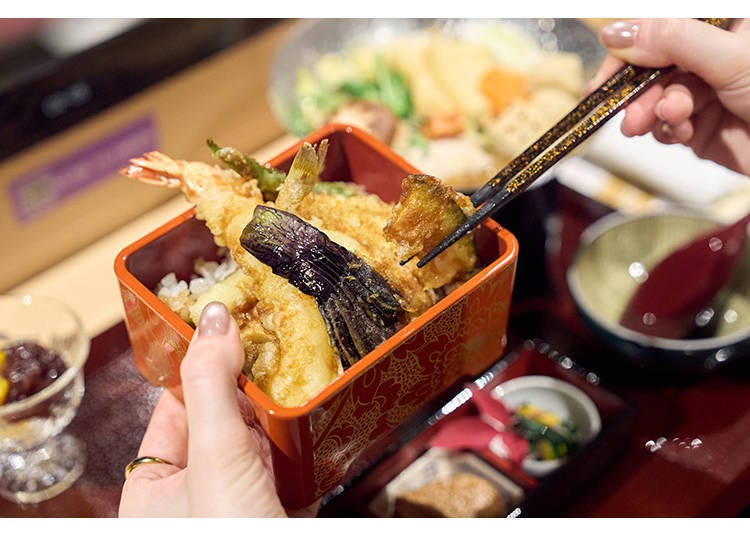
The freshly fried tempura at the kitchen is served as “Ten-don” (Tempura rice bowl). .
“I didn’t expect it to be such a substantial meal. This is a great opportunity to learn about Japanese cuisine” Mia said. The set also includes appetizers and Japanese-style desserts made with seasonal ingredients which are to die for.


You can request vegan and halal options at the time of reservation, as well as the Children’s Castle Set. THE SUMO LIVE RESTAURANT HIRAKUZA GINZA TOKYO makes sure that this unique cultural food experience is accessible to as many people as possible.
Discover the essence of sumo through practice demonstrations

As we savor our meal and wait for the performance, the sound of taiko drums fills the venue. The steady beat of the drums gradually quickens, and everyone in the audience prepares themselves for what is about to begin.
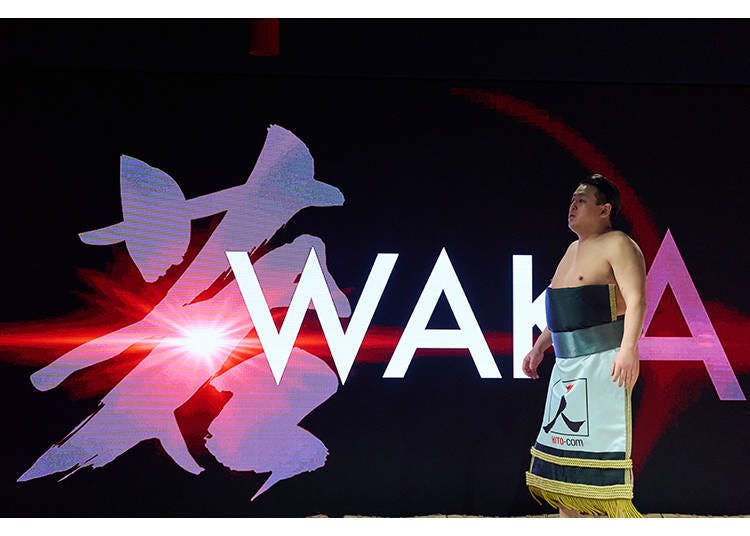
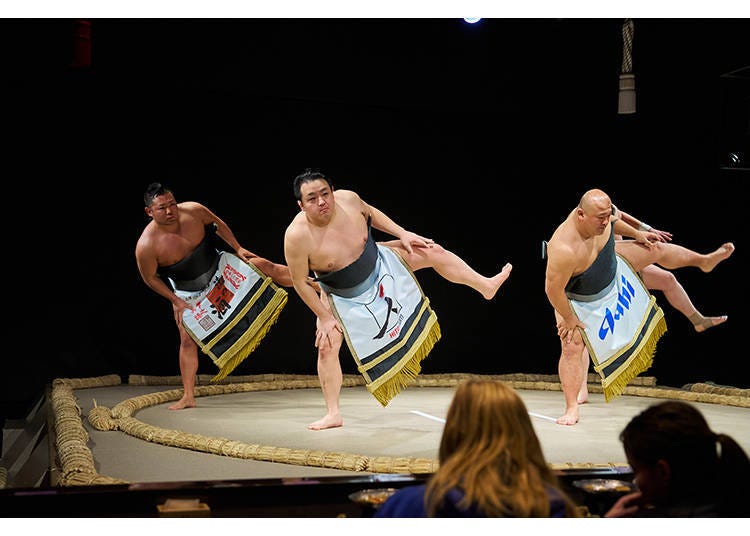
Then, the wrestlers performing today enter the ring one by one to the applause of the audience. Their imposing strides toward the ring exude an intensity that cannot be felt in photos and videos. Mia herself was taken aback by their intimidating presence.

The show begins with a demonstration of the wrestlers’ daily practice, which is not only physical but also spiritual, and a way to focus their minds. Traditional Japanese martial arts embrace the philosophy of “Shi, Gi, Tai” or “spirit, technique, and body,” meaning that only when these three elements are in harmony can true strength be achieved. This teaching is still being passed down in sumo practice.

The “chirichozu” ritual is one of the rituals performed before every bout. The wrestlers clap their hands together and turn their palms up to show that they are not carrying any weapons, ensuring fairness and honor. These movements are performed on a quiet stage without music or narration, and the venue instantly goes silent, creating a unique and intense atmosphere. The gestures’ meaning is explained through English captions on the screens behind the Dohyo to allow spectators to understand the context and better appreciate the depth of the tradition.
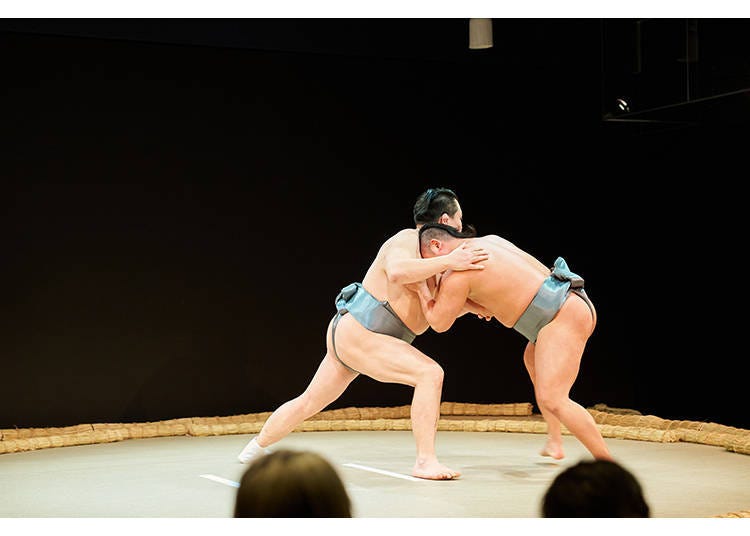
Next, the wrestlers demonstrate basic techniques and practice, showing actual training bouts in addition to offensive and defensive techniques. Despite their large physique, their speed and agility are unbelievable.
Each time two wrestlers collide, a sharp “bang” echoes through the venue, blowing the audience away. Words aren’t needed to understand that sumo is a sport that requires exceptional athletic skills and concentration.
Introducing techniques and fouls with humor
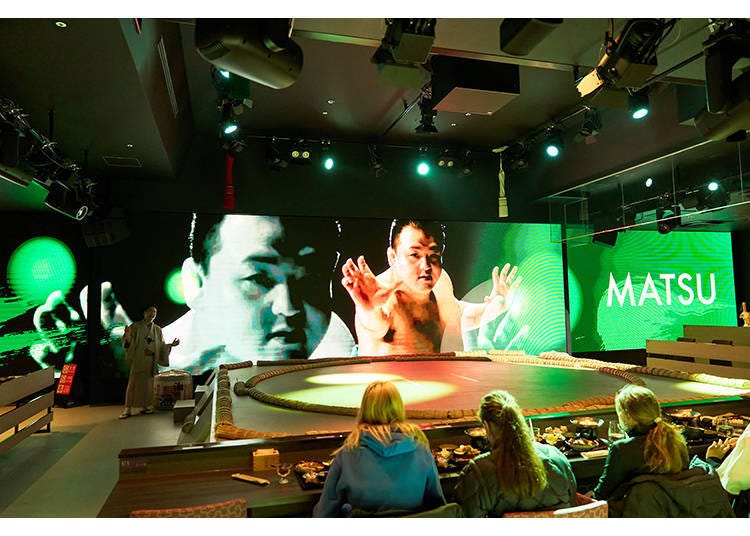
After the practice demonstration, the lights in the venue suddenly turn colorful, and the atmosphere changes completely. The host enters and warms up the crowd by repeatedly engaging them in a call-and-response in fluent English.
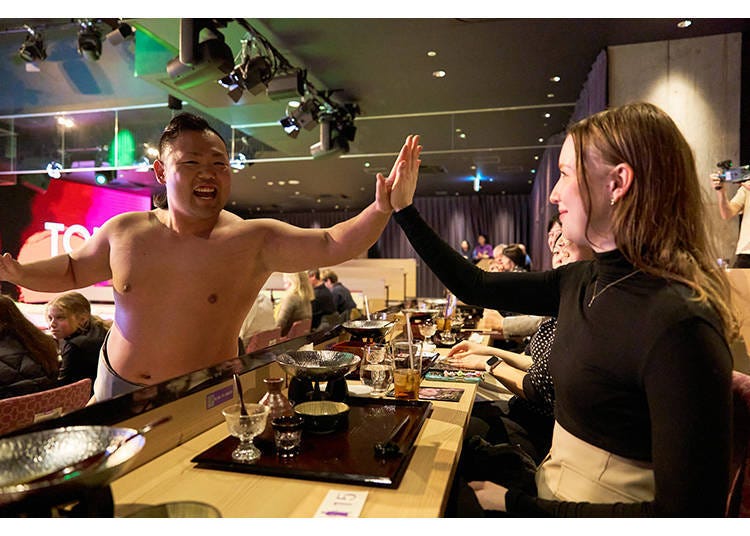
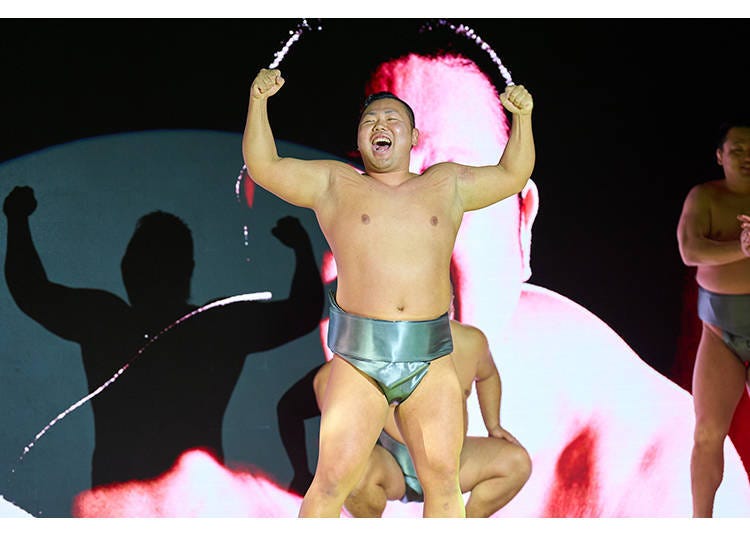
When the wrestlers reappear, they make their way to the ring, walking along the seats in the audience. They interact with the spectators, exchanging looks and high fives under a shower of applause. “I cannot believe we get to be this ose and even give them high-fives!” Mia exclaimed.

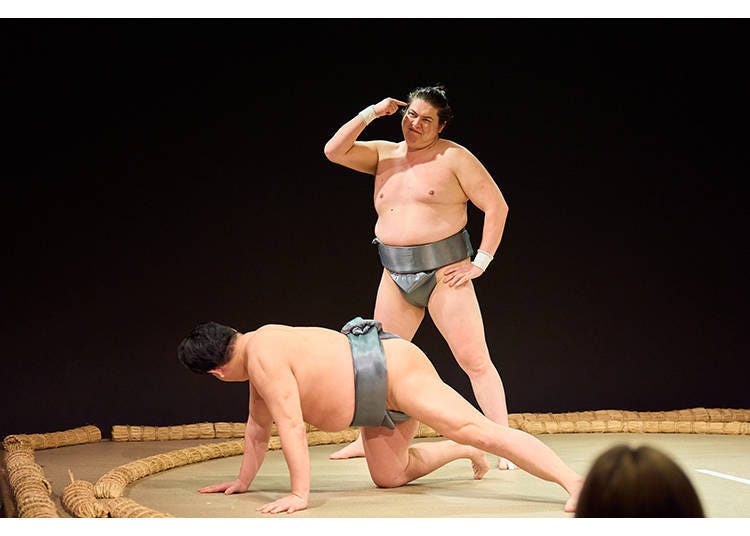
The wrestlers then demonstrate basic sumo techniques, such as oshidashi (frontal push out) and yorikiri (frontal force out). They deliberately exaggerate their movements and add reactions to the demonstrations to make them easy to follow for first-time viewers and naturally draw laughter from the crowd.

The entertainment continues with the introduction of fouls forbidden in sumo, such as kicks, punches, and eye poking, all reenacted with comical movements. The audience laughs and cheers as one of the wrestlers tries to dodge the fouls of the other. Seeing wrestlers demonstrate the rules makes them easier to understand than verbal explanations alone and very entertaining.
Who will win the three bouts? A 3-Match Tournament

After learning about the techniques and fouls, the matches finally begin. Thereis a 3-match tournament: two semi-finals and a final to determine the champion of the day.
The wrestlers enter the ring from the eastern and western directions, and the audience grows in anticipation, cheering and shouting the wrestlers’ names. Thanks to the previous explanations, each spectator already has a favorite wrestler to root for.


The venue falls silent when two wrestlers step onto the ring, stomp their feet, and look at each other, building the tension. The referee calls out, “Hakkeyoi, nokotta!” and the wrestlers lunge forward, grabbing each other's mawashi loincloths. The sound of their bodies colliding echoes throughout the ring, and even their heavy breathing can be heard in the audience during each bout.

The outcome of matches between well-trained wrestlers is not decided by sheer force alone. Victory hinges on a split-second decision to shift position the moment an opponent’s stance wavers. Naturally, the spectators were riveted to the ring, waiting to see who would move next..

After a heated final match, WAKAemerged victorious. He was given a barrel of sake and a prize envelope, to thunderous applause from the audience.
The highlight of the show! Step into the ring for the “Sumo Challenge”

One of the most popular segments of the show is the “Sumo Challenge,” where audience members selected by lottery get the opportunity to face off against wrestlers who just delivered thrilling matches.

To join, you simply must raise your hand when the host asks who would like to participate before explaining the techniques and rules. You will be given a ticket for the lottery. Pay close attention, as this will be the only chance to receive a ticket.
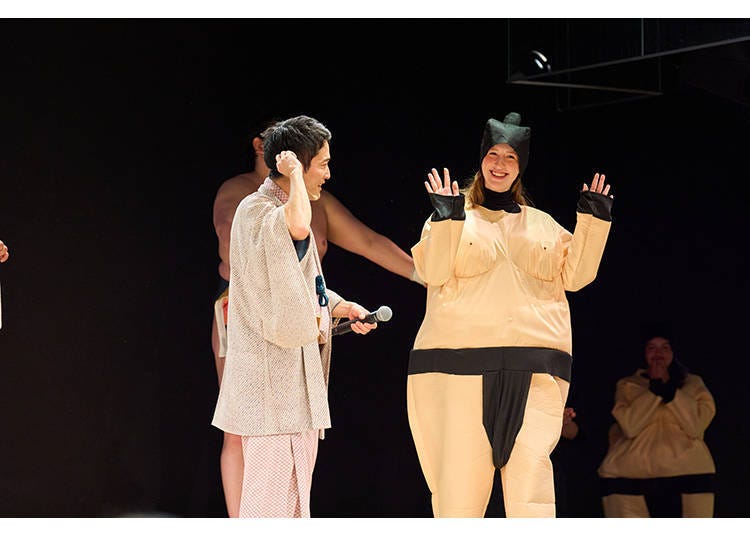

Three spectators were chose that day, including Mia! After changing into a sumo outfit and returning to the ring, the crowd spontaneously erupted into cheers. She chose an opponent, and the match began. At first, she seemed to be putting up a good fight, but in the end, the wrestler effortlessly lifted her up and carried her out of the ring. Laughter and cheers filled the venue.
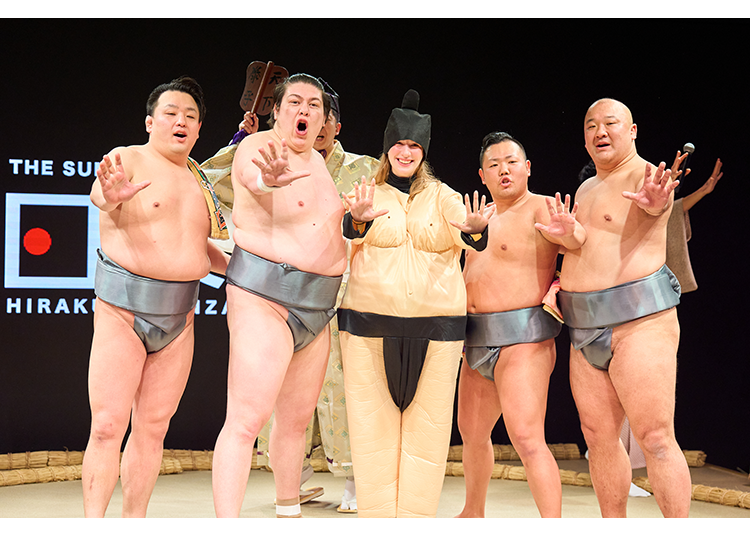
“I’m so glad that I had the opportunity to experience a sumo match. Even when I pushed the wrestler with all my might, he still wouldn’t budge, and it made me more and more determined to try to win. Being a sumo wrestler is a once-in-a-lifetime experience, so I had a blast,” Mia recalls excitedly.
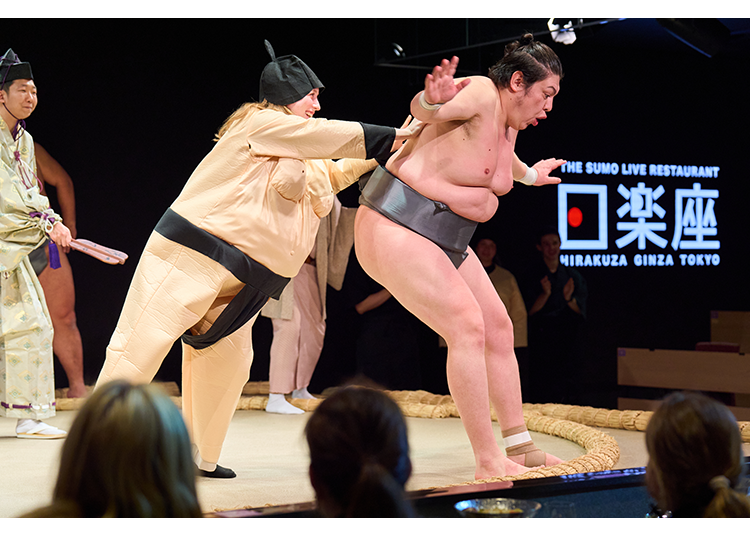
Entry to the “Sumo Challenge” is open to all show-goers at no additional cost. While only a select few are chosen, many people apply, hoping for what promises to be an unforgettable experience. Participation is open to women and children (elementary school age) as well, so if you are interested, don’t hesitate to enter!
Capture the moment: Post-show photo op with the wrestlers
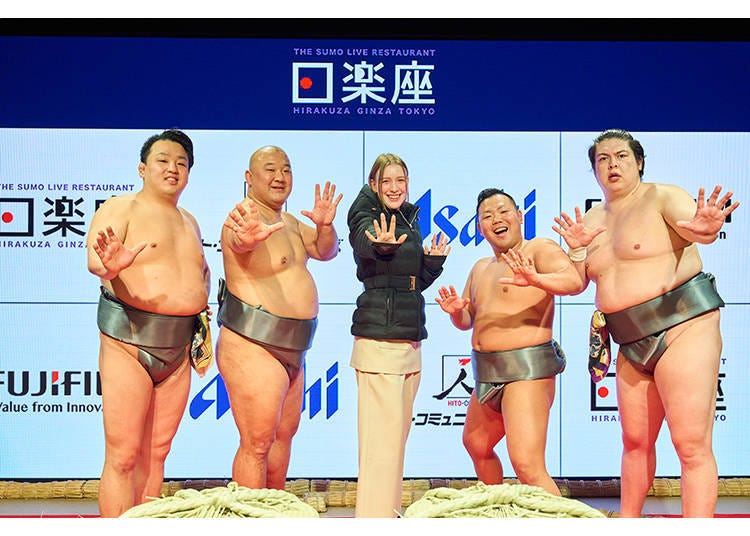
The show concludes with a warm send-off from the wrestlers. Seeing their imposing physiques up close is awe-inspiring. In a striking contrast to their intense “battle mode” on stage, the wrestlers will greet you with gentle smiles. It is a touching display of hospitality that leaves a lasting impression.
Guests are also invited onto the Dohyo stage for a souvenir photo with the wrestlers. Staff members are on hand to take the shot with your own smartphone, making it easy to capture the perfect memory. Feel free to shake hands, strike a pose, and enjoy this special moment of interaction that will surely become a lasting memento.
About seat types, prices, and access

Seat types and prices
There are three types of seats available at THE SUMO LIVE RESTAURANT HIRAKUZA GINZA TOKYO, categorized by their view of the Dohyo. The layout allows for a full view of the stage from any location. Standard seats are designed with a tiered structure similar to a concert hall, ensuring that visibility is secured for all guests.
- VIP Ringside Seats
(Limited to nine seats) - 27,000 yen (flat rate)
- Premium Seats
- Adults (13 years and older): 21,000 yen, Children: 12,000 yen
- Standard Seats
- Adults (13 years and older): 17,000 yen, Children: 9,500 yen
*All prices include tax
*Seat availability is subject to change
Facility overview
-
The Sumo Live Restaurant Hirakuza Ginza TokyoTHE SUMO LIVE RESTAURANT 日楽座 GINZA TOKYO
- Address 1-9-13 Ginza, Chuo-ku, Tokyo Prime Ginza Yanagidori Building, 1st basement floor
-
Nearest Station
・1-minute walk from Ginza 1-chome Station on the Tokyo Metro Yurakucho Line
・4-minute walk from Ginza Station on Tokyo Metro Ginza, Hibiya, Marunouchi Lines
・5-minute walk from Kyobashi Station on the Tokyo Metro Ginza Line
・6-minute walk from Takaracho Station on the Toei Asakusa Line
・7-minute walk from Yurakucho Station on the JR Yamanote Line/Keihin Tohoku Line
・Opening date: January 1, 2026
・Seating capacity: Approximately 150 seats
・Performance time: 5 PM to 7 PM
(A second performance from 8:30 PM to 10:30 PM is scheduled on some dates)
*Information subject to change
A unique Japanese experience: Enjoy authentic sumo wrestling and Japanese cuisine
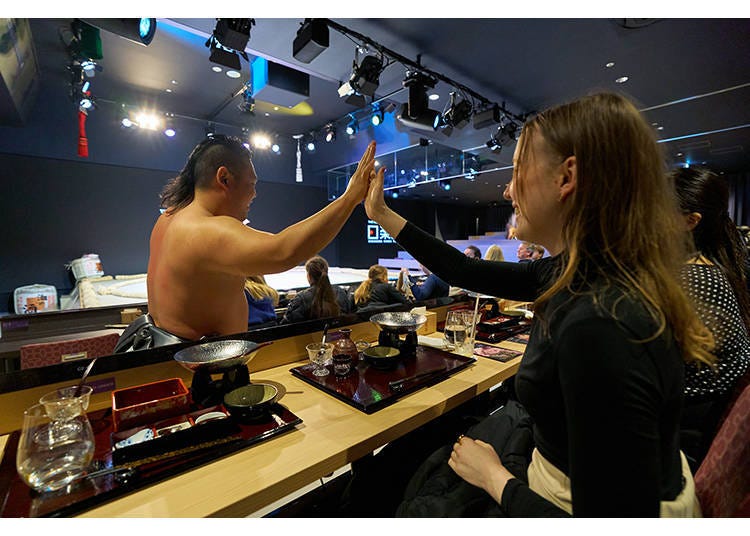
Reflecting on the day, Mia said with a smile, “It is rare to have the chance to see Sumo in person, so I was thrilled to experience it.” She also mentioned how much she enjoyed the sake at the bar and picking up souvenirs. ““The venue’s location is another advantage, as it is close to the center of Ginza it is easily accessible. It has been a wonderful memory.”
Opportunities to combine world-class Japanese dining with the intensity of Sumo are few and far between. Join us in the heart of Ginza for a unique experience that you and your loved ones will never forget.
*Prices and options mentioned are subject to change.
*Unless stated otherwise, all prices include tax.
Popular Tours & Activitiess
-
Ad
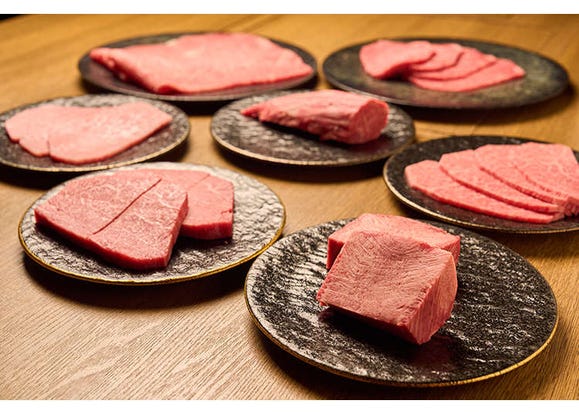
What Makes Japanese Yakiniku So Darn Good? Guide to Cuts, Heat, and Wagyu Know-How
-
At This Zen Hideaway in Shinjuku, Master the Way of Tea with English Guidance, Matcha, and Wagashi This April
by: Guest Contributor
-
PokéPark KANTO Is Finally Open! Tokyo's New Pokémon World Starts Before You Even Arrive (2026)
by: Guest Contributor
-
Ad
In the Heart of Japan: Why Gifu City Deserves a Spot on Your Itinerary (Cormorant Fishing, Gifu Castle, Nightlife & More!)
-
Where to Buy a Japanese Kitchen Knife? Why Travelers Choose MUSASHI JAPAN's 14 Stores in Tokyo, Kyoto, and Nara
by: Guest Contributor
-
To the Holy Land of Kawaii! Odakyu Tama Center Station Is Becoming a Dreamy Sanrio Wonderland
by: Guest Contributor
-
Kichijoji – Explore Tokyo’s Top-Rated Stylish Suburb in Half a Day!
-
Tokyo Goes Crazy For This Tuna-Cutting Show! So We Filmed our Experience of it
-
It’s GAKUENSAI Season: We’ve Visited Shinjuku’s Joint Campus Festival of Tokyo’s Universities!
-
October Events in Tokyo: Fun Festivals, Food, and Things to Do
-
Easy Day Trip from Tokyo! Ultimate Sightseeing Guide for Hakone & Lake Ashinoko!
-
Spending Wonderful Time Alone in Shibuya - Free Cosmetics and a Hundred-Yen Bus!
- #best ramen tokyo
- #what to buy in ameyoko
- #what to bring to japan
- #new years in tokyo
- #best izakaya shinjuku
- #things to do tokyo
- #japanese nail trends
- #what to do in odaiba
- #onsen tattoo friendly tokyo
- #daiso
- #best sushi ginza
- #japanese convenience store snacks
- #best yakiniku shibuya
- #japanese fashion culture
- #best japanese soft drinks