



Best Ways to Travel from Tokyo to Osaka: Shinkansen, Flights, Overnight Buses, or Driving (Cost Comparison + Money-Saving Deals)
- Written by: LIVE JAPAN Editor
Tokyo and Osaka sit about 500 kilometers apart, linking Japan’s largest metropolitan area with the food-loving heart of Kansai. For many travelers planning a self-guided trip to Japan, visiting both cities in one itinerary is a must.
The big question is simple: what is the smartest way to get between them?
In the past, the JR Pass was an easy default choice. After recent fare increases, however, the landscape has changed. Business travelers often prioritize speed and choose the Shinkansen, budget-conscious travelers look to overnight buses, and flexible planners sometimes score surprisingly cheap tickets on low-cost flights.
In this guide, we break down the four main ways to travel between Tokyo and Osaka in 2026, comparing travel time, cost, comfort, and large luggage rules to help you decide what works best for your trip. We also highlight lesser-known options like the discounted Platt Kodama tickets and the Hokuriku Arch Route detour, which can free up enough budget for an extra Japanese Black beef yakiniku meal.
Main image source: PIXTA
This article contains affiliate links
- Table of Contents
-
- Quick Comparison at a Glance: Tokyo ⇄ Osaka Transportation Options
- 1. Fastest & Most Comfortable: Shinkansen
- 2. Cheapest & Most Budget-Friendly: Highway Bus / Overnight Bus
- 3. Fastest but with Hidden Costs: Flights (LCC vs Full-Service Airlines)
- 4. Trading Time for Savings: Local Trains (Seishun 18 Ticket)
- 5. Exclusive for International Visitors: JR Rail Pass
- 6. Maximum Freedom: Rental Car Road Trip
- Final Verdict: Which Option Is Right for You?

Quick Comparison at a Glance: Tokyo ⇄ Osaka Transportation Options
Before diving into the details, this comparison table gives you a clear, side-by-side look at the key differences between each transportation option, making it easy to see which one fits your travel style.
Prices and travel times are one-way estimates and may vary depending on season and exchange rates.
1. Shinkansen
・Key features: The fastest and most comfortable option, with the most frequent departures and no need for early check-in.
・Travel time: About 2 hours 30 minutes.
・Price: Around 14,000 to 15,000 yen for a reserved seat on the Nozomi.
・Best for: First-time visitors to Japan, families traveling with children or seniors, travelers with a flexible budget, and anyone who values time efficiency.
2. Highway Bus / Overnight Bus
・Key features: Travel while you sleep, save one night of accommodation, and enjoy the lowest prices among all options.
・Travel time: About 8 to 10 hours, usually departing late at night and arriving the next morning.
・Price: Around 3,000 to 10,000 yen one way, depending on weekdays or weekends and seat class.
・Best for: Budget-conscious students, backpackers, travelers with good stamina, and anyone who wants to maximize sightseeing time during the day.
3. Flights
・Key features: Often the cheapest on paper, but extra time and cost for airport access need to be factored in.
・Travel time: About 1 hour 30 minutes in the air, or roughly 4 to 5 hours including airport transfers.
・Price: Around 4,000 to 8,000 yen, excluding baggage fees and airport transportation.
・Best for: Travelers staying near an airport, those with light luggage, or anyone curious to try a domestic flight in Japan.
4. Local Trains (Seishun 18 Ticket)
・Key features: The ultimate slow rail journey, using only local and rapid trains with six or more transfers along the way.
・Important note: From winter 2024, rules changed significantly. Tickets are single-user only and must be used on consecutive days. Sharing or non-consecutive use is no longer allowed.
・Travel time: About 9 to 10 hours.
・Price: 5-day pass: 12,050 yen, averaging 2,410 yen per day. 3-day pass: 10,000 yen, averaging 3,333 yen per day.
・Best for: Train enthusiasts, travelers with plenty of time and stamina, and those who enjoy scenery and the challenge of multiple transfers.
5. Rail Passes (JR Pass Nationwide / Hokuriku Arch Route)
・Key features: Available only to foreign visitors. After price increases, the nationwide pass is rarely cost-effective for a simple round trip, while the Hokuriku Arch Route can save money by detouring via Kanazawa.
・Travel time: Around 3 hours on a direct Hikari service, or about 5 hours via the Hokuriku route.
・Price: Nationwide pass (7 days): 50,000 yen. Hokuriku Arch Route (7 days): 30,000 yen.
・Best for: Long-distance travelers heading to Hiroshima or Hakata, or those planning side trips to Karuizawa or Kanazawa.
6. Rental Car
・Key features: Maximum freedom and privacy with no luggage limits, but high one-way drop-off fees and driver fatigue are major considerations.
・Travel time: About 8 to 9 hours, including rest stops, meals, and urban traffic.
・Price: Roughly 50,000 to 70,000 yen one way, covering rental fees, fuel, expressway tolls, and an estimated 30,000 yen one-way return charge.
・Best for: Families or groups of four or more splitting costs, travelers with lots of luggage or strollers, and those who enjoy flexible stops or exploring Japan’s highway rest areas.
1. Fastest & Most Comfortable: Shinkansen
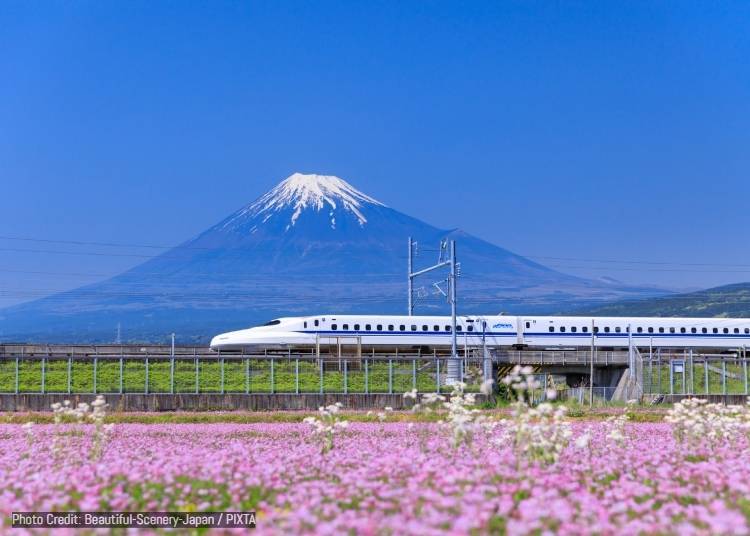
Traveling between Tokyo and Osaka, the Shinkansen stands out as the most convenient option. With frequent departures and centrally located stations in both cities, it is the top choice for travelers who value speed, comfort, and a smooth, stress-free journey.
What’s the Difference Between Nozomi, Hikari, and Kodama?
On the Tokaido Shinkansen line, services are broadly divided into three types based on how many stations they stop at:
・Nozomi (のぞみ): The fastest option, stopping only at major stations. Travel time is about 2 hours 30 minutes, with the most frequent departures. Note that the JR Pass nationwide version usually requires an additional fee to ride Nozomi trains.
・Hikari (ひかり): Slightly slower, reaching Osaka in around 3 hours. This is the most commonly used service for travelers holding the JR Pass nationwide version.
・Kodama (こだま): Stops at every station and takes roughly 4 hours. While slower, it offers access to some excellent discounted ticket deals.
Money-Saving Tip: What Is “Platt-KODAMA”?
If you are not in a hurry, JR Central’s Platt-KODAMA plan lets you ride the Shinkansen at a significantly lower price.
・Key features: Valid only on Kodama services and includes one complimentary drink voucher, which can be exchanged for beer or a non-alcoholic drink.
・Price: Several thousand yen cheaper than a standard Nozomi reserved seat, making it a great option for budget-minded travelers.
・Important notes: Advance reservation is required, and changes to departure times are not allowed.
How to Buy Shinkansen Tickets
・Smart EX App: Highly recommended. Download the official app, link your credit card, and tap in with a transportation IC card like Suica at the gate to skip ticket lines.
・Ticket offices / vending machines: Physical tickets can be purchased directly at station ticket counters or automated machines.
・Online booking platforms: Services such as Klook and KKday let you secure Shinkansen tickets in advance before departure.
What to Know When Traveling with Oversized Luggage
When riding the Tokaido Shinkansen, luggage with total dimensions exceeding 160 cm (length + width + height), typically suitcases 28 inches or larger, requires an advance reservation for a designated oversized baggage seat. If you bring oversized luggage onboard without a reservation, a 1,000 yen handling fee will be charged, so be sure to plan ahead.
2. Cheapest & Most Budget-Friendly: Highway Bus / Overnight Bus
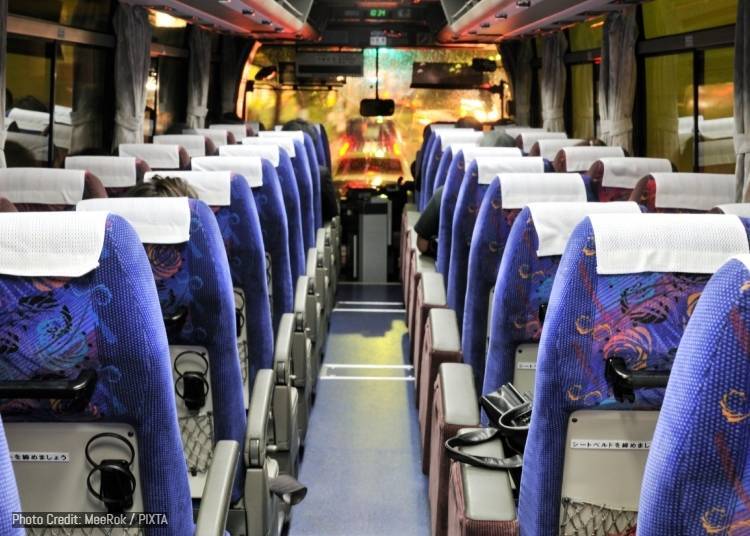
For travelers on a tight budget or those aiming to spend as little as possible, highway buses, including overnight buses, are the clear winner. With low fares and the ability to travel while you sleep, they are especially popular with students and backpackers looking to save on both transportation and accommodation.
Pros and Cons of Overnight Buses
Pros
The most budget-friendly choice, with weekday fares starting around 3,000 yen, while also saving the cost of one night’s accommodation. You arrive in Osaka in the morning and can start exploring right away.
Cons
Long hours of sitting can be tiring, there are no onboard showers so you will need to freshen up at a bathhouse or internet café after arrival, and sleep quality varies depending on the traveler.
3-Seat vs 4-Seat Layouts: Comfort Makes a Big Difference
When booking an overnight bus, always check the seat layout. It has a major impact on how well you will sleep.
4-seat layout (standard)
Two seats on each side of the aisle (2+2). This is the cheapest option, but legroom and personal space are limited. If the seat next to you is occupied, turning over can be difficult. Best for travelers who prioritize price above all else.
3-seat independent layout (recommended)
Each passenger has an individual seat (1+1+1) with two aisles. Fares are slightly higher, usually starting around 6,000 yen, but many buses include privacy curtains and deeper seat recline. Comfort and privacy are significantly better, making this the preferred choice for longer trips.
Recommended Bus Companies & Booking Websites
Willer Express
One of the most popular choices among international travelers. The website supports Traditional Chinese, and the signature pink buses feature thoughtful cabin design. Some vehicles include head covers to block light, with a strong reputation for safety and comfort.
JR Bus (Dream)
Operated by JR, with boarding and drop-off typically near major hubs like Tokyo Station and Osaka Station. Reliable, convenient, and reassuring for first-time visitors.
Japan Bus Online
An all-in-one booking platform that lets you compare fares and seat types across multiple bus companies in one place.
3. Fastest but with Hidden Costs: Flights (LCC vs Full-Service Airlines)
Tokyo and Osaka are each served by two major airports, so choosing the right pairing makes a big difference to total travel time and cost:
・Haneda (HND) ⇄ Itami (ITM): The best overall combination. Haneda is close to central Tokyo, and Itami is only about 30 minutes from Osaka’s city center (Umeda). Flights are mainly operated by Japan Airlines and ANA, with higher fares. Foreign visitors may be able to use discounted Explorer Pass tickets.
・Narita (NRT) ⇄ Kansai (KIX): The hub for low-cost carriers. LCCs such as Jetstar and Peach Aviation often offer fares as low as around 4,000 yen, but both airports are far from their respective city centers.
- Kansai Airport Station → Osaka Station
- About 1 hour 11 minutes by JR (1,210 yen). Using a limited express to Tennoji takes about 49 minutes but requires an additional limited express fee of 1,190 yen.
- Kansai Airport Station → Tennoji Station
- About 53 minutes by JR (1,080 yen). Limited express takes around 34 minutes with an additional 1,190 yen fee.
- Kansai Airport Station → Namba Station
- About 46 minutes via the Nankai Airport Line (930 yen). Limited express takes about 40 minutes with an extra 520 yen fee.
Watch Out: Hidden Time & Transportation Costs to and from the Airport
Before jumping on a cheap flight deal, make sure to factor in these often-overlooked costs:
・Baggage fees: Most low-cost carriers do not include checked luggage. Adding baggage can cost an extra 2,000 to 3,000 yen.
・Airport transportation: Traveling between central Tokyo and Narita Airport costs around 2,500 yen one way on the Skyliner. From Kansai Airport to central Osaka, expect about 1,200 yen one way.
・Time cost: Early arrival for check-in, plus travel time to and from the airport, can push total travel time past 4 hours. In many cases, this is not much faster than taking the Shinkansen.
4. Trading Time for Savings: Local Trains (Seishun 18 Ticket)
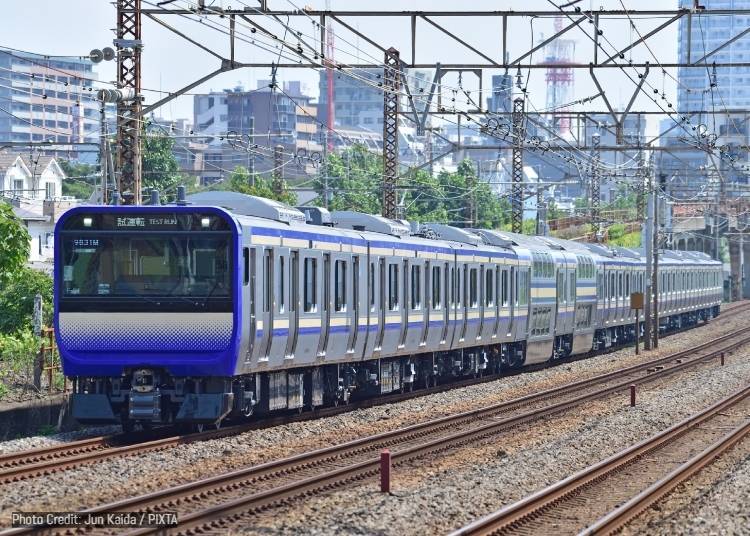
If you love slow rail journeys, have plenty of stamina, and are traveling on an ultra-tight budget, the legendary Seishun 18 Ticket turns the Tokyo–Osaka route into a true test of patience and endurance. It is designed for travelers who value the journey itself and are willing to spend time in exchange for maximum savings.
What Is the Legendary Seishun 18 Ticket?
This special pass allows unlimited rides on JR local and rapid trains across Japan, using non-reserved seats only.
・Eligibility: Open to everyone, regardless of nationality or age. Foreign visitors can also purchase it.
・New rules (important): From winter 2024 onward, the pass must be used on consecutive days and can no longer be shared among multiple people.
・Price: 3-day consecutive pass: 10,000 yen. 5-day consecutive pass: 12,050 yen.
・Where to buy: Available at major JR stations across Japan. See the website for details (in Japanese).
How Many Transfers Are There, and Who Is It Best For?
Taking the Seishun 18 Ticket from Tokyo to Osaka is a true test of stamina and patience:
・Route: The journey usually follows the Tokaido Main Line, with transfers at stations such as Atami, Hamamatsu, Toyohashi, Ogaki, and Maibara.
・Number of transfers: Expect six or more transfers along the way.
・Travel time: Around 9 to 10 hours one way.
・Best for: Train enthusiasts, students, and travelers on an extremely tight budget who are not in a hurry. If long hours on local trains sound exhausting, this option is best avoided.
5. Exclusive for International Visitors: JR Rail Pass
For international visitors, the JR Pass was once considered a must-have bargain. After the major price increase in 2023, however, deciding whether it is worth buying now requires careful calculation based on your itinerary and travel distance.
Is the JR Pass Nationwide Worth Buying?
If your plan is simply a round trip between Tokyo and Osaka, the answer is no.
・Price comparison: The 7-day JR Pass nationwide costs 50,000 yen, while a round-trip Shinkansen reserved seat between Tokyo and Osaka is about 29,000 to 30,000 yen.
・Bottom line: Buying the pass at this level results in a loss of roughly 20,000 yen.
・When it makes sense: The nationwide pass only becomes worthwhile for long-distance routes such as Tokyo → Osaka → Hiroshima → Hakata. Otherwise, buying individual tickets or using options like Platt-KODAMA is more cost-effective.
High Value Alternative: Hokuriku Arch Rail Pass (via Kanazawa)
If you want to save money and do not mind spending more time on the train, this lesser-known pass is a smart alternative for traveling between Tokyo and Osaka.
・Route: Instead of the Tokaido route via Nagoya, this pass takes you along the Hokuriku route through Nagano, Kanazawa, and Kyoto before reaching Osaka.
・Price: 7-day pass priced at 30,000 yen, valid for seven consecutive days.
・Why it’s great: While slower than the direct Shinkansen, the price is close to a Tokyo–Osaka round trip and lets you add stops such as Karuizawa, Kanazawa, and Fukui. It is ideal for travelers who enjoy slower, more in-depth journeys.
6. Maximum Freedom: Rental Car Road Trip

For travelers who enjoy stopping whenever they like, are carrying lots of luggage, or are traveling as a family, driving offers the greatest flexibility. That said, long-distance, one-way car rentals in Japan often cost far more than many people expect.
The Hidden Cost Trap of One-Way Car Rentals
Many travelers assume that renting a car works like taking a train, where picking up in one city and returning it in another is simple and affordable. In Japan, this is one of the biggest rental car pitfalls.
・One-way return fee (drop-off charge): Tokyo and Osaka belong to different rental operation zones, so returning a car across regions incurs a very high repositioning fee.
・Cost estimate: The one-way drop-off fee alone for Tokyo pickup and Osaka return typically ranges from 30,000 to 40,000 yen.
・Bottom line: Unless costs are split among four or more people, the total one-way driving cost (rental fee, drop-off fee, tolls, and fuel) is usually far higher than taking the Shinkansen.
Final Verdict: Which Option Is Right for You?
If you are still undecided after reviewing all the options above, here is a clear set of final recommendations based on different travel styles and priorities:
Business travelers / Family trips
・Top choice: Shinkansen
・Why: It is the most expensive option, but comfort and convenience are unmatched. When traveling with children or seniors, avoiding long transfers or cramped overnight buses makes a big difference. If you want to save a little, consider the Platt-KODAMA plan.
Budget-conscious students / Backpackers
・Top choice: Overnight bus
・Why: The only option that can keep transport costs under 5,000 yen while also saving one night of accommodation.
・Alternative: If sleeping on a bus is not appealing, low-cost airlines are an option, but be careful with baggage limits and airport transportation costs.
Hokuriku side trips / Slow travel fans
・Top choice: Hokuriku Arch Rail Pass
・Why: The route from Tokyo to Osaka is longer, but it lets you explore highlights such as Karuizawa, Nagano, Kanazawa, and Fukui along the way. At 30,000 yen for seven days of unlimited rides, it turns simple transportation into a rewarding rail journey.
Extreme time-for-money challengers
・Top choice: Seishun 18 Ticket
・Why: If you have unlimited stamina and time, this is the ultimate way to experience Japan’s local rail network at a slow pace. Just remember, it is an endurance challenge rather than a convenient way to get from point A to point B.
Tokyo and Osaka each have their own distinct appeal, and visiting both in one trip is a classic Japan travel dream.
Whether you choose the speed and comfort of the Shinkansen, the ultra-budget overnight bus, or the freedom of a self-drive adventure, the key is planning ahead. Early-bird Shinkansen discounts, Platt-KODAMA tickets, and low-cost airline fares often sell out as early as one month before departure.
Once your travel dates are set, booking early through the websites or apps introduced in this guide will help you keep costs down and travel with peace of mind. We hope this guide helps you find the option that suits you best, and wish you an unforgettable Tokyo–Osaka twin-city journey.
*Prices and options mentioned are subject to change.
*Unless stated otherwise, all prices include tax.

Popular Tours & Activitiess
Recommended places for you
-
Sunflower terminal (Osaka) Terminal 1
Other Sightseeing
USJ, Nanko Port
-

Kanzenkoshitsuyakinikutabehodai Gyugyu Paradise Sannomiya
Yakiniku
Kobe, Sannomiya, Kitano
-
Goods
Yoshida Gennojo-Roho Kyoto Buddhist Altars
Gift Shops
Nijo Castle, Kyoto Imperial Palace
-
ISHIDAYA Hanare
Yakiniku
Kobe, Sannomiya, Kitano
-

Jukuseiniku-to Namamottsuarera Nikubaru Italian Nikutaria Sannomiya
Izakaya
Kobe, Sannomiya, Kitano
-
Kambei Sannomiyahonten
Yakiniku
Kobe, Sannomiya, Kitano
-
This Spring, Enjoy Magical Night Sakura Reflections Along Nara's Uda River (Local Hidden Gem!)
-
Ad

Meet Osaka's Fluffiest Locals: Relax With Samoyeds at Cafe moffu in Shinsaibashi!
-
Joshin Nipponbashi: Inside Osaka's Premier Shop for Gadgets, Toys & Hobbyists (+Bonus 8% Off Coupon)
-
[2026] Don Quijote Opens New Store on Shijo-dori, Kyoto! Experience Exclusive "Fruit Skewers" at Kansai's First Inbound-Focused Store
-
Ad
Walking the Sacred Sites of the Kii Mountains: An Inner Journey
-
One of Western Japan's Largest Character Hubs Is Coming to Osaka Station in 2026
by: Guest Contributor
-
Life in Osaka: We Interviewed International Residents About Their Life in Kansai
by: WESTPLAN
-
What to Do In Osaka When It's Raining: 10 Fabulous Weather-Proof Tourist Hotspots
by: WESTPLAN
-
KANSAI ONE PASS: Explore Osaka and the Whole Kansai Region with Just This Card and a Phone!
by: WESTPLAN
-
Japan's Bath Culture: Tips You Should Know!
-
Kichijoji – Explore Tokyo’s Top-Rated Stylish Suburb in Half a Day!
-
(Video) Walking Tour along Narita Omotesando - Quaint Historical Village near Narita Airport!
by: Victor Gonzalez
- #best gourmet Osaka
- #things to do Osaka
- #what to do in kyoto
- #what to bring to japan
- #best gourmet Kyoto
- #new years in Osaka
- #what to buy in nanba
- #Visiting Osaka
- #onsen tattoo friendly arima
- #daiso
- #Visiting Kyoto
- #best japanese soft drinks
- #japanese fashion culture
- #japanese convenience store snacks
- #japanese nail trends