



Planning Your First Ski Trip to Japan? Here's Everything You Need to Know
- Written by: Marco Blasco
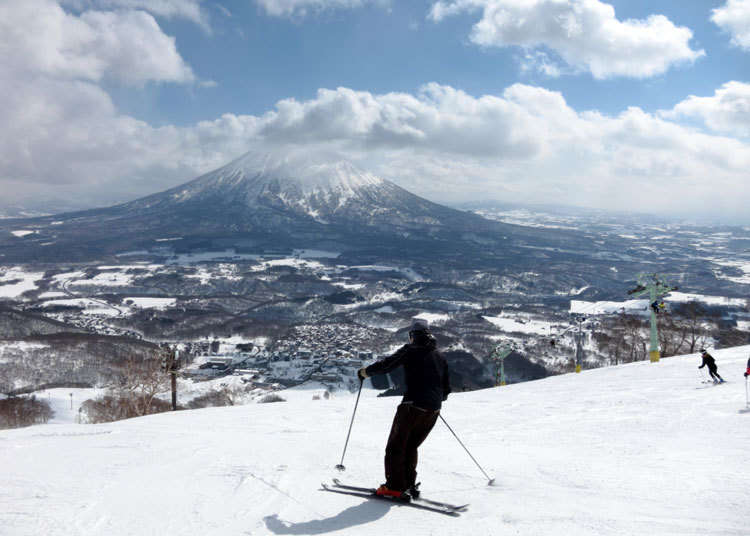
Thinking about skiing in Japan for the first time and not sure where to start? You’re not alone. From legendary powder snow to resort towns that feel refreshingly different from Europe or North America, Japan is an incredible ski destination. It can also feel a little overwhelming when you begin planning.
This article is part of a larger ski series, so whenever a topic deserves a deeper dive, you’ll find links to more detailed guides. That includes a complete packing checklist, explanations of lift passes, and resort-specific tips to help you plan with confidence.
- Table of Contents
-
- When Is the Best Time to Go Skiing in Japan?
- How Do I Choose the Right Region and Resort?
- When Should I Book My Ski Trip to Japan?
- How Do Japanese Slope Ratings and Lifts Work?
- What Gear Do I Need to Bring (and What Can I Rent)?
- Renting Equipment
- How Do I Get to the Resorts From the Airport?
- What’s the Best Way to Handle Bulky Luggage?
- What is the Best Way to Relax After Skiing?
- Do I Really Need Travel Insurance for Skiing?
- Wrapping Up

When Is the Best Time to Go Skiing in Japan?
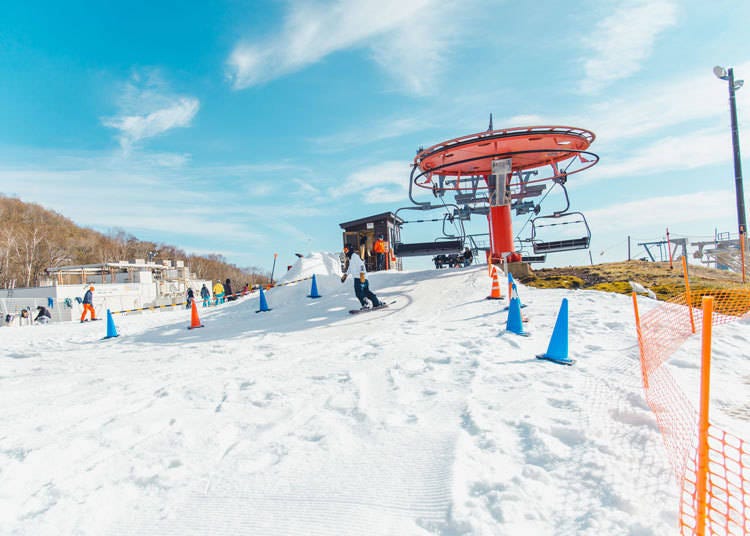
The general ski season runs from around December to April in Japan, with peak season hitting in January and February. This is when you’ll find the heaviest snowfall and that famous "Japan Powder" quality.
While it will vary by resort, here's a rundown of what the typical 'seasons' look like:
Early Season (Late November - Early/Mid-December)
Typically seen only in the north, in regions like Hokkaido and Tohoku. Prices are lower and slopes emptier, though lift availability might be limited.
Regular Season (Mid December to March)
The Regular Season is going to be the peak season with the best snowfall, coldest temperatures, and Japan's famous dry, light powder. This season will also typically attract the most crowds, both from across Japan and from international tourists.
Spring Season (March - April)
Warmer temperatures and fewer crowds. The snow undergoes "corn" phases (melting/refreezing), making it easier for beginners to navigate than deep powder. For 2026, many high-altitude resorts in Hokkaido, Iwate, and Nagano are scheduled to remain open through the "Golden Week" holidays in early May.
Where are the best spots for spring skiing? If you are planning a trip for March or April, look for resorts with high elevations or northern latitudes. Top recommendations include:
・Geto Kogen (Iwate): Known as the "Mecca of Moguls" in spring, this resort often sees some of Japan's highest snow depths and stays open until late April.
・Niseko Annupuri (Hokkaido): The high-quality snow holds up well here late into the season, typically closing in early May.
・Hakuba Happo-One & Tsugaike Mountain Resort (Nagano): Both offer high-altitude skiing that remains reliable through April.
・Shiga Kogen (Nagano): As Japan’s highest ski area, many of its 18 interconnected resorts stay open until early May.
How Do I Choose the Right Region and Resort?
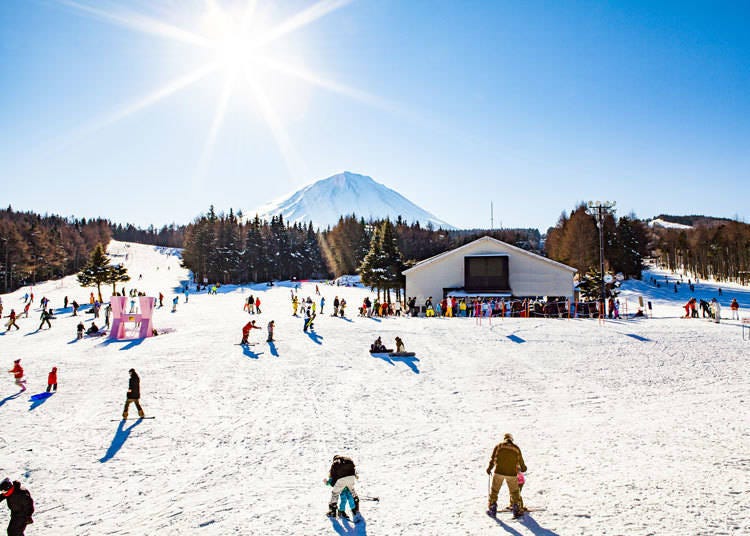
As you narrow down the time of year you'd like to plan your trip, you'll naturally start looking for where you'd like to go. For beginners, the layout of the mountain is just as important as the snow quality. You should look for resorts with a high percentage of "Green" runs (at least 30-40%) and wide, open base areas.
Beginners should look for a few things when researching resorts:
・What do the slopes look like? Are there wide, gentle green (beginner) runs?
・Does the resort have dedicated areas for lessons or practice?
・Are there foreign language services (lessons, rentals, signage, accommodation)?
・Is the resort accessible to Tokyo or other major cities? Some of the northern resorts, while stunning, could take at least a day of travel and sending gear to arrive at.
Which resorts are best for beginners?
Based on slope breakdowns from Japan Ski Guide, these resorts are particularly beginner-friendly:
・GALA Yuzawa (Niigata): The ultimate in convenience. The Shinkansen station is inside the resort, and the "Melody" and "Edelweiss" courses are specifically designed for beginners. They also host the Canyons International Snowsports School for English lessons.
・Tsugaike Mountain Resort (Nagano): Home to the "Kane-no-Naru-Oka" slope, one of Japan’s widest beginner runs (1,200m wide!), allowing plenty of space to turn without fear of collisions.
・Karuizawa Prince Hotel Snow Resort (Nagano): Just over an hour from Tokyo, this resort is over 50% beginner-friendly. It is famous for its sunny weather and artificial snow-making, ensuring a stable base even if natural snowfall is low. Plus, it is adjacent to a massive shopping outlet mall!
What if I want more of a challenge?
If your group includes intermediate or advanced riders, these resorts offer steeper gradients and specialized terrain:
・Hakuba Happo-One (Nagano): An Olympic venue famous for long, steep runs and challenging mogul fields.
・Niseko Village (Hokkaido): Features steep "avalanche-controlled" gates and long, technical tree runs.
・Hakuba Cortina (Nagano): A favorite for advanced powder-hounds due to its steep, ungroomed "tree-run" zones.
・Madarao Kogen (Nagano/Niigata): Known as the "Tree Run Capital" of Japan, offering specifically thinned forest areas for technical riding.
・Geto Kogen (Iwate): Features the "Grow Up Treerun" system with levels from 1 to 4, perfect for those looking to master deep powder.
When Should I Book My Ski Trip to Japan?
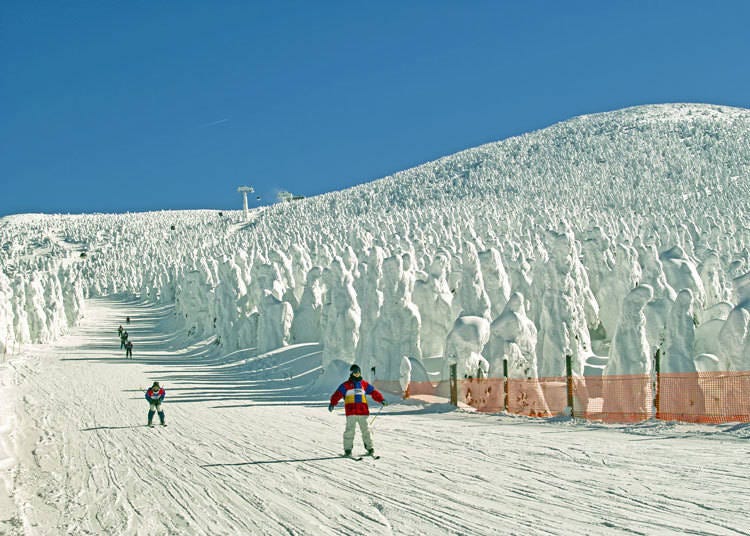
Because Japan is now a global hotspot for winter sports, timing your bookings is critical to avoid high prices and "sold out" signs.
Accommodation (6–12 months out): For major hubs like Niseko or Hakuba, international-facing hotels often open bookings 9–12 months in advance. If you are eyeing peak dates (Christmas, New Year, or Lunar New Year), aim to book by May or June. Note that smaller, family-run Japanese "pensions" may only open their calendars 3–5 months before the season.
Flights (6–9 months out): Airfare to Japan typically spikes for the winter season. Booking your international flights at least half a year in advance is the best way to secure reasonable rates.
English-Speaking Lessons (3–6 months out): There is a limited number of English-speaking instructors in Japan. If you are a beginner, lock in your lessons by September or October to ensure you get your preferred time slots.
Peak Dates to Avoid (or Book Extra Early): For the 2026 season, the Lunar New Year begins on Tuesday, February 17, 2026. This week, along with the Sapporo Snow Festival (early February), sees the highest demand and prices of the entire year.
How Do Japanese Slope Ratings and Lifts Work?
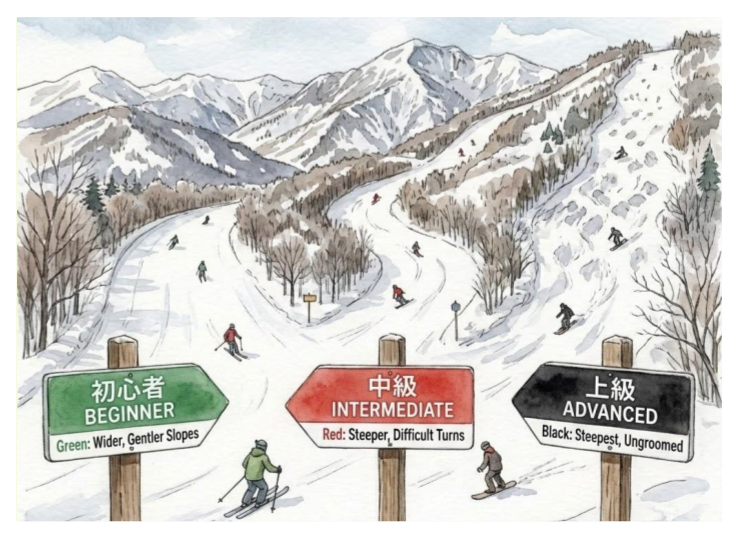
In Japan, pistes are groomed ski runs and trails that are categorized by colors. They are marked and maintained by the resort and categorized by difficulty level.
Different types of trails will be marked on the map at the resort to let you know the difficulty level of each. The system used in Japan is:
・Green: Beginner - Tend to be wider, gentler slopes
・Red: Intermediate - Steeper, may have more difficult turns
・Black: Advanced - These are the most difficult, steepest slopes, and may even be ungroomed
Note that the difficulty ratings can vary between resorts, so it's always best to see if a resort has green beginner options to get started. Japan’s system is also different from Europe and the US, where Blue is often the intermediate marker.
Lifts and Lift Passes
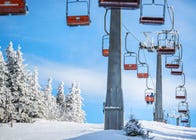
Another thing to consider when looking at resorts is the type of lifts and lift passes available. Beginners should look for magic carpets or slow-moving quad chairlifts. We go into more detail in our Lift Guide.
As for lift passes, you'll need one to ride a lift at any resort. See this article for details. While most major resorts use electronic IC cards (tap-and-go), some local resorts still use paper tickets that you must clip to your jacket or show to staff. Lift passes come in many different forms, such as:
・Day passes (full day until closing)
・Half-day passes (AM or PM)
・Multi-day passes (consecutive days, some allow non-consecutive)
・Single-use/one-time tickets
・Multiple-use tickets (specific number of rides)
・Point system passes (points deducted per lift)
・Hourly passes
・Night skiing tickets
・Season passes
Where to store your lift pass
After you purchase a lift pass, you’ll have to either tap-and-go or show it to the person working the lift each time you want to get on. Usually, ski jackets have a small pocket with a transparent plastic covering that you can slip the pass into so that you don’t have to take it out each time and risk losing it or getting it wet. Sometimes these are on the inside flap of the jacket, or on the outside sleeve. You can also purchase a lift pass case separately and keep it in a pocket. We cover this more in detail in our Lift Passes for Beginners article.
What Gear Do I Need to Bring (and What Can I Rent)?
Of course, when you’re going skiing or snowboarding, you're going to need gear. Here's a list of some essential gear that you will need, and some definite nice-to-haves that will make your experience more enjoyable.
Rent This
・Skis / Snowboard
・Boots (ski boots or snowboard boots)
・Poles (for skiing only, not needed for snowboarding)
・Helmet
Buy / Bring This
・Waterproof ski jacket
・Waterproof ski pants
・Base layers (thermal underwear - top and bottom)
・Mid-layers (fleece or light insulation)
・Gloves or mittens (waterproof, insulated)
・Goggles (for eye protection - sun glare on snow, wind, falling snow)
・Helmet (highly recommended for safety, required in some areas)
・Warm hat/beanie
・Neck warmer/buff
・Ski socks (generally tall, thick socks are better)
Additional Important Items:
・Sunscreen and lip balm (Despite the season, the sun reflection off snow can be intense)
・Water (I always wore a backpack when I snowboarded and put some water bottles in there)
Check out our Packing List article for a more in depth guide.
Note about personal belongings: Depending on the resort, you may find coin lockers for small items like your phone, keys, and wallet. These typically require a 100 yen coin, which is returned when you unlock the locker, and you keep the key with you while skiing. Some resorts, however, only offer open cubbies. As it is best not to leave valuables unattended, bringing a small backpack you can wear while skiing is a practical option.
Renting Equipment
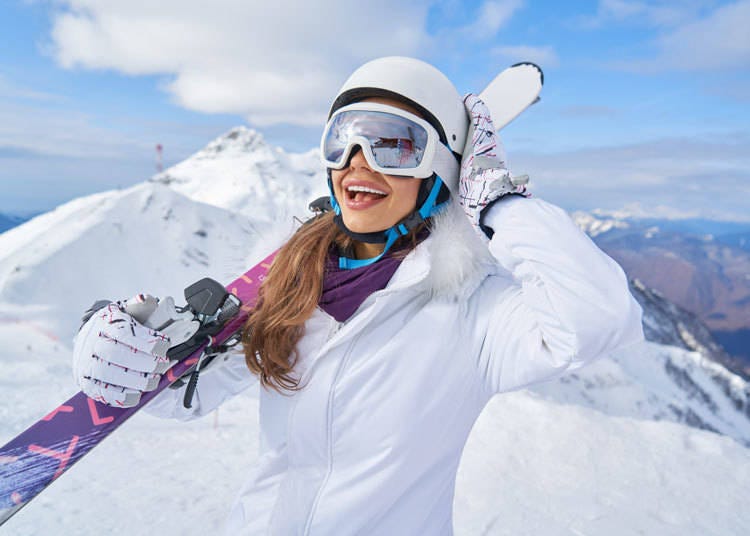
As for gear, you’ll have to decide what to rent here in Japan versus what to buy, and where you might do that once you are here.
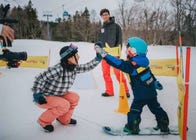
Most resorts in Japan have excellent rental facilities. You can typically rent Skis/Snowboard, Boots, Poles, and a Helmet. Modern rental centers (like at GALA or Karuizawa) allow you to swap between skis and snowboards during the day if you want to try both.
Most rental shops offer package deals that combine these items. A standard rental package usually includes skis/board + boots + poles, or jacket + pants separately. Some places offer a "full package" that includes everything. Rental prices depend on the resort but can be around 8,000 yen/day.
In order to rent, you’ll want to know your height, weight, and shoe size in centimeters and kilograms. You will also likely be asked to present ID, so make sure to bring your passport with you.
For a detailed breakdown of the rental process, sizing, and what to expect, check out our Renting Gear guide.
Where Can I Buy Snow Gear in Japan?
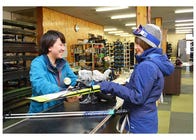
If you are in Tokyo before heading to the mountains, the Jimbocho area is one of the best places to gear up. This neighborhood is packed with specialized ski and snowboard shops, often offering a wider selection and better prices than resort boutiques.
Well-known local chains like Ishii Sports and L-Breath have multiple stores here, carrying everything from beginner-friendly setups to high-performance gear. You will also find major international and premium brands such as Patagonia and Goldwin/The North Face Japan collections.
For general cold-weather and outdoor apparel rather than ski-specific gear, other convenient options in central Tokyo include L.L. Bean in Hibiya, Snow Peak in KITTE Marunouchi (near Tokyo Station), and Montbell in Kyobashi.
How Do I Get to the Resorts From the Airport?
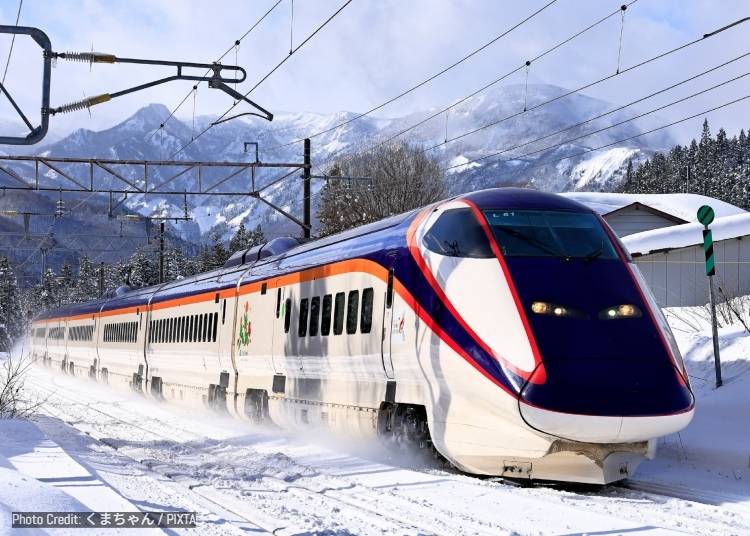
Once you've decided where and when you want to go, you'll need to figure out how to actually get there.
If you're heading to Hokkaido resorts like Niseko, Rusutsu, or Furano, you'll fly into New Chitose Airport in Sapporo. From there, you can take a train, bus, or rent a car to reach the resorts. There are also vehicle charters and private transfers that are especially handy for groups of travelers. The journey typically takes 2-3 hours depending on your destination.
For resorts in most other areas, you’ll probably fly into Tokyo. International flights will go to either Narita International Airport or Haneda Airport. From there, you can get to Tokyo Station and take the shinkansen (bullet train) to your destination. There also may be shuttle buses depending on your resorts right from the station or the airport.
For example, to reach Nagano resorts, you'll typically take the train from Tokyo Station to Nagano Station then transfer to a bus to reach your specific resort. For resorts in Tohoku, you’ll take the Tohoku shinkansen to the closest stop and then either a bus or taxi from there. One standout is Gala Yuzawa, which has a shinkansen station directly at the resort, and it takes only a little over an hour to get to from Tokyo!
Several companies run direct shuttle services from Narita Airport, Haneda Airport, and Tokyo Station to major ski resorts. The journey takes longer than trains, but you don't have to worry about transfers or dragging luggage between connections.
Some example shuttle companies include:
・Nagano Snow Shuttle (https://naganosnowshuttle.com/): Runs to Hakuba, Nozawa Onsen, Shiga Kogen, and other Nagano resorts from both Narita and Haneda airports
・Hokkaido Resort Liner (https://access-n.jp/resortliner_eng/): Runs from New Chitose Airport to four different resorts (approximately 2.5-3 hours)
These shuttles typically include comfort stops and can handle ski equipment. Prices vary by route and these can usually be booked online in English for major resorts.
Keep in mind that a lot of these trains can be covered by the Japan Rail Pass, which is an exclusive pass to overseas visitors. It could be worth it depending on where you are going during your time in Japan, so be sure to do some research and see if it makes sense for your trip.
If you want flexibility, you can rent a car, though keep in mind you'll need an International Driver’s Permit, and you would need to be comfortable driving in snowy weather in a foreign country. See our guide on car rentals for details.
What’s the Best Way to Handle Bulky Luggage?
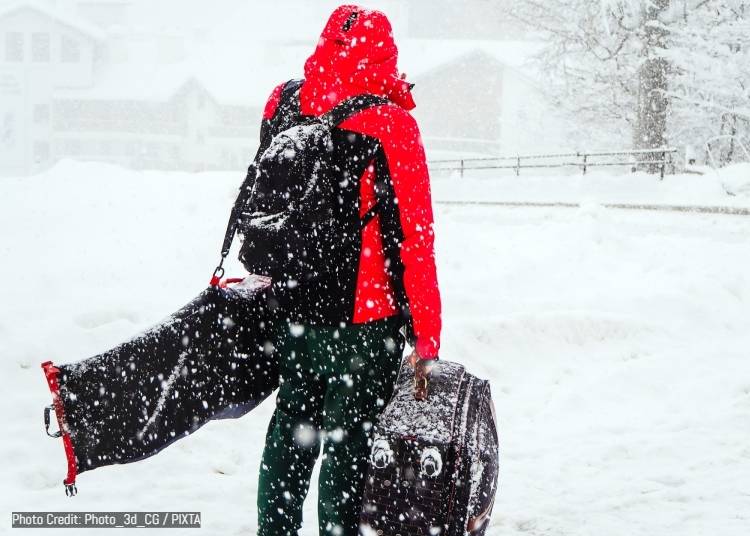
Bringing your own gear? Don't drag ski bags through Tokyo’s crowded subways. The shinkansen does not have much storage for things like skis or snowboards (and some trains even prohibit items larger than 250 cm in length). Instead, use a Takkyubin (delivery service) like Yamato Transport (Kuroneko) or JAL ABC, which can be done right at the airport.
English forms are usually available. Generally, shipping takes two days, so just keep that in mind.
Before shipping, confirm with your hotel that they accept deliveries. And when you're ready to return, ship your gear back at least two days before your departure flights.
What is the Best Way to Relax After Skiing?
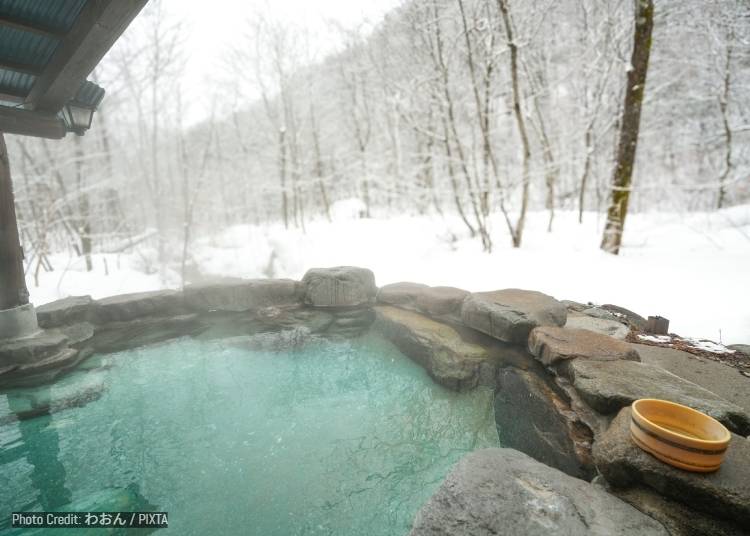
In Japan, "Après-ski" often means the Onsen (hot spring). It is the ultimate way to soothe sore muscles. You can see our guide on how to enjoy onsen here. Also, check the tattoo policy beforehand; while many resort spas are now "tattoo-friendly," some traditional village baths still have restrictions.
Do I Really Need Travel Insurance for Skiing?
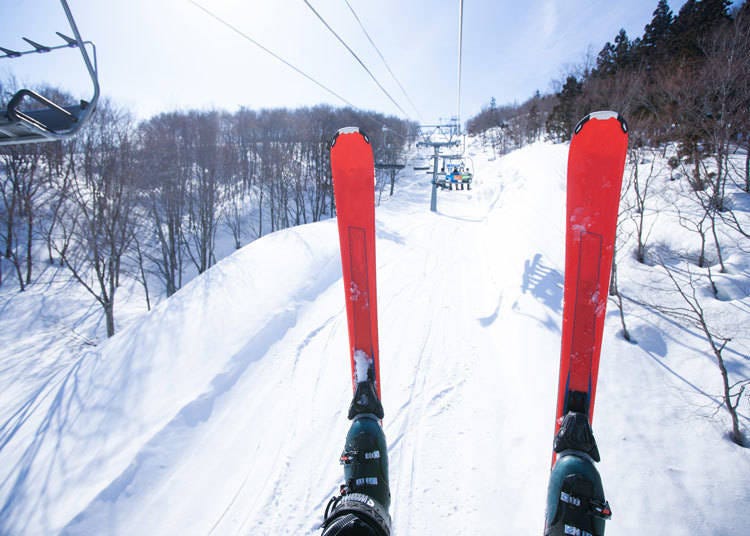
Absolutely. Medical costs for mountain rescues or hospital visits can be pricey. Ensure your policy specifically covers "Winter Sports" and offers 24/7 English support.
As an example, Tokio Marine's tourist medical insurance plan for foreign nationals visiting Japan includes coverage for injuries sustained during ski activities. This alleviates any additional stress that may occur trying to find a hospital that can speak your language if you accidentally injure yourself while skiing. You also don't have to worry about not being able to afford the treatment. If you get this plan, or any other plan with similar coverage, you'll always be referred to the appropriate hospital for treatment.
The insurance plan provides English, Mandarin, and Korean interpretation services as well, so that means chances of miscommunication with the medical staff is low. The insurance company will also foot the bill for the hospital fee directly. Any treatment or medication costs incurred by personal injuries or illnesses in Japan will be insured and covered until you return to your home country, which leaves you with the peace of mind to fully focus on getting better! The plan also covers loss of passport and credit cards.
Consider getting insurance coverage so that unforeseen circumstances won't put a damper on your Japan trip or ski adventure!
Wrapping Up
Planning a ski trip to Japan can seem overwhelming at first, but breaking it down into these steps makes it manageable. Start with when and where you want to go, figure out what gear you need (and what you'll rent), plan your transportation and accommodations, and make sure you have proper insurance. Oh and don't forget to pack a little extra cash for those mountain-side ramen bowls!
Check out our other articles in this series for more in depth guides.

Marco Blasco is an American writer and editor living in Tohoku, Japan. After moving to Japan from the United States more than four years ago, Marco taught English in a snowy town before moving on to start his writing and editing career. Currently, he edits and proofreads light novels in translation, and writes articles about travel, Japanese culture, and the JET Program. In his free time, he writes novels, reads mostly science fiction and fantasy books, and tries to see as much of the Japanese countryside as he can.
*Prices and options mentioned are subject to change.
*Unless stated otherwise, all prices include tax.
Popular Tours & Activitiess
Recommended places for you
-
Appealing
Rukku and Uohei
Izakaya
Sapporo / Chitose
-
ISHIDAYA Hanare
Yakiniku
Kobe, Sannomiya, Kitano
-
Kanzenkoshitsuyakinikutabehodai Gyugyu Paradise Sannomiya
Yakiniku
Kobe, Sannomiya, Kitano
-
Kambei Sannomiyahonten
Yakiniku
Kobe, Sannomiya, Kitano
-
Jukuseiniku-to Namamottsuarera Nikubaru Italian Nikutaria Sannomiya
Izakaya
Kobe, Sannomiya, Kitano
-
Goods
Yoshida Gennojo-Roho Kyoto Buddhist Altars
Gift Shops
Nijo Castle, Kyoto Imperial Palace
-
Legends Return to the Skies! ANA Launches Three “Pokémon Jets” in 2026
by: Guest Contributor
-
Ad
Savor Japanese Sake Culture: A Stroll Along Saijo Sake Brewery Street in Higashihiroshima City, Hiroshima Prefecture
-
Road Trip Around Izu Peninsula: Stunning Views, Hidden Gems, and Relaxing Hot Springs
by: Hide
-
The Best of Japan's Flavors and Fun! Don Quijote's New "DONKI MEMORIES" Project is Mind-Blowing
-
Ad

Vegetarian Dining in Saga: 8 Recommended Restaurants for Pizza, Pasta, and So Much More
-
At This Zen Hideaway in Shinjuku, Master the Way of Tea with English Guidance, Matcha, and Wagashi This April
by: Guest Contributor
-

Best Time to Ski in Niseko: Guide to Monthly Niseko Weather & Crowds
-

"It's Really This Cheap?!" 5 Things That Surprised Foreign Travelers on Hokkaido's Ski Resorts
-
Japanese Foods List: 16 Crazy Tasty Japanese Tohoku Region Dishes You've Never Heard of
by: Guest Contributor
-
Japan Ski Lift Passes for Beginners (What to Know Before You Go)
by: Marco Blasco
-

These 4 Luxury Japan Ski Hotels Will Have You Loving Winter's Beauty
-
38 Best Things to Do in Sendai & Miyagi: Sightseeing, Food, Shopping & Souvenirs
by: Guest Contributor
- #best sushi japan
- #what to do in odaiba
- #what to bring to japan
- #new years in tokyo
- #best ramen japan
- #what to buy in ameyoko
- #japanese nail trends
- #things to do japan
- #onsen tattoo friendly tokyo
- #daiso
- #best coffee japan
- #best japanese soft drinks
- #best yakiniku japan
- #japanese fashion culture
- #japanese convenience store snacks