



New Chitose Airport to Sapporo: JR vs Bus vs Car, Plus Winter Travel Tips
- Written by: Minna no Kotoba Sha
You’ve finally landed in Hokkaido. As you step out of New Chitose Airport, the air feels crisp, food plans start forming, and your trip is about to begin. Then the first real question hits. How do you get into Sapporo?
For first-time visitors, the choice is usually between the JR train and the airport bus. If you’re traveling between December and March, when heavy snow can disrupt schedules, that decision matters even more.
In this guide, LIVE JAPAN editors compare JR trains, airport buses, and rental cars, with a focus on winter conditions. We also explain what to do if services are delayed or suspended due to snow, helping you reach your hotel smoothly and start your Hokkaido trip with confidence.
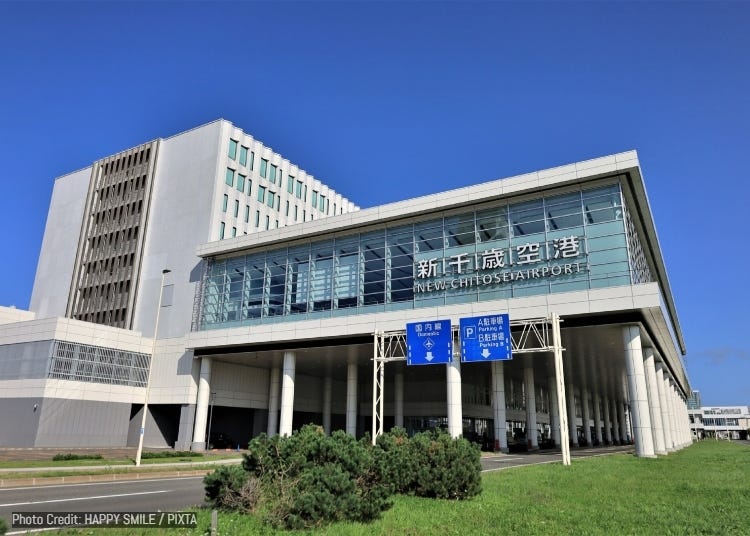
(Main image source: PIXTA)
(This article contains affiliate links)
- Table of Contents
-
- Quick Comparison Guide: JR vs Bus vs Taxi vs Rental Car at a Glance
- Winter Travel Tips: Read Before You Go. What to Do If Heavy Snow Stops Transportation
- 1. JR Rapid Airport: Best if You’re Staying Near Sapporo Station
- 2. Airport Bus: Best if You’re Staying in Susukino or Near Odori Park
- 3. Taxi or Airport Transfer: Best for Privacy and Door-to-Door Comfort. Choose a Flat-Rate Taxi to Save
- 4. Rental Car: Maximum Freedom, but Use Caution in Winter
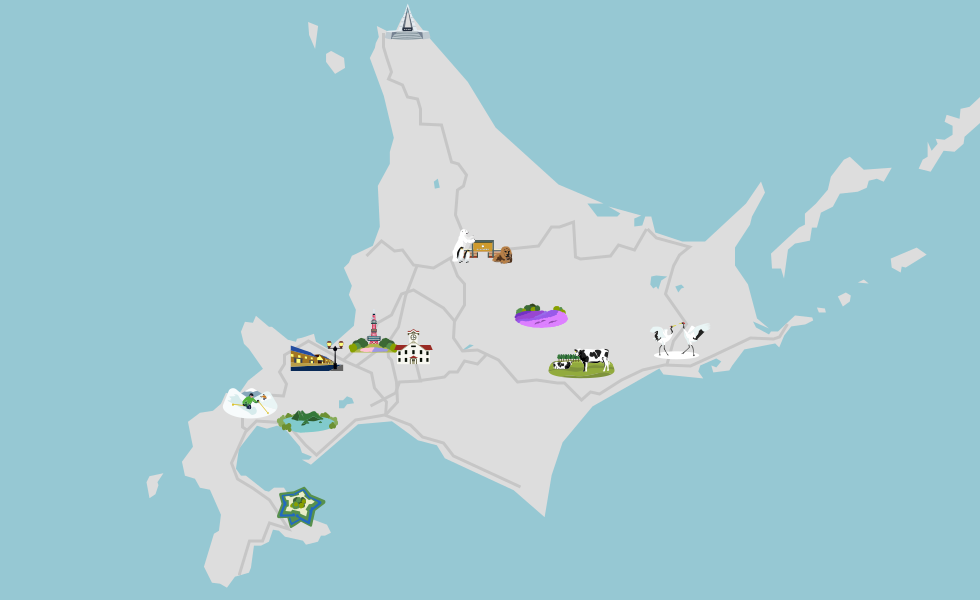
- Extra Tip: Hokkaido Is Bigger Than You Think. Fly to Hakodate, Kushiro, or Wakkanai
- Not Sure What to Do at the Airport? Visit the Tourist Information Counter
- Getting to Popular Tourist Areas Travelers Love

Quick Comparison Guide: JR vs Bus vs Taxi vs Rental Car at a Glance
- 1. JR Rapid Airport (Train)
- ・Time: As fast as 37 minutes.
・Cost: 1,150 yen for adults. Reserved U-Seat costs an additional 840 yen.
・Best for: Staying near Sapporo Station, short on time, solo travelers.
- 2. Airport Bus
- ・Time: About 65 to 80 minutes.
・Cost: 1,300 yen.
・Best for: Staying in Susukino or near Odori Park, travelers with large luggage who want a direct ride.
- 3. Taxi or Airport Transfer (Flat Fare)
- ・Time: Around 60 minutes.
・Cost: Approximately 10,000 to 13,000 yen with flat-rate pricing.
・Best for: Travelers with a flexible budget, late-night arrivals when public transport is unavailable, families with young children or elderly travelers.
- 4. Rental Car
- ・Time: Around 60 minutes, not including vehicle pickup procedures.
・Cost: Mid to high, more economical when shared.
・Best for: Families and travelers heading straight to outlying areas such as Furano or Noboribetsu.
Winter Travel Tips: Read Before You Go. What to Do If Heavy Snow Stops Transportation
Before getting into specific transportation options, this is one point that needs to come first. Winter in Hokkaido, especially in January and February, is highly unpredictable. Sudden snowstorms can quickly lead to widespread delays and service suspensions across trains, buses, and roads.
JR Is More Vulnerable to Heavy Snow, While Buses Are More Stable but Prone to Traffic
This is an important rule of thumb to remember: JR struggles with wind and snow, while buses struggle with icy roads.
JR Hokkaido train lines often run through wide, open areas. When strong winds or heavy snowfall hit, services are frequently suspended or severely delayed for safety reasons.
Airport buses, on the other hand, tend to keep running even in snowy conditions. That said, they move more slowly on snow-covered roads and may be forced off expressways due to closures, which can double travel time.
・Local tip: If JR announces widespread service suspensions, head straight for the airport bus counters. If the weather is clear but roads are icy, JR is usually the more reliable and punctual option.
The “3-Hour Rule” for Catching Your Flight Home: Arrive Early, Don’t Risk It
If you’re flying out from Sapporo in winter, always allow 1.5 to 2 times more travel time than usual when heading to the airport. Do not plan it too tightly. It’s strongly recommended to arrive at New Chitose Airport at least 3 to 4 hours before departure.
New Chitose Airport is more than just an airport. It’s a large shopping and dining complex with an onsen, a movie theater, and a famous ramen alley. Arriving early gives you time to relax, eat, and shop, which is far better than being stuck mid-route and worrying about train suspensions due to snow.
A Must-Have Tool: JR Hokkaido Train Service for Real-Time Train Updates
Before heading to the station, always check the latest service status. We strongly recommend checking the official JR Hokkaido Train Service Information website. It shows real-time updates such as normal operation, delays, or service suspensions.
If you see a red suspension alert, activate Plan B immediately and switch to a bus or taxi instead of waiting at the station.
1. JR Rapid Airport: Best if You’re Staying Near Sapporo Station

If speed is your top priority, or if your hotel is located near Sapporo Station, the JR Rapid Airport train is the most straightforward choice. This includes popular stays such as JR Tower Hotel Nikko Sapporo and Sapporo Grand Hotel.
As the main rail link between New Chitose Airport and central Sapporo, the JR Rapid Airport departs from the station on the B1 level of the airport. The fastest services reach Sapporo Station in just 37 minutes. Trains run frequently throughout the day, roughly every 12 minutes, so you can usually hop on without a long wait and get into the city efficiently.

After exiting the international arrivals area at New Chitose Airport, you’ll immediately see signs directing you to transportation options. The JR lines are located straight ahead, alongside the domestic flights area.
Simply walk straight down the central corridor and follow the clearly marked “JR Line” signs at each major junction. Even though the walkway is quite long, moving through the terminal is easy thanks to moving walkways and luggage carts, allowing you to reach the station smoothly without much effort.

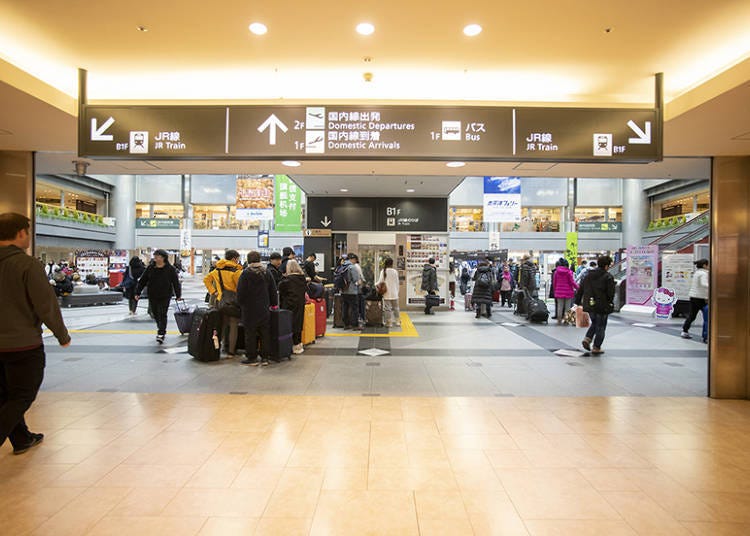
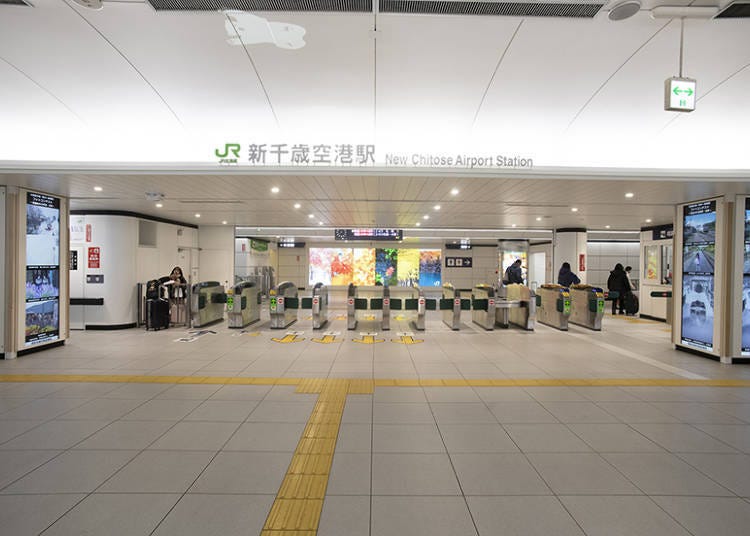
Once you reach the central plaza on the 2nd floor of the domestic terminal, you’ll see clear signs marked “JR” with arrows pointing the way. Take the escalator or elevator down, and you’ll arrive at JR New Chitose Airport Station on Basement Level 1.
Be aware that the escalator does not go all the way down. You’ll need to use the stairs for the final section. If you’re traveling with large or heavy luggage, it’s much easier to use the elevator instead.

JR New Chitose Airport Station has a dedicated information counter for international travelers. From 8:30 AM to 7 PM, staff who speak English, Chinese, and Korean may be available, though language support is not guaranteed every day.
If you plan to exchange a Hokkaido Rail Pass or need assistance in a foreign language, this is the counter to visit.

U-Seat Reserved Seating Is Highly Recommended
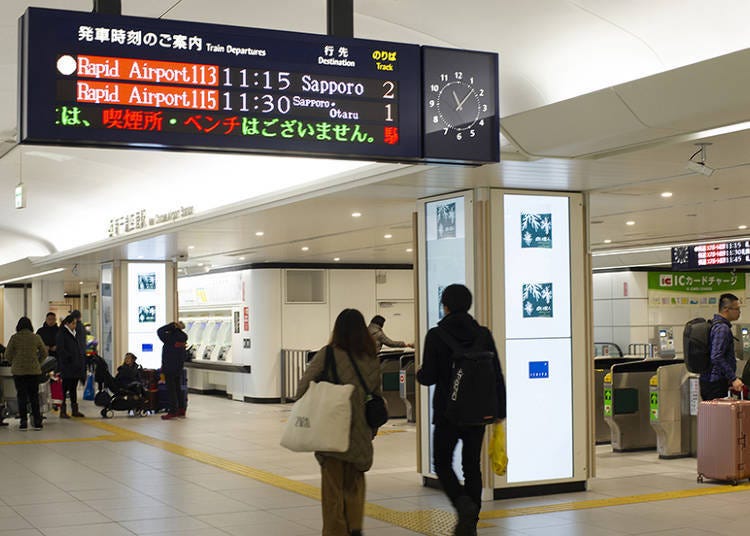
Although the JR Rapid Airport train has non-reserved cars, seats can be very hard to find during peak travel periods and ski season. For this reason, it’s strongly recommended to pay an extra 840 yen for a reserved U-Seat in Car No. 4.
U-Seat not only guarantees a more spacious and comfortable seat, but also provides dedicated large luggage racks inside the car. This means you won’t have to worry about bulky suitcases shifting around or blocking other passengers. For travelers with elderly family members or children, the added comfort and peace of mind make this small upgrade well worth the cost.
New Service: Enter the Station Easily With a QR Code
Don’t want to line up at a ticket machine after landing? You can now reserve your ticket online via the Ekinet website and use the QR code on your smartphone to scan directly at the ticket gates.
This is an especially convenient option on arrival day, when you may be tired, juggling luggage, or simply want to get into the city as smoothly as possible.
- One common pitfall when taking the JR train is assuming that Sapporo Station is the city’s main entertainment district. If you’re staying in the lively Susukino area, getting off at Sapporo Station means there is still some distance to go.
From Sapporo Station, you’ll need to transfer to the Namboku Subway Line for about two stops or walk through the underground passages for roughly 20 minutes, often while pulling your luggage. In winter, especially when it’s snowing, this transfer can be more tiring than expected. If your hotel is in Susukino, it’s worth carefully considering the airport bus option introduced next.
Money-Saving Tip: Is the JR Hokkaido Rail Pass Actually Worth It?
Many travelers consider buying the Hokkaido Rail Pass before their trip in hopes of cutting transportation costs. However, after recent price increases, this pass is no longer a guaranteed bargain for everyone.
Based on the latest 2026 pricing, the All Hokkaido 5-Day Pass costs 21,000 yen, while the 7-Day Pass is priced at 27,000 yen. There are also regional options for more focused trips, such as the Sapporo–Noboribetsu Area Pass at 10,000 yen for four days, or the Sapporo–Furano Area Pass at 11,000 yen for four days.
So, should you buy one? In simple terms, if your itinerary is limited to short-distance routes like New Chitose Airport, Sapporo, and Otaru, buying individual tickets is usually the cheaper option. A one-way trip from the airport to Sapporo costs just 1,150 yen, and even with a round trip plus an Otaru visit, the total is far below the price of a rail pass.
On the other hand, if your plans include longer journeys, such as traveling from Sapporo to Hakodate, where round-trip limited express fares are around 19,000 yen, or exploring eastern Hokkaido destinations like Asahikawa, Abashiri, or Kushiro, the rail pass can offer excellent value. Most passes also include seat reservation privileges, which is especially useful during peak travel seasons. Be sure to reserve seats in advance at a staffed ticket counter or ticket machine to make long-distance travel more comfortable.
2. Airport Bus: Best if You’re Staying in Susukino or Near Odori Park

For first-time winter visitors to Hokkaido or travelers with lots of luggage, the airport bus, operated by Hokkaido Chuo Bus and Hokuto Kotsu, is often the easiest option. The ride takes about 70 to 80 minutes, which is slower than JR, but the biggest advantage is door-to-door convenience.
Simply hand your luggage to the driver, get on, and relax. When you wake up, you’re already at your hotel entrance. There’s no need to haul suitcases up and down subway stairs. One-way fares are 1,300 yen for adults, with half-price tickets for children. Tickets can be purchased at bus counters in the arrival lobby using credit cards, or you can pay directly by tapping IC cards such as Suica, PASMO, or ICOCA when boarding.
Some airport buses stop at both the international and domestic terminals, while others only serve the domestic terminal. Be sure to check in advance which boarding location applies to your bus.
How to Get to the International Terminal Bus Stop
After exiting the international arrivals area, you’ll immediately see signboards. Look for the signs pointing to “Route Buses / Group Buses” on the right-hand side, then follow the arrows down to the bus boarding area on the 1st floor.
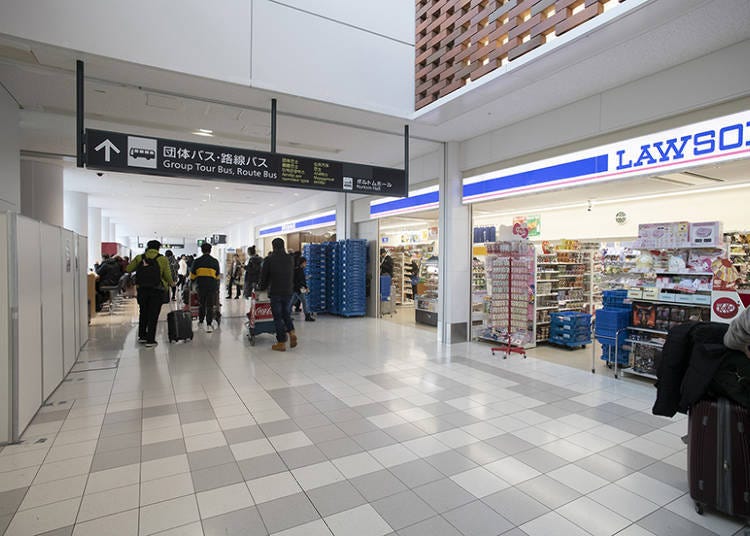

On the 1st floor, you’ll find a transportation information counter where you can ask about bus routes or purchase tickets. Multilingual signage and guidance are also available, making it easy for international travelers to get the information they need.

How to Get to the Domestic Terminal Bus Stop
If you’re taking a bus that only boards and drops off at the domestic terminal, follow the same route used to reach the JR station. Walk straight along the central corridor to move from the international terminal to the domestic terminal.
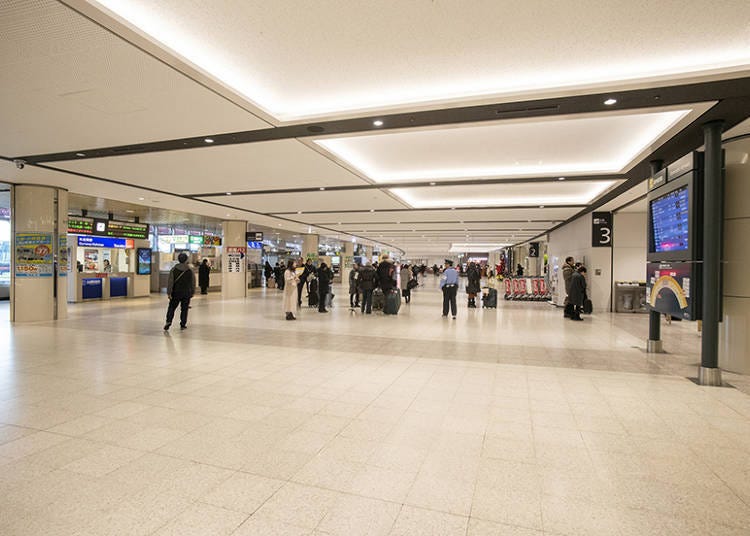
The information counters for Hokkaido Chuo Bus, Hokuto Kotsu, and Donan Bus are all located on the 1st floor of the domestic terminal.
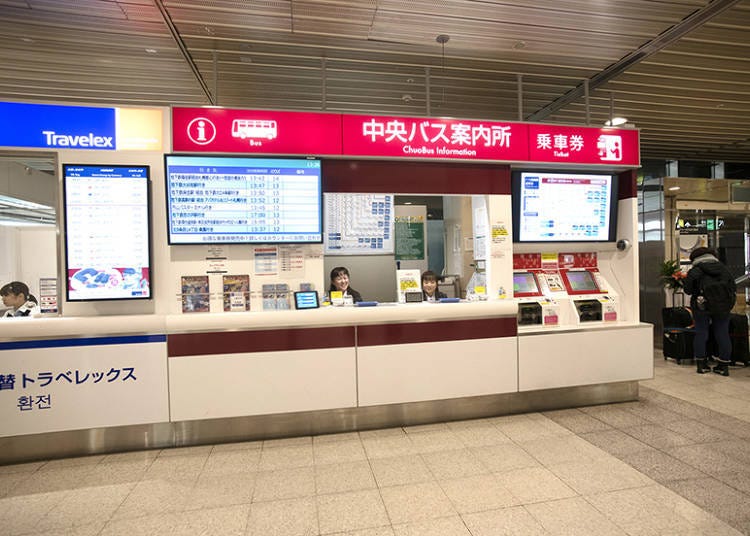
Main Bus Stops and Destinations

At each highway bus company’s information counter, you’ll find ticket machines as well as staffed windows. Staff can usually assist with basic foreign-language inquiries. If the fare is the same, tickets issued by Hokkaido Chuo Bus and Hokuto Kotsu are interchangeable and can be used on either company’s buses.
- Hokkaido Chuo Bus: Major locations within Sapporo, Lake Shikotsu area in Chitose, Niseko and Rusutsu ski resort buses (reservation required)
- Hokuto Kotsu: Major locations within Sapporo, Jozankei Onsen, Obihiro Tokachigawa Onsen, Asahikawa
- Abashiri Bus: Kitami, Abashiri
- Donan Bus: Muroran, Noboribetsu Onsen, Hobetsu, Tomakomai
Airport buses make frequent stops throughout the city and cover most popular hotels. This includes properties in the Susukino area such as Sapporo Tokyu REI Hotel and Mercure Hotel Sapporo, as well as hotels around Nakajima Park. In many cases, buses stop right at the hotel entrance or at a nearby stop. Before departure, it’s a good idea to check the bus company’s website to confirm the stop closest to your hotel.
Onboard Amenities and Ticket Purchase
Most airport buses now offer free Wi-Fi, and some vehicles are also equipped with USB charging ports. Buying tickets is straightforward. You can purchase a ticket at the bus counters in the airport arrival hall, or simply tap a transportation IC card such as Suica or PASMO when boarding and exiting the bus for a smooth, hassle-free ride.
3. Taxi or Airport Transfer: Best for Privacy and Door-to-Door Comfort. Choose a Flat-Rate Taxi to Save
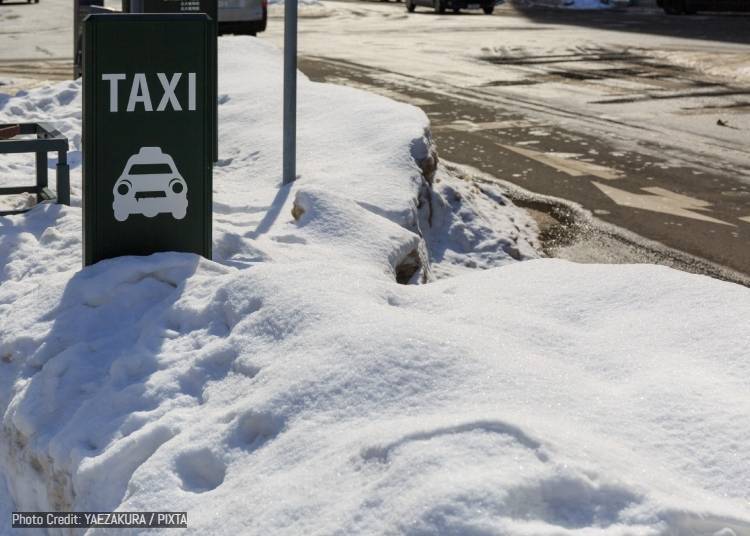
If you’re traveling with bulky ski gear, a baby, or elderly family members with limited mobility, even the airport bus can feel like a hassle. In these cases, a taxi offers the most comfortable door-to-door option.
While taxis in Japan are often seen as expensive, trips from New Chitose Airport to central Sapporo can actually be good value if you use a flat-rate taxi. With a fixed fare, you can avoid surprises, enjoy a private ride, and arrive directly at your destination with minimal effort.

If you plan to take a taxi or pick up a rental car, follow the signs at the international arrivals exit and head to the left.

After taking the escalator or elevator down to the 1st floor, you’ll see the pickup area right away.
What Is a Flat-Rate Taxi?
Regular taxis use a meter, so the fare keeps rising when you’re stuck in traffic, which can be stressful to watch. A flat-rate taxi, on the other hand, charges a fixed price based on destination zones.
From New Chitose Airport to central Sapporo, including the main hotel areas, daytime flat-rate fares are typically around 10,000 to 13,000 yen. Late-night surcharges and expressway tolls are extra. If you’re traveling in a group of three or four, the cost works out to roughly 3,000 yen per person, only slightly more than the bus, but with far greater comfort and privacy.
How to Take a Taxi
Taxi stands are located just outside the arrival hall, and you can simply line up and get in. Before boarding, be sure to confirm with the driver that the flat-rate fare applies by asking whether a fixed rate is available.
Most taxis waiting at the airport support flat-rate pricing, but it’s always safer to double-check. Taxis are also the only option for late-night arrivals, after JR trains and airport buses have stopped running, making them the final way to reach the city at night.
You may also reserve an airport transfer below.
4. Rental Car: Maximum Freedom, but Use Caution in Winter
If your plans go beyond central Sapporo and include destinations such as Noboribetsu, Lake Toya, or Furano, renting a car offers the greatest flexibility. New Chitose Airport is well set up for car rentals, with a shared counter on the 1st floor of the arrival hall representing major rental companies such as Nippon Rent-a-Car, Toyota Rent a Car, Nissan Rent a Car, and ORIX Rent a Car.
Nippon Rent-A-Car Special Discount
Book through the dedicated website to receive 10 percent off your rental. (Discount code: iUzM2RfVlJ) See below for details.

Airport Car Pickup Process
For safety reasons, private rental cars cannot be handed over directly outside the terminal at New Chitose Airport. After completing check-in at the rental counter, you’ll need to take the company’s free shuttle bus to an off-site rental location, about a 10-minute ride from the airport.
When planning your schedule, be sure to allow around one hour in total for the pickup process, including check-in and shuttle transfer time.
3 Essential Safety Rules for Driving on Snow in Winter
Finally, a serious reminder. Winter driving in Hokkaido is completely different from driving on normal roads.
First, always slow down. Sudden braking on snow or ice can easily lead to skidding and loss of control.
Second, keep a much greater following distance. On icy roads, stopping distances can be more than three times longer than usual.
Third, if you encounter whiteout conditions with poor visibility, turn on your headlights and hazard lights immediately, and pull over at the nearest safe location until the weather improves.
If you have little or no experience driving on snowy roads, choosing JR trains or airport buses is often the safer and smarter option.
Extra Tip: Hokkaido Is Bigger Than You Think. Fly to Hakodate, Kushiro, or Wakkanai

Many first-time visitors underestimate distances in Hokkaido, assuming it’s easy to move between cities by train, like in Tokyo or Osaka. In reality, Hokkaido is about 2.3 times the size of Taiwan.
If your first stop after landing isn’t Sapporo, and you’re heading south to Hakodate for its famous night views, or east toward drift ice areas near Kushiro, taking JR can easily take an entire day. In these cases, it’s often far more efficient to transfer to a domestic flight at the airport. The same applies if you’re traveling to far northern destinations like Wakkanai.
Time Is Money: JR vs Plane Compared
To Hakodate (Southern Hokkaido)
・By JR limited express: About 3.5 to 4 hours.
・By domestic flight: Around 40 minutes.
To Kushiro (Eastern Hokkaido)
・By JR limited express: About 4 to 4.5 hours.
・By domestic flight: Around 45 minutes.
To Wakkanai (Northernmost Hokkaido)
・By JR limited express: About 5 to 5.5 hours.
・By domestic flight: Around 50 minutes.
Major Airlines and Discounts for International Travelers
New Chitose Airport is Hokkaido’s main aviation hub, with domestic routes primarily operated by Japan Airlines including Hokkaido Air System and All Nippon Airways including ANA Wings.
For international visitors, both airlines often offer special foreigner-only fares, such as the Japan Explorer Pass. One-way tickets can sometimes be under ten thousand yen, which can be cheaper than taking a JR limited express. When planning long-distance travel within Hokkaido, it’s worth checking flight options first. The time you save can easily translate into more time to explore and enjoy your trip.
Not Sure What to Do at the Airport? Visit the Tourist Information Counter

Right after exiting the international arrivals area, you’ll find a tourist information counter that welcomes visitors. Here, you can pick up guide brochures covering Hokkaido’s major attractions, hotels, and ski resorts, and get helpful travel information.
Staff can also answer questions about transportation options and airport facilities. If anything about traveling around Hokkaido feels unclear, this is the best place to sort it out before heading on your way.

In the domestic terminal, there is another information counter located in the high-ceilinged central plaza surrounded by souvenir shops. This counter is especially popular for questions about how to get to facilities and services within the airport.
Getting to Popular Tourist Areas Travelers Love
1. Central Sapporo
Below is an overview of how to reach Hokkaido’s major sightseeing areas using different transportation options. We’ll start with central Sapporo, the heart of the city. JR trains, buses, and driving are all convenient choices.
The travel times below do not include transfer time. Some routes run less frequently, so checking schedules in advance is recommended.
・JR: JR Chitose Line Rapid, about 39 minutes from New Chitose Airport to Sapporo. Estimated cost: 1,150 yen.
・Bus: About 1 hour 14 minutes on the highway bus from New Chitose Airport to Sapporo Station Bus Terminal. Estimated cost: 1,100 yen.
・Driving: About 1 hour using the expressway from New Chitose Airport IC to Sapporo IC, then Route 5. Estimated cost: 6,930 yen, including 1,430 yen in expressway tolls and 5,500 yen for a half-day compact car rental.
2. Hakodate City Area
Known for the lively Hakodate Morning Market filled with fresh seafood and historic spots like Goryokaku Park, Hakodate is one of Hokkaido’s most popular destinations. Below are the main ways to travel from New Chitose Airport to Hakodate.
There is no direct airport bus from New Chitose Airport to Hakodate. You would need to travel via Sapporo, so bus options are not listed here.
・JR: About 3 hours 20 minutes total. JR Chitose Line Rapid about 4 minutes from New Chitose Airport to Minami-Chitose, then a limited express for about 3 hours 14 minutes from Minami-Chitose to Hakodate. Estimated cost: 8,050 yen.
・Driving: About 3 hours 45 minutes. Use the expressway from New Chitose Airport IC to Onuma Park IC, then take Route 149 and National Route 5. Estimated cost: 12,680 yen, including 5,530 yen in expressway tolls and 7,150 yen for a one-day standard car rental.
3. Niseko
Niseko is one of Hokkaido’s most popular winter destinations, especially for skiing. Below are the main ways to reach the Niseko Hirafu area, home to major ski resorts. During winter, seasonal ski buses make the journey especially convenient.
・JR: About 2 hours 45 minutes total. JR Chitose Line Rapid about 1 hour 16 minutes from New Chitose Airport to Otaru, JR Hakodate Main Line about 1 hour 17 minutes from Otaru to Kutchan, then a local bus about 18 minutes from Kutchan to Hirafu. Estimated cost: 3,280 yen.
・Bus: About 2 hours 30 minutes on a winter-only ski resort bus from New Chitose Airport to Niseko Hirafu. Fares vary by bus operator.
・Driving: About 2 hours 10 minutes via Prefectural Routes 16, 478, and 631, and National Route 276. Estimated cost: 5,500 yen for a half-day standard car rental.
4. Kushiro Wetlands
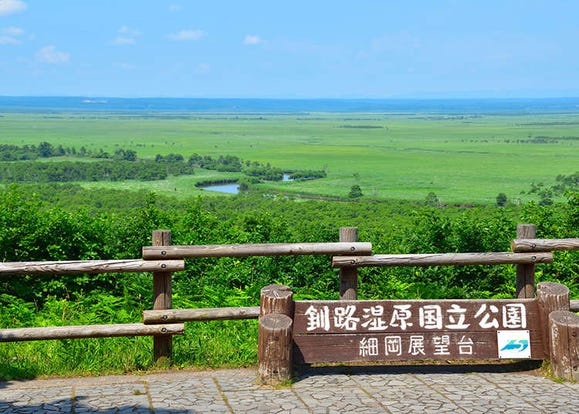
Known for its vast, dramatic landscapes, the Kushiro Wetlands offer some of Hokkaido’s most impressive natural scenery. Below are the main ways to reach the western side of the wetlands, focusing on access to the Kushiro City Wetland Observatory. Because this area is reached via Sapporo, only JR, driving, and domestic flights are listed.
・JR: About 4 hours 12 minutes total. JR Chitose Line Rapid about 2 minutes from New Chitose Airport to Minami-Chitose, then a limited express for about 3 hours 26 minutes to Kushiro, followed by a local bus about 39 minutes from Kushiro Station to the Kushiro City Wetland Observatory. Estimated cost: 9,620 yen.
・Driving: About 4 hours. Use the expressway from New Chitose Airport IC to Akan IC, then travel via National Route 240 and Prefectural Routes 222 and 53. Estimated cost: 12,460 yen, including 5,310 yen in expressway tolls and 7,150 yen for a one-day standard car rental.
・Flight: About 2 hours 10 minutes total. Domestic flight from New Chitose Airport to Kushiro Airport takes about 45 minutes, followed by a local bus about 45 minutes from Kushiro Airport to Kushiro Station, then another local bus about 40 minutes from Kushiro Station to the Kushiro City Wetland Observatory. Estimated cost: 23,910 yen, including 22,270 yen for airfare and 1,640 yen for buses.
Manuscript by Mika Hosokawa, Photography by Kazumasa Wakamatsu, Edited by Minna no Kotobasha
Minna no Kotoba Sha is a production company founded by an editor with extensive experience in editing local magazines in Sapporo. For over 20 years, our team has conducted research and written articles across Hokkaido, with Sapporo as our primary hub. Our diverse portfolio includes the production of various books such as travel guides, informational magazines, and collections showcasing the picturesque landscapes of Hokkaido. Comprised entirely of women, the team at Minna no Kotoba Sha boasts diverse interests, including a passion for travel, culinary delights, and alcoholic beverages. The scope of our communication efforts spans a wide range, covering everything from introducing notable restaurants to providing coverage of local events and sharing stories of leisure experiences.
- Area
- Category
*Prices and options mentioned are subject to change.
*Unless stated otherwise, all prices include tax.
Popular Tours & Activitiess
Recommended places for you
-
Appealing
Rukku and Uohei
Izakaya
Sapporo / Chitose
-
Appealing
Shiroi Koibito Park
Theme Parks
Sapporo / Chitose
-
Niseko Village Ski Resort
Skiing & Snowboarding
Niseko / Rusutsu
-
Appealing
Odori Park
Parks
Sapporo / Chitose
-
LakeAkan
Rivers, Lakes & Canyons
Abashiri
-

Farm Tomita
Other Nature
Furano / Biei / Sounkyo
-
Explore Japan in 7 Days: The Ultimate Local Rail Adventure with the Hokkaido & East Japan Pass
by: Guest Contributor
-
Ad

Sapporo SATUDORA Shopping Guide: Get Souvenirs, Medicine & More at This Iconic Drugstore (Special Deal Inside!)
-
Expert-Recommended: 9 Hakodate Hotels Serving Up the Best Breakfasts in Town
by: Nobuka Kawashima
-

Jozankei Onsen: 10 Luxurious Hotels with Private Hot Springs & Stunning Views Near Sapporo
by: Robotan
-
Ad
Explore Eastern Hokkaido from Tancho Kushiro Airport: Your Gateway to Grand Nature
-
7 Iconic Hokkaido locations that will make your Instagram shine
by: Himanshi Shah
-
Sapporo New Chitose Airport (CTS): Complete Guide to Restaurants, Souvenirs, Shopping & More!
-
Ad
New Chitose Airport’s Portom Hall: Just 3 Minutes from International Arrivals!
-
Healthcare in Japan for Tourists: What to Do When You Get Sick or Injured in Japan
-
Hokkaido Airports Guide: Travelling to Hokkaido by Plane & Itinerary Tips
-
Noboribetsu Onsen: 5 Best Things to Do in Japan's Famous Hot Springs Town!
-
Japanese Domestic Flights: Where to Continue Your Adventure Across Japan!
- #best sushi hokkaido
- #things to do hokkaido
- #best ramen sapporo
- #what to bring to japan
- #new years in tokyo
- #what to buy in ameyoko
- #japanese nail trends
- #what to do in odaiba
- #onsen tattoo friendly tokyo
- #daiso
- #best sweets otaru
- #japanese fashion culture
- #best nature furano
- #japanese convenience store snacks
- #best japanese soft drinks