



Known as "konamono" (literally "flour things") they are distinctly Japanese dishes that are often eaten at home as well as out. The ingredients and seasoning, as well as the way of cooking, vary according to area such as Kanto region and Kansai region.
The ingredients are mixed together for "Kansai style okonomiyaki"
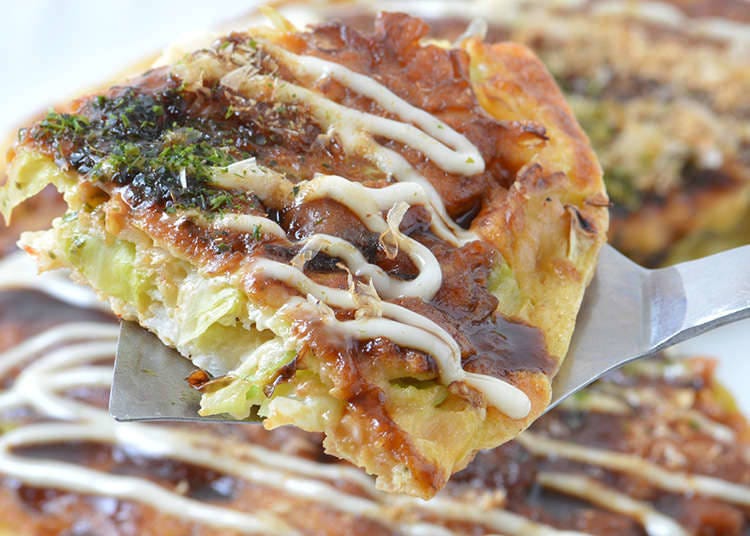
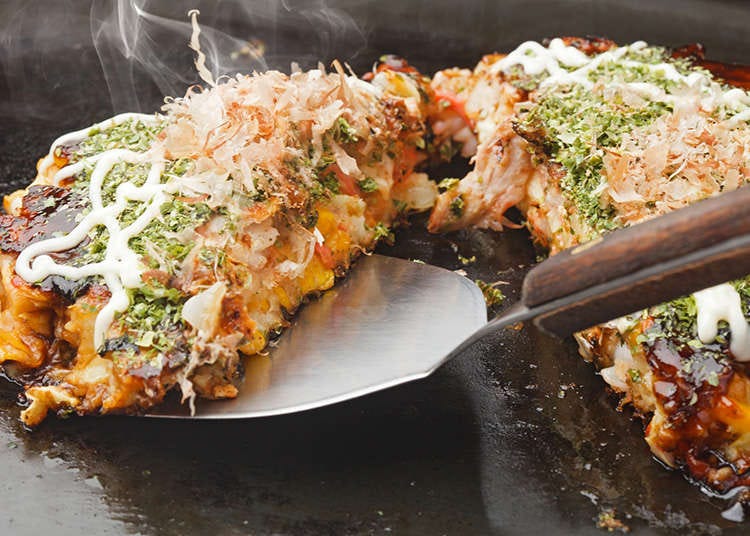
Kansai style okonomiyaki, eaten in places in the Kansai region such as Osaka, is the style of mixing eggs, cabbage and seafood such as prawns and squid into a batter made of flour and water. This is then poured onto a teppan (iron griddle) in a round shape, and fried with sliced pork on top. Sometimes grated Japanese yam is added into the batter.
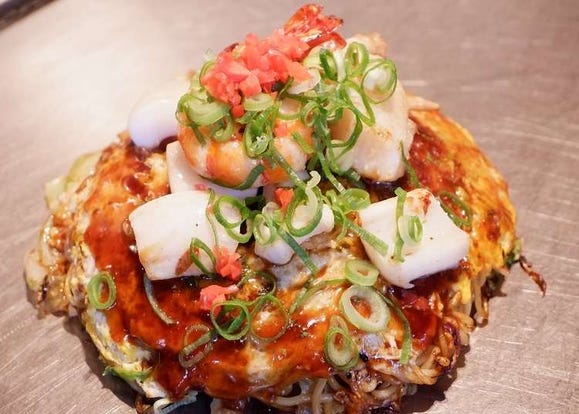
Ingredients are layered for "Hiroshima style okonomiyaki"
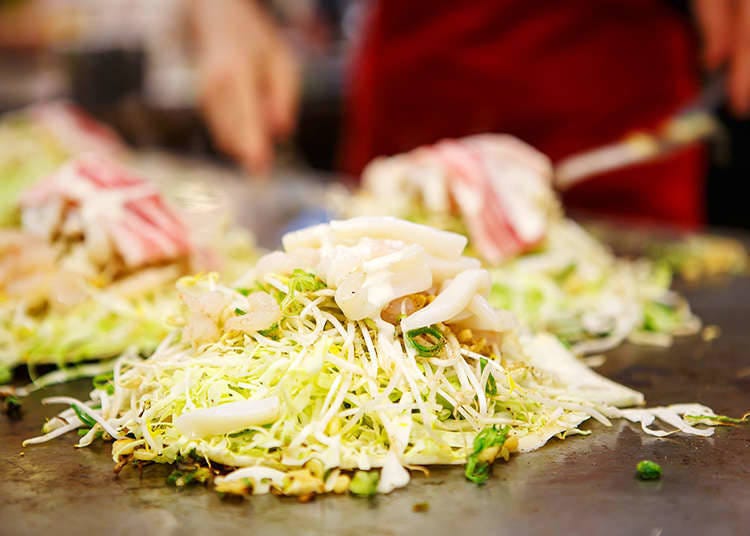
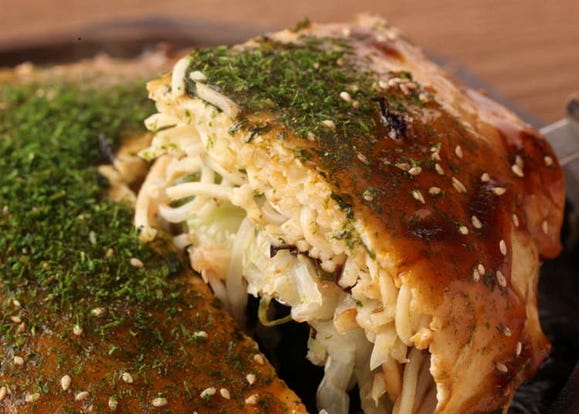
Hiroshima style okonomiyaki's characteristic is that the ingredients are not mixed.
The flour-and-water batter is poured onto a teppan thinly in a round shape like a crepe. Then cabbage, bean sprouts, seafood and sliced pork are added on top in order. It is later turned over by spatula to fry the other side.
"Monjayaki", where making the well is key
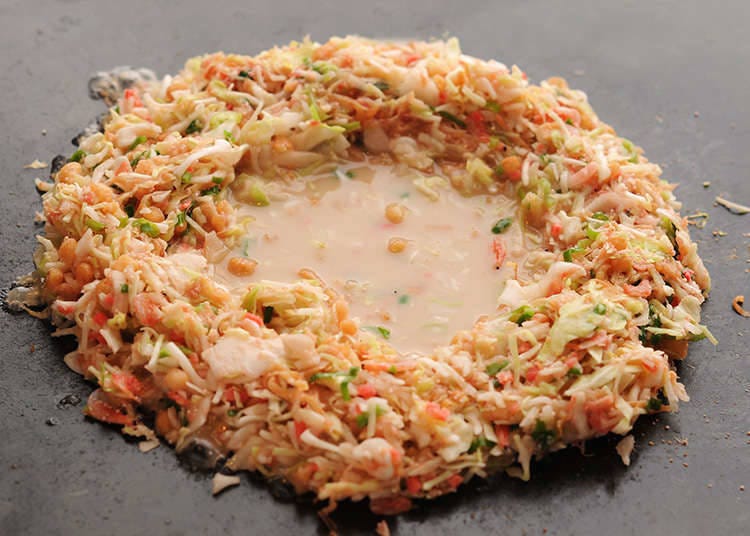
A batter made with flour and plenty of water is flavored with sauce, mixed with ingredients like cabbage and seafood and fried on the teppan.
It is more watery than okonomiyaki so the ingredients are used to make a well which the batter is then poured into. When the batter boils and starts to get short of water, the well is broken and the ingredients are mixed into the batter. It is then spread flat. Small spatulas are used to press the batter against the teppan, and the batter is eaten off the spatula.
"Takoyaki" shaped like table-tennis balls
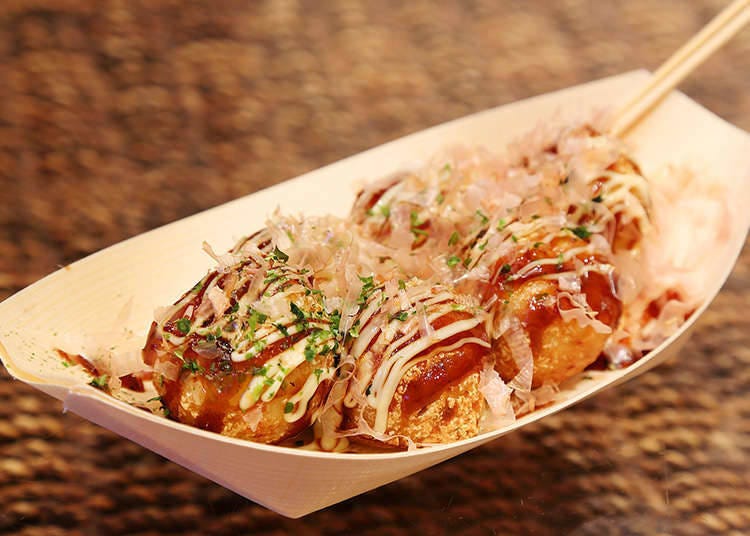
Chopped octopus is dropped into batter made from flour and water or soup stock and grilled into balls of 3 to 5cm in size. It originated in Osaka. Toppings include sauce, green laver and dried bonito shavings. Some people add mayonnaise.
If sauce is not provided, usually the batter is flavored.
- Area
- Category
*Prices and options mentioned are subject to change.
*Unless stated otherwise, all prices include tax.
Popular Tours & Activities
Recommended places for you
-
Senso-ji Temple
Temples
Asakusa
-
The Tokyo Station Marunouchi Building
Landmarks
Tokyo Station
-
Kappabashi Street
Old Towns (Shitamachi)
Asakusa
-

TOUKYOUMONJAKURAYA
Okonomiyaki, Monja & Takoyaki
Ikebukuro
-
Menu

Tsurujiro
Okonomiyaki, Monja & Takoyaki
Asakusa
-
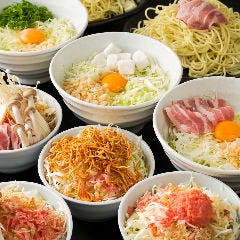
MuraShibuya
Okonomiyaki, Monja & Takoyaki
Shibuya
-
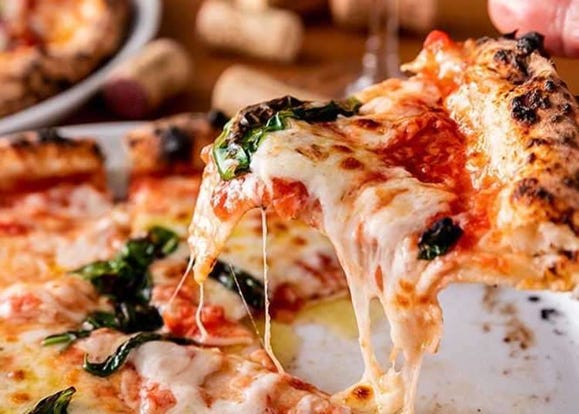
Top-Booked by International Visitors: Must-Try Italian & Pizza in Tokyo for First-Time Visitors
by: Guest Contributor
-
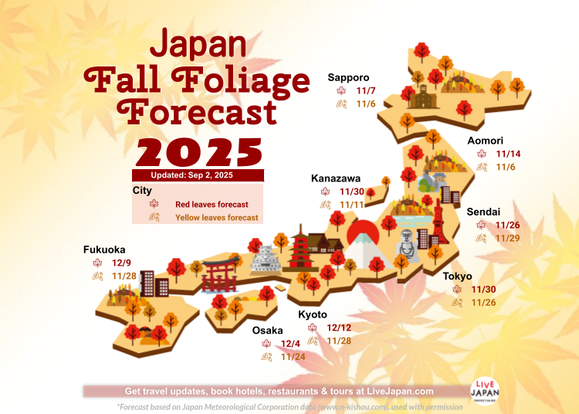
Autumn in Japan 2026: Fall Foliage Forecast & Where to Enjoy the Colorful Leaves (+Tour Info)
-

The Best Sumo Experiences in Tokyo: Morning Practices vs. Sumo Shows
-
Ad
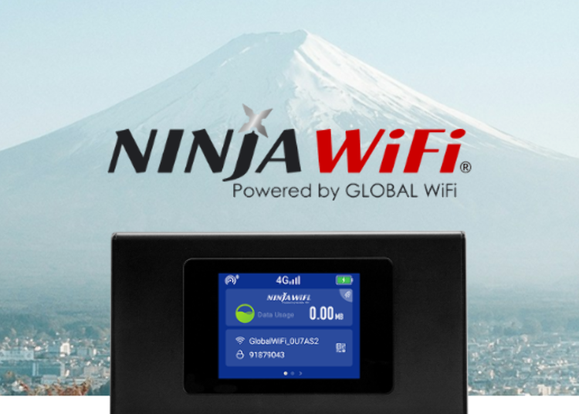
Pocket WiFi Rental in Japan 2026: Complete Price Comparison & Where to Get the Best Deal
-

ANA’s Chiikawa Jet Is Taking Off—Here’s Everything You Need to Know About Exclusive Goods, In‑Flight Fun & Travel Tips
by: Guest Contributor
-

Seibu Group Launches New Chichibu Adventure Tourism Experience for International Travelers in 2026
by: Guest Contributor
Inspiration for Accommodations
-
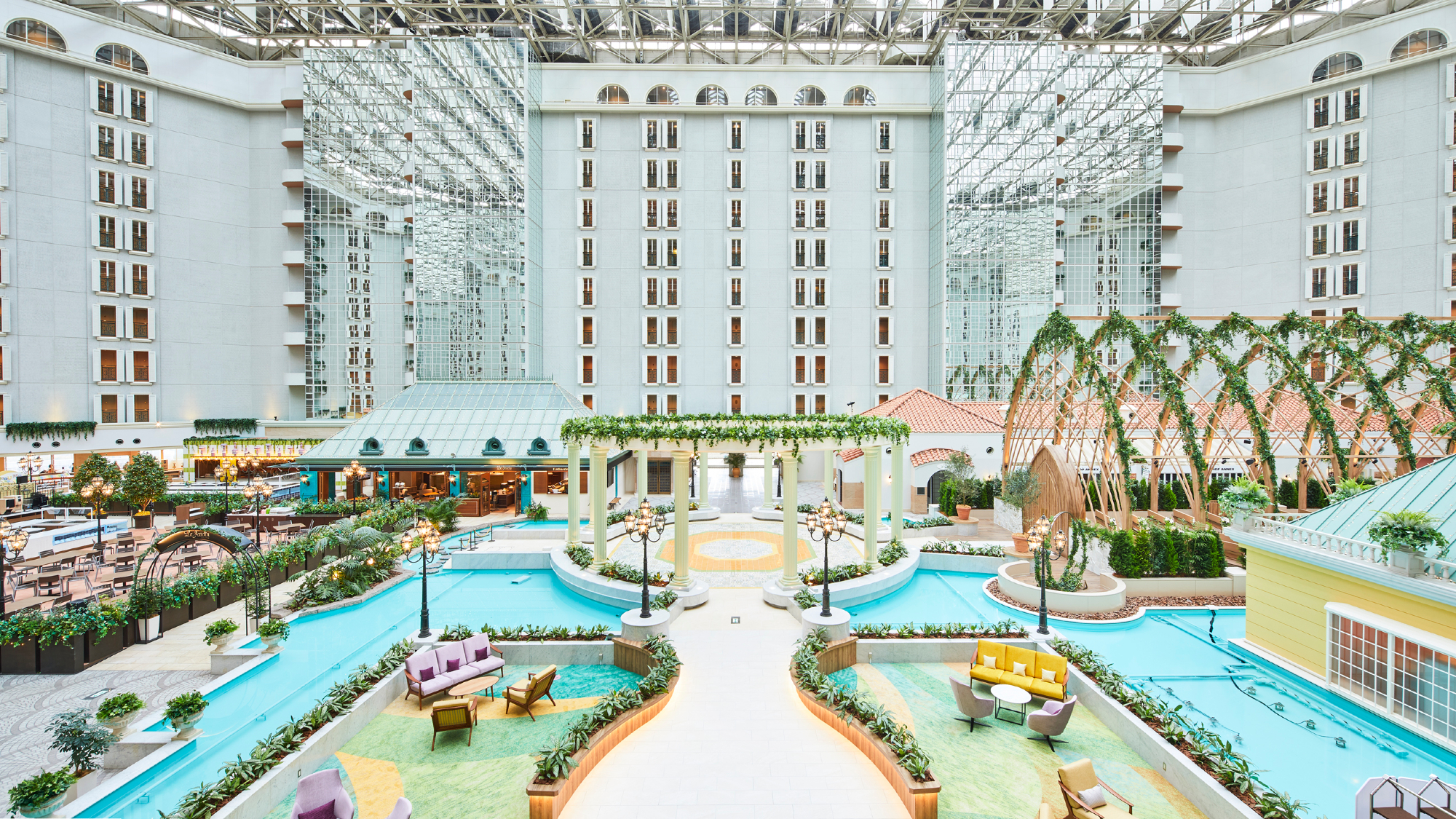
Family-Friendly Hotels with Free Shuttle to Disneyland: Convenient Access for a Magical Stay
-
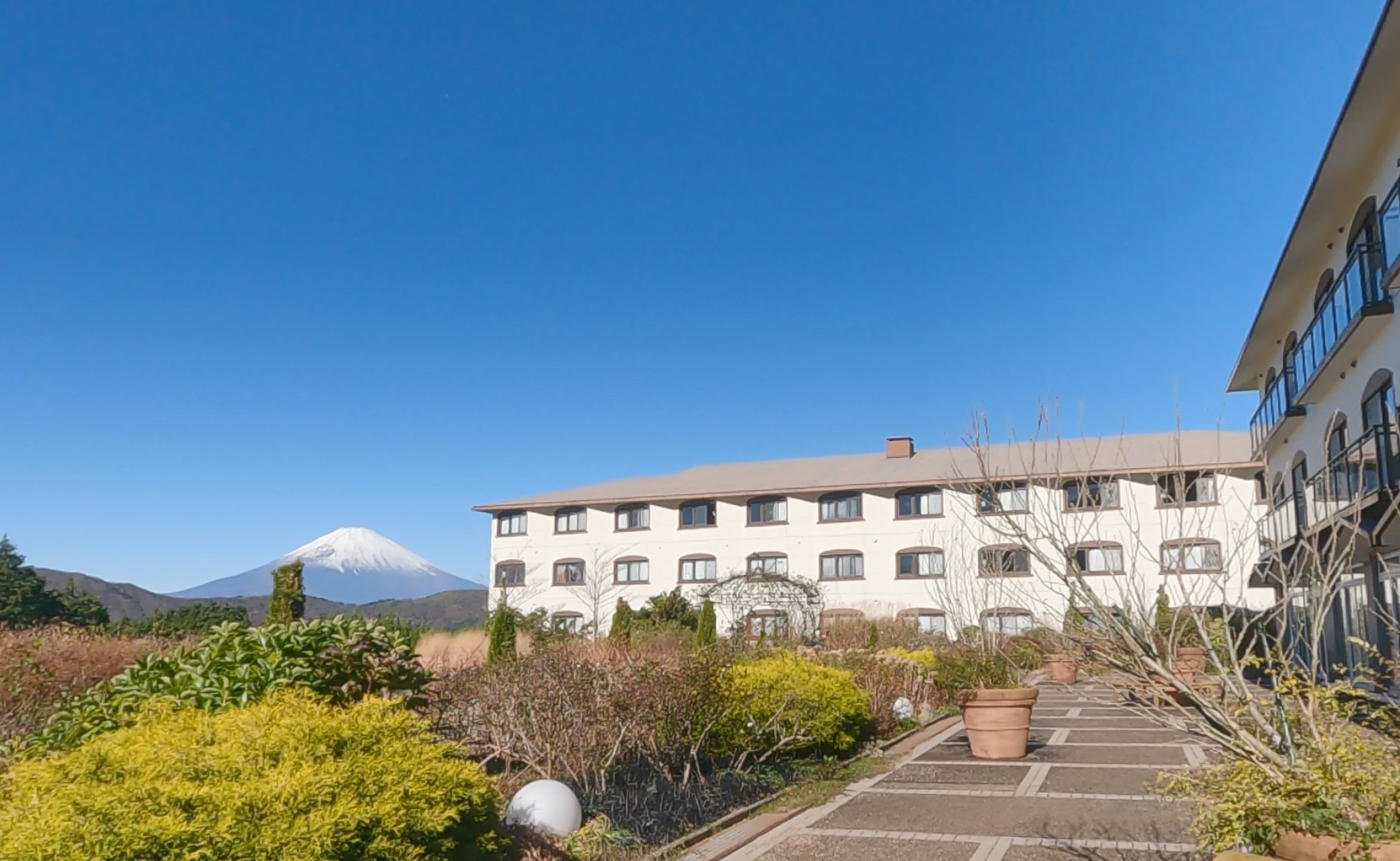
Top Ranked Hakone Hotels with Mt. Fuji View: Enjoy Stunning Scenery from Your Private Space
-
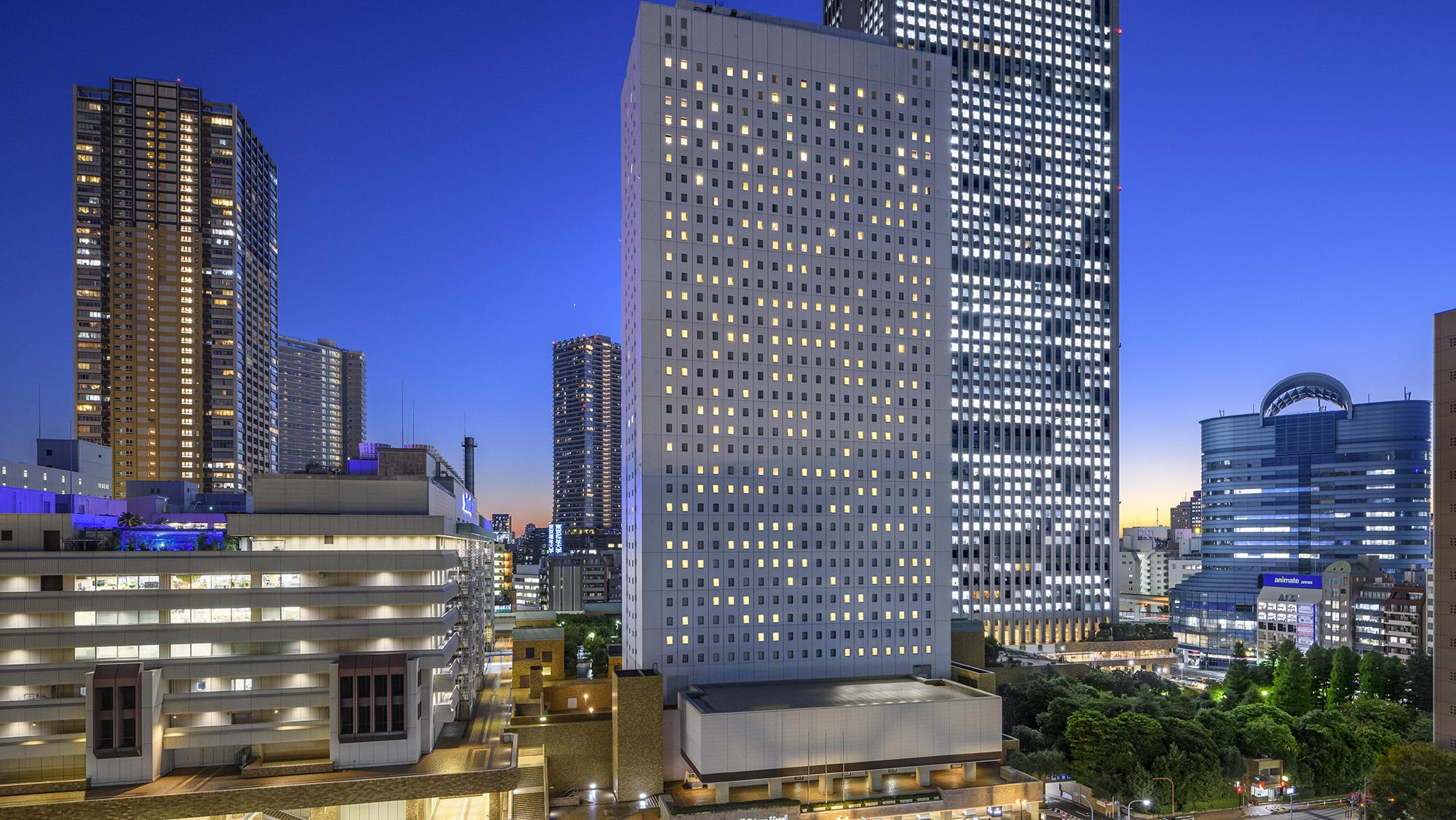
Convenient Tokyo Hotels with Airport Shuttle: Ideal for Families and Heavy Luggage
-
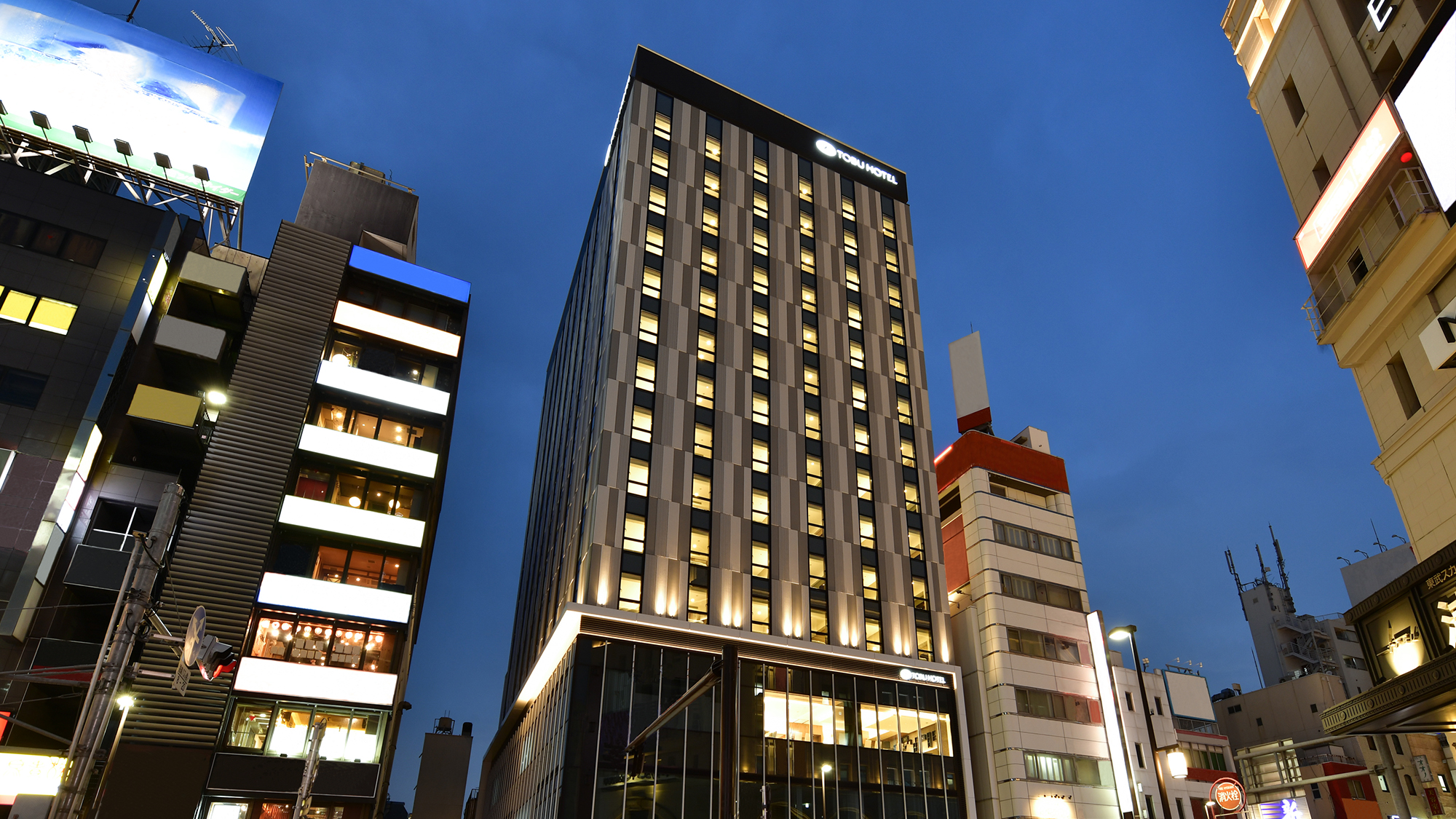
9 Family-Friendly Hotels with Comfortable Family Rooms in Asakusa
-
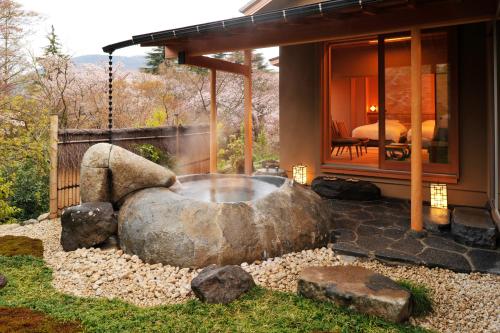
10 Open-air bath Onsen Ryokans in Hakone for Ultimate Relaxation
-
Exploring Tokyo: 4 Must-Visit Spots around Tokyo Station
-
Tokyo Dining Guide: Top 5 Asakusa Area Teppanyaki Restaurants!
-
As Seen On TV Drama 'Solitary Gourmet!' 3 Top Tasty Spots 10 Minutes from Shinjuku
-
3 Gourmet Suppers in Ueno Ameyoko: Perfect Food for a Late Night or a Late Flight
-
Top 5 restaurants where you can enjoy Hiroshima-style okonomiyaki in Tokyo!
-
Easy Day Trip from Tokyo! Ultimate Sightseeing Guide for Hakone & Lake Ashinoko!
- #best ramen tokyo
- #what to buy in ameyoko
- #what to bring to japan
- #new years in tokyo
- #best izakaya shinjuku
- #things to do tokyo
- #japanese nail trends
- #what to do in odaiba
- #onsen tattoo friendly tokyo
- #daiso
- #best sushi ginza
- #japanese convenience store snacks
- #best yakiniku shibuya
- #japanese fashion culture
- #best japanese soft drinks