



Osaka Train Guide: JR, Subway, and Private Railways Made Simple
- Written by: LIVE JAPAN Editor
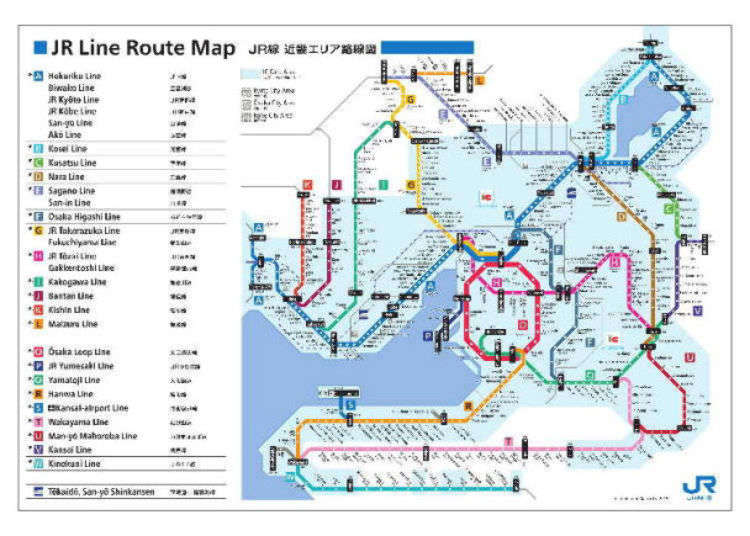
For many first-time visitors, the hardest part of traveling around Osaka is not planning where to go, but understanding the dense and confusing train map. Osaka’s rail network is built around three main systems: JR West, Osaka Metro (the subway), and five major private railway companies. These systems overlap heavily, and it is common for a single destination to be reachable in several different ways.
On top of that, Osaka’s transportation network has changed significantly in recent years. JR Osaka Station added new underground platforms in the Umekita area starting in 2023, and major upgrades were made in preparation for the 2025 Osaka Expo. As a result, navigating Osaka today is very different from just a few years ago.
This guide breaks down Osaka’s transportation logic for 2026, helping you choose the smartest route based on your destination and travel style, so you can move confidently without getting lost in Umeda’s famously complex station maze.
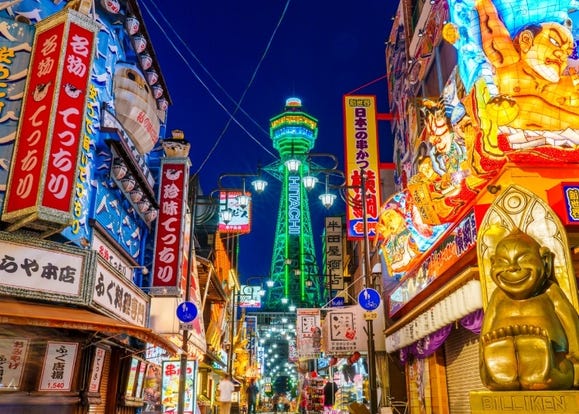
(Main image source: PIXTA)
(This article contains affiliate links)
- Table of Contents
-
- The 3 JR West Lines You Need to Know
- Getting Around Osaka Made Easy: Osaka Metro’s 8 Lines at a Glance
- Osaka Metro’s 8 Lines and Key Sightseeing Stops Along Each Route
- Only Hankyu Railway Connects Osaka, Kyoto, and Kobe Directly
- Hanshin Electric Railway: A Down-to-Earth Option for Kobe and Koshien
- Kintetsu Railway: The Best Way to Visit Nara and Feed the Deer
- Nankai Railway: The Gateway to Kansai Airport and Koyasan
- Sightseeing-Friendly Routes: Keihan Railway and the Retro Hankai Tramway
- Quick Summary: One-Line Rules for Choosing the Right Route (The Ultimate Cheat Sheet)
- Have You Decided Where to Stay Yet?
The 3 JR West Lines You Need to Know
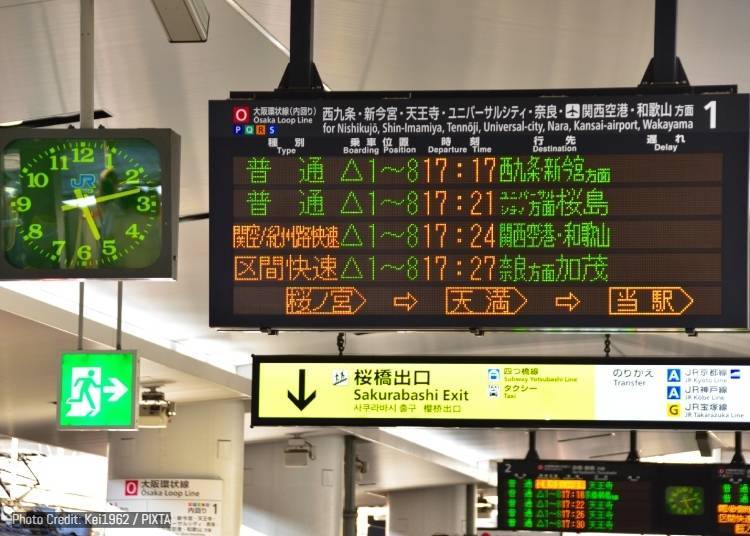
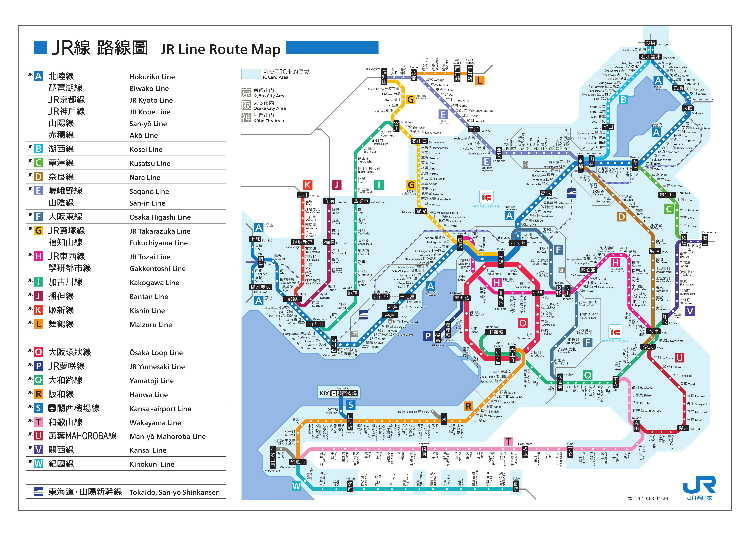
JR West operates an extensive rail network across the Kansai region, but for most Osaka sightseeing itineraries, there are a few core lines you should understand first. These include the JR Kyoto Line, JR Kobe Line, Osaka Loop Line, and the Yumesaki Line (Sakurajima Line), which is the closest JR line to Universal Studios Japan.
One of the biggest changes travelers should note is the full opening of the new underground platforms at Osaka Station in the Umekita area. Thanks to this upgrade, the Kansai Airport Limited Express Haruka now stops directly at Osaka Station. In the past, it terminated only at Shin-Osaka or Tennoji. For travelers staying around Umeda, this is one of the most important transportation improvements to know for 2026.
- JR Kyoto Line (Osaka–Kyoto)
- The JR Kyoto Line is all about speed. Taking a Special Rapid Service, you can reach Kyoto Station from Osaka in about 30 minutes, making it faster than most private railways. While there are fewer sightseeing stops along the way, this line is ideal if your goal is to reach Kyoto Station quickly and transfer to buses or subways for sightseeing around the city.
- JR Kobe Line (Osaka–Kaobe–Himeji)
- If Kobe is on your itinerary, the JR Kobe Line is the most convenient option. From Osaka, Special Rapid trains reach Kobe in roughly 25 minutes. This makes it easy to visit areas such as Motomachi for Chinatown (Nankinmachi), or Sannomiya for the historic Kitano district. The same line also continues to Himeji, making it the main route for visiting Himeji Castle.
- Osaka Loop Line (City Center)
- For sightseeing within Osaka itself, the Osaka Loop Line is essential. Much like Tokyo’s Yamanote Line, it circles the city center and connects many major attractions. You can access Shitennoji via Tennoji Station, Osaka Castle via Morinomiya or Osakajokoen Station, and the retro Shinsekai area via Shin-Imamiya Station. The area around Osaka Station, including popular landmarks like the Hep Five Ferris wheel, is also on the loop. Once you understand this line, getting around central Osaka becomes much simpler.
Getting Around Osaka Made Easy: Osaka Metro’s 8 Lines at a Glance
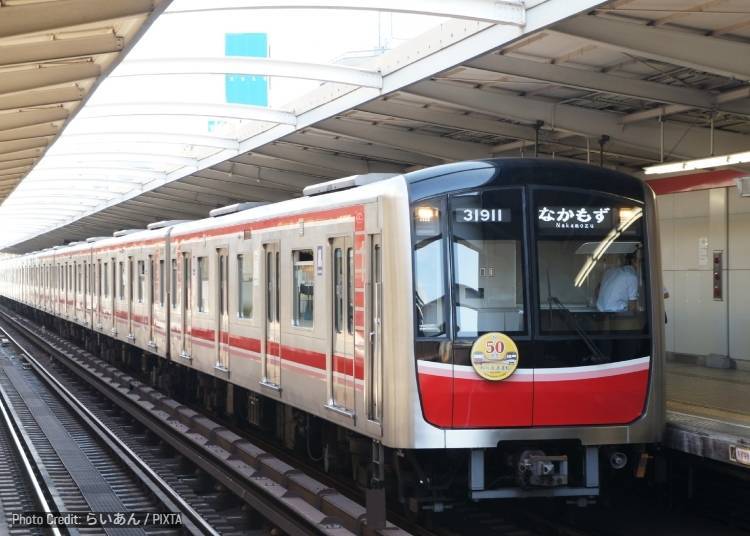
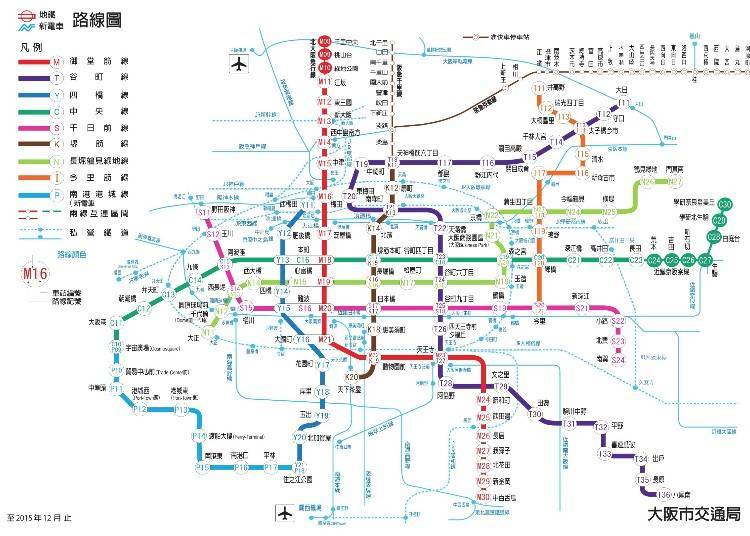
For getting around Osaka itself, Osaka Metro is the most important transportation system to know. With eight subway lines, it is the second-largest metro network in Japan after Tokyo, and it can take you to nearly every corner of the city.
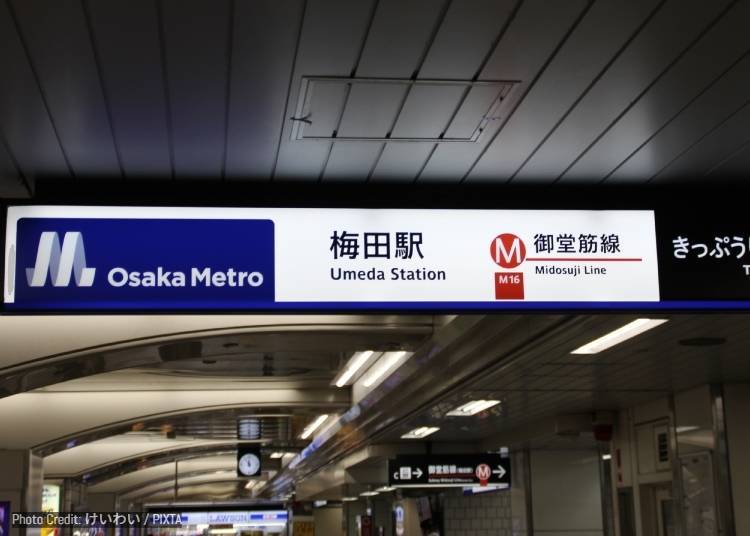
To make things easier for visitors, each line has its own color and every station is assigned a number. For example, the heavily used Midosuji Line is marked in red, and Umeda Station is labeled M16. Remembering the color and station number is often enough to avoid getting on the wrong train, even if you cannot read Japanese.
Among all lines, the Midosuji Line (red) is the one you will use most often. Running beneath Osaka’s main north–south avenue, it functions as the city’s backbone. This single line connects Shin-Osaka Station, Umeda, Shinsaibashi, Namba, and Tennoji, linking major transfer points and shopping districts in one continuous route.
Several other lines are especially useful depending on your itinerary. The Chuo Line (green) runs east to west and serves popular spots like Osaka Aquarium Kaiyukan and the Tempozan Ferris wheel. From 2026 onward, it also becomes the only rail line extending directly to Yumeshima, the site of the Osaka Expo, making it more important than ever.
The Tanimach Line (purple) runs north to south through areas such as Higashi-Umeda, Tenmabashi, and Tanimachiyonchome. It is ideal for visiting Osaka Castle, the Osaka Museum of History, and Shitennoji Temple.
The Sakaisuji Line (brown) passes through Ebisucho near Tsutenkaku and Kitahama, home to the Museum of Oriental Ceramics. This line also through-runs with Hankyu Railway, which sometimes allows direct travel to Kyoto without changing trains.
Osaka Metro’s eight lines form a dense web centered on the city core. For most travelers, understanding a few key lines and what they connect to is enough to explore Osaka smoothly and confidently. Below, we break down each of the eight lines with their main features and must-visit stops.
Osaka Metro’s 8 Lines and Key Sightseeing Stops Along Each Route
Once you understand which Osaka Metro line serves which area, getting around the city becomes far less intimidating. Even mastering just a few of these lines is enough to cover most major sightseeing spots in Osaka.
- Midosuji Line (Red)
- The busiest subway line in Osaka, running beneath the city’s main north–south boulevard, Midosuji.
・Umeda Station: Hep Five
・Yodoyabashi Station: The Museum of Oriental Ceramics, Osaka
・Namba Station: Namba Parks
・Dobutsuen-mae Station: Tsutenkaku
・Tennoji Station: Shitennoji Temple, Abeno Harukas
- Tanimachi Line (Purple)
- A north–south line running under Tanimachi-suji, with many temples and government offices along the route.
・Higashi-Umeda Station: Hep Five
・Tenmabashi Station: Osaka Castle area
・Tanimachiyonchome Station: Osaka Castle, Osaka Museum of History
・Shitennoji-mae Yuhigaoka Station: Shitennoji Temple
・Tennoji Station: Shitennoji Temple, Abeno Harukas
- Yotsubashi Line (Blue)
- Runs north–south beneath Yotsubashi-suji, convenient for West Umeda and the western side of Namba.
・Nishi-Umeda Station: Hep Five
・Namba Station: Namba Parks
- Chuo Line (Green)
- An east–west line crossing central Osaka. In 2026, it becomes the key rail link to the Expo site at Yumeshima.
・Osakako Station: Osaka Aquarium Kaiyukan, Tempozan Ferris Wheel
・Tanimachiyonchome Station: Osaka Castle, Osaka Museum of History
・Morinomiya Station: Osaka Castle
- Sennichimae Line (Pink)
- Runs beneath Sennichimae-dori. Between Tsuruhashi and Sakuragawa, it parallels Kintetsu and Hanshin Namba lines.
・Namba Station: Namba Parks
- Sakaisuji Line (Brown)
- Runs under Sakaisuji, an area known for wholesalers and electronics shops, and connects directly with Hankyu Railway.
・Kitahama Station: The Museum of Oriental Ceramics, Osaka
・Ebisucho Station: Tsutenkaku
- Nagahori Tsurumi-ryokuchi Line (Light Green)
- Japan’s first subway line to use a linear motor system. Shinsaibashi Station connects easily with Midosuji and Yotsubashi lines.
・Morinomiya Station: Osaka Castle
・Osaka Business Park Station: Osaka Castle
- Imazatosuji Line (Orange)
- The only Osaka Metro line that does not connect directly with the Midosuji Line. It mainly serves residential neighborhoods.
Only Hankyu Railway Connects Osaka, Kyoto, and Kobe Directly
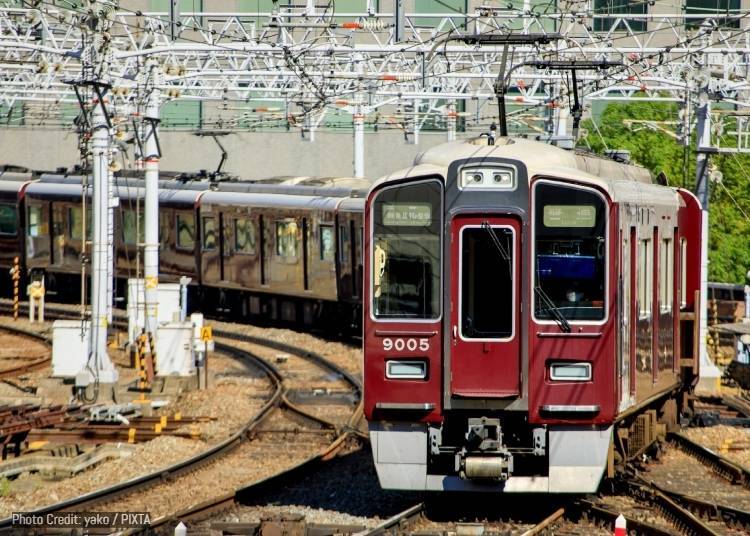
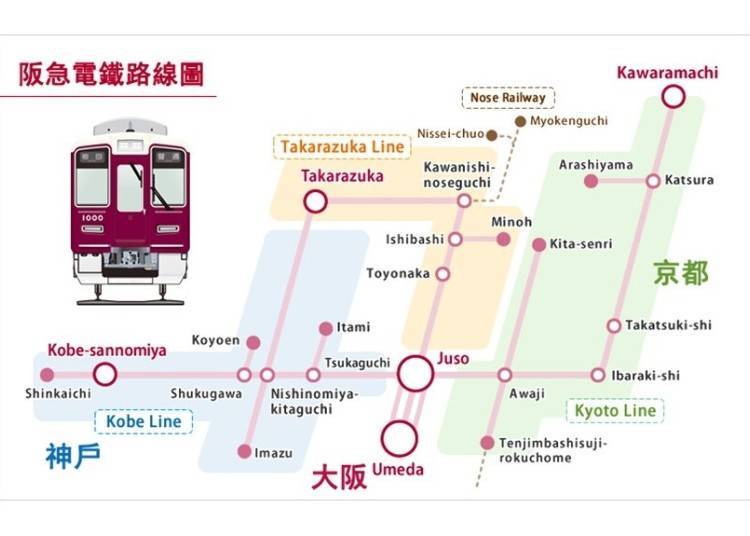
Among Kansai’s many private railway companies, Hankyu Railway stands out as the only operator that directly links Osaka-Umeda, Kyoto-Kawaramachi, and Kobe-Sannomiya on a single network.
Hankyu trains are instantly recognizable by their elegant maroon-colored cars and operate nine lines in total, including the Kyoto Line, Kobe Line, and Takarazuka Line. For travelers, the most useful services are the limited express trains.
The Kyoto Line Limited Express takes about 45 minutes from Umeda to Kawaramachi, dropping you right at Shijo Street, Kyoto’s busiest shopping and sightseeing area.
The Kobe Line Limited Express reaches Sannomiya in around 30 minutes, making it an easy and stylish way to travel between Osaka and Kobe.
If your itinerary includes all three cities, Hankyu Railway offers one of the most seamless and traveler-friendly options for moving across Kansai.
Hanshin Electric Railway: A Down-to-Earth Option for Kobe and Koshien
If Kobe is on your itinerary, another solid alternative to Hankyu is Hanshin Electric Railway. This line also connects Osaka and Kobe, with limited express trains reaching Motomachi Station in about 35 minutes from Umeda. Motomachi is just steps away from Nankinmachi, Kobe’s famous Chinatown, making it a convenient stop for sightseeing and food.
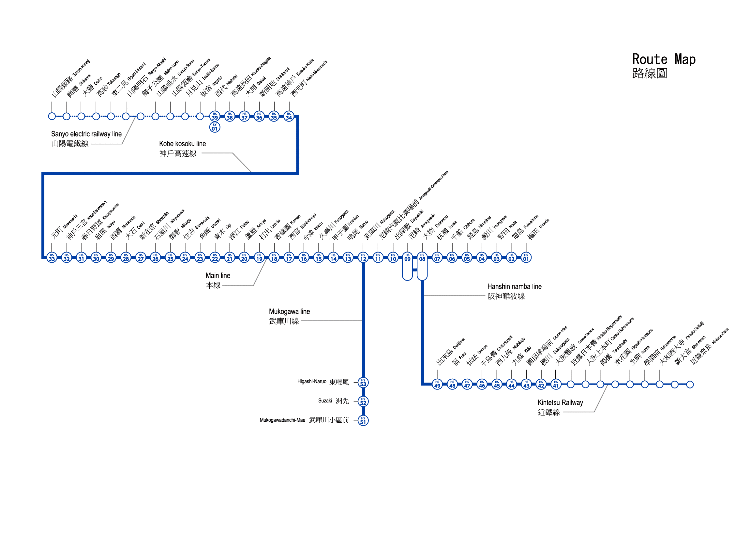
Hanshin Railway is especially popular for its access to Koshien Stadium, a must-know destination for baseball fans. Thanks to through-service with Kintetsu Railway, travelers starting from Osaka-Namba can also reach Kobe via Amagasaki without changing trains, in roughly 46 minutes. With flexible routing and reasonable fares, Hanshin is a practical, no-frills choice for getting around the Osaka–Kobe corridor.
Kintetsu Railway: The Best Way to Visit Nara and Feed the Deer
With one of the largest private railway networks in Japan, Kintetsu Railway connects Osaka, Kyoto, and Nara, and even extends to Mie Prefecture and Nagoya. For travelers, its biggest advantage is access to Nara.
From Osaka-Namba, Rapid Express trains reach Kintetsu-Nara Station in about 40 minutes. Compared with JR Nara Station, Kintetsu-Nara is much closer to Nara Park, Todai-ji Temple, and Kasuga Taisha Shrine. Step out of the station and you can walk straight to the park to meet Nara’s famous deer.
Kintetsu is also the key choice if you plan to visit Ise Grand Shrine or ride the luxury sightseeing train Shimakaze. For day trips beyond Osaka and Kyoto, Kintetsu offers coverage and convenience that other railways simply cannot match.

Nankai Railway: The Gateway to Kansai Airport and Koyasan
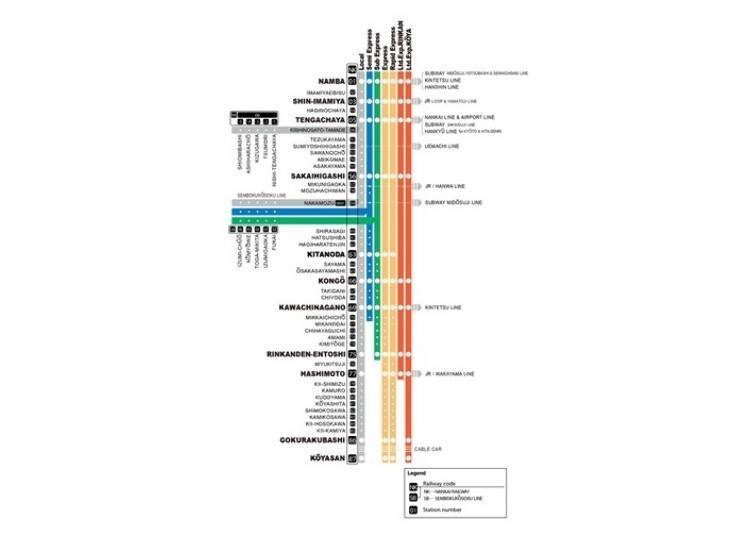
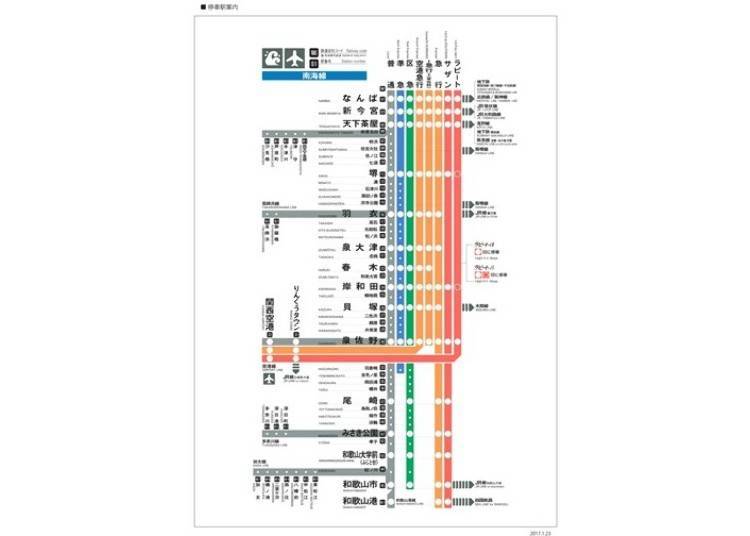
Based in Namba, Nankai Electric Railway is a key rail operator for southern Osaka, Wakayama Prefecture, and Kansai International Airport. Its network is built around two main lines, each serving a very different purpose.
The Nankai Main Line links Namba with Wakayama City and includes the Airport Line to Kansai Airport. The distinctive limited express Rapi:t connects Namba and the airport in about 34–40 minutes, offering one of the fastest and most comfortable rail options for air travelers.
The Koya Line heads inland toward the sacred mountain temple complex of Koyasan. As the train climbs higher, city scenery gives way to forests and mountain views, setting the tone for a pilgrimage to this UNESCO World Heritage site. For visitors heading to Kansai Airport or planning a trip to Koyasan, Nankai Railway is the route to remember.
Sightseeing-Friendly Routes: Keihan Railway and the Retro Hankai Tramway
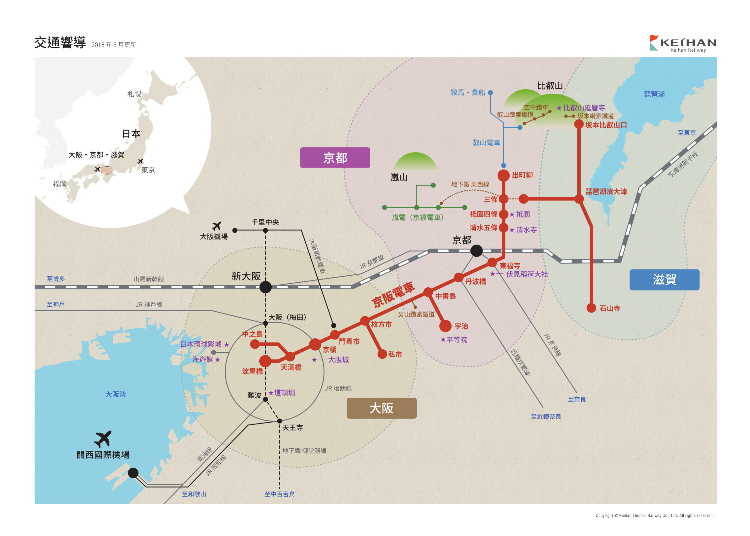
To wrap up, here are two character-filled lines that are especially popular with sightseers. Keihan Electric Railway runs between Yodoyabashi in Osaka and Demachiyanagi in Kyoto, with limited express trains covering the full route in about 55 minutes. Following the Kamo River, this line is extremely convenient for visitors, as it stops directly at some of Kyoto’s most iconic areas, including Fushimi Inari Taisha (famous for its thousands of torii gates), Gion-Shijo, and Kiyomizu-Gojo, the closest station for Kiyomizu-dera.
The Hankai Tramway offers a completely different experience. This nostalgic streetcar runs between southern Osaka and Sakai City on two lines, the Uemachi Line and the Hankai Line. Trams travel slowly along public roads, stopping at landmarks such as Sumiyoshi Taisha, known for its ancient architectural style. If you want to slow down and experience the atmosphere of Osaka from a century ago, a ride on the Hankai Tramway is a memorable way to do it.


Quick Summary: One-Line Rules for Choosing the Right Route (The Ultimate Cheat Sheet)
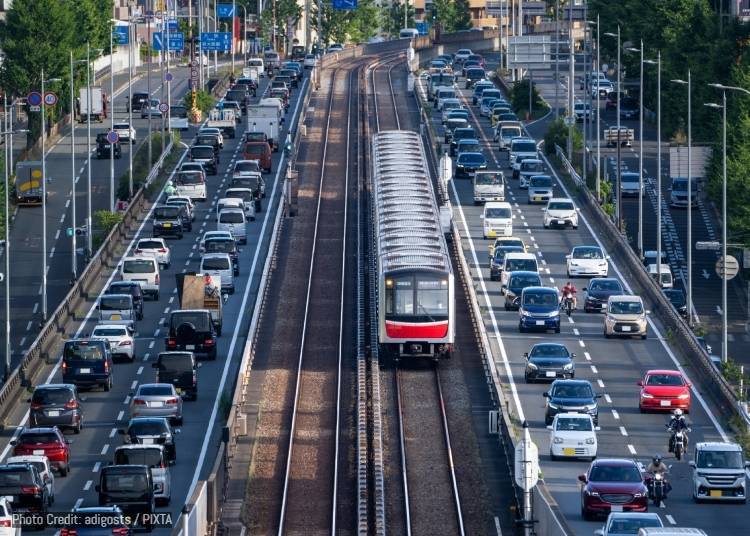
To help you make fast decisions on a busy travel day, here is a simplified destination-based cheat sheet. Just match where you want to go with the recommended railway, and you can skip the headache of reading complex route maps.
If your destination is Universal Studios Japan (USJ) or the World Heritage site Himeji Castle, choose JR West without hesitation.
If you are staying within central Osaka (Umeda, Namba, Shinsaibashi) for shopping and sightseeing, the Osaka Metro Midosuji Line is the only line you really need to remember.
If your plan is shopping or café hopping around Kyoto Kawaramachi, Hankyu Railway offers the most comfortable and direct access to the heart of the area.
If you are visiting Fushimi Inari Taisha or Kiyomizu-dera in Kyoto, Keihan Railway takes you closest to the sights with minimal walking.
If feeding deer at Nara Park is on your itinerary, be sure to take Kintetsu Railway. Its stations are far closer to the main attractions than JR’s.
For travel to and from Kansai International Airport, the rule is simple:
Staying in Namba? Take Nankai Railway.
Staying in Umeda (Osaka Station area)? Take the JR Limited Express Haruka.
Remember these simple rules, and you will have already mastered the essentials of Osaka transportation. With that confidence, you can focus on enjoying your Kansai journey instead of worrying about how to get around.
Have You Decided Where to Stay Yet?
Top-Rated Accommodation Picks in Osaka

▼Explore More Osaka Transportation Guides▼
▼Explore More Osaka Transportation Deals & Pass Guides▼

*Prices and options mentioned are subject to change.
*Unless stated otherwise, all prices include tax.

Popular Tours & Activities
Recommended places for you
-
Kyoto National Museum
History Museums
Kyoto Station, To-ji Temple
-
Goods
Yoshida Gennojo-Roho Kyoto Buddhist Altars
Gift Shops
Nijo Castle, Kyoto Imperial Palace
-
Sunflower terminal (Osaka) Terminal 1
Other Sightseeing
USJ, Nanko Port
-
ISHIDAYA Hanare
Yakiniku
Kobe, Sannomiya, Kitano
-

Jukuseiniku-to Namamottsuarera Nikubaru Italian Nikutaria Sannomiya
Izakaya
Kobe, Sannomiya, Kitano
-
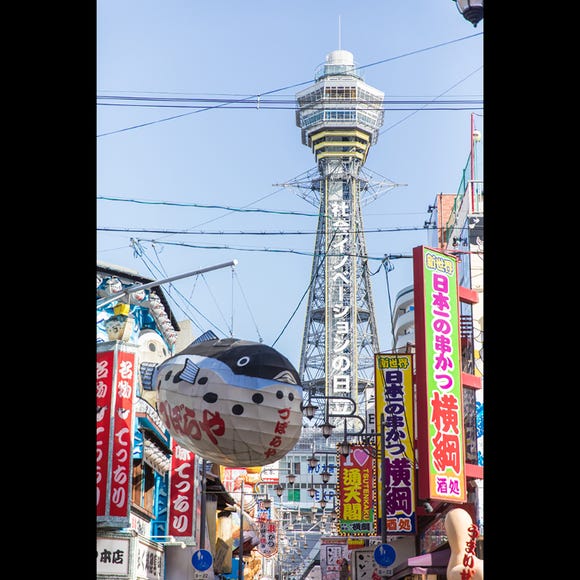
Tsutenkaku Tower
Landmarks
Shinsekai, Tennouji, Tsuruhashi
-
Shopping in Osaka? Tourists Can Now Get Up to 3,000 Yen Off at Namba Stores
by: Guest Contributor
-
Top-Booked in Japan: Must-Try Sushi in Osaka for First-Time Visitors
by: Guest Contributor
-
Ad
New Destination! UNIQLO's New Global Flagship Store Comes to Kyoto in November 2026
-
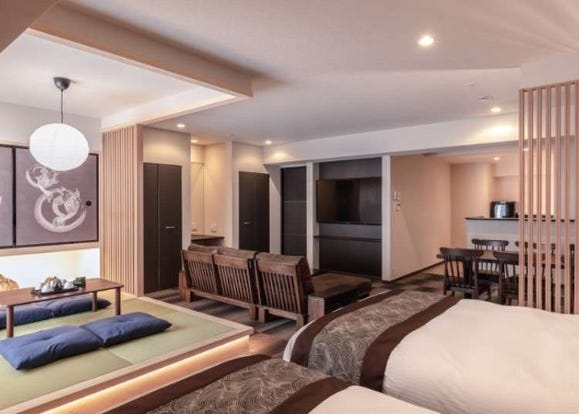
10 Recommended Apartment Hotels in Kyoto for Long Stays and Family Trips
by: Yotsuka Hizuki
-
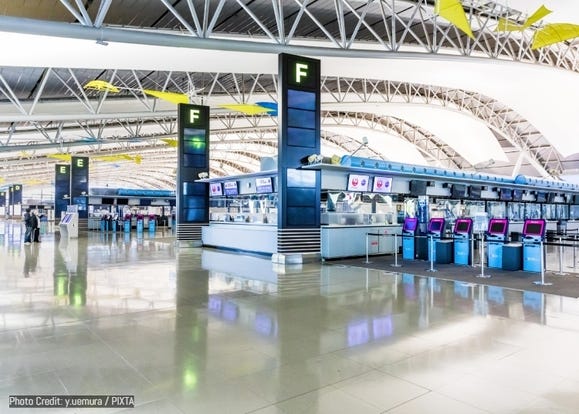
Travel Hands-Free from Kansai Airport (KIX) with Yamato Transport’s New Counter
by: Guest Contributor
-
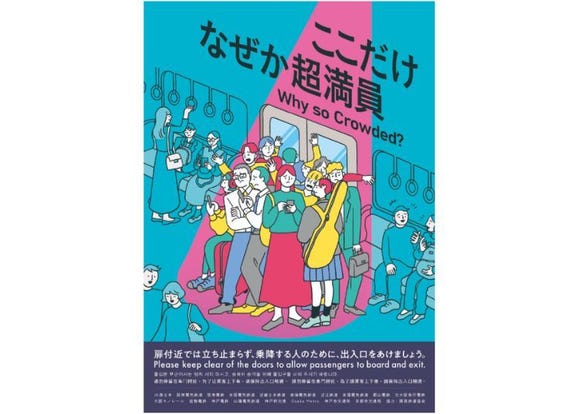
How to Ride Trains Like a Local in Kansai: Etiquette, Railway Culture & Historic Stops
by: Guest Contributor
Inspiration for Accommodations
-

Why Is Osaka So Wildly Popular With Foreign Tourists?
by: WESTPLAN
-
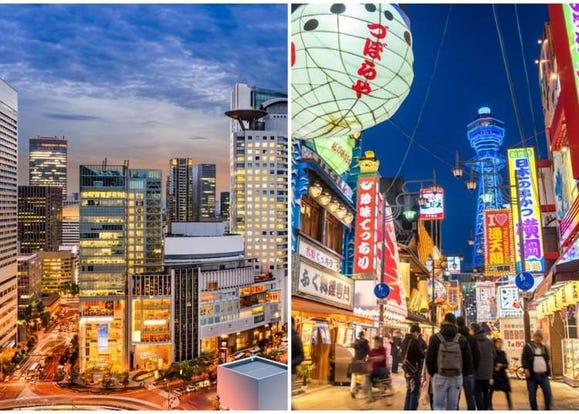
Minami vs. Kita: Which Osaka Sightseeing Area Is Right for You?
by: WESTPLAN
-
Top 5 Best Sightseeing Spots Near Shin-Kobe Station
-
Ad
Smart Travel in Kyoto: Using Luggage Storage & Delivery Services at Kyoto Station
-
Japan's Bath Culture: Tips You Should Know!
-
Visiting Tsutenkaku Tower: Osaka's Retro Icon in the Heart of Shinsekai
by: Guest Contributor
- #best gourmet Osaka
- #things to do Osaka
- #what to do in kyoto
- #what to bring to japan
- #best gourmet Kyoto
- #new years in Osaka
- #what to buy in nanba
- #Visiting Osaka
- #onsen tattoo friendly arima
- #daiso
- #Visiting Kyoto
- #best japanese soft drinks
- #japanese fashion culture
- #japanese convenience store snacks
- #japanese nail trends