


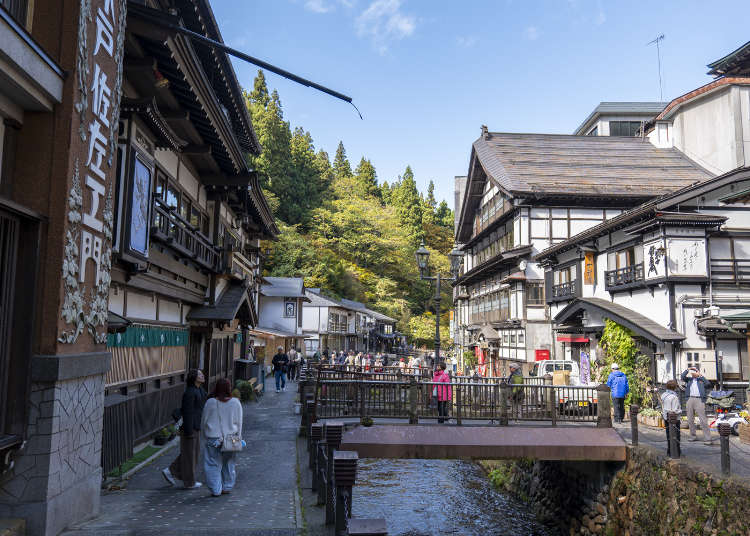
Ginzan Onsen in Autumn: Discovering the Other Side of Japan’s Fairy-Tale Hot Spring Town
- Written by: Timothy Sullivan
Most travelers dream of seeing Ginzan Onsen covered in snow. But after returning to this picturesque Yamagata hot spring town in autumn, I discovered there’s much more to it than its famous winter scenery.
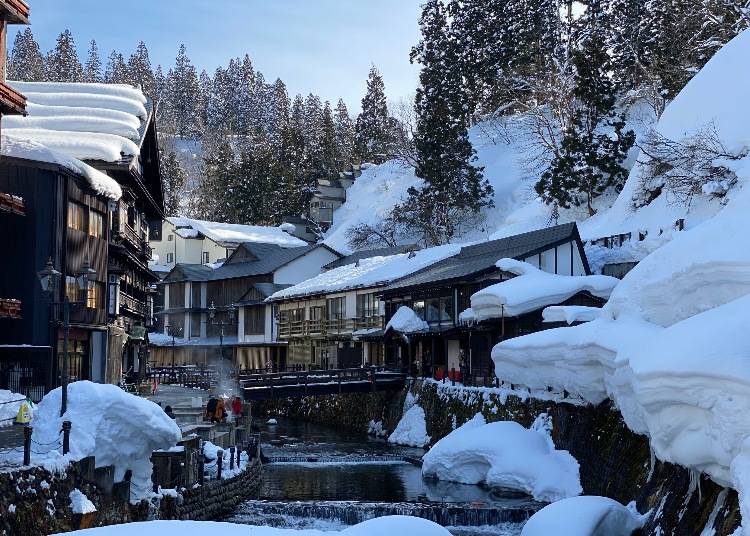
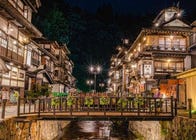
Say the words “Ginzan Onsen,” and for many travelers, images of a Japanese fairy-tale village immediately come to mind. Beautiful wooden ryokan lining a narrow river, old-fashioned gas lamps casting their warm glow over the streets, and thick blankets of snow transforming everything into a scene straight out of a Studio Ghibli film.
When I first visited Ginzan Onsen in 2021, I deliberately chose winter. Like so many travelers, I wanted to experience that magical, snow-covered town for myself. I even stayed overnight at Kozankaku, one of its traditional inns, enjoying the rare opportunity to wander its quiet snow-blanketed streets after the day-trippers had departed.
And it was every bit as wonderful as I’d imagined.
But when I returned in late October 2026, this time as part of a fall foliage sightseeing tour through Miyagi and Yamagata prefectures, I discovered something unexpected.
- Table of Contents
-
- Beyond the Picture-Perfect Streets of Ginzan Onsen
- Following the River Into Ginzan Onsen’s Hidden Forest
- The Silver Mine That Gave Ginzan Onsen Its Name
- A Quiet Moment Beside the River
- Winter or Autumn: When Should You Visit Ginzan Onsen?
- How to Visit Ginzan Onsen: Join a Tour or Explore Independently
- Ginzan Onsen: A Place Worth Returning To
Beyond the Picture-Perfect Streets of Ginzan Onsen
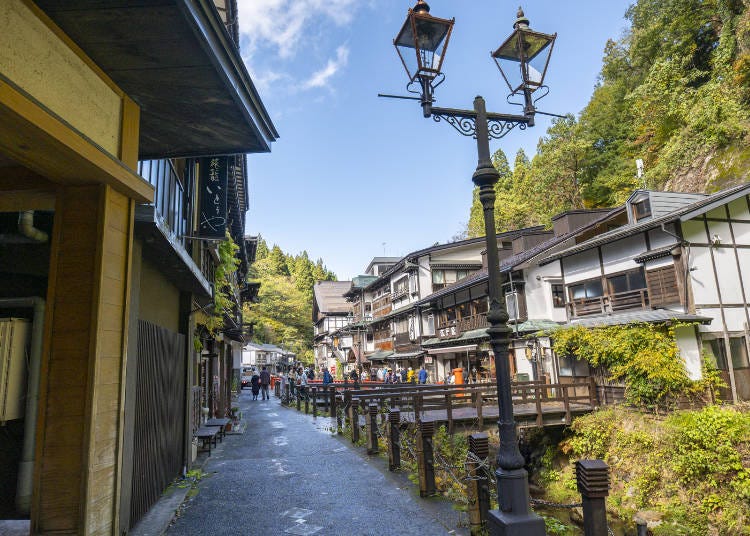
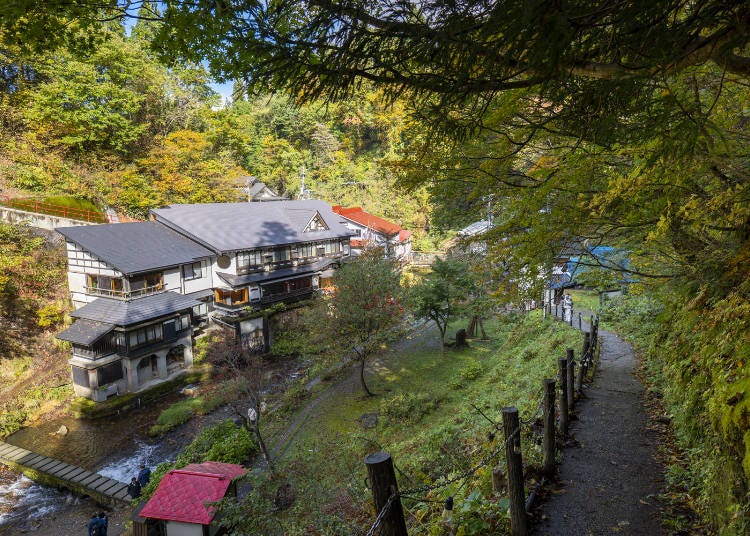
Tucked away in the mountains of Yamagata Prefecture, Ginzan Onsen is known for its beautifully preserved wooden ryokan, many of which evoke the romantic atmosphere of Japan’s Taisho era (1912–1926).
A narrow river runs through the heart of town, crossed by charming little bridges, while shops, cafés, and traditional inns line its banks.
During winter, the scenery is spectacular. But heavy snowfall and icy conditions also limit how much of the surrounding area you can explore.
On my first visit, I could venture only so far beyond the main street before snow and ice made continuing impractical.
This time, however, things were different.
Our tour bus dropped us off near the entrance to the village, giving us around two hours of free time to explore independently.
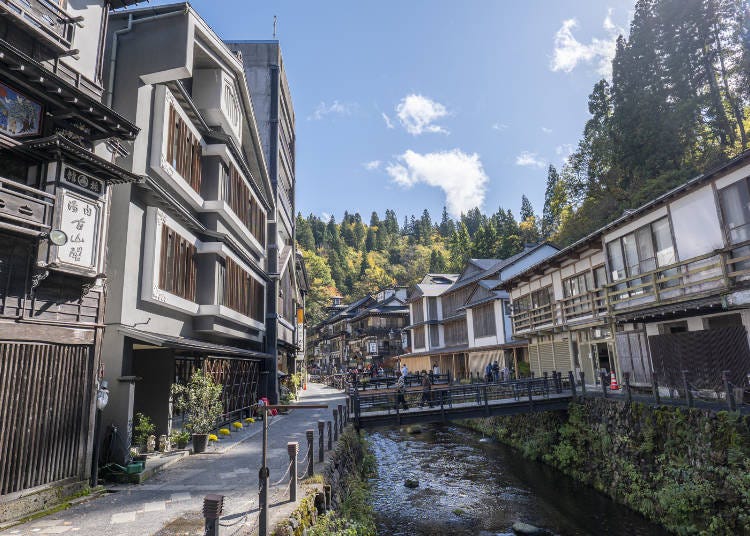
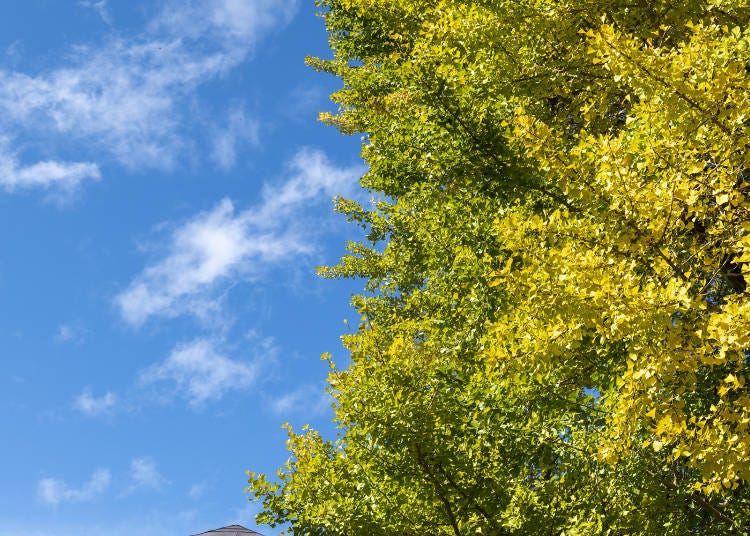
Arriving around 10 AM, I found the town bathed in beautiful morning sunshine. Golden leaves framed the rooftops, the air was pleasantly warm, and the mountains surrounding the village glowed with the colors of autumn.
Unlike the brilliant reds of Kyoto’s carefully maintained gardens, Ginzan Onsen’s autumn foliage felt wonderfully natural. Here, the colors weren’t arranged for effect. They were simply part of the landscape, covering the hillsides and reflecting in the river below.
And with the weather on my side, I decided to see just how far I could explore.
Following the River Into Ginzan Onsen’s Hidden Forest
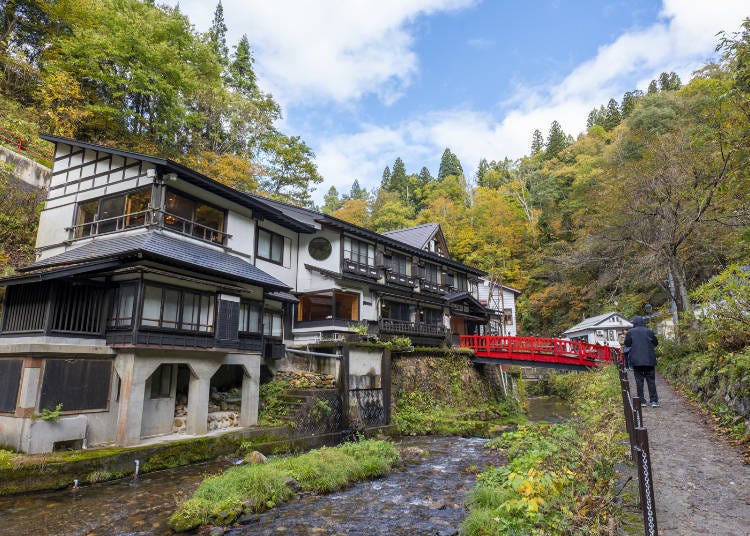
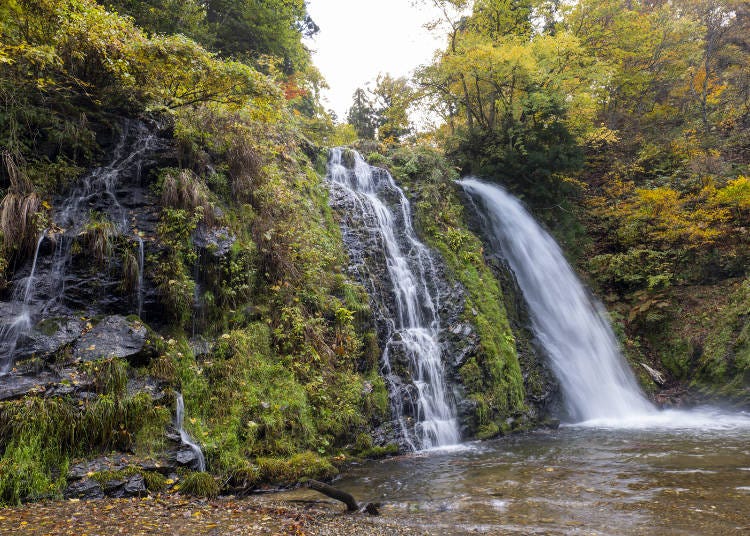
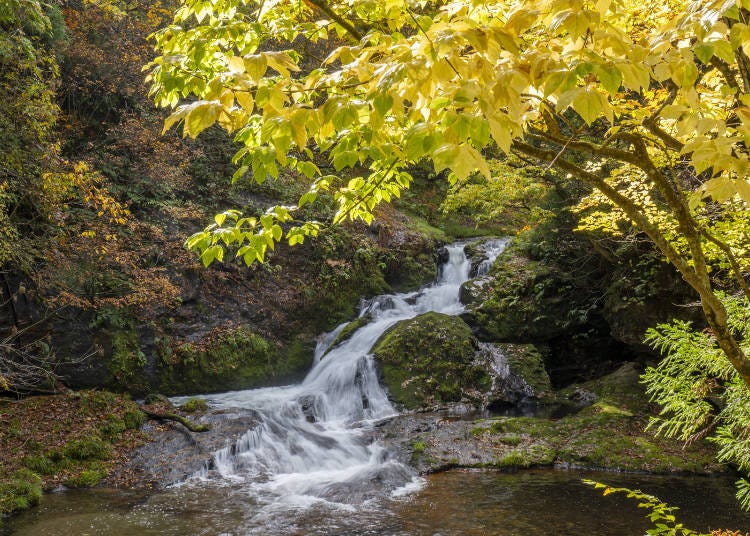
At the far end of Ginzan Onsen’s main street lies Shirogane Falls, a beautiful 22-meter waterfall that tumbles into a rocky pool surrounded by forest.
On this particular morning, the scene was especially lovely. A brilliant blue sky peeked through the clouds, while golden autumn leaves framed the cascading water. Sunlight filtered through the trees, giving everything a gentle, warm glow.
But rather than turning back toward town, as most visitors seemed to be doing, I followed the walking trail farther into the hills.
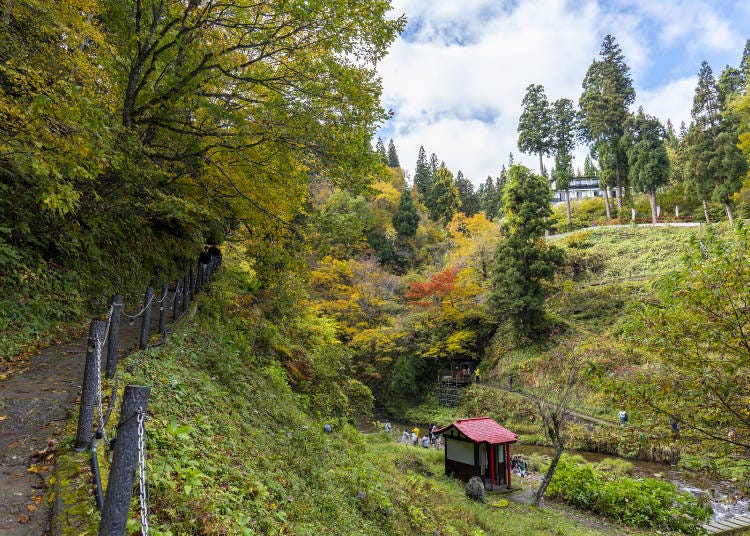
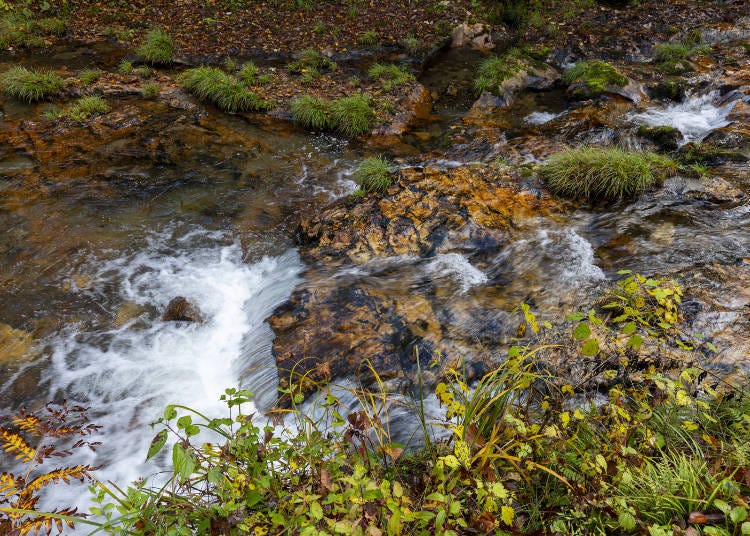
The path runs alongside the Ginzan River, gradually climbing into the forest and passing a series of small waterfalls and picturesque bridges.
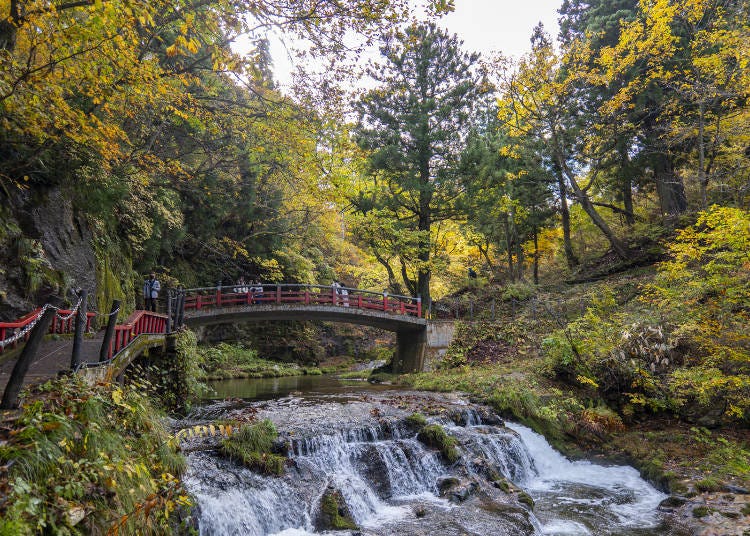
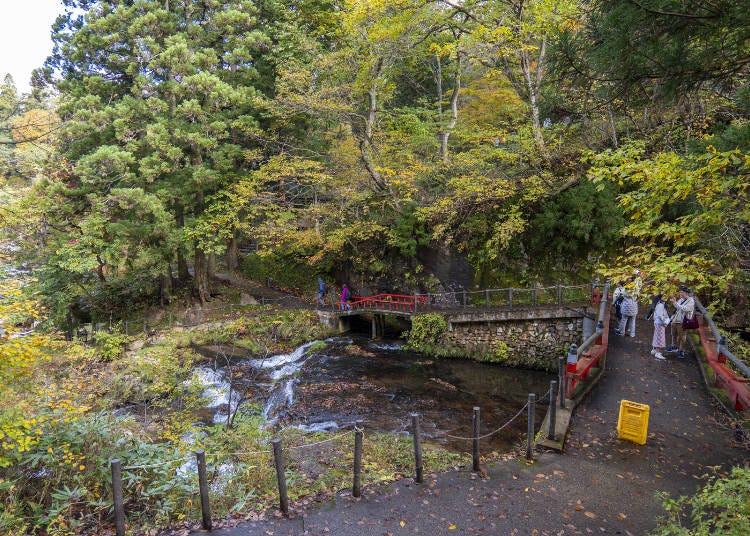
One of my favorite spots was Sekotoi Bridge, a lovely vermilion bridge spanning the river. From here, you can admire the water cascading over rocks as it winds its way through the gorge.
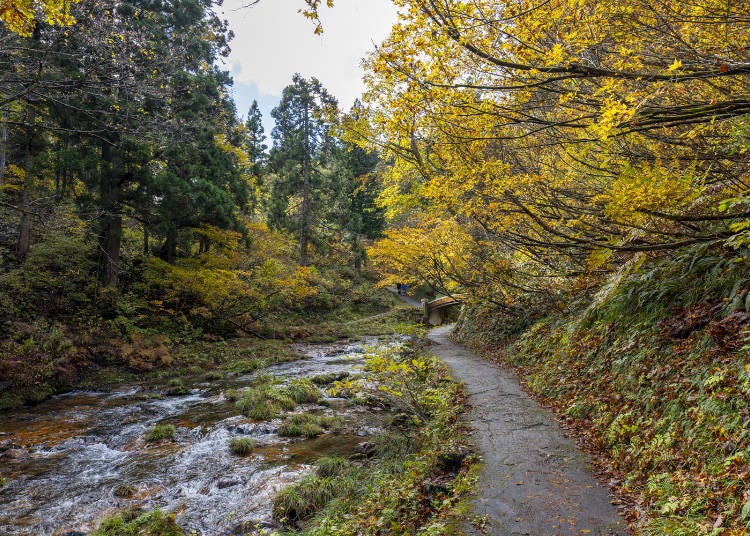
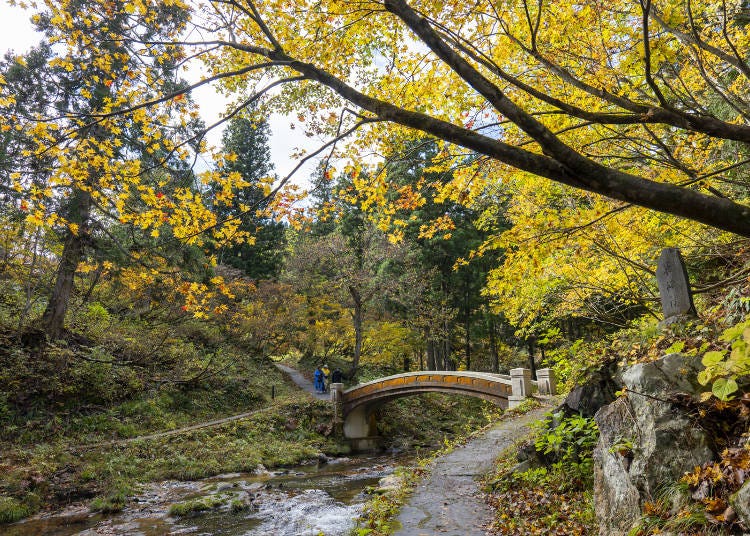
Farther along, I reached Kajika Bridge, a charming old stone bridge surrounded by trees.
The scenery was peaceful, with little more than the sound of running water and leaves rustling in the breeze.
And something else struck me: there were hardly any other people around.
While Ginzan Onsen’s main street attracts plenty of visitors, relatively few seemed interested in following the trail this far. For a while, it felt as though I had this beautiful corner of Yamagata almost entirely to myself.
The Silver Mine That Gave Ginzan Onsen Its Name
As I continued deeper into the forest, the scenery began revealing another side of Ginzan Onsen’s story.
Long before it became a famous hot spring destination, this area was known for its silver mines.
In fact, the name “Ginzan” literally means “silver mountain,” a reminder of the mining industry that once flourished here.
Silver mining in the area dates back to the 15th century, and the surrounding hills still contain remnants of that history.
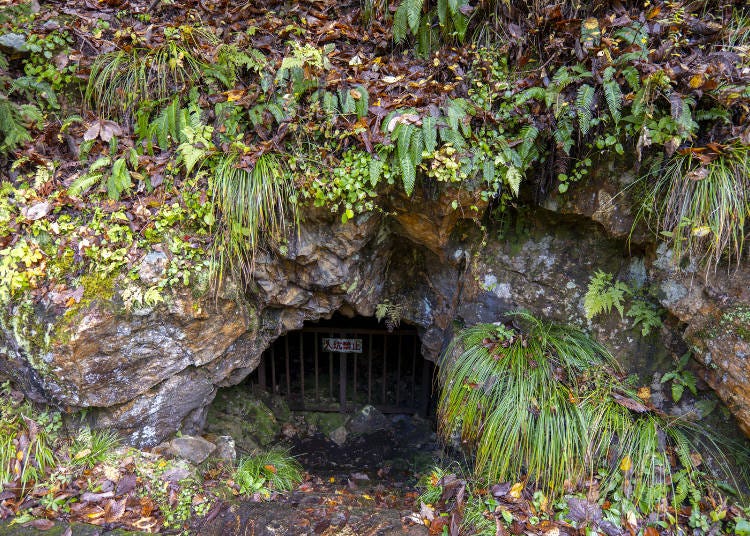
Along the trail, I noticed several openings and recesses in the hillsides, some fenced off to prevent entry.
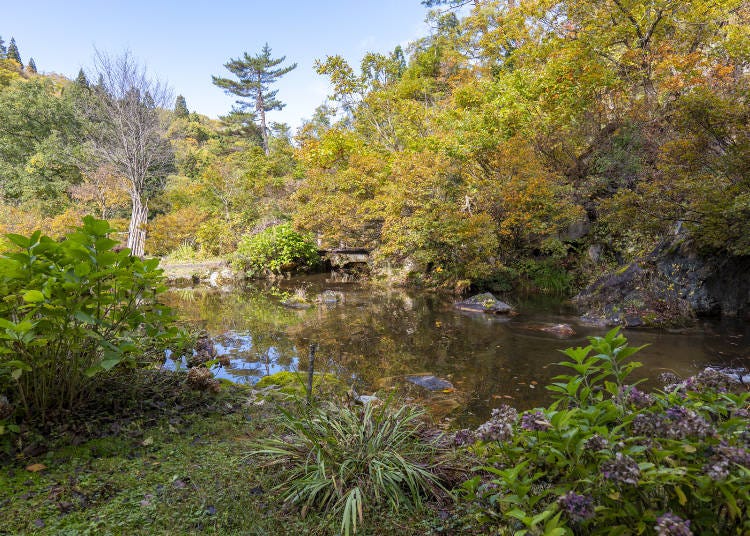
It was fascinating to imagine the people who once worked here, venturing into dark tunnels in search of silver before eventually returning to the settlement below.
Eventually, I arrived at Omokage-en, a small park near the entrance to the old silver mine tunnels.
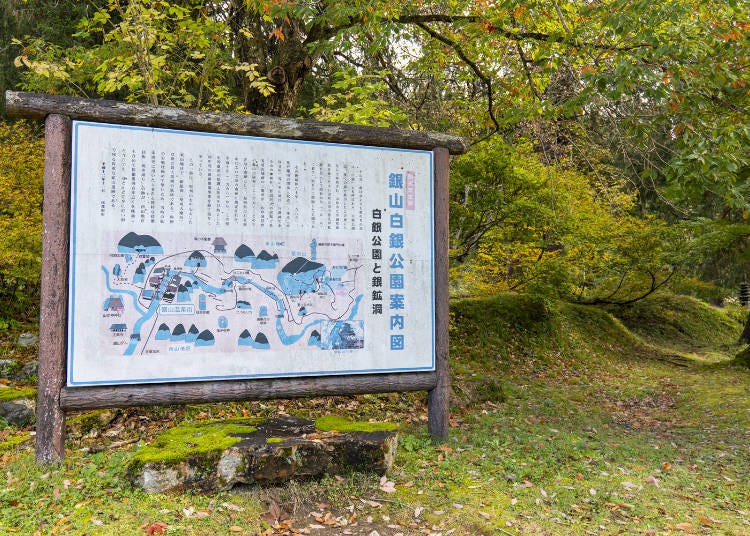
The entrance to the mine itself was striking, framed by enormous wooden beams supporting the opening into the mountainside.
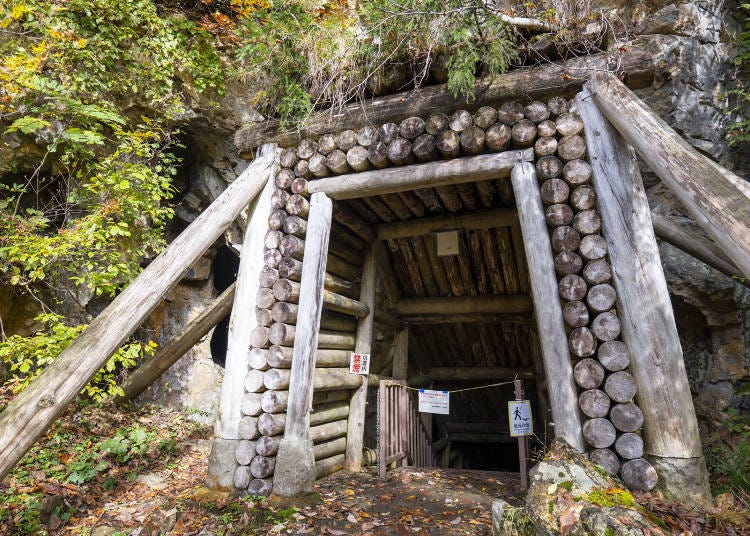
I’d hoped to explore inside, to get a closer sense of what life might have been like for the miners who worked here centuries ago.
Unfortunately, the mine was temporarily closed during my visit. A sign made it clear that entering wasn’t permitted.
I was a little disappointed. After following the trail so far, I’d been looking forward to stepping inside and experiencing that piece of Ginzan Onsen’s history firsthand. I’d seen on Google Maps that it was temporarily closed, but I had also seen that sometimes it is open without Google Maps being updated.
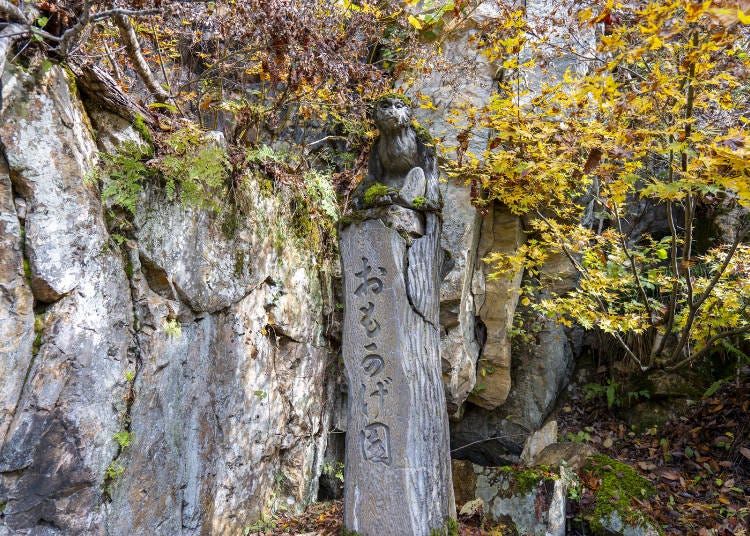
Still, standing there in the quiet forest, surrounded by the remnants of a once-bustling mining community, I found myself appreciating just how much more there was to this place than I’d previously realized.
And perhaps that unfinished exploration gave me another reason to return someday.
A Quiet Moment Beside the River
After retracing my steps through the forest, I returned to Ginzan Onsen’s main street with enough time to relax before rejoining the tour.
Near the entrance to town is Warashiyu, a free public footbath beside the Ginzan River.
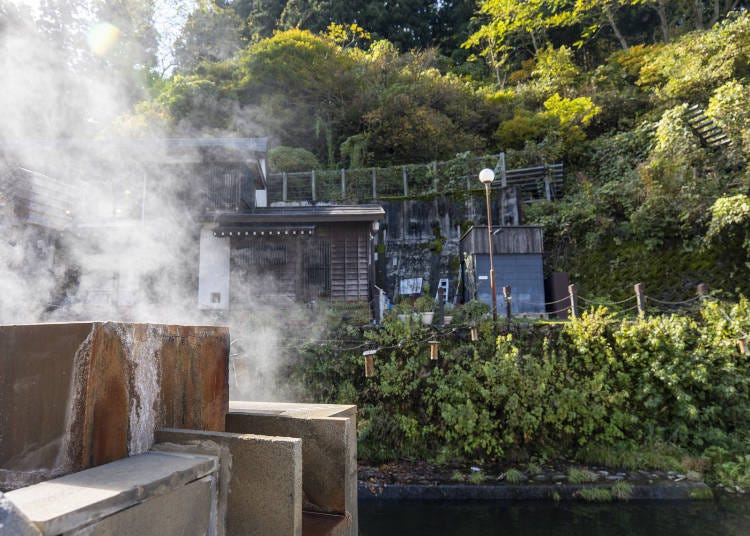
I slipped off my shoes, lowered my feet into the warm hot spring water, and simply enjoyed the scenery.
Steam drifted gently through the breeze. Tall pampas grass swayed along the riverbank, and the morning sunlight illuminated the beautiful wooden buildings lining the water.
Then I noticed something moving beneath the surface of the river.
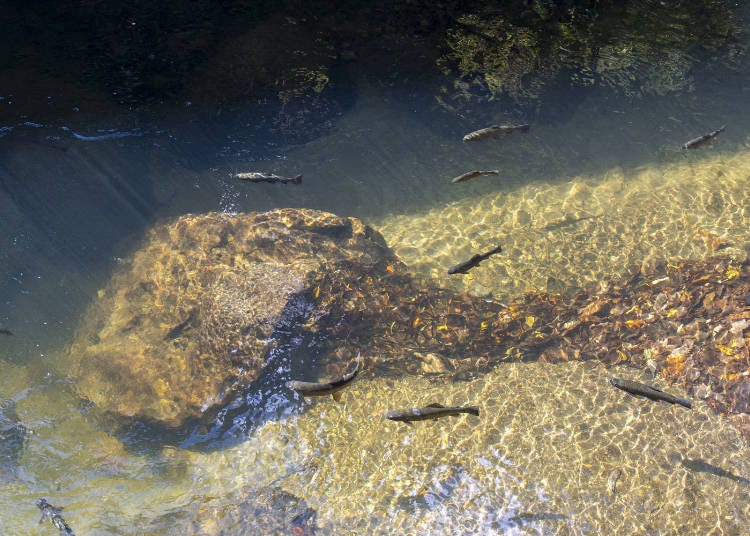
Rainbow trout.
Several fish were swimming gently against the current, their tails moving back and forth as they held their positions in the clear water.
For a while, I just sat there watching them. There were other visitors around, of course, but the atmosphere felt remarkably peaceful.
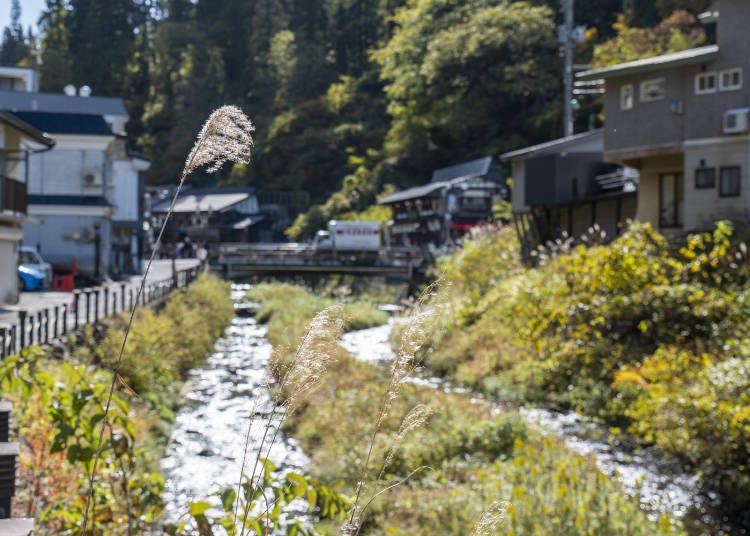
It wasn’t the dramatic, snow-covered scenery I’d experienced during my first visit. There was no need to rush around taking photographs or searching for the perfect view.
It was simply a lovely autumn morning, with warm water around my feet, sunlight on the river, and the quiet rhythm of life unfolding around me.
And I think that was my favorite moment of the entire visit.
Winter or Autumn: When Should You Visit Ginzan Onsen?
Having now experienced Ginzan Onsen in both seasons, I wouldn’t necessarily say one is better than the other.
Rather, they offer two wonderfully different ways to appreciate the same destination.
Winter is all about atmosphere. Snow-covered rooftops, softly glowing gas lamps, and traditional wooden ryokan create the storybook scenery that has made Ginzan Onsen famous.
If possible, I’d strongly recommend staying overnight. That’s what I did in 2021, and being able to enjoy the town after many of the day visitors had left was incredibly rewarding.
The gas lamps cast a beautiful glow across the snow, and the entire village takes on a wonderfully intimate atmosphere.
However, winter also brings heavy snowfall, icy paths, and restrictions on access to some surrounding trails.
Autumn, meanwhile, is about exploration.
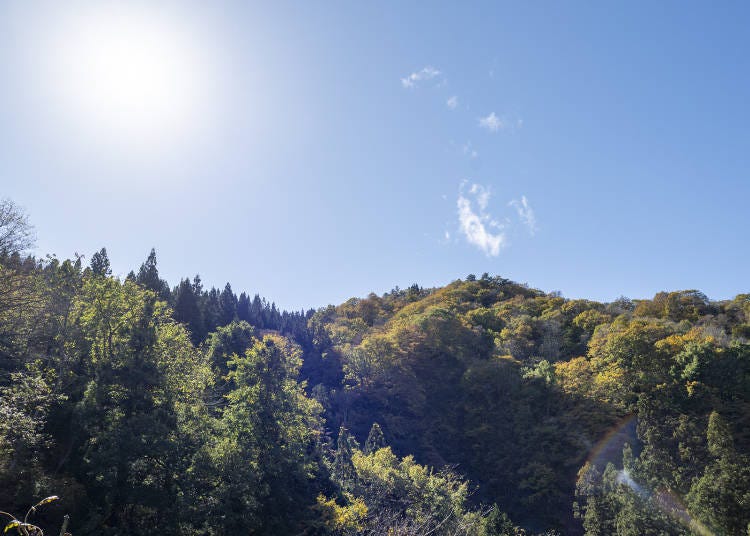
The weather is generally more comfortable for walking, and the surrounding mountains come alive with golden and orange foliage.
Most importantly, the walking trails beyond the main street offer opportunities to discover waterfalls, forest scenery, and the old silver mines that played such an important role in the town’s history.
And while Ginzan Onsen itself remains popular, I found the forest trails surprisingly quiet.
For travelers who enjoy combining beautiful scenery with a little exploration, autumn is a wonderful time to visit.
How to Visit Ginzan Onsen: Join a Tour or Explore Independently
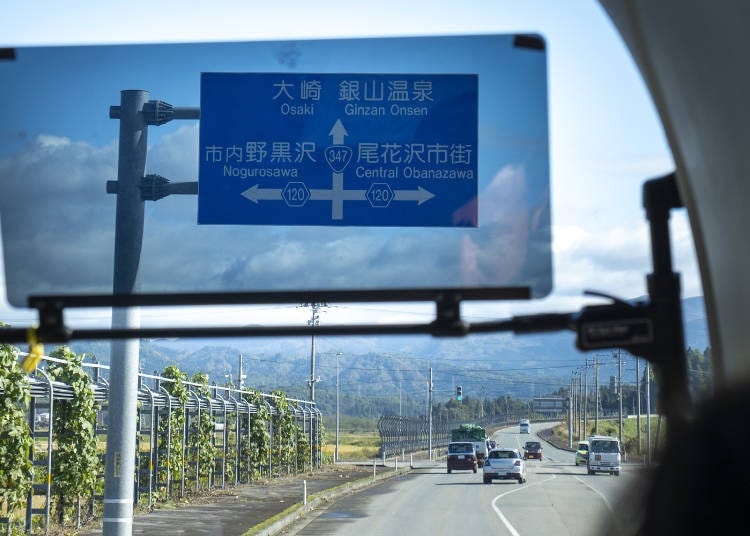
One of the things I appreciated most about this visit was how easy it was to enjoy Ginzan Onsen as part of an organized tour. Our itinerary included several autumn foliage destinations across Miyagi and Yamagata prefectures, with around two hours of free time at Ginzan Onsen.
Rather than following a guide around town, we were free to explore at our own pace.
And for me, that was perfect.
If you’re visiting the Tohoku region in autumn, I’d particularly recommend looking for tours departing from Sendai that combine Ginzan Onsen with other scenic destinations, such as Naruko Gorge, another spectacular autumn foliage spot.
It’s a convenient way to experience several beautiful places in a single day without worrying about mountain roads, parking, or coordinating public transportation.
Recommended Tours
-
 Yamagata Day Trip from Sendai: Yamadera Temple, Tendo & Ginzan Onsen
Details & Bookings: Klook ▶ -
 Ginzan Onsen, Zao Snow Monsters & Fox Village Day Tour from Sendai
Details & Bookings: Klook ▶ -
 2-Day Tohoku Winter Tour from Tokyo: Ginzan Onsen, Zao Snow Monsters, Yamadera & Fox Village
Details & Bookings: Klook ▶ -
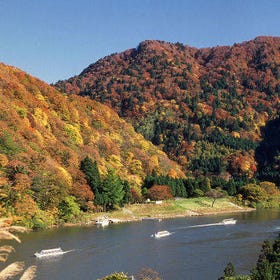 Sendai Tohoku Day Tour: Mogami River Cruise & Naruko Gorge & Ginzan Onsen
Details & Bookings: Klook ▶
Of course, exploring independently is also an option. If you’re comfortable driving in Japan, renting a car in Sendai or Yamagata gives you greater flexibility to explore the surrounding countryside.
However, the roads approaching Ginzan Onsen can be narrow, and parking near the hot spring village is restricted.
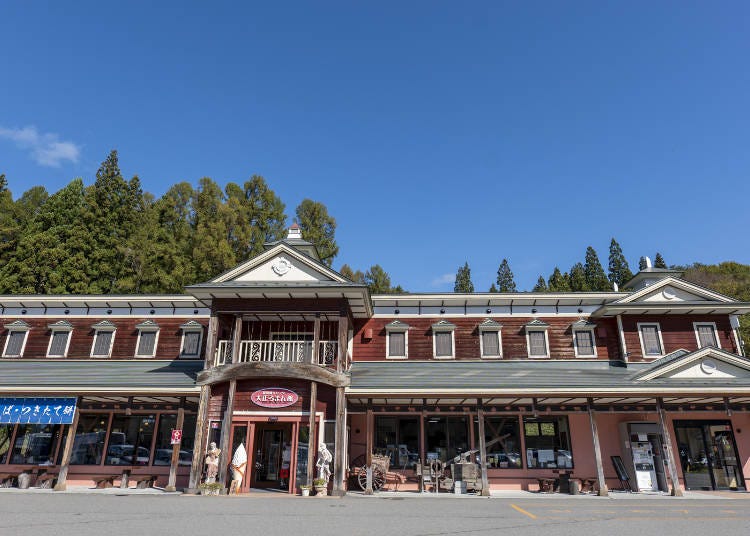
Day visitors arriving by car should generally park at Taisho Romankan, a souvenir and rest facility located approximately 1.5 kilometers from the village, then take the shuttle bus into town.
-
Taisho Romankan大正ろまん館
-
Address
364-3 Jubuichi, Kamiyanagiwatarido, Obanazawa, Yamagata 999-4332
View Map
・Hours: Open daily 9 AM - 5:30 PM
・MAP Code: 720 857 666*46 -
Address
364-3 Jubuichi, Kamiyanagiwatarido, Obanazawa, Yamagata 999-4332
- Allow at least two hours: This gives you time to enjoy the main street, visit Shirogane Falls, explore part of the forest trails, relax by the river, and get a snack or two to enjoy.
- Follow the walking trails: The official 1.9-kilometer scenic walking course takes under an hour to complete and includes Shirogane Falls, historic bridges, and the silver mine area.
- Wear comfortable shoes: Although sections of the paths are well maintained, forest trails can be uneven or slippery.
- Visit in the morning: The soft morning light was one of the highlights of my visit, and I found the atmosphere relatively peaceful.
- Check seasonal restrictions: The trails leading toward the silver mines close during the snowy season, and individual attractions may also be temporarily closed.
Special Deal for LIVE JAPAN Readers: Planning to drive? Save 10% on standard bookings or 15% on long-term rentals (6+ days) with our exclusive Nippon Rent-A-Car discount code here.
Outside the winter restriction period, the shuttle normally costs 500 yen per adult for unlimited rides that day. Alternatively, travelers using public transportation can take the Yamagata Shinkansen to Oishida Station and continue by local bus to Ginzan Onsen. See the article below for details.
Important winter travel note: From December 19, 2026, through March 7, 2027, special vehicle restrictions and shuttle arrangements apply to winter visitors. Shuttle fares vary by boarding time, and advance booking is recommended. Check the official winter shuttle information before traveling.
Ginzan Onsen: A Place Worth Returning To
When I first visited Ginzan Onsen in winter, I came looking for a fairy tale.
And I found it.
The snow-covered ryokan, the glowing gas lamps, and the quiet beauty of the village after dark were everything I’d hoped they would be.
But autumn gave me something different. It gave me the freedom to wander beyond the familiar streets, follow a river into the forest, discover waterfalls and forgotten traces of the area’s mining history, and simply sit beside the water watching rainbow trout swim against the current.
I didn’t quite finish the journey I’d planned. The old silver mine remained closed, its dark entrance inviting my curiosity but keeping its secrets for another day.
And perhaps that’s part of the appeal. After all, some places are worth visiting more than once, not because you missed something the first time, but because every season offers a new way to experience them.
Winter gave me the Ginzan Onsen I’d always imagined. Autumn showed me the Ginzan Onsen I hadn’t known existed.
And now, I have another reason to return.
-


-
Address
Yamagata Prefecture Obanazawa City Yamagata Large Ginzan Shinhata, 999-4333
View Map -
Nearest Station
Oishida Station (Ou Line / Yamagata Shinkansen)
- Phone Number 0237-28-3933
-
Address
Yamagata Prefecture Obanazawa City Yamagata Large Ginzan Shinhata, 999-4333
- Area
- Category
*Prices and options mentioned are subject to change.
*Unless stated otherwise, all prices include tax.
Popular Tours & Activities
Recommended places for you
-
Yokote Park
Parks
Surrounding Areas Of Akita
-
Akiu Onsen
Hot Springs (Onsen) & Bath Houses (Sento)
Sendai And Matsushima
-
Hirosaki Park
Parks
Aomori, Hirosaki And Hachinohe
-

Nikka Whisky Sendai Distillery
Culture Experience
Sendai And Matsushima
-

Koiwai Farm
Other Nature
Morioka, Hiraizumi And Hachimantai
-

Namahage Museum
Other Museums
Surrounding Areas Of Akita
-

Hotel Mazarium: Stay In the Heart of Morioka at This Atmospheric Hotel
by: Timothy Sullivan
-
Sendai & Miyagi: 10 Recommended Apartment Hotels Perfect for Road Trips and Local Experiences
-
Japan's Best Premium Hot Spring Getaways: Top 10 Luxury Ryokan in Tohoku & Niigata (Perfect for Family Trips & Couples)
-

Top-Booked: Must-Try Sendai Gyutan & Yakiniku in Sendai for First-Time Visitors
by: Guest Contributor
-

Tohoku Just Got Cuter: Meet the New Gotochi Bear × Sanrio Collab
by: Guest Contributor
-
Tohoku's Best Value Onsen Ryokan: 10 Hidden Hot Spring Gems from Sendai to Aomori and Niigata
-

Aizu-Wakamatsu Sake Crawl: Enjoy the Heart of Fukushima's Sake Culture
-

Niigata Prefecture Travel Guide: 27 Best Things to Do (Sado Gold Mine, Skiing & Sake)
by: Guest Contributor
-

Aomori Autumn Travel Guide: Weather, What to Wear & Where to Go in September–November
by: Nemi Lin
-

Japan's Bath Culture: Tips You Should Know!
-

10 Must-Visit Places for Autumn Leaves in Tohoku: Naruko Gorge, Geibikei Gorge & More (2026)
by: Guest Contributor
-

Fun Things to Do in Aomori in Fall (September/October/November): Events, Festivals & More!
by: Kei Suzuki