





15 Best Things to Do in Takayama: Must-See Sights & Local Experiences in Japan's Magical Town
- Written by: LIVE JAPAN Editor
Tucked into the mountains of Gifu Prefecture, Takayama is one of the best places in Japan to experience beautifully preserved streets, traditional crafts, local sake, and hearty regional food without the scale of a major city.
Often called Hida Takayama, the city is especially famous for its Edo-period old town, morning markets, Takayama Festival, and Hida beef. Its compact center also makes sightseeing refreshingly easy, while Shirakawa-go, Okuhida Onsen, and the Japanese Alps are close enough for memorable side trips.
If you're wondering what to do in Takayama, this guide covers the essential attractions, food, cultural experiences, seasonal highlights, and practical tips you need to plan your visit.
- Table of Contents
Is Takayama Worth Visiting?
Absolutely, especially if you want to add a smaller historic city to an itinerary dominated by Tokyo, Kyoto, and Osaka.
Takayama's central sightseeing area is largely walkable, and many of its best-known attractions sit within a relatively small area. In one day, you can browse a morning market, wander through centuries-old streets, explore an Edo-period government office, taste local sake, and eat your way through several Hida beef specialties.
Stay for two or three days and Takayama also becomes a convenient base for exploring Shirakawa-go, Okuhida Onsen, Shinhotaka Ropeway, and other parts of the Hida region.
Best Things to Do in Takayama
1. Wander Through Takayama's Historic Old Town

For many visitors, Takayama's Furui Machinami, or Old Town, is the defining image of the city.
Its most famous area is Sanmachi-dori, a collection of preserved streets stretching roughly from Kamiichinomachi to Kamisannomachi. Rows of dark wooden merchant houses dating from the Edo period create one of the most atmospheric townscapes in central Japan.
Today, many of those buildings contain shops, cafes, restaurants, craft stores, and sake breweries.
The streets become increasingly busy from late morning onward, so photographers and travelers looking for a quieter atmosphere should consider visiting early in the day or returning toward evening.
-
Sanmachi-doriさんまち通り
-
Address
Kamiichinomachi, Takayama-shi, Gifu-ken
View Map - Phone Number 0577-32-3333
・TEL: 0577-32-3333 (Front desk) (Takayama City Hall Tourism Division)
-
Address
Kamiichinomachi, Takayama-shi, Gifu-ken
2. Start the Morning at Takayama's Famous Markets
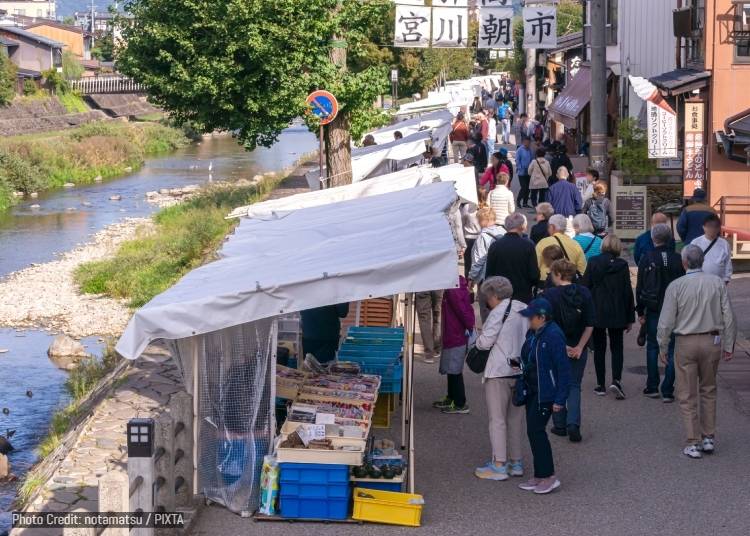
One of the easiest ways to experience everyday Takayama is to visit one of its two morning markets before sightseeing begins in earnest.
Miyagawa Morning Market stretches along the Miyagawa River, while Jinya-mae Morning Market is held beside Takayama Jinya. Depending on the season and vendor, you'll find vegetables, fruit, pickles, miso, flowers, crafts, sweets, and other local products.
Both wind down around midday, so make them one of your first stops of the day. Jinya-mae is particularly convenient because you can head straight into Takayama Jinya afterward.
3. Step Inside Takayama Jinya, Japan's Last Surviving Building of Its Kind
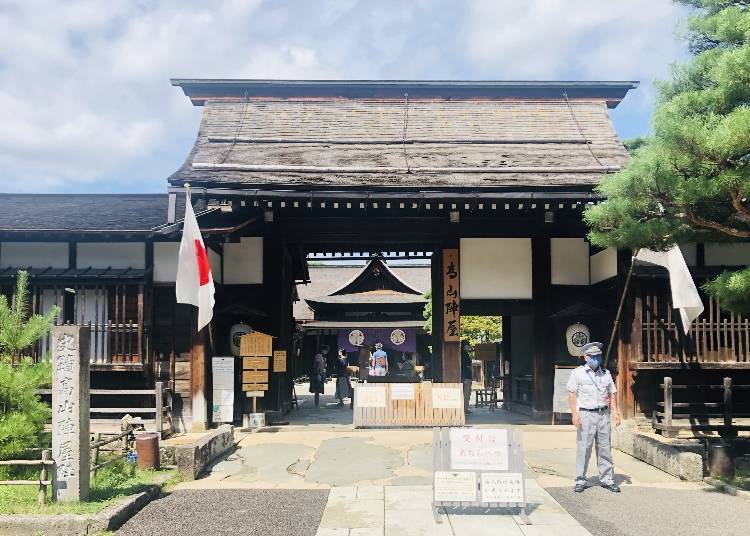
Takayama Jinya is much more than another traditional Japanese building.
During the Edo period, it served as an administrative office for officials dispatched by the Tokugawa shogunate. Around 60 such offices existed across Japan by the end of the period, but Takayama Jinya is the only surviving main building, making it an especially important piece of Japanese administrative history.

Visitors can explore tatami-floored offices, kitchens, reception spaces, courtyards, and a large rice storehouse.
Another intriguing feature is the preserved Oshirasu, the area used when the Jinya functioned as a courthouse during the Edo period. Free volunteer tours have also traditionally been offered on-site.

Takayama Jinya also offers free on-site tours led by volunteers, allowing you to appreciate the history and charm of its beautiful, well-maintained courtyard.
-
Takayama Jinya高山陣屋
-
Address
1-5 Hachikenmachi, Takayama-shi, Gifu 506-0012
View Map - Phone Number 0577-32-0643
・Hours: April 1 to October 31, 8:45 AM-5 PM; November 1 to March 31, 8:45 AM-4:30 PM
・Admission: 500 yen; free for high school students and younger
・Closed: December 29, December 31, and January 1-3 -
Address
1-5 Hachikenmachi, Takayama-shi, Gifu 506-0012
4. Bite Into a Juicy 100% Hida Beef Burger at CENTER4 HAMBURGERS

Located in Takayama's historic old town, CENTER4 HAMBURGERS is a popular spot for a more casual take on Hida beef. Its signature Hida beef burger is made with a patty of 100% Hida beef and local ingredients, delivering plenty of rich, savory flavor in every bite.

The menu also includes classics such as cheeseburgers and avocado burgers, along with around 15 to 20 beers from countries including the U.S., Germany, and Belgium. The Hida beef burger is limited in quantity, and the restaurant is popular, so reservations are recommended.
-
CENTER4 HAMBURGERSCENTER4 HAMBURGERS
-
Address
94 Kamiichinomachi, Takayama-shi, Gifu-ken
View Map - Phone Number 0577-36-4527
・Hours:
-Lunch: 11 AM to 2:30 PM (last order)
-Dinner: 5:30 PM to 8 PM
・Closed: Wednesdays, New Year's holiday, etc. -
Address
94 Kamiichinomachi, Takayama-shi, Gifu-ken
5. Try Hida Beef Sushi While Exploring Takayama's Old Town

Along Sanmachi-dori, Sakaguchiya offers one of Takayama's most popular ways to sample Hida beef on the go: Hida beef nigirizushi. Created as an easy way for visitors to enjoy the local specialty, the sushi pairs lightly seared Hida beef with vinegared rice, a sweet sauce, and a touch of wasabi.

Instead of a disposable plate, the sushi is served on an edible shrimp cracker, making it especially convenient while exploring the old town. If you'd prefer to sit down, Sakaguchiya also serves a range of Hida beef dishes inside the restaurant.
-
Sakaguchiya坂口屋
-
Address
90 Kamisannomachi, Takayama-shi, Gifu-ken 506-0846
View Map - Phone Number 0577-32-0244
・Hours: 10:30 AM to 3 PM (last order 2:30 PM)
・Closed: Tuesdays -
Address
90 Kamisannomachi, Takayama-shi, Gifu-ken 506-0846
6. Warm Up With a Fluffy Kihachiro Hida Beef Bun

For another easy Hida beef snack, stop by Kihachiro Yasukawa Shop for one of its piping-hot beef buns. The soft, fluffy dough is packed with a savory filling that highlights the rich umami of Hida beef.
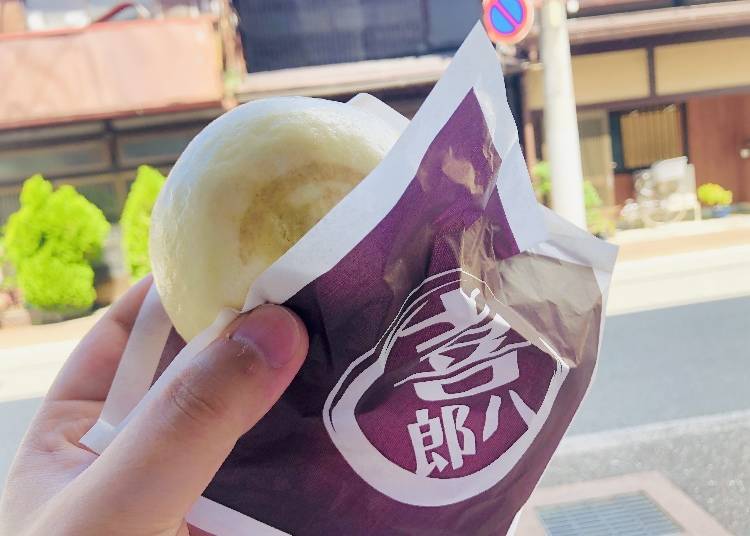
They're easy to enjoy while sightseeing, although you can also eat inside the shop while the bun is still steaming hot. Other varieties include Chinese-style, matcha, and black sesame, and frozen buns are available if you'd like to take some home as a souvenir.
-
Kihachiro Yasukawa Shop牛まん喜八郎 安川本店
-
Address
2 Shimoichinomachi, Takayama-shi, Gifu-ken 506-0843
View Map - Phone Number 0577-33-4848
・Hours: 9 AM to 5 PM
・Closed: Tuesdays -
Address
2 Shimoichinomachi, Takayama-shi, Gifu-ken 506-0843
7. Feast on Hida Beef Yakiniku at Ajikura Tengoku

Just a short walk from JR Takayama Station, Ajikura Tengoku is a convenient choice when you're ready for a full Hida beef meal. The restaurant is operated by the JA Hida Group, the local agricultural cooperative handling agricultural and livestock products from the Hida region, making it a popular place to enjoy high-quality Hida beef at relatively approachable prices.

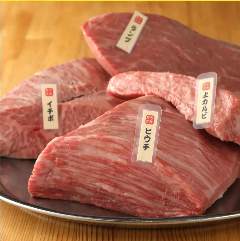
Alongside yakiniku, the menu features cuts such as sirloin, tenderloin, and rib roast, as well as Hida beef shabu-shabu and sukiyaki. It's a particularly good option if you'd rather sit down for a substantial meal than sample Hida beef through street food alone.
-
Ajikura Tengoku味蔵天国
-
Address
4-308 Hanasatomachi, Takayama-shi Gifu-ken 506-0026
View Map - Phone Number 0577-37-1129
・Hours:
-11 AM to 2:30 PM (last order: 2 PM)
-5 PM to 9:30 PM (last order: 9 PM)
・Closed: Tuesdays, 2nd and 4th Wednesdays -
Address
4-308 Hanasatomachi, Takayama-shi Gifu-ken 506-0026
6. Go Sake Brewery-Hopping Through Takayama's Old Town
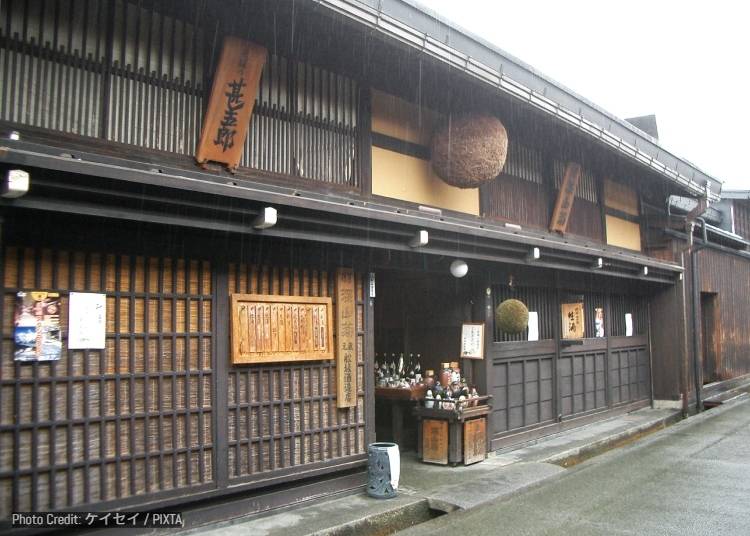
Takayama's cold winters, pure mountain water, and locally grown rice have supported sake brewing for centuries. Today, six sake breweries are clustered in and around the historic old town, making it easy to sample several very different styles without traveling far. Look for the traditional cedar sugidama hanging outside their entrances.
Each brewery has its own character. Hirase Sake Brewery, whose history can be traced to 1623, is Takayama's oldest and is known for its crisp Kusudama sake. Harada Sake Brewery produces Sansha, a label dating back to 1855, and also sells sake-based treats such as cheesecake and jelly. Niki Sake Brewery specializes in ginjo sake and occupies a traditional machiya-style building based on a layout dating to 1695.
For something a little different, Funasaka Sake Brewery combines its brewery with a restaurant, cafe, and tasting counter, making it an easy stop during lunch or an afternoon wander. Oita Sake Brewery is known for the notably dry Oni Koroshi, while Hirata Sake Brewery produces everything from daiginjo to long-aged sake and also operates a small museum.
Those who want to go beyond a quick tasting can book a guided experience at Hirata Sake Brewery. The roughly 40-minute program takes visitors inside parts of the brewery normally closed to the public, explains the brewing process, and finishes with a tasting. The experience costs 4,000 yen and is available year-round by reservation, subject to the brewery's schedule.
Seasonal tip: Winter is an especially interesting time for sake fans, as Takayama traditionally holds special brewery-opening programs during the brewing season. The city also occasionally stages brewery-hopping events, such as the 2026 Hida Takayama Nombe Festival, which linked all six old-town breweries with tastings and a stamp rally. Check the official Takayama tourism website for dates during your visit.
7. Try Takayama-Style Midarashi Dango on Sanmachi-dori

After Hida beef and sake, save room for one of Takayama's simplest local snacks. Mizuma, located along Sanmachi-dori, serves midarashi dango, skewered rice dumplings grilled over heat and brushed with soy sauce.
Unlike the sweet-and-savory mitarashi dango commonly found elsewhere in Japan, Takayama's version is notably savory, with the soy sauce caramelizing slightly as it grills. It's inexpensive, quick to eat, and particularly satisfying while wandering the wooden streets of the old town.

One thing to remember when snacking around the old town: public trash cans are scarce. Return wrappers and other waste to the shop where you bought your food when possible, or carry it with you until you find somewhere to dispose of it properly.
-
Mizumaみずま
-
Address
2 Kamiichinomachi, Takayama-shi, Gifu-ken
View Map - Phone Number 0577-33-0645
・Hours: Around 9 AM to 6:30 PM
・Closed: None -
Address
2 Kamiichinomachi, Takayama-shi, Gifu-ken
8. See Takayama Festival's Elaborate Floats Up Close

Takayama's spring and autumn festivals are among the city's biggest events, famous for their towering, richly decorated yatai festival floats. But you don't have to visit on festival day to see them.
At Takayama Matsuri Yatai Kaikan, beside Sakurayama Hachimangu Shrine, four actual floats used in the Autumn Takayama Festival are displayed at a time. The floats are periodically rotated, giving visitors a rare chance to examine their intricate carvings, lacquerwork, metal fittings, textiles, and mechanical details from close range.
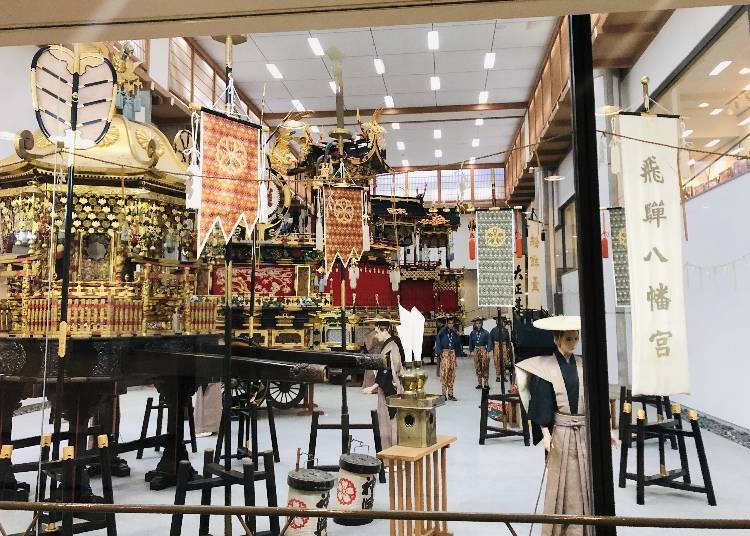
Takayama's reputation for craftsmanship stretches back centuries. Skilled workers from the Hida region were historically sent to Japan's ancient capitals to help build temples and palaces, and generations of those woodworking and decorative techniques eventually found expression in Takayama's extraordinarily elaborate festival floats.
Seeing the floats here also makes the festival itself easier to appreciate. Rather than simply appearing as grand parade pieces, they become examples of the woodworking skill for which Hida has long been famous.
Spring Takayama Festival: April 14-15
Autumn Takayama Festival: October 9-10
-
Takayama Matsuri Yatai Kaikan高山祭屋台会館
-
Address
178 Sakuramachi, Takayama-shi, Gifu-ken 506-0858
View Map - Phone Number 0577-32-5100
・Hours: 9 AM-5 PM from March to November; 9 AM-4:30 PM from December to February
・Admission: Adults 1,000 yen; high school students 600 yen; elementary and junior high school students 500 yen
・Closed: Open year-round -
Address
178 Sakuramachi, Takayama-shi, Gifu-ken 506-0858
9. Visit Sakurayama Hachimangu Shrine, Home of Takayama's Autumn Festival
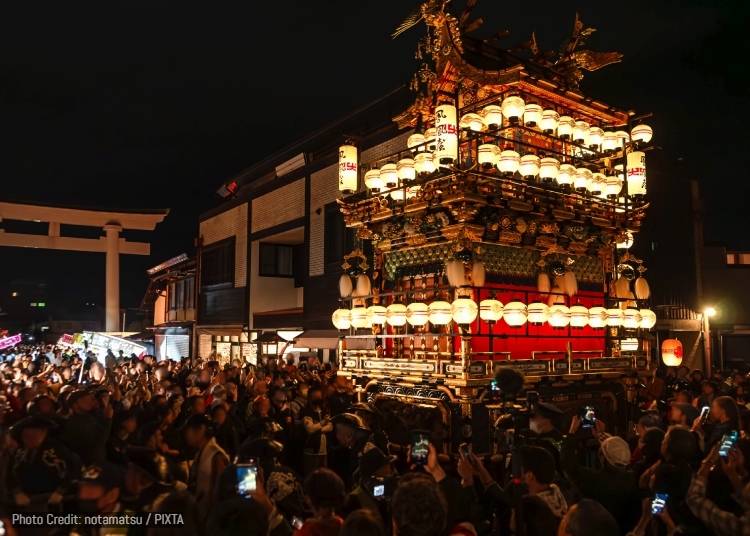
Right beside the Yatai Kaikan is Sakurayama Hachimangu Shrine, the spiritual center of Takayama's Autumn Hachiman Festival.
The shrine's wooded grounds offer a noticeably calmer atmosphere than busy Sanmachi-dori. Walking through the torii gates and cedar-lined grounds also helps put the festival floats next door into context, as this is the shrine around which the October festival is held.
Visit the shrine and Yatai Kaikan together rather than treating them as separate stops. The combination gives a much clearer picture of how Takayama's famous festival connects craftsmanship, religion, and local community traditions.
10. Escape the Crowds on the Higashiyama Walking Course
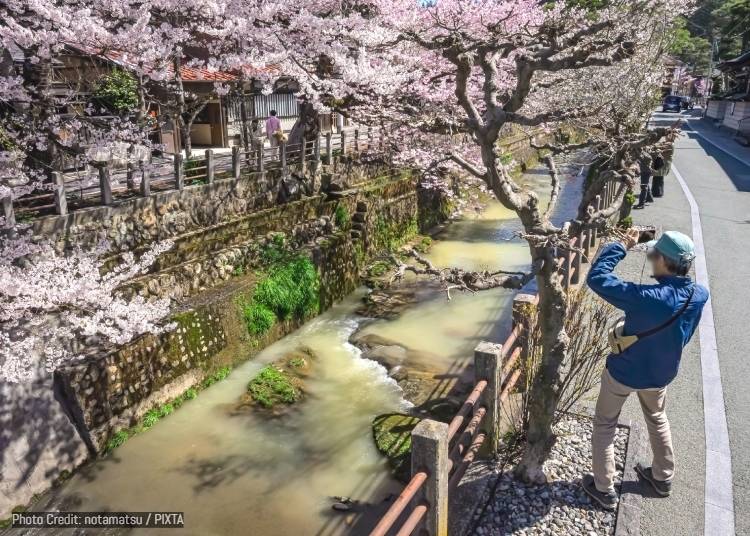
For a quieter side of Takayama, head east of the old town to the Higashiyama Walking Course.
The route winds past temples, shrines, wooded paths, and the remains of Takayama Castle, offering a sharp contrast to the shops and crowds of Sanmachi-dori. The temple district was established in the 16th century and was partly modeled after Kyoto's Higashiyama area.
Allow around two hours to complete the route at a leisurely pace, although you can easily walk only part of it if you're short on time.
Spring and autumn are particularly pleasant thanks to seasonal greenery and foliage. In winter, snow can make the scenery especially atmospheric, but paths may also be icy, so suitable footwear is essential.
11. Step Inside Traditional Hida Farmhouses at Hida Folk Village

A short trip from central Takayama, Hida Folk Village (Hida no Sato) brings together more than 30 historic buildings relocated from communities across the Hida region.
Among them are distinctive gassho-zukuri farmhouses with steep thatched roofs designed to withstand the area's heavy snowfall. Many of the houses can be entered, letting visitors see traditional hearths, rooms, tools, and construction techniques up close rather than simply viewing the buildings from outside.
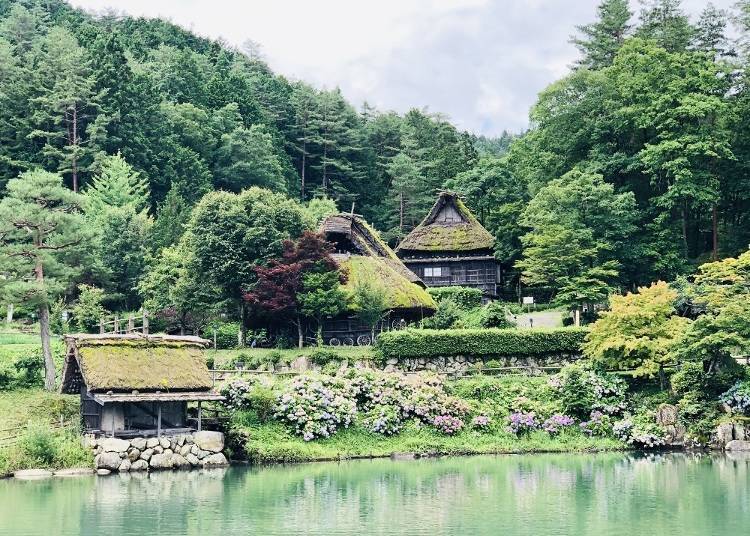
The village also preserves around 8,000 folk objects, helping illustrate how people once lived, worked, and adapted to the harsh mountain climate throughout the seasons.
Hands-on craft experiences add another dimension. Depending on availability, visitors can try traditional Hida sashiko stitching or kumihimo braiding, making this a particularly good stop for families or anyone interested in Japanese craftsmanship.
It's also one of Takayama's most photogenic attractions throughout the year. Fresh greenery fills the village in warmer months, autumn colors reflect around the pond, and winter snow turns the thatched houses into a scene reminiscent of old rural Hida.
-
Hida Folk Village飛騨の里
-
Address
1-590 Kamiokamotomachi, Takayama-shi, Gifu-ken 506-0031
View Map - Phone Number 0577-34-4711
・Hours: 8:30 AM-5 PM
・Admission: Adults 700 yen; elementary and junior high school students 200 yen
・Closed: Open year-round -
Address
1-590 Kamiokamotomachi, Takayama-shi, Gifu-ken 506-0031
12. Shop for Takayama Souvenirs and Make Your Own Sarubobo
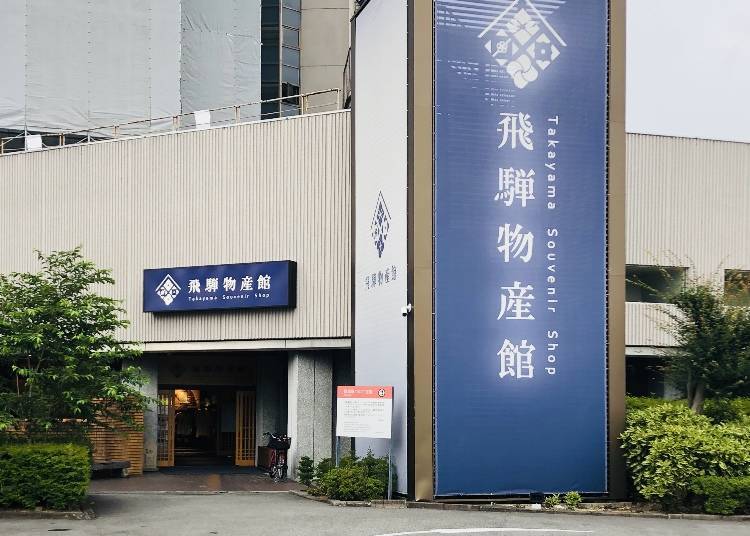
Before leaving Takayama, make time for a souvenir hunt. Local specialties range from sake and sweets to woodcraft, miso, pickles, and the unmistakable red dolls you'll see throughout the city.

One convenient place to browse is Takayama Souvenir Shop (Hida Bussankan), located beside Takayama Green Hotel. The large shop brings together a broad selection of products from Takayama and the wider Hida region, making it useful if you don't have time to visit several smaller stores.

It also offers hands-on activities, including making a sarubobo doll and grilling salted rice crackers, with staff available to guide visitors through the process.
-
Takayama Souvenir Shop飛騨物産館
-
Address
2-180 Nishinoisshikimachi, Takayama-shi, Gifu-ken 506-0031
View Map - Phone Number 0577-33-5505
・Hours: 7 AM to 10 PM
・Closed: None -
Address
2-180 Nishinoisshikimachi, Takayama-shi, Gifu-ken 506-0031

What is a sarubobo?
Sarubobo is one of Hida Takayama's most recognizable folk crafts and souvenirs. Its name means "baby monkey" in the local Hida dialect, and the traditional version is a small, faceless red doll believed to bring safe childbirth, healthy children, and family well-being.
Its origins are linked to hōko, protective dolls introduced from China during the Nara period (710–794) and once used by aristocratic families when praying for safe delivery. Over time, sarubobo became a symbol of Hida Takayama, and today you'll find them in many colors and sizes, from tiny charms to large decorative figures around the city.
Making one yourself adds a little more meaning than simply buying one off the shelf, while the shop is also a convenient place to pick up edible souvenirs and other Hida products before heading home.
Seasonal Highlights Around Takayama
Some of Takayama's best experiences depend heavily on when you visit. The city itself works year-round, but the mountains, festivals, foliage, and snow can completely change what is worth prioritizing.
Spring: Takayama Festival and Late Cherry Blossoms
Spring arrives later than in Tokyo, Osaka, and Kyoto because of Takayama's mountain climate.
The biggest event is the Spring Takayama Festival on April 14-15, when decorated floats, traditional performances, and processions fill the streets.
Cherry blossoms also tend to bloom later than in major cities farther south, making Takayama a useful option for travelers arriving after peak bloom in Tokyo or Kyoto.
Spring is also a pleasant time for the Higashiyama Walking Course and Hida Folk Village.
Summer: Head Into the Japanese Alps
Summer is warm in central Takayama, but the surrounding mountains offer cooler temperatures and some of the best alpine sightseeing of the year.
13. Ride Shinhotaka Ropeway for Sweeping Views of the Japanese Alps

About 1 hour 30 minutes by bus from Takayama Station, Shinhotaka Ropeway climbs deep into the Northern Japanese Alps and is one of the best mountain excursions from Takayama.
Its best-known feature is Japan's only double-decker gondola, which carries passengers high above the Okuhida landscape. At the upper Nishihotakaguchi Station, the rooftop observatory sits at an elevation of 2,156 meters, opening up panoramic views across the surrounding peaks on clear days.
The scenery changes dramatically through the year. Summer brings lush green mountains and cooler temperatures, autumn colors sweep across the slopes from higher elevations downward, and winter transforms the landscape with deep snow.
Because the weather at more than 2,000 meters can be very different from central Takayama, check conditions before heading out and bring an extra layer even during warmer months.
-
Shinhotaka Ropeway新穂高ロープウェイ
-
Address
〒506-1421 岐阜県高山市奥飛騨温泉郷新穂高温泉
View Map - Phone Number 0578-89-2252
・Hours:
-11 AM to 2:30 PM (last order: 2 PM)
-5 PM to 9:30 PM (last order: 9 PM)
・Closed: Tuesdays -
Address
〒506-1421 岐阜県高山市奥飛騨温泉郷新穂高温泉
Autumn: Festival Floats and Mountain Foliage
Autumn is one of Takayama's busiest and most scenic seasons.
The Autumn Takayama Festival takes place on October 9-10, centered around Sakurayama Hachimangu Shrine.
At higher elevations, foliage begins changing before the leaves in central Takayama, making October an especially good month for combining Shinhotaka, Okuhida, and Takayama.
Hida Folk Village and the Higashiyama area are also particularly attractive during foliage season.
Winter: Snowy Streets and Outdoor Hot Springs
Winter gives Takayama a completely different character.
Heavy snow can cover the wooden streets of the old town and the traditional houses of Hida Folk Village, creating some of the city's most atmospheric scenery.
Bring warm, waterproof footwear and clothing suitable for temperatures below freezing.
14. Spend a Night Among the Mountain Hot Springs of Okuhida Onsengo
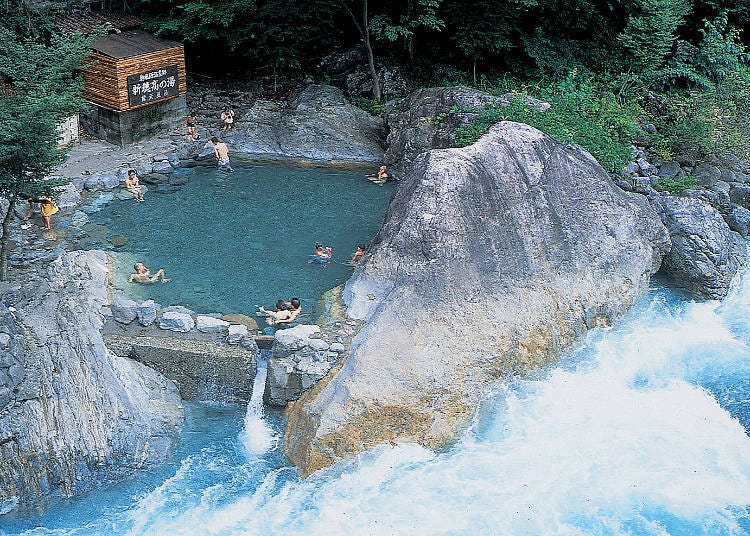
If Shinhotaka Ropeway gives you the mountain views, Okuhida Onsengo gives you the chance to slow down and soak in them.
Okuhida Onsengo is actually a collection of five hot spring areas: Hirayu, Fukuchi, Shinhirayu, Tochio, and Shinhotaka. Spread through the mountains east of central Takayama, they are known for abundant natural hot spring water and a large number of rotenburo, or open-air baths.
Each area has a slightly different atmosphere. Hirayu is the main transportation hub and a convenient gateway to Kamikochi, while Shinhotaka is well positioned for visiting the ropeway. Smaller areas such as Fukuchi and Tochio offer a quieter hot-spring-town feel.
Many ryokan have outdoor baths surrounded by forest or mountain scenery, and on clear nights the relatively dark surroundings can make for impressive stargazing.
Winter is particularly memorable, when snow piles up around the outdoor baths, but Okuhida is rewarding year-round. Summer offers a cooler mountain retreat, while autumn brings some of the region's earliest foliage.
Rather than squeezing Okuhida into a quick side trip, consider staying overnight if your itinerary allows. It gives you time to enjoy a ryokan dinner, multiple baths, and the mountain scenery after day-trippers have left.
Travel tip: Shinhotaka Ropeway is located within the Okuhida Onsengo area, so the two are particularly easy to combine.
-
Okuhida-Onsengo奥飛騨温泉郷
-
Address
Okuhida-Onsengo, Takayama-shi, Gifu-ken 506-1421
View Map - Phone Number 0578-89-2458
・TEL: 0578-89-2458 (Okuhida Onsengō Tourist Information Center)
-
Address
Okuhida-Onsengo, Takayama-shi, Gifu-ken 506-1421
15. Enjoy a Natural Hot Spring Near Takayama Station at Takayama Green Hotel

For travelers who want an onsen experience without heading all the way into Okuhida, Takayama Green Hotel is a convenient option around a six-minute walk from JR Takayama Station.
The hotel operates a shuttle service and also has a large parking area, making it practical for both rail travelers and those exploring the Hida region by car. The Takayama Souvenir Shop mentioned earlier is also located on the hotel grounds.
The hotel's natural hot springs include a spacious indoor bath with large windows overlooking the seasonal scenery, as well as open-air bathing areas. These include a cypress bath and a rock bath illuminated in the evening, allowing guests to enjoy the onsen without leaving central Takayama.

The Ōrinkaku wing, opened in June 2020, incorporates greenery and traditional Hida craftsmanship into its design, while guest rooms look out across the surrounding Takayama landscape.
Dining is another reason to stay. At Dining Marchē Green Court, dishes are prepared using regional ingredients, including Hida beef, with some items cooked in front of guests.
For visitors arriving after a long journey or returning from a day trip to Shirakawa-go, the combination of station access, hot springs, dining, and souvenir shopping makes it an especially convenient base.
-
Takayama Green Hotel高山グリーンホテル
-
Address
2-180 Nishinoisshikimachi, Takayama-shi, Gifu-ken
View Map - Phone Number 0577-33-5500
-
Address
2-180 Nishinoisshikimachi, Takayama-shi, Gifu-ken
Best Day Trips From Takayama
16. Take a Day Trip to Shirakawa-go
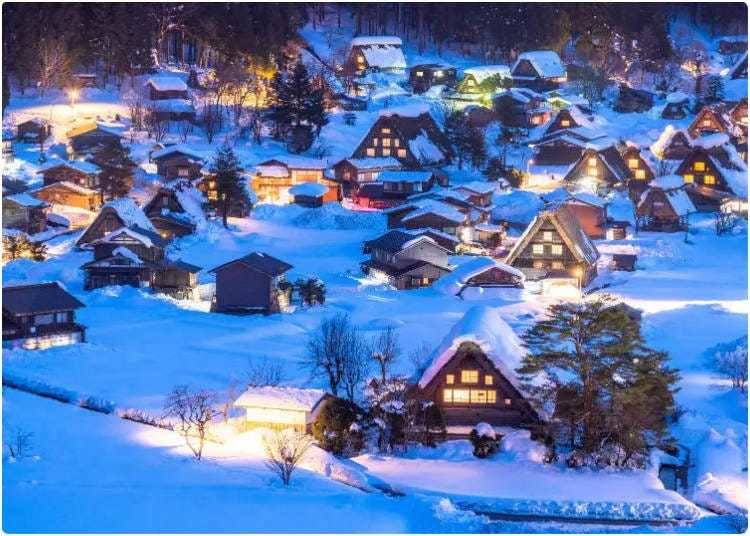
If Takayama is part of a longer journey through central Japan, UNESCO-listed Shirakawa-go is one of the easiest additions.
The village of Ogimachi is famous for its gassho-zukuri farmhouses, whose steep thatched roofs were developed to withstand the region's heavy winter snowfall.
Direct buses connect Takayama with Shirakawa-go in roughly 50 minutes, making a day trip straightforward even without a rental car.
Each season offers a different experience. Fresh greenery surrounds the houses in summer, autumn colors the surrounding mountains, and winter snow creates the village's most famous scenery.
Demand can be particularly high during weekends, holidays, autumn foliage season, and winter illumination periods, so reserving buses ahead of time is recommended when possible.
Travelers continuing toward Kanazawa can also visit Shirakawa-go between the two cities rather than returning to Takayama.
Bonus: Slow Down in Hida Furukawa
About 15 minutes from Takayama by train, Hida Furukawa offers a quieter alternative to its better-known neighbor.
The town is known for traditional streets, white-walled storehouses, waterways filled with carp, sake breweries, and the Furukawa Festival.
It's small enough for a relaxed half-day excursion and can be especially appealing if central Takayama feels busy.
Film fans may also recognize scenery associated with the hit anime film Your Name.
How Many Days Do You Need in Takayama?
One full day is enough to see Takayama's main central attractions, but two days is a much better choice for most first-time visitors.
With one day, concentrate on the morning markets, Takayama Jinya, Sanmachi-dori, local food, sake breweries, and the festival area.
With two nights, you can slow the pace considerably and add Hida Folk Village, the Higashiyama Walking Course, or more time exploring Takayama's restaurants and shops.
Three days or more works particularly well if you plan to visit Shirakawa-go, Okuhida, Shinhotaka Ropeway, or Kamikochi.
Suggested 1-Day Takayama Itinerary
Morning
Miyagawa Morning Market or Jinya-mae Morning Market → Takayama Jinya → Sanmachi-dori
Lunch
Try Hida beef at a restaurant or turn lunch into a food crawl with beef sushi, beef buns, and savory mitarashi dango.
Afternoon
Sake breweries → Sakurayama Hachimangu Shrine → Takayama Matsuri Yatai Kaikan
Evening
Return to the old town once many day-trippers have left, then enjoy a Hida beef dinner or local izakaya.
Suggested 2-Day Takayama Itinerary
Day 1: Historic Takayama
Morning market → Takayama Jinya → Sanmachi-dori → Hida beef lunch → sake breweries → Sakurayama Hachimangu Shrine → Takayama Matsuri Yatai Kaikan
Day 2: Choose by season
・Spring: Hida Folk Village → Higashiyama Walking Course
・Summer: Takayama → Shinhotaka Ropeway → Okuhida Onsen
・Autumn: Hida Folk Village → Shinhotaka or Okuhida foliage
・Winter: Hida Folk Village → Okuhida Onsen
・Year-round: Takayama → Shirakawa-go → Takayama
How to Get to Takayama
Takayama has no Shinkansen station, but it is easily reached by train or highway bus from major cities.
From Tokyo
A direct highway bus runs from Shinjuku to Takayama. By train, travel via Nagoya or Toyama and transfer to the Limited Express Hida.
・Shinjuku Expressway Bus Terminal → Takayama Nohi Bus Center: Approximately 5 hours 45 minutes
・Via Nagoya: Approximately 4 hours 15 minutes
・Via Toyama: Approximately 4 hours
From Nagoya
The Limited Express Hida connects Nagoya directly with Takayama in approximately 2 hours 20 minutes. Highway buses are also available.
From Kanazawa
Direct highway buses connect Kanazawa and Takayama, with some services stopping at Shirakawa-go, making Kanazawa → Shirakawa-go → Takayama an efficient sightseeing route.
Crowd tip
Expect heavier crowds during Golden Week, Obon, Silver Week, the year-end/New Year holidays, and the Takayama Festivals on April 14–15 and October 9–10. Advance reservations are recommended.
Where to Stay in Takayama
For first-time visitors, staying between Takayama Station and the old town is usually the most convenient option. You'll be within walking distance of the main sights, restaurants, markets, and bus terminal.
Traditional ryokan are worth considering if you want tatami rooms, Japanese meals, and hot spring bathing to become part of the sightseeing experience itself.
Travelers prioritizing day trips may prefer accommodation close to Takayama Station and Nohi Bus Center, particularly when catching early buses.
Alternatively, spend a night in Okuhida if mountain scenery and outdoor hot springs are a bigger priority than central sightseeing.
-
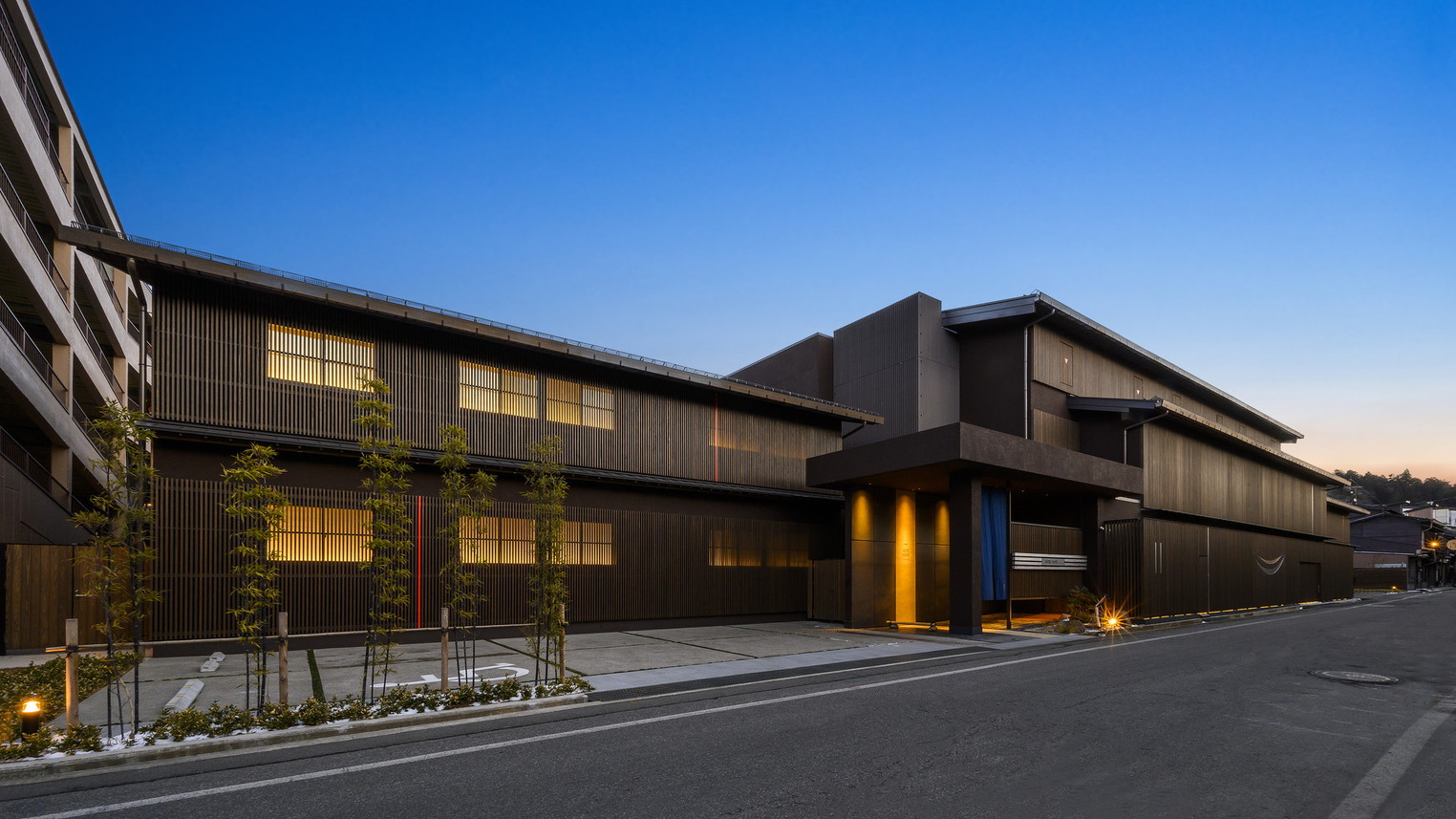
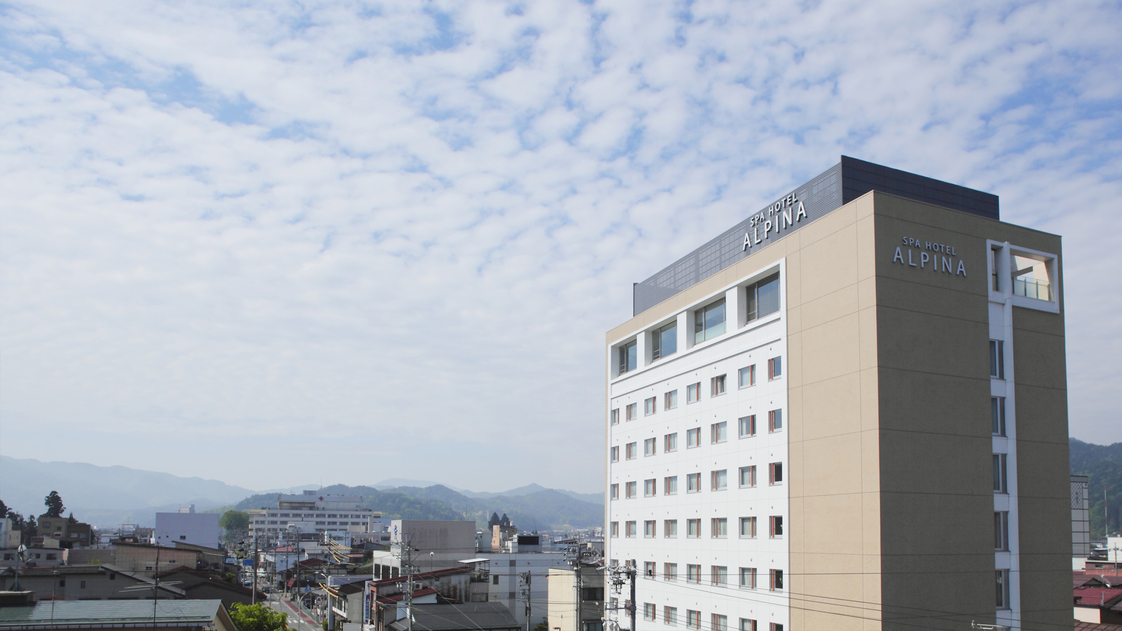 Spa Hotel Alpina Hida Takayamaスパホテルアルピナ飛騨高山
- Address 5-41 Nadamachi, Takayama-shi, Gifu View Map
- Original source: Rakuten Travel
-
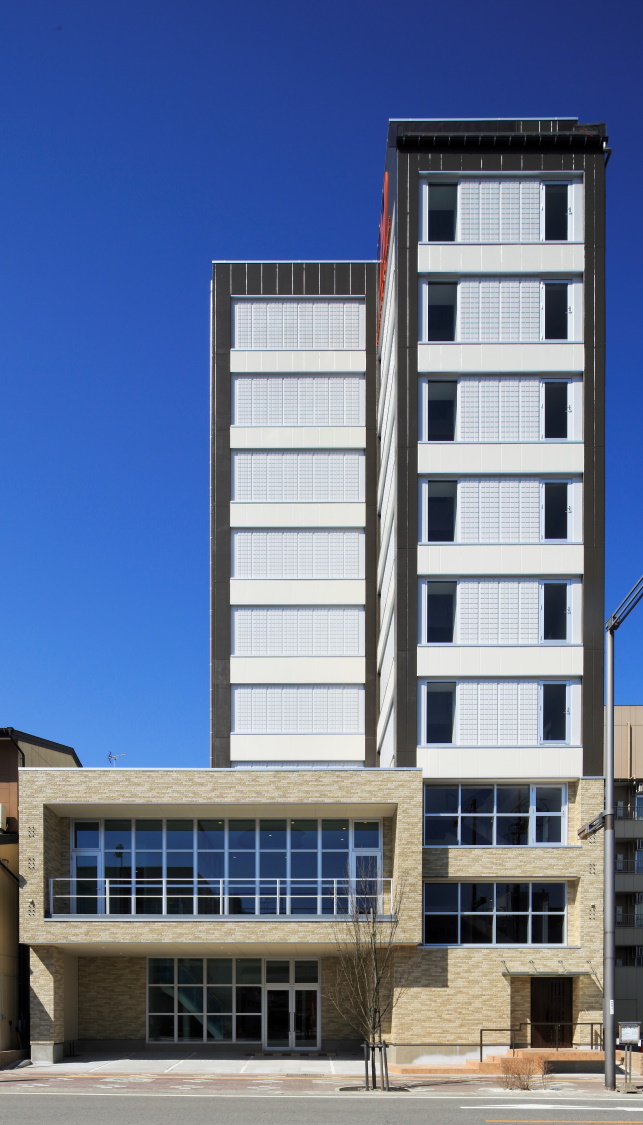
 Hotel Wood TakayamaHOTEL WOOD 高山
- Address 80-2 Kamininomachi, Takayama-shi, Gifu View Map
- Original source: Rakuten Travel
-
 Residence Hotel Takayama Stationレジデンスホテル 高山駅前
- Address 6-105 Hanasatomachi, Takayama-shi, Gifu View Map
- Original source: Rakuten Travel
-
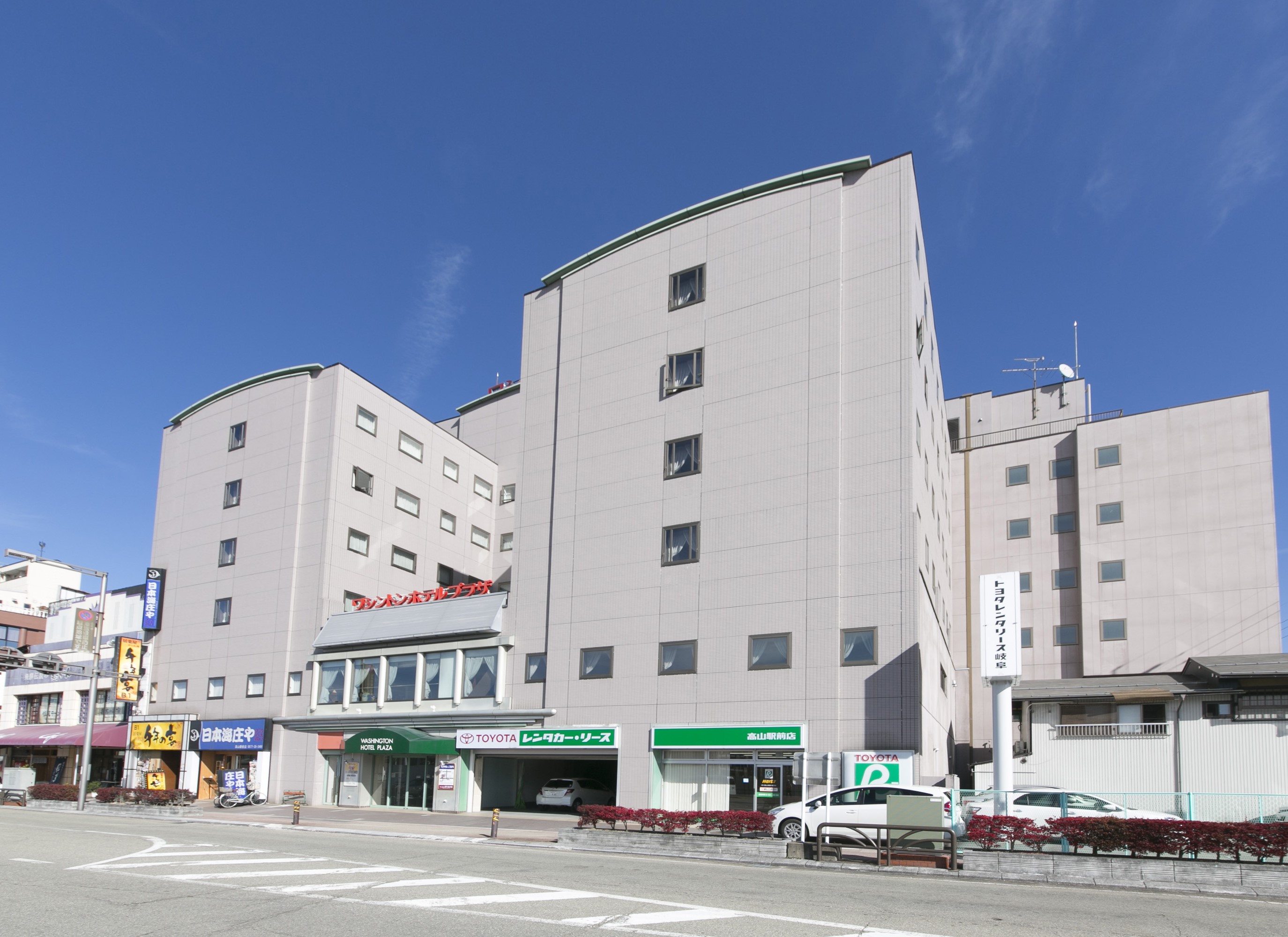 Hida Takayama Washington Hotel Plaza飛騨高山ワシントンホテルプラザ
- Address 5-20 Hanasatomachi, Takayama-shi, Gifu View Map
- Original source: Rakuten Travel

Explore the wonders of Hida Takayama!
There are still a lot of charming spots and stores that were not included in our list. As an area filled with sake breweries, Hida Takayama's nightlife revolves around Japanese pubs called izakaya, bars, and even snacks!
Spend a long vacation in Hida Takayama and fully experience Furui Machinami and Okuhida Onsengō along with the fascinating spots in nearby places such as Shinakawa-gō, Kamikōchi, and Kanazawa. Explore Hida Takayama along with its deeply fascinating spots!


The LIVE JAPAN editorial team is a multinational group made up of native editors who have lived in Japan for over five years and Japanese editors who love to travel. Together, we share the best of Japan, offering cultural insights, historical context, event updates, and travel-friendly deals, to support your journey every step of the way.
- Area
- Category
*Prices and options mentioned are subject to change.
*Unless stated otherwise, all prices include tax.
Popular Tours & Activities


-
Autumn in Japan 2026: Fall Foliage Forecast & Where to Enjoy the Colorful Leaves (+Tour Info)
-
Japan's New GREEN LIFESTYLE TRAIN Connects Tokyo, Yokohama, and a Greener Future
by: Guest Contributor
-

Daikoku PA Car Meet: What Is JDM, and Why Do Enthusiasts Flock Here?
-

Pocket WiFi Rental in Japan 2026: Complete Price Comparison & Where to Get the Best Deal
-
Just 2 Hours from Tokyo! Escape to Yamanashi's NIPPONIA Kosuge, Where an Entire 700-Person Village Becomes Your Hotel
by: Alice Lee
-
7-Day Japan Weather Forecast: Tokyo, Osaka, Sapporo, Sendai, Fukuoka, Naha – Plan & Pack Smart for Your Trip
Inspiration for Accommodations
-

Family-Friendly Hotels with Free Shuttle to Disneyland: Convenient Access for a Magical Stay
-
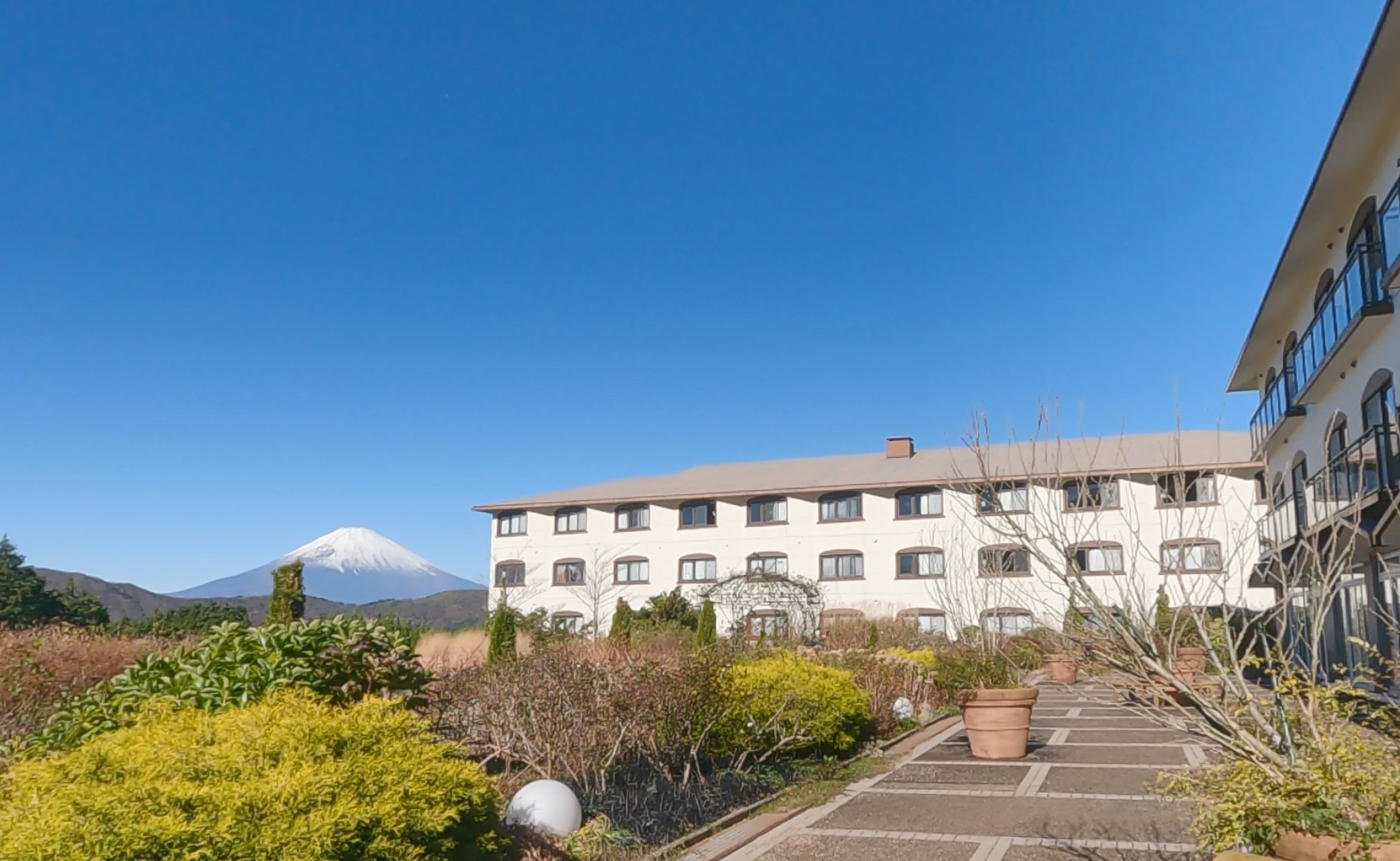
Top Ranked Hakone Hotels with Mt. Fuji View: Enjoy Stunning Scenery from Your Private Space
-
Convenient Tokyo Hotels with Airport Shuttle: Ideal for Families and Heavy Luggage
-
9 Family-Friendly Hotels with Comfortable Family Rooms in Asakusa
-
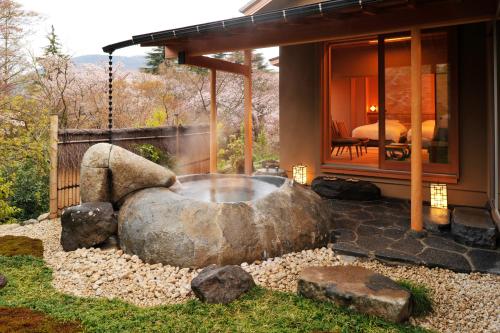
10 Open-air bath Onsen Ryokans in Hakone for Ultimate Relaxation
-
Ikebukuro Station Area Guide: Top 15 Spots When You Escape the Station's Maze!
-
20 Must-Try Yakiniku Restaurants in Tokyo: Enjoy Wagyu BBQ and More
by: Tiffany YU
-
Essential Tokyo: The Complete Guide to Ikebukuro Station
-
Gen Asakusa Honten: All-You-Can-Eat BBQ At Incredible Prices!
-

Meat dishes in Tokyo
-
Spending Wonderful Time Alone in Shibuya - Free Cosmetics and a Hundred-Yen Bus!
- #best ramen tokyo
- #what to buy in ameyoko
- #what to bring to japan
- #new years in tokyo
- #best izakaya shinjuku
- #things to do tokyo
- #japanese nail trends
- #what to do in odaiba
- #onsen tattoo friendly tokyo
- #daiso
- #best sushi ginza
- #japanese convenience store snacks
- #best yakiniku shibuya
- #japanese fashion culture
- #best japanese soft drinks