




Japan Ski Packing List: Everything You Need for the Powder
- Written by: Marco Blasco
One of the most daunting tasks when planning a ski trip to Japan is packing. While there are the essential items that everyone thinks of, there are also plenty of “nice-to-haves” that make your trip much more comfortable and enjoyable.
A helpful way to prepare is to categorize items into: must bring, can rent, and can buy. So in this guide, we’ll go over everything you need to pack in order to have a great ski trip to Japan, including gear, personal items, buying vs. renting, and more.
- Table of Contents
-
- Should I Bring My Own Gear or Rent at the Resort?
- What can I rent at most resorts? (Don't Need to Pack)
- What On-Mountain Gear Must I Pack?
- What Accessories Should I Have While Skiing?
- What Should I Pack for Life Off the Slopes?
- Which Electronics and Documents are Necessary?
- What to Buy in Japan
- Ready to Hit the Slopes?

Should I Bring My Own Gear or Rent at the Resort?

I recommend renting gear for beginners. Most Japanese snow resorts have excellent rental facilities with well-maintained gear available in a variety of sizes. Unless you're an experienced skier with custom gear you love or are particularly tall, renting saves you the hassle of lugging heavy bags through train stations.
What can I rent at most resorts? (Don't Need to Pack)
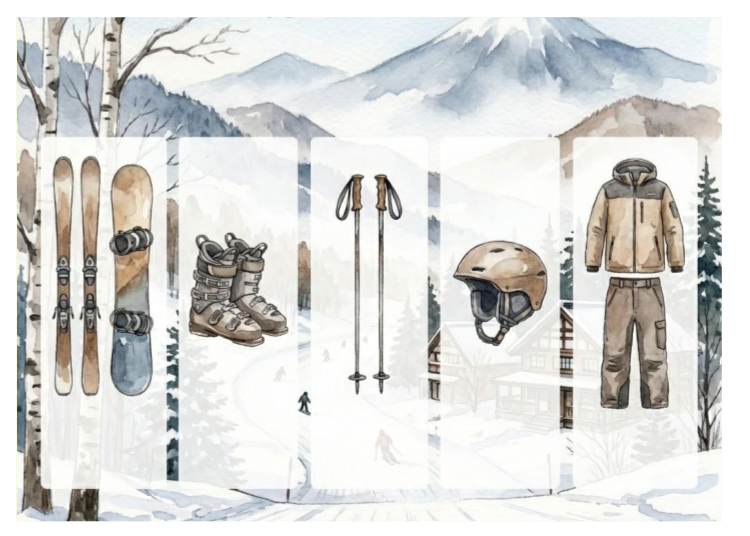
- Skis or snowboard + bindings
- Boots (These are the one item, where if you are considering purchasing, I might recommend it. Having comfortable boots that fit your feet can make a big difference. While rented boots aren’t bad, and I have used many, my feet were always tired by the end of the day.)
- Poles (for skiing)
- Helmet (though I have been to resorts where you can’t rent helmets, so be sure to double-check)
- Jacket and snowpants
Pro Tip: If you are outside of "standard" Japanese sizes (which run somewhat smaller than at North American/European resorts), double-check the resort's size range. It is also helpful to know your height/shoe size in centimeters and weight in kilograms for the rental forms.
For full details on the rental process, sizing, and what to expect, check out our Renting Gear guide.
What On-Mountain Gear Must I Pack?
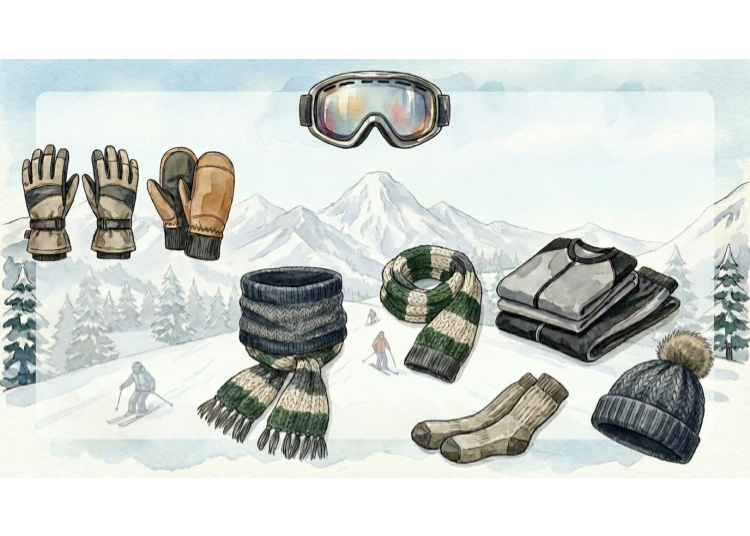
There are certain personal items that resorts typically do not rent for hygiene or fit reasons.
Goggles
Goggles are essential on both blustery days and sunny ones. They protect your eyes, face, and I would never recommend skiing without them. While resorts will usually sell goggles, they can be quite expensive there. So I would bring at least one pair, ideally with an extra lens for different light conditions. If you are in Tokyo, places like Sports Town Kanda (which is like a small village of sports shops) can be a great place to get gear before you head to your resort.
Gloves or Mittens
You’ll need waterproof, insulated gloves or mittens, and these cannot usually be rented. This is an easy one to throw in a suitcase, so I’d even recommend buying in your home country first so you can try them on and assess the fit.
It might be best to even bring two pairs if you are planning on skiing for multiple days. That way, one pair can dry overnight. If you are anything like me when I first started, you’ll likely fall a lot, and your gloves will take a beating!
Neck Warmer/Buff/Balaclava
Not everyone wears these, but I always wore a balaclava when I was on the mountain. Especially if you're skiing in Hokkaido or Tohoku where temperatures can drop significantly, you’ll want to protect your neck and face. A neck warmer keeps snow from getting down your jacket and protects your face from windburn. These are not typically available for rent, and you'll want one that fits comfortably under your helmet and goggles.
Warm Hat/Beanie
Some people wear these under their helmets. I never did, but you’ll at least want one to wear around the resort when your helmet is off.
Thermal Wear/Under Layers
I recommend layering underneath your jacket and ski pants. There’s nothing worse than being cold on the mountain, and you’ll probably also work up a sweat, so moisture-wicking fabrics are a must have.
For your base layers, sportswear, spandex-type winter clothes are good. Your mid-layers might be something a bit heavier such as a fleece or a light-down jacket that can fit comfortably beneath your coat.
Definitely bring multiple pairs of under layers. Within the same day, you might even want to change as you get sweaty. Most accommodations have laundry facilities or you can hand-wash and hang-dry, but having backups means you're never stuck with damp base layers.
Your outer layer is going to be your waterproof ski jacket and pants. These can usually be rented as a set from the resort.
Socks
Another essential, and one that I would recommend bringing many of. Nothing worse than cold, wet feet. Ski and snowboard boots are thick and heavy, and can be somewhat uncomfortable if you don’t have thick socks. So I’d recommend proper ski socks that go up to your shin and have extra cushioning. Most ski socks will be made from moisture-wicking material.
Don't underestimate how important dry feet are to your comfort. Wet, cold feet can ruin a ski day faster than anything.
What Accessories Should I Have While Skiing?

Sunscreen
Obviously this will depend on the day, but if you get a sunny day where the light reflects off the snow, it can be good to use sunscreen on your face, and lip balm with SPF if your lips aren’t covered.
Hand Warmers
These are disposable heat packets you can buy everywhere in Japan (every convenience store, vending machines at resorts, etc.). Slip them in your gloves or pockets on particularly cold days. They're cheap and effective.
Small Backpack
While a lot of resorts have coin lockers to store valuables, many people keep their valuables on them. And I have been to resorts where there are only cubbies, so having a small backpack that you don’t mind wearing when skiing can be very helpful. My essential carry items were:
・Water bottle(s)
・Snacks (I always bought onigiri at convenience stores)
・Hand warmers
・Your phone, wallet, etc.
Lift Pass Holder
A lift pass holder is a clear case that you can slip the lift pass or ticket inside to protect it from getting wet and for the ease of showing it to the person in charge of the lift so you can get on. A lot of ski jackets will have one built into the sleeve or inner lining of the jacket, but if not, you can buy one to keep in a pocket for ease of use.
What Should I Pack for Life Off the Slopes?

Of course, you're not going to be in ski gear 24/7. After a day on the slopes, you'll change into comfortable clothes for dinner, exploring the village, or relaxing at your accommodation. Pack comfortable clothing and layers that you can wear to many different places. Since you’re heading to snowy areas, the warmer the better. As footwear, I’d recommend boots with good traction as it might be snowy and icy.
If you are staying at a resort with an onsen (hot spring), then you’ll also want to pack appropriately for that. Generally, the hotel will provide bath towels in your room (or to rent), as well as a small towel used to wash yourself and for modesty. If you have room in your suitcase however, it never hurts to have extra towels, and what each resort provides varies, so be sure to check. Onsen are communal baths, typically separated by gender. However, you bathe nude, so you won’t need a bathing suit or anything.
While onsen etiquette can be a little intimidating at first, there’s nothing better than the relaxing bath after a long day of skiing!
Personal Care Items
For spending the night, you’ll want to have:
・Toiletries
・Prescription medication, or over the counter pain reliever. You can buy this in Japan, though it might be best to research beforehand as the brands are different than in other countries
・Deodorant (hard to find Western-style in Japan)
・Plastic bags to put wet clothes in in case they don’t have time to dry.
You can easily buy most toiletries in Japan at any drug store or convenience store. While most, if not all labels, will be in Japanese, with a bit of research beforehand you should be able to find anything that you need. Of course, your hotel will have the basic amenities available as well.
Which Electronics and Documents are Necessary?

These mostly go without saying, but be sure to have:
・Passport
・Travel insurance documents
・Printed hotel confirmations (Sometimes cellphone signal can be unreliable in the mountains, so it’s easier to just have these printed out should there be any issues)
・Lift pass reservations (if you pre-purchased)
・International Driving Permit (if you're planning to rent a car)
・Emergency contacts list
・Copies of important documents
・An extra ID such as your driver’s license
Electronics
The basics you'd bring on any trip, plus a couple Japan-specific considerations:
・Smartphone + charger
・Universal power adapter. Japan uses Type A (two flat pins; 100V; same style as used in North American, Mexico, and Taiwan). Most modern chargers work fine, but Japan does not use three-prong outlets.
・Power bank
・Camera (winter in Japan is beautiful if you are into photography)
・Headphones
Money
Cash is still common in Japan, especially outside major cities. While most resorts and shops will have plenty of payment options, I’d recommend carrying a decent amount of Yen on you at all times.
You can order Yen from your bank in your home country before you come. However, most ATMs in convenience stores and at the Japan Post work with foreign cards. You can withdraw cash from here.
Having cash is also convenient for buying drinks from vending machines, paying for coin lockers, or paying at rental shops inside the resort. So don’t get rid of your coins either! I’d recommend bringing or buying a small coin purse to keep your coins in as well.
What to Buy in Japan
We have a whole article about renting skis in Japan, so check that out if you want a more in depth guide for what to buy vs. what to rent. But my basic recommendation is to rent things that you will only use on this trip (such as skis or a snowboard), and buy more personal items. Depending on the length of your trip as well, it could be more cost efficient to buy certain items rather than rent them each time.
If you are in Tokyo before heading to the mountains, the Jimbocho area is one of the best places to gear up. This neighborhood is packed with specialized ski and snowboard shops, often offering a wider selection and better prices than resort boutiques.
Well-known local chains like Ishii Sports and L-Breath have multiple stores here, carrying everything from beginner-friendly setups to high-performance gear. You will also find major international and premium brands such as Patagonia and Goldwin/The North Face Japan collections.
For general cold-weather and outdoor apparel rather than ski-specific gear, other convenient options in central Tokyo include L.L. Bean in Hibiya, Snow Peak in KITTE Marunouchi (near Tokyo Station), and Montbell in Kyobashi.
Also, Uniqlo sells HEATTECH thermal layers, and even convenience stores sell things like gloves and hats. These are all easily accessible and provide affordable options.
For complete details on the rental process, sizing, and tips, check out our Renting Gear Guide.
Ready to Hit the Slopes?

Packing for a ski trip to Japan doesn’t have to be overwhelming. By focusing on quality base layers, bringing your personal essentials like goggles and gloves, and utilizing Japan’s world-class rental services, you’re already halfway there.
If there is one final "pro-tip" to remember, it is Takkyubin (Luggage Delivery). You can send your heavy ski gear or suitcases directly from the airport to your resort (and vice versa) for a small fee. This allows you to travel hands-free on the shinkansen and enjoy the journey as much as the destination.
Japan offers a ski experience unlike anywhere else in the world - from the legendary "Japow" snow to the soothing post-ski onsens. Pack smart, travel light where you can, and get ready for an unforgettable winter adventure!

Marco Blasco is an American writer and editor living in Tohoku, Japan. After moving to Japan from the United States more than four years ago, Marco taught English in a snowy town before moving on to start his writing and editing career. Currently, he edits and proofreads light novels in translation, and writes articles about travel, Japanese culture, and the JET Program. In his free time, he writes novels, reads mostly science fiction and fantasy books, and tries to see as much of the Japanese countryside as he can.
- Area
- Category
*Prices and options mentioned are subject to change.
*Unless stated otherwise, all prices include tax.
Popular Tours & Activitiess
Recommended places for you
-
Appealing
Asahiyama Zoo
Zoos, Aquariums & Botanical Gardens
Asahikawa
-
Appealing
Rukku and Uohei
Izakaya
Sapporo / Chitose
-
Appealing
Kanemori Red Brick Warehouse
Shopping Malls
Hakodate
-
Niseko Village Ski Resort
Skiing & Snowboarding
Niseko / Rusutsu
-
Appealing
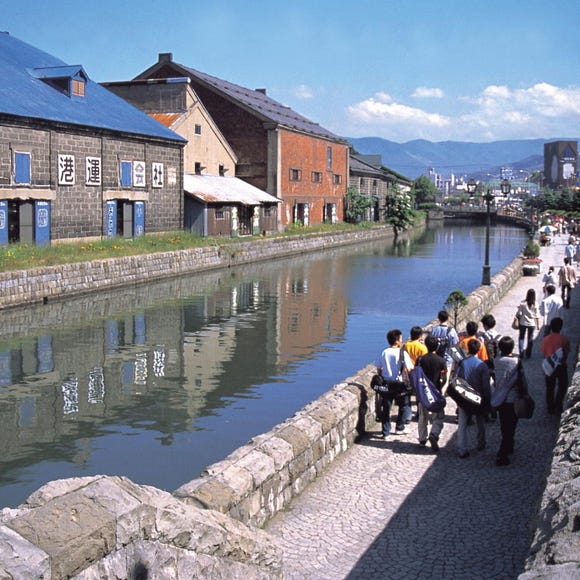
Otaru Canal
Rivers, Lakes & Canyons
Otaru
-
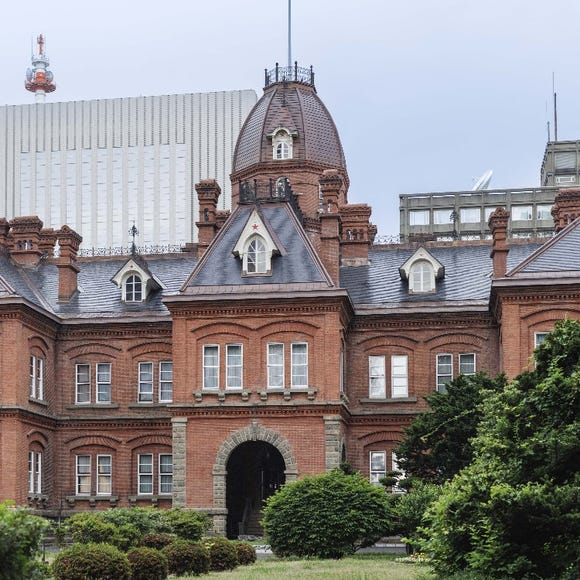
Former Hokkaido Government Office Building (Red Brick Office)
Other Historic Sites
Sapporo / Chitose
-
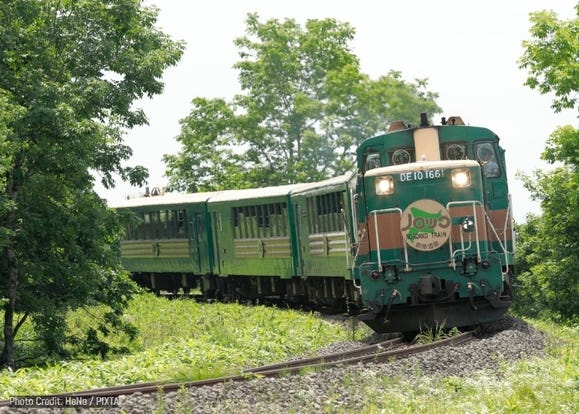
Into Hokkaido’s Untouched Wilderness: A Scenic Rail Journey on the JR Kushiro Shitsugen Norokko Train
by: Guest Contributor
-
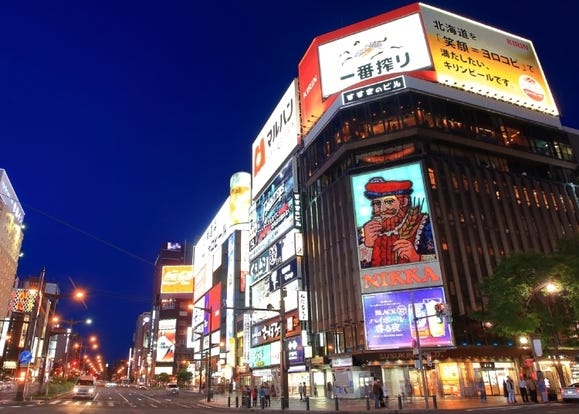
Explore Japan in 7 Days: The Ultimate Local Rail Adventure with the Hokkaido & East Japan Pass
by: Guest Contributor
-
Niseko Shopping Guide: Must-Buy Souvenirs & Spots in Hokkaido's Ski Paradise
by: ShiroKu inc.
-
Ad
Explore Eastern Hokkaido from Tancho Kushiro Airport: Your Gateway to Grand Nature
-

Jozankei Onsen: 10 Luxurious Hotels with Private Hot Springs & Stunning Views Near Sapporo
by: Robotan
-
Asahikawa Shopping Guide: Where to Find the Best Souvenirs, Local Food, and Duty-Free Deals
by: ShiroKu inc.
-
6 Surprisingly Cheap Things in Japan
-
Free Bus?! Rusutsu Resort Access: How to Get to Hokkaido's Huge Ski Area
by: Guest Contributor
-
Japan Ski Lift Passes for Beginners (What to Know Before You Go)
by: Marco Blasco
-
Furano Ski Resort Guide (2025-2026): Why Furano Is Called the 'Perfect Snow Mountain' for Families and Serious Skiers Alike
by: Hide
-
Japan's Bath Culture: Tips You Should Know!
-
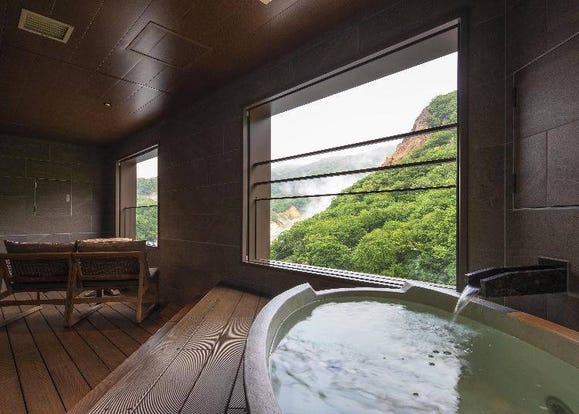
Where to Stay in Noboribetsu Onen: 6 Ryokan Hotels in Hokkaido's Spa Wonderland
by: Masakazu Yoshida
- #best sushi hokkaido
- #things to do hokkaido
- #best ramen sapporo
- #what to bring to japan
- #new years in tokyo
- #what to buy in ameyoko
- #japanese nail trends
- #what to do in odaiba
- #onsen tattoo friendly tokyo
- #daiso
- #best sweets otaru
- #japanese fashion culture
- #best nature furano
- #japanese convenience store snacks
- #best japanese soft drinks