




After Japan’s sweltering summer, the cooler days of autumn bring one of the year’s biggest travel highlights: fall foliage season. Kyoto and Nara are especially beautiful, but they are also extremely popular, meaning packed buses, long lines, traffic jams, and plenty of time spent simply getting from one temple to the next.
Heading farther out to quieter foliage spots can be even trickier. Routes may involve several trains and buses, and figuring out unfamiliar connections can quickly eat into your sightseeing time, especially when traveling with young children or older family members.
One of the easiest ways around the hassle is to leave the transportation to someone else. In this guide, we introduce scenic trains worth riding and handpicked Klook and KKday day tours around Kyoto and Nara. With a reserved seat, direct transportation, and multiple attractions packed into a single itinerary, you can relax on the bus, save your energy, and step off ready to enjoy the autumn colors.
(Main image: Klook)
(This article contains affiliate links)
- Table of Contents
Route A: Kyoto’s Hidden Otagi Nenbutsuji Temple & Osaka’s Daruma-Filled Katsuoji Temple
Kyoto may be one of Kansai’s most famous fall foliage destinations, but its best autumn spots are scattered across the city and surrounding areas. When traveling independently, complicated connections can mean spending much of the day in transit and only managing one or two major sights.
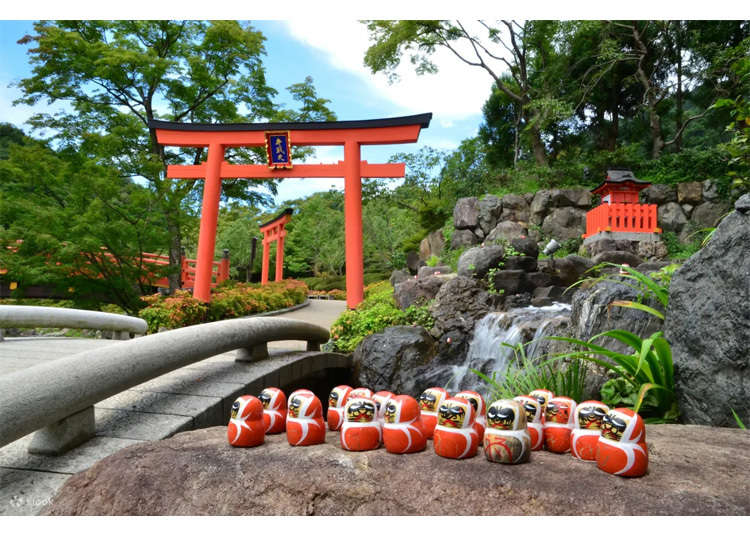
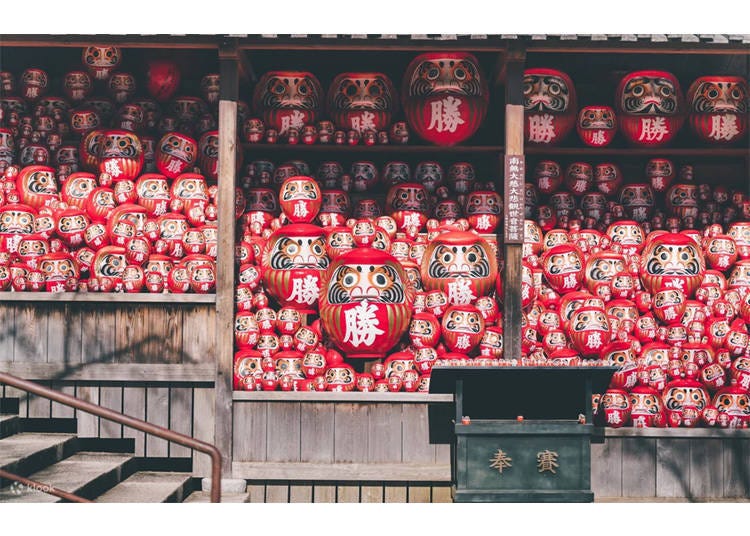
This bus tour makes it much easier to pack more into a single day. Along with Kyoto’s famous Arashiyama area, it visits the quieter Otagi Nenbutsuji Temple before heading across to Osaka Prefecture for Katsuoji Temple, known for its striking autumn colors and thousands of red daruma dolls.
Otagi Nenbutsuji and Katsuoji are particularly useful stops to visit by tour, as reaching either independently typically involves a combination of trains and buses. With direct transportation between the sights, you can cover standout foliage spots in both Kyoto and Osaka without sacrificing two separate days of your trip.
The first stop is Katsuoji Temple, tucked away in the mountains of Minoh, Osaka. With more than 1,300 years of history, it is known as the "Temple of Victory," where visitors come to pray for success in everything from exams and competitions to careers and good health.
The temple grounds are filled with bright red daruma dolls, creating an especially photogenic scene when surrounded by autumn foliage. Traditionally, you write your goal on the daruma, make a wish, and fill in its left eye. Once your wish comes true, you complete the right eye.
You’ll have around two hours of free time to explore. There is also a fun stamp activity with six stamp points around the temple, and once completed, the daruma postcard makes a memorable souvenir to take home.
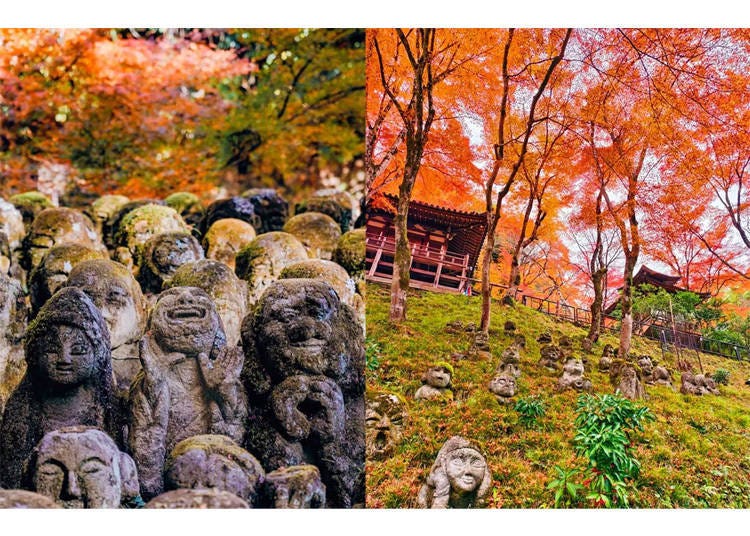
The second stop is Otagi Nenbutsuji Temple in Kyoto’s Sagano area. Its main hall dates back to the Kamakura period and is designated an Important Cultural Property, with a statue of the Thousand-Armed Kannon enshrined inside.
What really sets the temple apart, though, are its more than 1,200 stone rakan statues, each carved by worshippers and displaying its own quirky expression. Scattered among mossy trees and fiery autumn leaves, they give the temple an almost Spirited Away-like atmosphere, with a peaceful, slightly mysterious feel that makes this secluded spot especially memorable in fall.
Note that Otagi Nenbutsuji Temple is closed on Wednesdays and Saturdays. On those days, the tour visits Jojakkoji Temple instead. As there is no parking area immediately beside Otagi Nenbutsuji, visitors should also expect around a 20-minute walk from the bus parking area.
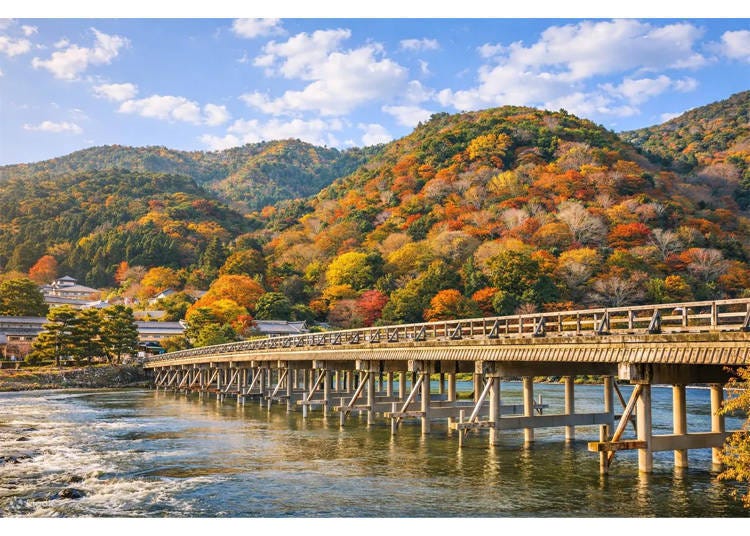
The third stop is Arashiyama, where you’ll have around three hours of free time to explore at your own pace. Depending on your interests, you can usually fit in three or four nearby sights, such as Adashino Nenbutsuji Temple, Saga Toriimoto Preserved Street, Mikami Shrine, Tenryuji Temple, Hogon-in Temple, or Yusai-tei.
For an extra dose of autumn scenery, consider booking the Sagano Romantic Train in advance for views over the colorful Hozugawa Gorge. If you still have time afterward, the footbath near Randen Arashiyama Station is a relaxing way to recharge before heading back.
Route B: Kyoto’s Golden Pavilion, Arashiyama & Evening Fall Colors
Many bus tours start around 7 or 8 AM, which can be rough if early mornings are not your thing. This one starts after 10 AM, and if you join from Kyoto, the meeting time is around noon, giving you time to sleep in, enjoy breakfast, and start the day at a much more relaxed pace.
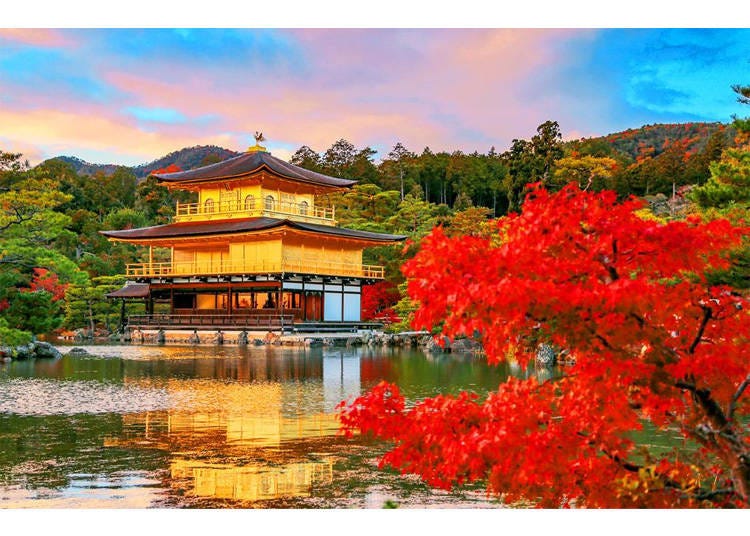
The first stop is Kinkakuji Temple, officially known as Rokuonji. Its famous nickname, the Golden Pavilion, comes from the gold leaf covering the exterior of its second and third floors.
On clear days, the pavilion is beautifully reflected in Kyokochi Pond, creating an especially striking scene when framed by autumn leaves. Kinkakuji is also deeply rooted in Japanese culture and literature, famously inspiring Yukio Mishima’s novel The Temple of the Golden Pavilion.
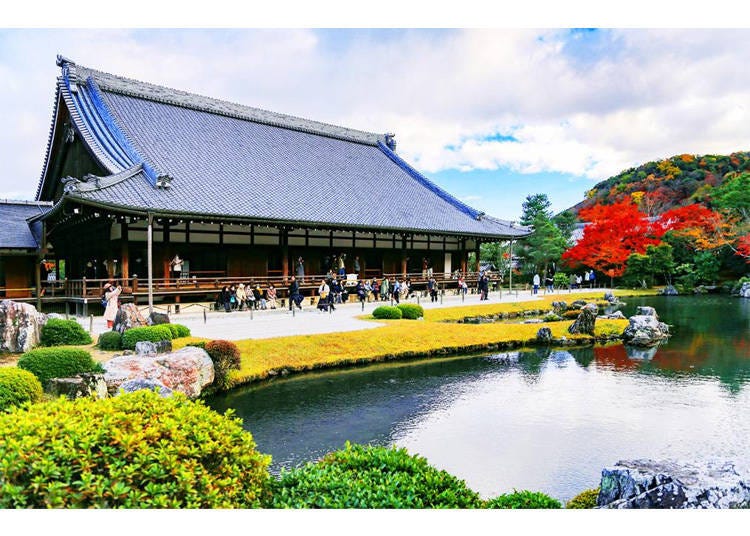
The second stop is Arashiyama, where you’ll have around four hours of free time to explore. One highlight is Tenryuji Temple, a UNESCO World Heritage Site known for its beautiful Sogenchi Garden, a strolling pond garden that incorporates the surrounding mountains into the scenery.
In autumn, the colorful trees around the pond blend beautifully with the slopes of Mt. Kameyama in the background, creating a classic Kyoto landscape. Inside the Dharma Hall, don’t miss the dramatic Cloud Dragon painting by Japanese artist Matazo Kayama, painted across 159 cedar panels. Its famous “eight-direction gaze” makes it seem as though the dragon’s eyes are following you no matter where you stand.
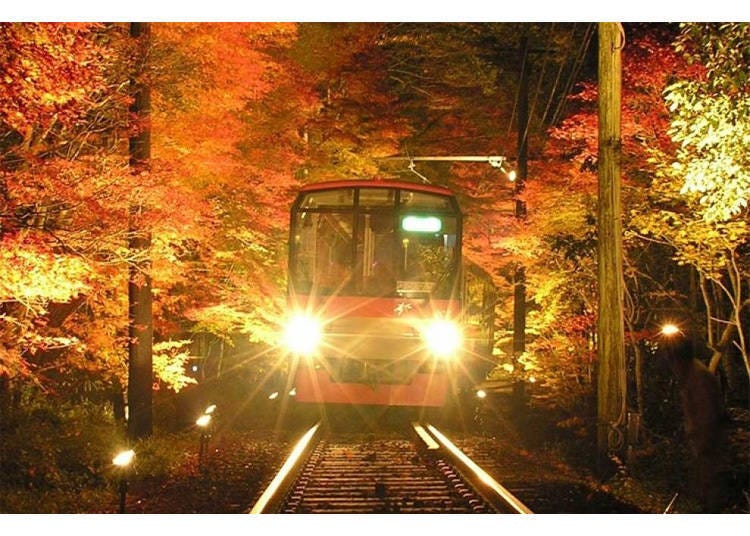
Along with a visit to Kyoto’s famous Kinkakuji Temple, this tour includes a ride on the Sagano Romantic Train during its special autumn evening service. Traveling in nostalgic carriages through the Hozugawa Gorge, you can enjoy both daytime foliage and illuminated autumn leaves as the train winds through colorful valleys after dark.
There is another reason to ride this year: the current red-and-yellow retro trains are scheduled to retire at the end of 2026, with new rolling stock arriving in spring 2027. That makes autumn 2026 the final chance to experience the classic train during one of Arashiyama’s most atmospheric seasons.
Route C: Nara’s Ancient Temples, Friendly Deer & Stunning Fall Colors
Nara is another of Kansai’s top autumn destinations, and this bus tour makes it easy to cover several of its biggest highlights in one day. Depending on the itinerary, stops may include Nara Park, Todaiji Temple, Tsubosakadera Temple, and Mt. Yoshino, with the chance to visit two UNESCO World Heritage Sites along the way.
Some tour options also include a seasonal fruit-picking experience, making this a particularly fun choice for families. Pick sweet autumn mandarins straight from the trees, enjoy them on the spot, and combine Nara’s colorful scenery with a tasty seasonal treat.
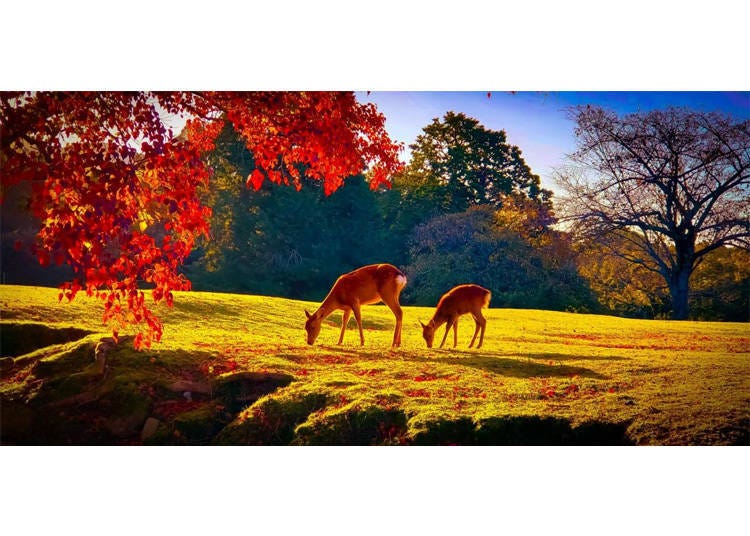
Nara Park is one of Nara’s most popular places for fall colors, and it is also home to more than 1,000 free-roaming deer. Visitors can buy special shika senbei crackers to feed them, making this a particularly fun stop for animal lovers and families.
The wider park area is also home to UNESCO-listed landmarks including Todaiji Temple, Kasuga Taisha Shrine, and Kofukuji Temple. Come autumn, the historic temples, shrines, curious deer, and brilliant foliage create a scene that feels unmistakably Nara.
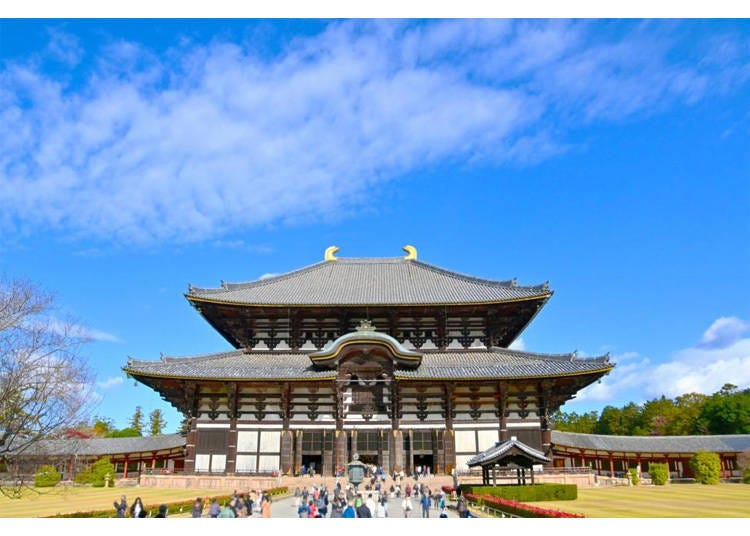
With more than 1,200 years of history, Todaiji Temple is home to one of Japan’s most impressive wooden temple halls. Inside sits the approximately 15-meter-tall Great Buddha of Nara, or Vairocana Buddha, an immense statue representing the Buddha’s compassion embracing all living things.
For autumn photos, head to Kagami-ike Pond, where colorful maples and golden ginkgo leaves frame the temple grounds. If a few of Nara’s famous deer wander across the carpet of fallen leaves, even better.
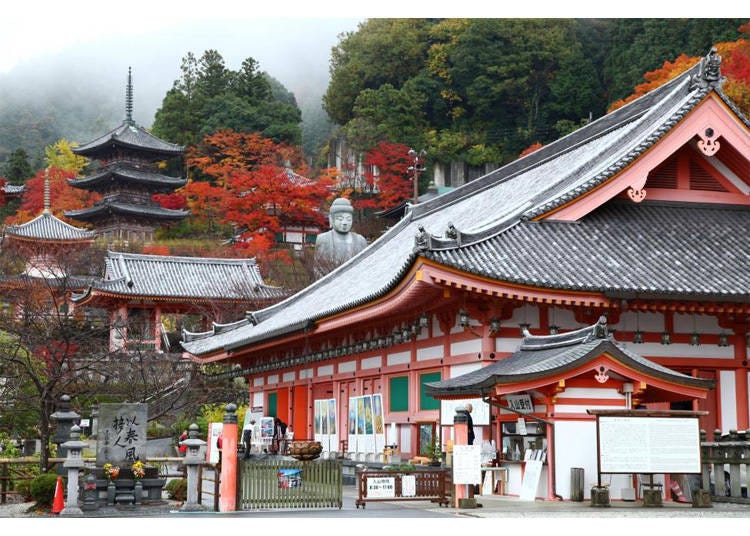
Tsubosakadera Temple, officially known as Minamihokkeji Temple, was founded in 703 and has more than 1,300 years of history. Long associated with prayers for eye health, it is also known for its enormous stone Buddhist statues.
In autumn, the 10-meter-tall Great Shaka Nyorai statue and vermilion three-story pagoda rise dramatically above layers of red and orange foliage. The temple has appeared in works ranging from Sei Shonagon’s classical The Pillow Book to the famous kabuki story Tsubosaka Reigenki, reflecting its longstanding place in Japanese culture.
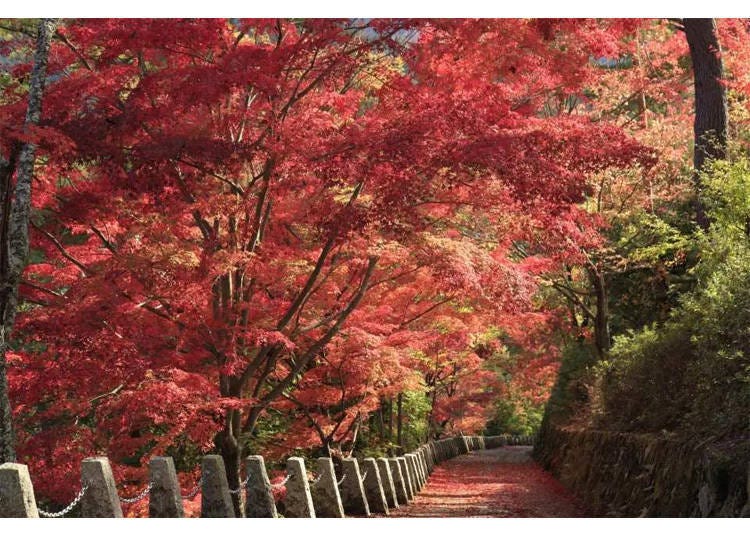
Mt. Yoshino forms part of the UNESCO-listed Sacred Sites and Pilgrimage Routes in the Kii Mountain Range and has long been an important center of Shugendo mountain worship. While it is best known for its thousands of cherry trees in spring, autumn transforms the mountain into an equally impressive sea of fiery color.
The foliage spreads across the mountain from Okusenbon and Kamisenbon down through Nakasenbon and Shimosenbon, creating layer upon layer of red, orange, and gold. From the right viewpoints, entire slopes appear blanketed in autumn leaves, making Yoshino one of Nara’s most spectacular fall landscapes.
Route D: The Best of Both Worlds: Bus Tour + Scenic Train Adventure
Want to save your legs while still experiencing one of Japan’s distinctive sightseeing trains? This tour combines both, with the train tickets and transportation arrangements taken care of in advance, so there is no need to wrestle with Japanese booking websites or organize the connections yourself.
Kintetsu’s Blue Symphony sightseeing train travels from Osaka-Abenobashi Station to Yoshino Station in around 1 hour and 20 minutes. Designed around the idea of a refined journey for adults, the route passes through historic Asuka before continuing toward Yoshino, a sacred center of Shugendo mountain worship.
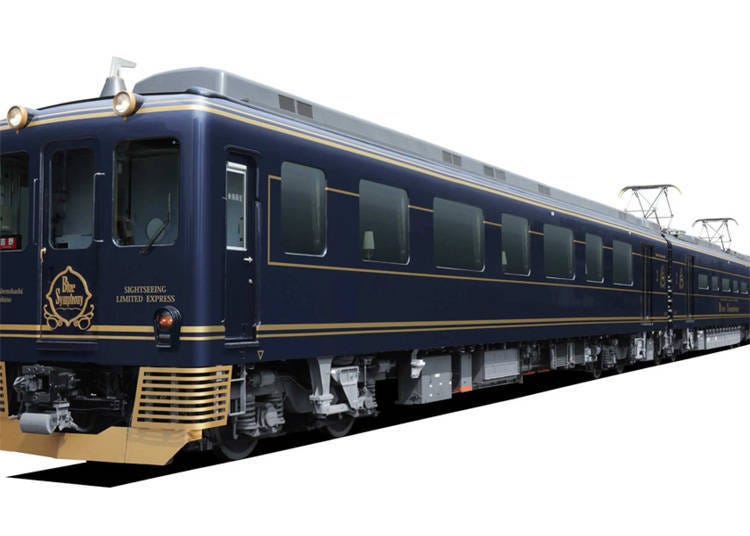
The Blue Symphony certainly looks the part. Its deep blue exterior is accented with gold lines and an elegant emblem, giving the train a sophisticated, classical feel.
Look closely at the Blue Symphony logo on the front and sides, and you’ll also spot decorative motifs inspired by the flowers and plants of Mt. Yoshino.
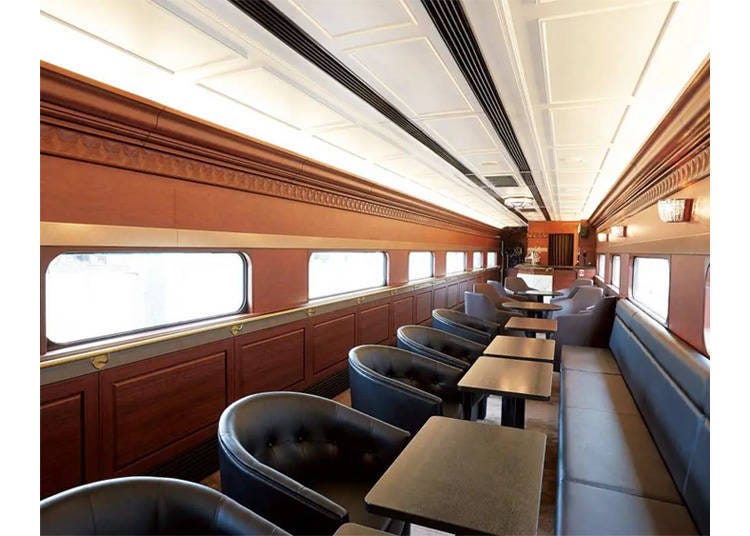
Inside, the train has a classic European-inspired interior designed for a leisurely ride. Cars No. 1 and 3 feature spacious 2+1 seating as well as face-to-face pairs with large tables.
Car No. 2 is home to a lounge and bar counter, where passengers can enjoy local wines and original desserts. There is also a small reading area with books and photography collections about Nara, plus train-exclusive souvenirs such as stationery, plush toys, handkerchiefs, and goshuincho stamp books. Don’t forget to pick up a commemorative boarding certificate as a keepsake.
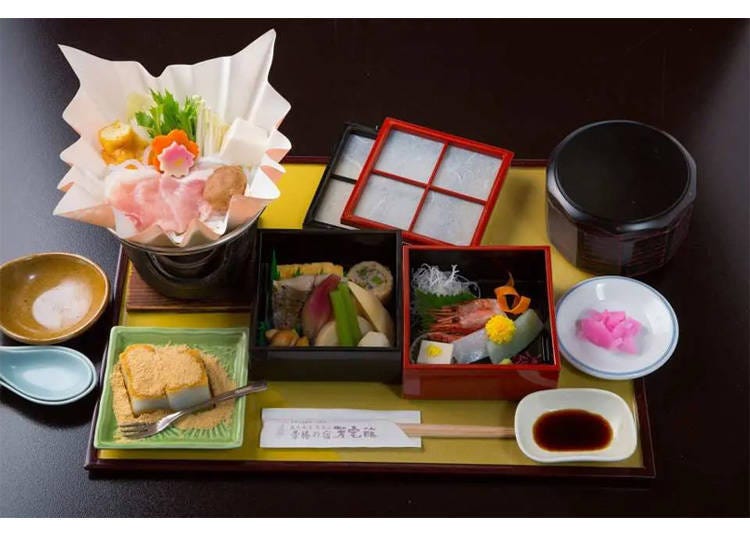
After arriving at Yoshino Station, a shuttle bus takes you up the mountain to Hounkan, a traditional ryokan founded in 1754. Here, you’ll sit down to a Yoshino kudzu hot pot lunch featuring local ingredients and regional cooking traditions.
It is also a chance to experience a little of Yoshino’s long-established ryokan culture before heading out to explore the mountain.
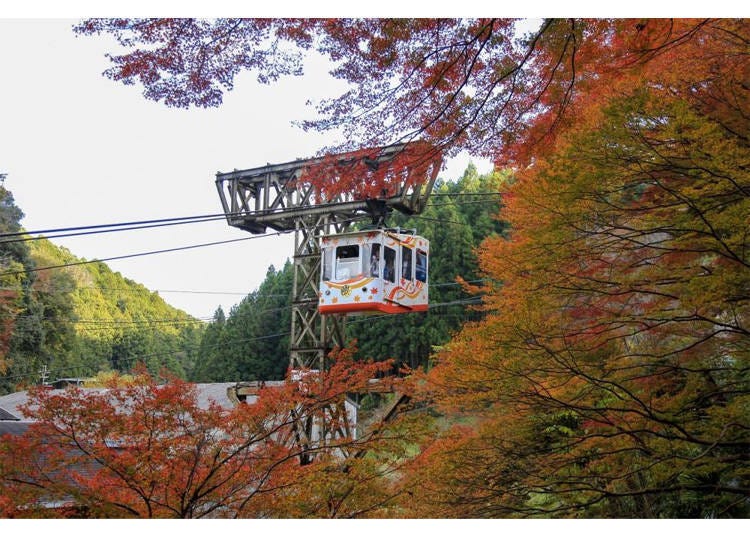
After lunch, you’ll have free time to explore Mt. Yoshino independently, including its temples, shrines, and autumn scenery. There is no guide during this portion, so you can choose the spots that interest you most.
You’ll then make your own way back down the mountain, with the walk taking around 80 minutes. Although much of the route is downhill, comfortable shoes and easy-to-move-in clothing are recommended. The Yoshino Ropeway can also be used for part of the return journey, but lines may form during the busy foliage season, so leave plenty of extra time.
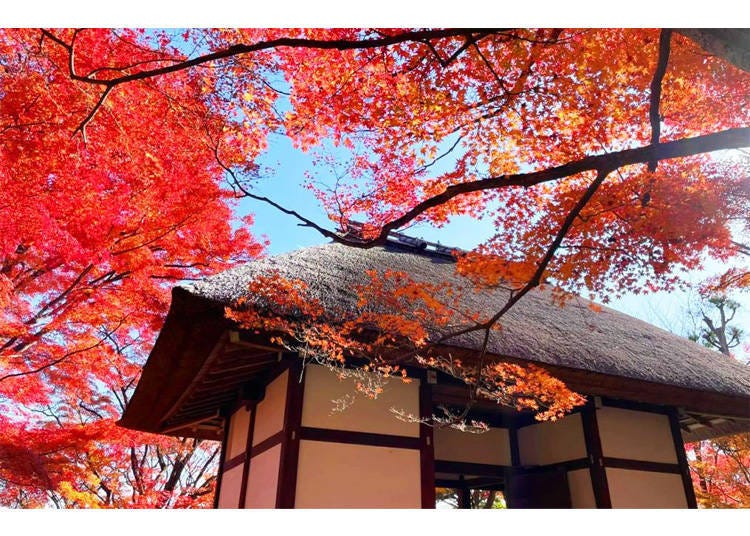
When planning your fall foliage trip, consider mixing one hassle-free bus tour with a separate day of easy, self-guided sightseeing. The tour takes care of the longer journeys and trickier connections, while a city day lets you slow down and enjoy planning your own route.
The foliage spots below are especially easy to reach from Osaka-Umeda Station or Kyoto Station, with direct train access and journey times of under an hour. Combining both styles of travel gives you the best of Kansai’s countryside and city autumn scenery without making every day feel overplanned.
- Osaka Castle Park
- JR Osaka Loop Line to Morinomiya Station or Osakajokoen Station; Osaka Metro Chuo Line to Tanimachi 4-chome Station or Morinomiya Station
- Nagai Park
- Osaka Metro Midosuji Line to Nagai Station
- Expo ’70 Commemorative Park
- Osaka Monorail to Bampaku-kinen-koen Station
- Toji Temple
- Kintetsu Kyoto Line to Toji Station
- Nijo Castle
- Kyoto Subway Tozai Line to Nijojo-mae Station
- Kyoto Gyoen National Garden
- Kyoto Subway Karasuma Line to Marutamachi Station or Imadegawa Station
Fall foliage season is one of Kansai’s busiest times of year, and popular bus tours can sell out well in advance. If you spot an itinerary you like, it’s a good idea to book around a month ahead, or even earlier for peak dates. Plan early, save your energy for the autumn scenery, and leave the complicated transportation to the pros.
*Prices and options mentioned are subject to change.
*Unless stated otherwise, all prices include tax.

Popular Tours & Activities
Recommended places for you
-
Myoshin-ji Temple
Temples
Arashiyama, Uzumasa
-
Goods
Yoshida Gennojo-Roho Kyoto Buddhist Altars
Gift Shops
Nijo Castle, Kyoto Imperial Palace
-
Dotonbori
Other Sightseeing
Namba, Dotonbori, Shinsaibashi
-
To-ji Temple
Temples
Kyoto Station, To-ji Temple
-

Jukuseiniku-to Namamottsuarera Nikubaru Italian Nikutaria Sannomiya
Izakaya
Kobe, Sannomiya, Kitano
-
ISHIDAYA Hanare
Yakiniku
Kobe, Sannomiya, Kitano
-
Top-Booked in Japan: Must-Try Sushi in Osaka for First-Time Visitors
by: Guest Contributor
-
10 Recommended Apartment Hotels in Kyoto for Long Stays and Family Trips
by: Yotsuka Hizuki
-
Kansai Hidden Gem: Step Into a Real-Life Shangri-La at MIHO MUSEUM, I.M. Pei's Stunning Mountain Masterpiece
by: Wemmy Chau
-
Travel Hands-Free from Kansai Airport (KIX) with Yamato Transport’s New Counter
by: Guest Contributor
-
The 5 Best Sumo Experiences in Osaka & Kyoto (2026): Live Shows, Restaurants & Workshops
-

September Events in Kansai: Fun Festivals, Food, and Things to Do in Kyoto & Osaka
Inspiration for Accommodations
-
Japan's Bath Culture: Tips You Should Know!
-
Osaka Travel Service Center: So Many Incredibly Convenient Services - in English!
by: WESTPLAN
-

Universal Studios Japan: Guide to Osaka's Giant Theme Park Attractions!
by: WESTPLAN
-

Visiting Osaka in Autumn: What to Wear & Must-Visit Attractions in September, October, and November
by: WESTPLAN
-
October in Kansai: Fun Festivals, Food, and Things to Do in Kyoto & Osaka
-

Kyoto in Autumn: Weather & Clothing Tips for September, October, and November
by: WESTPLAN
- #best gourmet Osaka
- #things to do Osaka
- #what to do in kyoto
- #what to bring to japan
- #best gourmet Kyoto
- #new years in Osaka
- #what to buy in nanba
- #Visiting Osaka
- #onsen tattoo friendly arima
- #daiso
- #Visiting Kyoto
- #best japanese soft drinks
- #japanese fashion culture
- #japanese convenience store snacks
- #japanese nail trends