




The brilliant pink scenery of cherry blossom season in spring attracts countless visitors, but many Japanese people are just as captivated by sakura themselves.
For the Japanese, cherry blossoms are more than a springtime view. They are a mirror reflecting ideas about life, death, and beauty. The language even contains many sakura-related words that are difficult to translate directly, each carrying a keen awareness of the changing seasons and the subtle sentiment that something is precious precisely because it will fade.
Learn these 16 expressions, and the next time you go cherry blossom viewing in Japan, you may see more than just a sea of pink flowers. You may also glimpse the deep aesthetic sensibilities of Japanese culture.
(This article contains affiliate links)
Mankai (満開)
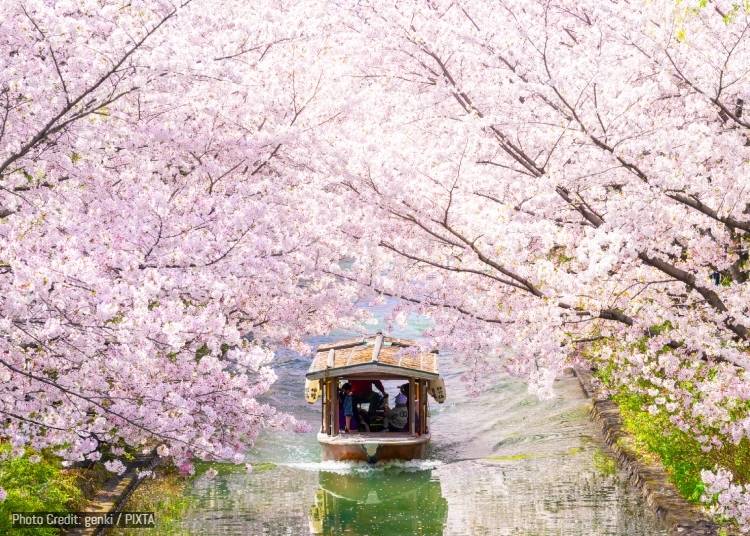
Meaning: Cherry blossoms in their most spectacular state of bloom. (The kanji 満 means “full,” and 開 means “to open.”)
This term refers to the stage when more than 80% of the blossoms on a tree have opened. It is the moment many people hope to experience during hanami, when branches are filled with soft pink petals at their most vibrant and full of life.
Each year, Japan Meteorological Corporation releases a cherry blossom forecast that includes both the first bloom date and the mankai, or full bloom date. If you want to see the blossoms at their peak, plan your visit around the days just before and after mankai.
Sakura Fubuki (桜吹雪)
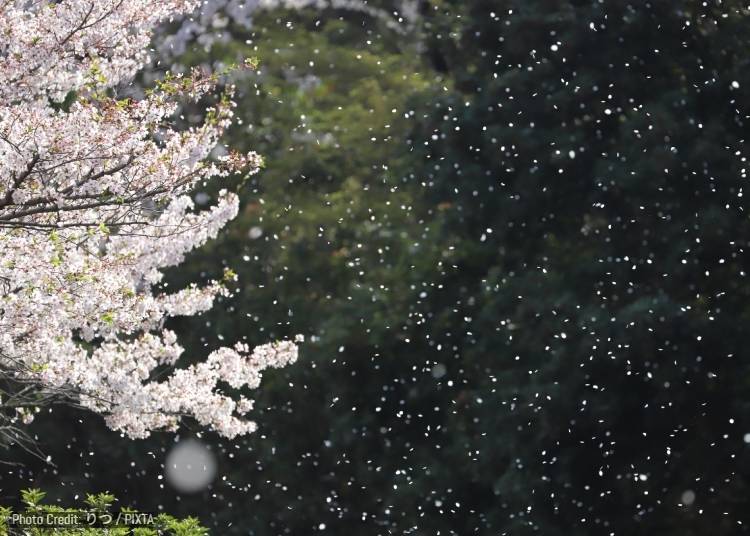
Meaning: Cherry blossoms scattering through the air like a snowstorm. (The kanji 桜 means “cherry blossom,” 吹 means “to blow,” and 雪 means “snow.”)
This expression describes the breathtaking moment near the end of cherry blossom season, when strong winds send petals swirling through the air like falling snow. In an instant, a tree that was in full bloom begins to break apart, surrounding viewers in a dreamlike storm of petals with striking visual and emotional impact.
In Japan, the falling of blossoms, known as chiri (散り), is often considered even more powerful than the moment of full bloom. The sight carries a poignant beauty tinged with melancholy.
This scene also reflects two deeply rooted Japanese values. Cherry blossoms fall at the height of their beauty, drifting away without hesitation, embodying the idea of a graceful farewell without regret. That image closely echoes the spirit admired by samurai in earlier times: to meet one’s end with dignity and intensity. In this view, withering or death is not a failure, but the completion of a life.
Hanaikada (花筏)

Meaning: Cherry blossom petals that gather on the water’s surface, forming flowing pink patterns. (The kanji 花 means “flower,” and 筏 means “raft.”)
Many cherry blossom spots are located near rivers or moats, such as Hirosaki Park in Aomori and Chidorigafuchi in Tokyo. When the petals fall onto the water, they drift together across the surface, layering into constantly shifting ripples of soft pink.
Beyond its visual beauty, this scene reflects a distinctive Japanese aesthetic. Even after the blossoms have fallen, their elegance remains, suggesting the idea that even as life fades, the spirit continues forward with quiet grace.
Hazakura (葉桜)
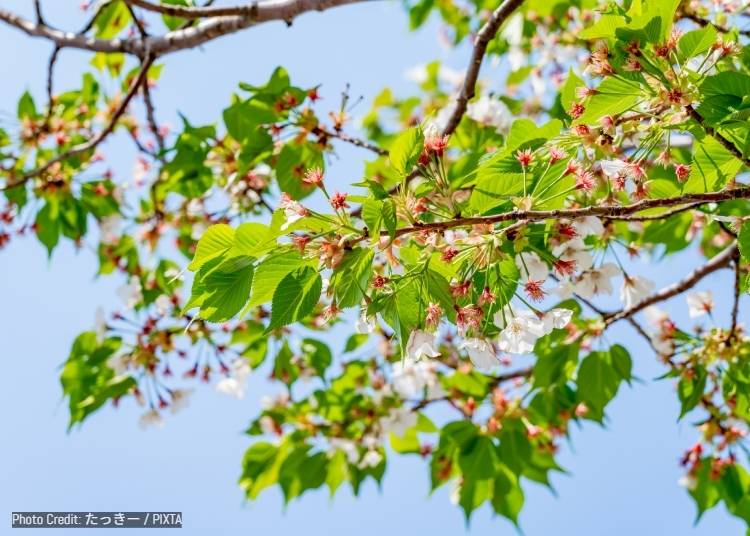
Meaning: The stage when green leaves appear after the cherry blossom petals have fallen. (The kanji 葉 means “leaf,” and 桜 means “cherry blossom.”)
After the blossoms fall, fresh green leaves begin to emerge. For a brief moment, the branches display a mix of pale new greenery and lingering pink petals, creating a soft transition that signals the end of spring and the arrival of early summer.
This phase of cherry trees is short-lived. If you spot hazakura during your next cherry blossom outing, instead of feeling that the season is ending, take a moment to appreciate the sense of renewal and the quiet energy of new life beginning.
Yozakura (夜桜)
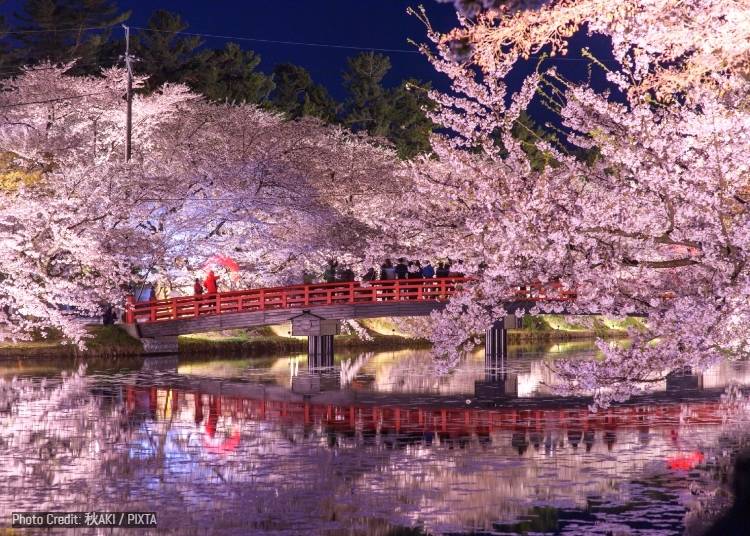
Meaning: Cherry blossoms viewed at night, revealing a more mysterious and alluring side. (The kanji 夜 means “night,” and 桜 means “cherry blossom.”)
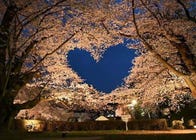
Cherry blossoms in the daytime often feel fresh and gentle, but at night they take on a completely different character. Under soft lighting, the petals catch faint glimmers of light and seem to glow as they emerge from the darkness, creating a dreamlike and slightly mysterious atmosphere.
This contrast with their daytime appearance gives yozakura a captivating, almost spellbinding quality that can make viewers forget the world around them. Because people in Japan often gather to eat and drink beneath the blossoms, night viewing is also closely associated with lively hanami parties and festive evening gatherings.
Hanagumori (花曇り)

Meaning: Cherry blossoms seen under a softly overcast sky. (The kanji 花 means “flower,” and 曇 means “cloudy.”)
This term refers specifically to the weather during peak cherry blossom season when thin clouds soften the sunlight. Although the sun is hidden, the gentle light gives the blossoms a delicate, slightly hazy appearance.
Under these conditions, the cherry blossoms seem as if they are veiled in a thin layer of white gauze, creating a subtle and refined beauty.
Hanabie (花冷え)
Meaning: A sudden drop in temperature during cherry blossom season. (The kanji 花 means “flower,” and 冷 means “cold.”)
Just when the weather begins to warm and the cherry blossoms have started to bloom, the temperature can suddenly fall again. Compared with some other seasonal expressions, this term is more straightforward and simply describes the chilly spells that sometimes arrive during sakura season.
It also reflects the unpredictable nature of spring weather and serves as a practical reminder: if you are heading out for cherry blossom viewing, it is wise to bring an extra layer.
Kobore Zakura (零れ桜)
Meaning: Cherry blossoms so abundant they seem to spill from the branches. (The kanji 零れ means “to spill or overflow,” and 桜 means “cherry blossom.”)
This expression describes blossoms blooming so densely that they appear to overflow from the branches, creating a scene of remarkable fullness and vitality. The nuance also suggests a moment when life’s energy has swelled to its limit, as if one more breath might tip the balance.
At the very peak of beauty often lies the moment closest to collapse. Kobore zakura captures that fragile edge, when the blossoms seem to stand at the limit of their brilliance.
Hana yori Dango (花より団子)
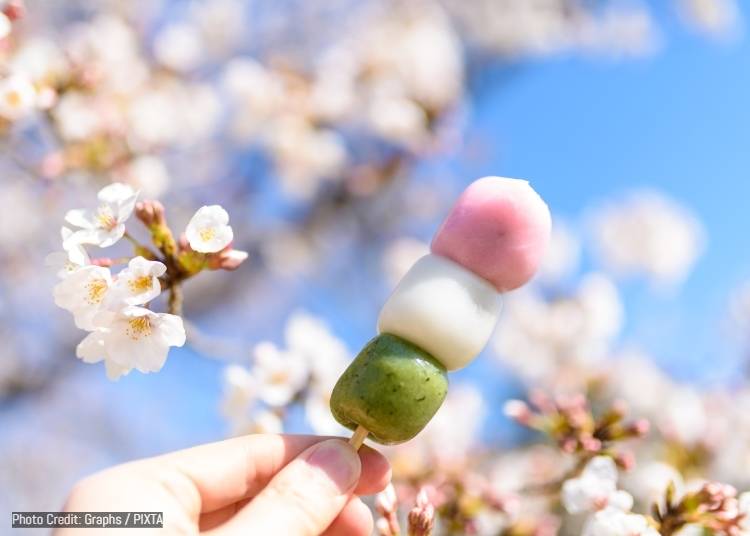
Meaning: “Dumplings over flowers.” (The kanji 花 means “flower,” 団子 means “dumplings,” and より means “rather than.”)
One of the most well-known sayings connected to cherry blossom viewing in Japan. Rather than focusing only on the abstract beauty of the blossoms, the phrase humorously suggests that people may care more about enjoying good food and lively company.
During hanami, it is common to see food stalls, picnics, and groups gathering to eat and drink beneath the blossoms. One of the most classic seasonal treats is hanami dango.
Hanami dango typically features three dumplings in pink, white, and green. These colors symbolize cherry blossoms, lingering snow, and fresh spring grass, representing the transition from winter into spring.
Mikka Minu Ma no Sakura (三日見ぬ間の桜)
Meaning: “In just three days without seeing them, the cherry blossoms have already changed.” (The kanji 三日 means “three days,” 見ぬ means “not seeing,” and 桜 means “cherry blossoms.”)
Cherry blossoms bloom for only a short time, and their transformation happens quickly. Buds seen just a few days earlier may suddenly burst into full bloom, only to fall away again before long.
The phrase is often used as a metaphor for how quickly circumstances can change, reminding us that even the most beautiful moments do not wait. Beneath its gentle melancholy is also a quiet encouragement to appreciate the present while it lasts.
Ichigo Ichie (一期一会)
Meaning: A once-in-a-lifetime encounter. (The kanji 一期 means “one lifetime,” and 一会 means “one meeting.”)
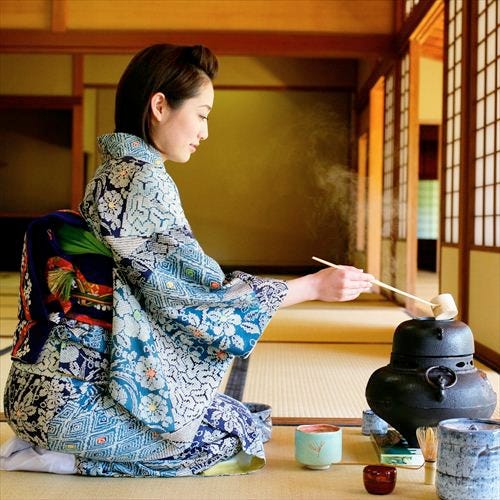
The phrase originates from the Japanese tea ceremony and was introduced by a disciple of Sen no Rikyū. Its original meaning is that even if host and guest meet many times in life, each individual tea gathering happens only once, and therefore should be treated with complete sincerity.
During cherry blossom season, the idea is often invoked as well. Each year the blossoms bloom differently, the light changes, and the people sharing the moment are never quite the same. Because the sakura season is so brief, every encounter with the flowers and with one another is truly unique.
Ichigo ichie expresses the preciousness of a moment that will never come again, emphasizing the irreplaceable nature of time and circumstance.
Mono no Aware (物の哀れ)
Meaning: A deep emotional awareness of the passing of things. (The kanji 物 means “things,” and 哀れ conveys a sense of “poignancy” or “gentle sadness.”)
Mono no aware is often considered one of the core aesthetics of Japanese culture. It reflects the understanding that all things change and that nothing can remain forever. In this view, the moment just before something disappears is when its beauty is most deeply felt.
The falling of cherry blossoms is a classic example. Watching the petals drift away can move viewers from simply observing beauty to feeling a quiet sense of poignancy. While often associated with sakura, the concept applies broadly to any moment when things shift, fade, or pass away.
Awai (淡い)

Meaning: A soft, delicate elegance that feels almost fleeting. (The kanji 淡 conveys the idea of “light,” “faint,” or “subtle.”)
Awai is an adjective that can take on slightly different meanings depending on what it describes. It may refer to a pale color, or more broadly to something gentle, understated, and refined.
When used to describe cherry blossoms, it evokes their faint pink-white tones, a soft spring color that feels tender and quietly beautiful.
Karen (可憐)
Meaning: Charming in a delicate, endearing way. (The kanji 可 means “worthy” or “admirable,” and 憐 conveys “tender affection.”)
In Japanese, karen carries a very different meaning from the Chinese sense of “pitiful.” Instead, it describes something so delicate and lovely that it naturally stirs feelings of affection.
When cherry blossoms sway gently in the breeze, their small and graceful form can inspire a quiet desire to cherish them. In such moments, Japanese speakers may describe the blossoms as karen.
Interestingly, while expressions like sakura fubuki or kobore zakura evoke sweeping scenes filled with petals or entire trees in bloom, karen focuses on the charm of a single blossom. Both describe sakura, yet the imagery they evoke feels entirely different.
Gensōteki (幻想的)
Meaning: Dreamlike, with a beauty that feels almost unreal. (The kanji 幻想 means “fantasy” or “illusion.”)
Although the word “fantasy” exists in Chinese kanji as well, the Japanese sense of gensō often carries the nuance of something so beautiful it hardly feels real. The emphasis is on an atmosphere that seems to drift beyond everyday reality.
It is especially fitting for cherry blossoms seen in mist or illuminated at night, when the softly glowing petals create a magical scene that feels almost like stepping into another world.
Hara-hara (はらはら)
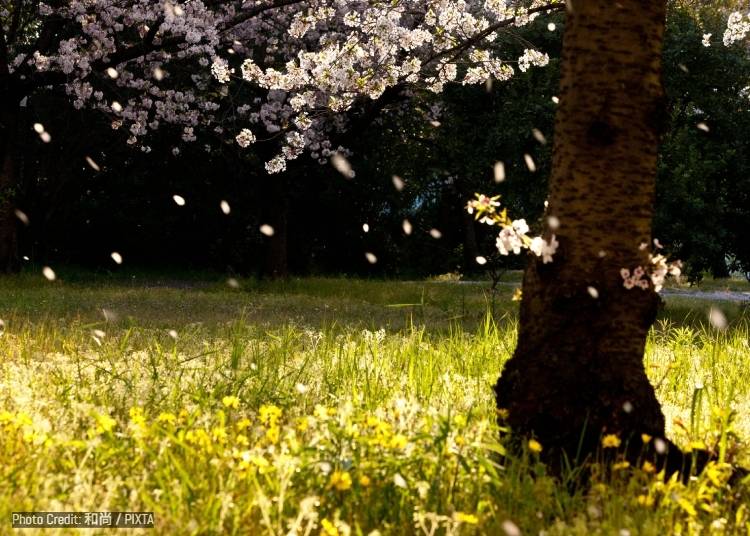
Meaning: An onomatopoeic expression describing something gently fluttering down.
This is one of the many distinctive mimetic words in Japanese. While there is no exact equivalent in English, it closely resembles expressions like “petals drifting down one after another” or “softly fluttering to the ground.”
It describes the quiet scene of petals falling lightly, one by one, creating a gentle farewell that carries a hint of melancholy. Interestingly, hara-hara can also describe a feeling of nervous tension or suspense, as in the expression hara-hara suru, showing how versatile the word can be.
Language is one pathway to understanding a culture. When spring arrives and you stand beneath the blossoms at places like Ueno Park or along the Meguro River, the sight of trees in full bloom or petals drifting through the air begins to feel like more than just scenery. Sakura becomes a quiet conversation about life, Japanese aesthetics, and the fleeting nature of the present moment.
If you would like to enjoy cherry blossom viewing with a more relaxed itinerary, you might also consider joining one of the many available tours. It can be an easy way to immerse yourself even more deeply in the world of sakura.
-
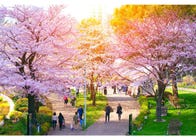
 Ueno Park, Chidorigafuchi & Meguro River Night Cherry Blossom Day Tour (Includes Lunch)
(Photo credit: Klook) -
 Mount Fuji Seasonal Highlights Day Tour
(Photo credit: Klook) -
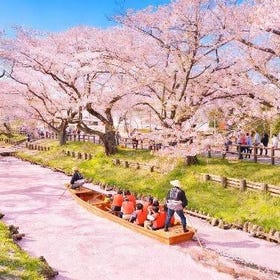 Gongendo Park Cherry Blossoms, Little Edo Kawagoe & Mitsui Outlet Park Day Tour
(Photo credit: Klook) -
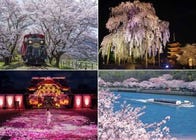
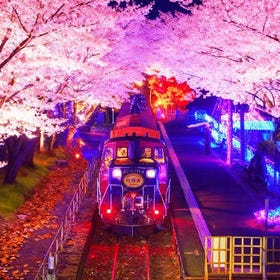 Kyoto Night Cherry Blossom Illumination Tour: Kinkaku-ji & Arashiyama (Includes Night Sakura Train)
(Photo credit: Klook) -
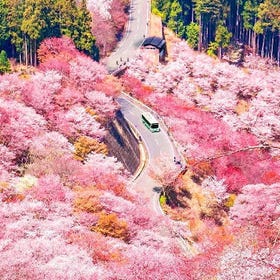 Classic Nara Cherry Blossom Tour: Nara Park, Todai-ji & Yoshinoyama’s Thousand Cherry Trees (Includes Sakura Bell Souvenir)
(Photo credit: Klook)

- Category
*Prices and options mentioned are subject to change.
*Unless stated otherwise, all prices include tax.
Popular Tours & Activitiess
Recommended places for you
-
ISHIDAYA Hanare
Yakiniku
Kobe, Sannomiya, Kitano
-
Kambei Sannomiyahonten
Yakiniku
Kobe, Sannomiya, Kitano
-

Kanzenkoshitsuyakinikutabehodai Gyugyu Paradise Sannomiya
Yakiniku
Kobe, Sannomiya, Kitano
-
Appealing
Rukku and Uohei
Izakaya
Sapporo / Chitose
-
Goods
Yoshida Gennojo-Roho Kyoto Buddhist Altars
Gift Shops
Nijo Castle, Kyoto Imperial Palace
-
Jukuseiniku-to Namamottsuarera Nikubaru Italian Nikutaria Sannomiya
Izakaya
Kobe, Sannomiya, Kitano
-
Grand Reopening! The Edo-Tokyo Museum Returns After 4 Years: New Highlights, Interactive Tech, and Limited-Edition Goods
-
Ad

Sharing Japan's Secrets of Longevity with the World: "Noage International" Delivers a New Medical Tourism Experience
-

SILK AND ILY DONUT: Tokyo's New, Laid-Back Waterfront Shop Is A Real Treat
by: Timothy Sullivan
-

Front-Row Seat by the Sea: Inside the Newly Opened La Vista Atami Terrace and Its Unique Everyday Escape
by: Yukiko Honda
-

Snow Peak: Discover the Japanese Outdoor Brand That Became a Global Obsession (and Its Best Stores)
-
No More Getting Lost in Tokyo's Subways! The "Magic Translation Terminal" Appearing at All 171 Stations Will Revolutionize Your Journey
by: Guest Contributor
-
Essential Tokyo: The Complete Guide to Ikebukuro Station
-

What to Buy in Tokyo: 5 Unique Tokyo Station Souvenirs
-
5 Must-Visit Nara Temples and Shrines: Discover the Timeless Beauty of Japan's Ancient Capital
by: WESTPLAN
-
38 Best Things to Do in Sendai & Miyagi: Sightseeing, Food, Shopping & Souvenirs
by: Guest Contributor
-

What The Heck Is A 'PET Bottle'? Deciphering the Most Confusing Japanese English Words
-

“With Strangers...?!" Why Foreigners Are Shocked by Japan’s Onsen Culture
- #best sushi japan
- #what to do in odaiba
- #what to bring to japan
- #new years in tokyo
- #best ramen japan
- #what to buy in ameyoko
- #japanese nail trends
- #things to do japan
- #onsen tattoo friendly tokyo
- #daiso
- #best coffee japan
- #best japanese soft drinks
- #best yakiniku japan
- #japanese fashion culture
- #japanese convenience store snacks