



Grand Reopening! The Edo-Tokyo Museum Returns After 4 Years: New Highlights, Interactive Tech, and Limited-Edition Goods
- Written by: LIVE JAPAN Editor
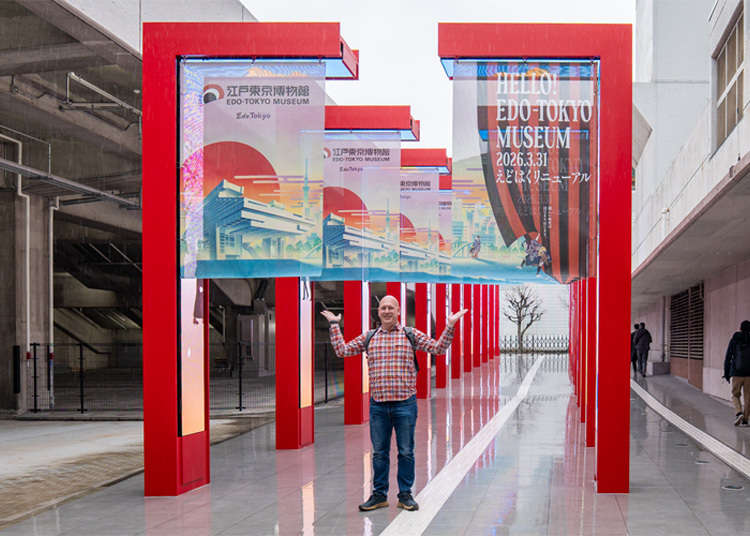
Tokyo culture lovers, the wait is over. After four years of major renovations, the Edo-Tokyo Museum in Ryogoku officially reopened on March 31, 2026.
Closed since 2022 for extensive upgrades, this iconic museum, known for its distinctive architecture, returns with enhanced exhibits and immersive interactive experiences. We visited ahead of reopening to explore what’s new, from must-see displays to the latest highlights showcasing Tokyo’s evolution over the centuries.
(Main image: Timothy Sullivan/LIVE JAPAN)
(This page contains affiliate links)
- Table of Contents
-
- Museum Overview: Why It’s a Must-Visit in Tokyo
- Explore the Exhibits: From the Tokugawa Shogunate to Modern Tokyo
- Immersive Experiences: Don’t Just See History, Interact with It
- Dining and Souvenir Shops: Taste Tokyo’s History
- Visitor Information
- FAQ: Helpful Tips Before You Visit
- Where Past and Present Meet
Museum Overview: Why It’s a Must-Visit in Tokyo
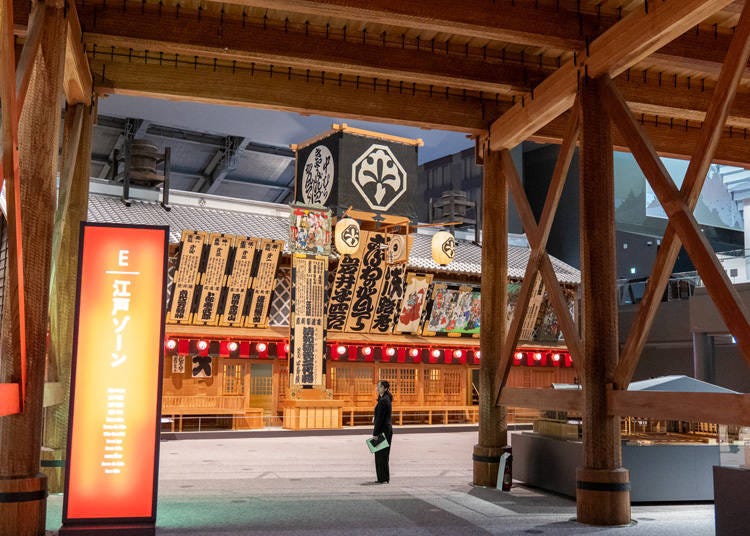
The Edo-Tokyo Museum is more than a place to view artifacts. It feels like stepping into a time machine that brings Tokyo’s past to life.
Designed by renowned architect Kiyonori Kikutake, the building itself is part of the experience. Inspired by traditional elevated storehouses from the Edo period, its striking 62-meter-tall structure stands as a bold symbol of preserving history.
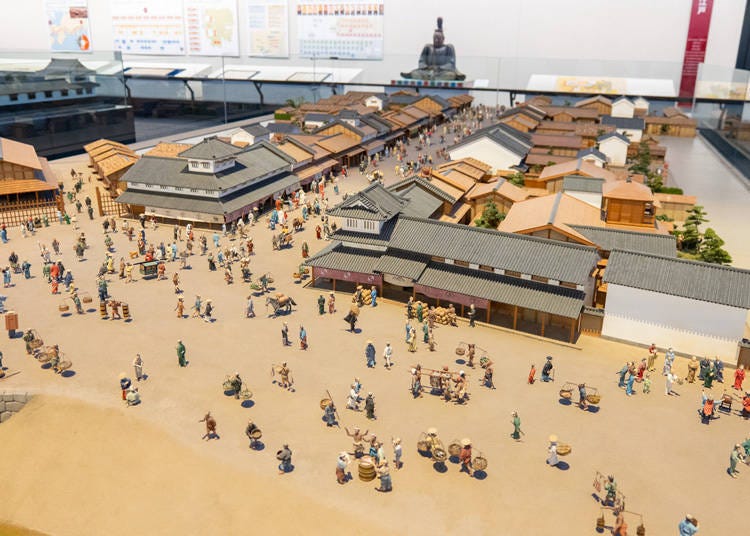
It’s considered a must-visit in Tokyo because it vividly recreates “Edo,” the foundation of modern-day Tokyo. Once the city’s former name, Edo flourished as Japan’s political center after Tokugawa Ieyasu established the shogunate in 1603, growing into one of the world’s largest cities by the early 1700s with a population of over one million.
Step inside, and it feels like walking through a miniature city. The museum recreates scenes from Edo through to modern Tokyo using full-scale reconstructions and intricately detailed models, bringing everyday life and architecture vividly into view.
During the 260-year period of peace, samurai and townspeople coexisted and shaped a rich blend of tangible and intangible culture. Today, the Tokyo Metropolitan Government is placing renewed focus on Edo and sharing its enduring appeal with the world, making this museum the perfect starting point to experience it firsthand.
Explore the Exhibits: From the Tokugawa Shogunate to Modern Tokyo
Edo Zone (Permanent Exhibition): Where a Flourishing City Began
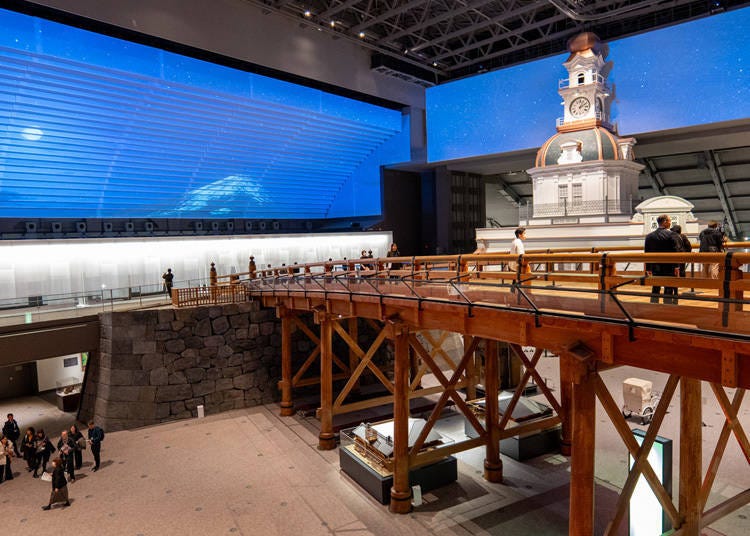
Nihonbashi Recreated: Your Starting Point Through Time
Step inside, and one of the most striking sights is the full-scale wooden reconstruction of Nihonbashi. During the Edo period, this bridge marked the starting point of all major roads and symbolized the city’s thriving commercial life. As you walk across the wide wooden span and look down over the street models below, the height and texture create an uncanny feeling, as if you’ve stepped back 400 years into the shogun’s Edo.
Kabuki Theater and Daimyo Residences: A Glimpse of Social Hierarchy
Beyond Nihonbashi, you’ll encounter detailed models of daimyo residences that reflect the power and prestige of the samurai elite. One of the most eye-catching highlights is the Nakamuraza theater.
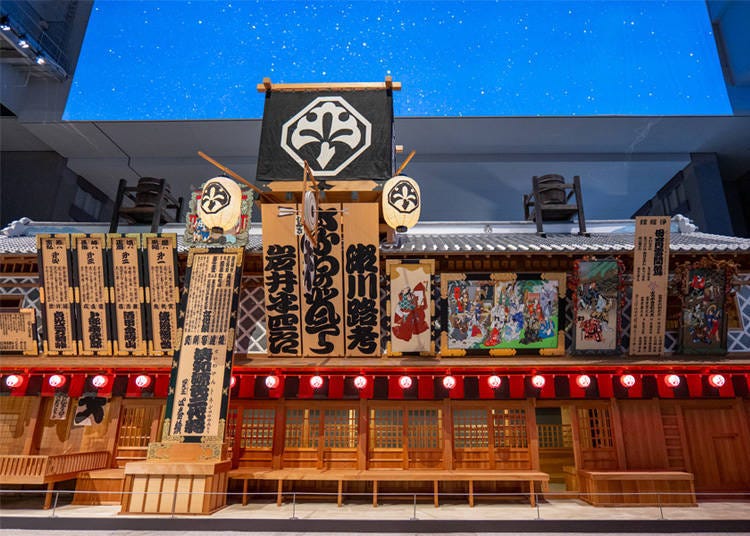
Nakamuraza Theater: Architectural Beauty of Kabuki
This is one of the most iconic kabuki theaters of the Edo period. Based on detailed records from 1809, the museum faithfully recreates the original structure of Nakamuraza, which once stood in Sakai-cho.
Through the intricate model, you can closely observe the complex stage design of early kabuki. While decorative gables on the stage were simplified over time, they were still temporarily installed for certain performances, reflecting the close connection between popular entertainment and artistic expression in Edo society.
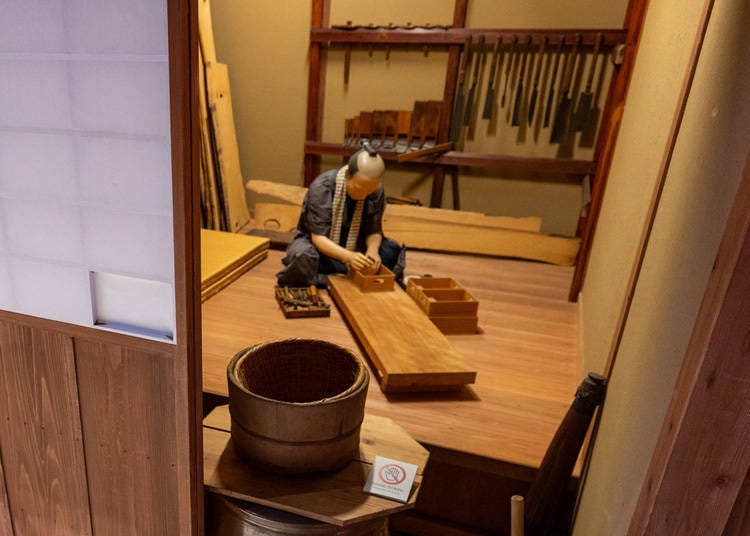
Everyday Life: Inside a Nine-by-Two Nagaya Row House
Leaving the grand theaters behind, you step into the everyday world of Edo’s townspeople with a visit to a nagaya, or row house.
Compact yet cleverly designed, these long shared buildings were divided into multiple units. A typical “nine-by-two” rear nagaya measured just about 30 square feet, where an entire family lived within a single 4.5-tatami room.
Fire-prone and often nicknamed “burning houses,” these homes were built from wood and paper with thin dividing walls. In the reconstructed space, you’ll see a dirt-floor entrance that doubles as a kitchen, complete with a water container and stove. With no closets, residents stored clothing and bedding in bamboo baskets or wrapped bundles, neatly tucked into corners to maximize their limited living space.
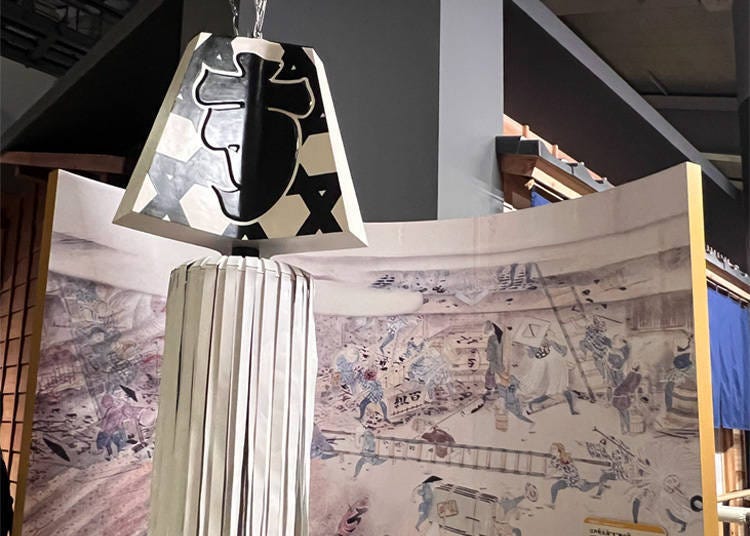
Machibikeshi Firefighters: Battling the Flames of Edo
You can’t talk about Edo without mentioning fire. One highlight you shouldn’t miss is the “matoi,” the symbolic standard of the Edo town firefighters known as machibikeshi.
Instead of using water, firefighting in Edo often relied on “destructive firefighting,” where surrounding buildings were dismantled to stop the spread of flames. The matoi served as both a symbol of pride and a practical signal. Firefighters would climb onto rooftops and wave these heavy standards, guiding crews below as they worked. Their bold, fearless presence remains a lasting symbol of Edo spirit.
Tokyo Zone: Modernization and Rebirth
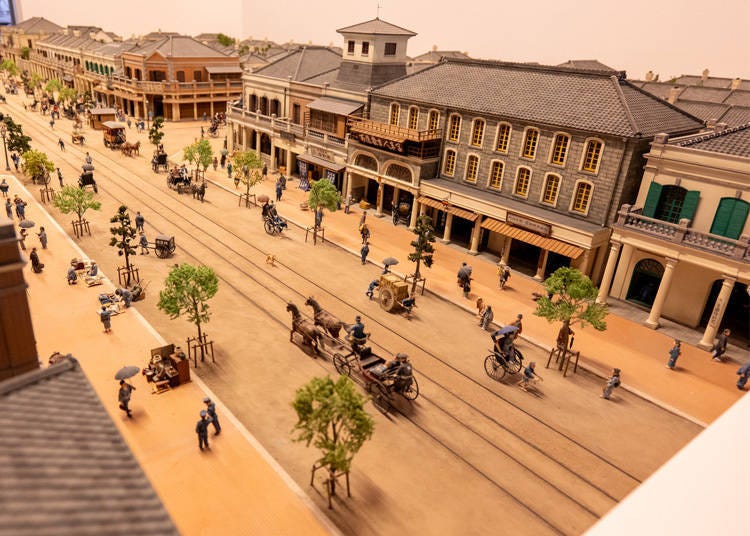
Ginza Bricktown: The Birthplace of Modern Tokyo
As you step into the Tokyo Zone, the atmosphere shifts to one filled with Western-style architecture. Following the Great Ginza Fire of 1872, the Meiji government set out to rebuild the area as a symbol of a modern nation, commissioning British architects to transform the stretch from Shimbashi to Tsukiji into a fire-resistant “Ginza Bricktown.”
With more than 150 newspaper companies, including the well-known Choya Shimbun, this district became a hub for media, public discourse, and the spread of Western culture.
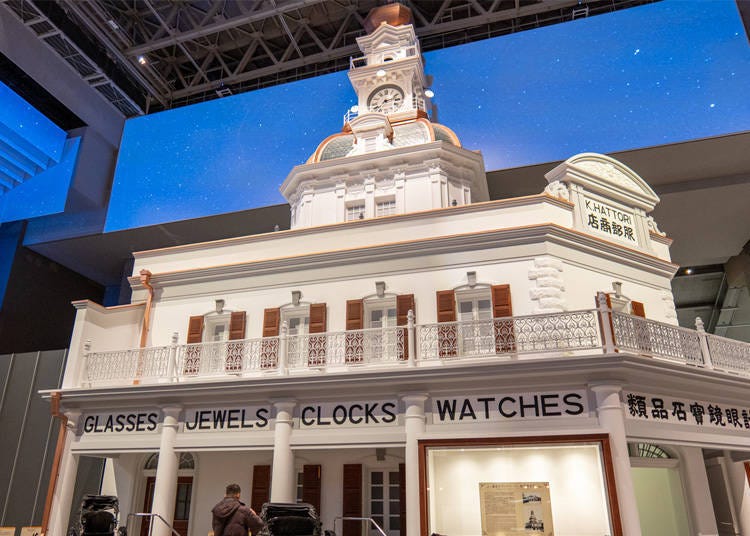
Hattori Clock Tower: A Timeless Symbol of Ginza
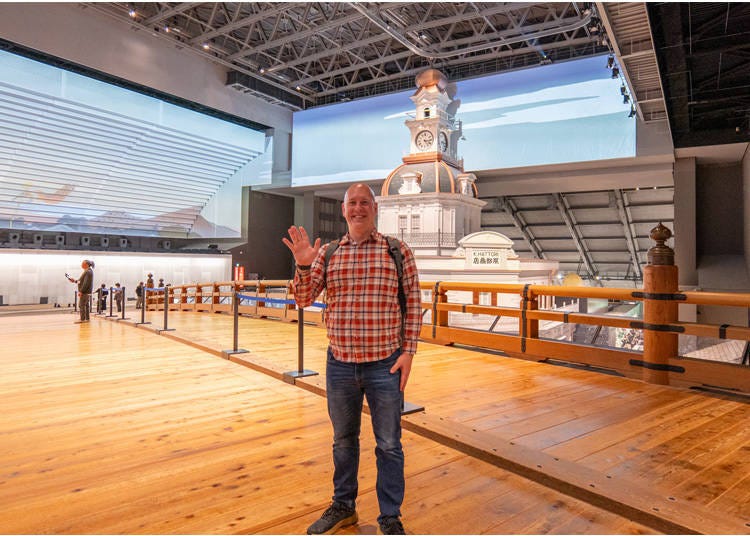
At the corner of Ginza 4-chome stands a detailed model of the Hattori Clock Tower, now known as Wako, telling a story of time, resilience, and reinvention.
The first clock tower was built in 1894, when founder Kintaro Hattori acquired the former Choya Shimbun building and had it redesigned by a U.S.-trained architect. A tower fitted with a four-faced Swiss clock was added, creating a new landmark for Ginza. Though designed with earthquake resistance in mind, the building was later demolished for redevelopment.
Construction of the second building was interrupted by the Great Kanto Earthquake, but it was eventually completed in 1932. Blending Western design with a robust structure, it survived wartime air raids and remains one of Ginza’s most iconic landmarks today.
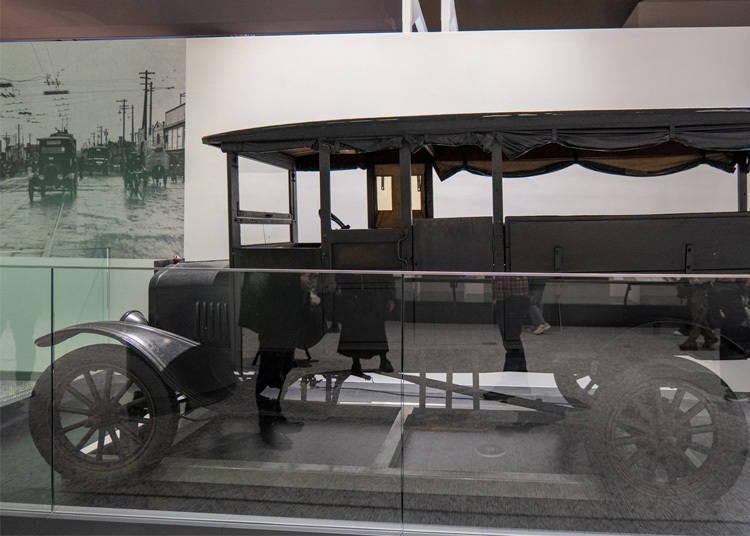
Transport and Nostalgia: The Entaro Bus and Everyday Essentials
The Entaro Bus on display is a rare piece of mechanical heritage. Introduced after the Great Kanto Earthquake as a substitute for disrupted rail services, it played a key role in keeping the city moving during a time of crisis, marking an important turning point in Tokyo’s transportation history.
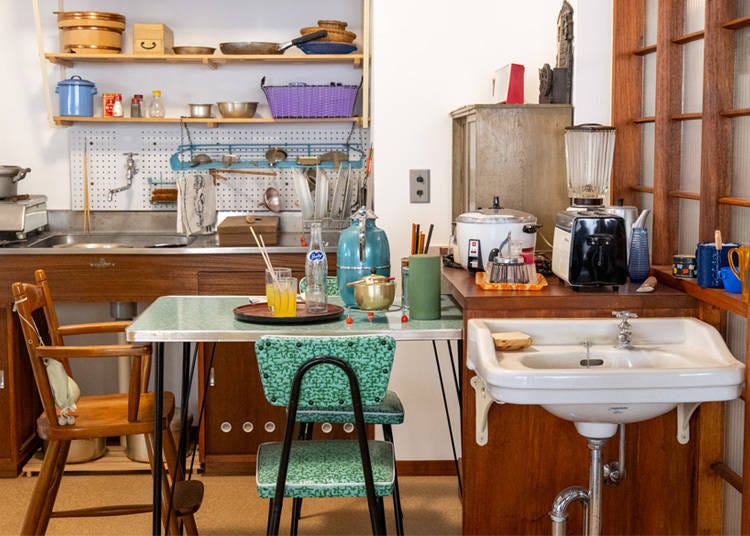
Showa-Era Nostalgia: Step into this section and it feels like a scene from Always: Sunset on Third Street. The exhibit recreates the dream home of a 1950s Japanese family, centered around the “three sacred treasures” of the time: a black-and-white TV, washing machine, and refrigerator.
At a time when a new graduate earned just 10,000 yen a month, a television could cost as much as 200,000 yen. Yet during Japan’s period of rapid economic growth, ownership soared from just 1% to 54% in only five years, reflecting a dramatic improvement in everyday life.
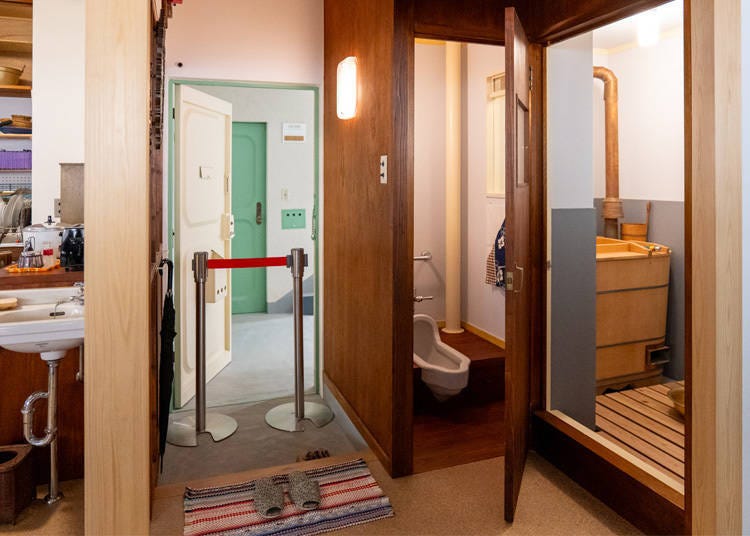
Changing Homes: From Nagaya to Detached Houses in Yamanote
After the Meiji era, housing in Tokyo began to evolve. Detached homes with gardens, influenced by samurai residences, became popular in the Yamanote area and suburbs, especially among office workers.
Meanwhile, merchants and artisans in the downtown districts adapted by developing more modern nagaya and machiya-style homes, featuring separate kitchens and hallways. These designs reflect how Tokyo residents flexibly adjusted to the demands of a changing, modern lifestyle.
Special Exhibitions: Time-Spanning Themed Experiences
In addition to its impressive permanent displays, the museum regularly hosts special exhibitions centered on a range of themes, offering fresh ways to experience its rich collection.
Featured Exhibitions and Highlights
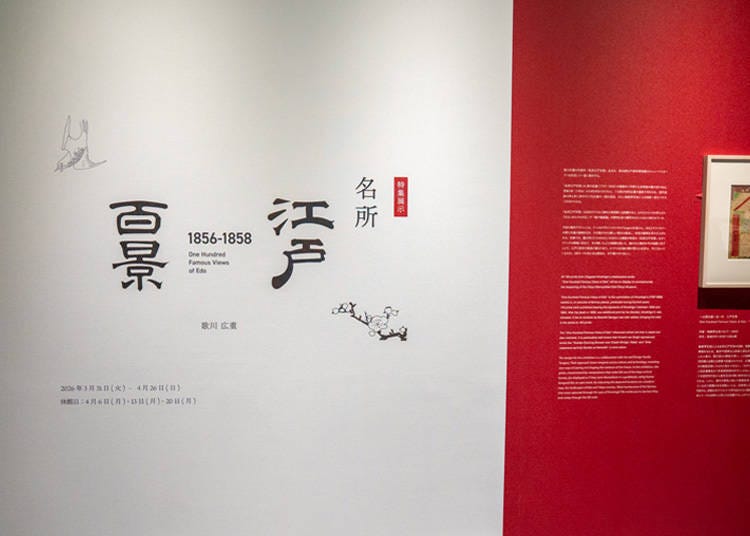
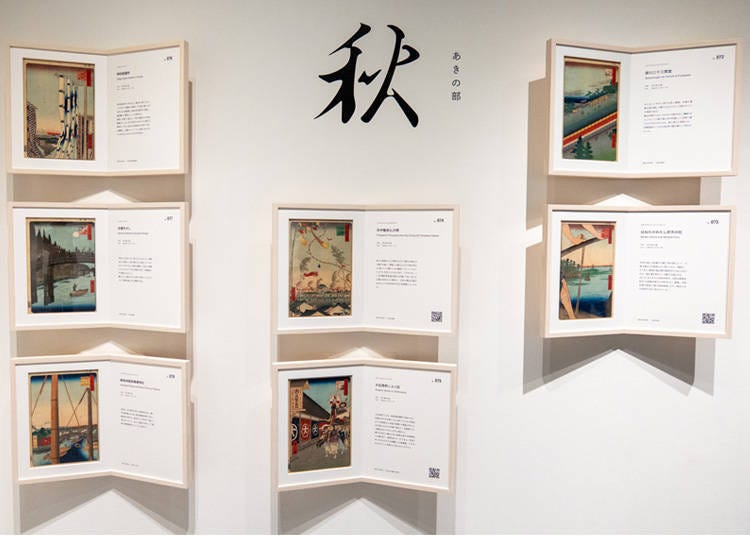
One Hundred Famous Views of Edo: This exhibition showcases one of the most celebrated ukiyo-e series by Utagawa Hiroshige, capturing the changing seasons of Edo in remarkable detail. It is widely regarded as a masterpiece of ukiyo-e art.
・Dates: March 31 – April 26
Samurai Pride: Edo-Tokyo Museum Armor Collection
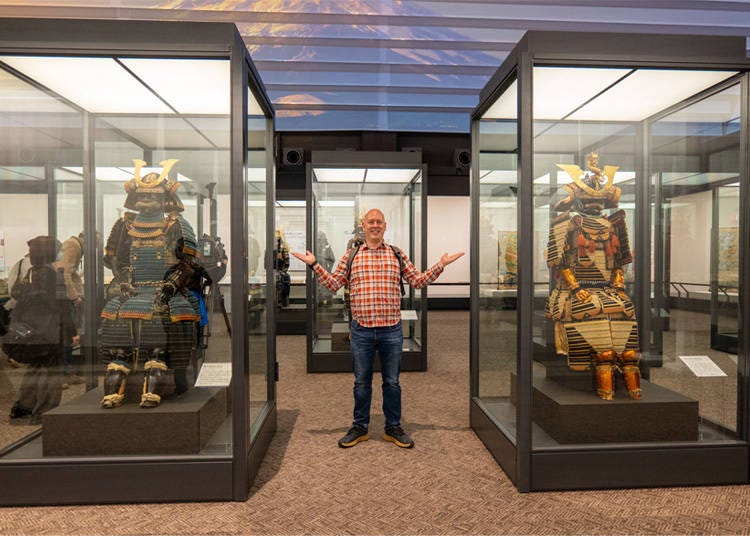
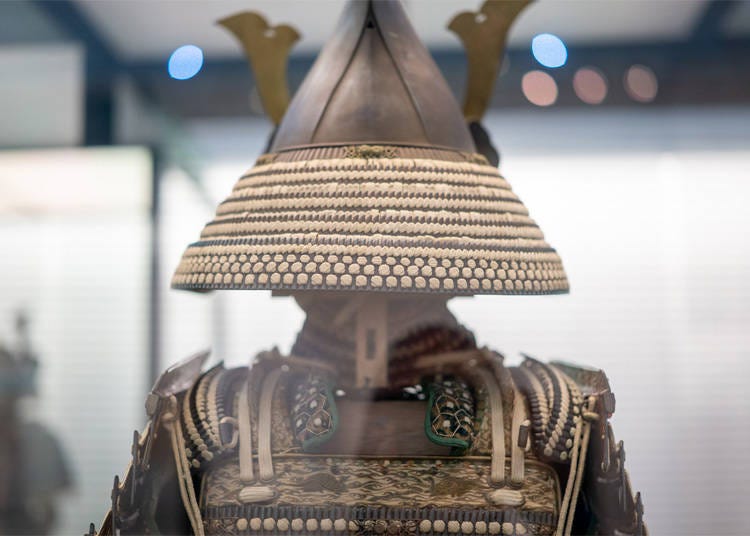
This exhibition features 11 exceptional suits of samurai armor from the museum’s collection, offering a close-up look at the power, prestige, and intricate metalwork of the Edo-period warrior class.
・Dates: March 31 – May 10
- Edo Revered: Celebrating the Spirit of a Great City
- A major exhibition marking the museum’s grand reopening, offering a comprehensive look at the aesthetic and cultural richness of Edo. It’s a must-see for understanding the roots of Tokyo.
・Dates: April 25 – May 24
- Gifts from the People: New Acquisitions 2021–2025
- This exhibition features recently acquired items donated by the public between 2021 and 2025. Each piece reflects everyday life and the shared memories of Tokyo’s residents.
・Dates: April 25 – May 17
- Western Architecture: Meiji-Era Dreams and Challenges
- Focusing on the architectural transformation following the Meiji Restoration, this exhibition explores the rise of Western-style buildings in Japan.
・Dates: June 23 – August 23
- NHK Taiga Drama Special: The Toyotomi Brothers
- Held in conjunction with an NHK taiga drama, this exhibition presents historical artifacts from the late Sengoku to early Edo period, exploring the Toyotomi family and a pivotal era of change.
・Dates: September 15 – November 8
- Maruyama Okyo: Beyond Realism, A Spatial Revolution
- This exhibition highlights Edo-period master Maruyama Okyo, known for his realism, and explores how his precise observation created striking spatial depth in screens and hanging scrolls, redefining Japanese painting.
・Dates: November 28 – January 24, 2027
Immersive Experiences: Don’t Just See History, Interact with It
One of the Edo-Tokyo Museum’s biggest draws is how it breaks away from the “look but don’t touch” approach of traditional museums.
Throughout the exhibits, you’ll find a wide range of hands-on displays designed to make history feel tangible and engaging.
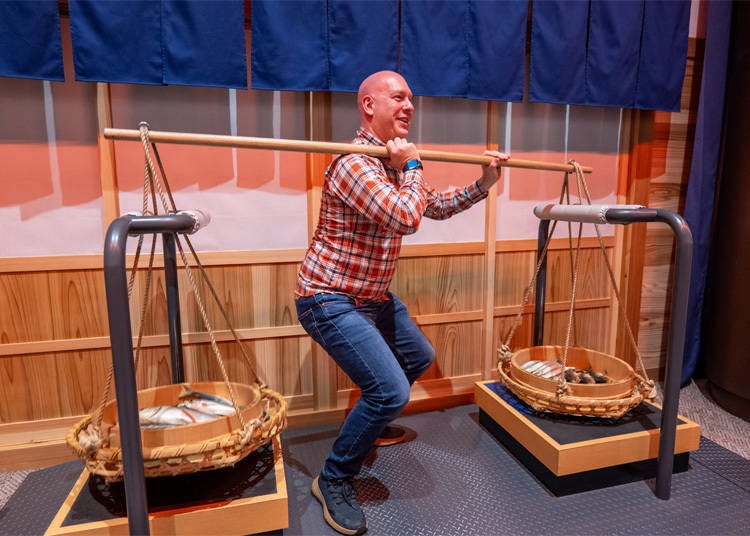
Feel the Weight of Edo Craftsmanship
Pole Vendor Experience: In the Edo period, mobile street vendors known as “botefuri” carried goods like fish and vegetables through the streets using shoulder poles.
At the museum, you can try lifting one of these poles yourself, giving you a real sense of the weight they carried each day and the physical demands of everyday life in Edo.
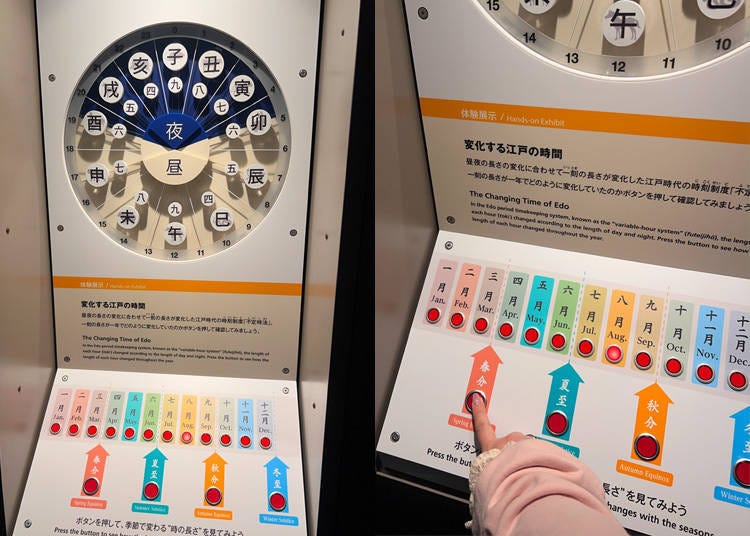
Hands-On Learning: Discover Edo-Era Ingenuity
Seasonal Timekeeping Interactive: Time in the Edo period wasn’t fixed like it is today. Instead, it followed a system that adjusted with the length of day and night throughout the year.
At this interactive display, you can press buttons to see how the length of a single time unit changes across the seasons, offering a simple but fascinating look at how people once experienced time.
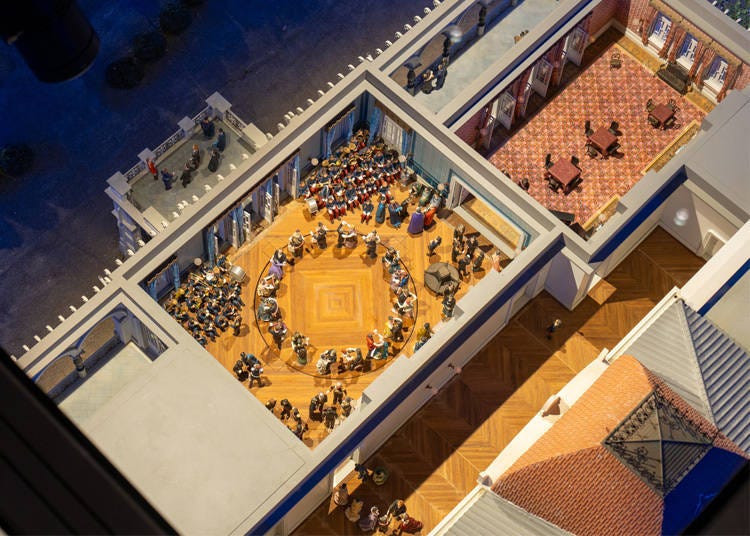
Dynamic Model Displays: Many of the museum’s detailed architectural and street models aren’t just static exhibits. Some come to life through scheduled demonstrations or at the push of a button, recreating the movement and atmosphere of the city as it once was.
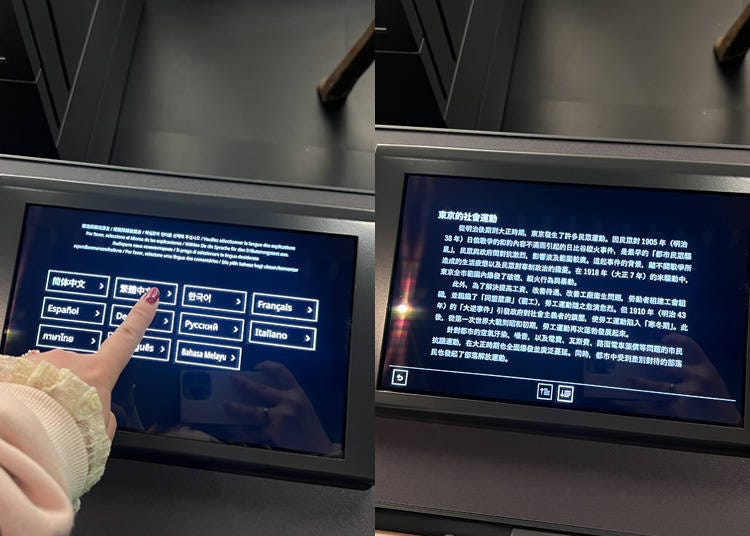
Accessible and Multilingual-Friendly Design
Multilingual Information Panels: Explanatory panels throughout the museum are clearly presented in multiple languages, making it easy for international visitors to understand the stories behind each exhibit.
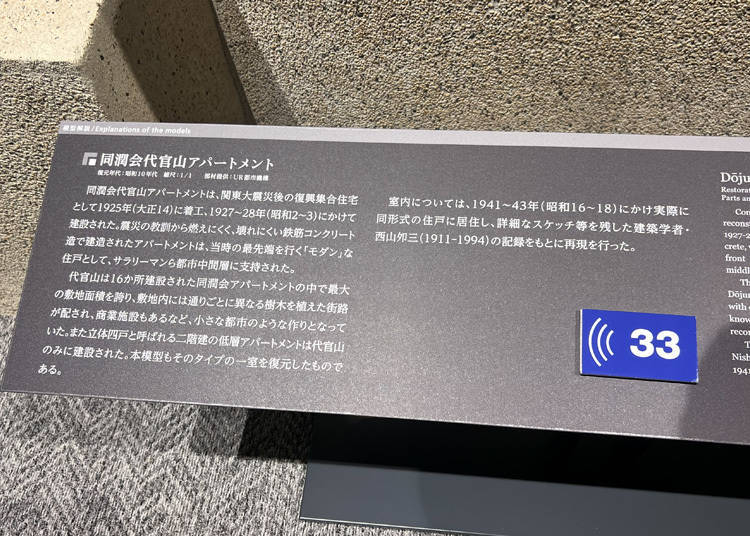
Audio Guides in 13 Languages: The permanent exhibition offers audio guides in up to 13 languages. Simply scan a QR code with your smartphone to access detailed explanations, making it easy to explore without any language barriers.
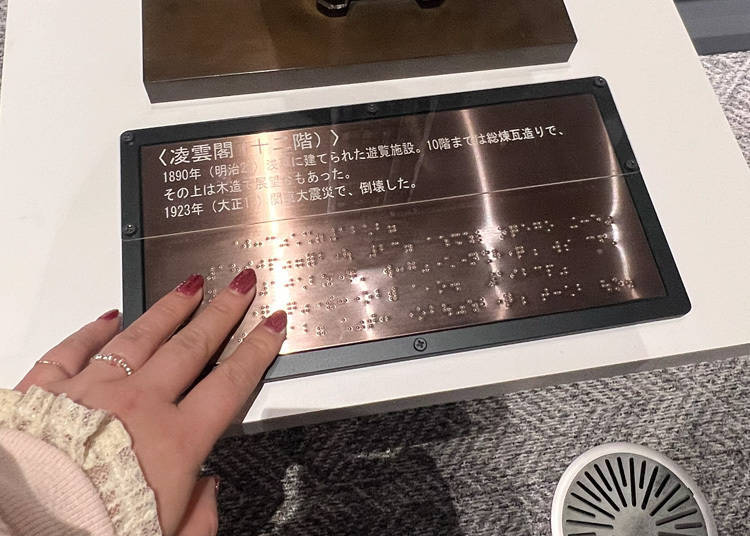
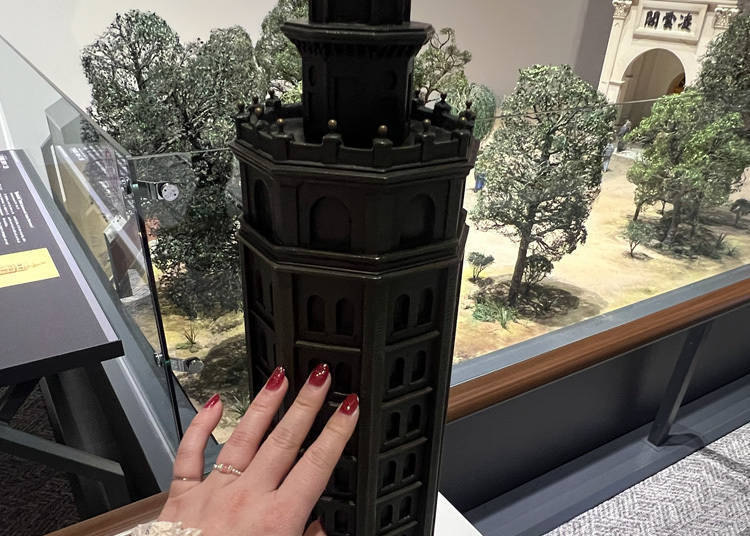
Visual and Tactile Accessibility: The museum places strong emphasis on universal design. Near select large-scale exhibits in the permanent gallery, you’ll find Braille descriptions alongside smaller, touchable models.
These features allow visitors with visual impairments to explore the shapes and structures through touch, creating a more inclusive and multi-sensory experience.
Dining and Souvenir Shops: Taste Tokyo’s History
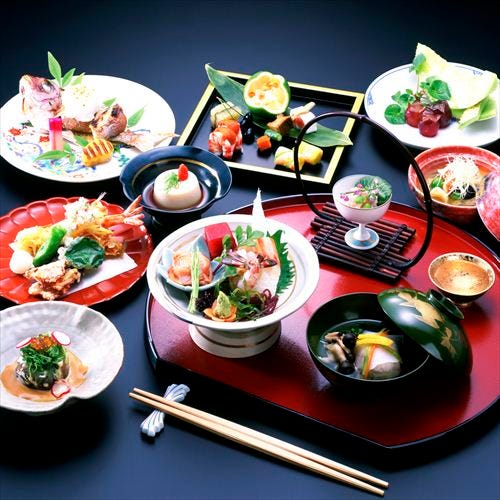
After exploring centuries of history, take a break and enjoy a taste of Tokyo within the museum’s unique setting. The dining options here go beyond just good food, offering dishes that reflect the evolution of Tokyo’s food culture from the Edo period to the present day.
Japanese-Style Dining: KOYOMI
If you’re looking to experience authentic Edo and Tokyo flavors, this is the place to go.
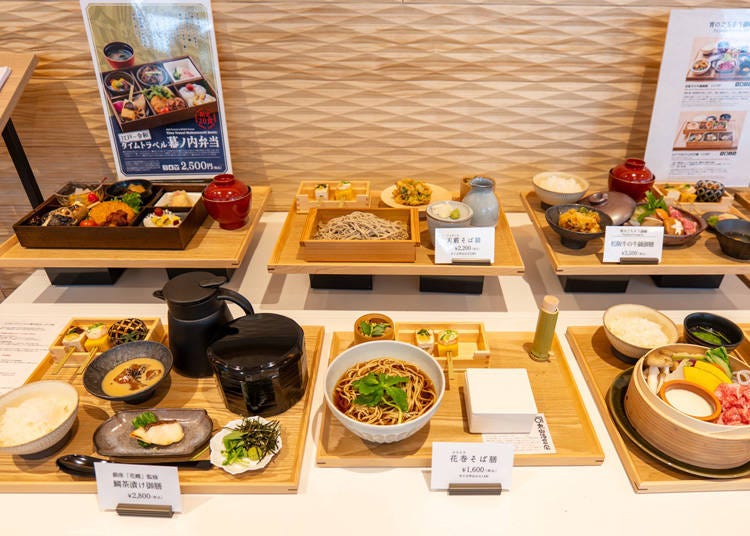
Edo Meets Ginza: The restaurant features a refined “Japanese-modern” design, serving classic Edo favorites like soba, tempura, and sushi, alongside Western-inspired Japanese dishes that rose to popularity in Ginza.
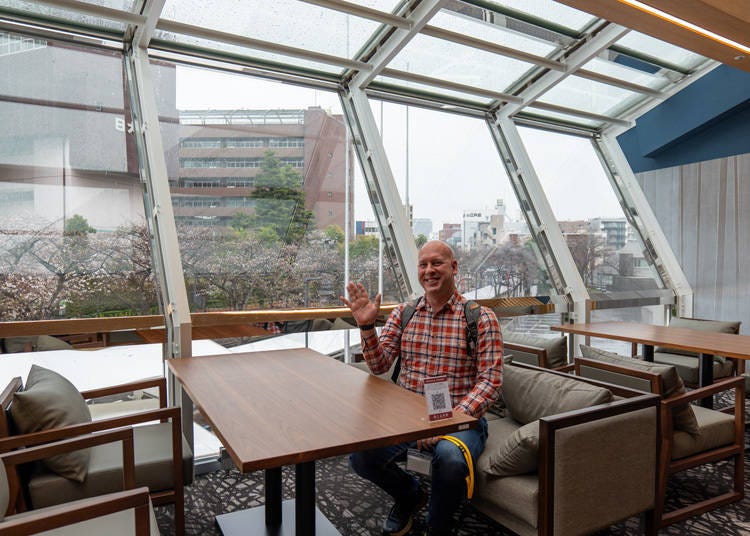
Seasonal Views: Located on an upper floor, the restaurant offers a prime setting. During cherry blossom season, rows of blooming sakura outside the windows create a stunning backdrop, adding a seasonal touch to your meal.
Special Feature: A Time-Traveling Bento Experience
To celebrate the reopening, the museum held a public contest for the “bento you most want to eat at Edo-Tokyo Museum.” Out of around 70 entries, the top-winning creation has been turned into an official menu item.
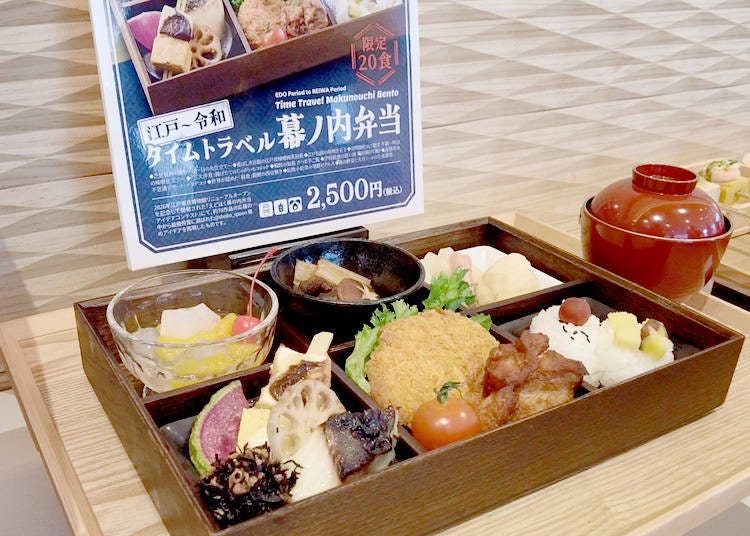
“Edo-Tokyo Time Travel Makunouchi Bento: Edo to Reiwa”: This thoughtfully curated bento is like an edible history book. It begins with rice balls once enjoyed during theater outings in the Edo period, moves through Meiji-era beef hot pot that symbolized Western influence, includes wartime sweet potato rice, and finishes with plant-based meat representing future food trends.
In a single meal, you can trace the evolution of Japanese food culture through time. (Note: This bento is available for a limited time and in limited quantities. Please check the official website for details.)
Break Time: ippuku cafe
The name “ippuku” comes from the Japanese phrase kissa ippuku, meaning to pause for a cup of tea and a short rest during or after your visit.
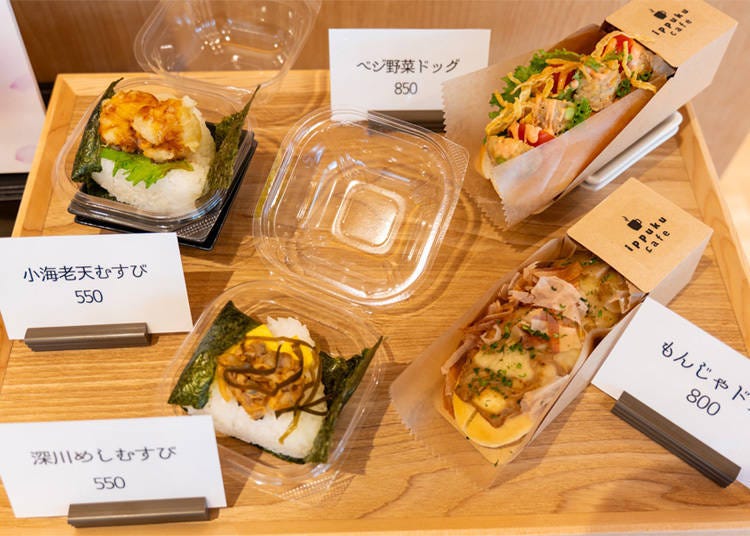
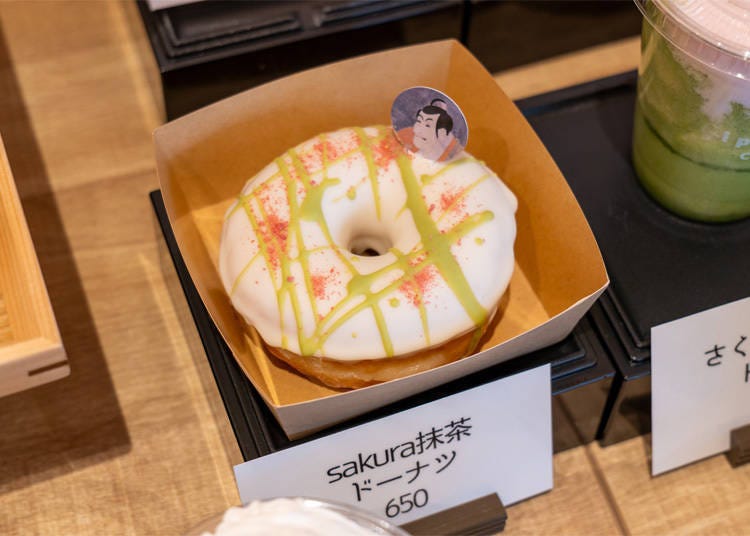
Creative Light Bites: Alongside classic Japanese sweets like matcha and red bean treats, the café also offers inventive light bites with a local twist. Options include Japanese rice balls and a monjayaki-style hot dog inspired by Tokyo’s specialty flavors, perfect for a casual and fun taste of Edo-Tokyo cuisine.
Souvenir Shop: Take a Piece of Edo Home
Before you leave, be sure to stop by the thoughtfully curated gift shop.
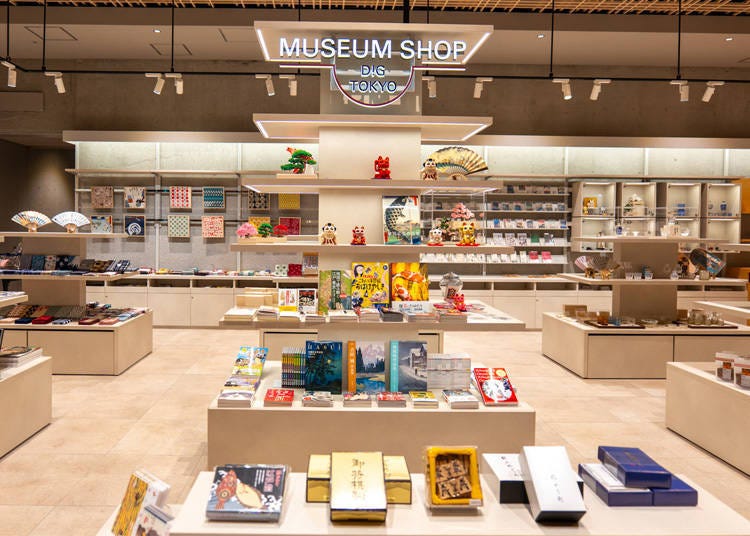
Original Designs: You’ll find a range of original items inspired by the Edo-Tokyo Museum’s collection, blending visual appeal with meaningful cultural elements.
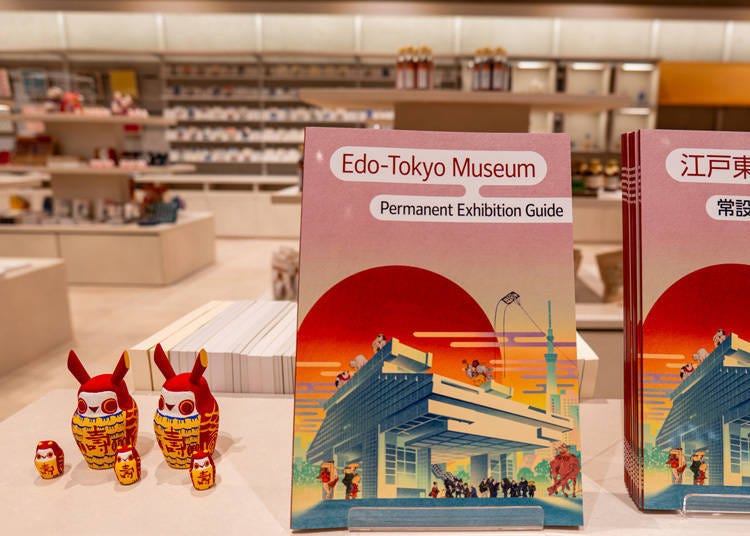
Publications and Books:If you’re eager to dive deeper, the museum also offers detailed exhibition catalogs and historical publications, letting you take a deeper understanding of Tokyo’s past home with you.
Visitor Information
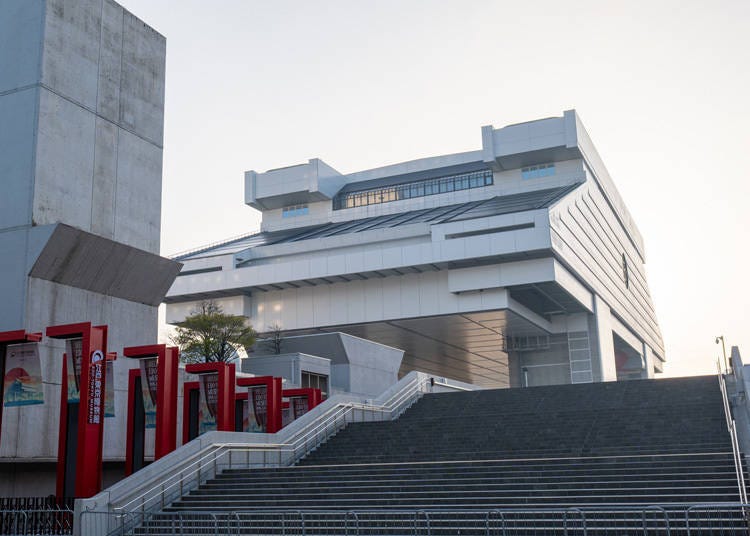
Address:
1-4-1 Yokoami, Sumida City, Tokyo 130-0015
Access:
・3 min walk from JR Sobu Line Ryogoku Station (West Exit), or 7 min from East Exit
・1 min walk from Ryogoku Station on the Toei Oedo Line (A3/A4 exits)
・Take Toei Bus routes Kin 27, Ryo 28, Mon 33, or the Sumida City Loop Bus (Sumimaru-kun / Sumirin-chan, South Route) and get off at Toei Ryogoku Station (Edo-Tokyo Museum-mae), then walk 3 min
Hours:
9:30 AM – 5:30 PM
Saturdays: 9:30 AM – 7:30 PM
Last admission 30 minutes before closing
Closed:
・Mondays (or the following day if Monday is a public holiday)
・Year-end and New Year holidays
-

-
Address
1-4-1, Yokoami, Sumida-ku, Tokyo, 130-0015
View Map -
Nearest Station
Ryogoku Station (Toei Oedo Line / JR Sobu Line)
1 minute on foot
- Phone Number 03-3626-9974
-
Address
1-4-1, Yokoami, Sumida-ku, Tokyo, 130-0015
FAQ: Helpful Tips Before You Visit
To help make your “time-travel” experience as smooth as possible, here are a few common questions to know before you go.
Q1: Do I need a reservation?
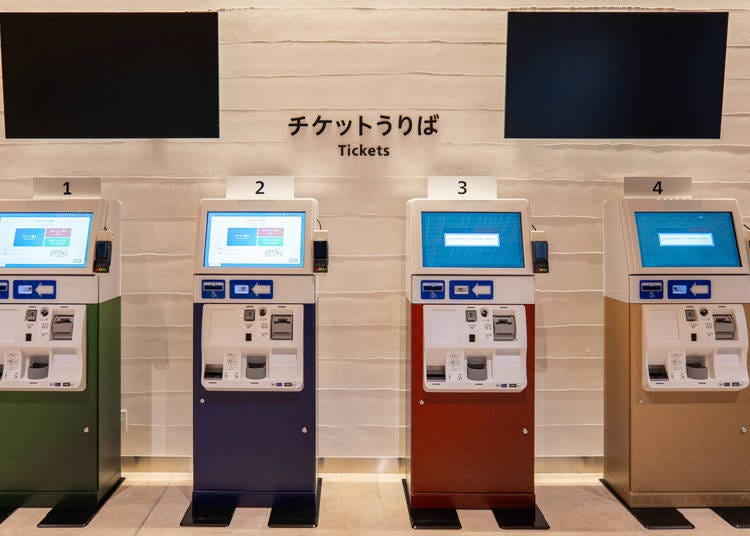
No reservation is required. You can purchase tickets on-site, but booking in advance online is recommended for a smoother entry.
Note: Some popular special exhibitions may require separate timed-entry tickets, so be sure to check the official website in advance.
Q2: Is photography allowed?
Photography is permitted in most areas of the permanent exhibition. However, flash, tripods, and selfie sticks are not allowed.
Note: Certain special exhibitions or loaned items may have stricter no-photography rules, so please follow on-site signage.
Q3: How much time should I plan for my visit?
With such a wide range of exhibits, it’s best to allow at least 2–3 hours for a quick visit.
If you enjoy history and want to explore in depth, including reading exhibits and trying interactive displays, plan for half a day to a full day.
Q4: Is it convenient to visit with luggage or strollers?
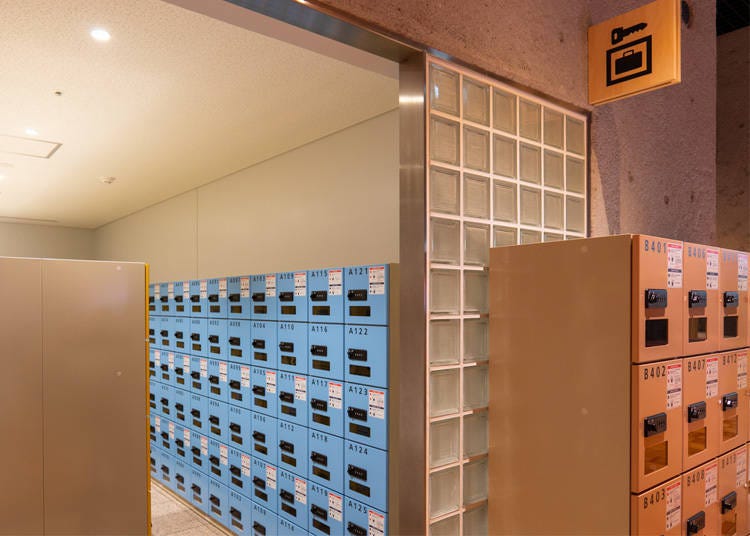
Yes. Coin lockers are available for storing luggage. The museum is also spacious and equipped with elevators, making it easy to navigate with strollers or wheelchairs.
Q5: How do I get to the Edo-Tokyo Museum?
It’s very easy to access. Take the JR Sobu Line or Toei Oedo Line to Ryogoku Station, then walk about 3–5 minutes to reach the museum’s distinctive elevated structure.
Where Past and Present Meet
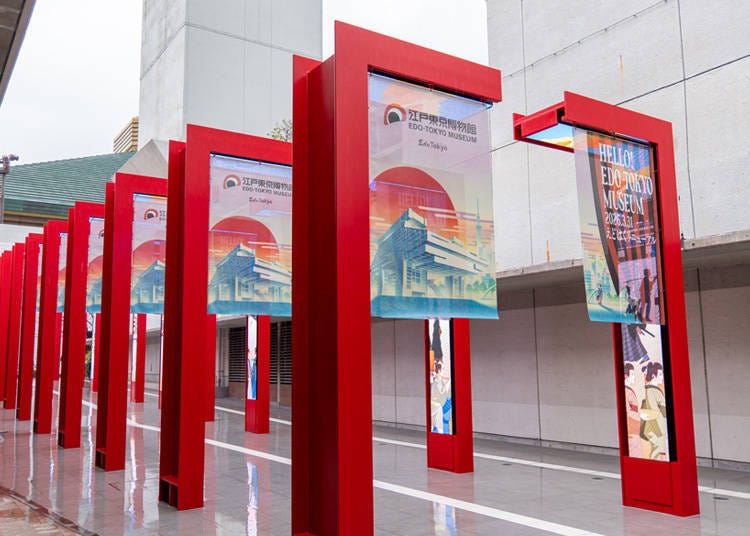
The reopening of the Edo-Tokyo Museum is more than the return of treasured artifacts. It marks the revival of a cultural cornerstone that reflects the spirit of Tokyo. Spanning over 400 years, it serves as a bridge between the city’s vibrant past and its evolving future.
Whether you’re drawn to bold architectural design, eager to uncover historical stories, or simply looking to capture memorable photos in immersive settings, this museum offers something for everyone.
Standing beneath its elevated structure and feeling the breeze from Ryogoku, you may come away with a deeper realization. Tokyo’s enduring appeal lies in how it continues to move forward without ever losing sight of its roots.
▼ Explore more nearby attractions ▼


The LIVE JAPAN editorial team is a multinational group made up of native editors who have lived in Japan for over five years and Japanese editors who love to travel. Together, we share the best of Japan, offering cultural insights, historical context, event updates, and travel-friendly deals, to support your journey every step of the way.
- Area
- Category
*Prices and options mentioned are subject to change.
*Unless stated otherwise, all prices include tax.
Popular Tours & Activitiess
Recommended places for you
-
Ad
Embrace Japanese Aesthetics and Tradition with the CITIZEN SAKURA Limited Edition and Other Popular Models
-
2026 Japan Cherry Blossom Report: Tokyo Beginning Bloom
-
Ad

Celebrate the Arrival of Spring at Tokyo Midtown Hibiya with HIBIYA BLOSSOM 2026
-
Japan’s Luxury Rail Journey: Explore Hiroshima, Miyajima & Iwakuni on the "Hanaakari"
by: Guest Contributor
-

SILK AND ILY DONUT: Tokyo's New, Laid-Back Waterfront Shop Is A Real Treat
by: Timothy Sullivan
-
Ad
Enjoy Tokyo's Hidden Gem! Katsushika: Where Anime, Kawaii Culture & Real Tokyo Vibes Meet (2026 Guide)
by: Yohei Kato
-
Japan's Bath Culture: Tips You Should Know!
-
8 Unfamiliar (But Totally Normal) Customs in Japan!
-
Tokyo Station Top 10 Sweets Ranking!
-
Atami 1-Day Itinerary: Exploring Japan's Castle & Hot Springs Resort Town Near Tokyo!
-
Easy Day Trip from Tokyo! Ultimate Sightseeing Guide for Hakone & Lake Ashinoko!
-
Healthcare in Japan for Tourists: What to Do When You Get Sick or Injured in Japan
- #best ramen tokyo
- #what to buy in ameyoko
- #what to bring to japan
- #new years in tokyo
- #best izakaya shinjuku
- #things to do tokyo
- #japanese nail trends
- #what to do in odaiba
- #onsen tattoo friendly tokyo
- #daiso
- #best sushi ginza
- #japanese convenience store snacks
- #best yakiniku shibuya
- #japanese fashion culture
- #best japanese soft drinks