




Japanese is a challenging language to learn, but that shouldn’t stop you from expressing yourself!
Here we’ll introduce some words and Japanese language phrases you can use when you want to express your opinion or feeling in Japanese (physical or otherwise), as well as how to ask others.
- How are you? (Literal meaning: Are you well?)
- genki desu ka? /元気ですか。
For the most basic way to say how you feel in Japanese, use the following pattern:
"adjective + desu"
Feel free to omit the pronoun (I, you, he, etc.), as it is usually implied in most situations when using Japanese. You should generally try to avoid the word 'you' (あなた anata) altogether when speaking Japanese, as it can denote over-familiarity. When in doubt, the person's name with a 'san' (さん) attached is always a safe bet.
Describing How You Feel in Japanese

(I am)___ . / (She is)___ . /(He is)____ .
(watashi wa) / (kanojo wa) / (kare wa)___ desu.
(私は) / (彼女は) / (彼は) ___です。
- fine, well
- 元気 (genki)
- not feeling well
- 気分が悪い (kibun ga warui)
- sleepy
- 眠い (nemui)
- tired
- 疲れた (tsukareta)
- excited
- わくわくする・ワクワクする (waku waku)
- bored
- 退屈 (taikutsu)
- sad
- 悲しい (kanashii)
- lonely
- 寂しい (sabishii・samishii)
- angry
- 怒っている (okotteiru)
- I'm sleepy
- (私は)眠いです / (watashiwa) nemui desu
You can use the following expressions to talk about hunger or thirst. In Japanese, you won't find direct translations of the terms "hungry" or "thirsty." Instead, these concepts are described in relation to one's stomach or throat.
- hungry (Literal meaning: stomach is empty.)
- お腹が空いた / onaka ga suita
- thirsty (Literal meaning: throat is dry.)
- のどが渇いた / nodo ga kawaita
- full (Literal meaning: stomach is full.)
- お腹がいっぱい / onaka ga ippai
How To Describe Things Using Japanese
If you would like to describe something else, you can use the following format:
- (It) is___.
- ___desu. / ___です。
- good
- 良い (ii)
- nice
- ナイス (naisu)
- not good
- 良くない (yokunai)
- bad
- 悪い (warui)
- fun
- 楽しい (tanoshii)
- difficult
- 難しい (muzukashii)
- funny, interesting
- 面白い (omoshiroi)
- not funny, not interesting
- 面白くない (omoshirokunai)
- boring
- つまらない (tsumaranai)
- strange
- おかしい (okashii)
- hot (weather)
- 暑い (atsui)
- hot (object)
- 熱い (atsui)
- warm
- 温かい (atatakai)
- cold (weather)
- 寒い (samui)
- cold (object)
- 冷たい (tsumetai)
- quiet
- 静か (shizuka)
- expensive
- 高い (takai)
- cheap
- 安い (yasui)
- cute, pretty
- 可愛い (kawaii)
- beautiful
- 綺麗 (kirei)
- lovely
- 素敵 (suteki)
- wonderful
- 素晴らしい (subarashii)
- terrible
- 酷い (hidoi)
- the worst
- 最悪 (sai aku)
- suspicious, shady
- 怪しい (ayashii)
- unfair
- 狡い (zurui)
- It's hot.
- 暑いです。 / atsui desu
“She's Nice. He’s Cool.” How to Describe Other People in Japanese
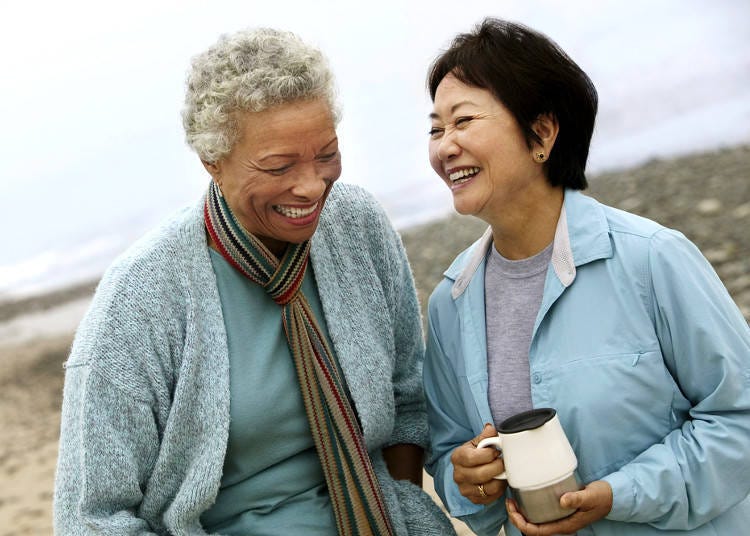
You can also use the same sentence structure to describe people, using either a pronoun, or a name. Once again, the pronoun is considered optional, although it can clarify who you are speaking about, depending on the situation.
- He is ___.
- 彼は___です。 / kare wa___desu.
- She is ___.
- 彼女は___です。 / kanojo wa___desu.
- Yuka is ___.
- 由佳さんは___です。 / Yuka-san wa___desu.
The following are just a few adjectives that can be used to describe a person.
- kind, sweet
- 優しい (yasashii)
- nice
- 親切 (shinsetsu)
- intelligent
- 頭がいい (atama ga ii)
- clever
- 賢い (kashikoi)
- good looking, cool
- かっこいい (kakkoii)
- strict
- 厳しい (kibishii)
- unkind
- 優しくない (yasashiku nai)
- stubborn
- 頑固 (ganko)
- enthusiastic**
- ハイテンション (hai tenshon**)
**This is a wasei-eigo term taken from the English terms 'high tension.' It has nothing to do with 'tension' the way English speakers use the word.
Related Articles on Japanese Language
*Prices and options mentioned are subject to change.
*Unless stated otherwise, all prices include tax.
Popular Tours & Activities
-
Fukuoka: 10 Recommended Apartment Hotels for Comfortable Stays in Hakata, Tenjin, and Beyond
by: Yotsuka Hizuki
-
Start Your Japan Trip Luggage-Free with SAGAWA’s New Narita Airport (NRT) Service
by: Guest Contributor
-
August Events in Kanto: Fun Festivals, Food, and Things to Do
-

Top-Booked by International Visitors: Must-Try Italian & Pizza in Tokyo for First-Time Visitors
by: Guest Contributor
-
The Best Sumo Experiences in Tokyo: Morning Practices vs. Sumo Shows
-
Japan's New GREEN LIFESTYLE TRAIN Connects Tokyo, Yokohama, and a Greener Future
by: Guest Contributor
Inspiration for Accommodations
-

Family-Friendly Hotels with Free Shuttle to Disneyland: Convenient Access for a Magical Stay
-
Top Ranked Hakone Hotels with Mt. Fuji View: Enjoy Stunning Scenery from Your Private Space
-
Convenient Tokyo Hotels with Airport Shuttle: Ideal for Families and Heavy Luggage
-
9 Family-Friendly Hotels with Comfortable Family Rooms in Asakusa
-
10 Open-air bath Onsen Ryokans in Hakone for Ultimate Relaxation
-

Complete Guide to Tokyo Love Hotels: How to Book & What to Know Before You Go Inside
by: Lucio Maurizi
-
Editors Recommend: Top Japanese Beauty and Snack Goods from Ginza's Famous Pharmacy!
-
Tokyo Roppongi: 5 Most Amazing Spots at Roppongi Hills and How to Make the Best of Them!
-
6 Fun Things to Do at Tokyo's World-Famous Tsukiji Outer Market!
-
'Ikebukuro Looks Exactly Like...' Foreigners Reveal Thoughts on Shibuya & Ikebukuro!
-
Yakatabune Boat Cruises in Tokyo Bay: Enjoy an Unforgettable Dinner on a Traditional Japanese Boat
- #best ramen tokyo
- #what to buy in ameyoko
- #what to bring to japan
- #new years in tokyo
- #best izakaya shinjuku
- #things to do tokyo
- #japanese nail trends
- #what to do in odaiba
- #onsen tattoo friendly tokyo
- #daiso
- #best sushi ginza
- #japanese convenience store snacks
- #best yakiniku shibuya
- #japanese fashion culture
- #best japanese soft drinks