





What is 'Craft Sake'? Learning Directly from Tochigi's Master Brewers
- Written by: Timothy Sullivan
Ahead of CRAFT SAKE WEEK, we traveled to Tochigi Prefecture to visit two of the region’s most respected breweries: Kobayashi Shuzo and Senkin.
Neither typically offers public tours. That made this a genuinely unique opportunity, not just to taste sake, but to step inside the kura and experience the process firsthand, guided by the brewers themselves.
(Main image: Timothy Sullivan/LIVE JAPAN)
How a Love of Sake Led Me Across Japan
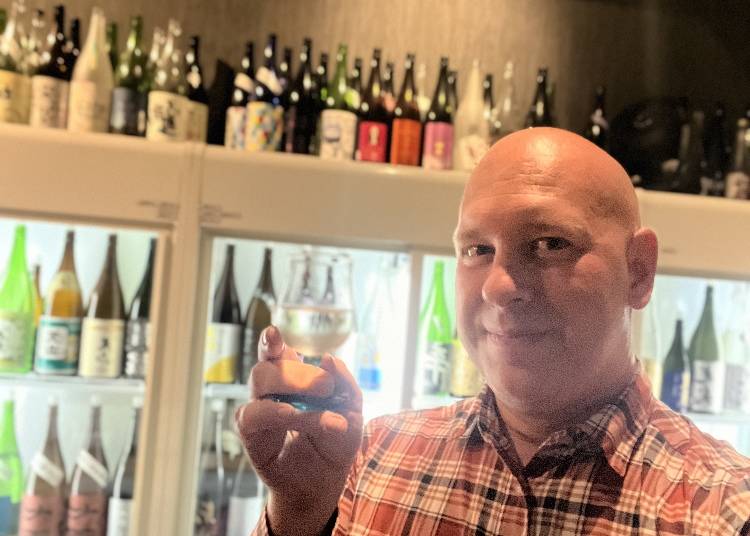
For over 17 years, I have adored the world of sake. From Hokkaido to Kyushu, many of my travels around the country have led me to peaceful, more rural areas, and whenever I note that a place is surrounded by rice fields, I tend to search around for the local sake brewery.
While many breweries do not offer tours without contact in advance, many have a sales section where you can get a sense of the brewery and its products. And, for me, this is also a great chance to meet some of the people of the brewery and understand their character.
Now, in the world of sake brewing, there is a long-standing system centered around the toji, or master brewer. Toji oversee every stage of the brewing process. Historically, they formed regional guilds (known as ryuha), where they shared techniques, trained kurabito (brewery workers), and organized seasonal labor, among other things. While more than 30 toji guilds have existed across the Japan, the most influential are known as the “Three Great Toji”: Nanbu Toji (Iwate Prefecture), Echigo Toji (Niigata Prefecture), and Tamba Toji (Hyogo Prefecture).
While many breweries have shifted toward having in-house toji and year-round employed staff, there remains a strong exchange of brewing techniques among local brewers, and, often, a strong, supportive relationship with mutual respect.
“Craft Is the Maker’s Atmosphere” (Kobayashi Shuzo/Hououbiden)
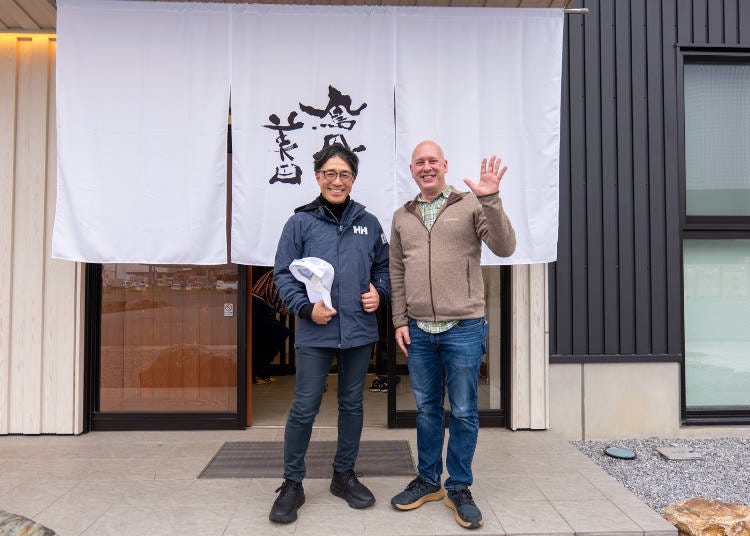
At Kobayashi Shuzo, we were welcomed by CEO Masaki Kobayashi and his wife, and toji, Mayumi Kobayashi. Previously an instructor with the Nanbu Toji, Mayumi brings a wealth of skill and knowledge, and her direction has helped elevate Kobayashi Shuzo’s signature brand, Hououbiden, to become a greatly respected sake. Established in 1872 in Oyama, Tochigi, the brewery is located in a small village surrounded by vast green fields of rice. Now, Kobayashi Shuzo has two brewery facilities: a modern plant complete with equipment that helps tightly monitor and regulate each stage of production, and an older facility that produces sake with much more hands-on intervention.
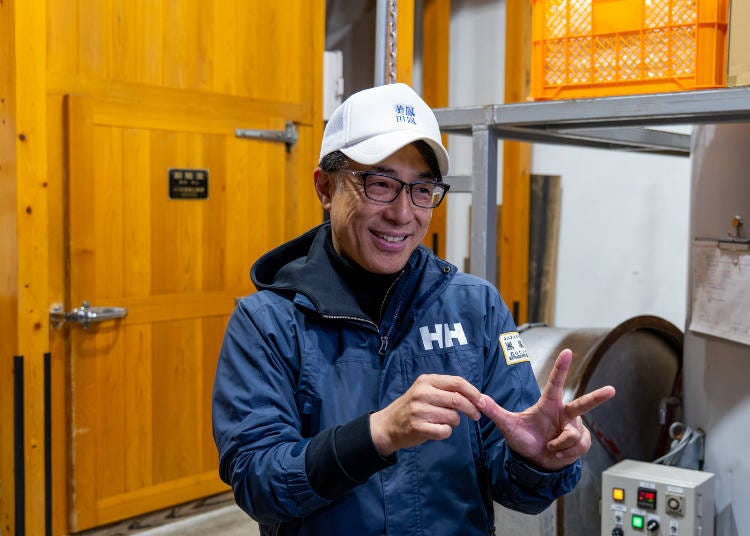
Their philosophy came through immediately. “When I think about craft sake,” Masaki explained, “it’s about how the maker’s atmosphere, their energy, even their sense of style, is reflected in the sake.” Masaki and Mayumi both have friendly, genuinely warm smiles and a calm yet powerful aura around them.
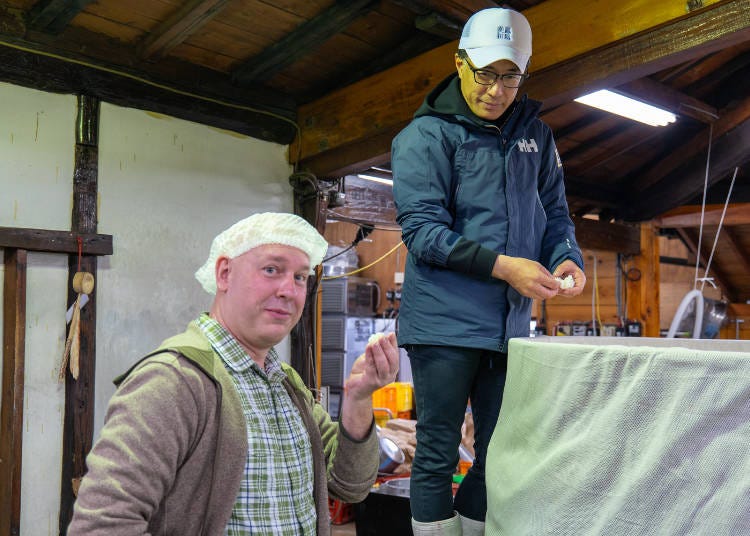
As we moved through the brewery, I quickly understood this wasn’t a passive tour. At nearly each stage, we were encouraged to engage directly with the process, to touch, smell, and even taste along the way. I have joined several brewery tours in the past, but this was the first time to really enjoy a hands-on experience—very rare indeed.
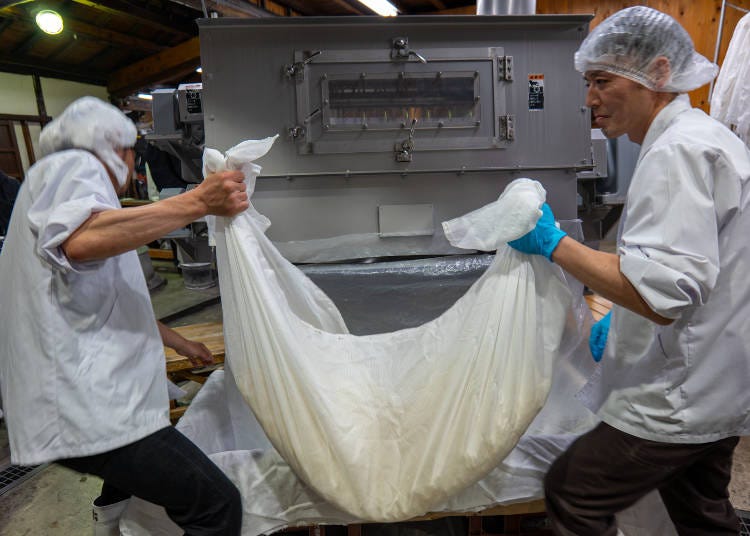
Traditionally brewed sake has only four ingredients: rice, koji (a specialized mold), kobo (a specialized yeast), and water. It is the characteristics of each ingredient that lends to the final product.
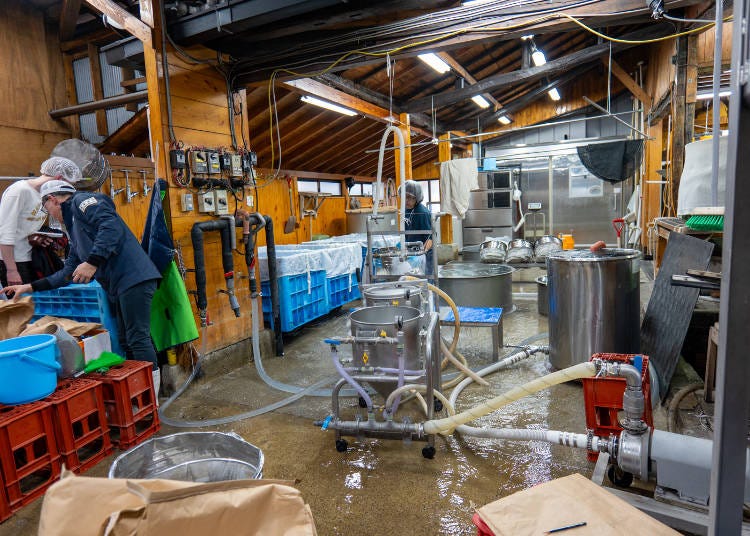
Brown rice is “polished” in a process that removes the outer layers of each grain to eliminate fats and proteins that would alter the sake’s flavor profile. Ginjo sake, which is what Kobayashi Shuzo produces, requires at least 40% of the outer layer (bran) to be removed. After this, rice is rested before being washed, then soaked and steamed. As Masaki explained about the process, the sound of water was omnipresent, from whooshing jets of water to the calming trickle of water running into drains.
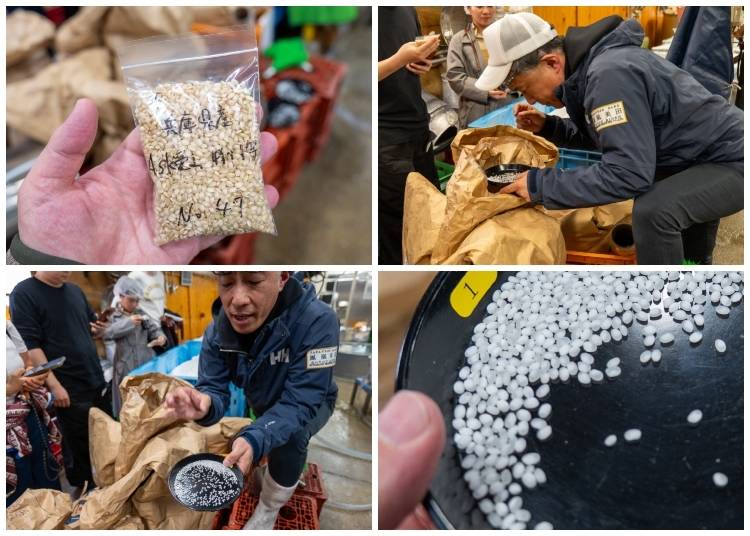
We handled freshly polished rice, including Ayama milled to 55% (meaning 45% of the outer layer has been removed), noticing its transparent texture. We handled steamed rice; slightly crisp on the outside. We were invited to give it a feel and even taste: firm texture with each grain distinct—very different from the familiar chew of soft sushi rice.
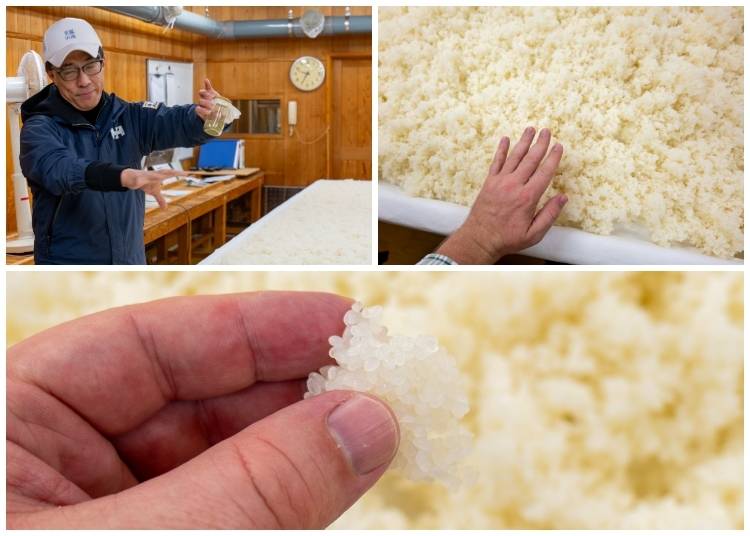
As we moved through the process, we entered the koji room. I kidded that it felt like a sauna, as its temperature was held at around 40°C (104°F) - the air itself feeling alive, humid, slightly sweet, and layered with something deeper, slightly floral but almost nutty. Koji, Masaki emphasized, is where sake’s character is truly formed. Watching the process up close made that clear. Each grain must be carefully inoculated, often by hand, ensuring the mold develops evenly. “Koji determines the structure (of the sake),” he explained, while yeast shapes the aromatics.
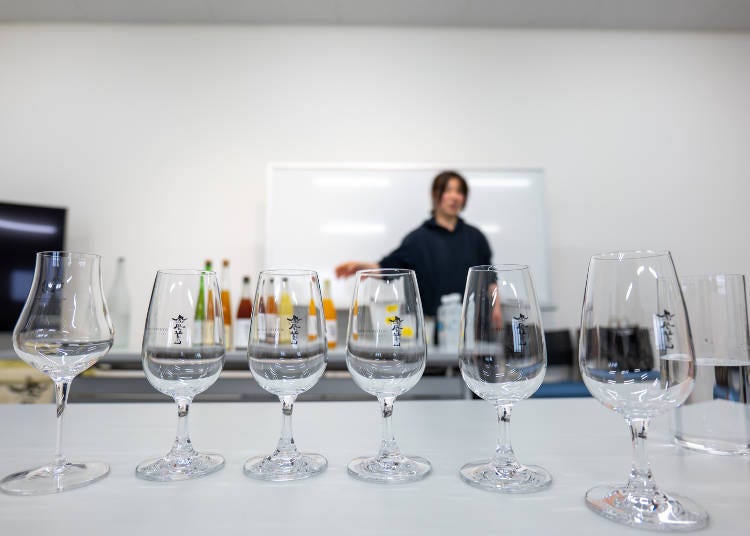
Subtle choices became easier to understand when experienced physically. How long and at what temperature a particular process is conducted, has dramatic consequences on the sake profile. That sensory approach extends all the way to the final product.
“Sake changes very quickly,” Masaki noted. “If you pour a glass and drink it right away, and then again after just a few minutes, the impression can be completely different.”
On April 29, Kobayashi Shuzo will present three distinct types of Hououbiden at CRAFT SAKE WEEK, including a rare, unexpected selection that’s sure to impress both first-time drinkers and seasoned enthusiasts.
-
Kobayashi Shuzo小林酒造
-
Address
743-1 Soshima, Oyama, Tochigi 323-0061
View Map
Website: https://hououbiden.jp/
-
Address
743-1 Soshima, Oyama, Tochigi 323-0061
- Visiting a sake brewery can involve a certain degree of preparation.
- Avoiding strong scents (perfume, cologne, hair products, strong fabric softeners, tobacco smoke) is crucial, as these can interfere with others’ appreciation of the delicate aromas of sake. Also, avoiding strong-tasting drinks, such as coffee, before tasting at a brewery can help you enjoy the flavors more fully.
- If you are planning to tour the brewery process, ensure that you do not eat fermented foods like natto or yogurt ahead of your visit, as these can contaminate the fermentation tanks.
- Choose footwear that easily slips on/off, as you may be required to remove shoes for sanitary reasons.
- Many breweries offer a tasting (sometimes paid) at the end of the tour. Depending on the brewery’s location, ensure that you have a designated driver if you plan on participating.
- Advance reservations are often required, as production areas often have limited space. Be sure to check the brewery website for additional instructions ahead of your visit, and follow on-site instructions.
Balancing Tradition, Love, and Innovation (Senkin)
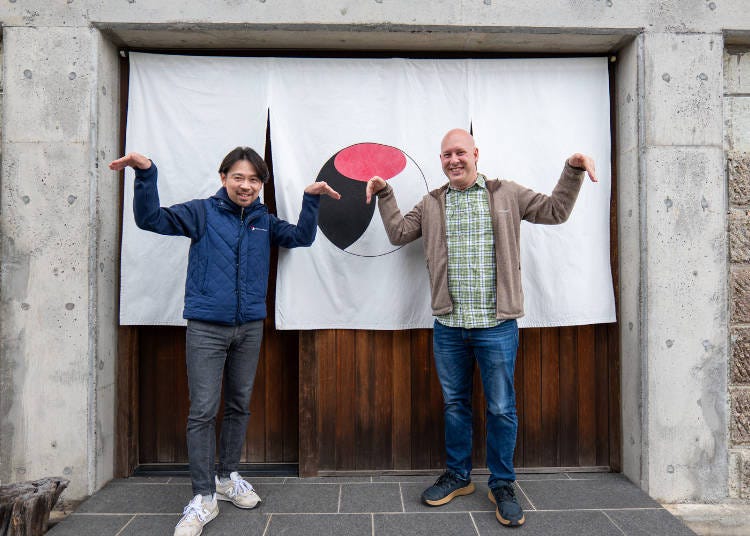
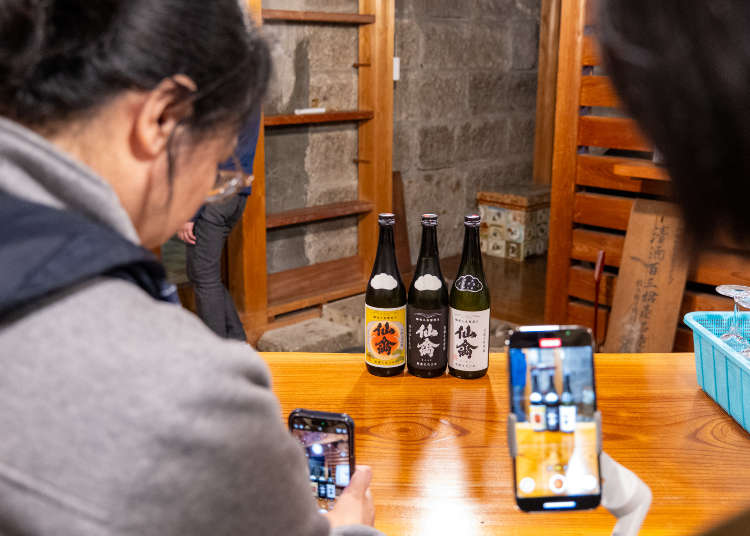
Senkin was established in 1806 in Sakura City, Tochigi Prefecture, a peaceful valley surrounded by expansive rice fields. The name “Senkin” (仙禽) refers to a crane serving the gods, a symbol that reflects the brewery’s deep connection to nature and tradition. In fact, the brand’s logo and colors are reflective of this: red for love, white for tradition, and black for innovation, mirroring the appearance of the Japanese crane. Two brothers are now behind Senkin: toji Masato Usui and CEO Kazuki Usui.
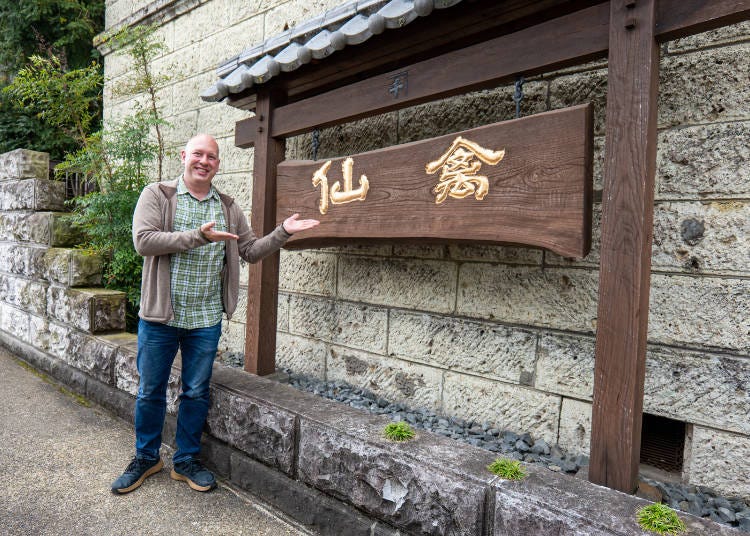
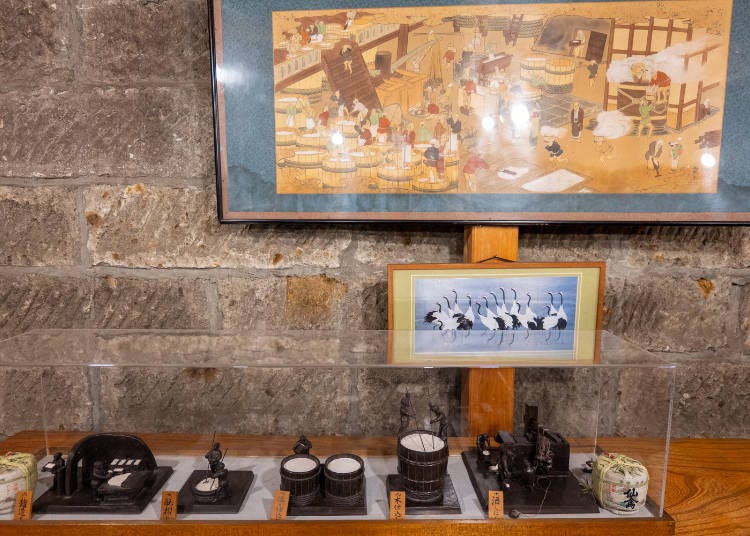
As we entered Senkin’s brewery complex, I was struck by the incredible contrast between it and Kobayashi Shuzo. Whereas the latter’s traditional facility featured wood, Senkin’s was constructed of gorgeous blocks of Oya stone, a famous material formed from ancient underwater volcanic deposits and quarried locally in Tochigi. In Tokyo, I occasionally see izakaya adorned with the stone, but here it is used abundantly in thick, bold blocks.
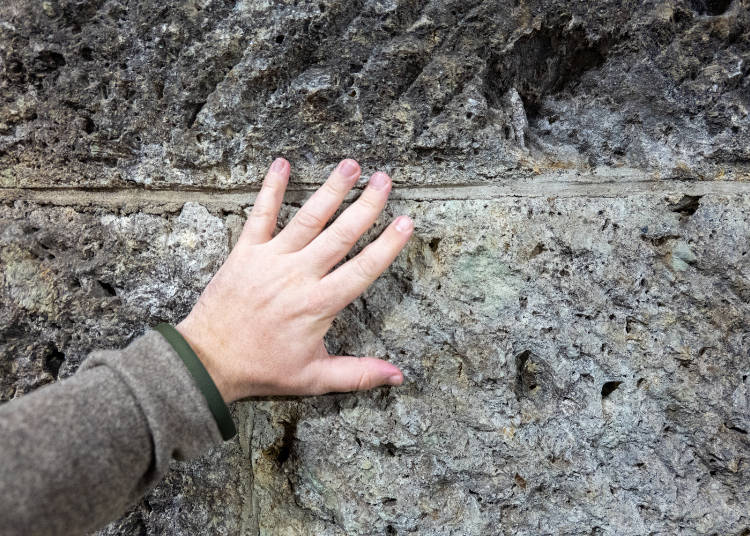
As we entered Senkin’s brewery complex, I was struck by the incredible contrast between it and Kobayashi Shuzo. Whereas the latter’s traditional facility featured wood, Senkin’s was constructed of gorgeous blocks of Oya stone, a famous material formed from ancient underwater volcanic deposits and quarried locally in Tochigi. In Tokyo, I occasionally see izakaya adorned with the stone, but here it is used abundantly in thick, bold blocks.
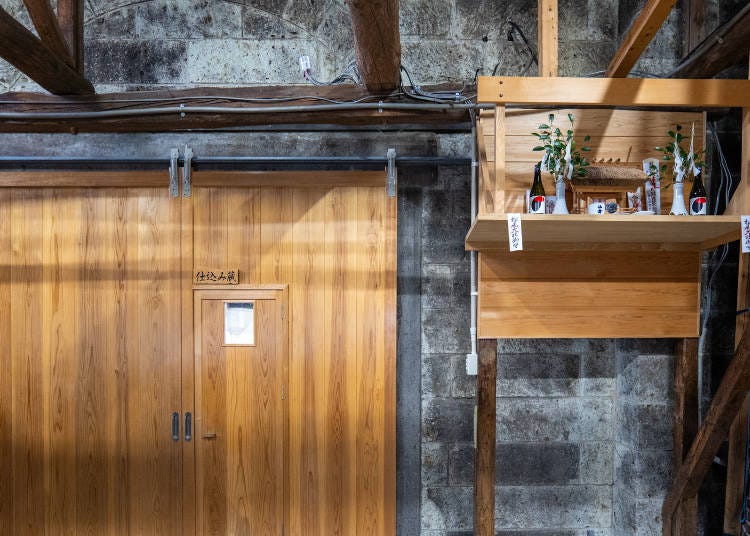
With a similar bold personality, toji Masato greeted us in a calm, friendly manner. Thinking back to the concept of the “maker’s atmosphere,” he strikes me as a very genuine person with acute observation. My gaze slowly moves around the room, and I am fascinated by the structure: stone and wood. While waiting for others in our group to gather, he quietly mentions: “The Oya stone is great natural insulation.” And I understand these thick walls help regulate temperature and humidity year-round. And it insulates from sound as well: perhaps Masato’s voice is quieter because there seems to be no echo.
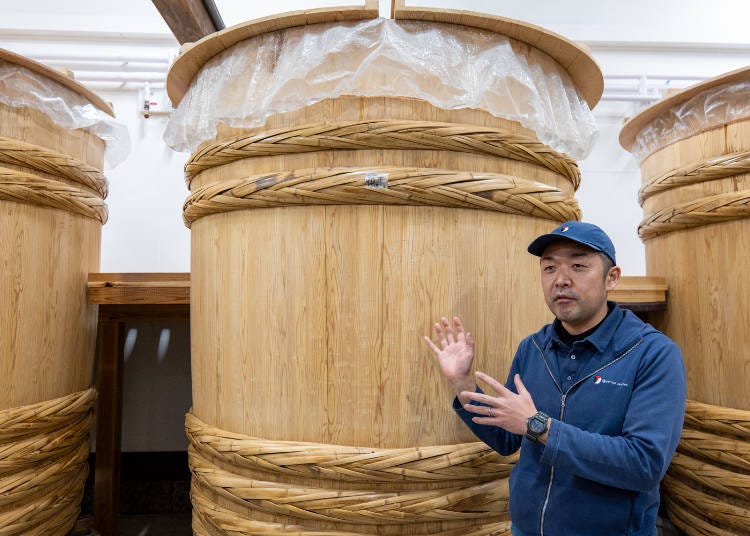
Here too, we followed the process step by step, from rice preparation to fermentation, gaining a clearer sense of how tightly controlled each stage must be. Temperature, timing, and handling are all carefully managed to avoid stressing the sake as it develops.
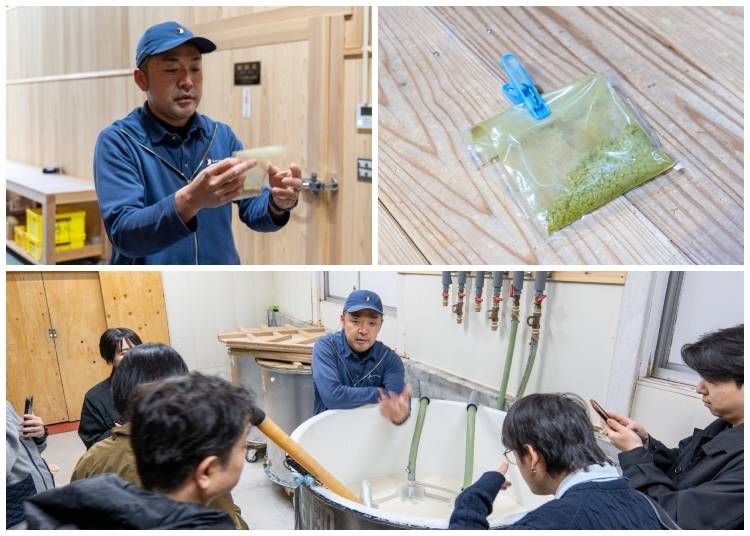
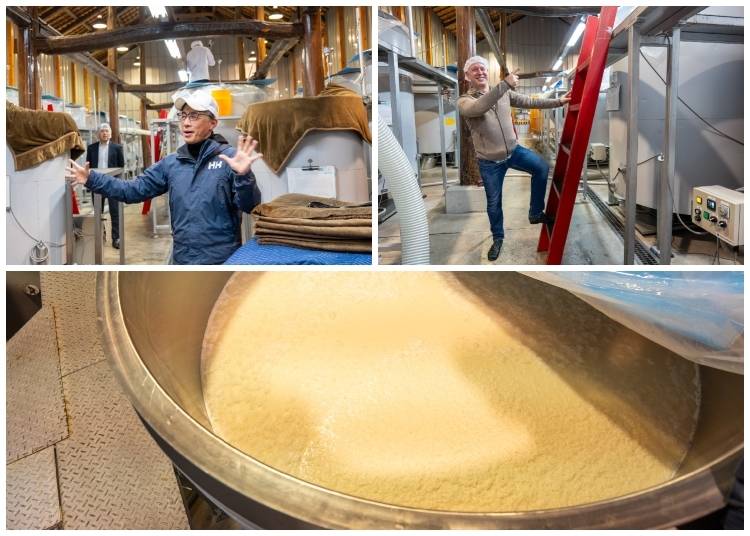
And when we get to the fermentation room, we climb up to peer into the tanks, listening to the soothing sounds of bubbling fermentation.
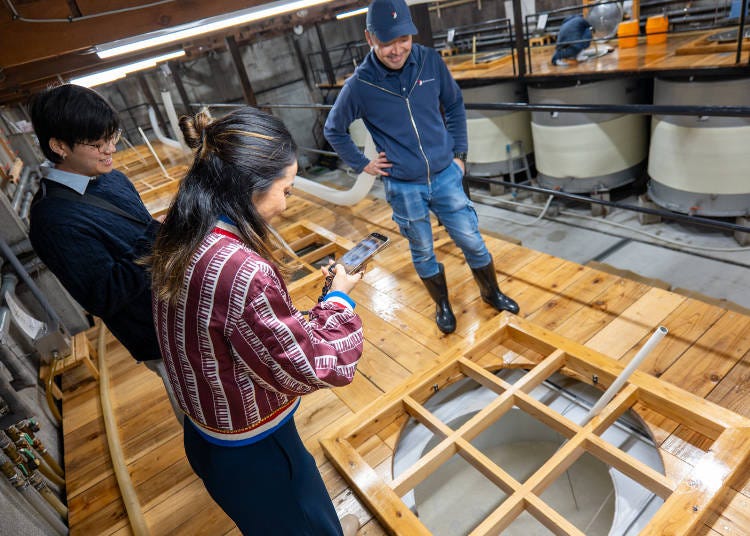
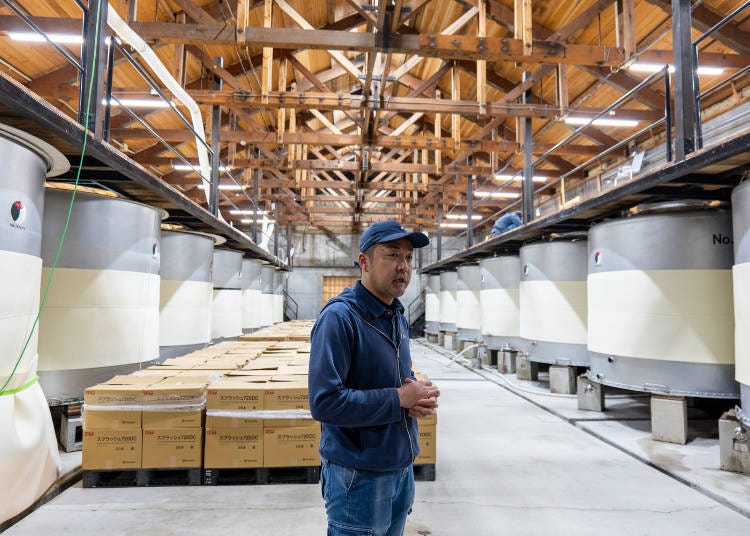
“We aim to balance both tradition and modernity,” Kazuki shared. “We follow some of the most traditional methods in Japan—no added yeast, wooden vats, and kimoto-style brewing—while ensuring the flavor fits modern tastes.”
The brothers take a patient, hands-on approach, staying closely involved at every stage and prioritizing quality over speed. Even the pressing is done at low temperatures to preserve delicate flavors.
Their selection of raw ingredients, especially rice, is just as meticulous. Masato explains that their rice is directly from individual rice growers in Tochigi rather than larger collectives, and that their brewing water is drawn from the same aquifer as the rice fields. That sensitivity to terroir is particularly compelling, and it comes as no surprise that Kazuki has a deep interest in wine—an influence that has helped shape his vision for sake.
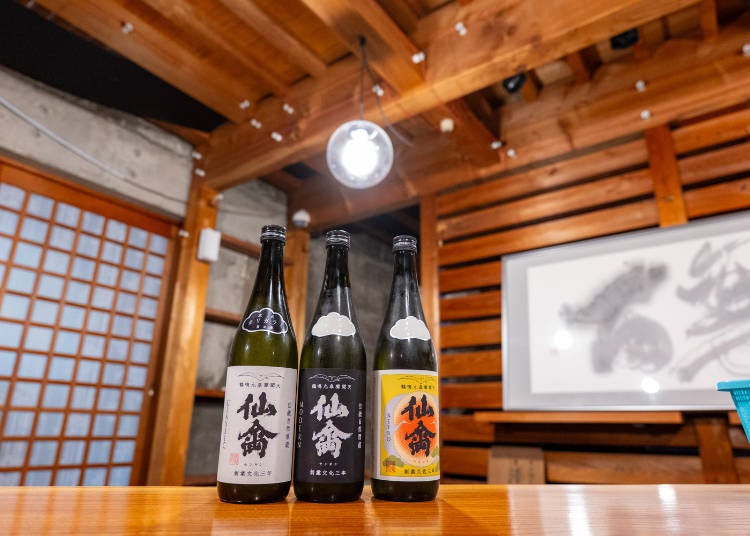
As we move to the warm wood-and-stone of the tasting room, Kazuki sets three bottles on the countertop: “Classic,” “Modern,” and “Retro,” each with the corresponding brand color.
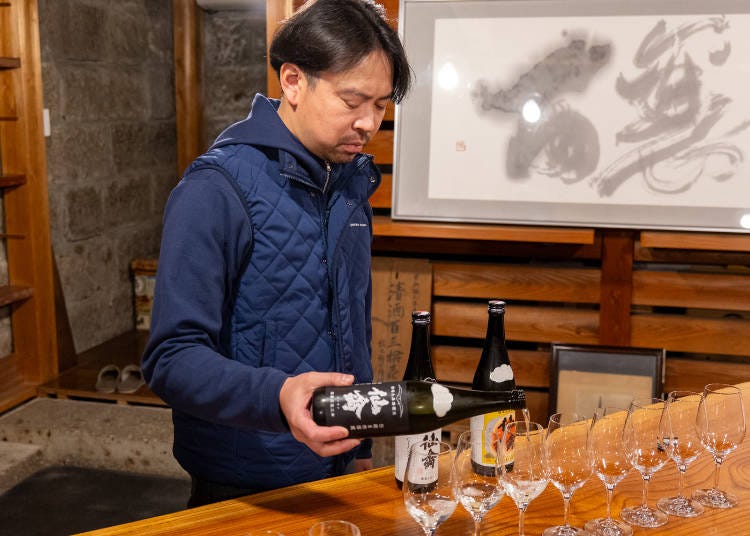
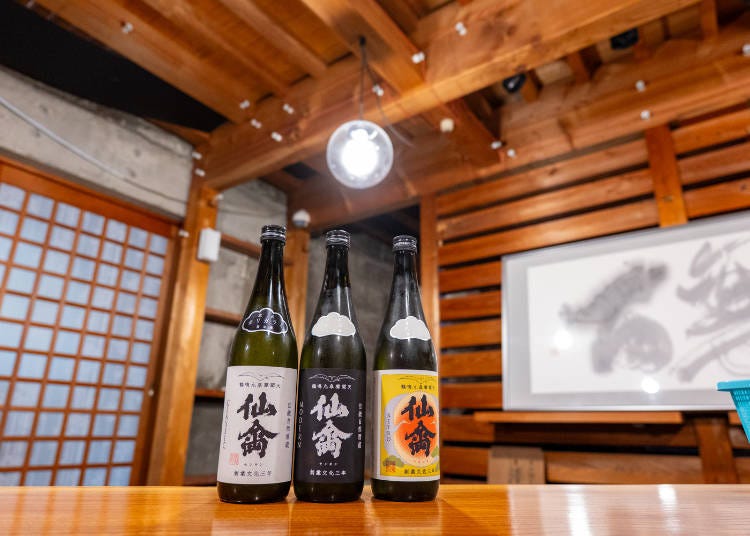
Each has a distinct flavor, but the commonality is a clean juiciness with a refreshing acidity. I can’t help pouring another glass and warming it in my hands to see how the aromatics change with time and temperature.
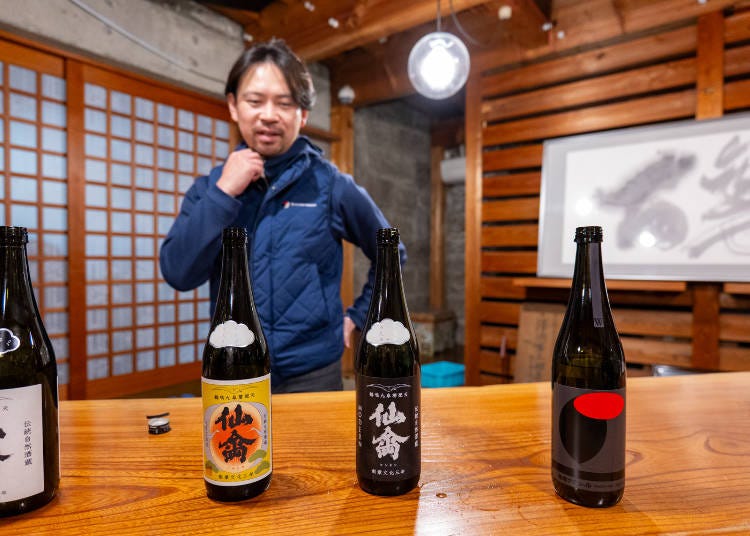
“If it doesn’t taste good, it doesn’t matter how natural it is,” Kazuki added. “That won’t work, especially internationally.”
Senkin will present three distinct types of sake at CRAFT SAKE WEEK on April 26, two of which are exclusive to the event.
-
Senkin Sake Brewery株式会社 せんきん
-
Address
106 Baba, Sakura, Tochigi 329-1321
View Map
Website: http://senkin.co.jp/
-
Address
106 Baba, Sakura, Tochigi 329-1321
A Shared Stage at CRAFT SAKE WEEK 2026 with OMAKASE byGMO at ROPPONGI HILLS
For both breweries, CRAFT SAKE WEEK represents something special.
“It’s rare to have so many breweries gathered in one place,” Kazuki said. “We’ve been fortunate to take part since the very beginning 10 years ago. The selection process is strict, so it’s not something you can just join if you want to. Being invited back each time is truly an honor.”
This year marks the event’s 10th anniversary, and both breweries will be pouring exclusive sake created specifically for the occasion.
- Dates: April 17–29, 2026
- Hours: Weekdays 3 PM to 10 PM (last order 9:30 PM); Weekends & holidays 12 PM to 9 PM (last order 8:30 PM)
- Venue: Roppongi Hills Arena
- Admission: Same-day tickets available. Advance tickets are available here.
- Starter Sets: Multiple options available, ranging from 4,800 yen (original sake glass + 14 coins) to 20,800 yen (original sake glass + 114 coins).
- Official website
So, What is Craft Sake?
After hearing directly from the brewers, one thing becomes clear: craft sake is a combination of discipline and personality.
It’s respecting tradition while making deliberate choices at every step.
And above all, it’s creating something that carries the imprint of its maker, something that evolves, tells a story, and leaves a lasting impression. It’s the sip that makes you want to try more, that entices you to meet the people behind the drink.
At CRAFT SAKE WEEK, that’s exactly what you’ll be tasting.


Chief English Editor
LIVE JAPAN
Timothy Sullivan is a senior English editor who has worked with LIVE JAPAN since 2017. Originally from New York, USA, he has over two decades of experience in Japan and more than 15 years in the digital media sphere. Timothy has played pivotal roles in assisting Japanese enterprises and regional authorities connect with international audiences. When he isn’t traveling, he is helping producing polished copy for LIVE JAPAN, one of Japan’s largest tourism platforms. He received a bachelor’s degree in Communication from the State University of New York College at Geneseo.
- Area
- Category
*Prices and options mentioned are subject to change.
*Unless stated otherwise, all prices include tax.
Popular Tours & Activitiess
Recommended places for you

-
Feel Shibuya in a New Way! Enjoy A Cultural Ride on the Open-Top SHIBUYA STREET RIDE
by: Guest Contributor
-

Front-Row Seat by the Sea: Inside the Newly Opened La Vista Atami Terrace and Its Unique Everyday Escape
by: Yukiko Honda
-
Lose Yourself in a Sea of Roses! A Magical Wonderland Awaits at Kanto's Largest Rose Garden This Spring
by: Guest Contributor
-

Japan's New Fine Dining Train 'vies' Launches in 2028: A New Era of Gourmet Rail Travel
by: Guest Contributor
-
Grand Reopening! The Edo-Tokyo Museum Returns After 4 Years: New Highlights, Interactive Tech, and Limited-Edition Goods
-

This Spring, Taste Japan's Finest Sake in Tokyo! CRAFT SAKE WEEK Returns to Roppongi Hills
by: Timothy Sullivan
Inspiration for Accommodations
-
Family-Friendly Hotels with Free Shuttle to Disneyland: Convenient Access for a Magical Stay
-
Top Ranked Hakone Hotels with Mt. Fuji View: Enjoy Stunning Scenery from Your Private Space
-
Convenient Tokyo Hotels with Airport Shuttle: Ideal for Families and Heavy Luggage
-
9 Family-Friendly Hotels with Comfortable Family Rooms in Asakusa
-
10 Open-air bath Onsen Ryokans in Hakone for Ultimate Relaxation
-
Crazy Japanese Drinks: These Expats Went Wild on Chuhai, Would You Try These?!
-
Tokyo's Tsukiji Fish Market Has Closed Down, But Its Restaurants are Still Amazing!
-
Dining in Asakusa (Tokyo): Must-Try Restaurants from Sukiyaki to Street Snacks
by: Wong Man Yee
-
Ad
Come for the Sushi, Stay for Everything Else! What Surprisingly Good Food Can You Eat in Tokyo?
-
Ueno Station Area Guide: Fun Ways to Explore Tokyo's Popular Destination (Area Map & Sightseeing Tips)
-
Secrets to Shopping in Japan: Guide to Annual Sales in Japan & Where to Shop
by: Miyu Shimada
- #best ramen tokyo
- #what to buy in ameyoko
- #what to bring to japan
- #new years in tokyo
- #best izakaya shinjuku
- #things to do tokyo
- #japanese nail trends
- #what to do in odaiba
- #onsen tattoo friendly tokyo
- #daiso
- #best sushi ginza
- #japanese convenience store snacks
- #best yakiniku shibuya
- #japanese fashion culture
- #best japanese soft drinks