



Date Masamune was a legendary Japanese military commander of the Warring States period who laid the foundations for Sendai City.
Nicknamed ‘The Hero of the Northeast’ and ‘The One-eyed Dragon,’ his trademark eyepatch, jet-black armor, and crescent helmet are now seen as the epitome of ‘ancient cool!’ Often featured in TV shows, anime, and even games, his popularity is ever-growing, even overseas.
Here we’ll take you on a tour of Sendai through the life of this remarkable legend. From castle ruins to ancient temples, following in Date Masamune's footsteps is the perfect way to appreciate Sendai's beauty.
Who Was Date Masamune? The One-Eyed Dragon of Sendai
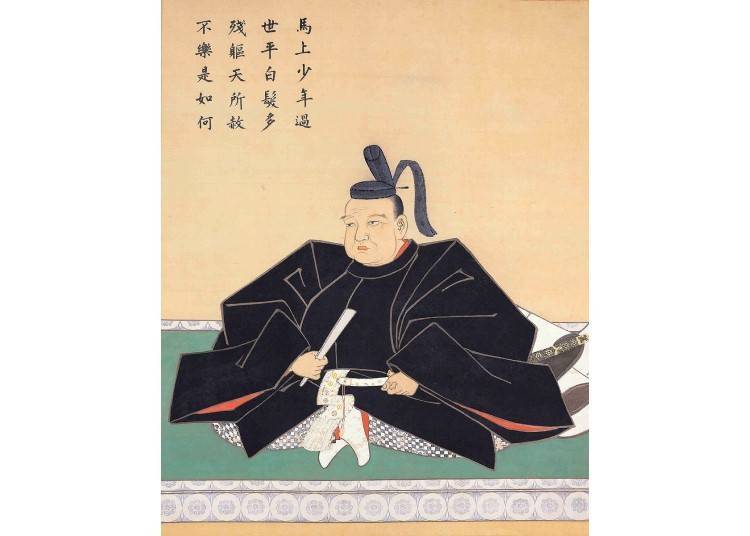
Born in 1567 in what is now Yonezawa City in Yamagata Prefecture, Date Masamune was one of the Sengoku period’s most legendary samurai warlords. Having lost the sight in his right eye to smallpox as a child, he earned the fearsome moniker "The One-Eyed Dragon" (Dokuganryū)—a title inspired by the 9th-century Chinese military commander Li Keyong.
Masamune inherited leadership of the Date clan at just 18 years old. By 23, through tactical brilliance and fierce determination, he commanded the largest domain in northeastern Japan. After serving regent Toyotomi Hideyoshi from his base in Iwadeyama, Masamune allied with Tokugawa Ieyasu and founded the Sendai Domain in 1600.
Beyond military might, he was a visionary statesman: he designed Sendai Castle, engineered ambitious land and water transit networks, developed vast rice fields, and championed culinary traditions like zunda (sweet edamame paste) and Sendai miso that define the region today.
Masamune died in Edo (modern-day Tokyo; a sign in Hibiya Park marks where his Tokyo residence once stood) in 1636 at age 70, leaving an indelible legacy. Today, his jet-black armor and iconic golden crescent-moon helmet remain enduring symbols of samurai culture across global media, anime, and travel.
How to Get Around: Exploring Sendai is Easy with the Loople Sightseeing Bus
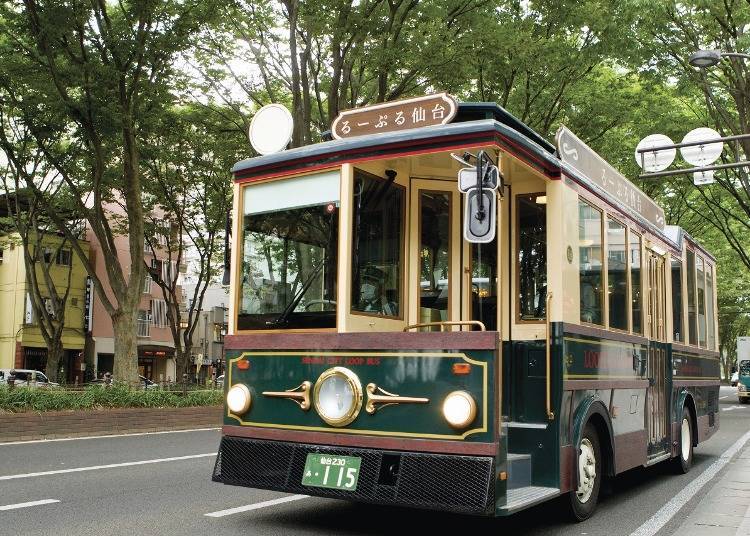
Because Sendai’s major samurai heritage sites are spread across the city, the easiest and most picturesque way to explore is aboard the Loople Sendai sightseeing bus. This retro-styled bus runs a continuous loop connecting 15 of Sendai’s top attractions. Buses depart every 20 minutes on weekdays and every 15 minutes on weekends, public holidays, and during peak August travel dates.
A single ride costs 300 yen for adults (150 yen for children), while a Loople Sendai 1-Day Pass is just 700 yen (350 yen for children). If you plan to visit three or more spots, the 1-Day Pass pays for itself immediately. Better yet, showing your pass unlocks discounted entry at Zuihōden Mausoleum, the Sendai City Museum, and the Aoba Castle Exhibition Hall.
(Travel Note: Aoba Shrine is located north of the city center outside the Loople route and is best reached via the JR Senzan Line or Sendai Subway.)
1. Aoba Shrine – Enshrining Masamune’s Legacy
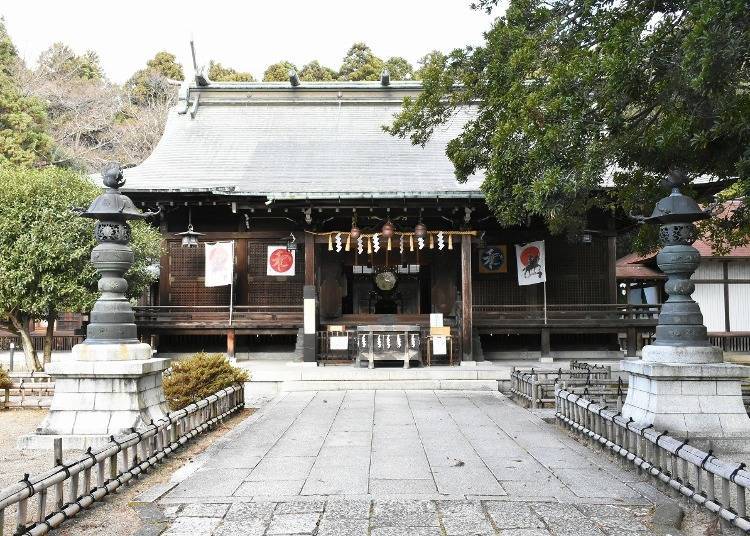
To start your journey where Masamune is revered as a Shinto deity, take the JR Senzan Line from Sendai Station to Kita-Sendai Station (a quick 10-minute ride), followed by a peaceful 10-minute stroll through northern Sendai. Because the Loople bus does not service this district, the train or subway is your quickest route.
Aoba Shrine was established in 1874 on the former grounds of the Date family temple, Tōshō-ji, with its current main structures dating to 1927. Nestled in tranquil, wooded northern hills, this idyllic sanctuary occupies the very grounds where Masamune himself once retreated to compose poetry, meditate, and escape the pressures of samurai rule.

Aoba Shrine brims with subtle details celebrating the Date clan. The Main Sanctuary (Honden) and Worship Hall (Haiden) were constructed using classical Shinto joinery to enshrine Masamune alongside his most faithful retainers, including his right-hand strategist Katakura Kojūrō.
Just past the torii gate at the hand-purification water basin (chōzuya), visitors are greeted by a striking bronze sculpture: Date Masamune clad in full battle armor standing beside a coiled water dragon. While dragon basins are common across Japanese shrines, one directly honoring Sendai's "One-Eyed Dragon" is an exclusive treat for samurai enthusiasts and a must-capture photo spot.
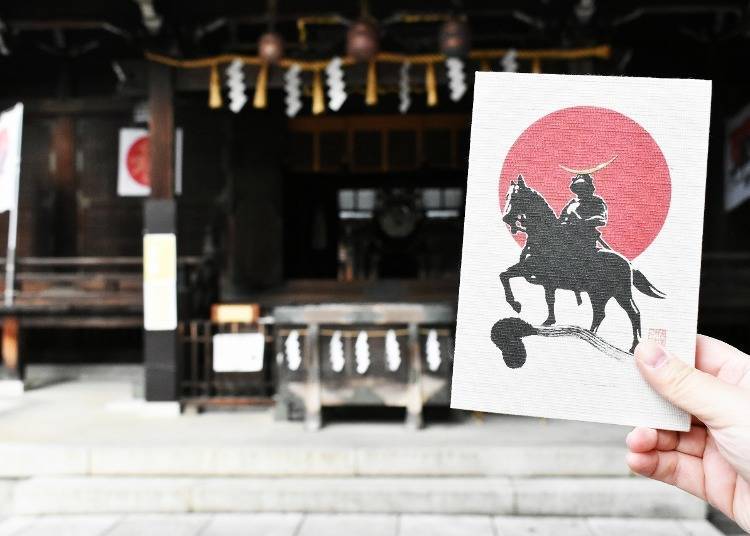
After offering a coin and bowing in prayer, head to the shrine office counter to browse unique samurai souvenirs. You'll find wooden ema prayer tablets, protective travel amulets, and crest stickers featuring Masamune’s iconic crescent-moon silhouette.
For temple and shrine stamp collectors, the resident priests will ink and stamp your goshuin book for a 300 yen contribution. If you haven't started your pilgrimage book yet, Aoba Shrine offers an exclusive, fabric-bound goshuincho stamped in gold with Date Masamune's likeness for 2,500 yen.
-
Aoba Shrine青葉神社
-
Address
7-1 Aobamachi, Aoba Ward, Sendai, Miyagi 981-0916
View Map -
Nearest Station
JR Kita-Sendai Station (Senzan Line) or Kita-Sendai Subway Station (Namboku Line), 10-minute walk
- Phone Number 022-234-4964
Grounds open 24 hours (Shrine office counter: 9:00 AM – 5:00 PM; seasonal adjustments may occur)
-
Address
7-1 Aobamachi, Aoba Ward, Sendai, Miyagi 981-0916
2. Zuihōden Mausoleum – Date Masamune's Final Resting Place
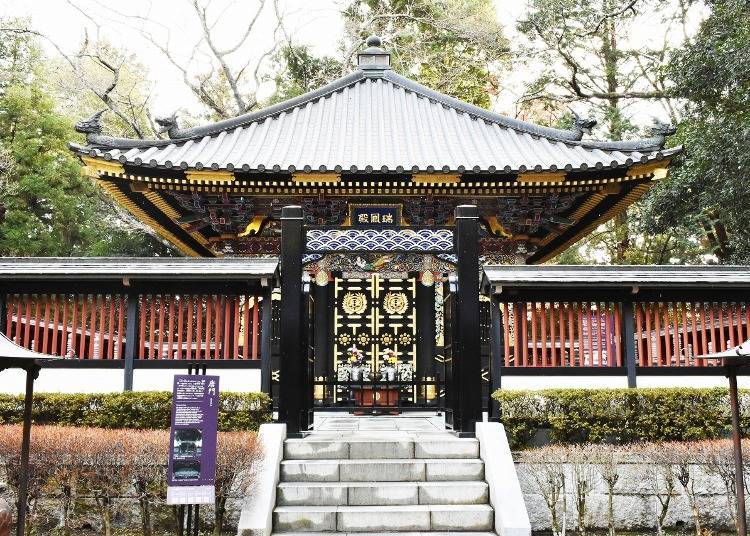
Tucked amidst towering cedar groves on the Kyōgamine hillside lies Zuihōden, the magnificent mausoleum complex of the Date clan. In addition to Masamune’s resting place, the site features the tombs of his direct heirs, an archaeological museum displaying excavated personal relics, and an official souvenir shop.
To get here, hop on the Loople Sendai bus from JR Sendai Station and ride 13 minutes to the "Zuihōden-mae" stop, followed by a scenic 5-minute walk up a stone stairway flanked by century-old cryptomeria trees. Alternatively, city buses departing from the JR Aoba-dōri Station bus terminal toward Yagiyama-Dobutsuen Station stop at "Otamayabashi Zuihōden Iriguchi" (a 7-minute walk across the Hirose River).

Constructed according to Masamune’s deathbed wishes, Zuihōden exemplifies the lavish aesthetics of the Momoyama period. The mausoleum is famous for its gleaming black lacquer exterior—echoing the finish of Masamune's iconic battle armor—contrasted with vibrant painted woodwork, gilded metal fittings, and intricate floral and avian carvings.
Walking deeper along the stone paths brings you to Kansendēn and Zennōden, the adjacent mausoleums of the second-generation daimyo Date Tadamune and third-generation daimyo Date Tsunamune. Tragically, all three original 17th-century National Treasure structures were destroyed by air raids in 1945. They were meticulously reconstructed in 1979 and 1985, restoring the master carpentry and rich pigments to their original Sengoku-era brilliance.
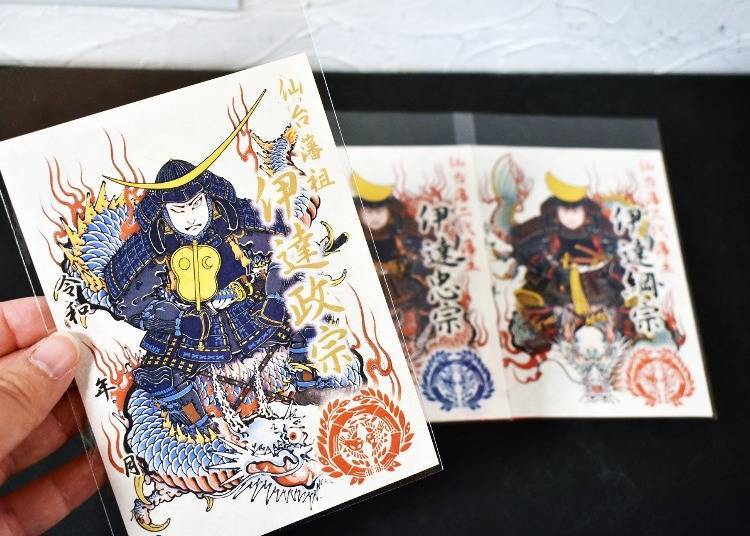
The museum shop located near the entrance offers high-quality gifts featuring the iconic Date clan symbols, most notably the Sendai-sasa (two resting sparrows framed by bamboo branches).
Popular choices include traditional tanzaku bookmarks printed on textured Japanese washi paper and stamped with the clan crest (660 yen). You can also pick up stylized Sengoku commander art cards depicting Masamune, Tadamune, and Tsunamune in dramatic period attire (300 yen each)—great keepsakes for history fans.

Exploring the tranquil hillside trails is effortless thanks to information signboards fitted with Uni-Voice barcodes. By downloading the free Uni-Voice app onto your smartphone, you can scan the codes at each viewpoint to hear professional audio guides and read translated transcripts. Commentary is available in five languages, including English, Simplified Chinese, Traditional Chinese, and Thai.
-
Zuihōden Mausoleum瑞鳳殿
-
Address
23-2 Otamayashita, Aoba Ward, Sendai City, Miyagi 980-0814
View Map -
Nearest Station
Loople Sendai Bus Stop #4 ("Zuihōden-mae")
- Phone Number 022-262-6250
・Hours: Feb 1 – Nov 30, 9 AM – 4:50 PM (last entry 4:30 PM); Dec 1 – Jan 31, 9 AM – 4:20 PM (last entry 4 PM)
・Admission: Adults / University Students: 570 yen (460 yen with Loople 1-Day Pass discount); High School Students: 410 yen; Elementary & Junior High Students: 210 yen
・Closed: December 31 (Exhibition Hall closed January 1) -
Address
23-2 Otamayashita, Aoba Ward, Sendai City, Miyagi 980-0814
3. Sendai City Museum – Masamune’s Iconic Armor & Treasures
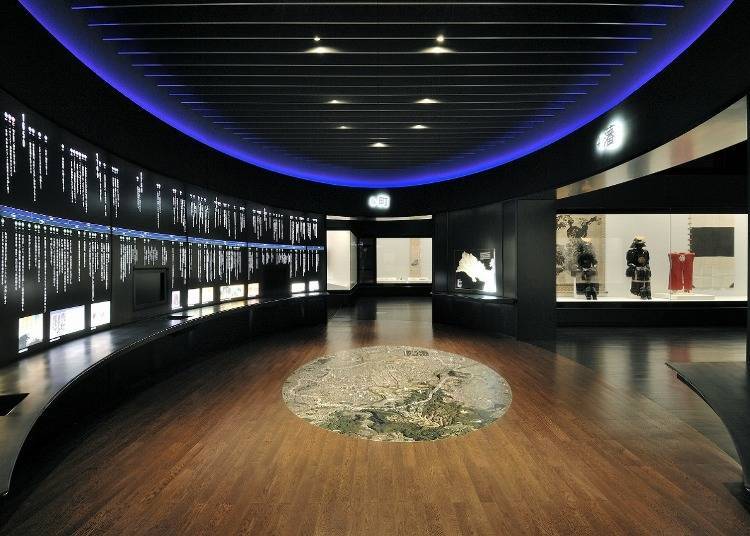
Situated in the historic Sannomaru (outer third ward) of Sendai Castle, the Sendai City Museum houses a world-class collection of roughly 98,000 artifacts documenting the history, fine arts, and samurai heritage of the Date domain.
Following a comprehensive 2.5-year structural renovation and display renewal, the museum reopened in April 2024 with state-of-the-art climate-controlled galleries, dramatic modern lighting, and expanded multilingual touchscreens. Reaching the museum is easy: take the Sendai Subway Tōzai Line to International Center Station (an 8-minute walk) or board the Loople bus from JR Sendai Station (roughly 20 minutes to the museum entrance).
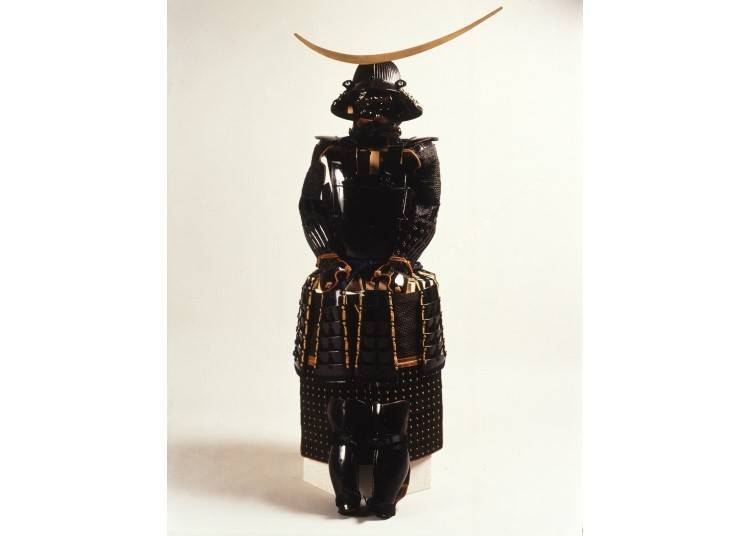
The centerpiece of the museum’s samurai gallery is Masamune’s authentic Kuro-urushi Gomai-dō Gusoku (Black Lacquer 5-Piece Cuirass Armor), designated an Important Cultural Property of Japan.
Forged from heavy iron plates expertly layered with jet-black lacquer, this battle harness was designed for pragmatic frontline survival: the plates were engineered to withstand direct musket fire! The armor is crowned by Masamune’s legendary kabuto helmet, sporting an asymmetrical, sweeping gold crescent moon (maedate) that became the defining emblem of Sendai's warrior style.
(Note: To protect fragile historical lacquers and textiles, original pieces rotate seasonally with high-fidelity replicas).
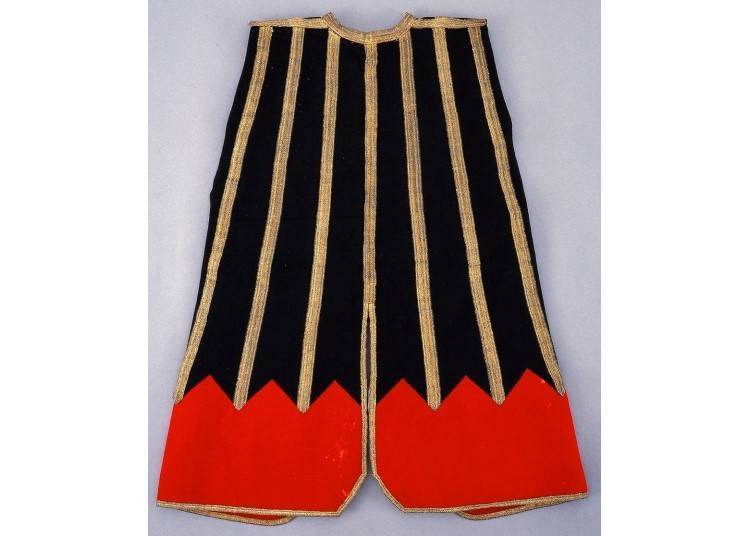
Another highlight is Masamune’s woolen battle surcoat (jinbaori), also an Important Cultural Property. Tailored from imported European wool acquired via Nanban trade routes, it showcases a bold scarlet mountain motif across the lower hemline.
Masamune was a master of political stagecraft and self-branding; wearing dramatic, foreign-influenced garments into battle and diplomatic meetings was a calculated move to project supreme confidence, strike awe into rivals, and etch his presence into the memory of allies.
-
Sendai City Museum仙台市博物館
-
Address
26 Kawauchi, Aoba Ward, Sendai City, Miyagi 980-0862
View Map -
Nearest Station
Loople Sendai Bus Stop #5 ("Sendai City Museum / Sendai International Center") or International Center Subway Station (8-minute walk)
- Phone Number 022-225-3074
・Hours: 9 AM – 4:45 PM (last entry 4:15 PM)
・Admission: Adults / College Students: 460 yen (360 yen with Loople 1-Day Pass discount); High School Students: 230 yen; Elementary & Junior High Students: 110 yen
・Closed: Mondays (or the following weekday if Monday is a public holiday); December 28 – January 4 -
Address
26 Kawauchi, Aoba Ward, Sendai City, Miyagi 980-0862
4. Sendai Castle Ruins (Aoba Castle) – Panoramas & the Equestrian Statue
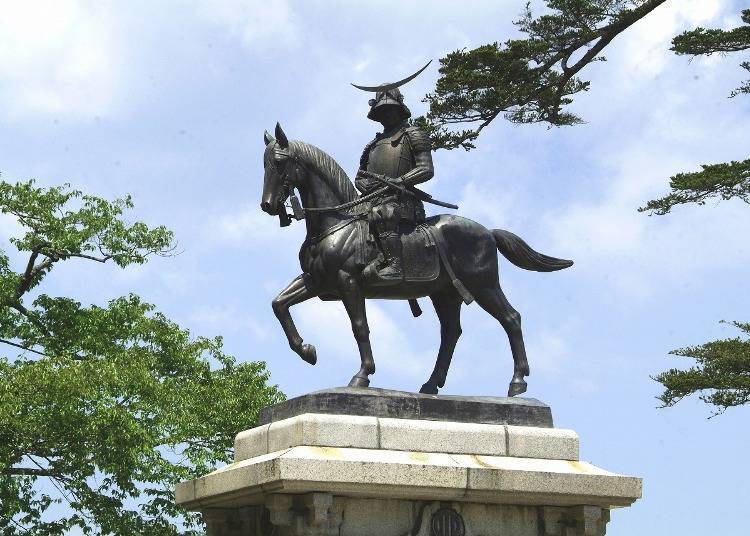
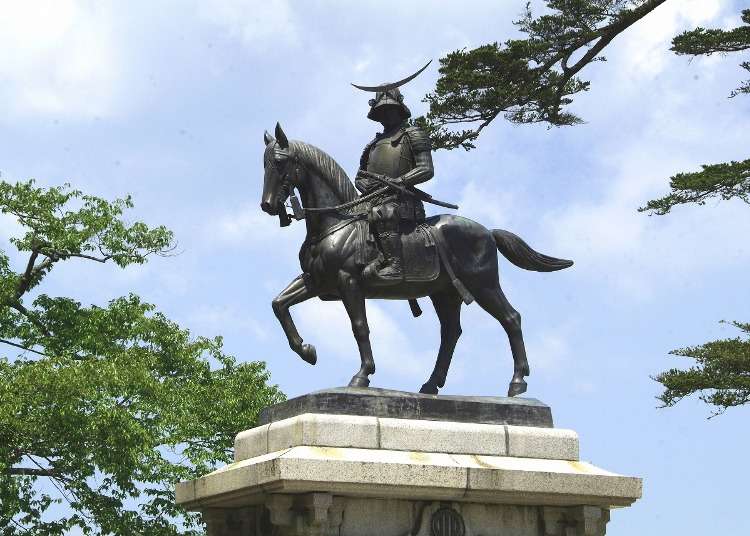
Perched high atop Mount Aoba, the ruins of Sendai Castle (also known as Aoba Castle) command sweeping views across downtown Sendai out toward the Pacific horizon. The lookout plaza is home to the world-famous bronze equestrian statue of Date Masamune gazing out over the modern metropolis he founded. After suffering structural damage during a major 2022 earthquake, the beloved statue was fully restored and re-erected on its pedestal in March 2023.
Visitors can reach the mountaintop in roughly 23 minutes aboard the Loople bus directly from JR Sendai Station. While you can walk from International Center Subway Station, the 20-minute hike climbs a steep, winding mountain road—making the Loople bus the far more relaxing option.
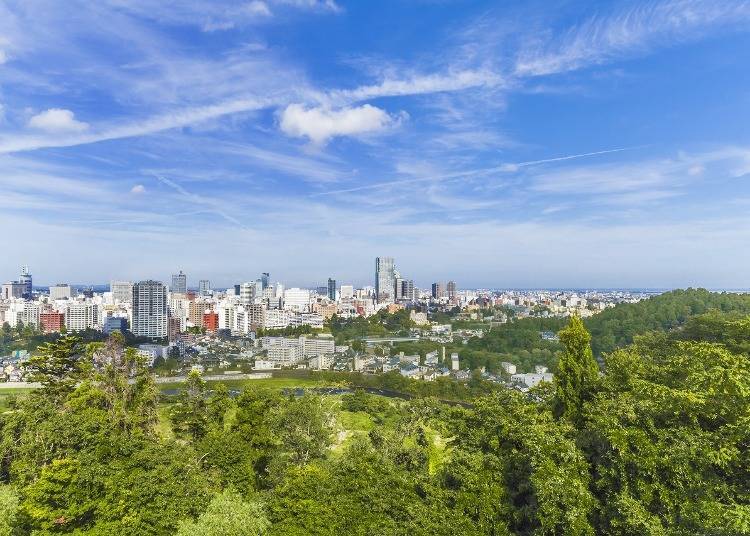
Built in 1601, Sendai Castle was designed with a deliberate political strategy: it possessed no central castle keep (tenshu). By choosing not to build a towering tower, Masamune signaled his peaceful intentions to the Tokugawa Shogunate while relying on natural defenses—sheer river bluffs, mountain ravines, and monumental dry-stone ramparts (ishigaki).
While the original wooden palaces were lost to historical fires and World War II, the massive reconstructed stone walls and the Honmaru plaza provide an awe-inspiring look into feudal military engineering. If your schedule allows, return after sunset: the Date Masamune equestrian statue and stone fortress walls are illuminated daily until 10:00 PM, creating one of Sendai’s most spectacular night views.
-

-
Address
1 Kawauchi, Aoba-ku, Sendai City, Miyagi Prefecture, 980-0862
View Map -
Nearest Station
Kokusai Center Station (Tozai Line)
15 minutes on foot
- Phone Number 022-214-8259
-
Address
1 Kawauchi, Aoba-ku, Sendai City, Miyagi Prefecture, 980-0862
5. Aoba Castle Exhibition Hall – Walk Through History with 3D VR
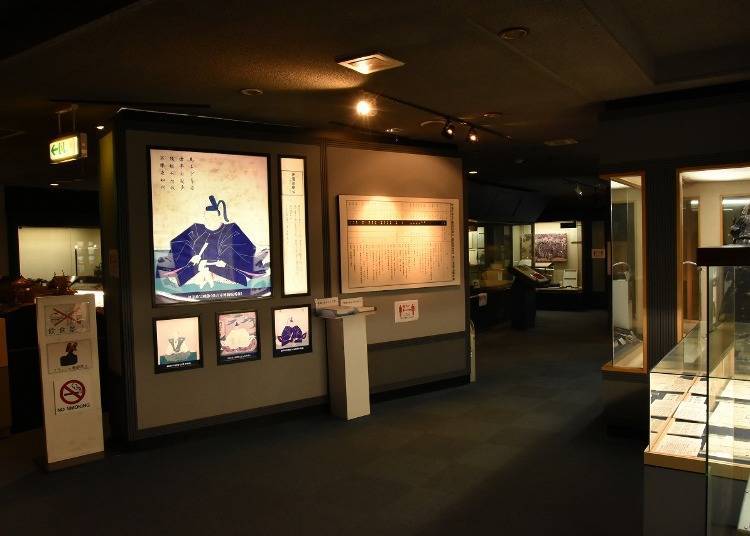
Situated right on the castle's Honmaru summit plaza, the Aoba Castle Exhibition Hall brings the lost fortress to life through modern technology and rare artifacts. Inside the museum galleries, visitors can view genuine Date clan swords, battle armor, and Masamune's personal letters.
The exhibition theater screens a high-definition 16-minute computer-generated film reconstructing Sendai Castle at its 17th-century height, guiding you through the gilded sliding screens and sprawling banquet halls of the lost Honmaru Palace.
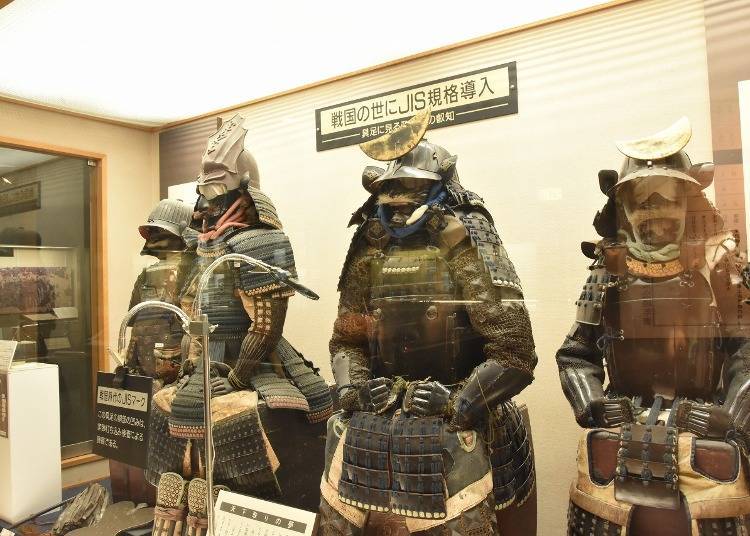
A highlight of the military collection is the Date clan's signature 5-layer iron armor, exhibited alongside breastplates worn by rival warlords of the period.
If you lean in close to the protective glass, you can see genuine round indentations (tameshi-gusoku) in the steel—marks left by bullets fired at close range during quality tests before the armor was approved for the daimyo’s guard. It provides a thrilling, authentic glimpse into the brutal realities of Sengoku warfare.

For the ultimate castle experience, try Sendai Castle VR GO. Equipped with a specialized 360-degree virtual reality headset, you can take a guided outdoor walking tour across the Honmaru summit.
As you walk over the open stone ruins, the VR display tracks your position, overlaying life-sized 17th-century reception halls, watchtowers, and interior gold-leaf folding screens directly over the modern landscape. It is the closest thing to stepping into a time machine.
VR GO headsets can be rented at the front reception counter on the 1st floor of the Lower Aoba Castle Meihinkan.
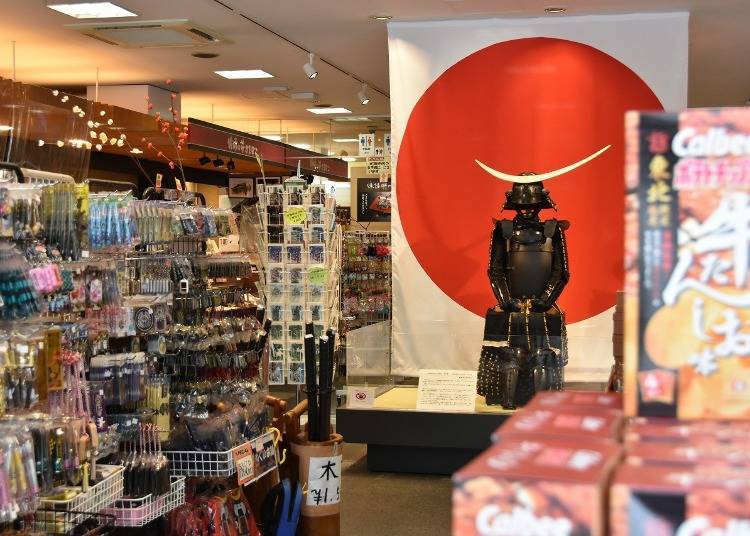
After completing your virtual tour, head into the neighboring food hall to refuel with Sendai’s iconic regional dishes: freshly charcoal-grilled gyūtan (thick beef tongue), sweet emerald-green zunda mochi (rice cakes topped with sweetened edamame paste), and skewered sasa kamaboko (bamboo-leaf-shaped fish cakes). You will also find an extensive gift shop stocked with Date clan stationery, sake, and collectible castle visit stamps (gōjōin).
-
Aoba Castle Museum青葉城資料展示館
-
Address
1 Kawauchi, Aoba Ward, Sendai City, Miyagi 980-0862
View Map -
Nearest Station
Loople Sendai Bus Stop #6 ("Sendai Castle Ruins")
- Phone Number 022-227-7077
・Hours: Apr – Oct, 9 AM – 5 PM (last entry 4:40 PM); Nov – Mar, 9 AM – 4 PM (last entry 3:40 PM)
・Price: Museum Admission: Adults 770 yen (500 yen with Loople 1-Day Pass discount), Junior/High School 550 yen, Elementary 330 yen; Sendai Castle VR GO: 770 yen (or 1,430 yen for Museum + VR GO Combo Ticket)
・Closed: Open year-round (Note: VR GO headset rentals are suspended on Wednesdays) -
Address
1 Kawauchi, Aoba Ward, Sendai City, Miyagi 980-0862
6. Ōsaki Hachimangū Shrine – Masamune’s National Treasure
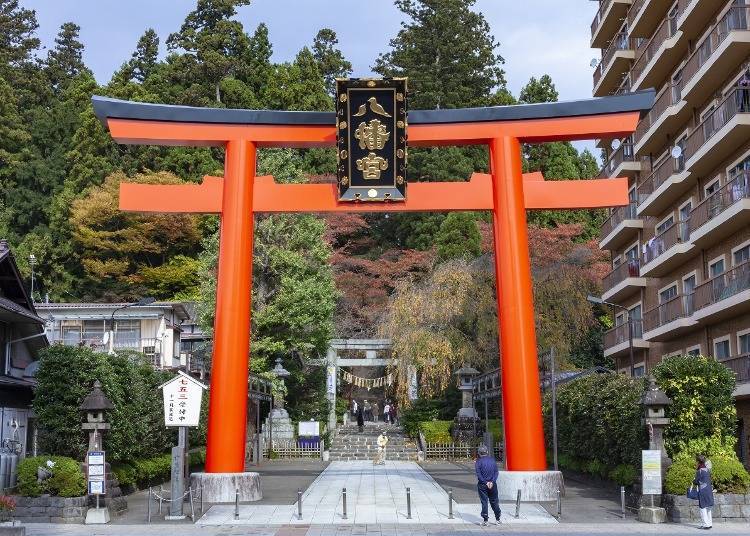
Designated an official National Treasure of Japan, magnificent Ōsaki Hachimangū Shrine is the final stop on this samurai heritage circuit.
You can reach the shrine directly via a 40-minute scenic ride on the Loople Sendai bus from Sendai Station. Alternatively, take a 22-minute municipal bus ride departing from JR Aoba-dōri Station (bound for Sanezawa Eigyōsho-mae) and disembark at the "Kunimi Ni-chome" bus stop, just steps from the shrine approach.
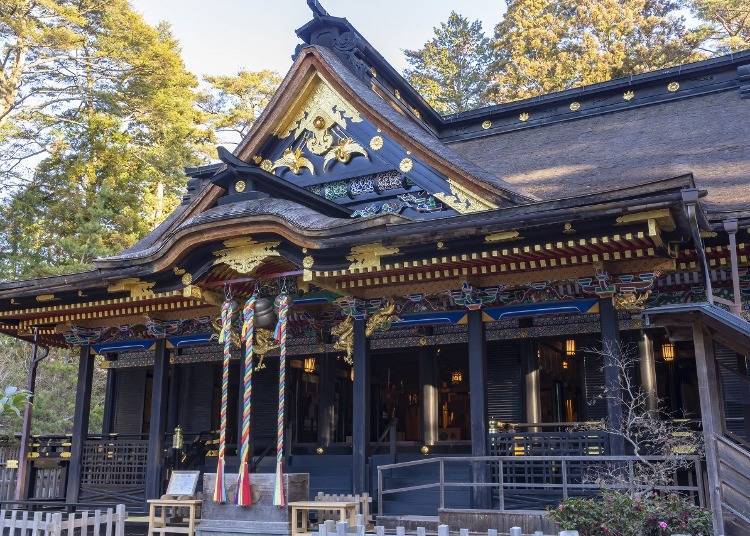
Commissioned by Date Masamune in 1607 to serve as the divine guardian shrine of Sendai, Ōsaki Hachimangū is celebrated as the oldest extant structure built in the gongen-zukuri architectural style.
In this revolutionary layout, the Main Sanctuary (Honden) where the kami resides and the Worship Hall (Haiden) where visitors pray are unified under a single, complex roof structure, joined in the center by a stone-paved corridor called the ishi-no-ma. This architectural breakthrough served as the direct aesthetic blueprint for Japan’s famous Nikkō Tōshō-gū shrine complex.
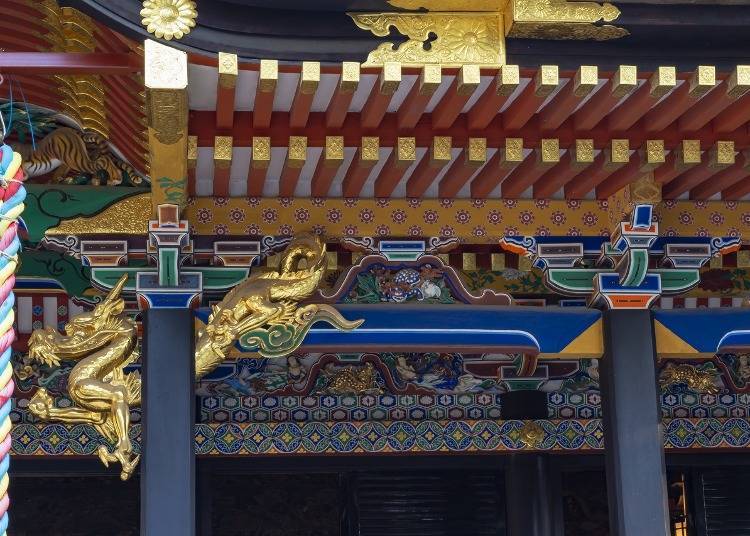
The visual allure of Ōsaki Hachimangū lies in its breathtaking exterior ornamentation. The deep black lacquer walls serve as a dramatic canvas for brilliant vermilion, turquoise, and gold carvings depicting sacred creatures: soaring phoenixes, mythical kirin, water dragons, leaping deer, and seasonal flora. Take your time admiring the woodwork under the eaves to see how many figures you can spot!
Informative self-guided pamphlets detailing the history and symbology of the shrine are available at the shrine office in English, Simplified Chinese, Traditional Chinese, Korean, and German.
-
Osaki Hachiman-gu Shrine大崎八幡宮
-
Address
4-6-1 Hachiman, Aoba Ward, Sendai City, Miyagi 980-0871
View Map -
Nearest Station
Loople Sendai Bus Stop #12 ("Ōsaki Hachimangū-mae")
- Phone Number 022-234-3606
・Hours: Grounds open 24 hours (Shrine office counter: 9 AM – 5 PM)
・Admission: Free -
Address
4-6-1 Hachiman, Aoba Ward, Sendai City, Miyagi 980-0871
Walk in the Footsteps of the One-Eyed Dragon
Retracing the life of Date Masamune across Sendai offers far more than a simple history lesson: it provides a window into the bold, visionary mind that molded Sendai into northern Japan’s "City of Trees."
From the brilliant Momoyama lacquerwork of Zuihōden and Ōsaki Hachimangū to the cutting-edge virtual reality time travel atop Mount Aoba, this tour weaves four centuries of warrior culture into an unforgettable adventure.
Grab your Loople pass, sample a cup of sweet zunda mochi, and embark on your own journey into the samurai history of Sendai!
Text by: Shoepress
- Area
- Category
*Prices and options mentioned are subject to change.
*Unless stated otherwise, all prices include tax.
Popular Tours & Activities
Recommended places for you
-
Namahage Museum
Other Museums
Surrounding Areas Of Akita
-
Lake Tazawa
Rivers, Lakes & Canyons
Surrounding Areas Of Akita
-
Yokote Park
Parks
Surrounding Areas Of Akita
-

Nikka Whisky Sendai Distillery
Culture Experience
Sendai And Matsushima
-
Sado Gold Mine
Winter
Niigata And Sado
-
Zuiganji Temple
Temples
Sendai And Matsushima
-
Every Fall, Giant Straw Creatures Take Over This Park in Japan
-

6 Morioka Souvenirs Worth Buying near the Station: An Editor's Picks from Iwate
by: Yukiko Honda
-

Top-Booked: Must-Try Sendai Gyutan & Yakiniku in Sendai for First-Time Visitors
by: Guest Contributor
-
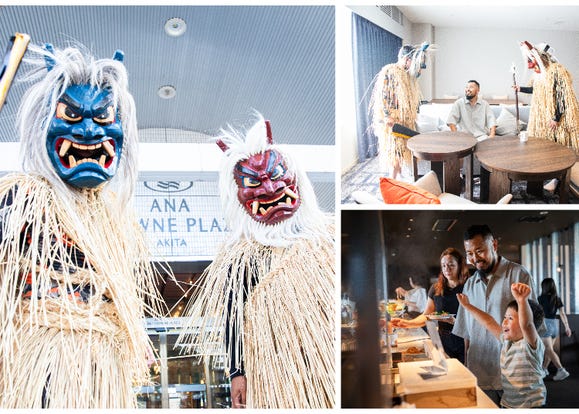
This Akita Hotel Brings a Legendary Japanese Folklore Tradition to Your Room
by: Guest Contributor
-
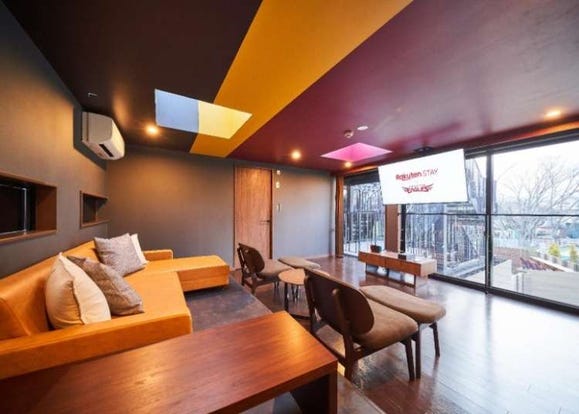
Sendai & Miyagi: 10 Recommended Apartment Hotels Perfect for Road Trips and Local Experiences
-

Tohoku Just Got Cuter: Meet the New Gotochi Bear × Sanrio Collab
by: Guest Contributor
-
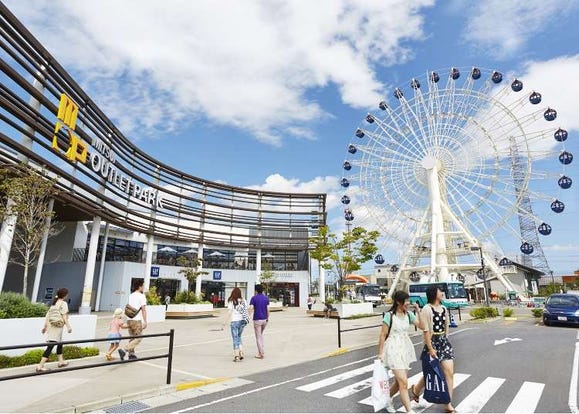
Shopping in Sendai: Best Outlet Malls, Tax-Free Stores & Souvenirs for Tourists
-
Tokyo Railway & Subway Map: Navigate the City Like a Pro (JR, Subways, IC Cards & Passes)
-
Kesennuma City Memorial Museum (Ruins of Koyo High School): Telling the Story of the 3/11 Great East Japan Earthquake
-

Sendai Umino-Mori Aquarium: Inside Northeast Japan's Largest Aqua Attraction
-
Japan Travel Guide: The Top 10 Cities You Have to Visit! Where Should You Go in Japan?
-
Kumano Taisha Shrine: Find the 3 Rabbits at Tohoku’s Power Spot for Love and Relationships!
by: Guest Contributor