




2026's Best Value Rail Pass: JR Kansai Wide Area Pass Explained
- Written by: James Davies
Is Kansai’s most talked-about rail pass still worth it in 2026?
If you are planning a trip to Kansai in 2026 and want to go beyond the usual crowds in Shinsaibashi or Kiyomizudera, the JR Kansai Wide Area Pass is one ticket you should seriously consider. Among the many JR rail passes available, this one is widely regarded by seasoned Japan travelers as the easiest to break even on and one of the best overall values.
Main image: PIXTA
This article contains affiliate links
- Table of Contents
-
- Understand the Coverage in Seconds: Think East, West, South, and North
- Types and Prices of the JR Kansai Wide Area Pass
- Highlight Rides: This Pass Is About More Than Getting Around
- Step-by-Step Guide: How to Pick Up Your Pass and Make Unlimited Seat Reservations
- Pass Showdown: Should You Buy This One or a Different JR Pass?
- Golden Itinerary Examples: Two Routes That Practically Pay for the Pass
- Pitfall Guide: Common Mistakes First-Time Users Should Avoid
- Travel Smarter and Enjoy Kansai with Total Freedom

Understand the Coverage in Seconds: Think East, West, South, and North
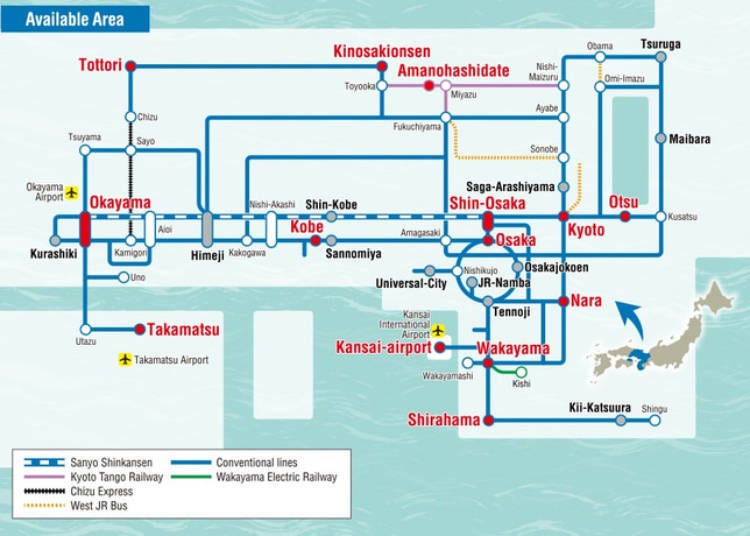
The coverage of the JR Kansai Wide Area Pass is vast, and the official route map can look overwhelming at first glance. The good news is that you do not need to memorize it. Just picture Osaka and Kyoto at the center, then remember how far the pass reaches in each of the four directions.
West: One of the easiest ways to get full value. Ride the Sanyo Shinkansen to Okayama, known for its sunshine and fruit, or continue to the historic canals of Kurashiki Bikan Historical Quarter. The pass even crosses the Seto Ohashi Bridge to Takamatsu in Shikoku, perfect for a Sanuki udon trip.
North: Ideal for exploring “Kyoto by the Sea” and the Sanin region. Travel to Kinosaki Onsen for its famous bath-hopping culture, or visit Amanohashidate, one of Japan’s Three Scenic Views. A major perk is that the pass covers the entire Kyoto Tango Railway. You can even continue on to Tottori without paying extra.
South: Head into Wakayama Prefecture on the Limited Express Kuroshio. Shirahama offers white-sand beaches and panda encounters, while farther south you can reach Kii-Katsuura, the gateway to Nachi Falls and the Kumano Kodo.
East and central areas: The pass also covers Lake Biwa and the Shiga area, as well as the core Kansai cities. From the HARUKA airport express to travel between Osaka, Kyoto, Kobe, and Nara, it keeps intercity travel simple and flexible.
In short, once your plans extend beyond central Osaka or Kyoto, this pass quickly becomes a powerful and practical option.
Types and Prices of the JR Kansai Wide Area Pass
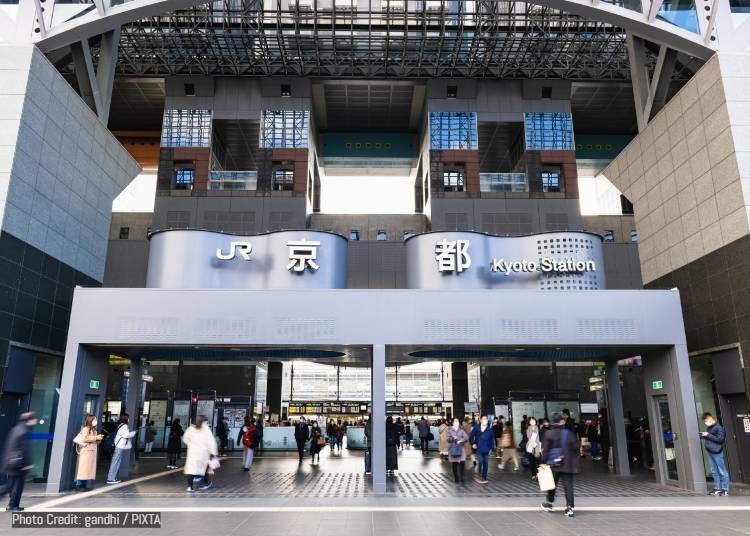
The JR Kansai Wide Area Pass is intentionally simple. It is available only as a five-day consecutive pass, with no one-day or three-day options. Once activated, it must be used for five straight days, so it works best when long-distance trips are grouped within that period.
According to the latest 2026 pricing, the adult fare for travelers aged 12 and over is 12,000 yen, while children aged 6 to 11 pay 6,000 yen, exactly half the adult price. Children under six may travel free as long as they do not occupy a reserved seat. Each adult pass holder may accompany up to two children for free. If a child requires their own reserved seat, or if more than two children are traveling with one adult, a child ticket is required.
While tickets were once slightly more expensive when purchased at JR ticket counters in Japan, JR West now strongly promotes online booking and digital passes. Travelers are encouraged to reserve through authorized overseas platforms such as Klook or KKday, or via the official JR West Online Train Reservation system. Prices generally match the standard rates, and online booking saves time by allowing easy ticket pickup from machines after arrival.
Highlight Rides: This Pass Is About More Than Getting Around
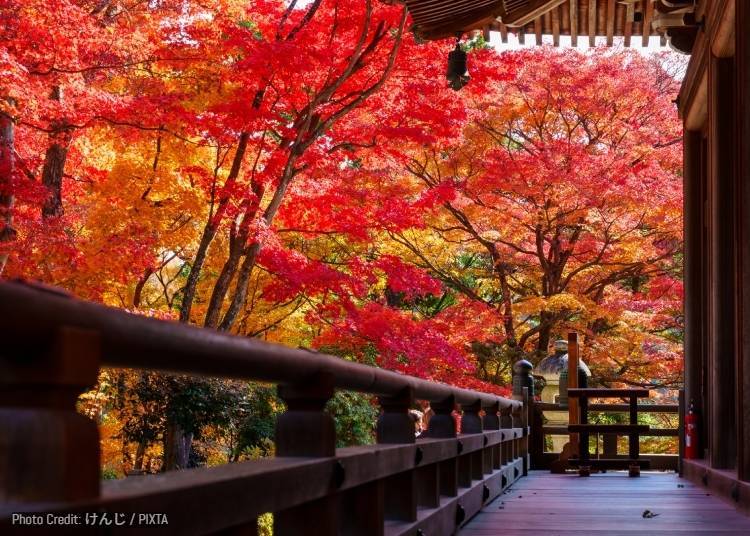
One of the best parts of the JR Kansai Wide Area Pass is not just the money you save on transport, but the chance to ride some of Kansai’s most popular themed and scenic trains at no extra cost. With this pass, the journey itself becomes part of the experience.
The most eye-catching option is the Hello Kitty Shinkansen. This pink, character-themed Shinkansen runs once daily between Shin-Osaka and Hakata. While the pass is valid only between Shin-Osaka and Okayama, that is enough to enjoy the Hello Kitty–filled cars and snap photos on board. Be sure to check the latest timetable in advance, as services are limited.
If you are heading to Shirahama in Wakayama to see pandas, look out for the Panda Kuroshio on the Limited Express Kuroshio. From the panda-faced front car to the panda-patterned seat covers, this train is especially popular with families. Note that not all Kuroshio services use the panda design, so confirming schedules ahead of time is important.
For rail fans or travelers who enjoy speed, the Super Hakuto is a must. This high-speed diesel limited express links the Keihanshin area with Tottori and runs on the Chizu Express, a private railway section that normally requires an extra fare. With the Kansai Wide Area Pass, you can ride all the way to Tottori without paying anything extra.
Finally, the pass also covers the full network of the Kyoto Tango Railway in northern Kyoto. Known for its dramatic Sea of Japan views, this line includes sightseeing trains designed by Eiji Mitooka. The blue Ao-Matsu is typically unreserved and easy to board, while the red Aka-Matsu requires a small additional seat fee, offering a more refined way to enjoy the coastal scenery.
In short, this pass turns travel time into a series of memorable train rides, not just a way to move from point A to point B.
Step-by-Step Guide: How to Pick Up Your Pass and Make Unlimited Seat Reservations
After buying your pass, the next concern for many first-time travelers is how to pick up the physical ticket. In 2026, to save valuable travel time, it is strongly recommended that you avoid waiting in line at staffed ticket counters. These counters are often crowded with travelers asking complex questions, and waits of an hour or more are common.
Instead, head straight to the green ticket machines equipped with passport scanners. These machines usually display a passport icon or the words “Globe Pass.” The interface supports English. Simply select the option to collect a reserved ticket, scan the QR code from your mobile voucher, then scan the photo page of your passport. The machine will automatically issue your physical rail pass.
Once you have the pass, the most important next step is reserving seats. The biggest upgrade in 2026 is the removal of the previous six-reservation limit. You can now make unlimited free seat reservations. This means you can secure a seat even for shorter trips. If you plan to ride the Shinkansen or a limited express train, it is best to reserve your seat in advance at a green ticket machine. Choose the reserved seat option on the screen, insert your pass, enter your departure and destination stations, then select your preferred window or aisle seat. The machine will print a reserved seat ticket.
One important reminder. When entering and exiting ticket gates, always use the small rail pass itself and remember to take it back after passing through. The reserved seat ticket is only for seat verification during onboard checks and cannot be used at ticket gates. In short, the rail pass is your access ticket, and the reserved seat ticket is your seat proof. Keep both with you while traveling.
Pass Showdown: Should You Buy This One or a Different JR Pass?
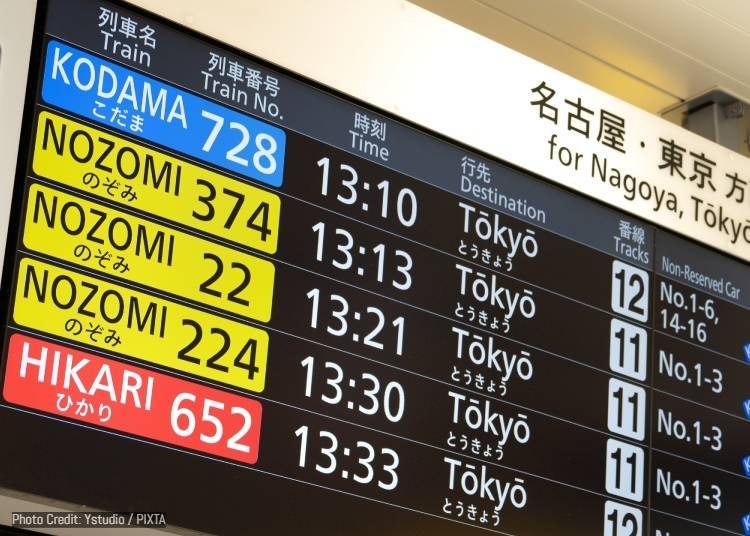
With so many JR rail passes available, the most common question travelers ask is simple: should I buy the wide-area pass, the cheaper standard pass, or upgrade to a Hiroshima-inclusive version? Here is the easiest way to decide and spend your money wisely.
Versus the standard Kansai Area Pass
The standard pass is a few thousand yen cheaper, but its coverage is very limited. It does not allow Shinkansen travel, and many limited express trains require extra fares. In practice, you are mostly limited to rapid and special rapid services.
If your travel stays within central Osaka, Kyoto, Kobe, or Nara, private railways and subways are usually cheaper and more convenient anyway, so the standard JR pass often makes little sense. Unless you have a very specific, short-distance JR-heavy plan, the JR Kansai Wide Area Pass is strongly recommended. Access to the Shinkansen and the HARUKA airport express alone more than justifies the small price difference in comfort and time saved.
Versus the Kansai–Hiroshima Area Pass
These two passes overlap heavily. The key difference is whether your trip goes beyond Okayama to Hiroshima or Miyajima. The price gap is roughly 5,000 yen, which is close to a one-way Shinkansen ticket from Okayama to Hiroshima.
The rule of thumb is simple. If Hiroshima is on your itinerary, the Kansai–Hiroshima pass is worth it because it covers the full round-trip Shinkansen cost. If your furthest destinations are Okayama, Kinosaki Onsen, or Amanohashidate, the Kansai Wide Area Pass already covers everything you need, and upgrading would be unnecessary.
Drawbacks and Limitations of the JR Kansai Wide Area Pass
Although the JR Kansai Wide Area Pass is often praised as one of the best-value passes in Kansai, it is not perfect. Understanding its key limitations before buying will help you avoid extra charges or wasted value.
No Shinkansen between Shin-Osaka and Kyoto
This is the most common and critical misunderstanding. The Shinkansen between Shin-Osaka and Kyoto is operated by JR Central on the Tokaido Shinkansen, not JR West. As a result, this pass cannot be used on that section at all. If you need to travel between these two stations, you must take the Limited Express HARUKA or a Special Rapid service instead. The time difference is only about 15 minutes, but travelers hoping to ride the Shinkansen should be aware of this restriction.
Limited use within city centers
The pass is designed for longer, inter-prefecture travel, not short hops within Osaka or Kyoto. It cannot be used on Osaka Metro, Kyoto City Subway, or most private railways such as Hankyu, Keihan, and Kintetsu, with a few specific exceptions. For trips like shopping in Shinsaibashi, visiting Kiyomizudera, or dining in Namba, you will still need separate subway or bus tickets. If your itinerary is mostly city-center sightseeing, this pass may not pay off.
Five consecutive days only
The validity period is five consecutive days and cannot be paused or split. Once you activate the pass, the clock keeps running whether you travel or not. If your plan is airport transfer on day one, several days of city shopping without long trips, then another airport ride on day five, much of the pass value will be lost. To get the most out of it, schedule longer trips such as Okayama, Kinosaki Onsen, or Tottori within those five continuous days.
In short, this pass delivers excellent value when used as intended for longer regional travel, but it is not a one-size-fits-all solution. Planning around these limitations is essential to make it truly worthwhile.
Golden Itinerary Examples: Two Routes That Practically Pay for the Pass
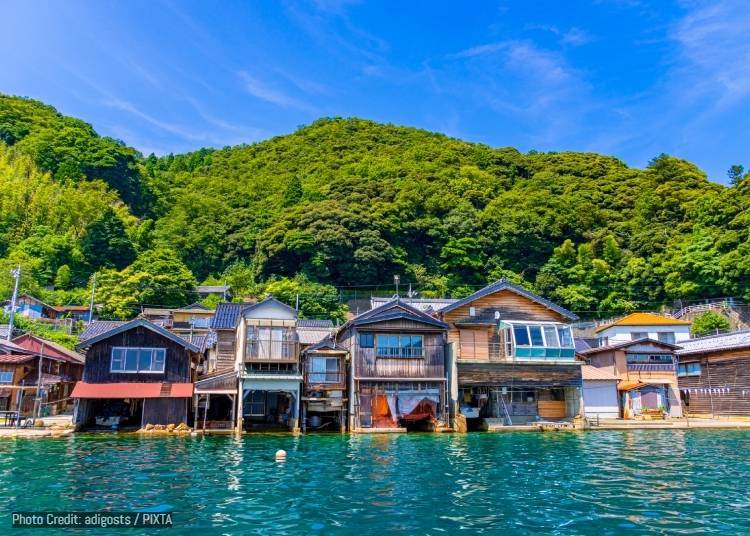
To clearly show just how cost-effective this pass can be, here are two sample itineraries in different styles. Follow either route and the savings quickly become obvious.
Route 1: A Classic Land–Sea–City Plan (Great for Families and First-Timers)
Day 1 starts with a smooth arrival, using the HARUKA airport express from Kansai Airport to Kyoto or Osaka. On day 2, take the Shinkansen to Himeji Castle, then continue on to Okayama to enjoy seasonal fruit and stroll through the Kurashiki Bikan Historical Quarter. Day 3 is perfect for a lighter pace, such as visiting Kobe Animal Kingdom or enjoying the waterfront around Kobe Port. The round-trip Shinkansen fare between Shin-Osaka and Okayama alone comes close to 12,000 yen. Add the HARUKA airport transfer, and the pass has already paid for itself by day 2. Everything after that is pure savings.
Route 2: Sea of Kyoto and Onsen Highlights (For Slow Travel and Hot Spring Fans)
This route focuses on northern Kansai and scenic rail travel. On day 1, ride the Super Hakuto limited express from Osaka to Tottori to see the dramatic sand dunes. A one-way reserved-seat ticket alone costs over 7,000 yen. Day 2 is all about relaxation in Kinosaki Onsen, enjoying its famous seven public bathhouses. On day 3, take the Kyoto Tango Railway to Amanohashidate, one of Japan’s Three Scenic Views, with an optional side trip to the Ine boathouses. Finish by returning to Kyoto on the Limited Express Hashidate. Bought separately, total fares on this route easily exceed 25,000 yen, meaning the pass saves you more than double its price. That leftover budget could easily go toward a premium crab dinner.
These two examples highlight the real strength of the JR Kansai Wide Area Pass. Whether you love fast Shinkansen rides or scenic countryside journeys, once your trip goes beyond central Osaka, Kyoto, and Kobe, this pass becomes one of the smartest travel investments you can make.
Pitfall Guide: Common Mistakes First-Time Users Should Avoid
Even though this pass is extremely powerful, there are a few common traps that often catch first-time users off guard. The biggest one is the Shinkansen no-go zone between Shin-Osaka and Kyoto. Many travelers see a Shinkansen and instinctively board it, not realizing that this short section is operated by JR Central, not JR West, which issues this pass. If you ride this Shinkansen by mistake, you will be asked to pay an additional fare at the exit gates. The correct option is to take the Limited Express HARUKA or a Special Rapid service instead. Despite not being a Shinkansen, the travel time is only about 15 minutes longer and is fully covered by the pass.
Another important point is the oversized luggage rule. Shinkansen and some limited express trains now require reservations for large luggage. If the total dimensions of your suitcase exceed 160 cm, you must reserve a seat with dedicated luggage space when making your seat reservation. Bringing oversized luggage onboard without a reservation can result in storage issues and an extra fee charged by the conductor. Travelers with large suitcases should take advantage of the pass’s unlimited seat reservations and book luggage-compatible seats in advance at green ticket machines.
Finally, pay close attention when passing through ticket gates. This pass is a magnetic ticket, so always insert it into the automatic gate and remember to take it back. Do not use staffed gates unless there is a problem such as demagnetization. The reserved seat slip printed by the machine is only for seat confirmation and onboard inspection. Do not insert it into the ticket gate. This is a very common mistake and can easily be avoided by remembering that the rail pass gets you through the gates, while the seat slip only shows where you sit.
Travel Smarter and Enjoy Kansai with Total Freedom
In 2026, the JR Kansai Wide Area Pass remains one of the most powerful transportation passes in the region. It removes geographic limits and lets travelers go far beyond central Osaka and Kyoto at a surprisingly low cost. From fruit orchards in Okayama and sand dunes in Tottori to hot springs in Kinosaki and beaches in Shirahama, this pass opens up Kansai and beyond with ease. If your itinerary includes even one long-distance trip, this pass is one of the smartest travel investments you can make.
As a final tip, consider purchasing the pass in advance through online platforms such as Klook or KKday. Exchange rates are often better, and you can avoid unnecessary hassle after arriving in Japan. The money saved on transportation can easily be put toward a Kobe beef dinner or an upgraded night at an onsen ryokan. Use this pass wisely, avoid the common pitfalls, and enjoy a cost-efficient, memorable journey across Kansai.

Originally from Cardiff in the UK, James has been working as a freelance writer since moving to Japan in 2020. Having first visited Japan in 2013, James has been to each of the country’s 47 prefectures. A lover of sushi, sumo and sake, when not writing, he is either exploring Tokyo or planning a trip to a new corner of Japan.
*Prices and options mentioned are subject to change.
*Unless stated otherwise, all prices include tax.

Popular Tours & Activitiess
Recommended places for you
-
Sunflower terminal (Osaka) Terminal 1
Other Sightseeing
USJ, Nanko Port
-

Jukuseiniku-to Namamottsuarera Nikubaru Italian Nikutaria Sannomiya
Izakaya
Kobe, Sannomiya, Kitano
-
Goods
Yoshida Gennojo-Roho Kyoto Buddhist Altars
Gift Shops
Nijo Castle, Kyoto Imperial Palace
-
ISHIDAYA Hanare
Yakiniku
Kobe, Sannomiya, Kitano
-
Kambei Sannomiyahonten
Yakiniku
Kobe, Sannomiya, Kitano
-

Kanzenkoshitsuyakinikutabehodai Gyugyu Paradise Sannomiya
Yakiniku
Kobe, Sannomiya, Kitano
-
Ad
Walking the Sacred Sites of the Kii Mountains: An Inner Journey
-
Joshin Nipponbashi: Inside Osaka's Premier Shop for Gadgets, Toys & Hobbyists (+Bonus 8% Off Coupon)
-
Ad

Meet Osaka's Fluffiest Locals: Relax With Samoyeds at Cafe moffu in Shinsaibashi!
-
A Happier Trip to Osaka & Kobe: Sesame Street Takes Over Hanshin Railway
by: Guest Contributor
-
One of Western Japan's Largest Character Hubs Is Coming to Osaka Station in 2026
by: Guest Contributor
-
This Spring, Enjoy Magical Night Sakura Reflections Along Nara's Uda River (Local Hidden Gem!)
-

3 Best Hotels in Kobe, Japan with Amazing Views of Kobe Bay!
-

5 Best Hotels Near Universal Studios Japan (Osaka): Top-Rated Places to Stay
by: WESTPLAN
-
Become a Maiko For the Day! Trying the Popular Kyoto Maiko Experience Near Kiyomizu-dera Temple
by: WESTPLAN
-
Osaka Travel Service Center: So Many Incredibly Convenient Services - in English!
by: WESTPLAN
-

9 New Must-Visit Spots in Kansai for 2025: World Expo 2025 and Other Exciting Openings in Osaka
by: Miyu Shimada
-
3 Best Izakaya In Osaka Where You Can Enjoy Drinks and Local Dishes, Recommended by Locals
- #best gourmet Osaka
- #things to do Osaka
- #what to do in kyoto
- #what to bring to japan
- #best gourmet Kyoto
- #new years in Osaka
- #what to buy in nanba
- #Visiting Osaka
- #onsen tattoo friendly arima
- #daiso
- #Visiting Kyoto
- #best japanese soft drinks
- #japanese fashion culture
- #japanese convenience store snacks
- #japanese nail trends