





On Kyoto's hottest summer days, locals escape to a place where dining platforms hover directly above a mountain stream and the air feels noticeably cooler than the city below. Known as kawadoko, these riverside dining terraces in Kibune are one of Kyoto's most beloved seasonal traditions, offering the rare chance to enjoy exquisite cuisine accompanied by the soothing sound of rushing water.
To experience this uniquely Kyoto summer ritual for myself, I headed to Kibune at the start of the season.
In summertime, Kibune is 10°C cooler than Kyoto City
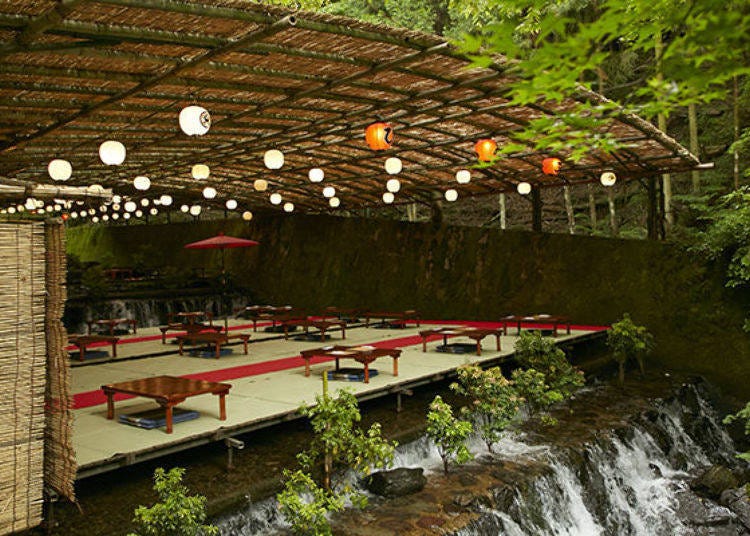
The kawadoko culture began in Kyoto about 400 years ago, during the Azuchi-Momoyama Period, and continued until the Edo Period. It began when establishments such as tea shops along the Kamogawa River would line up shogi, or little folding stools, for people to enjoy the cool evening outdoors.
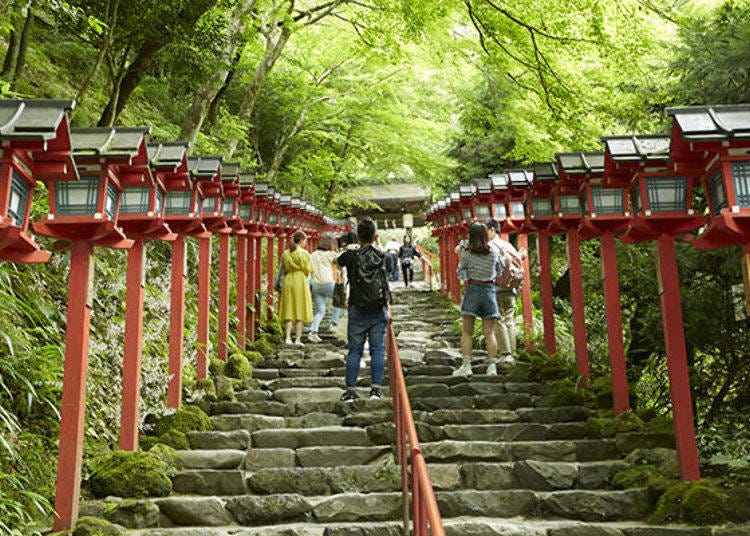
Kibune is one of the water sources of the Kamogawa River that flows through the center of Kyoto. It is also known as the place where the god in charge of the water in Kyoto resides at the Kibune Shrine.
Boasting one of the oldest histories in Kyoto, Kibune Shrine is known as a power spot where many worshippers have come since long ago. The ryokan and teahouses along the Kibune River and near the shrine offer relaxation to shrine-goers.
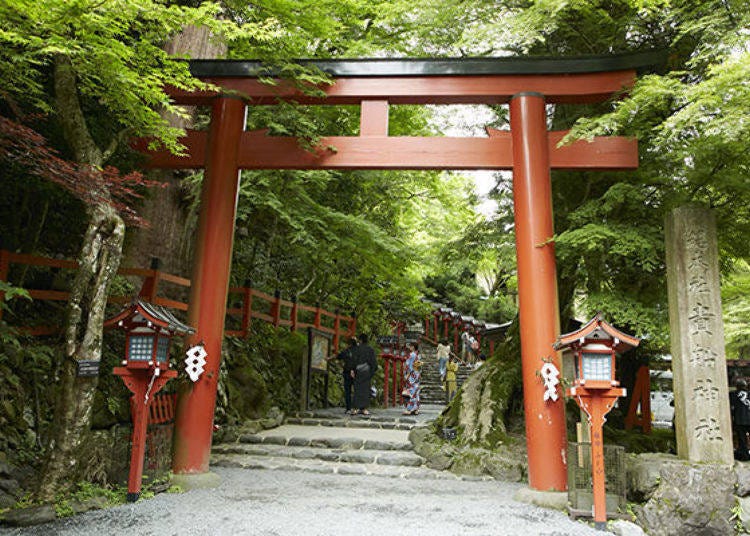
The kawadoko dining tradition of Kibune dates back to the Taisho Period (1912–1926). According to local lore, the riverside platforms first appeared when visitors flocking to Kibune, long known as a cool summer retreat, began gathering along the river to dip their feet in the refreshing water. To accommodate them, teahouses started setting up noryoka, or outdoor terraces, directly above the stream.
Dining at Ryori Ryokan Hirobun
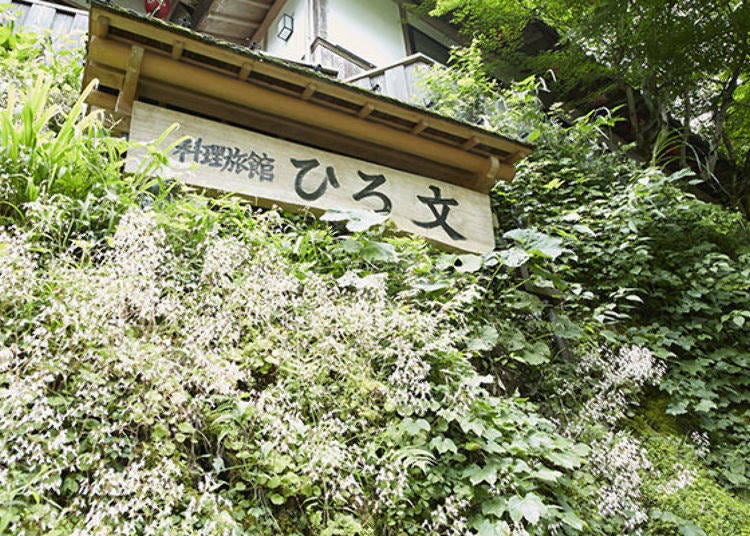
Today, several dozen restaurants and inns in Kibune offer kawadoko dining, with platforms built directly above the river. Each has its own atmosphere and specialties, giving visitors plenty of opportunities to enjoy a meal surrounded by the cool sights and sounds of the flowing water.
For this visit, I headed to the well-known Ryori Ryokan Hirobun to experience both its kaiseki cuisine and famous nagashi somen. The nearest station is Kibune-guchi Station on the Eizan Electric Railway. From there, it is about a 30-minute walk, or you can take a Kyoto Bus bound for Kibune and get off at the Kibune stop, about 10 minutes away.
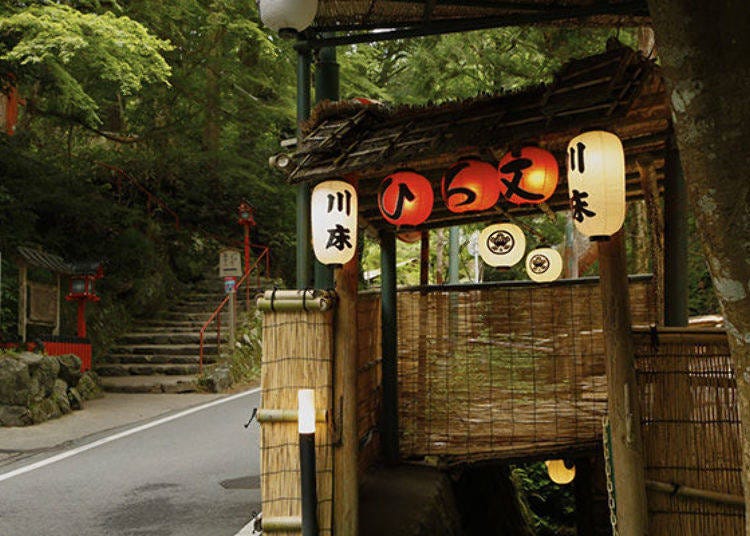
At the entrance, the kaiseki dining area and the nagashi somen area are separate. (Nagashi somen is a popular summer experience in which thin wheat noodles flow down long bamboo flumes and diners catch them with chopsticks before eating them.) This entrance leads to the kaiseki side, where staff members are on hand to greet guests and guide them to the appropriate dining area.
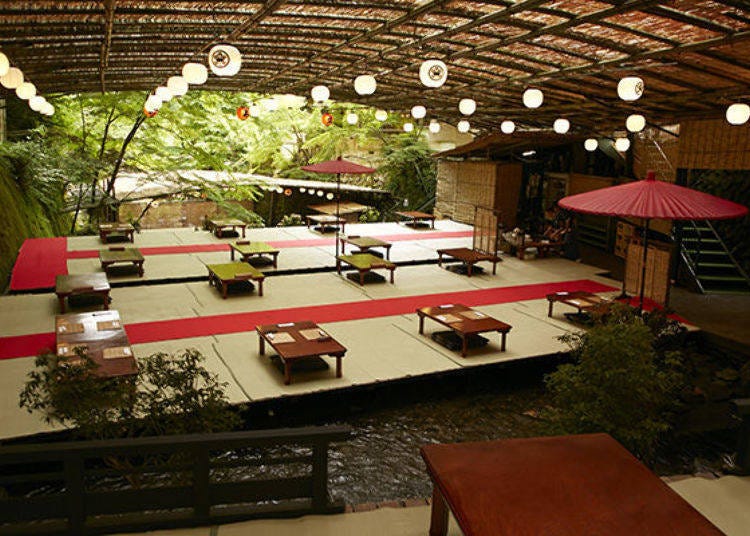
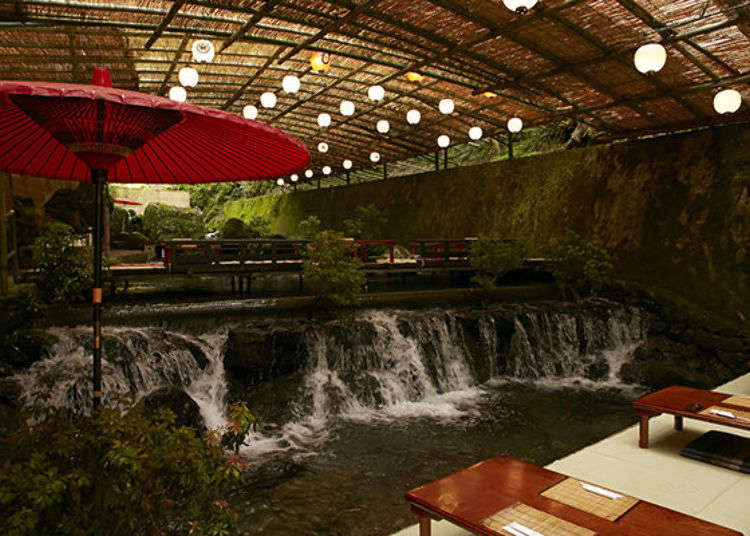
This is the kaiseki room. The red carpeting, umbrellas, and lanterns are quite a sight. The river flows right by your feet, and is only centimeters away from the floor. You can even stick your hand inside by reaching out. Looking up you see green leaves growing on the bamboo screen covered roof, signaling the arrival of summer.
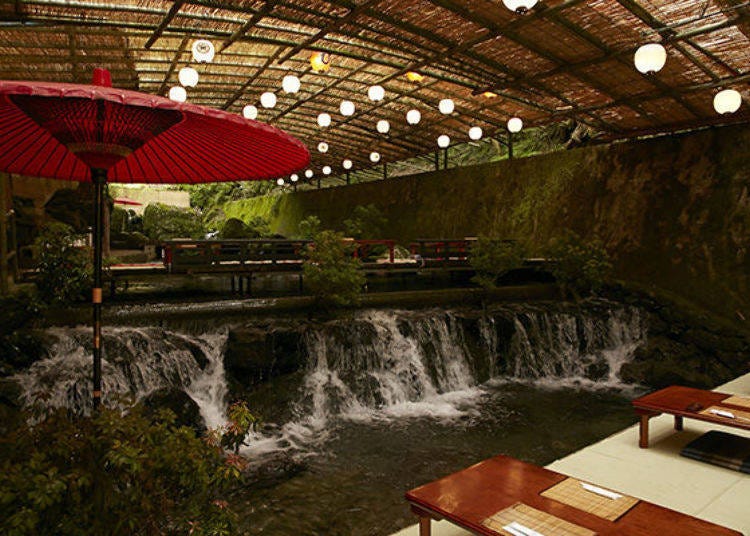
Some seating areas even offer views of a nearby waterfall. While the rushing water is far from quiet, its steady rhythm creates a soothing natural soundtrack that gradually helps you relax and unwind.
The breeze drifting up from the river felt surprisingly cool for early summer. While temperatures in central Kyoto can reach around 35°C (95°F), Kibune is often nearly 10°C cooler at about 25°C (77°F). Sitting above the flowing water, it's easy to see why many people describe Kibune's refreshing climate as nature's own air conditioning.
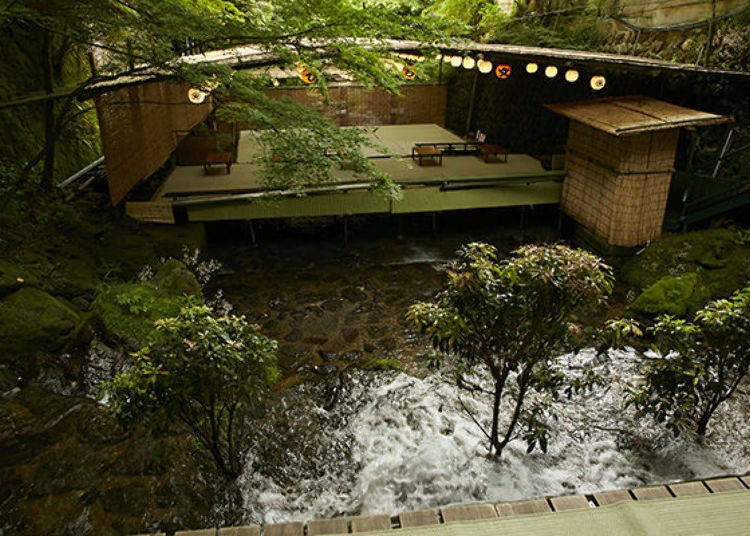
A cool summer experience! Trying out the popular nagashi somen floating noodles
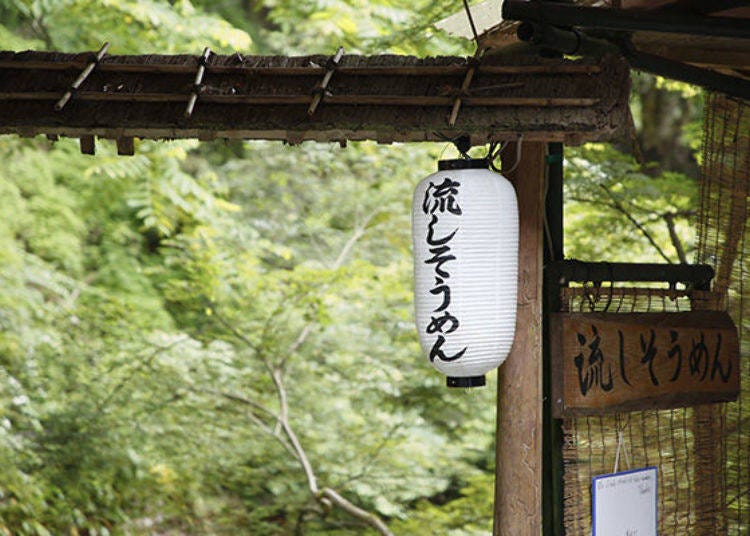
Before getting to the kaiseki meal, it's worth taking a look at Hirobun's famous nagashi somen. Enjoying these chilled noodles while seated above the river is a uniquely refreshing summer experience, and its popularity is easy to understand. Long lines are common, with visitors from both Japan and overseas often spending their wait taking photos of the picturesque setting.
Despite its popularity, the nagashi somen is reasonably priced at 2,000 yen (tax included; cash only). Advance reservations are not available, so wait times can be lengthy depending on the day and time of your visit. If you're hoping to try it, it's a good idea to leave plenty of extra time in your schedule.
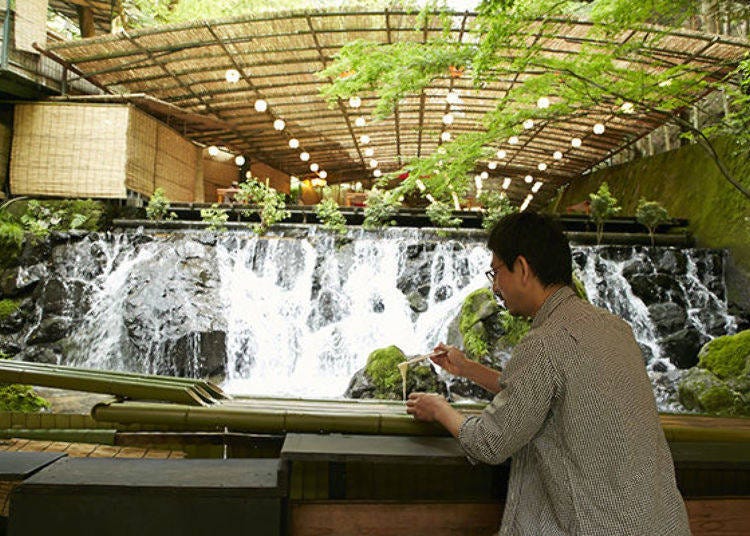
And now, it is time to try the somen. There are six bamboo flumes, divided into one per group, with water flowing smoothly through them. Holding my bowl and chopsticks, I watch and wait...
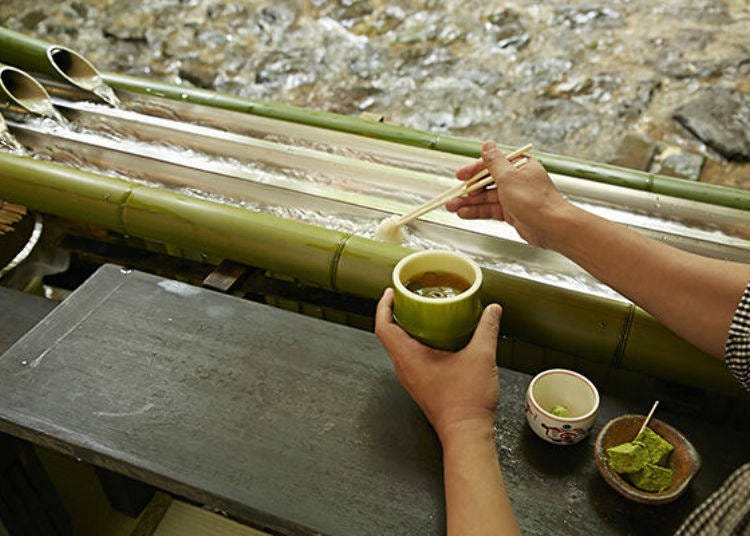
There it goes!
The pure white somen noodles flow down in bite-sized clusters. Light in weight and moving at a leisurely speed, it is perfect enough to pick up with just one chopstick.
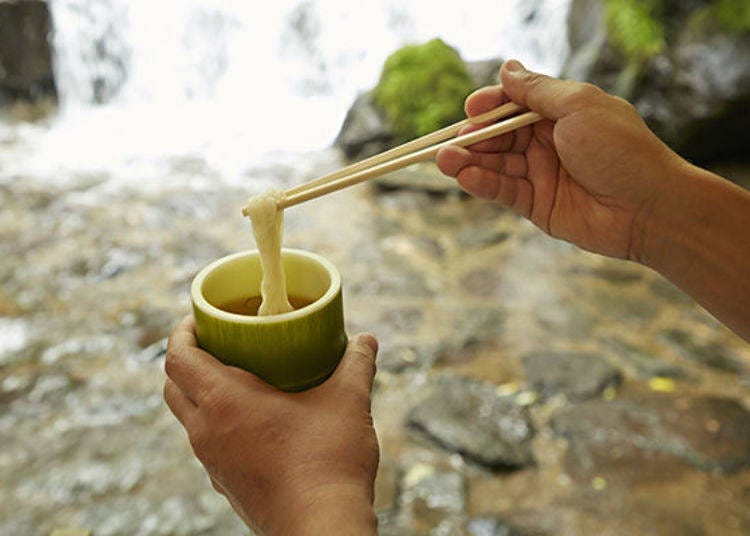
After putting the somen I picked out in the soup, it's time to eat!
"Slurp, slurp... Mmm!" It's so delicious!
Probably because of the good water quality, I could taste the somen very clearly. I personally liked the tsuyu dipping sauce, which was a little dense to prevent thinning out. There was also plenty of wasabi.
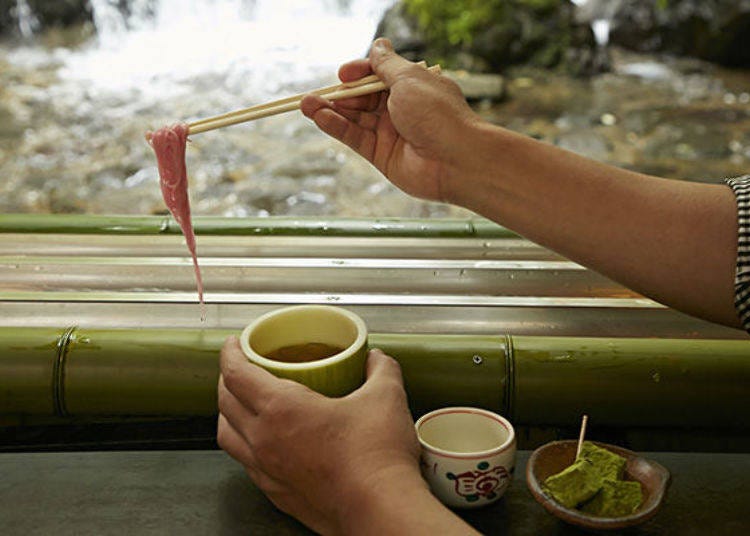
The somen flows down through the water to be picked up and placed in the soup several times. When the red somen as seen in the photo comes down, it has come to an end. These noodles are very flavorful, and a good way to wrap up the meal.
Listening to the sound of the waterfall while enjoying nagashi somen in the cool breeze... such a luxurious experience that won't be easily found elsewhere.
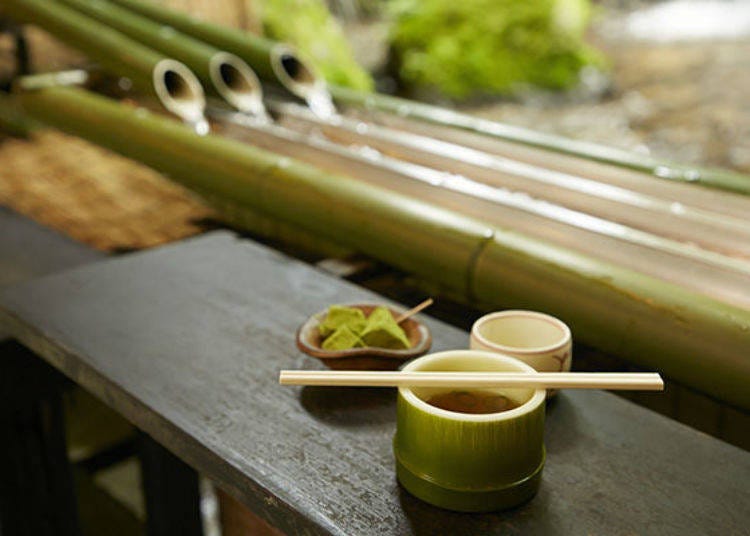
Enjoy a real authentic and refreshing Kibune summer cuisine with every dish!
Hirobun offers a variety of dining options, ranging from casual seasonal meals to elaborate kaiseki courses. During late spring and early summer, a limited-time Seiryo-zen set is available on weekdays for 4,840 yen (tax included; cash only). Guests can also choose from authentic kawadoko kaiseki meals priced from 10,890 to 20,570 yen (tax included), with course contents varying by season.
Other specialties include an unagi nabe (eel hot pot) course and a hamo (pike conger) course, both priced at 18,150 yen. Reservations are available for parties of two or more, and ingredients may change depending on seasonal availability.
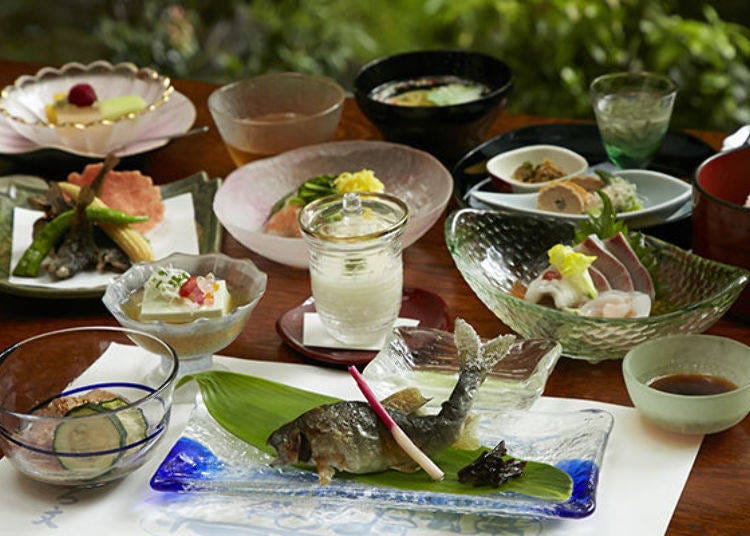
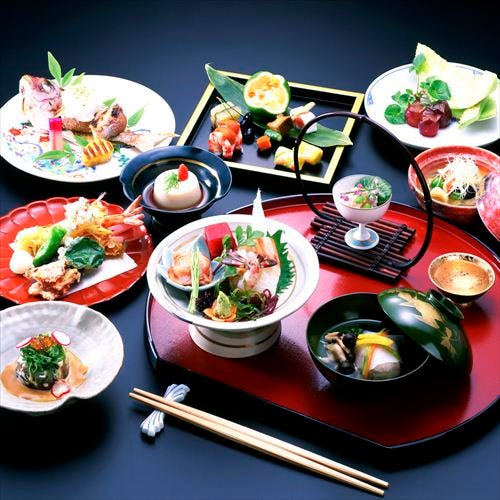
The line-up includes 11 dishes: hassun (seasonal dish), sashimi, soup, takiawase (boiled vegetables), yakimono (broiled food), aburamono (fried food), rice, pickled vegetables, and dessert. There is quite a variety of local dishes using seasonal ingredients. Here are some I found particularly delicious.
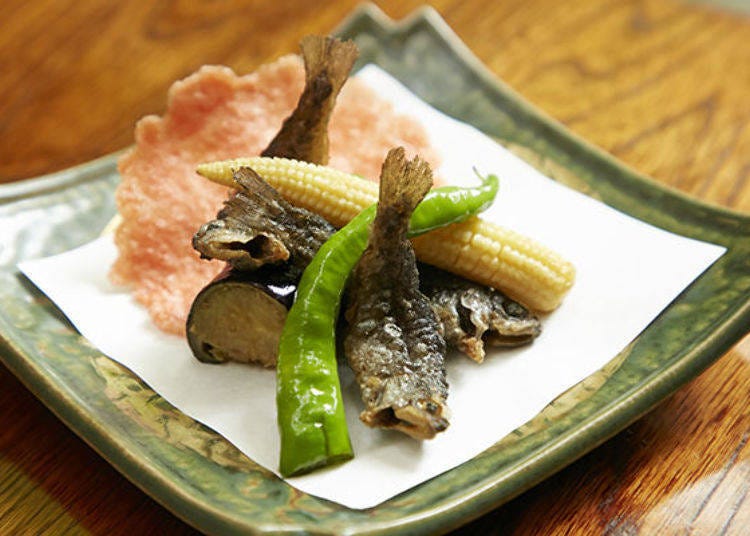
First is the fried amago. Amago is a fish from the same family as salmon and trout, characterized by red spots on the body. It is a delicious fish with a light and pleasant taste.
These small amago can be eaten whole, including the head, and have a fried, crispy aroma.
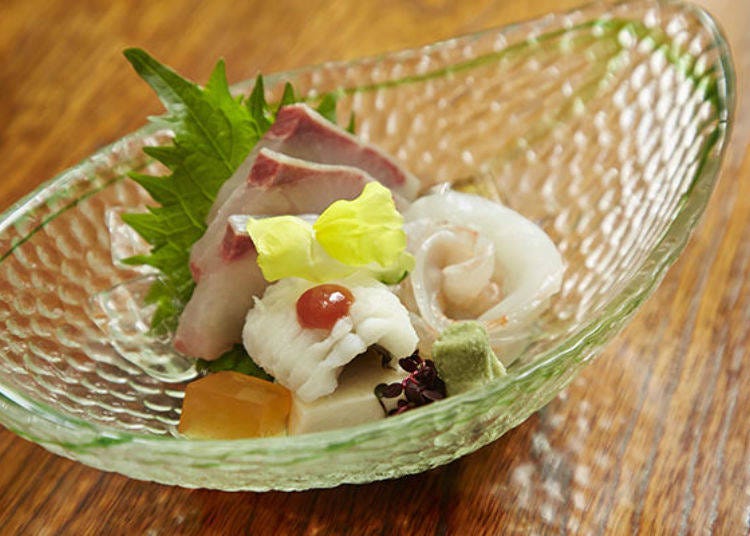
Next is the hamo, a type of pike conger, unique to this season. The meat of the hamo is light and chewy, and goes well with the refreshing taste of ume (Japanese plum). It is also recommended to eat it together with the soup. The shrimp and squid sashimi were served with great detail in the shape of a petal.
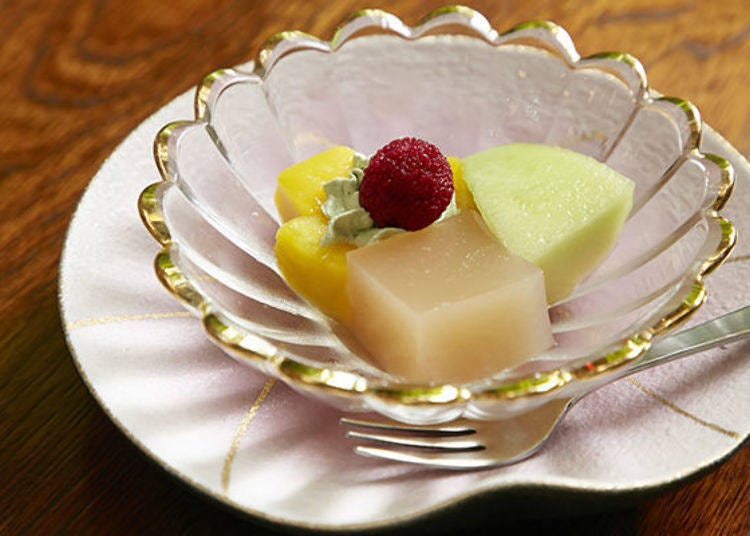
And finally, dessert. Today it was melon and yellow peach, with yamamomo (bayberry) and a peach agar jelly. With the seasonal fruit and the coolness of the kawadoko, one could really get a feel for summer in Kyoto.
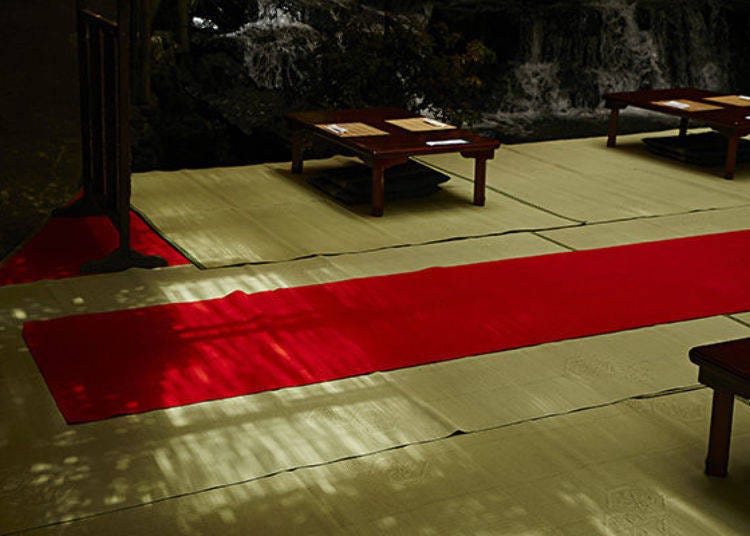
Kibune's kawadoko is open from May 1 until around the end of September. The enjoyment of the river flowing beneath the kawadoko in the mountains is quite a different experience from the busy city. Why not take the time to enjoy the summertime of Kyoto for yourself this year?
-
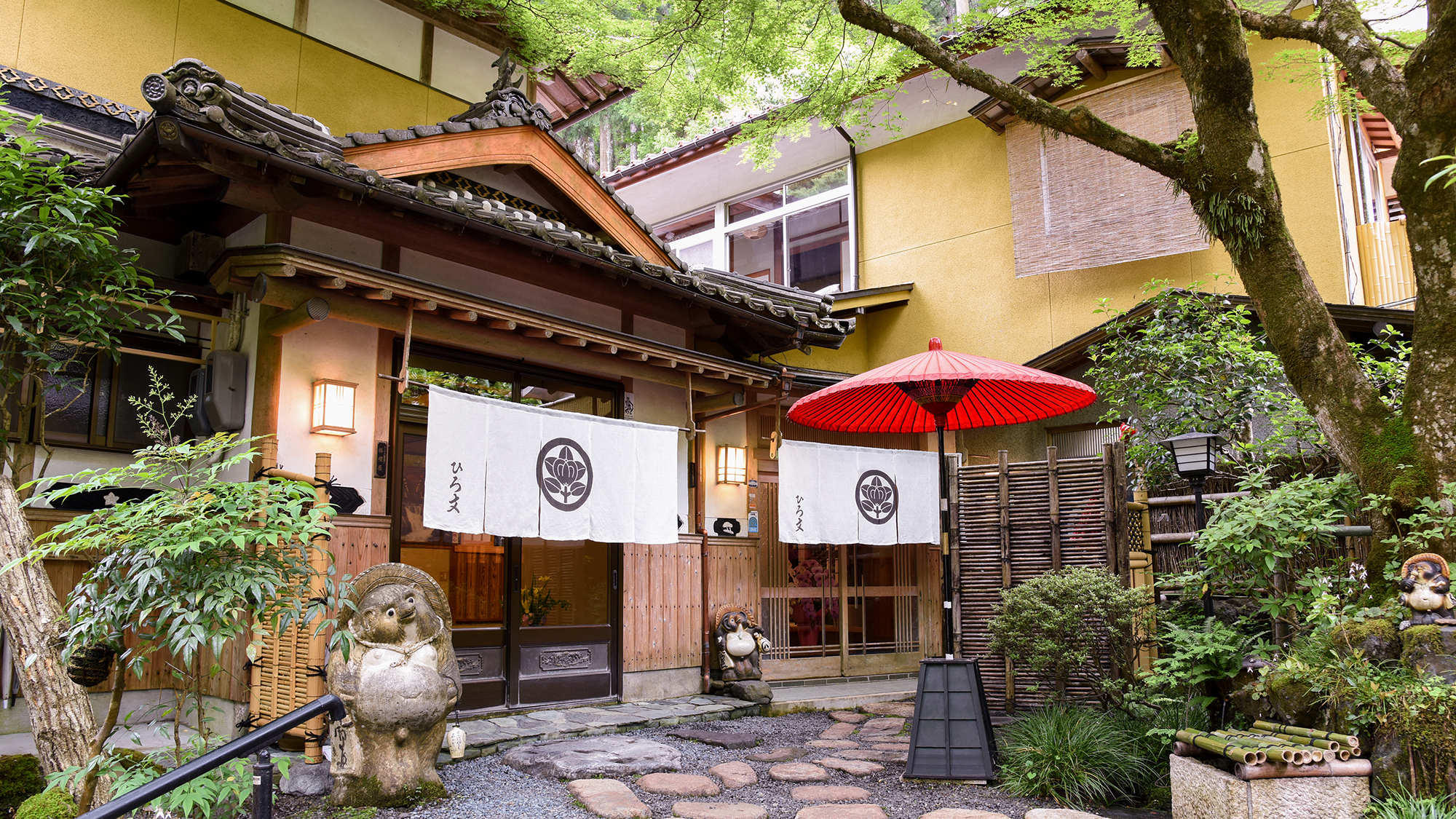 Ryokan Hirobun料理旅館 ひろ文
- Address 87 Kurama Kibunecho, Sakyo-ku, Kyoto-shi, Kyoto View Map
- Original source: Rakuten Travel
Vacancy search, reservation
-
from 70,180JPY 1room, 2adults
Check with our partner site as the latest rates, rate details, and guest room requirements may vary.
Other kawadoko restaurants in Kibune
Ryori Ryokan Hirobun is just one of many restaurants where you can experience Kibune's famous kawadoko dining. To help you explore more options, we've also included several popular riverside restaurants selected from Gurunavi, one of Japan's largest restaurant guide and reservation platforms.
- Kibunefujiya
- KIRAKU (Online booking available)
- Nakayoshi
- Ugenta

- Area
- Category
*Prices and options mentioned are subject to change.
*Unless stated otherwise, all prices include tax.

Popular Tours & Activities
Recommended places for you
-
Jukuseiniku-to Namamottsuarera Nikubaru Italian Nikutaria Sannomiya
Izakaya
Kobe, Sannomiya, Kitano
-
ISHIDAYA Hanare
Yakiniku
Kobe, Sannomiya, Kitano
-
Goods
Yoshida Gennojo-Roho Kyoto Buddhist Altars
Gift Shops
Nijo Castle, Kyoto Imperial Palace
-
Osaka Aquarium KAIYUKAN
Zoos, Aquariums & Botanical Gardens
USJ, Nanko Port
-
Koshitsu Fugukaniryori Isobue
Other Japanese Food
Namba, Dotonbori, Shinsaibashi
-
Gion Obanzai Nagatanien
Other Japanese Food
Gion, Kawaramachi, Kiyomizu-dera Temple
-
Osaka After Dark: The Ultimate Rooftop & Riverside Beer Garden Guide
by: Guest Contributor
-
July Events in Kansai: Fun Festivals, Food, and Things to Do in Kyoto & Osaka
-
Top-Booked in Japan: Must-Try Sushi in Osaka for First-Time Visitors
by: Guest Contributor
-

This October, Japan's Bullet Train Is Launching an Ultra-Luxurious New 'Supreme Class' Shinkansen
by: Wemmy Chau
-
Kyoto Just Got Easier: How pikuraku PORTER Lets You Travel Hands-Free
by: Guest Contributor
-
August Events in Kansai: Fun Festivals, Food, and Things to Do in Kyoto & Osaka
Inspiration for Accommodations
-
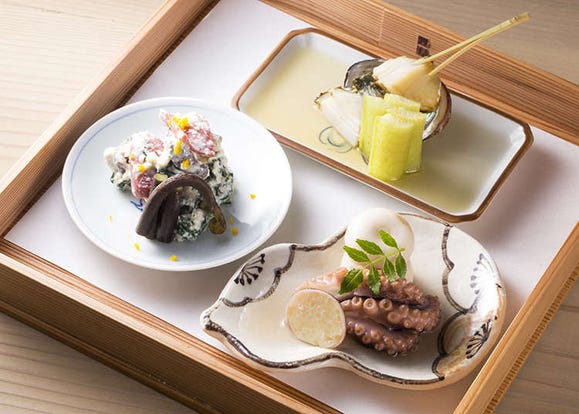
Fine Japanese Dining in Kyoto! Top 3 Japanese Restaurants in Kiyamachi and Pontocho Geisha Districts
-
This Hidden Spot Has Held the Secret to Making Kyoto Tofu Taste Good For Over 300 Years
-
38 Best Things to Do in Kyoto: See, Eat, and Shop Your Way Through Japan's Cultural Capital
-
Hearty Japanese Katsudon Recipe: Crispy Pork Cutlet with Soft & Scrumptious Egg
-

How to Make Chicken Cheese Katsu - Japan's Crispy Fried Chicken With Gooey Molten Cheese Center
-
Complete Guide to Buying Japanese Medicine in Japan: Phrases and Vocabulary You Need to Know
- #best gourmet Osaka
- #things to do Osaka
- #what to do in kyoto
- #what to bring to japan
- #best gourmet Kyoto
- #new years in Osaka
- #what to buy in nanba
- #Visiting Osaka
- #onsen tattoo friendly arima
- #daiso
- #Visiting Kyoto
- #best japanese soft drinks
- #japanese fashion culture
- #japanese convenience store snacks
- #japanese nail trends