




Getting Around Hokkaido in Winter: Transportation Tips to Know Before You Go
- Written by: Minna no Kotoba Sha
Traveling in Hokkaido in winter, you'll discover a fantastic wonderland where you can enjoy skiing and snowboarding in some of the world's best powder snow!
Superb winter scenery, like drift ice and 'diamond dust', are major sightseeing draws, along with the numerous hot springs and warming winter cuisine.
There is a wealth of attractive sightseeing spots, but the question is about getting around Hokkaido in winter. You especially have to be careful about driving in Hokkaido in winter, and mindful of delays and suspension of trains and buses due to bad weather.
Here, we will share about roads that are subject to traffic regulation in Hokkaido in winter, and points to note regarding trains and buses - so you may enjoy a trip unique to the snowy country!
- Table of Contents
-
- What are the most common Hokkaido road conditions in winter?
- Central Hokkaido: Areas subject to winter traffic controls
- Southern Hokkaido: Areas subject to winter traffic controls
- Northern Hokkaido: Areas subject to winter traffic controls
- Eastern Hokkaido: Areas subject to winter traffic controls
- Precautions for driving in Hokkaido in winter
- Getting around Hokkaido in winter by plane, train or bus
What are the most common Hokkaido road conditions in winter?
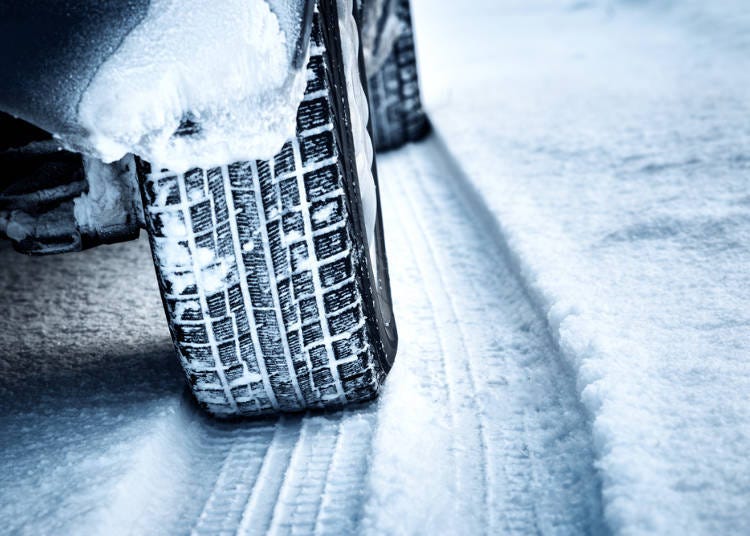
Even for the residents of Hokkaido, driving on winter roads is a difficult task. Be it the snowfall, snowstorm or frost, these are just some regular concerns for driving in Hokkaido in winter.
Skidding

There are two types of winter roads: snow-covered roads where snow is piled up and compacted, and ice-burned roads where snow that has once melted freezes again over the road.
During a full-brake test at 50 km/h, the distance covered after braking was about 10m on a dry pavement road, about 35 on a snow-covered road, and about 112m on an ice-burn road!
(Data from the Living Environment Division, Living Environment Bureau, Hokkaido Environment and Life Division)
Black ice

Furthermore, there’s a more dangerous variant of icy roads, which are those covered in “black ice”. Black ice is the same as regular ice. At first glance, it looks like a typical road, if not slightly wet.
However, in reality, a black ice-covered road is frozen over with transparent ice, which makes it difficult to detect. These cases are common at pedestrian crossings, below overpasses, and near the entrances of tunnels.
Whiteout
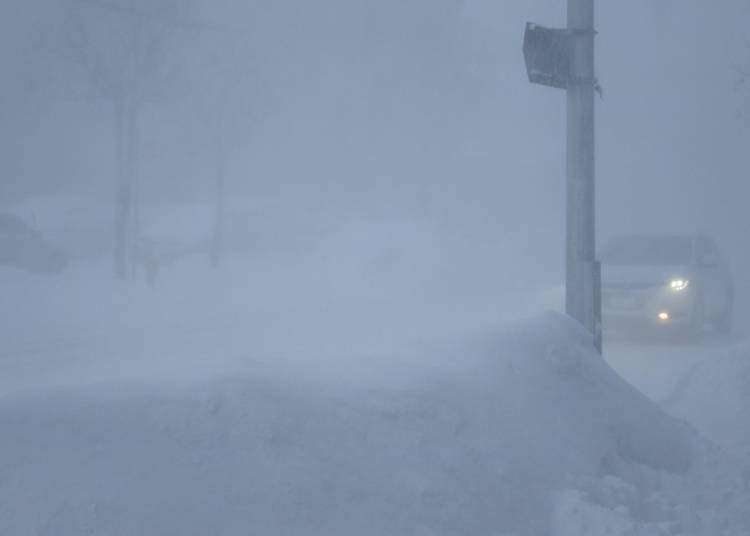
When your vision is impaired due to blizzards or strong winds when the snow gets thrown about. Also occurs when a heavy vehicle drives pass and throws up a cloud of snow, obstructing vision. Both the road and the scenery end up a single shade of white, making it all but impossible for you to figure out which direction you’re heading in.
Central Hokkaido: Areas subject to winter traffic controls
When these phenomena become rampant due to weather conditions, speed restrictions and road closures will likely be imposed. Here are the spots that often face such regulations by area.
Hokkaido Expressway / Ebetsu Higashi IC-Fukagawa JCT
An expressway that connects Sapporo and New Chitose Airport to Asahikawa and provides access to the popular sightseeing spot, Asahiyama Zoo. This route passes through areas with a lot of snowfall, so there will be many speed restrictions and road closures.
Route 12 / Kamuikotan Tunnel, Harushinai Tunnel
Freezing and snowdrifts are likely to occur within the tunnel and at the entrance and exit and are thus listed as dangerous places which traffic accidents often occur at.
National Route 230 Nakayama Pass / Snow Shelter
Cross the roadside station Moyonakayama and heading towards Kimobetsu from Sapporo, the pass also has a shelter to keep out snow, but the road surface may freeze, nonetheless.
National Route 393 - Kenashi Pass
Located on the border between Otaru City and Akaigawa City, it is widely used as an access to Kiroro Resort. Be careful about slipping when continuing on the steep slope and the hairpin curve.
Southern Hokkaido: Areas subject to winter traffic controls
National Route 37 / National Route 230 - Shizukari Pass
This is a pass at the border between Nagamanbe-cho and Kuromatsunai-cho, and while there is relatively little snow before and after, snowfall around the pass is heavy and visibility may be poor.
National Routes 228 to 229 / Oiwake Soran Line
A scenic area along the coast of Esashi-cho, Suttsu-cho, and Iwanai-cho, where the Sea of Japan and strangely shaped rocks stretch on. In winter, strong winds from the sea tend to cause snowstorms and snowstorms.
Northern Hokkaido: Areas subject to winter traffic controls
National Routes 231 to 232 / Orolon Line
The best drive route to enjoy the scenery of the Sea of Japan running along the coastline from Ishikari City to Teshio Town. One can never be too careful about traffic restrictions due to strong winds and snowstorms in the winter.
Eastern Hokkaido: Areas subject to winter traffic controls
Doto Expressway / Yubari Interchange-Tokachi Shimizu Interchange
An expressway connecting Sapporo and New Chitose Airport to Obihiro and Kushiro. Often experiences poor visibility due to snowstorms, and attention needs to be paid to front and rear vehicles in sections where the lane is flanked by other lanes on each side. Cars may be tossed about by strong winds around Tokachi Shimizu.
Dotohigashi Expressway / Uraporo Interchange-Akan Interchange
Since strong winds often blow at straight roads with little obstruction, cases where vehicles are overwhelmed or when vision gets obscured by the snowstorm are not uncommon.
National Route 241 / Akan Crossing Road
A pass from Kamashikashiro through Lake Akan to Teshikaga that has steep slopes and sudden curves. Be careful about slips and poor visibility.
Precautions for driving in Hokkaido in winter

When driving on winter roads, sudden operations such as "sudden braking", "sudden acceleration" and "sudden steering" are prohibited. Operate the brakes and accelerator smoothly and slowly and proceed at a gentle pace.
It thus goes without saying to keep a good distance from the car in front, but when visibility is poor, it is also important to maintain some distance to see the brake lights of the car in front to understand the traffic situation. Also, turning on the headlights during the day to let others know about your car is basic courtesy.
Visit the Hokkaido Development Bureau's road condition site and Hokkaido's comprehensive road information site, Kita no Road Navi to check up on the road conditions before you go.
Getting around Hokkaido in winter by plane, train or bus
Rental cars, buses, trains and planes are just some of the means of transport in Hokkaido, and each have their own merits and demerits when travelling around Hokkaido.
Flying

From New Chitose Airport, you can fly to Hakodate, Kushiro, Memanbetsu, Wakkanai, Nemuro, Rishiri (June-September), and from Sapporo Okadama Airport, to Hakodate, Kushiro, and Rishiri.
Although you save about 40 to 60 minutes, operation delays due to bad weather and snow removal are all too common in winter and in the worst case, the flight might even be cancelled.
Train

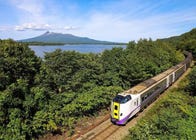
With deals such as the "Hokkaido Free Pass" (27,430 yen), which allows unreserved seats on regular express trains within JR Hokkaido and free use of the JR Hokkaido Bus (except on some routes) for 7 days, you can travel the region at a low price.
However, depending on the route you might have very few lines that take you to your destination, so preparation is necessary if you’re planning on going to a more obscure location. Again, delays or waits occur frequently during heavy snow or blizzards.
This is especially common on trains between Sapporo Station and New Chitose Airport during snowstorms. We strongly advise keeping an eye on weather forecasts and considering departing a bit earlier than planned when heavy snow is forecast
Bus
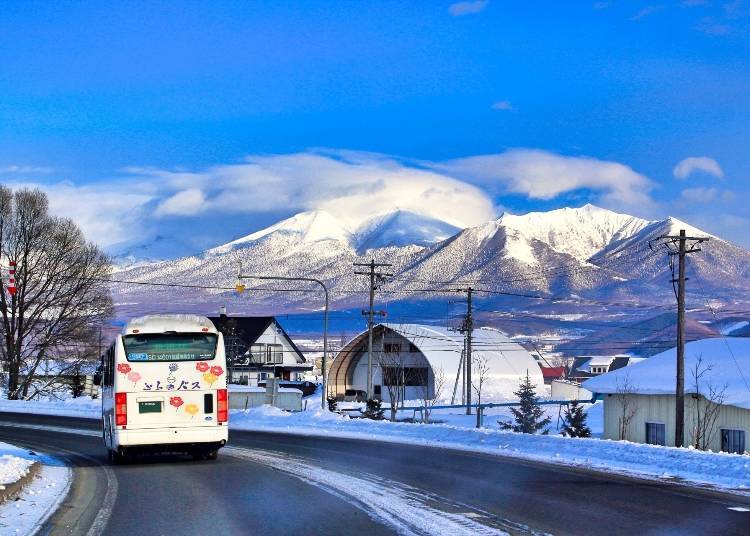
The most cost-efficient option for travel across long distances, with bonus points in convenience if a highway bus route that runs to the destination is available. Areas not accessible by train might possibly be an option with long-distance route buses.
However, its demerits include compulsory reservations depending on the route, and during periods of congestion depending on the weather some rides may get canceled. Again, seek out the individual bus service providers for more information on operations.
Rental car
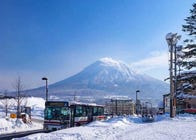
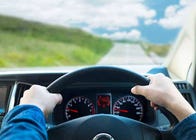
Lastly, a rental car offers the most freedom and flexibility, allowing you to access remote areas and easily transport heavy ski and snowboard gear. However, please be aware that road conditions can be treacherous; we do not recommend this option if you are not experienced in driving on snow and ice.
If you are confident in your winter driving skills, LIVE JAPAN recommends booking with Nippon Rent-A-Car. You can get 10% off when you book via the special link below using the coupon code: iUzM2RfVlJ

Consider all the above options when traveling long distances and make your trip as hassle-free as possible!
Minna no Kotoba Sha is a production company founded by an editor with extensive experience in editing local magazines in Sapporo. For over 20 years, our team has conducted research and written articles across Hokkaido, with Sapporo as our primary hub. Our diverse portfolio includes the production of various books such as travel guides, informational magazines, and collections showcasing the picturesque landscapes of Hokkaido. Comprised entirely of women, the team at Minna no Kotoba Sha boasts diverse interests, including a passion for travel, culinary delights, and alcoholic beverages. The scope of our communication efforts spans a wide range, covering everything from introducing notable restaurants to providing coverage of local events and sharing stories of leisure experiences.
- Area
- Category
*Prices and options mentioned are subject to change.
*Unless stated otherwise, all prices include tax.
Popular Tours & Activities
Recommended places for you
-
Appealing
Noboribetsu Onsen
Hot Springs (Onsen) & Bath Houses (Sento)
Noboribetsu / Lake Toya
-
Appealing
Odori Park
Parks
Sapporo / Chitose
-
Appealing
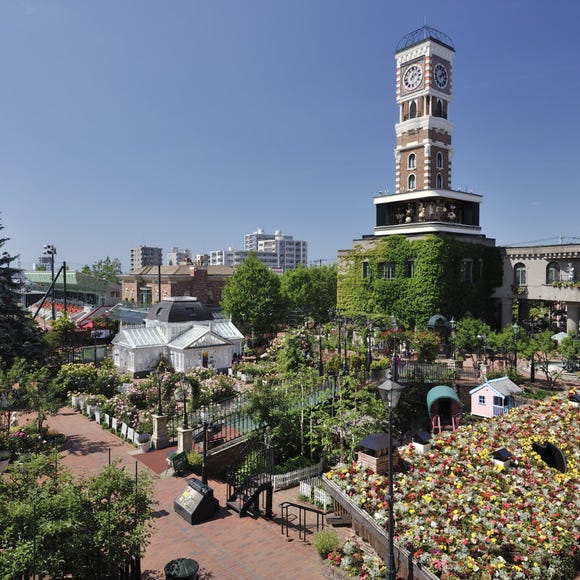
Shiroi Koibito Park
Theme Parks
Sapporo / Chitose
-
Appealing
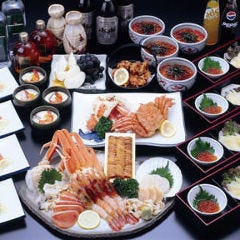
Rukku and Uohei
Izakaya
Sapporo / Chitose
-
Appealing
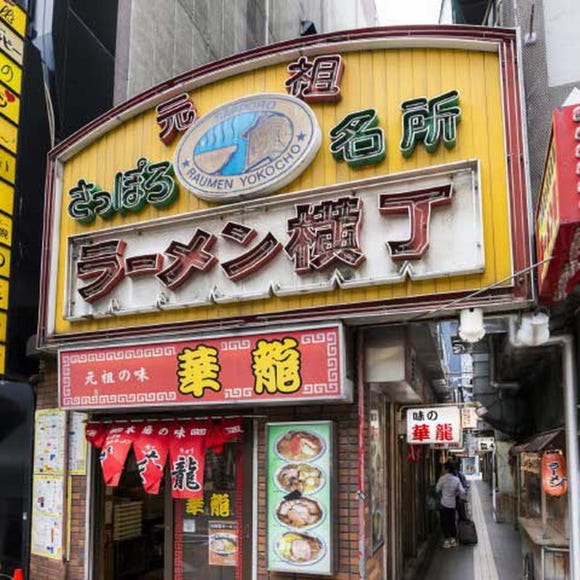
Sapporo Ramen Yokocho
Ramen
Sapporo / Chitose
-
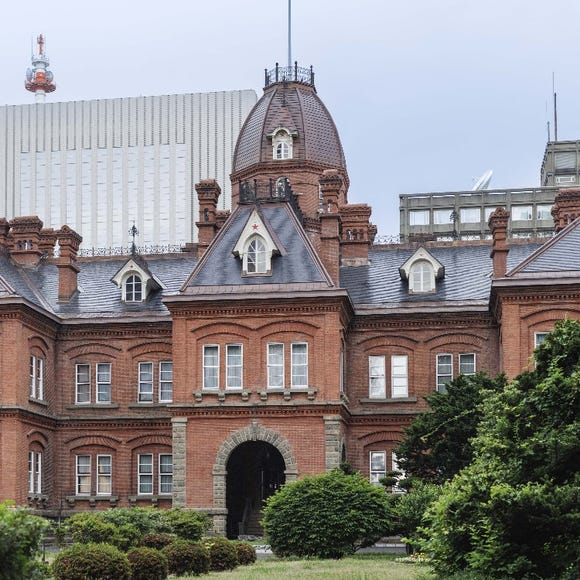
Former Hokkaido Government Office Building (Red Brick Office)
Other Historic Sites
Sapporo / Chitose
-
Enjoy A Private Morning Like a Movie: Exclusive Sunrise Experience at Furano's Garden of Wind
-
The Best Way to Visit Jozankei and Lake Toya from Sapporo: A Private Car Day Trip for Families and Seniors
by: Robotan
-
Hokkaido for Travelers from India: A Complete First-Trip Guide
by: Himanshi Shah
-
Hokkaido Rail Travel Guide: Why an Overnight Stay in Noboribetsu or Lake Toya Onsen Makes Sense — Plus Smart Booking Tips
by: Robotan
-
Brewing Tradition Since 1944: Visiting Kikko Nihon - One of Asahikawa's Longest-Running Soy Sauce Companies
-
Experience 'Ghost of Yotei' IRL! See Why Niseko is The Ultimate Summer Escape
-

8 Fun Things to do in Hokkaido in Winter
by: Andy Cheng
-
6 Most Scenic Spots Around Mount Yotei, Hokkaido: Gorgeous Sunflowers & More!
-
Surviving Hokkaido Winter: 4 Weird Tips From Our Sapporo Staff
-
Sapporo New Chitose Airport (CTS): Complete Guide to Restaurants, Souvenirs, Shopping & More!
-

Enjoy Hokkaido's Winter Magic: Guide to Snowy Adventures & Skiing
-
Japan's Bath Culture: Tips You Should Know!
- #best sushi hokkaido
- #things to do hokkaido
- #best ramen sapporo
- #what to bring to japan
- #new years in tokyo
- #what to buy in ameyoko
- #japanese nail trends
- #what to do in odaiba
- #onsen tattoo friendly tokyo
- #daiso
- #best sweets otaru
- #japanese fashion culture
- #best nature furano
- #japanese convenience store snacks
- #best japanese soft drinks