


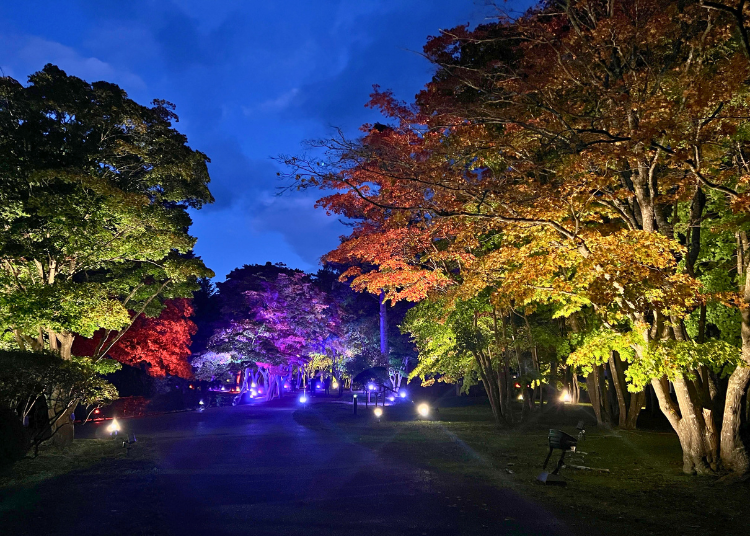
1 Day in Hakodate: Historic Mansions, a Star Fort & Glowing Night Maples (Autumn Itinerary)
- Written by: LIVE JAPAN Editor
In Hakodate in autumn, you can capture three completely different scenes in a single day: Western-style architecture on the slopes of Motomachi set against the autumn sky, the star-shaped fortress viewed from above Goryokaku Tower, and red leaves emerging under the lights at Kosetsuen, a Japanese-style garden. Located at the southern tip of Hokkaido, Hakodate's autumn foliage season arrives about 2 to 4 weeks earlier than in Tokyo or Kyoto, making it an excellent choice for repeat visitors looking to get an early start on foliage viewing.
The author personally walked this itinerary from October 20 to 22, 2026. The visit took place about a week before peak season, showcasing a transition phase where green, yellow, and red appeared simultaneously. This article faithfully shares what it looks like during this period to help you decide your departure timing.
(Main image: Hou / LIVE JAPAN)
(This article contains affiliate or coupon links. All featured facilities and experiences meet our editorial standards.)
- Table of Contents
-
- When to Visit Hakodate for Autumn Leaves? Best Timing & Kosetsuen MOMI-G Festival Schedule
- Autumn Color Report: What Is It Like Visiting Oct 20–22?
- Hakodate Autumn Leaves One-Day Itinerary Overview: West to East Without Backtracking
- Morning: Motomachi, Port Town Stroll With Western-Style Architecture & Autumn Colors
- Afternoon: Goryokaku Tower, Overlooking the Star-Shaped Fortress Adorned in Autumn Hues
- Dusk to Night: Kosetsuen MOMI-G Festival, Night Maple at Hokkaido's Only Nationally Designated Cultural Property Garden
- Transportation & Passes: Which Is the Best Value?
- What to Wear in Hakodate in Autumn? Weather & Clothing Advice
- Capture Hakodate's Japanese & Western Autumn in a Single Day
When to Visit Hakodate for Autumn Leaves? Best Timing & Kosetsuen MOMI-G Festival Schedule
The best viewing period for Hakodate's autumn leaves is usually from late October to early November. If you wish to see the peak foliage, it is recommended to schedule your trip between the last week of October and the first week of November.
Why Do Hakodate's Autumn Leaves Turn Earlier Than in Honshu?
Hokkaido sits at a higher latitude where autumn temperatures drop early and the temperature gap between day and night is large, creating ideal conditions for leaves to change color. According to data from the Hakodate Official Tourism Website, the average temperature in Hakodate is about 12.5°C in October and about 6.0°C in November. However, within Hokkaido itself, Hakodate is actually one of the "latest" regions for autumn foliage.
In other words, if you want to see red leaves in Hokkaido in early November, Hakodate is your safest choice. The peak viewing period for Kosetsuen over past years has mostly fallen between late October and early November. Note that this is only historical reference, as actual timing fluctuates yearly depending on temperatures.
| Region | General Peak Season |
|---|---|
| Daisetsuzan (Asahidake, Sounkyo) | Mid-September – Early October |
| Furano / Jozankei | Late September – Mid-October |
| Sapporo City Area | Mid-October – Late October |
| Hakodate | Late October – Early November |
Autumn Color Report: What Is It Like Visiting Oct 20–22?
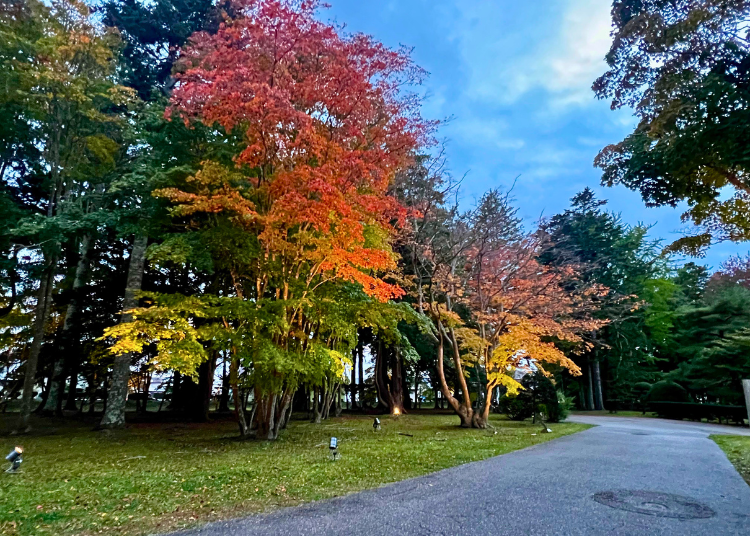
Our reporting dates were about a week ahead of peak season; conditions at the three spots were as follows:
・Motomachi (Oct 20): Street trees along Hachimanzaka Slope and Motomachi-zaka started turning orange and brown, but overall remained mostly green; clear blue skies made the Western-style buildings stand out vividly.
・Goryokaku (Oct 21–22): Viewed from the tower, the star-shaped Goryokaku Fort was still predominantly green with only sparse red patches; inside the park, a few maple trees along the moat and bridgehead were fully red.
・Kosetsuen (Oct 22): Individual maple trees displayed a gradient of red, orange, and yellow, but surrounding trees still had plenty of green leaves; the 100-meter maple tree avenue was about "half red" overall.
If you can only travel in mid-to-late October, there is no need to worry. The "gradient colors" mixing green, yellow, and red are equally photogenic, with fewer crowds than peak period for a more relaxed photo session. At night, colorful lighting at Kosetsuen makes even trees that haven't fully turned look vibrant.
Hakodate MOMI-G Festival (Kosetsuen Autumn Light-Up)
"Hakodate MOMI-G Festa" is the most anticipated autumn event in Hakodate, held annually at Kosetsuen with nighttime illuminations for autumn leaves.
2026 Dates: October 16 – November 8
・Light-up hours: 4 PM–9 PM
・Admission: Free
Hakodate Autumn Leaves One-Day Itinerary Overview: West to East Without Backtracking
Following the sequence of "Motomachi (West), Goryokaku (City Center), Kosetsuen (East)", heading east all the way finishes near Yunokawa Onsen, saving maximum travel time.
| Time | Itinerary |
|---|---|
| 9:30 AM | Take Hakodate Bus from Hakodate Station Bus Terminal for approx. 18 min to "Former British Consulate" stop |
| 10 AM | Motomachi Stroll: Former British Consulate, Motoizaka Slope, Old Public Hall of Hakodate Ward, Hachimanzaka, Church Group, grabbing a melon pan ice cream along the way |
| 11:30 AM | Walk downhill to Bay Area, explore Kanemori Red Brick Warehouses |
| 12 PM | Have lunch at Lucky Pierrot in the Bay Area |
| 1 PM | Take Hakodate City Tram from Jujigai Station toward Yunokawa (getting off at Goryokaku-koen-mae) |
| 1:45 PM | Goryokaku Tower Observation Deck and stroll through Goryokaku Park |
| 3:30 PM | Take Hakodate Bus to Kosetsuen (approx. 40 minutes) |
| 4:15 PM–5:30 PM | Kosetsuen: View daytime foliage first, followed by sunset "blue hour" and illuminated night maple |
| Night | Head to Yunokawa Onsen (approx. 10 min drive) for stay or hot spring bath |
From Our Visit: On October 22, 2026, we arrived at Kosetsuen around 4:40 PM as lights were turning on; 5:05 PM to 5:15 PM had deep blue skies, making it the best photogenic period of the day.
- Motomachi is at the foot of Mt. Hakodate (west), Goryokaku is in the city center, and Kosetsuen is near Yunokawa Onsen to the east. Moving in this order avoids backtracking.
- Take a bus up the slope in Motomachi first, then stroll downhill toward the bay area without climbing steep hills on foot.
- Slopes and Western-style architecture in Motomachi are great in morning sunlight; Kosetsuen requires waiting until dusk to catch the light-up.
- Popular restaurants around Goryokaku often have long lines at noon; eating in Motomachi/Bay Area before setting off is recommended.
Morning: Motomachi, Port Town Stroll With Western-Style Architecture & Autumn Colors
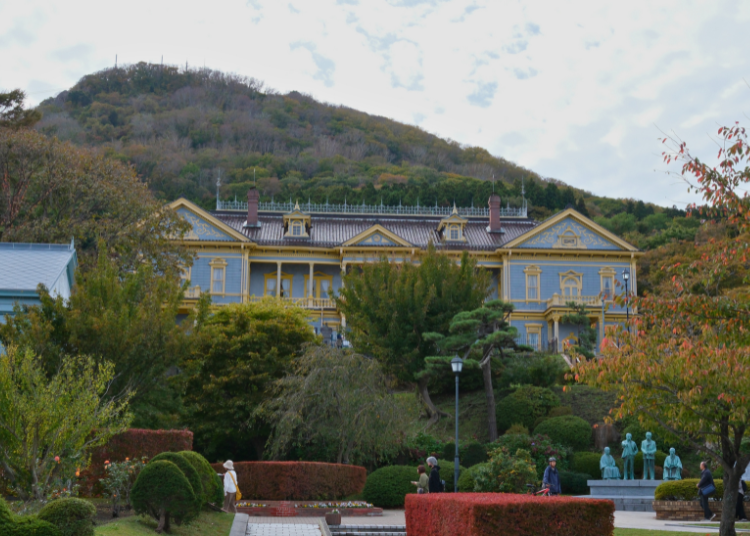
Motomachi represents the "Western" side of Hakodate. Churches, consulates, and public halls line up along the slopes of Mt. Hakodate, where autumn blue skies and color-changing street trees accentuate the architectural colors. Taking a bus up to the top of the slope and strolling down toward the bay is the most effortless route.
Take a Bus to the Top of the Slope First
With a full day ahead, it is advisable not to climb the slope from the bottom, but to take a bus directly from Hakodate Station to upper Motomachi.
・Route: Board Line 3 "Motomachi / Bay Area Loop Bus" at Bus Stop No. 4 in front of Hakodate Station, get off at "Kyu Igirisu Ryojikan/Old British Consulate" stop
・Time: Approx. 18 minutes
・Fare: Adult 250 yen (Transportation IC cards accepted)
Former British Consulate & Motoizaka Slope: Port Town Scenery Right Upon Alighting
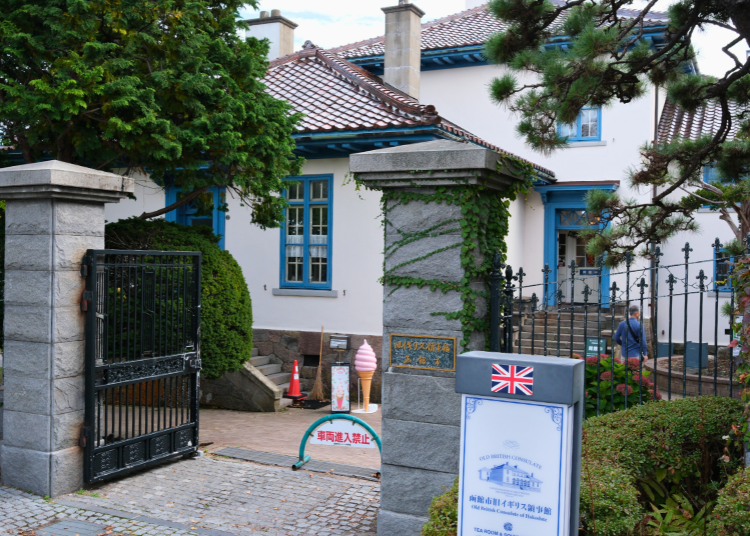
Right at the bus stop is the Former British Consulate (and Open Port Museum), featuring a white Western building with the Union Jack flag at the entrance. The slope outside is Motoizaka Slope, with cobblestone paving reaching all the way down to the sea.
-


-
Address
33-14, Motomachi, Hakodate-shi, Hokkaido, 040-0054
View Map -
Nearest Station
Hakodate Station (Hakodate Main Line)
- Phone Number 0138-27-8159
-
Address
33-14, Motomachi, Hakodate-shi, Hokkaido, 040-0054
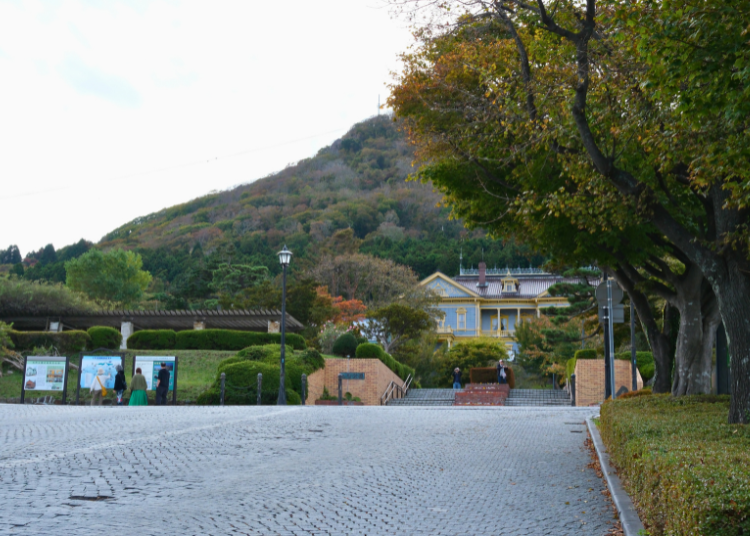
Motoizaka Slope's stone path leads upward directly facing Motomachi Park and the Old Public Hall of Hakodate Ward, backed by Mt. Hakodate. On October 20, trees on both sides of the slope were predominantly green, with only a few starting to show yellow and red hues.
Old Public Hall of Hakodate Ward: Blue-Gray & Yellow Meiji-Era Western Building
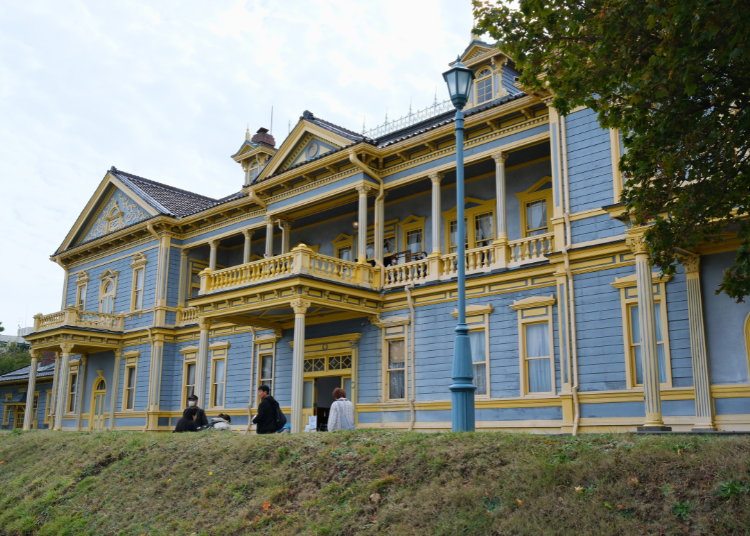
Built in 1910 (Meiji 43), the Old Public Hall of Hakodate Ward is an Important Cultural Property of Japan, whose blue-gray and yellow exterior walls stand out striking against autumn skies. Looking up from Motomachi Park reveals Mt. Hakodate tinted in autumn hues behind it; the second-floor balcony overlooks Hakodate Port.
-

-
Address
11-13, Motomachi, Hakodate-shi, Hokkaido, 040-0054
View Map -
Nearest Station
Hakodate Station (Hakodate Main Line)
- Phone Number 0138-22-1001
-
Address
11-13, Motomachi, Hakodate-shi, Hokkaido, 040-0054
Hachimanzaka: A Straight Slope Leading to the Sea
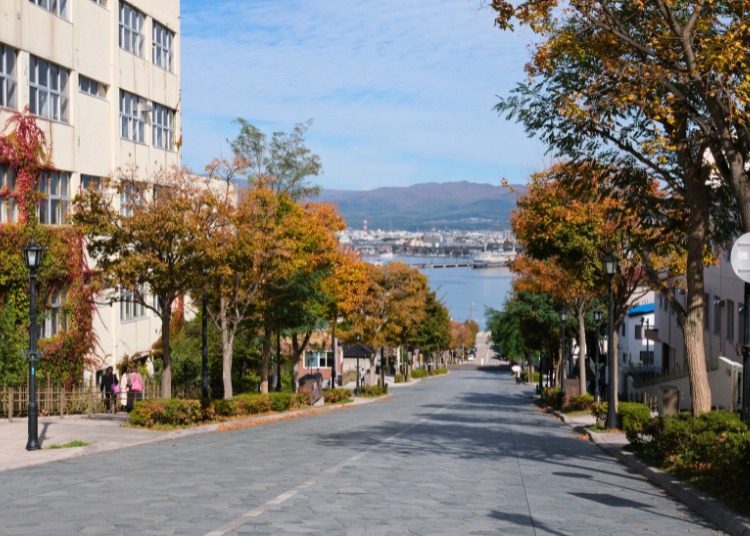
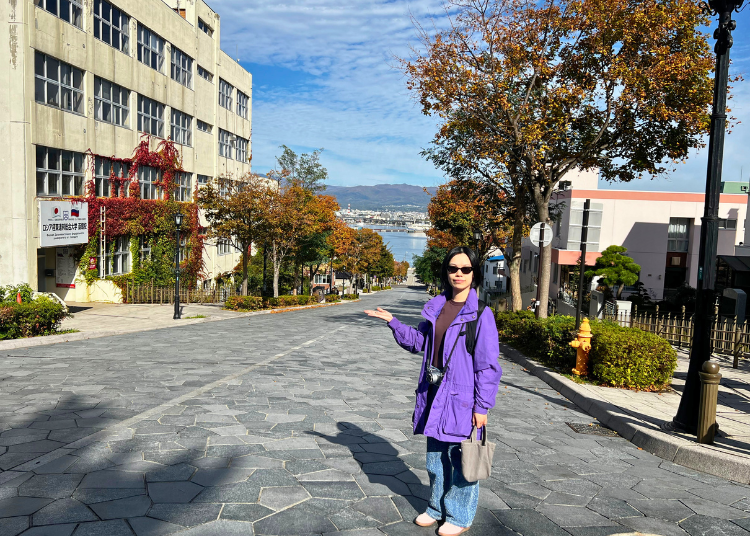
Walking west along the hillside from Motomachi Park for about 5 minutes brings you to the top of Hachimanzaka Slope. Hachimanzaka is one of Hakodate's most iconic views: a wide stone slope stretching straight toward Hakodate Port with moored ships visible at the end. During our visit on October 20, trees along the slope had turned orange-brown, making it the most autumn-infused stretch in Motomachi. Standing at the top allows you to capture both sea and autumn trees (watch out for traffic).
-
Appealing

-
Address
Motomachi, Hakodate-shi, Hokkaido, Suehirocho, 040-0054
View Map -
Nearest Station
Hakodate Station (Hakodate Main Line)
- Phone Number 0138-21-3323
-
Address
Motomachi, Hakodate-shi, Hokkaido, Suehirocho, 040-0054
Motomachi Church Group
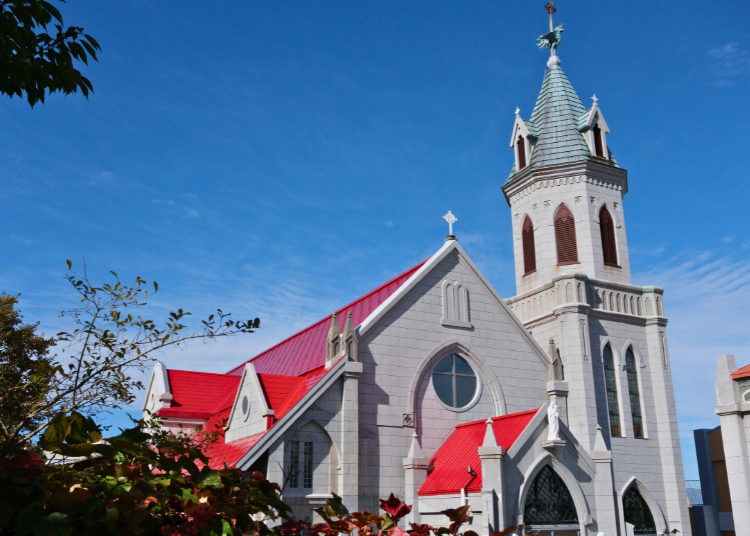
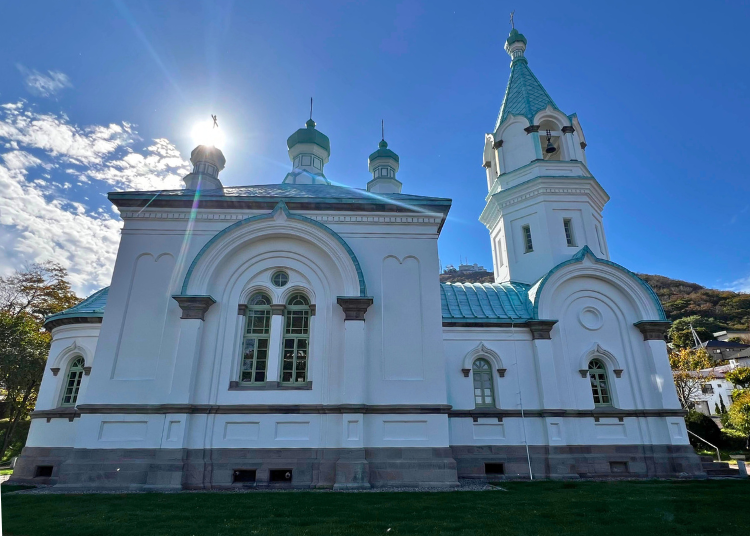
After photographing Hachimanzaka, walking east along the hillside back toward Motomachi Park leads to the church cluster area: Motomachi Catholic Church with its red roof and gray spire, and Hakodate Orthodox Church featuring white walls with green domes. Churches of different denominations stand side by side, preserving scenery from Hakodate's era as one of Japan's earliest open ports.
-
Appealing

-
Address
15-30, Motomachi, Hakodate-shi, Hokkaido, 040-0054
View Map -
Nearest Station
Suehiro-cho Station (Hakodate Tram Line 5 )
- Phone Number 0138-22-6877
-
Address
15-30, Motomachi, Hakodate-shi, Hokkaido, 040-0054
-

-
Address
3-13 Motomachi, Hakodate City, Hokkaido, 040-0054
View Map -
Nearest Station
Hakodate Station (Hakodate Main Line)
- Phone Number 0138-27-3333
-
Address
3-13 Motomachi, Hakodate City, Hokkaido, 040-0054
Take a Break With Freshly Baked Melon Pan Ice Cream Sandwich
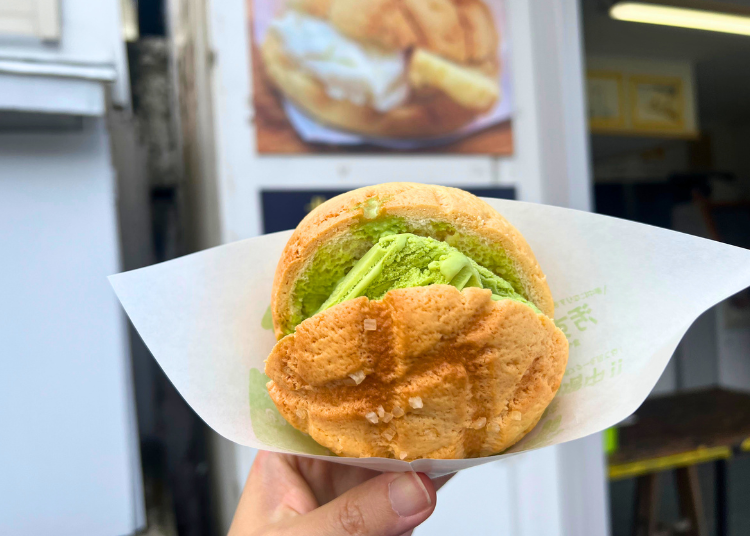
During the Motomachi walk, the author grabbed a melon pan stuffed with matcha ice cream at "World's Second Most Delicious Freshly Baked Melon Pan Ice Cream Hakodate Motomachi Store". Freshly baked warm melon pan combined with cold ice cream provides a hot-and-cold contrast ideal for recharging energy on slopes.
Downhill to Bay Area: Kanemori Red Brick Warehouses
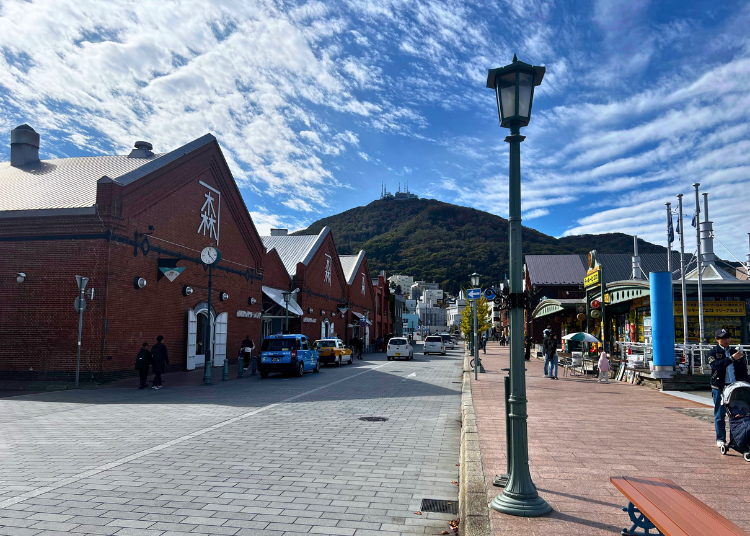
After touring around the group of churches, follow the slopes down toward the ocean to reach the Bay Area's Kanemori Red Brick Warehouses. Red brick warehouses from the Meiji era line the harbor, housing shops and restaurants where you can shop for souvenirs.
-
Appealing

-
Address
14-12, Suehirocho, Hakodate-shi, Hokkaido, 040-0053
View Map -
Nearest Station
Jujigai Station (Hakodate Tram Line 2 / Hakodate Tram Line 5 )
- Phone Number 0138-27-5530
-
Address
14-12, Suehirocho, Hakodate-shi, Hokkaido, 040-0053
Lunch: Lucky Pierrot Burgers in the Bay Area
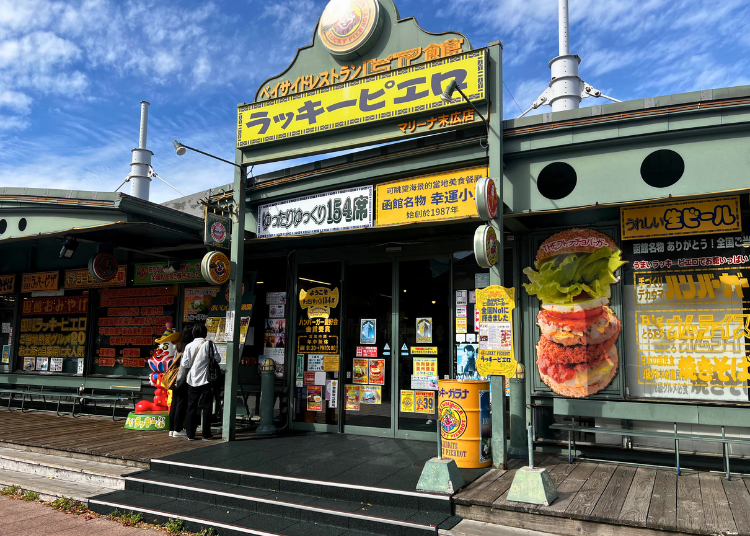
For lunch, local burger chain Lucky Pierrot is recommended. Two branches, Marina Suehiro Store and Bay Area Main Store, are nearby in the Bay Area with lively, easily recognizable storefronts. Restaurants around Goryokaku tend to have long lines at lunch, so eating here before taking the tram from Jujigai Station saves ample time in the afternoon.
Notes for Strollers and Wheelchairs
Main attractions in Motomachi are connected by slopes, with steps at some site entrances. Following the strategy of "riding up top first, then walking down" avoids strenuous uphill pushing. Electric assist shared bicycles are also available for rental in the city.
Afternoon: Goryokaku Tower, Overlooking the Star-Shaped Fortress Adorned in Autumn Hues
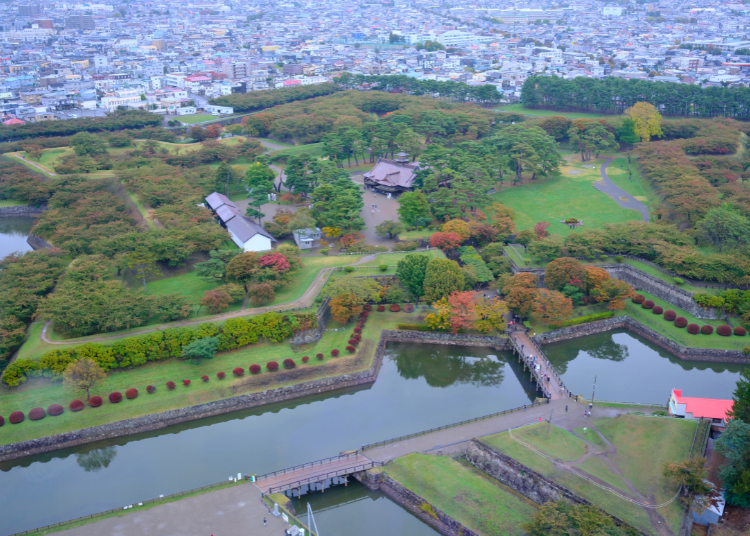
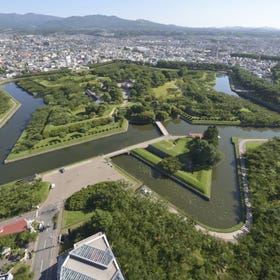
Goryokaku is a Western-style star-shaped fortress constructed in the late Edo period, currently designated as a Special Historic Site. The adjacent Goryokaku Tower observation deck offers a complete bird's-eye view of the five-pointed star.
During our tower visit on October 21, trees within the star fortress were mostly green with only a few red spots; the reconstructed Hakodate Magistrate's Office roof was visible in the center. Despite rain that day, the indoor observation deck permitted clear views of the star outline, making it one of Hakodate's few rain-proof attractions.
-

-
Address
43-9 Goryokaku-cho, Hakodate-shi, Hokkaido, 040-0001
View Map -
Nearest Station
Hakodate Station (Hakodate Main Line)
- Phone Number 0138-51-4785
-
Address
43-9 Goryokaku-cho, Hakodate-shi, Hokkaido, 040-0001
Strolling Inside Goryokaku Park
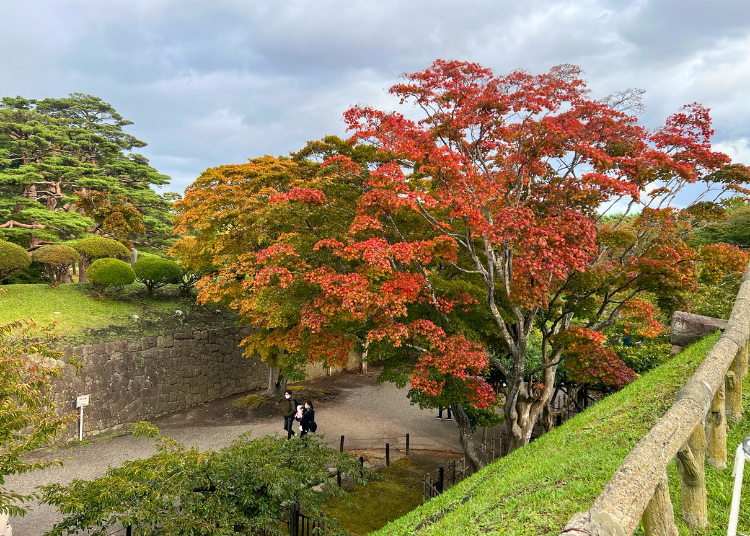
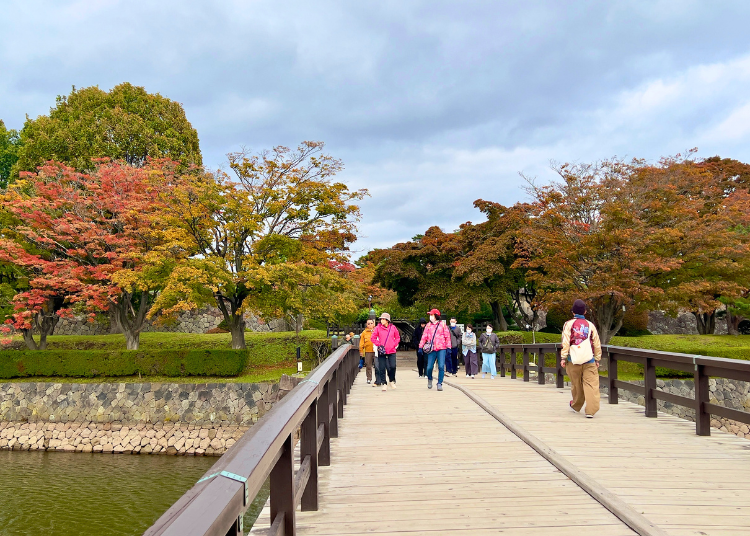
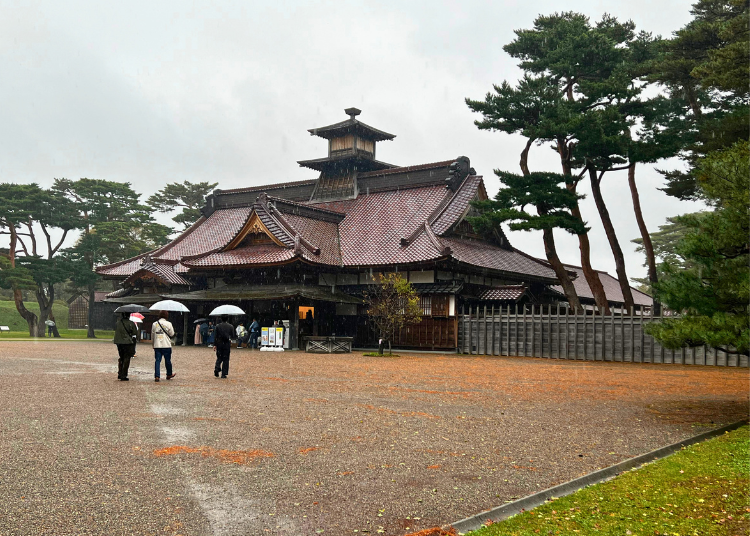
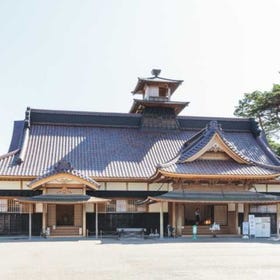
Scenery inside the park felt more autumn-like than from above: on October 22, 2026, maples along the stone walls of the moat and on both sides of the wooden entrance bridge were vibrant red, creating great photo spots together with reflections in the water. The restored Hakodate Magistrate's Office inside the park is also worth visiting.
-
Appealing
-
Address
44, Goryokakucho, Hakodate-shi, Hokkaido, 040-0001
View Map -
Nearest Station
Goryokaku-koen-mae Station (Hakodate Tram Line 2 / Hakodate Tram Line 5 )
- Phone Number 0138-57-7210
-
Address
44, Goryokakucho, Hakodate-shi, Hokkaido, 040-0001
-
-
Address
44-3, Goryokakucho, Hakodate-shi, Hokkaido, 040-0001
View Map -
Nearest Station
Hakodate Station (Hakodate Main Line)
- Phone Number 0138-51-2864
-
Address
44-3, Goryokakucho, Hakodate-shi, Hokkaido, 040-0001
What Is Special About Goryokaku's Autumn Leaves?
Goryokaku is famous for cherry blossoms, and the park consists mostly of cherry trees that turn orange-yellow in autumn, with deep red concentrated on a few maple trees. If you expect a garden full of deep crimson, Kosetsuen will better fit your image. Goryokaku's charm lies in viewing the overall star outline from the tower and seeing maples paired with stone walls and moats in the park.
Dusk to Night: Kosetsuen MOMI-G Festival, Night Maple at Hokkaido's Only Nationally Designated Cultural Property Garden
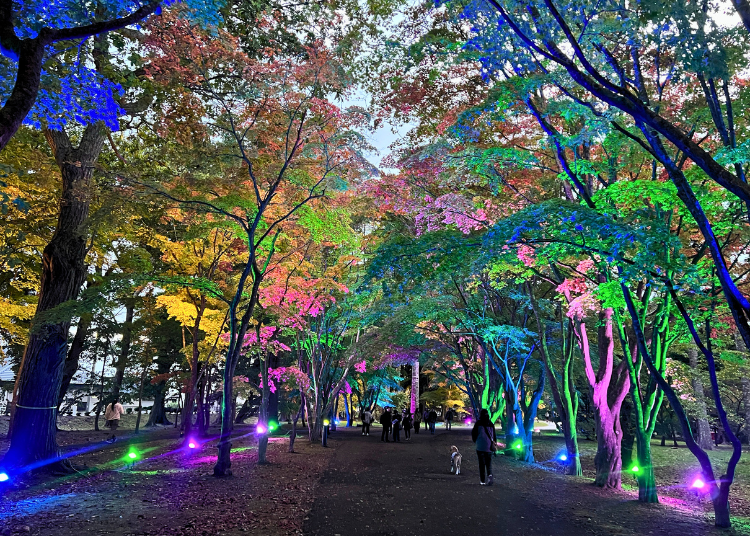
Kosetsuen is Hakodate's most representative autumn foliage spot and Hokkaido's only nationally designated cultural property garden. During the autumn MOMI-G Festival, illuminations take place daily from 4 PM to 9 PM with free admission.
What Is Kosetsuen Garden?
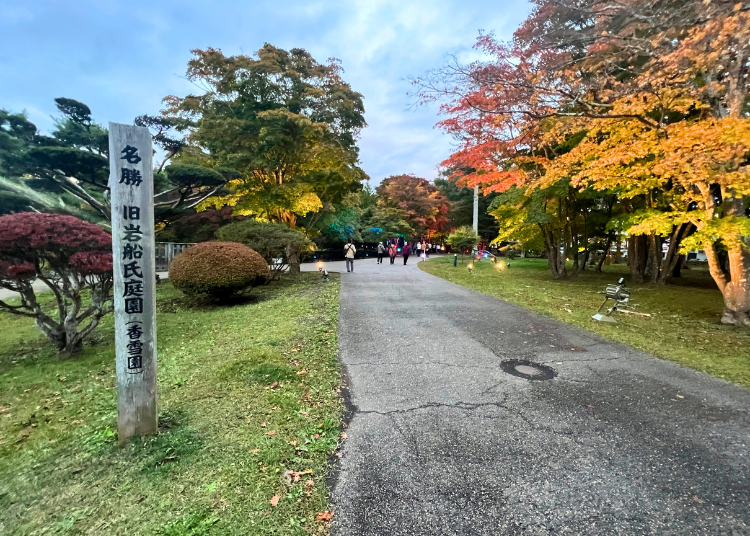
Kosetsuen is located inside Miharashi Park in eastern Hakodate, officially named Former Iwafune Family Garden. Originally built in the Meiji period as a villa garden for the wealthy Iwafune merchant family, the name "Kosetsuen" means "a garden where plum blossoms fragrance the cold snow". Designated as a National Scenic Spot in 2001, it is Hokkaido's sole nationally designated cultural property garden. The expansive grounds preserve Entei, a shoin-style teahouse; a red-brick greenhouse; streams, arched bridges; and roughly 150 tree species.
Before Dusk: Viewing Daytime Red Leaves First
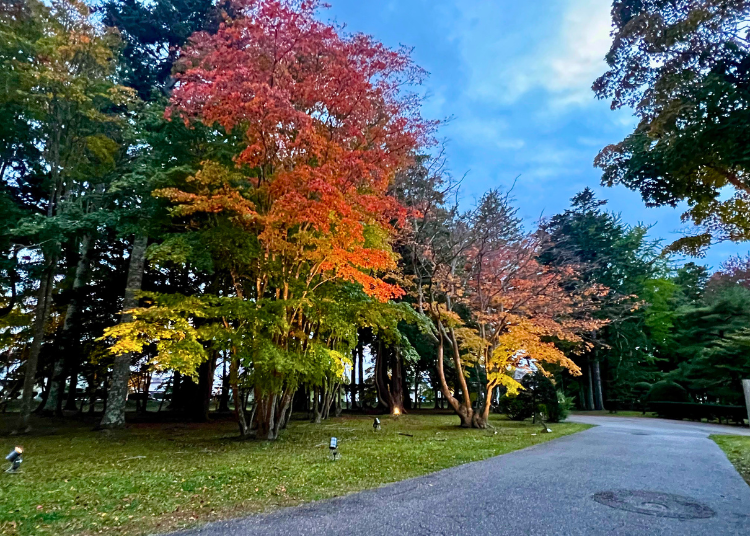
When the author arrived around 4:40 PM, daylight remained to clearly observe maples transitioning through red, orange, and yellow gradients. On October 22, 2026, select maples were red while surrounding trees maintained green foliage, making it "half red" overall.
After Light-Up: Colorfully Lit Maple Tree Avenue
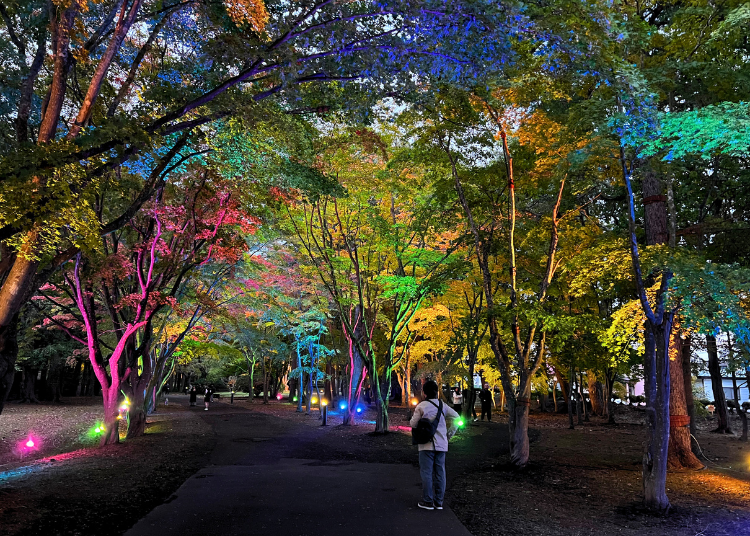
Kosetsuen's main highlights include a 100-meter-long maple avenue. During the MOMI-G Festival, this path is illuminated with green, purple, pink, and blue lights, differing from standard warm-white illuminations. Even before full redness, colorful lighting lends a dreamy atmosphere.
Entei Teahouse & Autumn Leaves: Japanese-Style Garden Night View
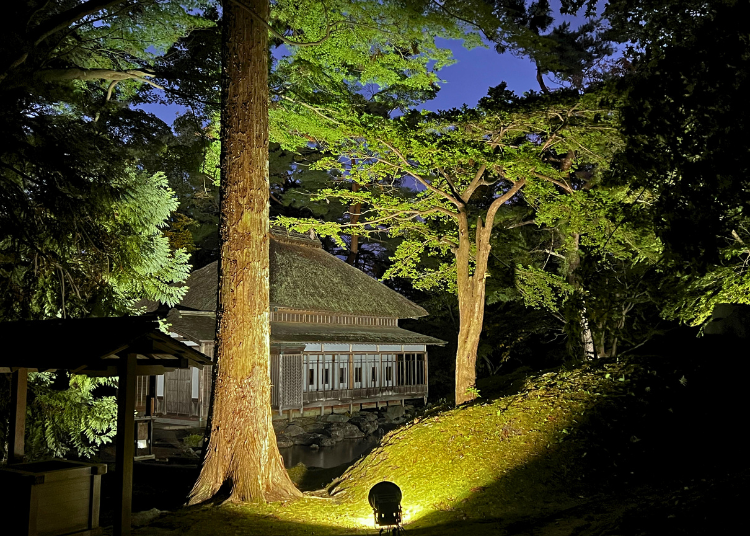
Entei, the shoin-style teahouse, is lit up at night; its wooden structure combined with pine trees and maple leaves forms the most authentic "wafu" (Japanese style) scene in Kosetsuen.
Best Photography Timing: "Blue Hour" After Sunset
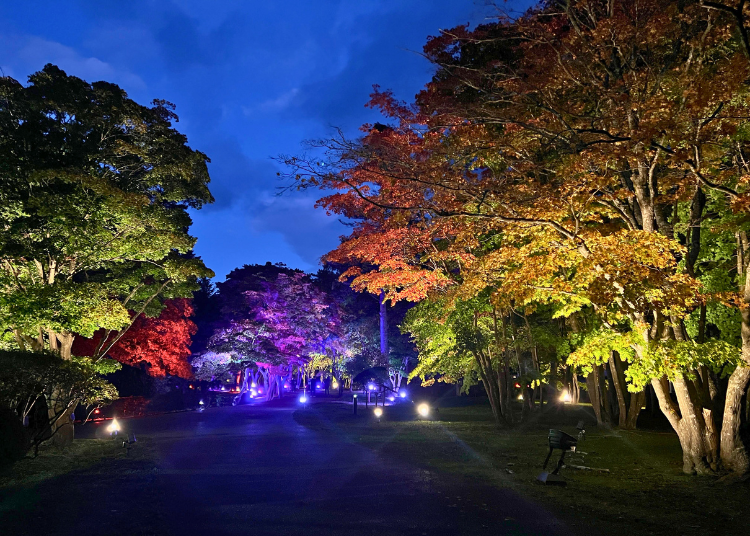
Arriving about 30 minutes before sunset is suggested: shoot daytime red leaves first, then watch the sky turn from orange to deep blue as lights turn on one by one. During our visit on October 22, 2026, the time from 5:05 PM to 5:15 PM presented a deep blue sky—the best 10 minutes for photos capturing red leaves, purple light, and blue sky together; after pitch dark, it turns into pure night scenery.
How to Get There & Return
・Outbound: Take Hakodate Bus #82 from JR Hakodate Station (bus platform #2) for approx. 40 minutes, get off at "Kosetsuen" stop, 1-minute walk. (320 yen one-way.)
・Return: Light-up lasts until 9 PM, but the final bus to JR Hakodate Station is at 7:12 PM on weekdays and 6:46 PM on weekends and holidays. (Note there is only around 1 bus per hour.) Check last bus schedules in advance at the bus stop signage or Hakodate Bus website.
・Self-driving: Free parking available (approx. 160 spaces).
-
Kosetsuen香雪園
-
Address
56 Miharashicho, Hakodate-shi, Hokkaido 042-0956
View Map -
Nearest Station
1-minute walk from Kosetsuen bus stop
- Phone Number 0138-57-7210
Admission: Free
Closed: None (Entei interior closed to the public December–March) -
Address
56 Miharashicho, Hakodate-shi, Hokkaido 042-0956
Where to Go After Enjoying the Evening Maples?
Kosetsuen is only about a 10-minute drive from Yunokawa Onsen. Finishing the cold night walk with a hot spring bath at an onsen ryokan makes for the most relaxing conclusion to this route.
-

-
Address
Yunokawacho, Hakodate-shi, Hokkaido, 042-0932
View Map -
Nearest Station
Hakodate Station (Hakodate Main Line)
- Phone Number 0138-57-8988
-
Address
Yunokawacho, Hakodate-shi, Hokkaido, 042-0932
Transportation & Passes: Which Is the Best Value?
This route uses both tram and bus (for Kosetsuen); the "Tram & Hakodate Bus Common 1-Day Pass" is recommended.
| Pass Type | Adult Price | Best Suitable For |
|---|---|---|
| Tram 1-Day Pass | 800 yen | Tram only (Motomachi, Goryokaku) |
| Tram / Hakodate Bus Common 1-Day Pass | 1,600 yen (Mobile ticket only) | Recommended for this route (Includes bus to Kosetsuen) |
| JR Hakodate Passport (1-Day) | 3,000 yen (1 day) | Visiting Onuma Park along JR lines on the same day |
Hakodate City Tram adjusted fares in December 2025 (one-way 250–300 yen). Above prices reflect November 2026 rates; check official websites for exact details.
What to Wear in Hakodate in Autumn? Weather & Clothing Advice
| Month | Avg Temp | Avg Min Temp | Recommended Clothing |
|---|---|---|---|
| October | Approx. 12.5°C | Approx. 8°C | Long sleeves, knitwear, light jacket; add light down coat at night |
| November | Approx. 6°C | Approx. 2°C | Sweater, light down coat or heavy coat, scarf, gloves |
Surrounded by sea on three sides, Hakodate feels colder than the thermometer suggests when sea winds blow, especially at night when viewing foliage. During our 3-day report, we experienced sunny, rainy, and cloudy weather; bringing a light down coat, waterproof jacket or folding umbrella, plus hat and scarf is recommended. Wear comfortable walking flat shoes due to Motomachi's slopes.
Capture Hakodate's Japanese & Western Autumn in a Single Day
Spend your morning watching Western-style architecture against autumn skies on Motomachi slopes, afternoon overlooking the star fortress from Goryokaku Tower while finding bright maples by the moat, and evening watching colorful illuminations light up foliage at Kosetsuen. This autumn itinerary blending traditional Japanese and Western flavors can only be experienced in Hakodate.
- Area
- Category
*Prices and options mentioned are subject to change.
*Unless stated otherwise, all prices include tax.
Popular Tours & Activities
Recommended places for you
-

Sapporo Clock Tower
Landmarks
Sapporo / Chitose
-
Appealing

Rukku and Uohei
Izakaya
Sapporo / Chitose
-
Appealing

Noboribetsu Onsen
Hot Springs (Onsen) & Bath Houses (Sento)
Noboribetsu / Lake Toya
-
Appealing
Sapporo Ramen Yokocho
Ramen
Sapporo / Chitose
-
Appealing

Kanemori Red Brick Warehouse
Shopping Malls
Hakodate
-

Former Hokkaido Government Office Building (Red Brick Office)
Other Historic Sites
Sapporo / Chitose
-

Okashi Kissa Miura - The Charming Hokkaido Cafe Serves French-Inspired Sweets in the Beautiful Countryside
by: Guest Contributor
-
Coming October 2026: JR Hokkaido Introduces Ticket Machines with Passport Readers for Easier Rail Pass Purchases
by: Guest Contributor
-
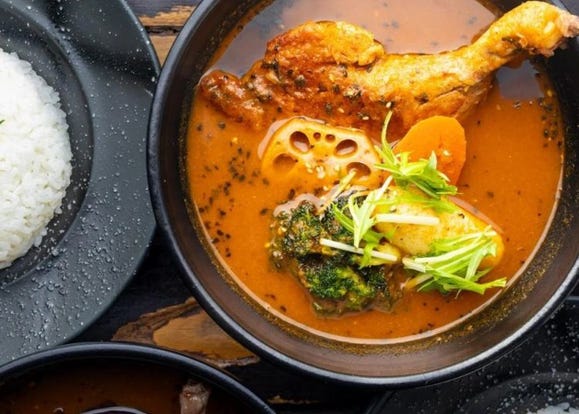
Curry Leaves: Sapporo Soup Curry with Crispy-Skin Chicken and a Rich Broth Built on Onions Sautéed for 10 Hours
-
Just 2 Minutes from JR Sapporo Station! Sapporo’s Must-Visit Soup Curry Gem: Hirihiri No. 2, a Longtime Local Favorite
by: Guest Contributor
-
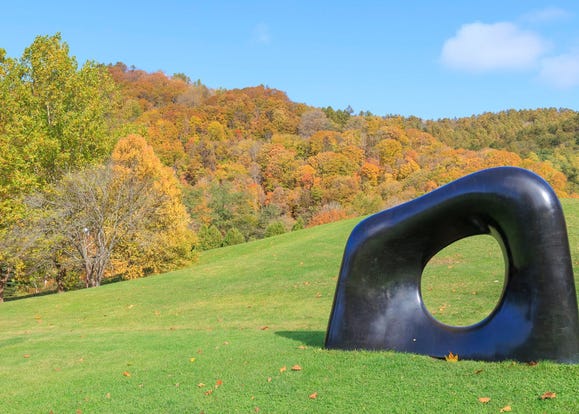
Inside Arte Piazza Bibai: Kan Yasuda’s Sculptures in a Former Hokkaido School
-
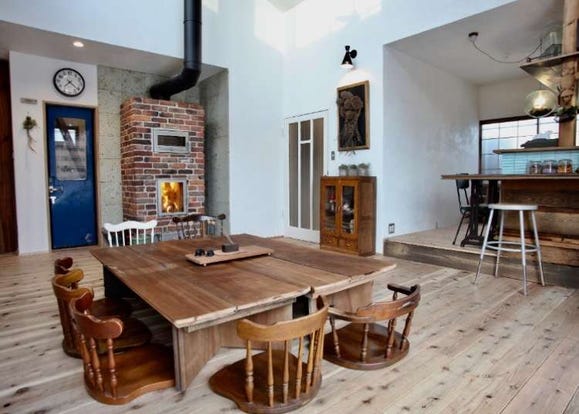
10 Recommended Apartment Hotels in Hakodate for Families & Groups
by: Sae Haneda
-

Hokkaido Lavender Fields: 6 Best Places in Furano to See Japan's Dreamiest Purple Meadows
by: Nobuka Kawashima
-

Japan Beyond the Guidebook: 6 Expats Share Their Top Autumn Food Choices!
by: Nina Cataldo
-

8 Stunning Autumn Foliage Spots in Hokkaido: From Sapporo Streets to Niseko Peaks (2026)
-

Enjoy Autumn Hues in Japan's Wild Frontier: Two-Day Road Trip Itinerary for Mount Daisetsu and Asahikawa (Hokkaido)
by: Hide
-

Visiting Hokkaido in Autumn: Local Shares What to Wear, Weather & Travel Tips
by: Nemi Lin
-

Tokyo Railway & Subway Map: Navigate the City Like a Pro (JR, Subways, IC Cards & Passes)
- #best sushi hokkaido
- #things to do hokkaido
- #best ramen sapporo
- #what to bring to japan
- #new years in tokyo
- #what to buy in ameyoko
- #japanese nail trends
- #what to do in odaiba
- #onsen tattoo friendly tokyo
- #daiso
- #best sweets otaru
- #japanese fashion culture
- #best nature furano
- #japanese convenience store snacks
- #best japanese soft drinks