







You don’t need a mountaineering expedition to enjoy Japan’s mountain scenery. Around Kansai, cable cars, ropeways and buses can take you past some of the steepest sections, leaving more time to explore temples, gardens, viewpoints and even a mountaintop amusement park.
Here are five rewarding trips for less experienced hikers, from Kurama and Kibune in Kyoto to Mount Rokko, Mount Hiei, Mount Ikoma and Mount Shosha. Find suggested routes, travel times and practical transport tips. Wear comfortable shoes and check the weather and operating schedules before setting out.
*Main image credit: PIXTA
*This article contains sponsored content.
- Table of Contents
-
- Kyoto: Walk from Kurama to Kibune through a forest of tengu legends
- Hyogo: Mount Rokko and Mount Maya’s million-dollar night views
- Kyoto and Shiga: Mount Hiei’s World Heritage temples and Lake Biwa views
- Osaka and Nara: A nostalgic amusement park atop Mount Ikoma
- Hyogo: Mount Shosha’s Engyoji Temple, a Hollywood filming location
- What to wear and check before a mountain trip
Kyoto: Walk from Kurama to Kibune through a forest of tengu legends

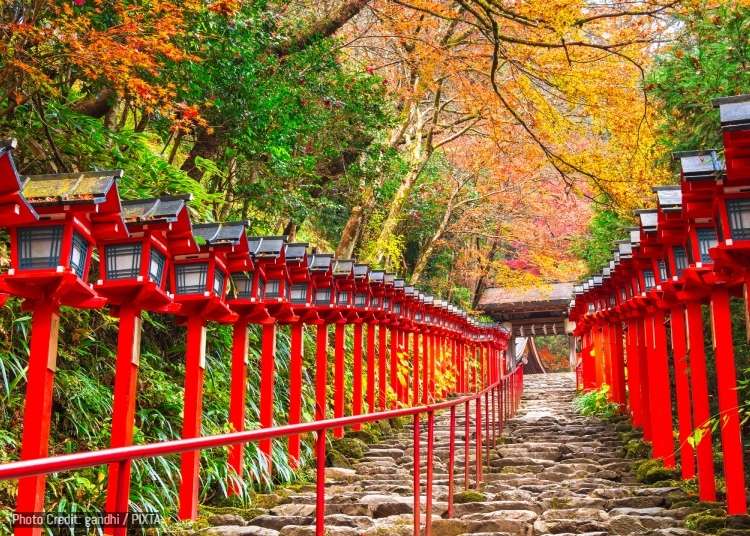
North of Kyoto, Mount Kurama and Kibune Shrine are known for spiritual atmosphere and forest scenery. Step out of Kurama Station on the Eizan Railway and you’ll meet an enormous red-faced, long-nosed tengu statue.
Follow the road to Kurama-dera Temple’s Niomon gate, where a 500-yen mountain conservation fee is collected. Choose between walking and the cable car. The walk follows steep switchbacks that Heian-period writer Sei Shonagon described in The Pillow Book as something that seems near but is actually far away. Allow about 20 minutes.

To bypass the climb, take Kurama-dera’s Ushiwaka cable car. At 207 meters (679 feet), it is Japan’s shortest railway line, traveling from Fumyo-den to Tahoto in about two minutes. Passengers make a 200-yen donation. The car is named after Ushiwakamaru, the childhood name of warrior Minamoto no Yoshitsune, who trained at the temple.
At the top, visit the main Kondo hall, then follow the Okunoin path toward Kibune. Stop at the Reihoden museum and walk the Kinone-michi, where exposed roots twist across the ground. Poet Yosano Hiroshi saw them as a symbol of resilience in a harsh environment.

Continue past Mao-den to Kibune Shrine. Try a water fortune: the paper appears blank until floated on sacred water, when the message emerges within seconds. A QR code provides translations, including English and Chinese.
For the return, walk about 30 minutes downhill or take bus 33 for around four minutes to Kibuneguchi Station on the Eizan Railway.
- Route
- Eizan Railway Kurama Station → Kurama-dera Niomon Gate → Kondo Hall → Kinone-michi → Okunoin Mao-den → Kibune Shrine → Kibuneguchi Station
- Time needed
- About 2–3 hours
-


-
Address
180, Kuramakibunecho, Sakyo-ku, Kyoto-shi, Kyoto, 601-1112
View Map -
Nearest Station
Kibuneguchi Station (Eizan Dentetsu-kurama Line)
30 minutes on foot
- Phone Number 075-741-2016
-
Address
180, Kuramakibunecho, Sakyo-ku, Kyoto-shi, Kyoto, 601-1112
-
鞍馬山鞍馬山
-
Address
Kurama Honmachi, Sakyo Ward, Kyoto, Kyoto Prefecture
View Map
-
Address
Kurama Honmachi, Sakyo Ward, Kyoto, Kyoto Prefecture
Hyogo: Mount Rokko and Mount Maya’s million-dollar night views

Mount Rokko and Mount Maya rise above Kobe, with cable cars providing access. Rokko Cable’s upper station stands at 737 meters (2,418 feet); the mountain’s highest peak reaches 931.3 meters (3,055 feet). From Hankyu Rokko or JR Rokkomichi Station, take Kobe City Bus 16 to Rokko Cable Shita Station, then ride the cable car for about 10 minutes. Mountain buses connect the attractions for a full day of exploring.

Take mountain bus 1 toward eastern Rokko and stop at Rokko Garden Terrace. Its European village-style buildings include restaurants and cafés with sea views. Rokko-Shidare Observatory is a geometric dome by architect Hiroshi Sambuichi, conceived around the idea that architecture is part of the earth. At night, LED lighting creates seasonal displays with more than 10 million colors.

Rokko Alpine Botanical Garden has around 1,500 alpine and cold-hardy plants from around the world, including bleeding hearts, Himalayan blue poppies and daylilies. Its rock garden recreates a high-altitude landscape.

ROKKO Forest Sound Museum combines nature and music. Indoors, discover music boxes, mechanical instruments, phonographs and automata popular in Europe and America from the late 19th to early 20th century. Automated performances take place at set times each day. Outside, SIKI Garden pairs seasonal flowers with interactive sound installations.

Return to Rokko Sanjo Station and take bus 2 toward western Rokko and Rokko-san Pasture. Sheep, goats, dairy cows, horses, rabbits and guinea pigs live here. Depending on the activity, visitors can milk a cow, ride a horse, feed sheep and goats, or meet the animals up close.

Finish at Mount Maya’s Kikuseidai Observatory, celebrated for its “ten-million-dollar” night view and counted alongside Hakodate and Mount Inasa in Nagasaki among Japan’s three great night views. From around 700 meters (2,297 feet), look across Kobe Port and Osaka Bay toward Awaji Island and Tokushima on Shikoku.

For the descent, take the two-part Maya View Line: the ropeway from Hoshi-no-Eki to Niji-no-Eki takes about five minutes, followed by a two-minute walk and a five-minute cable-car ride down. Catch a Kobe bus back toward Sannomiya. Allow time for the lifts and check the last departure; walking down at night is not recommended.
- Route
- Rokko Cable → summit → Rokko Garden Terrace → Rokko Alpine Botanical Garden → ROKKO Forest Sound Museum → Rokko-san Pasture → Kikuseidai → Maya Ropeway and Cable
- Time needed
- A full day, depending on the stops
-


-
Address
Motoyamachomori, Higashinada-ku, Kobe-shi, Hyogo, 657-0111
View Map -
Nearest Station
Rokkomichi Station (JR Tokaido Line / JR Kobe Line)
- Phone Number 078-303-1188
-
Address
Motoyamachomori, Higashinada-ku, Kobe-shi, Hyogo, 657-0111
-

-
Address
Takaha, Nada-ku, Kobe-shi, Hyogo character Nishiyama 8-2 (Rokko cable lower station), 657-0001
View Map -
Nearest Station
Rokkosanjo Station (Rokko Cable)
- Phone Number 078-861-5288
-
Address
Takaha, Nada-ku, Kobe-shi, Hyogo character Nishiyama 8-2 (Rokko cable lower station), 657-0001
-


-
Address
heikokenshinkoshinadakurokukosanchogokaisan 1877-9, 657-0101
View Map -
Nearest Station
Rokkosanjo Station (Rokko Cable)
10 minutes by bus
- Phone Number 078-894-2281
-
Address
heikokenshinkoshinadakurokukosanchogokaisan 1877-9, 657-0101
-
-
Address
Rokkousancho, Nada-ku, Kobe-shi, Hyogo north Rokko 4512-150, 657-0101
View Map -
Nearest Station
Rokkosanjo Station (Rokko Cable)
6 minutes by bus
- Phone Number 078-891-1247
-
Address
Rokkousancho, Nada-ku, Kobe-shi, Hyogo north Rokko 4512-150, 657-0101
-

-
Address
Rokkousancho, Nada-ku, Kobe-shi, Hyogo north Rokko 4512-145, 657-0101
View Map -
Nearest Station
Rokkosanjo Station (Rokko Cable)
- Phone Number 078-891-1284
-
Address
Rokkousancho, Nada-ku, Kobe-shi, Hyogo north Rokko 4512-145, 657-0101
-

-
Address
1-1, Rokkousanchonaka Ichiriyama, Nada-ku, Kobe-shi, Hyogo, 657-0101
View Map -
Nearest Station
Rokkomichi Station (JR Tokaido Line / JR Kobe Line)
- Phone Number 078-891-0280
Vacancy search, reservation
-
Please enquire directly about rates.
Check with our partner site as the latest rates, rate details, and guest room requirements may vary.
-
Address
1-1, Rokkousanchonaka Ichiriyama, Nada-ku, Kobe-shi, Hyogo, 657-0101
Kyoto and Shiga: Mount Hiei’s World Heritage temples and Lake Biwa views
Mount Hiei stands on the Kyoto–Shiga border at 848.3 meters (2,783 feet). Its Enryakuji temple complex is a World Heritage Site and a major center of Japanese Buddhism. Approach from Kyoto via the Eizan cable car and ropeway, or from Shiga on the Sakamoto Cable. This route starts on the Shiga side.

From JR Hieizan-Sakamoto or Keihan Sakamoto-hieizanguchi Station, take a bus about 11 minutes to the Sakamoto Cable. At 2,025 meters (1.26 miles), it is Japan’s longest cable railway and offers views over Lake Biwa. Enryakuji has three main areas: Todo, Saito and Yokawa. Walking between them can take around two hours one way, with slopes and steps, so the bus saves time and energy.
Start at Todo, the largest area. Its main hall, Konpon Chudo, houses the “eternal flame,” said to have burned for 1,200 years. A 15-year restoration is expected to finish in September 2030; the roof can be viewed until January 2027. Other buildings include Daikodo, Amida-do and Monju-ro.
Saito centers on Shaka-do, formally Tenporin-do, the complex’s oldest surviving building. Other sites include Jodo-in, the paired Jogyodo and Hokkedo halls, and Rurido, which survived Oda Nobunaga’s burning of Mount Hiei in 1571.

Before Yokawa, get off at Minemichi for a meal. The restaurant serves Omi beef, Buddhist vegetarian cuisine, Lake Biwa curry, tofu-skin beef patties and sesame tofu. Indoor and outdoor viewing areas overlook Lake Biwa, with Omi Fuji visible on clear days.
At Yokawa, vermilion Yokawa Chudo stands on raised supports, its form inspired by a ship carrying envoys to Tang China. From late October to mid-November, an inner passage normally reserved for monks opens specially for closer viewing of Buddhist statues. The area also includes Shiki Kodo and Eshin-do, and is the smallest and quietest of the three precincts.

To return toward Kyoto’s Yase area, ride the Eizan Ropeway about three minutes, walk one minute to the connecting station, and take the Eizan Cable for nine minutes down to Yase. Its 561-meter (1,841-foot) elevation change makes it Japan’s steepest cable railway. From Yase, take the Eizan Railway into Kyoto. November brings autumn colors to both Hiei and Yase.
A direct bus from JR Kyoto Station to the summit takes about 70 minutes, but departures are limited and vary by season. Check the timetable in advance.
- Route
- Sakamoto Cable → Mount Hiei → Todo → Saito → Minemichi → Yokawa → Eizan Cable
- Time needed
- 7–9 hours
-

-
Address
4220, Sakamotohonmachi, Otsu-shi, Shiga, 520-0116
View Map -
Nearest Station
Keburuenryakuji Station (Hieizan-sakamoto Cable)
11 minutes on foot
- Phone Number 077-578-0001
Vacancy search, reservation
-
from 46,000JPY 1room, 2adults
Check with our partner site as the latest rates, rate details, and guest room requirements may vary.
-
Address
4220, Sakamotohonmachi, Otsu-shi, Shiga, 520-0116
-
比叡山比叡山
-
Address
Ichijoji Idegatani Chosenguchi, Sakyo Ward, Kyoto, Kyoto Prefecture
View Map
-
Address
Ichijoji Idegatani Chosenguchi, Sakyo Ward, Kyoto, Kyoto Prefecture
Osaka and Nara: A nostalgic amusement park atop Mount Ikoma
Mount Ikoma, on the Osaka–Nara border, has a surprise at its summit: an amusement park. At 642 meters (2,106 feet), the mountain combines a temple visit with family-friendly rides.

From Kintetsu Ikoma Station, walk about one minute to the Ikoma Cable, opened in 1918 and Japan’s oldest cable railway. Its cars include the cat Mikke and dog Bull on the lower section to Hozanji, and the piano Doremi and cake Sweet on the upper section to the amusement park. Retro red Suzuran and blue Shirakaba cars also operate.
Hozanji, near the intermediate station, is associated with Ikoma Shoten and attracts worshippers praying for business prosperity. Beyond the torii and approach stand the main hall and Shoten-do, backed by the Hannyakutsu rock face. Continue past the Tahoto pagoda and Kaisan-do to Shishikaku, a Western-style building dating from 1884.

Continue by cable car to Ikoma Sanjo Amusement Park, opened in 1929. Entry is free, rides cost extra, and some accommodate babies from birth. The 30-meter (98-foot) Flying Tower is one of Japan’s oldest surviving large amusement rides, with a 360-degree panorama of the Osaka Plain and Nara Basin. The panda-shaped aerial ride circles the park and helps you get your bearings.

The park opens at night on selected summer dates, when Osaka’s lights spread out below. Mount Ikoma’s nightscape was recognized in the COOL JAPAN AWARD 2019, and the combination of rides and city views makes an evening visit distinctive.
-
生駒山 寳山寺生駒山 寳山寺(生駒聖天)
-
Address
1-1 Monzencho, Ikoma, Nara Prefecture
View Map
-
Address
1-1 Monzencho, Ikoma, Nara Prefecture
-
生駒山上遊樂園生駒山上遊園地
-
Address
2312-1 Nabatacho, Ikoma, Nara Prefecture
View Map
-
Address
2312-1 Nabatacho, Ikoma, Nara Prefecture
-
生駒山纜車生駒ケーブル
-
Address
8-8 Monzencho, Ikoma, Nara Prefecture
View Map
-
Address
8-8 Monzencho, Ikoma, Nara Prefecture
Hyogo: Mount Shosha’s Engyoji Temple, a Hollywood filming location
Engyoji Temple on Mount Shosha in Himeji was founded by the monk Shoku in 966. Known as the “Mount Hiei of the West,” it is the 27th temple on the Saigoku 33-temple pilgrimage. Its traditional buildings have appeared in The Last Samurai, the NHK drama Gunshi Kanbei and Rurouni Kenshin.
Take bus 10 from JR Himeji Station for about 30 minutes to the mountain’s foot. Mount Shosha is 371 meters (1,217 feet) high; walking up takes about an hour and includes steps and steep sections. Of its six trails, the signposted Higashizaka route is a comparatively approachable choice for beginners.
The ropeway reaches the top in about four minutes. Adult fares are 700 yen one way or 1,200 yen round trip. The source says it will close for maintenance from February 5 through October 28, 2027; during that period, visitors must walk up.

Near the upper station, stop at Mio Rosso Shosha, an observation deck opened in 2022. Its name evokes looking out over the Harima Plain, and the view extends across Himeji, the Seto Inland Sea and the Akashi Kaikyo Bridge.
Engyoji collects an 800-yen mountain admission donation. An additional 500-yen contribution gives access to a bus between the ropeway station and Mani-den, about five minutes instead of a 20-minute walk.
Engyoji has three main areas: Mani-den, Mitsunodo and Okunoin, with nationally designated Important Cultural Properties. Mani-den is associated with the legend of Shoku carving a six-armed Nyoirin Kannon into a cherry tree after seeing a heavenly being worship there. Its raised wooden platform on the steep mountainside recalls Kyoto’s Kiyomizu-dera, and statues of the Four Heavenly Kings stand inside.
Mitsunodo comprises Daikodo, Jikido and Jogyodo, arranged around a courtyard in a U shape. Gunshi Kanbei filmed scenes here depicting Hashiba Hideyoshi moving his headquarters to Mount Shosha. Jikido also appeared in The Last Samurai, including a scene featuring Tom Cruise and Ken Watanabe. Stand in the courtyard to appreciate the whole arrangement.
At the far end, Okunoin contains Kaisan-do, Gohodo and its worship hall. Carved figures beneath the corners of Kaisan-do’s eaves are attributed to Edo-period artisan Hidari Jingoro. Legend says the figure at the northwest corner ran away because the roof was too heavy. Gohodo’s worship hall is traditionally associated with the warrior monk Musashibo Benkei’s studies.
A one-day Buddhist practice program takes place at Jogyodo on the first of each month, with seated meditation, sutra copying and tea. It costs 5,000 yen and requires a phone reservation with the temple office.
Sutra copying is also available at Mani-den or Jikido without a reservation: choose the Heart Sutra, about one hour for 1,500 yen, or a petal-shaped version, about 10 minutes for 500 yen. Vegetarian meals at Juryoin are currently suspended, with no reopening date announced.
- Route
- Mount Shosha Ropeway → observation deck → Mani-den → Mitsunodo → Okunoin → ropeway
- Time needed
- 3–5 hours
-
書寫山圓教寺書寫山圓教寺
-
Address
2968 Shosha, Himeji, Hyogo Prefecture
View Map
-
Address
2968 Shosha, Himeji, Hyogo Prefecture
What to wear and check before a mountain trip
Cable cars and mountain buses make these outings more accessible, but preparation still matters. Check the weather, footwear and seasonal services before you go.
- Wear comfortable walking shoes; avoid heels and sandals for long walks.
- Mountain temperatures can be around 10°C (18°F) cooler than at lower elevations, so bring a light warm layer.
- Bring insect repellent or patches for the natural surroundings.
- Spring and fall are the best hiking seasons. Winter can be very cold and snowy, so long hikes are not recommended.
- Some attractions and cable cars close in winter, including Rokko Alpine Botanical Garden, Rokko-san Pasture and the Eizan Cable. Plan ahead.
- In summer, carry plenty of water to help prevent heat illness.
- Long sleeves and trousers can help protect against insects and sun. Bring sunscreen, a hat and sunglasses.
November’s crisp weather makes a mountain escape inviting. Visit temples, explore resort attractions or spend a day at an amusement park, then pause over a sweeping view above the city.
- Area
- Category
*Prices and options mentioned are subject to change.
*Unless stated otherwise, all prices include tax.

Popular Tours & Activities
Recommended places for you
-

Tsutenkaku Tower
Landmarks
Shinsekai, Tennouji, Tsuruhashi
-

ISHIDAYA Hanare
Yakiniku
Kobe, Sannomiya, Kitano
-

Jukuseiniku-to Namamottsuarera Nikubaru Italian Nikutaria Sannomiya
Izakaya
Kobe, Sannomiya, Kitano
-
Yodobashi Camera Multimedia Umeda Store
Shopping Malls
Umeda, Osaka Station, Kitashinchi
-

Todai-ji Temple
Temples
Nara, Ikoma, Tenri
-
Goods
Yoshida Gennojo-Roho Kyoto Buddhist Altars
Gift Shops
Nijo Castle, Kyoto Imperial Palace
-
Shopping in Osaka? Tourists Can Now Get Up to 3,000 Yen Off at Namba Stores
by: Guest Contributor
-
Travel Hands-Free from Kansai Airport (KIX) with Yamato Transport’s New Counter
by: Guest Contributor
-
5 Gorgeous Limited-Edition Goshuin Coming to Kobe’s Ikuta Shrine This September 2026
by: Wemmy Chau
-
10 Recommended Apartment Hotels in Kyoto for Long Stays and Family Trips
by: Yotsuka Hizuki
-
Ad
Opening November 6, 2026 - A Complete Guide to Uniqlo Kyoto! Introducing limited-edition products, UNIQLO COFFEE, and novelty items
-
Top 3 Bus Tours to Arashiyama & Kinkaku-ji (Amanohashidate Included)
by: Hyungil Kim
Inspiration for Accommodations
-
Sightseeing Highlights: Experience the Appeal of Kyoto Geisha Culture
-

10 Best Places for Autumn Leaves in Kyoto & When to Enjoy in 2026
by: WESTPLAN
-
Kichijoji – Explore Tokyo’s Top-Rated Stylish Suburb in Half a Day!
-

October Events in Kansai: Fun Festivals, Food, and Things to Do in Kyoto & Osaka
-

Visiting Osaka in Autumn: What to Wear & Must-Visit Attractions in September, October, and November
by: WESTPLAN
-

Planning an Autumn Foliage Trip to Kyoto? 12 Important Things to Know Before You Go
- #best gourmet Osaka
- #things to do Osaka
- #what to do in kyoto
- #what to bring to japan
- #best gourmet Kyoto
- #new years in Osaka
- #what to buy in nanba
- #Visiting Osaka
- #onsen tattoo friendly arima
- #daiso
- #Visiting Kyoto
- #best japanese soft drinks
- #japanese fashion culture
- #japanese convenience store snacks
- #japanese nail trends