




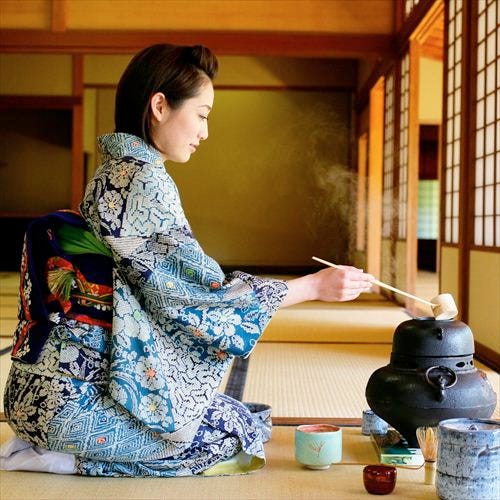


Takoyaki is one of Japan’s most recognizable street foods: small, round balls of savory batter cooked with pieces of octopus in a special molded pan. Originally from Osaka, they are typically served piping hot and topped with a sweet-savory takoyaki sauce, Japanese mayonnaise, aonori seaweed, and fluttering bonito flakes.
Crisp or lightly browned on the outside and wonderfully soft inside, takoyaki is especially associated with Osaka, but you will find it at specialty shops, festivals, food courts, and restaurants across Japan.
If you have never tried it before, here is everything to know about what takoyaki tastes like, what goes inside it, how to eat it without burning your mouth, its Osaka origins, and even how to make it at home.
- Table of Contents
-
- What is takoyaki?
- What does takoyaki taste like?
- What is takoyaki made of?
- Takoyaki was born in Osaka
- Takoyaki vs. akashiyaki: What is the difference?
- When and where do people eat takoyaki in Japan?
- How to eat takoyaki in Japan
- Popular takoyaki toppings and variations
- Takoyaki Recipe: Ingredients & Preparation
- Where should you try takoyaki in Japan?
- Takoyaki FAQ
- Takoyaki is more than just “octopus balls”
What is takoyaki?

Takoyaki (たこ焼き) literally means “grilled octopus.” Despite the English nickname “octopus balls,” they are not balls of octopus meat. Instead, each one is made from a light, savory batter cooked around a bite-size piece of octopus.
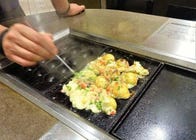
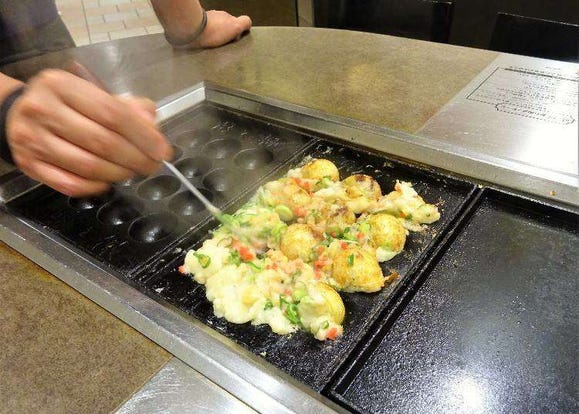
The batter is poured into rows of hemispherical molds in a special takoyaki pan. As it cooks, the vendor rapidly turns each piece with picks to form its distinctive round shape.
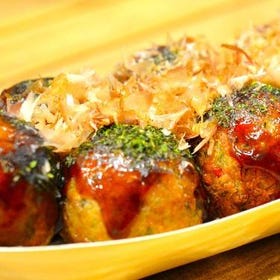
Classic takoyaki usually also contains ingredients such as pickled red ginger (beni shoga), green onion, and crispy tempura scraps called tenkasu. Once cooked, the balls are commonly finished with takoyaki sauce, mayonnaise, powdered green seaweed (aonori), and dried bonito flakes (katsuobushi).
They are generally served in trays of several pieces and are best eaten fresh. Just remember one important rule: takoyaki may be much hotter inside than it looks.
What does takoyaki taste like?
A good takoyaki combines several textures and flavors in a single bite.
The outside is lightly crisp or browned, while the inside is very soft, creamy, and sometimes almost molten. That soft center is intentional and is one of the main characteristics of Osaka-style takoyaki, rather than a sign that the batter is undercooked.
The batter itself has a gentle savory flavor, often strengthened with dashi stock. The octopus adds a slightly chewy texture and mild seafood flavor, while pickled ginger provides a sharp, refreshing accent.
Then come the toppings. Takoyaki sauce is sweet, savory, and tangy, somewhat reminiscent of Worcestershire-style sauces. Mayonnaise adds richness, aonori adds a subtle seaweed aroma, and bonito flakes bring another layer of smoky umami.
Different shops can taste surprisingly different depending on their batter, dashi, cooking style, sauce, and toppings, which is part of the fun of trying several places in Osaka.
What is takoyaki made of?
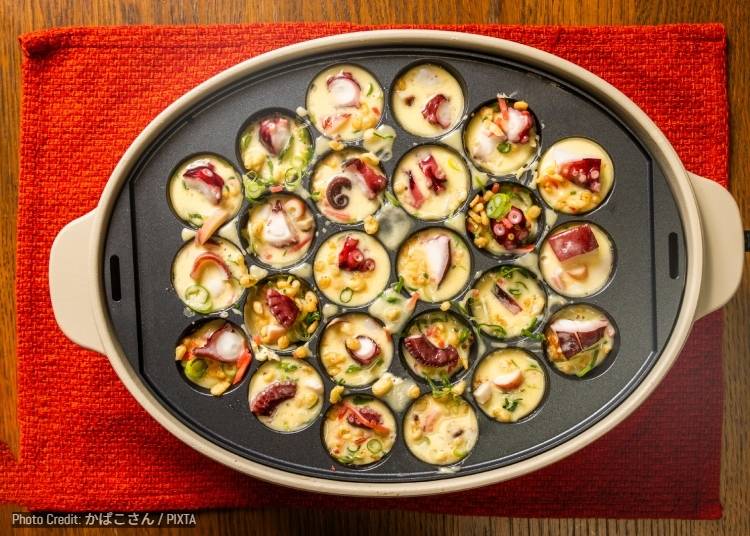
Recipes vary between shops and households, but classic takoyaki usually includes the following.
Takoyaki batter
A thin batter made primarily from wheat flour, eggs, and dashi. The relatively loose consistency helps create the soft interior takoyaki is known for.
Octopus
A small piece of cooked octopus is placed in the center of each ball. This is the tako in takoyaki.
Tenkasu
Small pieces of crispy tempura batter add richness and texture.
Beni shoga
Finely chopped pickled red ginger provides acidity and a slightly spicy kick.
Green onion
Often added to the batter or sprinkled in during cooking.
Takoyaki sauce
A thick, sweet-savory brown sauce commonly spread over the finished balls.
Japanese mayonnaise
Frequently drizzled over the top, although not every traditional style uses it.
Aonori
Powdered or finely flaked green seaweed sprinkled over the finished takoyaki.
Katsuobushi
Paper-thin dried bonito flakes. When placed over hot takoyaki, the rising heat makes them twist and flutter, which can make the dish look almost alive.
Takoyaki was born in Osaka
Takoyaki is now eaten throughout Japan, but its story is firmly tied to Osaka and the city’s famous konamon, or flour-based food culture.
One of the best-known accounts credits Tomekichi Endo, founder of the Osaka shop Aizuya, with creating takoyaki in 1935. Aizuya traces the dish back to rajioyaki, a round batter-based snack Endo had been selling with fillings such as beef and konjac.
According to Aizuya’s history, Endo was inspired after hearing about an octopus-filled dish eaten in nearby Akashi, Hyogo Prefecture. He began putting octopus into his own seasoned batter, and takoyaki was born.
The food spread through Osaka and continued to evolve. The now-familiar style covered in sauce, mayonnaise, aonori, and bonito flakes became widespread later. Aizuya itself still famously serves its original-style takoyaki without sauce, allowing the flavor of the seasoned batter to stand on its own.
Today, takoyaki sits alongside okonomiyaki as one of the foods most strongly associated with Osaka.

Takoyaki vs. akashiyaki: What is the difference?
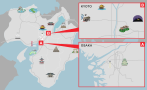
Takoyaki is sometimes confused with akashiyaki, a specialty of Akashi City in neighboring Hyogo Prefecture.
Both are round, flour-based dishes containing octopus, but the experience is quite different.
Akashiyaki uses a particularly egg-rich batter, giving it a softer and more delicate texture. The pieces are traditionally served with a light dashi broth and dipped into it before eating.
Takoyaki tends to have a more strongly seasoned batter and firmer browned exterior. Modern versions are most commonly eaten with sauce and toppings rather than dipped into broth.
If you are traveling through Kansai, trying both is an easy way to experience two closely related but noticeably different regional foods.
When and where do people eat takoyaki in Japan?

Takoyaki is casual food. There is no particular occasion when you need to eat it.
You will see it at dedicated takoyaki shops, shopping centers, food courts, izakaya, and sometimes convenience stores, but one of the classic places to encounter it is at a Japanese festival.
Festival stalls known as yatai often cook takoyaki right in front of customers. Watching the cook rapidly rotate dozens of half-formed balls in their molds is almost as much a part of the experience as eating them.
In Osaka, takoyaki is even more deeply woven into everyday food culture. It is common enough to make at home that owning a takoyaki maker is practically a Kansai stereotype.
For visitors, Osaka is naturally the best place to explore different styles. The busy Namba and Dotonbori area has numerous famous shops within walking distance of one another, making it easy to compare several. Umeda around Osaka Station is another convenient option, while local neighborhoods can reveal shops with devoted regular followings and very different approaches to batter, sauce, and texture.
Not visiting Osaka? Don't worry. Takoyaki is now widely available throughout Japan, including Tokyo and other major cities.
How to eat takoyaki in Japan
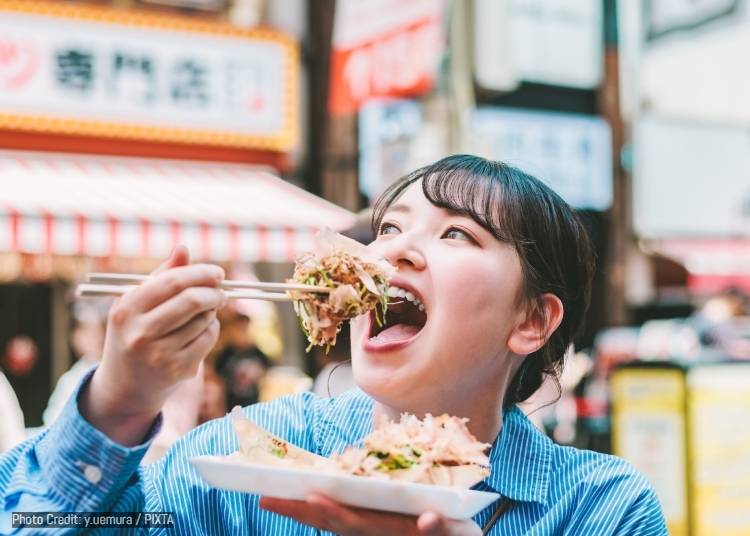
Eating takoyaki is easy, but first-time visitors should know a few things.
1. Let it cool before taking a big bite
Fresh takoyaki can be extremely hot in the center. The outside may seem manageable while the soft batter inside is still steaming.
Give it a little time before eating, particularly if it has just come off the pan.
2. Use the picks, chopsticks, or fork provided
Takoyaki is traditionally served with small picks or toothpick-like skewers, although chopsticks and forks are also common depending on the shop.
Fresh takoyaki can be very soft, so do not be surprised if it starts to collapse when you pick it up.
3. Eating it in one bite is not mandatory
You may see people pop an entire takoyaki into their mouth, but there is no need to prove anything. Splitting one open to release some steam is often the wiser move.
4. Expect a soft center
First-time visitors sometimes wonder whether takoyaki is supposed to be gooey inside. In many Osaka styles, yes. A creamy, almost custard-like interior contrasts with the cooked outer layer.
The exact texture varies by shop, however. Some specialize in a crispier exterior while others deliberately keep their takoyaki extremely soft.
Popular takoyaki toppings and variations

The classic combination of sauce, mayonnaise, aonori, and bonito flakes is only the beginning.
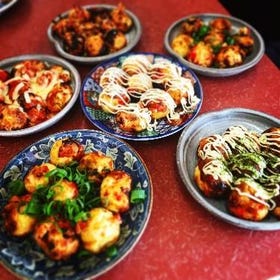
Depending on the shop, you may encounter toppings such as green onion, grated daikon, ponzu citrus sauce, cheese, spicy sauces, or extra bonito flakes. Some shops offer several flavor choices in a single order.
Home takoyaki parties are even more flexible. Instead of octopus, people sometimes use sausage, shrimp, cheese, mochi, corn, or other ingredients.
Strictly speaking, versions without octopus move away from the literal meaning of takoyaki, but the round-pan cooking style has become a fun format in its own right.
Takoyaki Recipe: Ingredients & Preparation

The base of Takoyaki is minced or sliced octopus that is steamed in batter. Said batter can be freely enhanced with any sorts of ingredients, from a variety to fresh, seasonal vegetables to ginger, green onion, or tempura bits called tenkasu.
- Servings
- Makes approximately 20-24 pieces, depending on the size of your pan.
- For the batter
- ・2 cups (480 ml) dashi
・2 large eggs
・1 tsp (5 ml) soy sauce
・1/4 tsp salt
・1 cup all-purpose flour
- For the filling
- ・5-6 oz (140-170 g) cooked octopus, cut into small pieces
・2-3 green onions, finely chopped
・2 tsp (about 10 ml) finely chopped pickled red ginger
・Tenkasu, as desired
- For serving
- ・Takoyaki sauce
・Japanese mayonnaise
・Aonori
・Katsuobushi
How to make takoyaki

1. Prepare the batter
Whisk together the dashi, eggs, soy sauce, and salt. Gradually mix in the flour until combined. Takoyaki batter should be considerably thinner than pancake batter.
2. Heat and oil the pan
Heat your takoyaki pan and lightly coat each mold and the surrounding surface with oil. Properly preheating the pan helps the batter form a cooked exterior.
3. Pour in the batter and add the fillings
Fill the molds generously with batter. It is fine if some batter spreads across the top of the pan.
Add a piece of octopus to each mold, followed by green onion, pickled ginger, and tenkasu.
4. Start turning the takoyaki
As the edges begin to cook, use takoyaki picks, skewers, or another suitable tool to separate the batter between the molds.
Rotate each piece by roughly 90 degrees, pushing any loose batter underneath as you turn it. Continue rotating the balls as the outside cooks and gradually becomes round.
5. Cook until evenly browned
Keep turning the takoyaki until the outside is golden and the balls hold their shape.
6. Add the toppings
Transfer to a plate or tray and finish with takoyaki sauce, mayonnaise, aonori, and bonito flakes.
Then resist the temptation to eat one immediately. The inside will be hot.
Where should you try takoyaki in Japan?
If your itinerary includes Osaka, that is the obvious place to start.
Dotonbori and Namba offer one of the easiest introductions for visitors, with multiple specialty shops clustered around one of Osaka's busiest sightseeing areas. Sampling small portions from several stores lets you discover how dramatically the texture, sauce, and toppings can change.
Around Osaka and elsewhere in Kansai, you can also seek out older shops serving more traditional styles, including takoyaki seasoned strongly enough to eat without sauce.
In Tokyo and other major Japanese cities, look for takoyaki specialty stores, izakaya, food halls, and festival stalls. While Osaka remains its spiritual home, you certainly do not need to travel there just to taste your first one.
For an even more hands-on experience, cooking classes and food tours can also be a fun way to learn how to make takoyaki while exploring Japan’s broader street-food culture.


Takoyaki FAQ
- Is takoyaki really made from octopus?
- Yes. Traditional takoyaki contains a small piece of octopus inside each ball. The ball itself is primarily batter, however, rather than solid octopus.
- What does the word takoyaki mean?
- Tako means octopus, while yaki refers to grilling or cooking with direct heat. The name can therefore be translated roughly as “grilled octopus.”
- Is takoyaki supposed to be gooey inside?
- Many styles of takoyaki are deliberately very soft and creamy inside. The texture can range from custard-like to firmer depending on the shop and recipe.
- Is takoyaki spicy?
- Classic takoyaki is generally not spicy. The flavor is savory and slightly sweet once the sauce is added. Some shops offer spicy sauces or toppings separately.
- Why do bonito flakes move on top of takoyaki?
- The paper-thin flakes react to the heat and rising steam from freshly cooked takoyaki, causing them to curl and move. They are not alive, even if your first tray appears to disagree.
- Does takoyaki always contain octopus?
- Classic takoyaki does. Home cooks and some specialty shops may substitute other ingredients, but these are variations on traditional takoyaki.
- Is takoyaki a meal or a snack?
- Usually a snack or casual light meal. Portions are commonly shared or eaten while exploring, although ordering several servings can certainly turn it into lunch.
Takoyaki is more than just “octopus balls”
Calling takoyaki “octopus balls” explains the basic idea, but misses much of what makes the dish so enjoyable.
It is the contrast between the browned outside and soft dashi-rich center, the chewy bite of octopus, the sweet-savory sauce, the smell of aonori and bonito, and the experience of watching a skilled cook turn dozens of pieces at remarkable speed.
And while you can find takoyaki almost anywhere in Japan today, eating it in Osaka offers the chance to taste the food where it developed and compare just how differently such a seemingly simple snack can be made.
Whether you encounter your first tray beneath the neon lights of Dotonbori, at a neighborhood shop, or beside a festival stall, just remember the most useful piece of takoyaki advice of all: give it a moment to cool before that first bite.


*Prices and options mentioned are subject to change.
*Unless stated otherwise, all prices include tax.
Popular Tours & Activities
Recommended places for you
-
Jukuseiniku-to Namamottsuarera Nikubaru Italian Nikutaria Sannomiya
Izakaya
Kobe, Sannomiya, Kitano
-
Goods
Yoshida Gennojo-Roho Kyoto Buddhist Altars
Gift Shops
Nijo Castle, Kyoto Imperial Palace
-
MuraShibuya
Okonomiyaki, Monja & Takoyaki
Shibuya
-

TOUKYOUMONJAKURAYA
Okonomiyaki, Monja & Takoyaki
Ikebukuro
-
Menu

Tsurujiro
Okonomiyaki, Monja & Takoyaki
Asakusa
-
Appealing
Rukku and Uohei
Izakaya
Sapporo / Chitose
-

Haneda Airport Duty-Free Shopping Guide: What to Buy, How to Save & Where to Eat Before Your Flight
by: Guest Contributor
-

The Best Sumo Experiences in Tokyo: Morning Practices vs. Sumo Shows
-

ANA’s Chiikawa Jet Is Taking Off—Here’s Everything You Need to Know About Exclusive Goods, In‑Flight Fun & Travel Tips
by: Guest Contributor
-

Japan's New GREEN LIFESTYLE TRAIN Connects Tokyo, Yokohama, and a Greener Future
by: Guest Contributor
-

Autumn in Japan 2026: Fall Foliage Forecast & Where to Enjoy the Colorful Leaves (+Tour Info)
-
Ad

Pocket WiFi Rental in Japan 2026: Complete Price Comparison & Where to Get the Best Deal
-
Hasshoku Center: Enjoy Famous Seafood Bowls at Aomori's Giant Fish Market
-
Osaka Food: How to Make Takoyaki Octopus Balls in 3 Easy Steps!
-
How to Make the Real Osaka Okonomiyaki: These Japanese Food Tips Will Make You Feel Like a Pro!
by: WESTPLAN
-

Hokkaido Travel Guide: Everything You Need to Know Before You Go (Transportation, Food, Souvenirs & Hidden Gems)
-
Dotonbori Konamon Museum: Revealing the Sensation of World-Famous Takoyaki in Osaka!
-

Okonomiyaki, Monjayaki and Takoyaki
- #best sushi japan
- #what to do in odaiba
- #what to bring to japan
- #new years in tokyo
- #best ramen japan
- #what to buy in ameyoko
- #japanese nail trends
- #things to do japan
- #onsen tattoo friendly tokyo
- #daiso
- #best coffee japan
- #best japanese soft drinks
- #best yakiniku japan
- #japanese fashion culture
- #japanese convenience store snacks