




Kansai-Ben: 18 Osaka Dialect Phrases You’ll Actually Hear On Your Trip (And How to Speak Them)
- Written by: WESTPLAN
Visit Osaka and it probably won’t be long before you hear words like meccha, honma, or akan. They’re part of Kansai-ben, the family of dialects spoken across Osaka, Kyoto, Kobe, and the surrounding region, and they give everyday conversation here a noticeably different rhythm from the standard Japanese taught in textbooks.
Some expressions are easy and fun for travelers to try, while others are more useful simply to recognize when chatting with locals, shopping, or eating out. Here are 18 Kansai-ben words and phrases worth knowing before your trip, along with what they mean, when you might hear them, and how to use them naturally.
Kansai-ben words and phrases for everyday conversation

1. あかん (akan): No good / can't / don't
Akan is one of the most useful Kansai-ben words to recognize. It roughly corresponds to dame or ikenai in standard Japanese and can mean “no good,” “you can’t,” “don’t,” or simply “no,” depending on the situation.
You might hear a parent telling a child “Akan!” when they’re doing something they shouldn’t, or someone describing a plan that simply isn’t going to work.
Examples
・Sonna koto shitara akan de. (You shouldn’t do that.)
・Nande akan no? (Why not?)
・Kore wa akan wa. (This is no good.)
Can travelers use it? Yes. It’s short, widely understood, and easy to use casually.
2. ええ (ee): Good / okay
Ee is the Kansai equivalent of ii, meaning “good,” “fine,” or “okay.” It appears constantly in everyday conversation and is one of the easiest Kansai expressions for visitors to pick up.
You’ll also hear it combined with other Kansai endings, such as ee yan (“That’s nice!”) or ee de (“That’s fine”).
Examples
・Ee yo. (Sure / That’s fine.)
・Kore de ee? (Is this okay?)
・Sono fuku, ee yan. (Those clothes look nice.)
Can travelers use it? Definitely. Try it when someone asks whether something is okay.
3. おもろい (omoroi): Funny / interesting
Omoroi is the Kansai form of omoshiroi, meaning “funny” or “interesting.” In conversation, it often carries more of a sense of “funny” or “entertaining” than the English word “interesting” might suggest.
Given Osaka’s strong association with comedy, this is one you’ll hear plenty.
Examples
・Kono manga, omoroi naa. (This manga is really funny.)
・Ano hito, omoroi na. (That person’s funny.)
Can travelers use it? Yes. It’s an easy compliment for a joke, story, show, or funny person.
4. ほんま (honma): Really / seriously / true
Honma corresponds roughly to honto or honto ni in standard Japanese. It can mean “really,” “seriously,” or “truly,” and can either emphasize a statement or become a question on its own.
If someone tells you something surprising, a quick Honma? works much like “Really?”
Examples
・Honma? (Really?)
・Honma ya de. (It’s true.)
・Honma ni oishii. (This is really delicious.)
Can travelers use it? Absolutely. This is another very easy one to slip naturally into conversation.
5. ちゃう (chau): That's not it / different / wrong
Chau corresponds to chigau in standard Japanese, meaning something is different, incorrect, or not what someone meant.
It’s also famously repeated as chau chau when correcting someone, although its exact nuance depends on tone.
Examples
・“Kore?” “Sore chau.” (This one? No, not that.)
・“Kore de ee?” “Chau chau.” (Is this okay? No, that’s not it.)
Can travelers use it? Yes, although it’s best in casual situations rather than formal conversations.
6. めっちゃ (meccha): Super / really / very
Meccha is used for emphasis and roughly corresponds to totemo or sugoku in standard Japanese. Think “really,” “so,” or “super.”
Although closely associated with Kansai, meccha is now understood and used far beyond the region. In Osaka, however, you’ll hear it everywhere.
Examples
・Meccha oishii! (This is so good!)
・Meccha ookii. (It’s huge!)
・Meccha niau. (That looks really good on you.)
Can travelers use it? Very easily. Meccha oishii! is particularly handy when eating your way around Osaka.
7. せや (seya): Yeah / that's right
Seya is roughly equivalent to so da in standard Japanese and means “That’s right,” “Yeah,” or “Exactly.”
You might also hear seya nen, which adds the characteristically Kansai sentence ending nen.
Examples
・“Ashita yasumi?” “Seya.” (Are you off tomorrow? Yeah.)
・Seya nen. (Yeah, that’s right.)
Can travelers use it? You can, although it sounds noticeably more dialectal than something like meccha or honma.
8. はよ (hayo): Quickly / hurry up / early
Hayo corresponds to hayaku in standard Japanese, meaning “quickly” or “early.”
You’ll often hear it in casual requests such as hayo shite (“Hurry up”) or hayo iko (“Come on, let’s go”). Because it can sound quite direct, it’s better used with people you already know rather than strangers.
Examples
・Hayo shite! (Hurry up!)
・Hayo iko. (Come on, let’s go.)
・Hayo kaero. (Let’s head home early.)
Can travelers use it? With friends, yes. Avoid telling an unfamiliar shop clerk to hayo do something!
9. なんでやねん (nande yanen): What are you talking about?! / You've got to be kidding!
Few phrases are more closely associated with Osaka than nande yanen. Literally related to asking “why,” it’s especially famous as the classic tsukkomi, or comic retort, in Kansai-style comedy.
In real conversation, it can mean anything from “What are you talking about?” to “You've got to be kidding!” The tone is usually playful rather than genuinely angry.
Example
・“Uchi no inu, eigo hanasu nen.” “Nande yanen!” (“My dog speaks English.” “Yeah, right!”)
Can travelers use it? Yes, but pick your moment. Used when someone is already joking with you, it can get a laugh. Dropping it randomly into conversation can sound more like you’re doing an Osaka comedy impression.
10. かまへん (kamahen): That's fine / I don't mind
Kamahen comes from kamawanai, meaning “I don’t mind” or “It doesn’t matter.” In everyday Kansai speech, it functions much like “That’s fine,” “No problem,” or “Don’t worry about it.”
Examples
・“Okuretemo daijobu?” “Kamahen de.” (Is it okay if I’m late? No problem.)
・Kamahen, kamahen. (It’s fine, don’t worry.)
Can travelers use it? Yes. It’s particularly useful when someone apologizes for a minor inconvenience.
11. 知らんけど (shiran kedo): I don't know, though / Don't quote me on that
One of Kansai-ben’s most entertaining expressions, shiran kedo literally means “I don’t know, though.”
The joke is that it often comes after someone has confidently given you an opinion, prediction, or piece of information. It works a little like adding “...but don’t quote me on that” or “...I think” at the end.
Example
・Ashita ame furu rashii de. Shiran kedo. (Apparently it’s going to rain tomorrow. Don’t quote me on that.)
The expression has become widely recognized outside Kansai too, but it remains strongly associated with Kansai speech.
Can travelers use it? You can, especially jokingly, but it’s even more useful to recognize when a local suddenly adds it to the end of a long explanation.
Kansai words you'll hear while shopping and eating out

Kansai-ben isn’t only heard in casual conversation. Some regional expressions are especially common in shopping streets, traditional businesses, izakayas, and restaurants. A few of the words below are particularly associated with Kyoto rather than Osaka, which is a useful reminder that “Kansai-ben” covers a family of related regional dialects rather than one uniform way of speaking.
12. まいど (maido): Hello / thanks for your continued business
Maido is strongly connected with Osaka’s merchant culture. Rather than being a straightforward substitute for konnichiwa, it is traditionally used between businesses, customers, and especially regulars.
You may hear a shopkeeper cheerfully call out Maido! when greeting or seeing off a familiar customer. It also appears in the expression maido ookini.
When you'll hear it: Traditional shops, markets, shopping streets, restaurants, and business settings.
Can travelers use it? You can reply with maido if someone says it to you, but it isn’t a universal Osaka replacement for “hello.”
13. おおきに (ookini): Thank you
Ookini is one of Kansai’s best-known ways of saying “thank you.” It remains particularly noticeable in shops, restaurants, markets, and traditional businesses.
Visitors may hear a restaurant or shop staff member say ookini as they leave. It’s also an easy word to try yourself.
Examples
・Ookini! (Thanks!)
・Maido ookini. (Thank you, as always / Thanks for your business.)
Can travelers use it? Absolutely. Saying ookini as you leave a friendly local shop is an easy way to put your new Kansai-ben to work.
14. なんぼ (nanbo): How much?
For travelers, the most useful meaning of nanbo is “How much?” It corresponds to ikura in standard Japanese and has long been associated with shopping and commerce in Osaka.
It can also refer more broadly to an amount or quantity, depending on context.
Example
・Kore nanbo? (How much is this?)
Can travelers use it? Yes, although Kore wa ikura desu ka? remains the safer polite choice in more formal situations.
15. 似おてる (nioteru): It suits you / It looks good on you
Nioteru corresponds to niatteru in standard Japanese and means that something suits or looks good on someone.
It’s particularly useful to recognize while shopping for clothes, accessories, or souvenirs, since you might hear someone commenting on how something looks.
Examples
・Yo niotemasu ne. (That looks really good on you.)
・Yo nioteharimasu ne. (That really suits you.)
Can travelers use it? Yes, especially as a casual compliment.
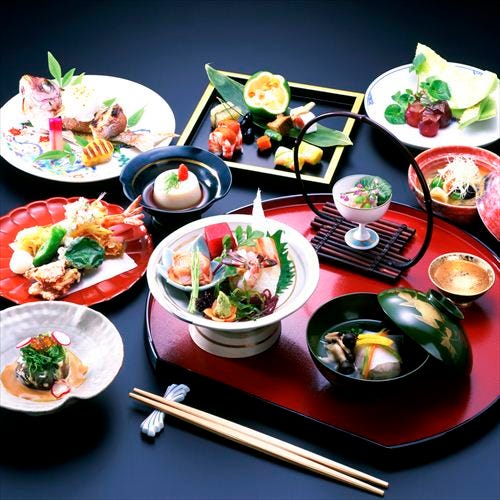
16. おばんざい (obanzai): Kyoto-style homestyle dishes
Obanzai is especially associated with Kyoto rather than Osaka and refers to the everyday dishes traditionally prepared in Kyoto households.
These are generally unfussy, seasonal dishes, often making use of vegetables, tofu, fried tofu, and dashi. Today, you’ll frequently see obanzai written on restaurant signs and menus around Kyoto.
Rather than thinking of it simply as another word for “side dish,” think of it as part of Kyoto’s distinctive homestyle food culture.
When you'll see it: Izakayas, small restaurants, set meals, and establishments specializing in Kyoto cuisine.
17. 炊いたん (taitan): A simmered dish
If you eat around Kyoto, you may come across menu items ending in no taitan. The expression comes from taita mono, or something that has been cooked, and is commonly used for gently simmered dishes.
It roughly corresponds to nimono in standard Japanese.
Examples
・Daikon no taitan (simmered daikon radish)
・Koimo no taitan (simmered small taro)
When you'll see it: Particularly on Kyoto menus and in restaurants serving homestyle dishes or obanzai.
18. 酒のアテ (sake no ate): Something to eat with your drink
In Kansai, ate refers to food eaten alongside alcohol. In standard Japanese, you’re more likely to encounter expressions such as otsumami or sake no sakana.
Despite the word sake appearing in the expression, the food doesn’t necessarily have to accompany Japanese sake. It can be something enjoyed alongside beer, shochu, or another drink.
When you'll hear it: Izakayas, bars, and conversations about what to order with drinks.
19. 突き出し (tsukidashi): The small dish served at the start of a meal
Sit down at an izakaya in Kansai and a small dish may appear before the food you actually ordered. This is often called a tsukidashi.
It roughly corresponds to the otoshi commonly encountered elsewhere in Japan. Traditionally, tsukidashi has been particularly associated with Kansai and western Japan, although the distinction between the two words is less clear-cut today.
For first-time visitors, the useful thing to remember is that this isn't necessarily something you accidentally ordered. It is a customary starter served by the restaurant, and depending on the establishment it may be associated with a table or cover charge.
Three Kansai-ben endings you'll hear all the time
Knowing individual words helps, but what really makes Kansai-ben sound distinctive is often what happens at the end of a sentence. Listen out for these three patterns while traveling around the region.
~ねん / ~やねん (-nen / -yanen)
Nen and yanen often add explanation or emphasis where standard Japanese might use forms such as n da, nan da, or da yo.
Examples
・Sou ya nen. (Yeah, that’s how it is.)
・Akan nen. (It’s no good.)
・Chau nen. (No, that’s not what I mean.)
These endings are one reason even familiar Japanese vocabulary can suddenly sound very Kansai.
~やん (-yan)
Yan is another extremely common Kansai ending. Depending on context and tone, it can convey something like “right?”, “isn’t it?”, or an emphatic “you know.”
Examples
・Ee yan! (That’s nice!)
・Akan yan. (You can’t do that / That’s no good.)
・Chau yan. (That’s not right.)
~はる (-haru)
The ending -haru is used in Kansai as a respectful form when talking about someone’s actions, although its precise use varies across the region.
There are also noticeable differences between Osaka and Kyoto. For example, forms such as ikiharu (“to go”) and kakiharu (“to write”) are associated with Osaka speech, while Kyoto speakers may use forms such as ikaharu and kakaharu.
You don’t need to master these forms on a short trip, but recognizing -haru can make Kansai conversations much easier to follow.
Why do people in Kansai call candy “ame-chan”?
Another charming feature of Kansai speech is the tendency to attach affectionate suffixes such as -chan or -san to certain everyday things.
The classic example is ame-chan, meaning candy. Visitors spending time around Osaka may hear ame referred to this way, especially in casual conversation.
It’s one of those tiny linguistic details that doesn’t necessarily help you order dinner or find the station, but immediately makes local speech sound a little more Kansai.
Can tourists use Kansai-ben?
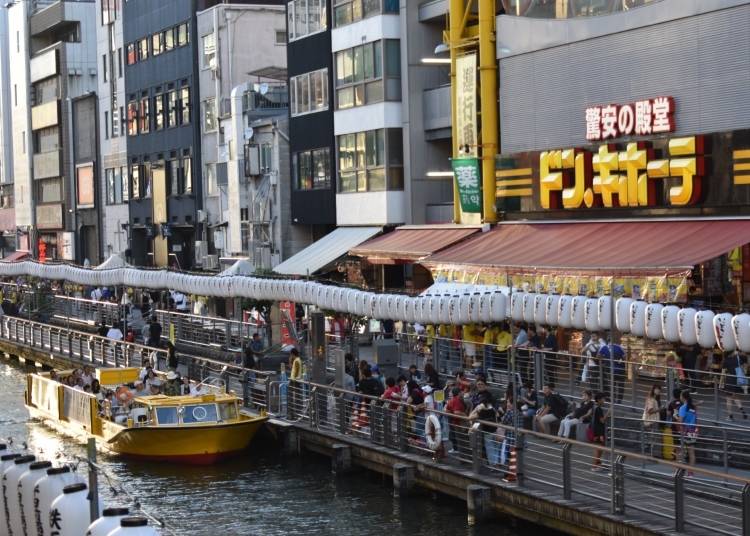
Absolutely, but a little goes a long way.
Simple expressions such as meccha, honma, ee, and ookini are easy for visitors to try and may earn a smile from locals. Others, particularly strongly dialectal or comedy-associated phrases such as nande yanen, sound more natural when the situation already calls for them.
There’s also no need to imitate a strong Kansai accent. Knowing what these expressions mean is often more valuable than trying to sound like a lifelong Osakan.
Most importantly, listen. Osaka, Kyoto, Kobe, and the rest of Kansai don't all speak in exactly the same way, and vocabulary can differ by location, generation, and speaker. Once you start recognizing a few of these expressions, though, you may find yourself hearing Kansai-ben everywhere you go.


Kiko Matsuda, Keiko Kimura, Risa Tsushi, and a team of female writers familiar with Kansai. We love eating, drinking and traveling! We share fun information based on our experiences.
*Prices and options mentioned are subject to change.
*Unless stated otherwise, all prices include tax.

Popular Tours & Activities

Recommended places for you
-
Kyoto National Museum
History Museums
Kyoto Station, To-ji Temple
-
Kiyomizu-dera Temple
Temples
Gion, Kawaramachi, Kiyomizu-dera Temple
-
Jukuseiniku-to Namamottsuarera Nikubaru Italian Nikutaria Sannomiya
Izakaya
Kobe, Sannomiya, Kitano
-
Goods
Yoshida Gennojo-Roho Kyoto Buddhist Altars
Gift Shops
Nijo Castle, Kyoto Imperial Palace
-
To-ji Temple
Temples
Kyoto Station, To-ji Temple
-
ISHIDAYA Hanare
Yakiniku
Kobe, Sannomiya, Kitano
-

10 Recommended Apartment Hotels in Kyoto for Long Stays and Family Trips
by: Yotsuka Hizuki
-
Top-Booked in Japan: Must-Try Sushi in Osaka for First-Time Visitors
by: Guest Contributor
-
Top 3 Bus Tours to Arashiyama & Kinkaku-ji (Amanohashidate Included)
by: Hyungil Kim
-
Kansai Hidden Gem: Step Into a Real-Life Shangri-La at MIHO MUSEUM, I.M. Pei's Stunning Mountain Masterpiece
by: Wemmy Chau
-
How to Ride Trains Like a Local in Kansai: Etiquette, Railway Culture & Historic Stops
by: Guest Contributor
-
5 Gorgeous Limited-Edition Goshuin Coming to Kobe’s Ikuta Shrine This September 2026
by: Wemmy Chau
Inspiration for Accommodations
-
Tokyo Train & Subway Guide: Navigate the City Like a Pro (JR, Subways, IC Cards & Passes)
-
Inside Kyoto's Spectacular Sanjusangen-do Temple with 1,000 Gold Statues
-

Universal Studios Japan: Guide to Osaka's Giant Theme Park Attractions!
by: WESTPLAN
-
Osaka's New Must-Have: Eki-Inki Station Stamps
by: Guest Contributor
-

10 Best Hotels Near Kyoto Station: Budget-friendly, Perfect for Kyoto Sightseeing
-
Ad
Prepare Japanese Food at a Factory in Kyoto and Sapporo, and Become the Star of the Show
- #best gourmet Osaka
- #things to do Osaka
- #what to do in kyoto
- #what to bring to japan
- #best gourmet Kyoto
- #new years in Osaka
- #what to buy in nanba
- #Visiting Osaka
- #onsen tattoo friendly arima
- #daiso
- #Visiting Kyoto
- #best japanese soft drinks
- #japanese fashion culture
- #japanese convenience store snacks
- #japanese nail trends