




In Japan, the trend of people moving from the countryside to large cities is as strong as ever. Especially difficult is the overconcentration in Tokyo, meaning that both people and money accumulates in Tokyo like nowhere else.
The government is promoting regional revitalization across the country to combat this phenomenon, but there are no figures to show any results yet. According to a publication by the Cabinet Secretariat’s “Machi, Hito, Shigoto” revitalization bureau, the Tokyo Metropolitan Area has experienced excessive immigration since 1996 in an unbroken trend.
There are various reasons why people move to Tokyo from the countryside: “We moved to Tokyo after getting married” or “I was transferred to Tokyo.” However, these alone cannot be the only factors in the phenomenon of overconcentration in Tokyo.
Many places across Japan offer an easier life than in Tokyo, so why are people drawn to the capital in such numbers? Is there some sort of special charm? We’re exploring the reasons for this trend, seen from the view of Japanese people from the countryside.
What is the Actual Situation of Overconcentration in Tokyo?

Since 1996, the influx of people moving to Tokyo has continuously exceeded the number of people leaving. According to the Report on Internal Migration in Japan based on the Basic Resident Register (2025 results), the prefectures experiencing an excess influx of new residents are Tokyo, Chiba, Saitama, Kanagawa, Shiga, Osaka, and Fukuoka.
Every other prefecture in the country is experiencing a net population loss. The destination with the highest net migration is Tokyo (65,597 people), followed by Kanagawa (18,524 people) and Osaka (17,489 people).
On the other hand, the prefectures with the highest net population loss are Shizuoka (7,919 people), Fukushima (7,617 people), and Niigata (6,897 people). Looking at these concrete figures, it is more than clear why the phenomenon is widely described as the "overconcentration in Tokyo."
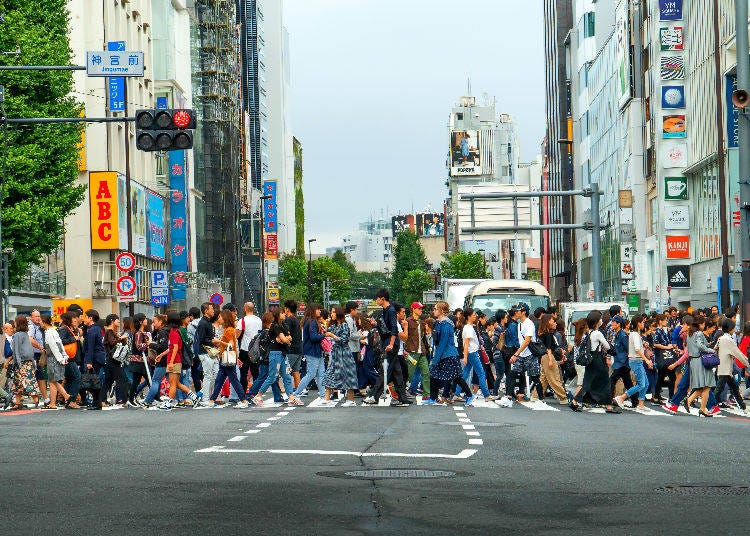
Furthermore, according to the results of the "9th Population Movement Survey (published March 21, 2025)" by the National Institute of Population and Social Security Research, 67.8% of the population were still living in their place of birth at the time of the survey, which shows little change compared to 68.6% in 2016.
However, for those who do live outside of their birthplace, the vast majority choose to reside within the three major metropolitan areas (Tokyo, Osaka, and Nagoya). Notably, a significant portion of individuals born in Hokkaido and Eastern Japan choose to move to Tokyo or the greater Tokyo area.
Why are so many people willing to leave their hometowns to migrate to and stay in the Tokyo metropolitan area?
Unraveling these underlying reasons provides a direct window into the phenomenon of "overconcentration in Tokyo."
Why Do People Move to Tokyo? Work? College?
Tokyo, Town of Famous Universities

The report on the current situation of Tokyo's overconcentration by the Cabinet Secretariat's "Machi, Hito, Shigoto" revitalization bureau breaks down Tokyo's incoming population by age, revealing that more than half are young people between 15 and 24 years old.
This indicates that most people move to Tokyo for higher education or employment. While there are plenty of universities outside of Tokyo, why choose the capital?
"Attending a well-known university in Tokyo makes job hunting much easier than going to a lesser-known local college," is a common sentiment among young migrants.
With prestigious institutions like Keio, Waseda, Sophia, Rikkyo, and Meiji universities, it is an undeniable fact that highly regarded schools are heavily concentrated in Tokyo. Furthermore, students looking for schools that match their academic level often find that their home prefectures lack suitable options, making Tokyo the ultimate destination.
According to the "Knowledge Station" website by Insight International, out of the 793 national, public, and private universities across Japan, 143 are located right in Tokyo, leaving the remaining 650 scattered across the other 46 prefectures.
This educational concentration is further amplified by Japan's unique hiring convention known as "shinsotsu ikkatsu saiyō" (simultaneous recruiting of new graduates). Since companies evaluate and hire students concurrently within a strictly limited period, university prestige frequently acts as a vital screening criterion, driving students to prioritize well-known Tokyo universities to secure their future career prospects.
Companies throughout Japan are Looking for Employees – Why the Overconcentration in Tokyo?
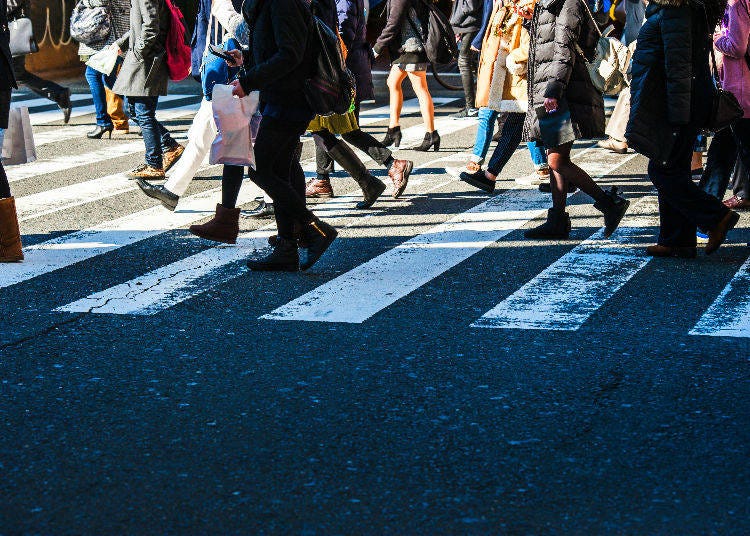
Besides that, regional differences in employment opportunities are often cited as a key reason for the overconcentration in Tokyo. Tokyo naturally boasts an immense number of job openings, prompting many to relocate there for work.
However, data suggests this is not the absolute primary factor.
According to the effective opening-to-application ratios by prefecture published by the Japan Institute for Labour Policy and Training (seasonally adjusted data up to March 2026), the top three regions are actually Fukui Prefecture at 1.74, Toyama Prefecture at 1.66, and Shimane Prefecture at 1.54.
This proves that Tokyo is far from the only place with a strong job market.
If employment metrics alone cannot explain the mass migration to Tokyo, other elements must be at play, such as the unique cultural appeal of the city or a level of convenience and lifestyle satisfaction that can only be fully appreciated once you actually live there.
A Kaleidoscope of Entertainment and Shopping, Adding Color to People’s Lives

“Bookstores in Tokyo have a selection that rural bookstores cannot compete with.” (Man from Gunma, 25)
“Tokyo has so many museums and movie theaters.” (Man from Miyazaki, 31)
“There are famous fashion brand stores in Tokyo.” (Woman from Nagano, 28)
One of the major factors attracting people from rural areas is Tokyo’s overwhelming concentration of entertainment, cultural, and shopping facilities.
Many people from the countryside grow up in areas without cinemas, museums, large bookstores, or specialty shops. As a result, they often have limited direct access to the hobbies, interests, and lifestyles they are passionate about.
For these individuals, Tokyo’s sheer diversity and abundance of opportunities feels exciting, liberating, and deeply appealing.

On top of that, Tokyo offers a plethora of different types of shops and commercial facilities. Examples are record shops and bookstores, some of them specializing in new releases while others handle retro goods, collector’s items, and old classics that aren’t printed or produced anymore.
Scouring Tokyo for long enough, you are sure to find rare and highly sought-after goods that are impossible to get even on the internet. In short, Tokyo is the prime spot to explore your love, no matter what that love is.
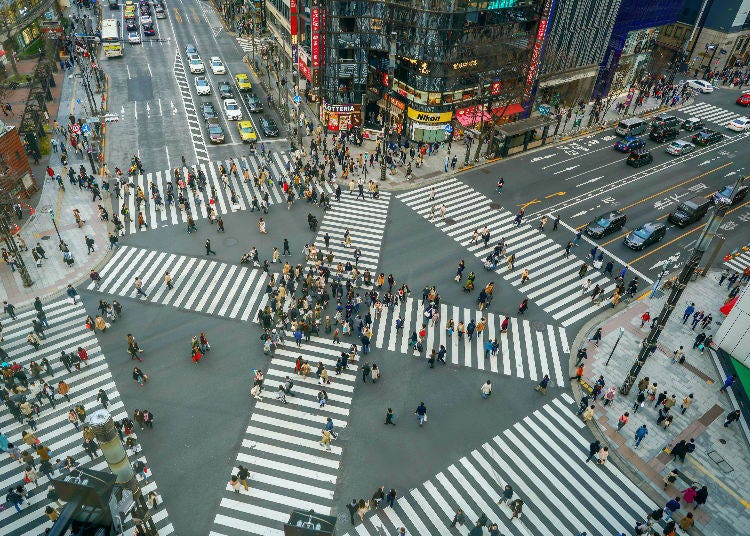
Tokyo’s people are just as diverse, boasting every viewpoint or value imaginable. From “marrying and having a child by the age of 30” to “going to college and working for a famous company,” the roads to happiness are manifold in Tokyo.
That doesn’t only pretty much guarantee you to find someone who’s on the same page but it also allows you to broaden your horizon by getting to know people that are completely different from you.
The author of this article, born and bred in Gunma Prefecture, realized just how many choices one has during their life, for example. It’s a diversity of thoughts and values as it can never be experienced in the countryside – is that not one, if not the most prominent reason as to why people keep flocking to Tokyo?
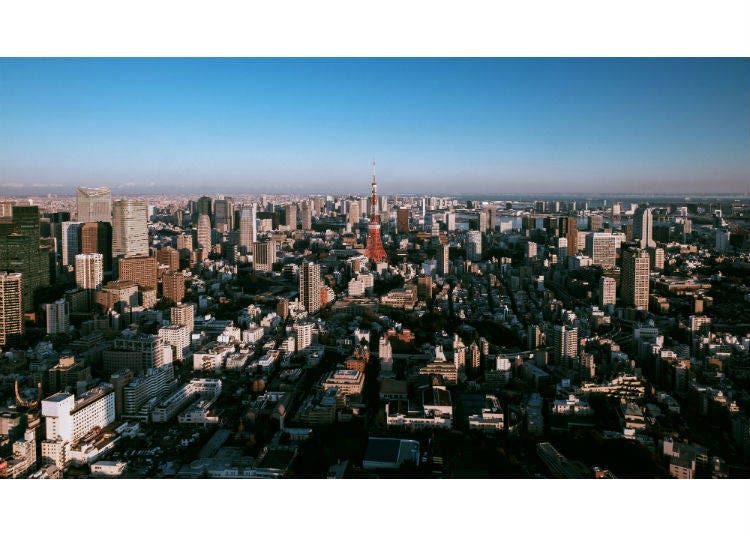
The rent is high and there’s an insane amount of people – Tokyo is by no means an easy city to live in, compared to Japan’s countryside. Nonetheless, more and more people move to the city each year.
Tokyo is ever-evolving, changing from one day to the next, and is at the forefront of diverse change and progress in Japan towards a global society. People from all walks of life, with various viewpoints and diverse ideas, coexist in this giant city filled with education, culture, and entertainment.
Isn’t this unique and exciting atmosphere what sets Tokyo apart and makes it so irresistibly fascinating?
Written by Tomoya Nakazawa
*Prices and options mentioned are subject to change.
*Unless stated otherwise, all prices include tax.
Popular Tours & Activities
Recommended places for you
-
Tried a Mt. Fuji & Hakone Day Bus Tour From Tokyo — Here's What It Was Really Like
-
This Mountain Beer Garden Might Be Tokyo’s Best Summer Experience
by: Guest Contributor
-
Coffee, Curry, and Titanium Gear: We Check Out Snow Peak LAND STATION TOKYO
-

(2026) 18 Stories You Can Carry Home: Immersive Cultural Experiences in Tokyo, Kyoto, and Osaka
-
Exploring Tokyo’s Neon Subculture: A Tourist’s Guide to the Iconic Love Hotel MAP
by: Guest Contributor
-
Explore Tokyo and Kanagawa to the Fullest! A Seamless Journey with the Odakyu Digital 1-Day All-Line Pass
by: Guest Contributor
Inspiration for Accommodations
-
Family-Friendly Hotels with Free Shuttle to Disneyland: Convenient Access for a Magical Stay
-
Top Ranked Hakone Hotels with Mt. Fuji View: Enjoy Stunning Scenery from Your Private Space
-
Convenient Tokyo Hotels with Airport Shuttle: Ideal for Families and Heavy Luggage
-
9 Family-Friendly Hotels with Comfortable Family Rooms in Asakusa
-
10 Open-air bath Onsen Ryokans in Hakone for Ultimate Relaxation
-

(Video) OFF-KAi!!: An Akihabara Hair Salon for Anime Fans
by: Holly Neslusan
-
6 Fun Things to Do at Tokyo's World-Famous Tsukiji Outer Market!
-
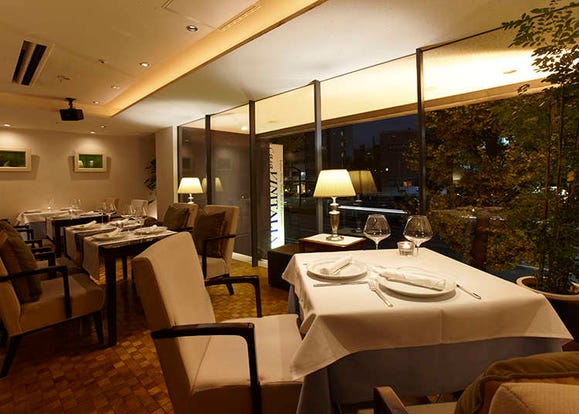
Italian Restaurants in Tokyo
-
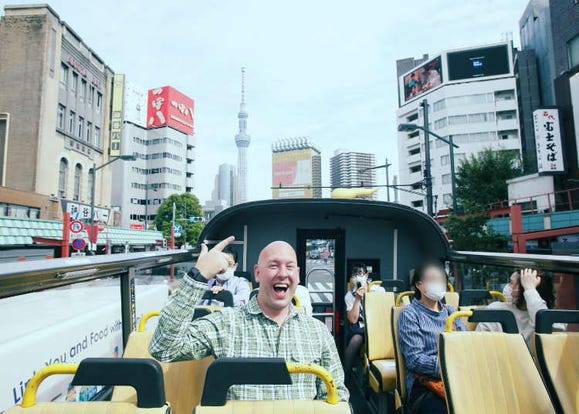
Tokyo Sightseeing Deals: 1 Day of Unlimited Rides on the Tokyo Skyhop Bus for Under $30!
-
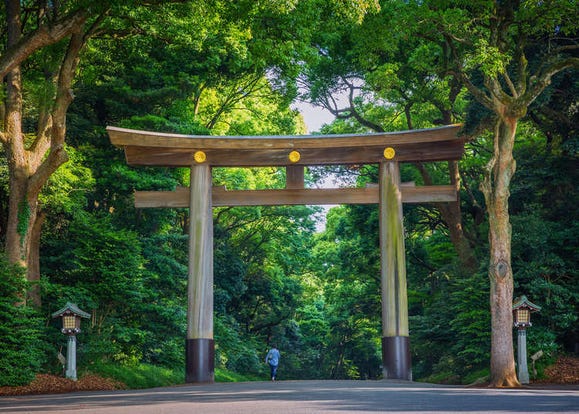
Meiji Shrine (Meiji Jingu): Exploring the Sacred Sanctuary of Peace in Bustling Tokyo
-
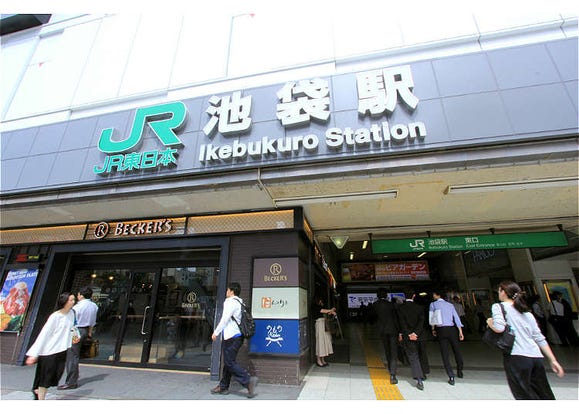
Essential Tokyo: The Complete Guide to Ikebukuro Station
- #best ramen tokyo
- #what to buy in ameyoko
- #what to bring to japan
- #new years in tokyo
- #best izakaya shinjuku
- #things to do tokyo
- #japanese nail trends
- #what to do in odaiba
- #onsen tattoo friendly tokyo
- #daiso
- #best sushi ginza
- #japanese convenience store snacks
- #best yakiniku shibuya
- #japanese fashion culture
- #best japanese soft drinks