





Enjoy Dreamy Plum Blossoms at Suzuka Forest Garden: A Lesser-Known Spring Treasure in Mie Prefecture
- Written by: Timothy Sullivan
If you’re planning a trip to Japan in early spring, there’s a hidden gem in Mie Prefecture that deserves a spot on your itinerary: Suzuka Forest Garden.
Famous for its breathtaking display of over 200 historic plum trees, including the awe-inspiring “Tennoryu” (Dragon of the Heavens) and “Chinoryu” (Dragon of the Earth), both over 100 years old, this garden transforms into a floral paradise from mid-February to mid-March. Here’s everything you need to know to experience this seasonal wonder!
(This article contains affiliate links)
A Plum Blossom Paradise 80 Minutes From Nagoya
While cherry blossoms receive much of the spotlight, plum blossoms are just as dazzling. In some ways, I even favor plum blossoms over cherry blossoms. Plums carry a unique, potent, almost hypnotic fragrance, a perfume that lingers in the air around each tree. At times, it feels as though you could simply follow your nose straight to a plum grove.
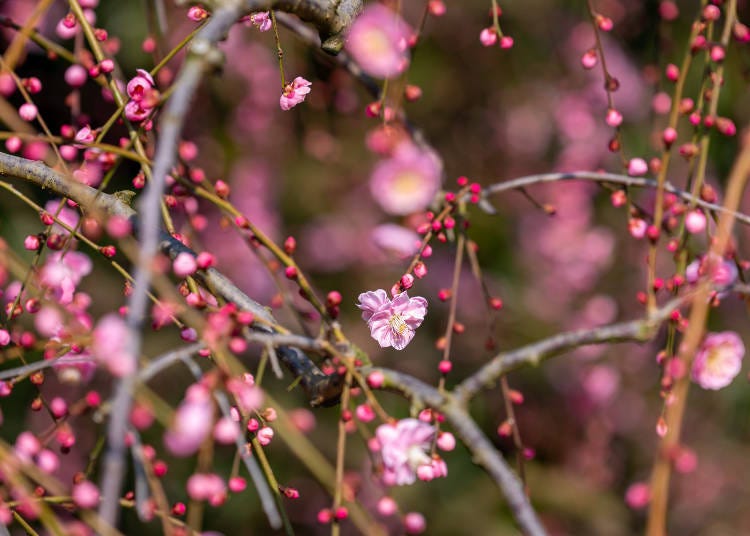
The trees themselves also seem to possess a deeper character. Plum trees often have gnarled, twisting limbs that curl dramatically in different directions, whereas typical cherry trees are more straightforward and stately in appearance.
Both types of trees come in many varieties, but I would especially like to draw your attention to those that include “shidare” (weeping) in their name. These varieties feature cascading branches that fall from central limbs, creating a graceful curtain of blossoms around the tree.
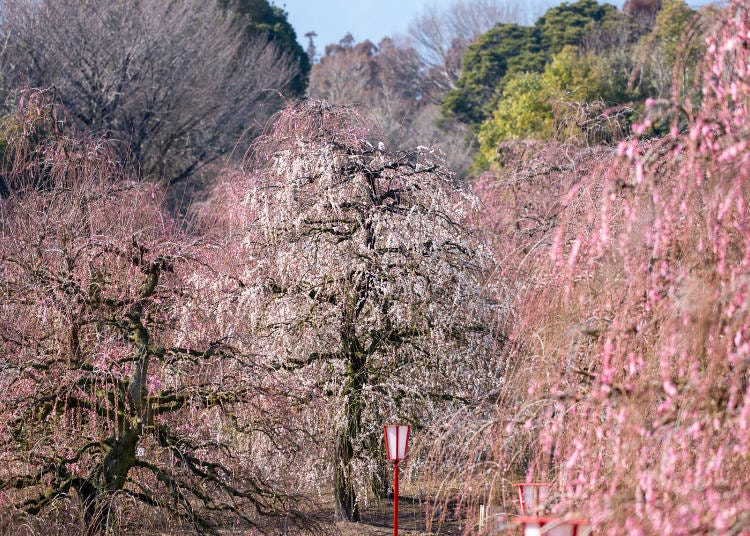
Many of the plum gardens I have visited tend to showcase mostly non-weeping varieties arranged throughout their grounds, with a few shidare-ume scattered here and there. Suzuka Forest Garden, by contrast, presents a spectacular collection composed primarily of weeping plums.
A Sea of Weeping Beauty by Day...
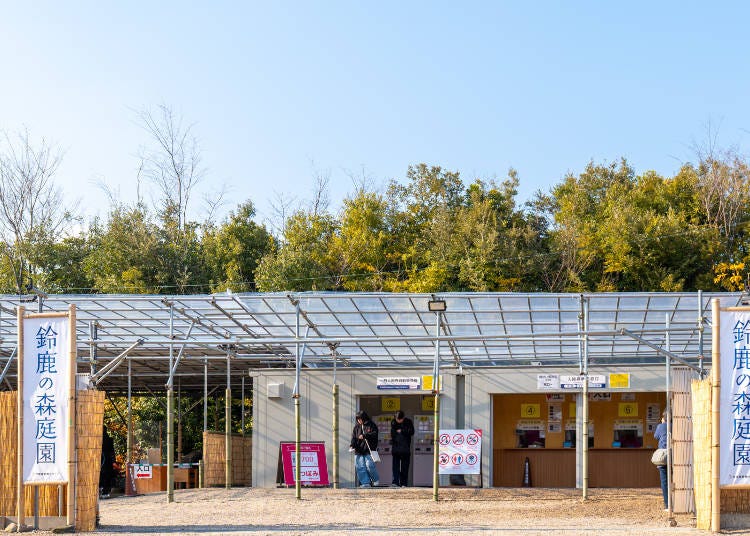
Suzuka Forest Garden is about a 40-minute drive from Kintetsu Yokkaichi Station. While a shuttle bus is available, I opted to rent a car from Nippon Rent-a-Car near the station so I could explore the surrounding area more freely. (If you decide to rent a car, you can save 10% with this deal from Live Japan.)
The drive to the garden takes you past beautiful tea plantations and quiet farmland, to a parking area (for around 200 cars) in a field near the entrance. (There is also a temporary lot for more vehicles not far away.)
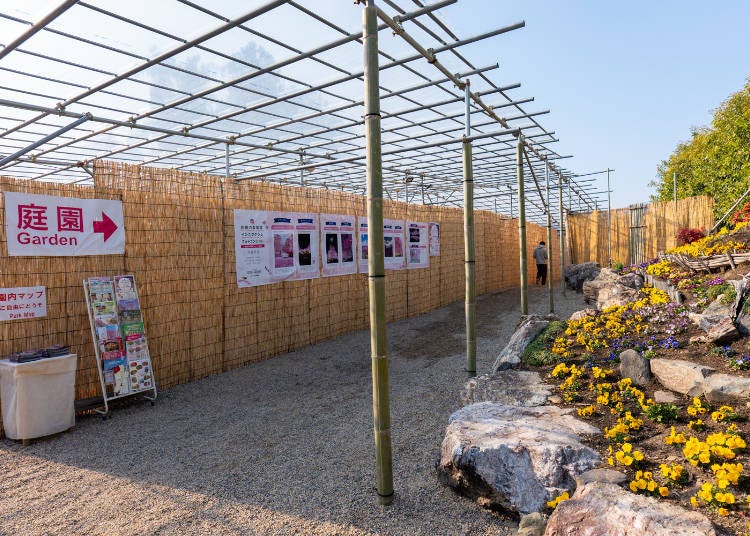
I visited the day after the garden opened in 2026. After checking the official website for bloom updates, I knew the trees were already flowering beautifully, though it would still take a few more days for the branches to fully fill out. After purchasing my ticket, I walked down a short walled corridor that concealed the landscape from view, heightening the sense of anticipation.
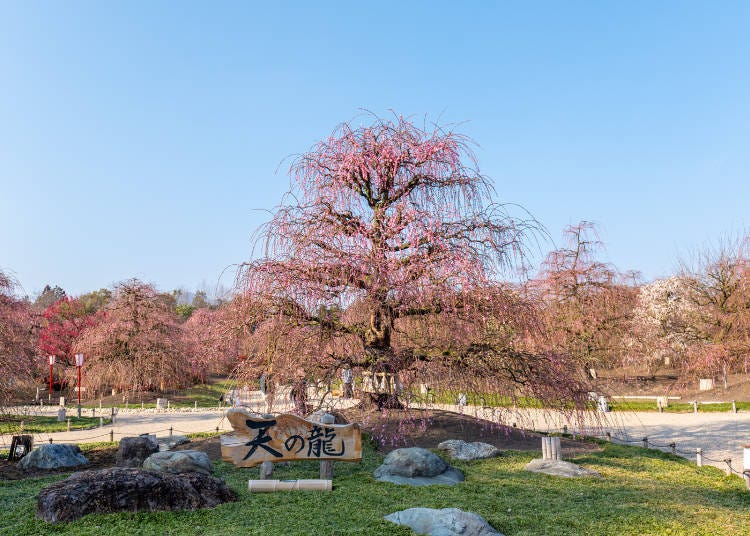
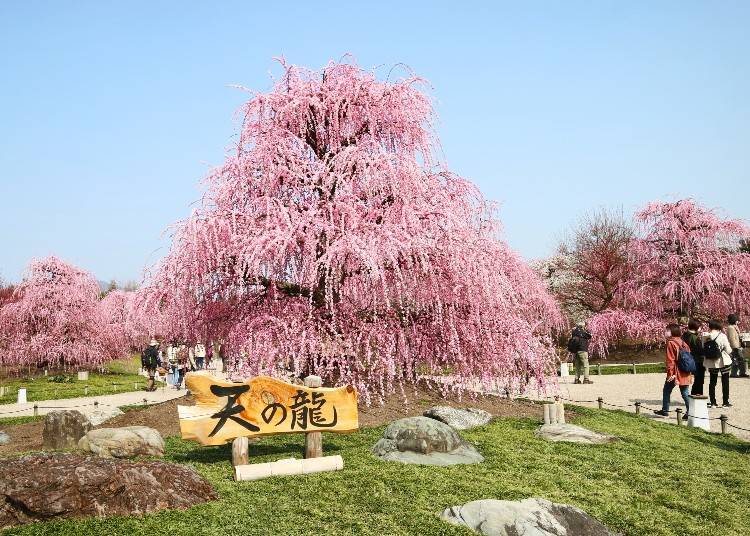
Then suddenly, the garden opened before me: a sweeping panorama of weeping plum trees, anchored at the center by the majestic 7-meter giant Tennoryu (Dragon of the Heavens). It was a breathtaking sight. Tennoryu and a nearby tree, Chinoryu (Dragon of the Earth), are both estimated to be over a century old.
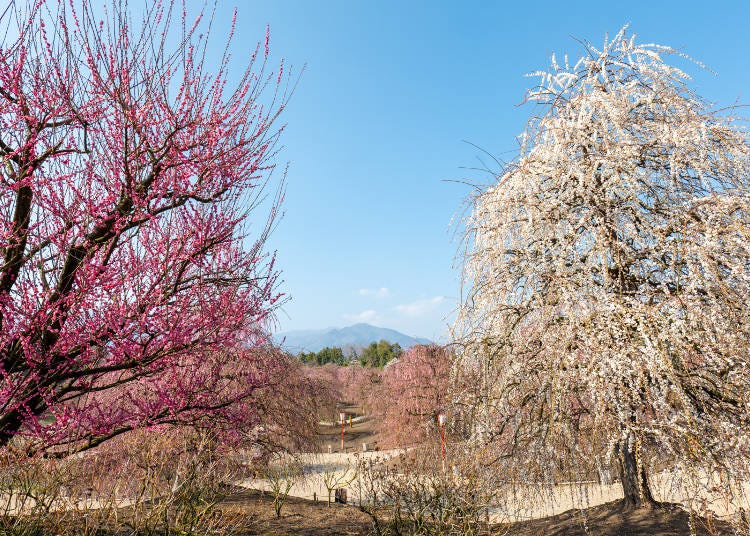
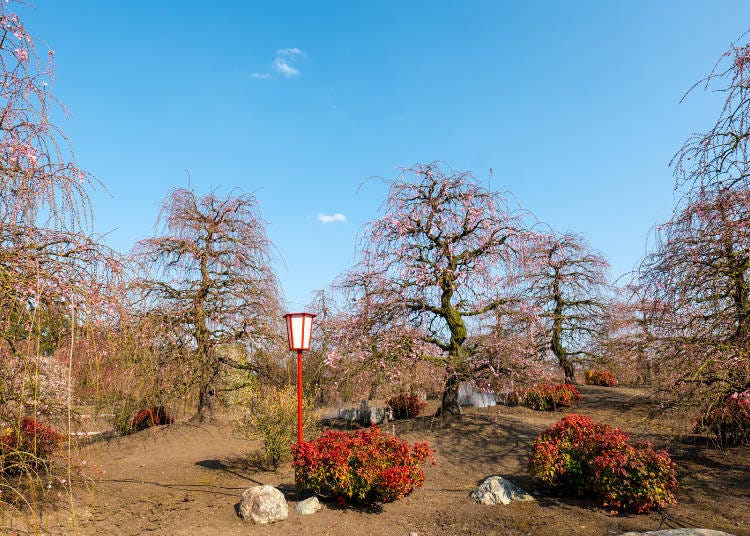
Continuing to the right leads up to Miharashidai (Lookout Point), where much of the garden spreads out below, framed by the Suzuka mountain range in the distance. During my visit, the weather was excellent, and I was able to enjoy the striking contrast of vivid pink blossoms against a brilliant blue sky, with snowcapped peaks rising beyond.
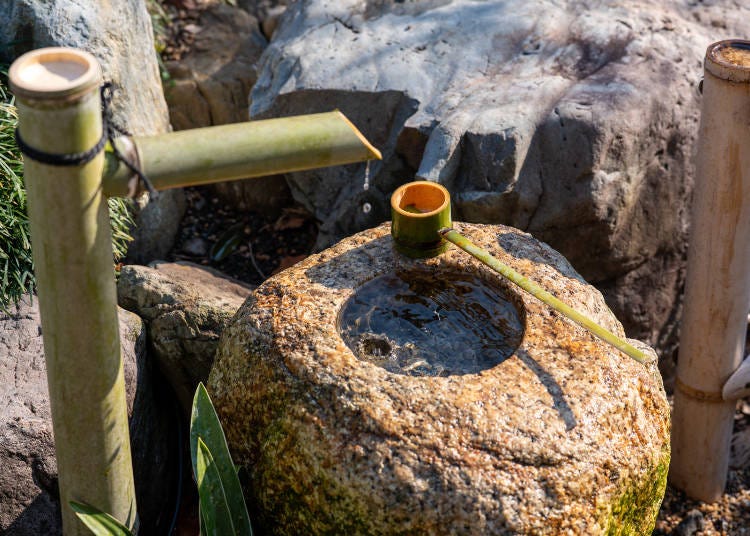
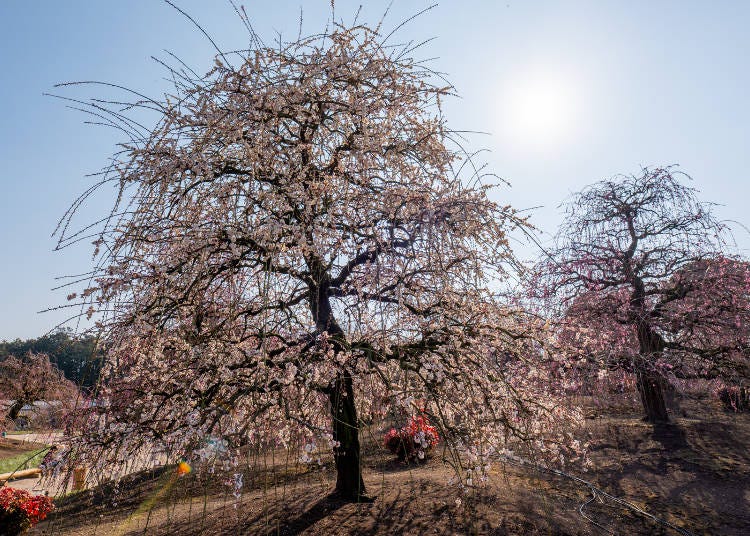
The garden is thoughtfully arranged, with “islands” of trees set along gravel-lined paths wide enough to allow visitors to move smoothly even when others stop for photos and videos. While it is possible to stroll through the grounds in about 30 minutes, I found myself lingering longer, taking in the scenery from different angles.
...A Dreamscape of Light by Night
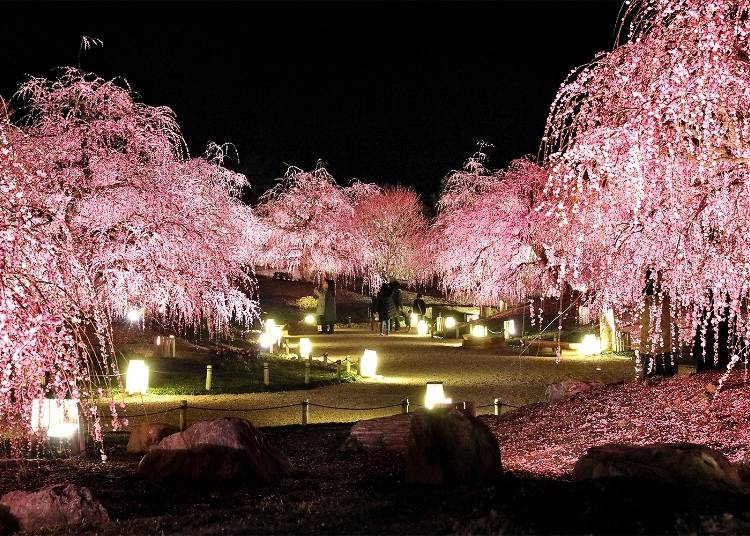
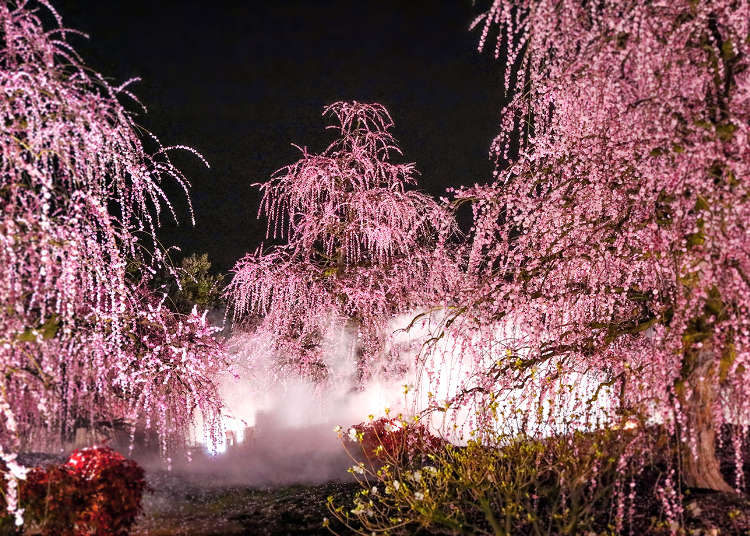
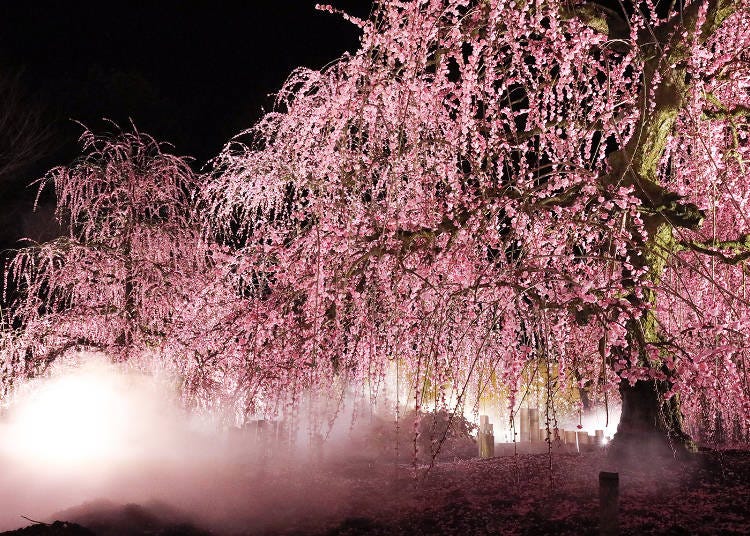
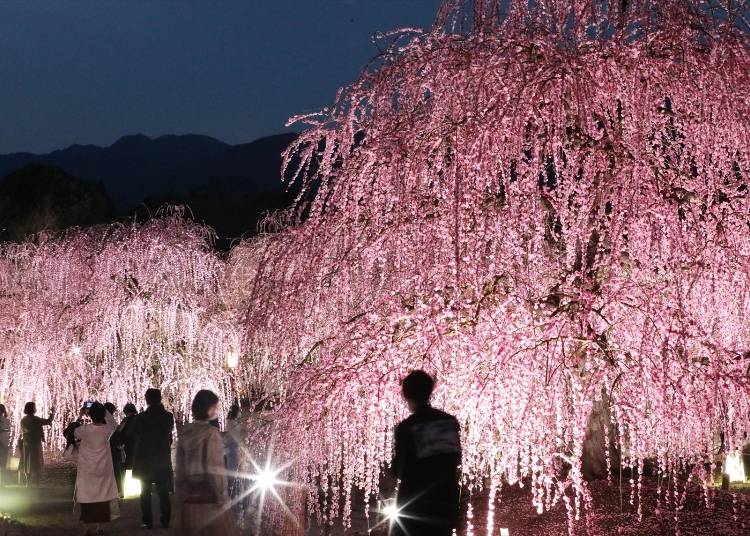
For an extra dose of enchantment, visit in the evening when the plum trees are illuminated from 6 PM to 8:30 PM, with last entry at 8 PM. One of Suzuka Forest Garden’s signature features is its nighttime light-up, when soft illumination highlights the cascading blossoms and mist machines create a gentle fog that drifts around the base of certain trees. The effect is otherworldly.
Two types of tickets are available: Single Entry and a One-day Pass. This is when the latter truly proves its value, allowing you to enjoy both the daytime scenery and the magical transformation after dark. While evening illuminations were not yet being offered during my visit, here is a glimpse of how the garden appears at night.
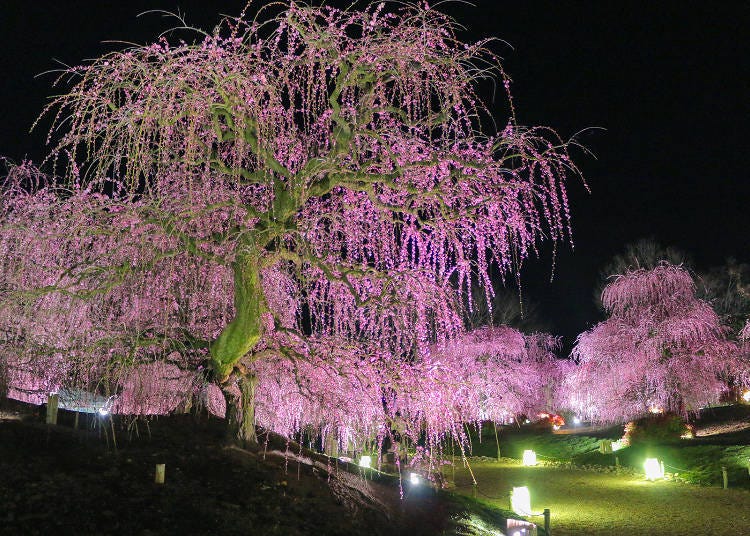
Positively enchanting.
If you plan to attend the evening session, consider wearing lighter-colored clothing so you stand out beautifully against the glowing backdrop. And be sure to dress warmly, as February and March evenings can be quite chilly.
There is not much else in the immediate vicinity of the garden, as it is surrounded by farmland, but this is where renting a car becomes especially useful. You could take a short side trip to Suzuka Flower Park, about 10 minutes away, or head to Suzuka Circuit, roughly 30 minutes away, before returning in time for the 6 PM illumination. If history appeals to you, consider a detour to Seki-juku, around 20 minutes away, a beautifully preserved Edo-period post town that invites a leisurely stroll through Japan’s past.
Things to Do and Take Home
During my visit, several food stalls were set up, along with a small seating area where visitors could grab a bite and rest their feet. A selection of light snacks was available, making it easy to refuel after wandering through the blossoms.
There is also a souvenir shop offering a variety of local foods, snacks, sweets, and teas. Below are a few of my recommendations.
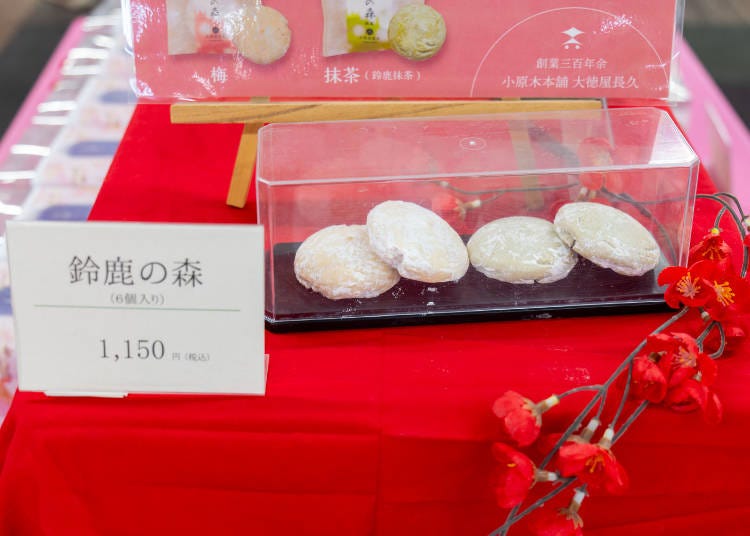
1. Suzuka no Mori (鈴鹿の森 / 6 pieces for 1,150 yen, tax inclusive)
These Japanese-style cookies, lightly dusted with powdered sugar to resemble freshly fallen snow, come in two flavors: Ume (plum) and Matcha, made with locally grown Suzuka matcha. They are crafted by Oharagi Honpo, a local confectioner with a history dating back 300 years.
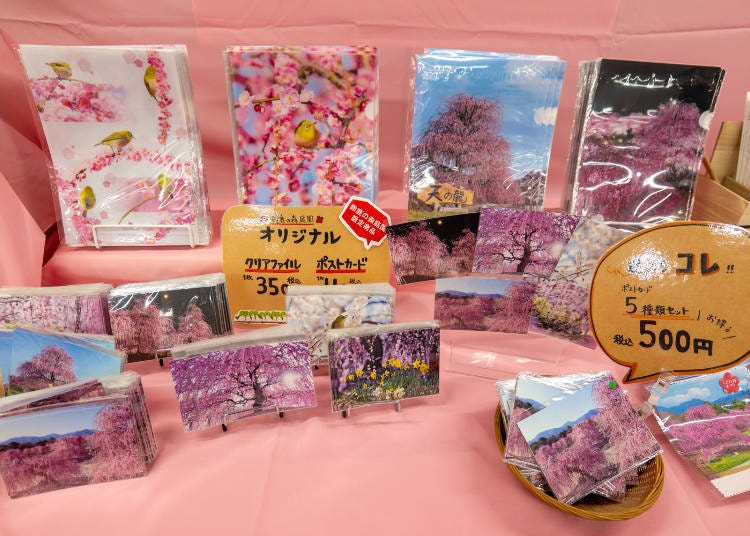
2. Original Postcard (5 for 500 yen)
While you will no doubt take plenty of photos yourself, these postcards beautifully capture the trees at the height of their bloom. Why not pick up a few to send to friends and family?
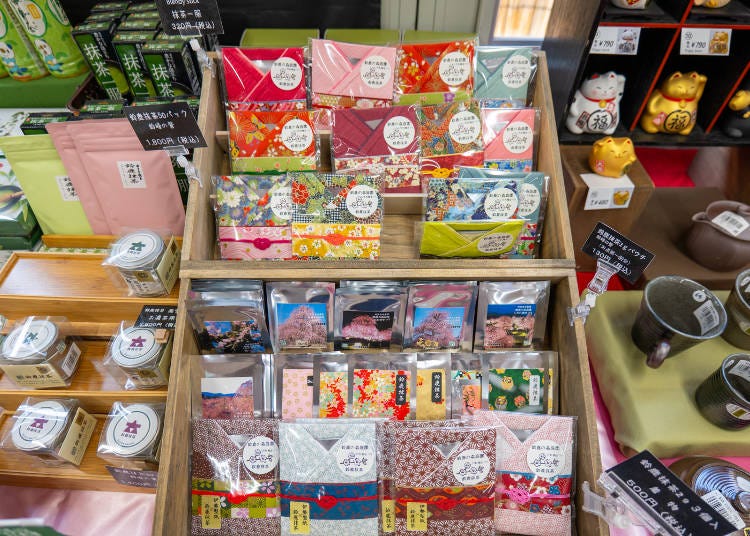
3. Suzuka Matcha Tea (Single-serving pack, 130 yen; 3-serving packs, 500 yen)
On your way to Suzuka Forest Garden, you likely passed expansive tea plantations stretching across the countryside. These pouches contain 2 grams of locally grown tea, making for a simple yet thoughtful souvenir. The kimono-themed three-packs are especially charming and gift-worthy.
Planning Your Visit
Getting to Suzuka Forest Garden is relatively straightforward, though it does require some advance planning. From Nagoya, it takes about 40 minutes by train to reach either JR Yokkaichi Station or Kintetsu Yokkaichi Station. From there, a seasonal bus operates to the garden in approximately 40 minutes. The bus runs from February 21 to March 15, 2026.
For the latest schedules and details, be sure to check Suzuka Forest Garden’s official website.
- When: February 21 – late March, 2026; 9 AM–8:30 PM (last entry 8 PM during illumination hours).
- How to Get There: From Nagoya Station, hop on the JR Kansai Line (about 50 minutes), to Yokkaichi Station, either take the temporary bus (schedule below) or take a 35-minute taxi ride.
- Admission: 700 yen to 2,000 yen for adults (price varies on bloom conditions; slightly cheaper if booked online in advance; see here for tickets), with discounts for kids and groups.
- Official website
- Operation Period:
- February 21 – March 23, 2026
- Duration:
- Approx. 40 min
- Fare:
- 900 yen one-way (450 yen for children)
- Regular Service (Two daily trips during the period)
- To Suzuka Forest Garden:
・Daily: JR Yokkaichi Station 10:20 AM → Kintetsu Yokkaichi Station 10:26 AM → Suzuka Forest Garden 11:00 AM
・Daily: JR Yokkaichi Station 1:30 PM → Kintetsu Yokkaichi Station 1:36 PM → Suzuka Forest Garden 2:10 PM
・Weekends (Feb 28 – Mar 15): JR Yokkaichi Station 5:30 PM → Kintetsu Yokkaichi Station 5:36 PM → Suzuka Forest Garden 6:10 PM
Return:
・Daily: Suzuka Forest Garden 12:30 PM → Kintetsu Yokkaichi Station 1:04 PM → JR Yokkaichi Station 1:10 PM
・Daily: Suzuka Forest Garden 3:30 PM → Kintetsu Yokkaichi Station 4:04 PM → JR Yokkaichi Station 4:10 PM
・Weekends (Feb 28 – Mar 15): Suzuka Forest Garden 7:40 PM → Kintetsu Yokkaichi Station 8:14 PM → JR Yokkaichi Station 8:20 PM
So, grab your camera, pack a light jacket, and head to Mie Prefecture this spring. Suzuka’s weeping plums are waiting to welcome you with open branches!
-
Suzuka Forest Garden鈴鹿の森庭園
- Address 151-2 Yamamotocho, Suzuka, Mie 519-0315
・Season: February 21–Late March 2026 (Open daily during the season)
・Hours: 9 AM–8:30 PM (On days with nighttime illumination); 9 AM–4 PM (On days without illumination)
・Last Entry: 30 minutes before closing
・Illumination: From around 6 PM



Chief English Editor
LIVE JAPAN
Timothy Sullivan is a senior English editor who has worked with LIVE JAPAN since 2017. Originally from New York, USA, he has over two decades of experience in Japan and more than 15 years in the digital media sphere. Timothy has played pivotal roles in assisting Japanese enterprises and regional authorities connect with international audiences. When he isn’t traveling, he is helping producing polished copy for LIVE JAPAN, one of Japan’s largest tourism platforms. He received a bachelor’s degree in Communication from the State University of New York College at Geneseo.
- Area
- Category
*Prices and options mentioned are subject to change.
*Unless stated otherwise, all prices include tax.

Popular Tours & Activitiess
Recommended places for you
-
Kambei Sannomiyahonten
Yakiniku
Kobe, Sannomiya, Kitano
-
Kyoto National Museum
History Museums
Kyoto Station, To-ji Temple
-

Kanzenkoshitsuyakinikutabehodai Gyugyu Paradise Sannomiya
Yakiniku
Kobe, Sannomiya, Kitano
-
ISHIDAYA Hanare
Yakiniku
Kobe, Sannomiya, Kitano
-

Jukuseiniku-to Namamottsuarera Nikubaru Italian Nikutaria Sannomiya
Izakaya
Kobe, Sannomiya, Kitano
-
Goods
Yoshida Gennojo-Roho Kyoto Buddhist Altars
Gift Shops
Nijo Castle, Kyoto Imperial Palace
-
Ad

Meet Osaka's Fluffiest Locals: Relax With Samoyeds at Cafe moffu in Shinsaibashi!
-

A Happier Trip to Osaka & Kobe: Sesame Street Takes Over Hanshin Railway
by: Guest Contributor
-
New Way to Reach Koyasan! Ride Nankai's Luxury 'GRAN Tenku' Train for a Scenic Journey
by: Guest Contributor
-
One of Western Japan's Largest Character Hubs Is Coming to Osaka Station in 2026
by: Guest Contributor
-
Koyasan's Sacred Silence Gets a Futuristic Upgrade: Electric Buses Arrive with GRAN TENKU in 2026
by: Guest Contributor
-
This Spring, Enjoy Magical Night Sakura Reflections Along Nara's Uda River (Local Hidden Gem!)
-

Universal Studios Japan: Guide to Osaka's Giant Theme Park Attractions!
by: WESTPLAN
-
Visiting Tsutenkaku Tower: Osaka's Retro Icon in the Heart of Shinsekai
by: Guest Contributor
-
(Video) Walking Tour along Narita Omotesando - Quaint Historical Village near Narita Airport!
by: Victor Gonzalez
-
Osaka Koreatown: In Search of the Best Eats in the Korean Roots of Osaka's Tsuruhashi Market
-
10 Best Hotels Near Kyoto Station: Budget-friendly, Perfect for Kyoto Sightseeing
-

Dining in Kyoto: Best Restaurants for Kaiseki, Sushi, Cafes & More
- #best gourmet Osaka
- #things to do Osaka
- #what to do in kyoto
- #what to bring to japan
- #best gourmet Kyoto
- #new years in Osaka
- #what to buy in nanba
- #Visiting Osaka
- #onsen tattoo friendly arima
- #daiso
- #Visiting Kyoto
- #best japanese soft drinks
- #japanese fashion culture
- #japanese convenience store snacks
- #japanese nail trends