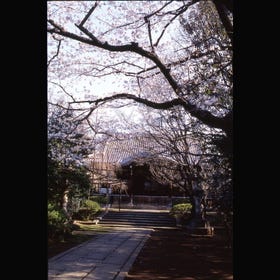
A Nichiren Buddhist temple housing Kishimojin (Hariti), the deity of easy childbirth. Steeped in nature, Kishimojin-do has been a popular site for viewing cherry blossoms since the Edo period (1603-1868).
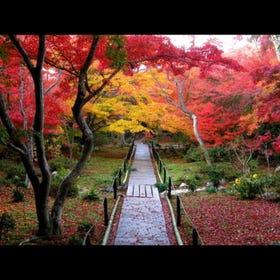
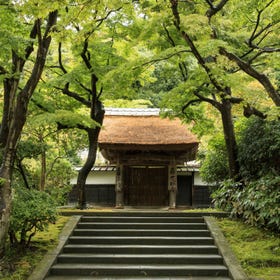
Established by Emperor Shirakawa during the Heian Period, the temple's name derives from the ingo (posthumous Buddhist name) of Yoshiakira Ashikaga, the second shogun of the Muromachi bakufu (Japanese feudal government headed by a shogun). While exploring the precinct, you'll find the graves of Yoshiakira and Masatsura Kusunoki, the busho (military commander) of Nancho (Southern Court) located next to each other. Masatsura was much respected by Yoshiakira even though he was an enemy general. During autumn, the maple leaves turn a striking red (visitors are not allowed to bring in a tripod stand or a unipod).
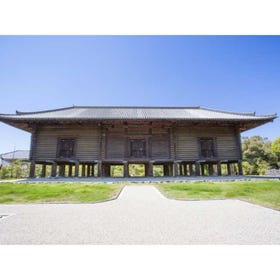
A vault of many national cultural artifacts from the Nara period
A temple of flowers, with a circuit-style garden
It is the Buddhist temple which is said to be the origin of maneki-neko or a luck-inviting cat figurine, beckoning with its right front paw. In its temple grounds, a number of historical assets still remain.
This is a historic temple established in 830 and also known as Kawagoe Daishi. The temple is famous for the 538 statues of rakan (disciples of Buddha) with various facial expressions.
The main gate of Sensoji Temple. Its huge, impressive paper lantern with ”Kaminarimon” written in kanji is a landmark of Asakusa.
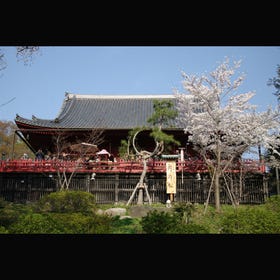
The temple hall is classified as an Important Cultural Property, modeled after Kiyomizu Temple in Kyoto Higashiyama. The gorgeous vermillion facade fascinates visitors.
This is a historically valuable temple that has National Treasures within its magnificent scenery that makes good use of nature. Zazen seated meditation meetings are held on weekends.
The principal object of worship at Ennoji Temple is Enma Daio. It also enshrines the Ten Judges of Hell. You can experience an ancient view of the afterlife here.
The Western Paradise of the Buddha Amida’s dazzling dream, a gold space that reflects upon a pond
Famous for ”The Scrolls of Frolicking Animals and Humans”
This famous shrine blossoms in full glory from season to season with its flowers
Famous for its national treasure, a statue of Miroku Bosatsu
See “Thunder of the Dragon” during special viewings
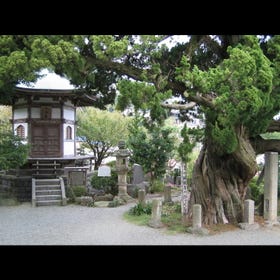
Sanehira Jiro Doi is famous for protecting Yoritomo Minamoto from Kagechika Oba’s army after he had lost the Battle of Ishibashiyama. Joganji Temple is the family temple of the Doi clan. The temple grounds contain many sights of historic interest, including Shichikido, a hall which keeps the seven wooden statues depicting Yoritomo and each of his samurai warriors who played an active part in the revival of the Minamoto family, as well as the Doi family’s burial ground (designated as a Kanagawa cultural property). A Chinese juniper tree planted by Sanehira himself (estimated to be 800 years old and designated as a national natural monument) is the largest and oldest in Kanagawa Prefecture, and its straight, vertical trunk is an impressive sight thought to be extremely rare in Japan.
With ancient living and meditation quarters
A temple with a living, breathing aesthetic sense of the tea ceremony
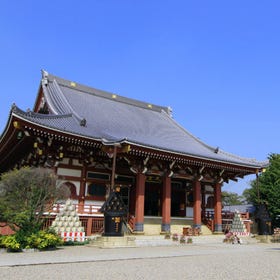
It is a daihonzan major temple of Nichiren-school Buddhism. Various historical buildings remain on the temple precincts, such as the Daido large hall, the Honden main hall, the Tahoto jeweled pagoda, and a five-story pagoda.
The orderly lineup of 1001 thousand-armed Kannon is superb