



7 Best Observation Decks in Tokyo: Spectacular Places to Capture the City View (Prices, Views & Tickets Compared)
- Written by: LIVE JAPAN Editor
Tokyo, with its bustling population of 14 million, is impressive at street level, but seeing it from above is something else entirely! From Shibuya’s famous scramble crossing to the glittering skyscrapers of Shinjuku, the city stretches seemingly forever. And on a clear day, you might even spot Mt. Fuji on the horizon.
But with so many observation decks to choose from, which one is actually worth visiting? Should you book the open-air rooftop at Shibuya Sky, head up Japan’s tallest structure at Tokyo Skytree, or save your money and enjoy the view from one of Tokyo’s free observation decks?
We’ve rounded up the best observation decks in Tokyo for 2026, comparing their views, ticket prices, photo opportunities, and nearby attractions. Whether you’re chasing sunset photos, planning a romantic evening, or simply want to see Tokyo from a different perspective, here’s how to choose the perfect viewpoint for your trip.
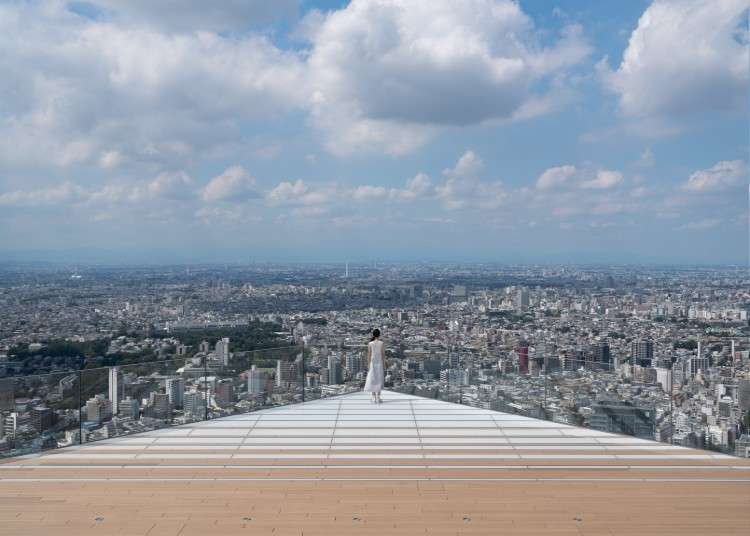
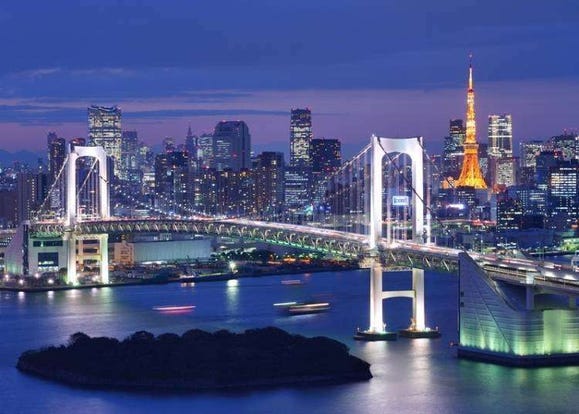
Main image: Klook
- Table of Contents
-
- Best observation decks in Tokyo at a glance
- 1. Shibuya Sky: Best for open-air views and sunset (Indoor/Outdoor Observation Deck)
- 2. Tokyo Skytree®: Best for the highest panoramic views (Indoor Observation Deck)
- 3. Tokyo Tower: Best for a classic Tokyo experience (Indoor Observation Deck)
- 4. Roppongi Hills Tokyo City View: Best for photographing Tokyo Tower (Indoor/Outdoor Observation Deck)
- 5. Tokyo Metropolitan Government Building: Best free observation deck (Indoor Viewing Area)
- 6. Yebisu Garden Place Tower: Free night views in Ebisu (Indoor Viewing Area)
- 7. Asakusa Culture Tourist Information Center: Best for views of old Tokyo (Indoor/Covered Outdoor Viewing Area)
- Bonus: See Tokyo from above on a helicopter tour
- Sunset Times in Tokyo
- Frequently asked questions about Tokyo observation decks
- Final verdict: Which Tokyo observation deck is worth visiting?
Best observation decks in Tokyo at a glance
Not all observation decks offer the same experience. Some are all about the height, others have outdoor terraces that are fantastic for photography, and a few offer impressive views without costing a yen. Here’s how Tokyo’s most popular observation decks compare.
| Observation deck | Viewing height | Best for | Adult admission |
|---|---|---|---|
| Shibuya Sky | Approx. 229 m | Open-air views, sunset photos | Paid, variable |
| Tokyo Skytree | 350 m / 450 m | Highest views, panoramic scenery | From 1,800 yen |
| Tokyo Tower | 150 m / 250 m | Classic Tokyo experience | From 1,500 yen |
| Roppongi Hills Tokyo City View | Approx. 250 m | Tokyo Tower photography | Paid, variable |
| Tokyo Metropolitan Government Building | Approx. 202 m | Free panoramic views | Free |
| Yebisu Garden Place Tower | 38th floor | Free night views | Free |
| Asakusa Culture Tourist Information Center | 8th floor | Asakusa and Skytree photos | Free |
Prices are starting adult admission rates where confirmed and may vary by date or ticket type. Heights refer to observation levels or approximate viewing elevations. Check official websites for current conditions before visiting.
Our quick recommendations:
・Best overall experience: Shibuya Sky, for its dramatic outdoor rooftop and central Tokyo location.
・Best panoramic views: Tokyo Skytree, for the sheer height and extraordinary scale of the city.
・Best view of Tokyo Tower: Roppongi Hills Tokyo City View, where the tower becomes part of the skyline.
・Best budget option: Tokyo Metropolitan Government Building, with free observation decks high above Shinjuku.
・Best for first-time visitors: Shibuya Sky or Tokyo Skytree, depending on whether you prefer open-air photography or the highest possible view.
If you only have time for one, don’t worry. Below, we’ll help you decide which observation deck best fits your itinerary.
1. Shibuya Sky: Best for open-air views and sunset (Indoor/Outdoor Observation Deck)
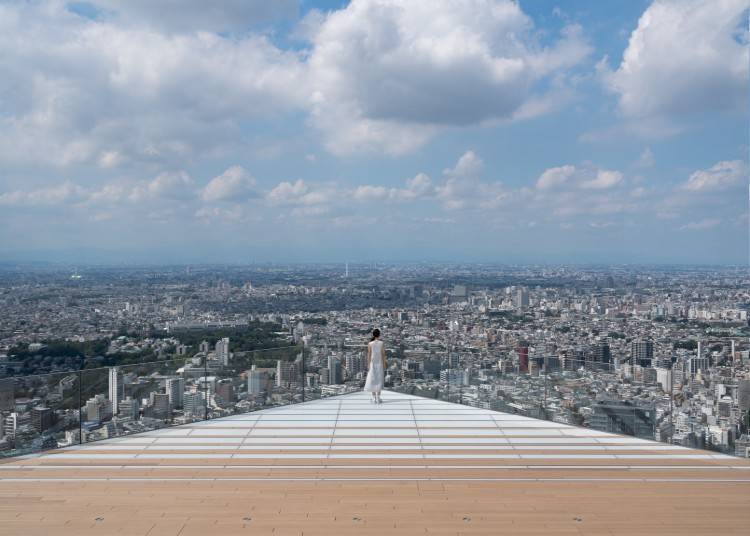
Perched high above one of Tokyo’s busiest neighborhoods, Shibuya Sky is arguably the city’s most photogenic observation deck. Located at the top of Shibuya Scramble Square, directly connected to Shibuya Station, it offers sweeping views of Tokyo from approximately 229 meters above the ground.
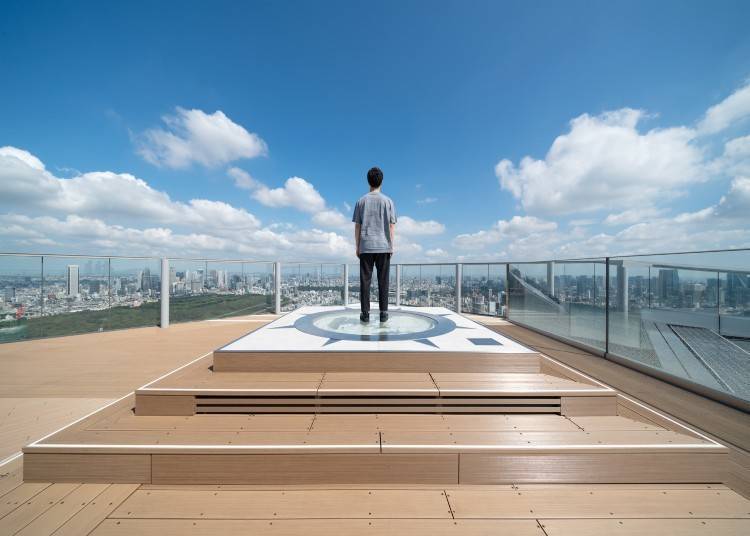
What makes Shibuya Sky special is its open-air rooftop, SKY STAGE. Instead of looking through windows, you can step outside and take in the skyline with the wind in your hair. Transparent barriers around the perimeter create a remarkable sense of openness, making this one of Tokyo’s most popular places for skyline photography.
Look down to spot Shibuya Crossing and the surrounding shopping streets, or turn toward the horizon for views of Tokyo Tower, Tokyo Skytree, and, on particularly clear days, Mt. Fuji.
The rooftop’s famous corner viewing area is especially popular for photographs, while the surrounding spaces give you plenty of room to appreciate the city from different angles.
What makes Shibuya Sky worth visiting?
The real appeal is the combination of height, location, and outdoor access. Tokyo Skytree takes you much higher, but Shibuya Sky places you closer to the dense cityscape, where trains, roads, and buildings create a fascinating urban panorama.
The experience begins before you reach the rooftop, with an elevator ride and a striking escalator leading toward the sky. There’s also an indoor observation area, SKY GALLERY, which offers an alternative when the weather isn’t suitable for the rooftop.
Sunset is particularly beautiful here. Arrive while it’s still light, watch the sun dip behind the skyline, and stay as Tokyo’s buildings begin to illuminate.

Best time to visit Shibuya Sky and how to get tickets
Sunset slots are among the most sought-after, so advance booking is strongly recommended. If you have a particular date in mind, check ticket availability as soon as reservations open.
For photography, aim to arrive before sunset rather than right at the moment the sun disappears. This gives you time to get through admission and enjoy the transition from daylight to evening.
Be aware that the rooftop may close during rain, strong winds, or other unsuitable weather conditions. Large bags and certain loose belongings aren’t permitted on the rooftop, so use the designated lockers and follow staff instructions.
Recent reviews on the Klook website note:
・We highly recommend making a reservation before visiting. Without a reservation, entry may not be possible, and it may be difficult to use the facility during your desired time slot.
・A 100 yen coin is required to use the locker room for baggage storage, and hats are not allowed inside the observatory.
Nearby sightseeing: Shibuya Crossing, Hachiko Statue, Shibuya PARCO, and the shops and restaurants around Miyashita Park are all easy to combine with a visit.
-

-
Address
Shibuya Scramble Square, 2-24-12 Shibuya, Shibuya-ku, Tokyo, 104-0061
View Map -
Nearest Station
Shibuya Station (JR Shonan Shinjuku Line / JR Yamanote Line / JR Saikyo Line / Tokyo Metro Ginza Line / Tokyo Metro Hanzomon Line / Tokyo Metro Fukutoshin Line / Tokyu Toyoko Line / Tokyu Den-en-toshi Line / Keio Inokashira Line)
- Phone Number 03-4221-4280
-
Address
Shibuya Scramble Square, 2-24-12 Shibuya, Shibuya-ku, Tokyo, 104-0061
2. Tokyo Skytree®: Best for the highest panoramic views (Indoor Observation Deck)
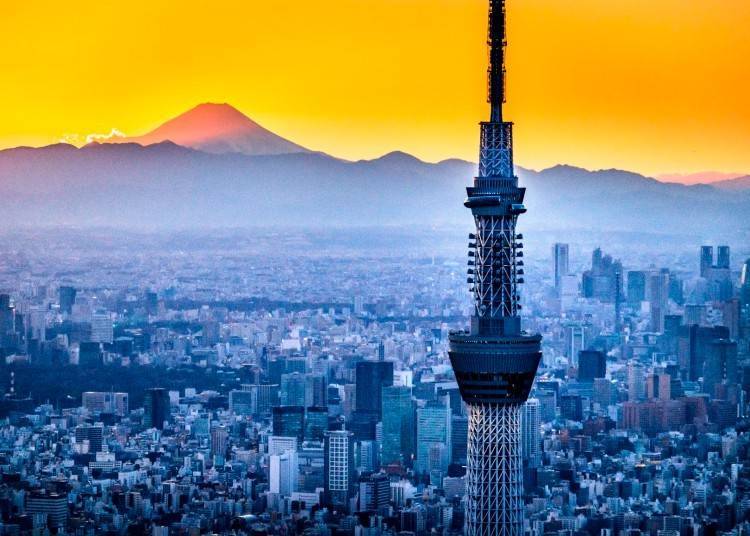
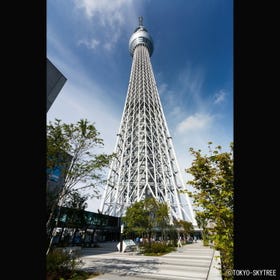
At 634 meters tall, Tokyo Skytree is Japan’s tallest structure and one of Tokyo’s most recognizable landmarks. Its observation decks are also among the highest places in the city that ordinary visitors can access.
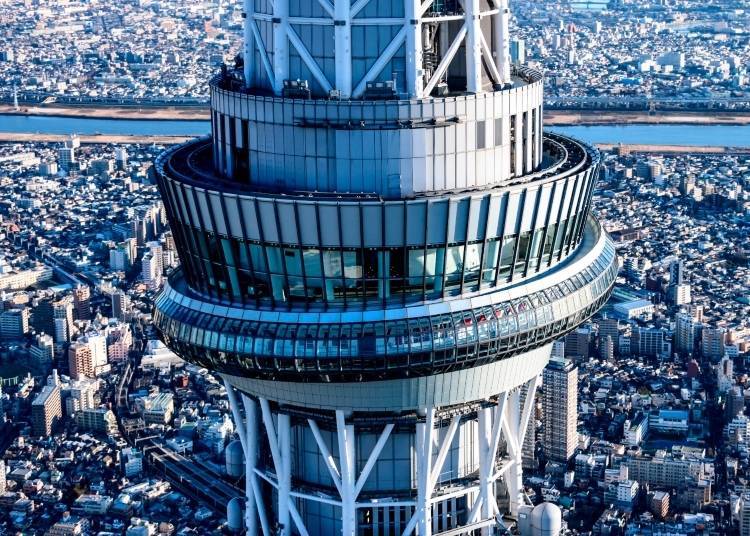
The main Tembo Deck sits 350 meters above the ground, offering a spectacular panorama of Tokyo. From here, you can trace the Sumida River as it winds through the city, pick out historic Asakusa, and look toward Tokyo Bay.
On a clear day, the view stretches far beyond central Tokyo, revealing just how enormous the metropolitan area really is.
Unlike Shibuya Sky, Tokyo Skytree’s observation areas are indoors, making it a particularly appealing choice during colder months or when the weather is less comfortable.
Tembo Deck vs Tembo Galleria: Is the upgrade worth it?
Tokyo Skytree has two main observation areas, and visitors often wonder whether paying extra for the higher one is worthwhile.
Tembo Deck (350 m)
The main observation deck features enormous windows, a café, and glass flooring on a lower level. For most first-time visitors, this is already an excellent experience.
Tembo Galleria (450 m)
This higher observation area features a gently sloping, glass-enclosed walkway leading to the highest public viewing point. It’s a fun choice for anyone who wants the full Tokyo Skytree experience.
Our recommendation? If you’re primarily interested in the view and want to keep costs down, the 350-meter Tembo Deck is more than sufficient. If this is a once-in-a-lifetime visit and you love heights, the additional 100 meters and the unusual skywalk make the combination ticket worth considering.
Tickets, access, and nearby attractions
Tokyo Skytree offers both advance and same-day tickets, with prices depending on the date and admission type.
Advance online tickets for the Tembo Deck start from 1,800 yen for adults, while combination tickets covering both the Tembo Deck and Tembo Galleria start from 3,000 yen. Check the official booking calendar for your travel date.
After your visit, explore Tokyo Solamachi, the shopping and dining complex at the base of the tower. The nearby Sumida River is also excellent for photographs of Skytree itself, particularly around sunset.
Recent reviews on the Klook website note:
・It's highly recommended to make a reservation, especially on weekends, as purchasing tickets alone may take over an hour.
・We recommend visiting from sunset to nighttime to enjoy the stunning view. It's absolutely amazing. It was perfect to go up around 4 PM.
Nearby sightseeing: Tokyo Solamachi, Sumida Aquarium, the Sumida River, and Asakusa are all convenient additions to your itinerary.
-
-
Address
1-1-2 Oshiage, Sumida Ward, Tokyo, 131-0045
View Map -
Nearest Station
Tokyo Skytree Station (Tobu Isesaki Line (Tobu Skytree Line))
- Phone Number 0570-55-0634
-
Address
1-1-2 Oshiage, Sumida Ward, Tokyo, 131-0045
3. Tokyo Tower: Best for a classic Tokyo experience (Indoor Observation Deck)
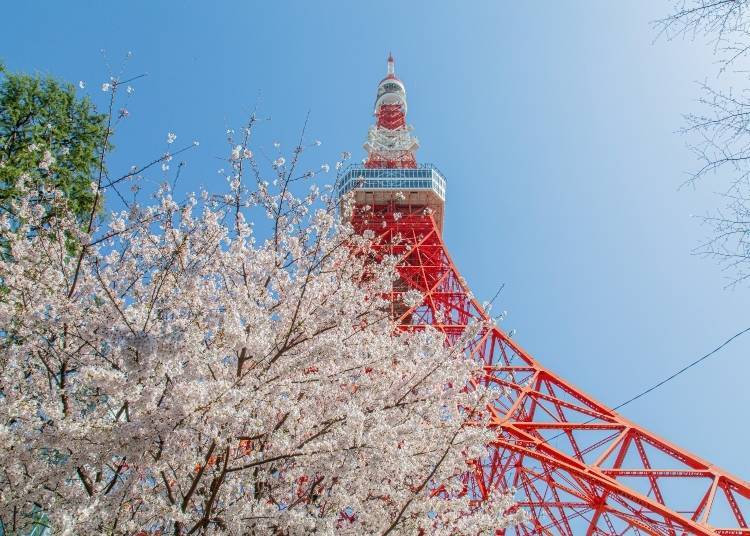
With its distinctive red-and-white structure, Tokyo Tower has been a symbol of the city since 1958. Inspired by the Eiffel Tower, it remains one of Tokyo’s most beloved landmarks, even though taller observation decks have since appeared across the city.
Tokyo Tower’s appeal isn’t about being the highest. It’s about seeing Tokyo from a more intimate perspective, with surrounding buildings, parks, and streets close enough to appreciate their details.
From the Main Deck, 150 meters above the ground, visitors can enjoy views of central Tokyo, including the greenery of Shiba Park and Zojoji Temple below. At night, the surrounding skyscrapers create a beautiful cityscape.
Main Deck vs Top Deck Tour
Tokyo Tower offers two principal observation experiences.
The Main Deck, at 150 meters, is the standard option and a good choice for families or travelers who want a classic Tokyo experience without spending too much.
The Top Deck Tour takes visitors to the 250-meter observation level, where a distinctive mirrored interior creates an almost futuristic atmosphere. The experience also includes access to the Main Deck.
The Top Deck offers a wider perspective, but the Main Deck is already worthwhile if you’re primarily interested in the tower’s atmosphere and views of the surrounding neighborhood. Current adult admission is 1,500 yen for the Main Deck or 3,300 yen for the Top Deck Tour when purchased online.
What to do around Tokyo Tower
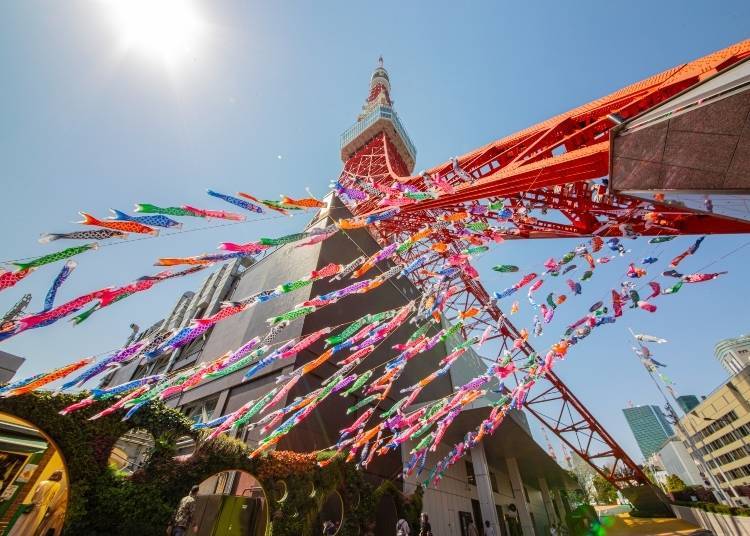
One of the best things about Tokyo Tower is its location. Before or after going up, visit Zojoji Temple, where the traditional temple buildings create a striking contrast with the modern tower rising behind them.
Shiba Park is another excellent place to photograph Tokyo Tower from below, especially when the surrounding trees are green in spring and summer or colorful in autumn.
Recent reviews on the Klook website note:
・We highly recommend making a reservation in advance.
・We recommend visiting from sunset to nighttime to enjoy the stunning view. After that, seeing the beautifully lit-up Tokyo Tower from below is also amazing.
・Tokyo Tower has souvenir shops, so it's a great place for a quick shopping trip too!
Nearby sightseeing: Zojoji Temple, Shiba Park, Atago Shrine, teamLab Borderless, and the restaurants around Azabudai Hills.
-
-
Address
4-2-8, Shibakouen, Minato-ku, Tokyo, 105-0011
View Map -
Nearest Station
Akabanebashi Station (Toei Oedo Line)
5 minutes on foot
- Phone Number 03-3433-5111
-
Address
4-2-8, Shibakouen, Minato-ku, Tokyo, 105-0011
4. Roppongi Hills Tokyo City View: Best for photographing Tokyo Tower (Indoor/Outdoor Observation Deck)
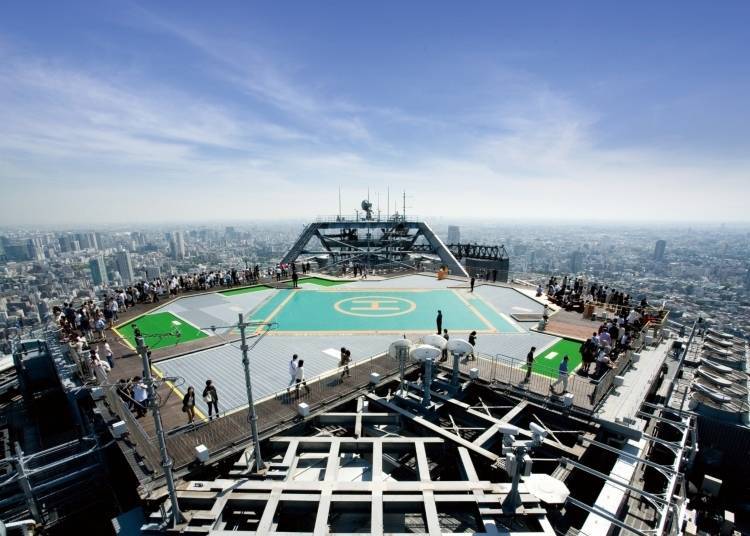
If you’re hoping to photograph Tokyo Tower as part of the skyline, rather than looking out from inside it, Tokyo City View at Roppongi Hills is one of the best places to go.
Located on the 52nd floor of Mori Tower, the indoor observation deck offers sweeping views of central Tokyo from approximately 250 meters above sea level.
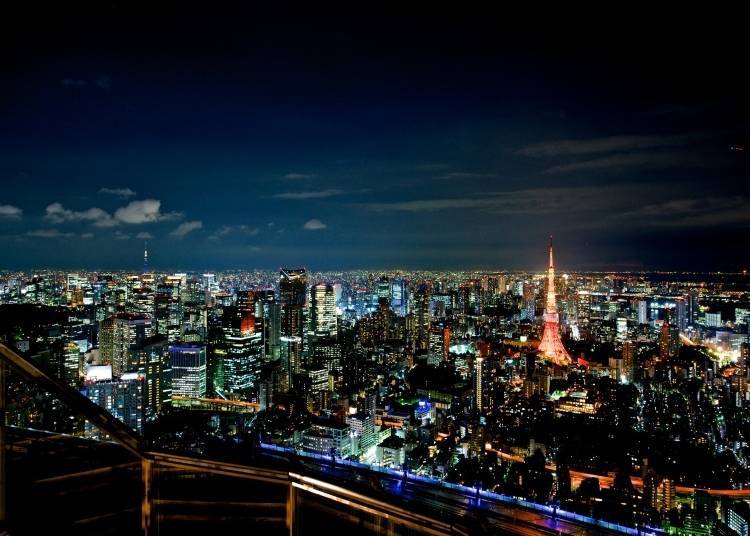
Tokyo Tower stands out beautifully among the surrounding buildings, while the city stretches toward Tokyo Bay and beyond. The perspective is particularly impressive in the evening, when Tokyo Tower lights up against the darkening sky.
Why photographers love Tokyo City View
While Shibuya Sky is famous for its open-air rooftop, Tokyo City View offers a different advantage: its location relative to Tokyo Tower.
From here, you can capture the illuminated landmark framed by the surrounding city, producing the kind of photograph that immediately says “Tokyo.”
The large indoor windows make it a comfortable option in colder or rainy weather, although reflections can be an issue when photographing at night. Try wearing dark clothing, avoiding flash, and positioning your camera close to the glass where permitted.
One important distinction: Roppongi Hills’ former outdoor Sky Deck is no longer a regular public observation option. Visitors should plan around the indoor Tokyo City View experience rather than expect rooftop access.
Combine the views with art and dining
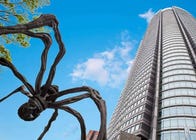
Tokyo City View is part of the Roppongi Hills complex, which is home to restaurants, shops, and cultural attractions.
The nearby Mori Art Museum makes an especially good pairing for art lovers, while the surrounding Roppongi neighborhood has plenty of places for dinner afterward
Recent reviews on the Klook website note:
・It is recommended to make a reservation in advance above all else.
・Although you can enjoy views from sunset to night, the night view is still amazing. The brightly shining Tokyo Tower looks so beautiful.
・There is an advantage of being able to see it outdoors if you pay an additional 500 yen and go to the Sky Deck.
Nearby sightseeing: Mori Art Museum, Roppongi Hills shopping and dining, Tokyo Midtown, and the National Art Center, Tokyo.
-
-
Address
6-10-1, Roppongi, Minato-ku, Tokyo, 106-6108
View Map -
Nearest Station
Roppongi Station (Tokyo Metro Hibiya Line / Toei Oedo Line)
0 minute on foot
- Phone Number 03-6406-6000
-
Address
6-10-1, Roppongi, Minato-ku, Tokyo, 106-6108
5. Tokyo Metropolitan Government Building: Best free observation deck (Indoor Viewing Area)
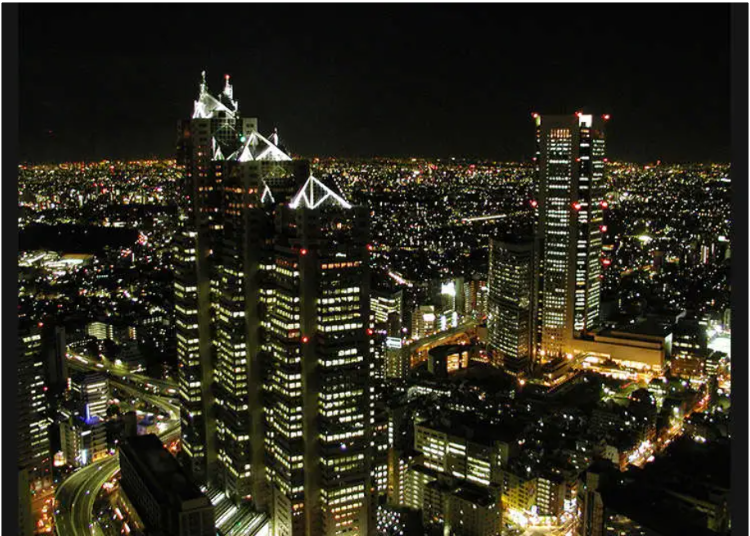
Want an impressive view of Tokyo without paying for a ticket? Head to the Tokyo Metropolitan Government Building, one of the city’s best-known free observation spots.
Located in the skyscraper district of western Shinjuku, this distinctive twin-towered building houses public observation rooms approximately 202 meters above the ground.
From the top, you’ll be surrounded by Shinjuku’s enormous office towers, with views stretching across the city. On clear days, Mt. Fuji can sometimes be seen in the distance, particularly during the cooler months when the air is often clearer.
The observation rooms are indoors, making this an excellent option when you want to escape the summer heat or winter cold.
North vs South Observatory: Which should you visit?
The building has two observation rooms, one in the North Tower and another in the South Tower. Both offer impressive views, although their operating schedules and availability can differ.
The South Observatory is particularly convenient for daytime sightseeing, while the North Observatory may offer evening viewing opportunities depending on the current schedule.
Before visiting, check which observatory is open and whether there are any temporary closures. Special events or building operations can affect access.
A free view in the heart of Shinjuku
The Metropolitan Government Building is particularly convenient if you’re already exploring Shinjuku. You can easily combine it with a stroll through Shinjuku Central Park, shopping around the station, or dinner in the lively entertainment districts to the east.
And unlike paid observation decks, you don’t need to worry about whether the view is worth the admission fee!
Nearby sightseeing: Shinjuku Central Park, Omoide Yokocho, Kabukicho, and Shinjuku’s major department stores.
-

-
Address
2-8-1, Nishishinjuku, Shinjuku-ku, Tokyo, 163-8001
View Map -
Nearest Station
Tochomae Station (Toei Oedo Line)
- Phone Number 03-3277-2815
-
Address
2-8-1, Nishishinjuku, Shinjuku-ku, Tokyo, 163-8001
6. Yebisu Garden Place Tower: Free night views in Ebisu (Indoor Viewing Area)
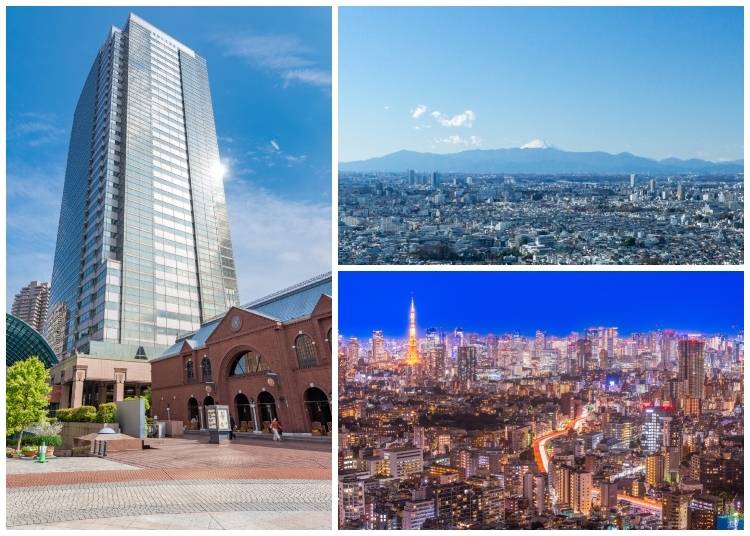
For a quieter alternative to Tokyo’s major observation decks, head to the 38th floor of Yebisu Garden Place Tower.
The Sky Lounge offers free views across the surrounding city, with Tokyo Tower and other landmarks visible from certain angles. It’s particularly appealing after dark, when the surrounding buildings sparkle with lights.
The viewing space is much smaller than a dedicated observation deck, but that’s part of its charm. You can enjoy the scenery without committing to a major sightseeing attraction.
Yebisu Garden Place itself is also worth exploring, with elegant architecture, restaurants, shops, and the nearby Museum of Yebisu Beer.
-
Yebisu Garden Place Tower恵比寿ガーデンプレイスタワー
-
Address
4 Chome-20-3 Ebisu, Shibuya, Tokyo 150-6004
View Map
-
Address
4 Chome-20-3 Ebisu, Shibuya, Tokyo 150-6004
7. Asakusa Culture Tourist Information Center: Best for views of old Tokyo (Indoor/Covered Outdoor Viewing Area)
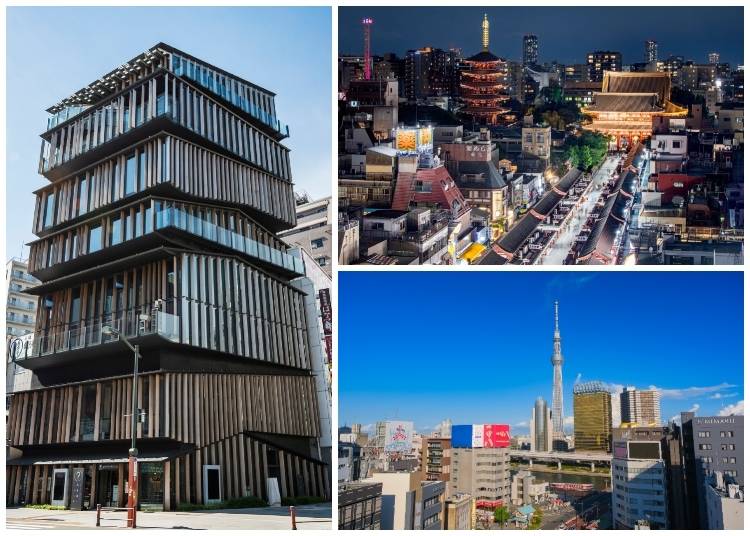
Not every memorable Tokyo view requires going hundreds of meters into the air.
Across from Kaminarimon Gate, the Asakusa Culture Tourist Information Center has an eighth-floor observation terrace overlooking one of Tokyo’s most historic neighborhoods.
From here, you can look down over Nakamise Shopping Street as it stretches toward Sensoji Temple, with Tokyo Skytree rising in the distance.
It’s a particularly enjoyable place for photography because the view captures something different from the modern skyscraper panoramas elsewhere in the city. Traditional streets, temple rooftops, and contemporary landmarks all appear in the same scene. Best of all, the observation terrace is free to visit.
-
Asakusa Culture Tourist Information Center浅草文化観光センター
-
Address
2-18-9 Kaminarimon, Taito City, Tokyo 111-0034
View Map
-
Address
2-18-9 Kaminarimon, Taito City, Tokyo 111-0034
Bonus: See Tokyo from above on a helicopter tour
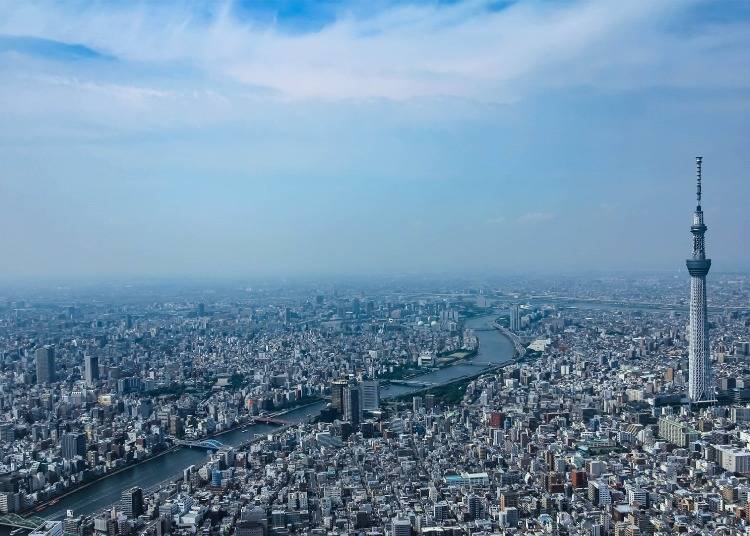
If observation decks aren’t quite adventurous enough, how about seeing Tokyo from the air?
A sightseeing helicopter flight offers a completely different perspective, taking you above the city rather than simply looking out from a building.
Depending on the route, you may fly over famous landmarks, including Tokyo Tower, Tokyo Skytree, and the waterfront areas around Tokyo Bay.
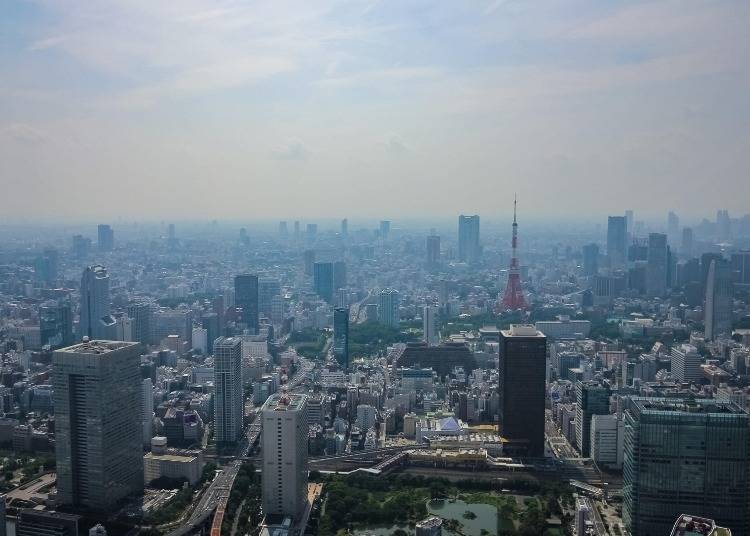
It’s certainly more expensive than visiting an observation deck, but for a special occasion, the experience can be unforgettable.
Flight routes, departure points, and prices vary by operator, and flights are subject to weather conditions. Check the details carefully before booking.
Sunset Times in Tokyo
Monthly Sunset Times in Tokyo
| Month | Sunset Range | Mid-Month & Key Highlights |
|---|---|---|
| January | ~4:38 PM to 5:07 PM | Mid-month around 4:48 PM; earliest sunrise/sunset cycle near early January |
| February | ~5:10 PM to 5:35 PM | Mid-month around 5:22 PM |
| March | ~5:35 PM to 6:00 PM | Mid-month around 5:48 PM |
| April | ~6:00 PM to 6:25 PM | Mid-month around 6:13 PM |
| May | ~6:25 PM to 6:50 PM | Mid-month around 6:38 PM |
| June | ~6:50 PM to 7:01 PM | Latest sunset around late June (7:00–7:01 PM); summer solstice June 21 |
| July | ~6:50 PM to 7:00 PM | Mid-month around 6:55 PM |
| August | ~6:10 PM to 6:50 PM | Mid-month around 6:30 PM |
| September | ~5:25 PM to 6:10 PM | Mid-month around 5:47 PM; autumn equinox late September |
| October | ~4:45 PM to 5:25 PM | Mid-month around 5:05 PM |
| November | ~4:28 PM to 4:45 PM | Mid-month around 4:35 PM |
| December | ~4:27 PM to 4:35 PM | Earliest sunset in early December (4:27–4:29 PM); winter solstice December 22 |
Frequently asked questions about Tokyo observation decks
Which observation deck in Tokyo has the best view?
Shibuya Sky is our top recommendation for travelers who want an exciting outdoor experience and memorable photographs. Tokyo Skytree is better for those who want the highest possible panoramic views, while Roppongi Hills Tokyo City View is particularly appealing for photographing Tokyo Tower. For a free alternative, the Tokyo Metropolitan Government Building is an excellent choice.
Is Shibuya Sky better than Tokyo Skytree?
It depends on what you’re looking for. Shibuya Sky offers an open-air rooftop with fantastic photography opportunities, particularly at sunset. Tokyo Skytree is much higher, with observation areas at 350 and 450 meters, and offers a more expansive view of the city. If you prefer outdoor experiences, choose Shibuya Sky. If height and panoramic scenery are your priorities, choose Tokyo Skytree.
When is the best time to visit a Tokyo observation deck?
The same observation deck can look completely different depending on when you visit. A bright afternoon offers distant views and recognizable landmarks, while sunset and evening bring an entirely different atmosphere.
Daytime vs sunset vs night: What should you choose?
・Daytime: Best for spotting landmarks
Choose a clear morning or early afternoon if you want to identify buildings, photograph the city in natural light, or look for Mt. Fuji.
・Sunset: Best overall atmosphere
Arriving 45–60 minutes before sunset gives you a chance to enjoy daylight, golden hour, and the beginning of the city’s evening illuminations. Allow extra time for admission procedures.
・Night: Best for city lights
Tokyo’s illuminated buildings and roads create a remarkable panorama after dark. It’s also a good time to visit if your daytime itinerary is already packed.
Is Tokyo Skytree worth the money?
For many visitors, yes. Tokyo Skytree offers an extraordinary perspective of Tokyo that few other attractions can match. The 350-meter Tembo Deck is a good option if you’re watching your budget, while the 450-meter Tembo Galleria adds a distinctive elevated walkway experience. It’s especially worthwhile on clear days when visibility extends far beyond central Tokyo.
When can you see Mt. Fuji from Tokyo?
Mt. Fuji is about 100 kilometers west of central Tokyo, but its distinctive silhouette can sometimes be seen from elevated viewpoints on clear days.
Your best chances are generally during the cooler months, particularly from late autumn through winter, when the air is often clearer. Early morning is usually better than a hazy afternoon, though conditions can change quickly.
If seeing Mt. Fuji is a top priority, check the weather forecast and visibility before buying a ticket. Even on a sunny day, distant haze or clouds can hide the mountain.

Can you visit more than one Tokyo observation deck in a day?
Absolutely. Shibuya Sky and Roppongi Hills Tokyo City View make a convenient pairing, allowing you to enjoy different perspectives of central Tokyo. Another option is to visit Tokyo Skytree during the day and Tokyo Tower in the evening. However, if your itinerary is already busy, visiting one observation deck at the right time may be more enjoyable than rushing between several.
Final verdict: Which Tokyo observation deck is worth visiting?
Tokyo looks spectacular from above, but you don’t need to visit every observation deck to appreciate the view.
For first-time visitors, Shibuya Sky is our top recommendation for its open-air rooftop, exciting atmosphere, and memorable photo opportunities. Tokyo Skytree is the better choice if you want to experience the city’s incredible scale, while Tokyo Tower offers a classic sightseeing experience with plenty to explore nearby.
If you’re hoping to capture Tokyo Tower in your photographs, head to Roppongi Hills Tokyo City View. And if you’d rather save your sightseeing budget for food, shopping, or other attractions, the Tokyo Metropolitan Government Building proves that some of the best views in Tokyo are completely free.
Whichever you choose, try to visit on a clear day, allow enough time to enjoy the scenery, and don’t forget to look beyond the famous landmarks. Sometimes the most fascinating part of Tokyo’s skyline is simply seeing how far the city stretches in every direction.


- Area
- Category
*Prices and options mentioned are subject to change.
*Unless stated otherwise, all prices include tax.
Popular Tours & Activities
Recommended places for you
-
Ad
Pocket WiFi Rental in Japan 2026: Complete Price Comparison & Where to Get the Best Deal
-
Haneda Airport Duty-Free Shopping Guide: What to Buy, How to Save & Where to Eat Before Your Flight
by: Guest Contributor
-

Best Sumo Shows & Experiences in Tokyo (2026): Prices Compared
-
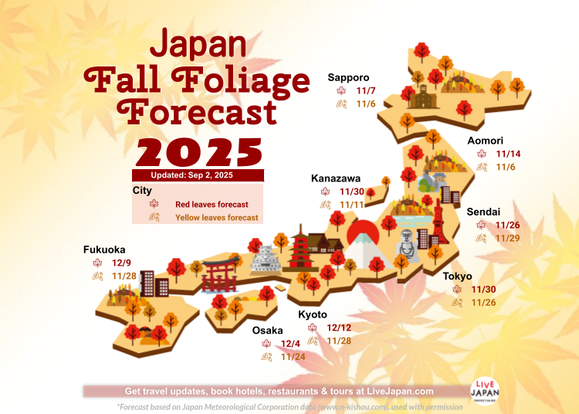
Autumn in Japan 2026: Fall Foliage Forecast & Where to Enjoy the Colorful Leaves (+Tour Info)(Updated Oct 1)
-
Ad
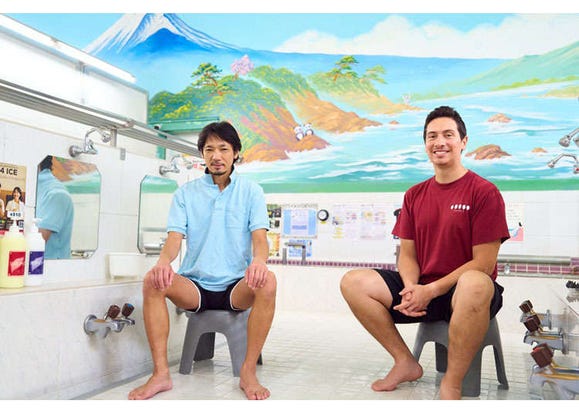
Do’s and Don’ts: The Complete Guide to Sento Baths! Getting the Full Experience In Ueno’s Famous Kotobuki-yu
-

Seibu Group Launches New Chichibu Adventure Tourism Experience for International Travelers in 2026
by: Guest Contributor
Inspiration for Accommodations
-
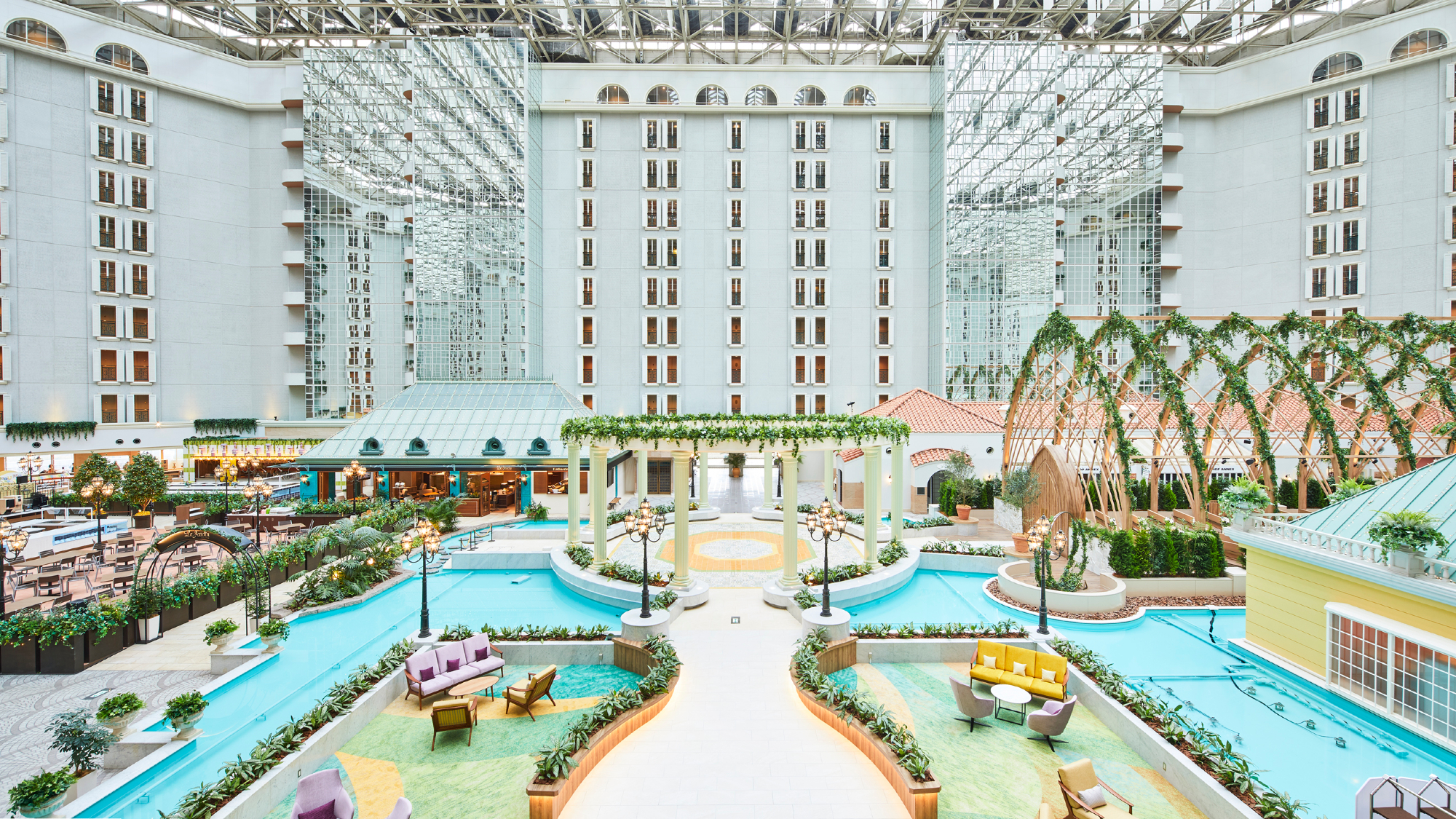
Family-Friendly Hotels with Free Shuttle to Disneyland: Convenient Access for a Magical Stay
-
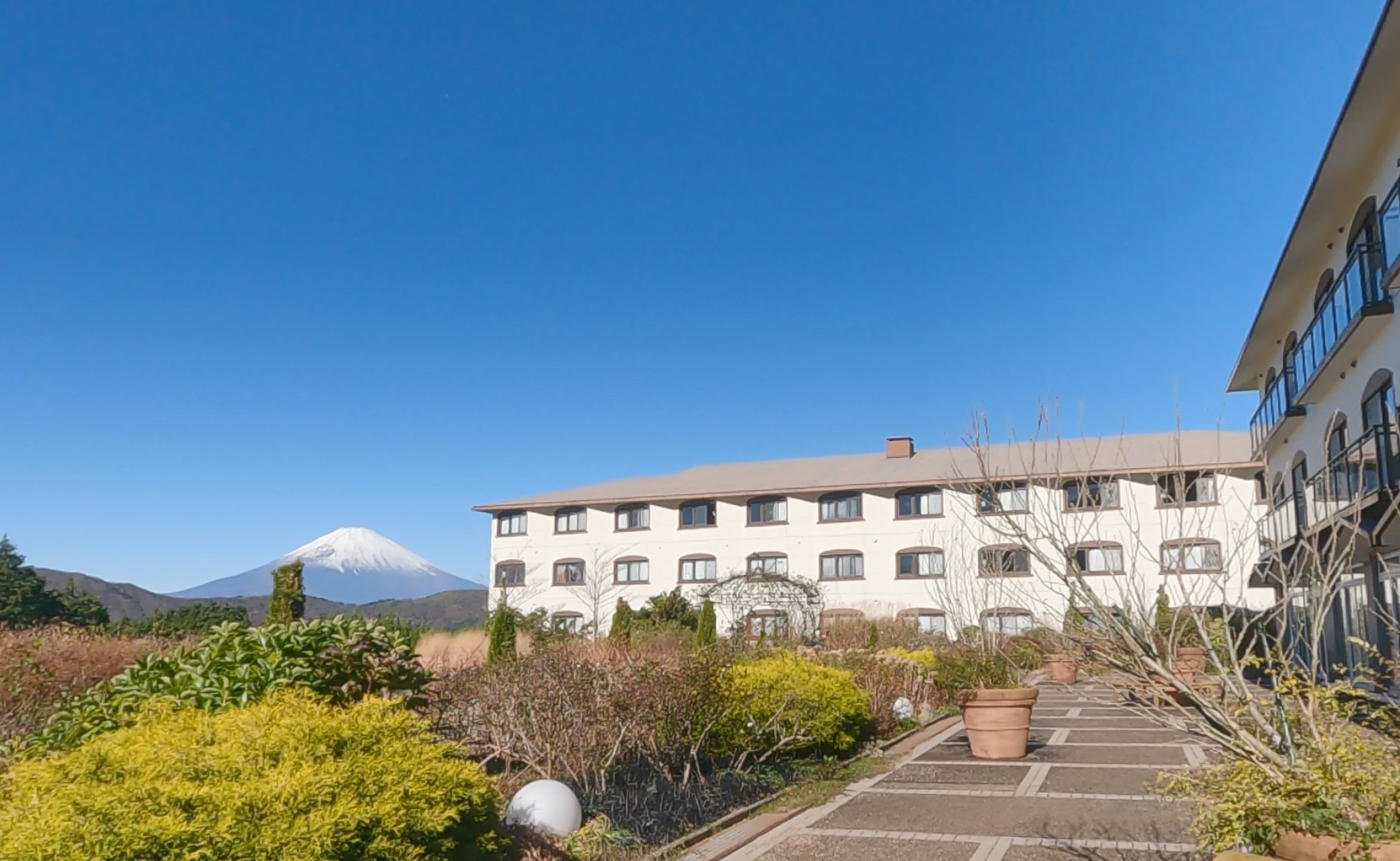
Top Ranked Hakone Hotels with Mt. Fuji View: Enjoy Stunning Scenery from Your Private Space
-
Convenient Tokyo Hotels with Airport Shuttle: Ideal for Families and Heavy Luggage
-
9 Family-Friendly Hotels with Comfortable Family Rooms in Asakusa
-
10 Open-air bath Onsen Ryokans in Hakone for Ultimate Relaxation
-
8 Unfamiliar (But Totally Normal) Customs in Japan!
-
Spa LaQua: Experiencing a Natural Hot Spring in the Middle of Tokyo
-
Exploring Tokyo Station: 11 Must-Visit Spots Around the Heart of Tokyo
-
5 Best View Spots in Shibuya Tokyo at Night (Some are Free!)
-
16 Secrets About Mt. Fuji, the Symbol of Japan: Even Japanese People Don’t Know That?!
by: Guest Contributor
-
5 Best Spots to Enjoy Tokyo Night Views
- #best ramen tokyo
- #what to buy in ameyoko
- #what to bring to japan
- #new years in tokyo
- #best izakaya shinjuku
- #things to do tokyo
- #japanese nail trends
- #what to do in odaiba
- #onsen tattoo friendly tokyo
- #daiso
- #best sushi ginza
- #japanese convenience store snacks
- #best yakiniku shibuya
- #japanese fashion culture
- #best japanese soft drinks