



See Japan's Crimson Carpet: About 5 Million Spider Lilies Bloom Near Tokyo (Kinchakuda Red Spider Lily Festival 2026)
- Written by: Alice Lee
As the summer heat fades and cool autumn breezes roll in, that’s your cue that the vivid red spider lilies, known as manjushage (or higanbana), are about to bloom! Every year from mid-September to early October, a dreamy autumn spectacle awaits in Hidaka City, Saitama, just a short trip from Tokyo.
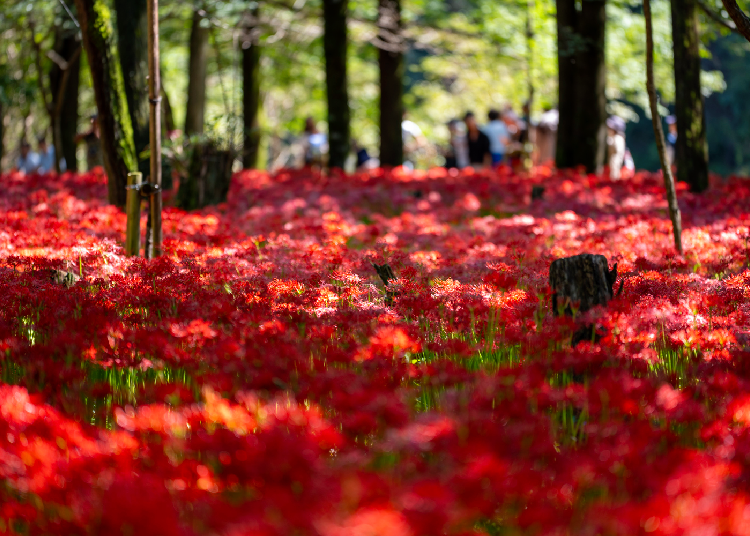
This is Kinchakuda Manjushage Park, cradled by the Koma River and home to one of Japan’s largest and most iconic spider lily colonies. A staggering 5 million red spider lilies burst into bloom in early autumn, painting the forest floor a brilliant crimson. Whether you’re a photography enthusiast chasing light and shadow or want to soak up nature on a crisp autumn day, this fleeting “crimson miracle” is guaranteed to take your breath away! Follow along as we step into this autumn-only fantasy forest.
(Main image credit: Timothy Sullivan/LIVE JAPAN)
(This article contains affiliate links)
- Table of Contents
Meet Autumn's Mysterious Messenger: The Manjushage (Red Spider Lily)
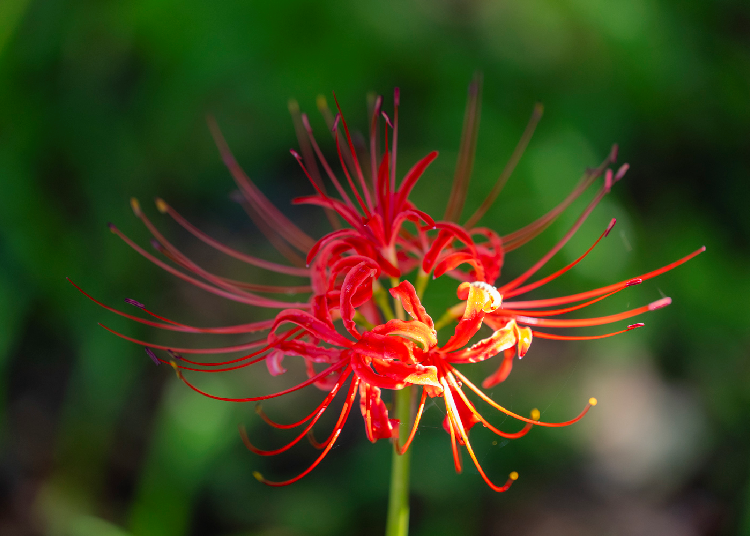
Before we dive into the sea of flowers, let’s get to know the manjushage a little better! Known in English as the red spider lily, one of its most unusual traits is that its flowers and leaves never appear at the same time. When the blooms emerge, there’s no foliage in sight, and by the time the leaves grow, the flowers are gone.
Its long, slender petals curl outward like tiny bursts of red fireworks, giving the flower its instantly recognizable appearance. The blooming period is remarkably short, usually falling in mid-September to early October, with peak color lasting just one to two weeks.
Despite its somewhat mysterious image, the flower language associated with manjushage includes meanings such as “passion” and “independence.” Seen en masse at Kinchakuda, the effect is especially striking.
- If Kinchakuda’s endless red flowers look strangely familiar, there may be a reason. Red spider lilies frequently appear in Japanese manga and anime as symbols of parting, death, remembrance, or the boundary between this world and the next. Their name is linked to Higan, the Japanese Buddhist observance around the equinoxes, when families traditionally visit ancestral graves. The flowers themselves bloom around the autumn equinox, strengthening that connection. So when a field of brilliant red spider lilies suddenly appears in an anime, it isn’t always just pretty scenery: it can be a visual hint that something rather more ominous is coming.
Kinchakuda's Must-Photograph Highlights: Step Into a Crimson Fantasy Maze
The charming name “Kinchakuda” comes from the way the Koma River winds around this stretch of land, wrapping it into a shape resembling a traditional Japanese drawstring pouch, or kinchaku.
The vast spider lily colony here was actually a natural discovery. After overgrown riverbeds were cleared around 1989, huge numbers of manjushage that had been growing wild underneath became visible. It is thought that bulbs were carried downstream by floods over many years, washed ashore along the Koma River, and gradually took root across Kinchakuda.
Today, the park is divided into an early-blooming "upstream area" and a late-blooming "downstream area", Around 300,000 people visit this area during spider lily season each year.
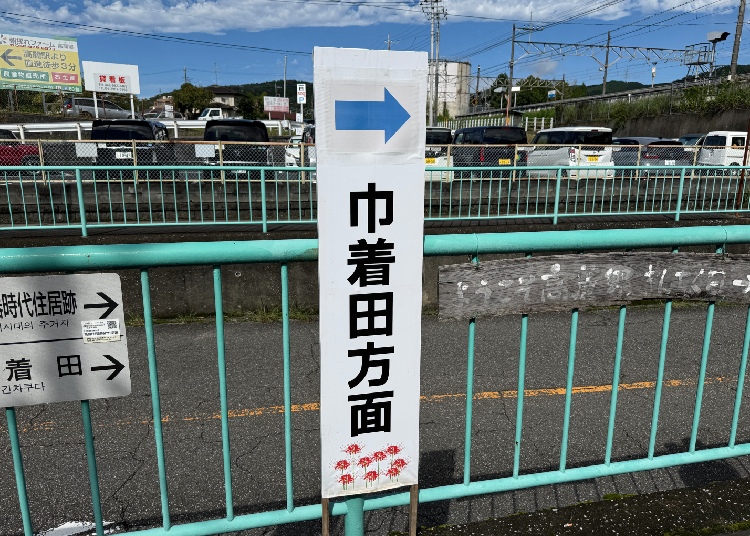
Getting to Kinchakuda is easy: once you arrive at Koma Station on the Seibu Chichibu Line, you’ll spot a sign decorated with spider lilies right away. From there, follow the crowds and the directional signs, and you’ll be there in no time!
During the manjushage blooming season, admission is 500 yen, payable by cash or IC card. The park is open from 7:00 AM to 5:00 PM, but we recommend arriving early, since lines can build up if you show up after midday!
You can wander through the main flower area fairly quickly, but allow around 60–90 minutes if you want to explore the different blooming zones, stop by the river, and take plenty of photos.
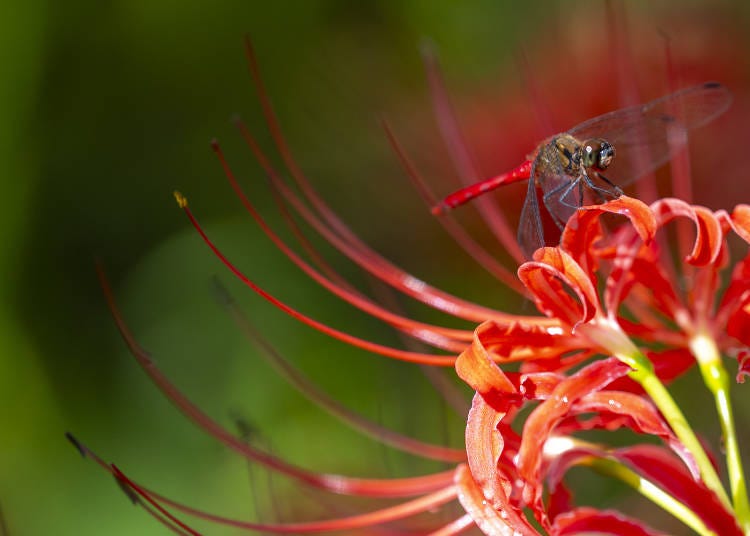
- Mornings are generally quieter and give you more freedom for photography.
- Around midday, the festival area and narrow flower paths become noticeably busier.
- Low morning or late-afternoon sunlight filtering through the trees produces some of the most dramatic photographs.
- Kinchakuda can become extremely busy on weekends and public holidays during peak bloom, particularly around late morning and lunchtime. If photography is your priority, visit on a weekday or arrive close to opening time.
Highlight #1: The Core Viewing Area - Strolling the Forest Flower Path
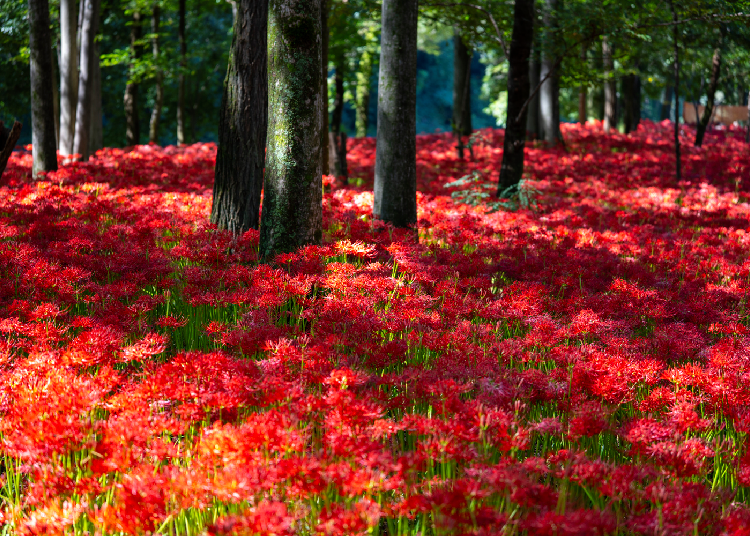
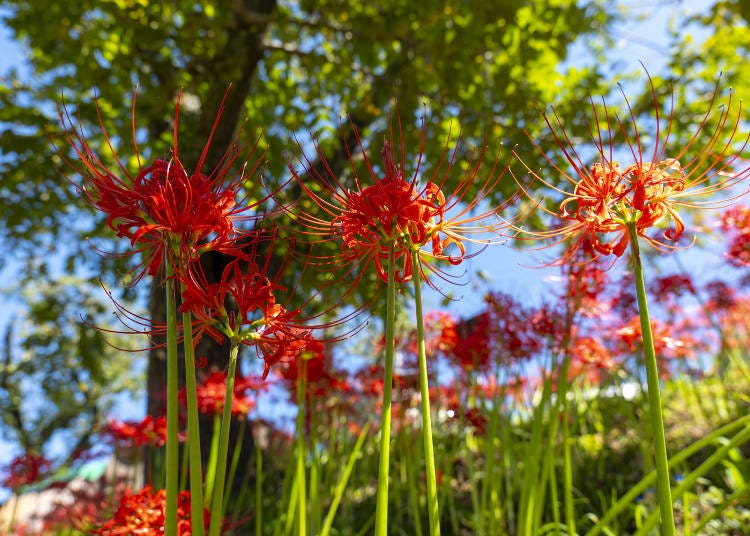
Walk slowly in from the entrance, and you’ll immediately see the ground carpeted with blooming spider lilies. Unlike most flower fields that sit under the blazing sun, Kinchakuda’s spider lilies grow within a quiet grove of trees. As you stroll along the path, sunlight filters through the dense canopy, and light and shadow dance across the crimson blooms, creating a dreamlike sense of being lost in an enchanted forest.
Editor's photo tip:
For a stunning shot of the manjushage, try lowering your camera angle slightly along the flower path. Position your lens just above the flowers and shoot from a low angle to capture the crimson carpet stretching endlessly into the distance. The visual impact is guaranteed to be a perfect ten!
Highlight #2: Where Spider Lilies Meet the River
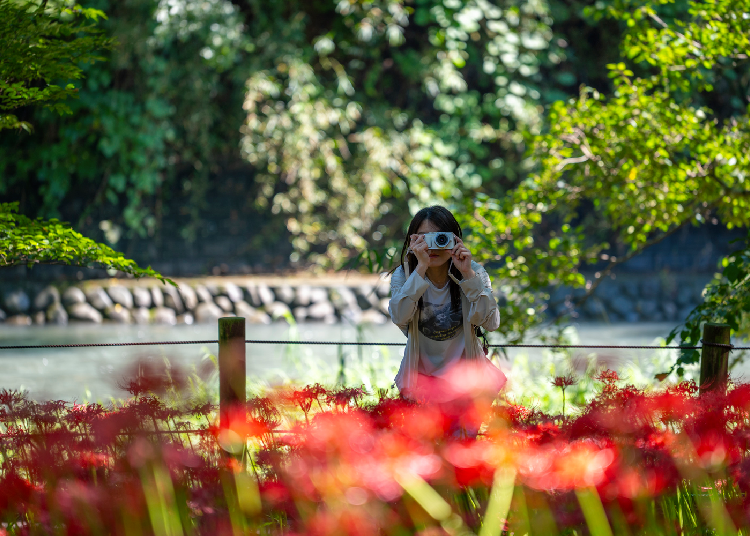
The crystal-clear Koma River hugs Kinchakuda’s entire perimeter. While the blooms closest to the entrance tend to cluster further inland, head a bit further back and you’ll find spider lilies growing right along the riverbank.
You can also walk out onto the path that cuts through the flower field and shoot across the blooms for that classic “person surrounded by flowers” effect!
Listening to the lively chirping of cicadas or crickets while watching the cool river water reflect the fiery red spider lilies along its banks is a uniquely Kinchakuda autumn experience, a perfect escape from the hustle and bustle of the city.
Highlight #3: Chase the Sunlit Blooms for High-Contrast Shots
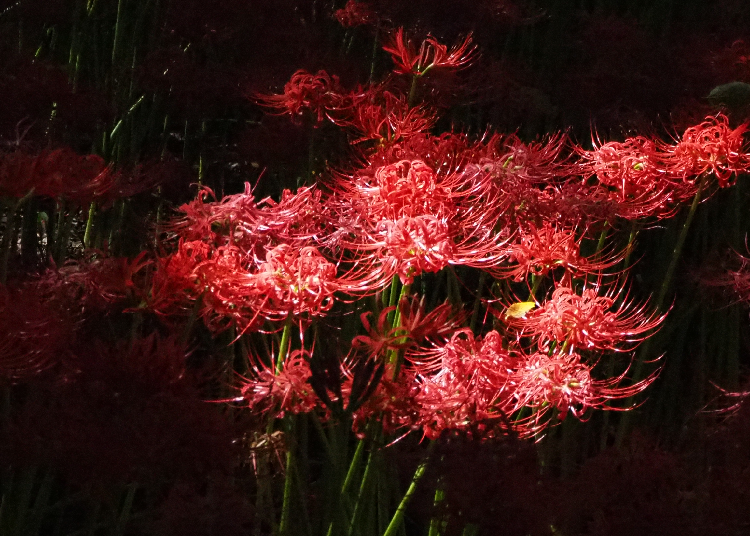
Since the spider lilies grow beneath the trees, sunlight filtering through the leaves creates natural contrast across the flower field. If you’ve brought a camera, look for flowers caught in a beam of sunlight against a darker backdrop, then adjust your aperture to capture a moody, high-contrast shot.
Highlight #4: Don't Miss the White Spider Lilies
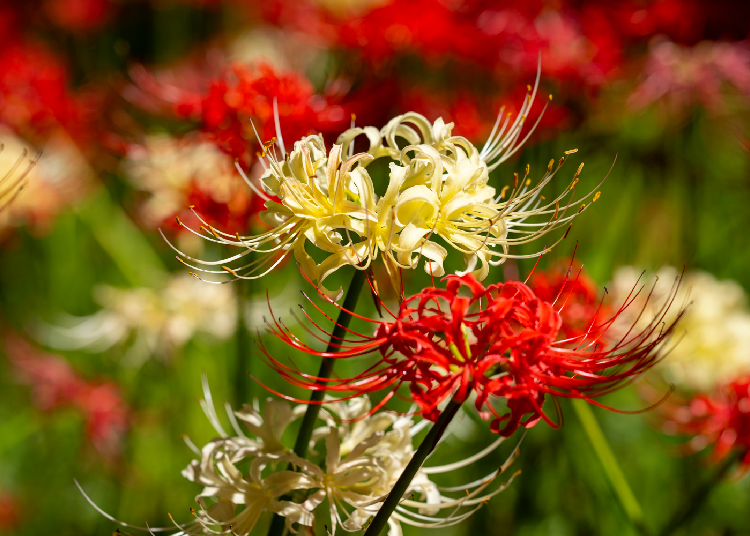
Step into Kinchakuda and you’ll be greeted by a sea of red as far as the eye can see. But keep an eye on the ground, because in a few spots you’ll spot a handful of rare white spider lilies too.
The white spider lily, also known as mandarage, is often associated with meanings like “eternal longing” and “purity.” Unlike the red variety, which carries a slightly wistful, melancholic air, the white spider lily is said to bloom along the path to paradise, giving it a more sacred, otherworldly feel.
- Red spider lilies are poisonous if ingested, so visitors should avoid touching or picking the flowers and keep small children from eating any part of the plant.
Enjoy the Red Spider Lily Festival Food
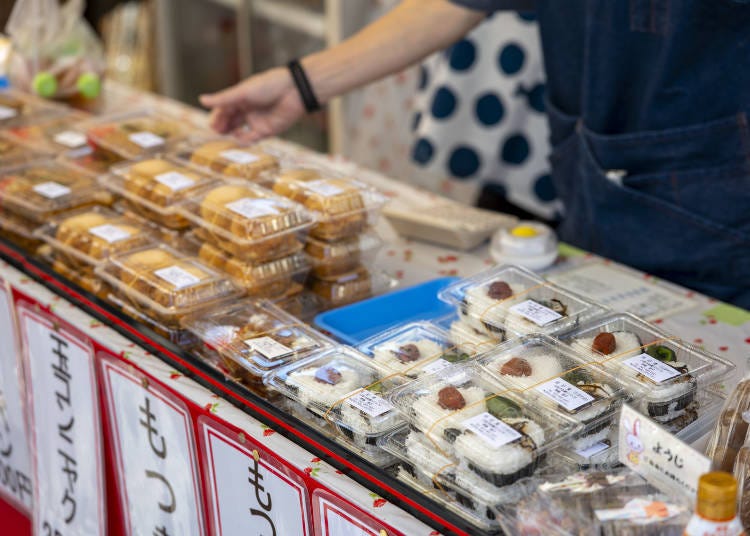
The Manjushage Festival isn’t just about the flowers! During the bloom season, plenty of local food stalls set up shop, selling everything from ice cream and beef skewers to rice balls. A nearby shaded seating area lets you rest your feet and refuel after all that walking. While some shops accept cashless payments, it would be a good idea to have some cash on hand for snacks.
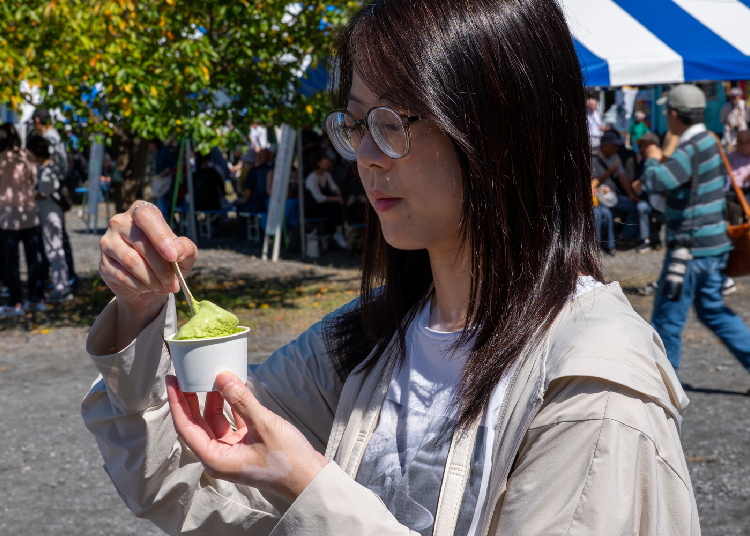
You can even find matcha ice cream made with Sayama tea from the surrounding area, the perfect way to soak up the local flavor!
Nearby Recommendation: Alishan Cafe
If you’re looking for a spot to sit down and enjoy a proper afternoon tea, Alishan Cafe is just a short trip from Kinchakuda. This wooden cafe, built around an organic, plant-based theme, offers riverside views from its outdoor terrace and serves delicious, healthy light meals, making it a popular lunch stop for visitors after a morning of flower viewing.
Beautiful All Year Round: A Natural Treasure in Every Season
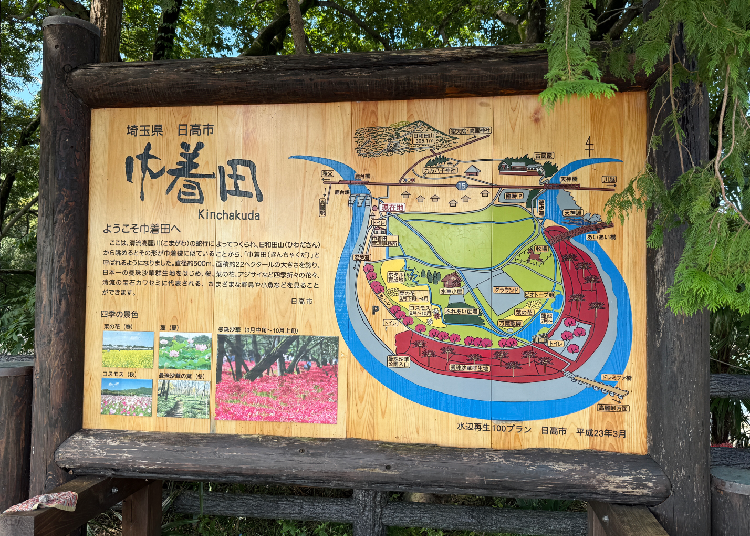
While Kinchakuda is best known for its autumn spider lilies, it actually has something beautiful to offer in every season! In spring, the banks of the Koma River burst into soft pink cherry blossoms and golden rapeseed flowers.
By early summer, families flock here to let their kids splash in the water, while the nearby rice paddies turn a lush, vibrant green. Winter brings no flowers, but a snow-covered Kinchakuda has its own quiet, serene beauty.
If you miss the autumn season this time around, add it to your bucket list and come back to experience a completely different side of Kinchakuda.
Access & Visitor Information
Ready to head out after reading all this? Before you go, be sure to double-check the access details and the latest bloom updates!
What to Bring & Etiquette
・Mosquito repellent: Bring insect repellent, as mosquitoes are common around the damp, riverside forest in September.
・Footwear: Wear comfortable walking shoes. Many paths are unpaved and can become muddy.
・Photography & park rules: Tripods and monopods are typically prohibited during the peak Manjushage Festival to reduce congestion. Drones and other flying vehicles are also prohibited. Do not step into the flower beds, as the spider lily stems are very fragile.
- The best time to see the manjushage usually falls between mid and late September, but the exact timing can shift a bit each year depending on the weather.
- Before you plan your trip, we recommend checking Kinchakuda’s official website and the latest official bloom updates so you don’t miss the blooms!
-
Kinchakuda Manjushage Park巾着田曼珠沙華公園
-
Address
125-2 Komahongo, Hidaka, Saitama 350-1251
View Map -
Nearest Station
From Ikebukuro, take the Seibu Ikebukuro Line to Koma Station. From there, just follow the signs for about a 15-minute walk to reach the park.
・Admission: 500 yen (charged only during the manjushage bloom period; cash and transit cards like Suica and Pasmo are accepted)
・Hours: 9 AM to 4:30 PM -
Address
125-2 Komahongo, Hidaka, Saitama 350-1251
Make it a Full Day
Kinchakuda is easy to combine with other attractions in western Saitama. After seeing the spider lilies, consider heading to Kawagoe, known as “Little Edo,” where preserved warehouse-style buildings, traditional sweets shops, and historic streets make for an easy afternoon of sightseeing.
Another option is Moominvalley Park in nearby Hanno, a lakeside theme park inspired by the Moomin stories. Travelers with more time can also continue farther west to Chichibu, known for its mountain scenery, temples, and relaxed countryside atmosphere.
Pairing Kinchakuda with Kawagoe, Hanno, or Chichibu turns a flower-viewing visit into a fuller day trip from Tokyo.


A native of Taiwan, she has lived in Japan for 10 years and holds JLPT N1 certification. She enjoys reading Japanese novels and has experience as a guide at a tourist information center, as well as writing for travel media. She enjoys visiting shrines and once walked an hour each way for a single visit. She also explores sites tied to Sengoku period warlords and enjoys hiking. Interested in lesser-known destinations, she is dedicated to uncovering hidden spots. Her travels span many regions, and she enjoys bringing home local souvenirs to taste and share with friends and family.
- Area
- Category
*Prices and options mentioned are subject to change.
*Unless stated otherwise, all prices include tax.
Popular Tours & Activities
Recommended places for you
-
Ad

Pocket WiFi Rental in Japan 2026: Complete Price Comparison & Where to Get the Best Deal
-

Top-Booked by International Visitors: Must-Try Italian & Pizza in Tokyo for First-Time Visitors
by: Guest Contributor
-

ANA’s Chiikawa Jet Is Taking Off—Here’s Everything You Need to Know About Exclusive Goods, In‑Flight Fun & Travel Tips
by: Guest Contributor
-
Just 2 Hours from Tokyo! Escape to Yamanashi's NIPPONIA Kosuge, Where an Entire 700-Person Village Becomes Your Hotel
by: Alice Lee
-

Daikoku PA Car Meet: What Is JDM, and Why Do Enthusiasts Flock Here?
-
Autumn in Japan 2026: Fall Foliage Forecast & Where to Enjoy the Colorful Leaves (+Tour Info)
Inspiration for Accommodations
-
Family-Friendly Hotels with Free Shuttle to Disneyland: Convenient Access for a Magical Stay
-
Top Ranked Hakone Hotels with Mt. Fuji View: Enjoy Stunning Scenery from Your Private Space
-
Convenient Tokyo Hotels with Airport Shuttle: Ideal for Families and Heavy Luggage
-
9 Family-Friendly Hotels with Comfortable Family Rooms in Asakusa
-
10 Open-air bath Onsen Ryokans in Hakone for Ultimate Relaxation
-
Essential Tokyo: The Complete Guide to Ikebukuro Station
-

November Events in Tokyo: Fun Festivals, Food, and Things to Do
-
Magic After Dark: 5 Best Places to See Autumn Leaf Illuminations in Tokyo (2026)
-
10 Important Japanese Phrases to Know Before You Enter a Japanese Convenience Store
by: Teni Wada
-
Easy Day Trip from Tokyo! Ultimate Sightseeing Guide for Hakone & Lake Ashinoko!
-
Fall in Japan is the Best! 10 Reasons We Love Autumn in Tokyo
by: Timothy Sullivan
- #best ramen tokyo
- #what to buy in ameyoko
- #what to bring to japan
- #new years in tokyo
- #best izakaya shinjuku
- #things to do tokyo
- #japanese nail trends
- #what to do in odaiba
- #onsen tattoo friendly tokyo
- #daiso
- #best sushi ginza
- #japanese convenience store snacks
- #best yakiniku shibuya
- #japanese fashion culture
- #best japanese soft drinks