






About 80 minutes from Ikebukuro, Chichibu feels a world away from the city, with wide-open scenery, rich history, and a slower pace of life. From April to May, one of its most spectacular sights is the moss phlox (shibazakura) in full bloom at Hitsujiyama Park.
Set against the backdrop of Mount Buko, waves of vivid pink flowers sweep across the hillside in a breathtaking spring display. We visited Hitsujiyama Park to share the highlights and help you plan your trip to this seasonal favorite.
Hitsujiyama Park’s 'Shibazakura' Moss Phlox Hill
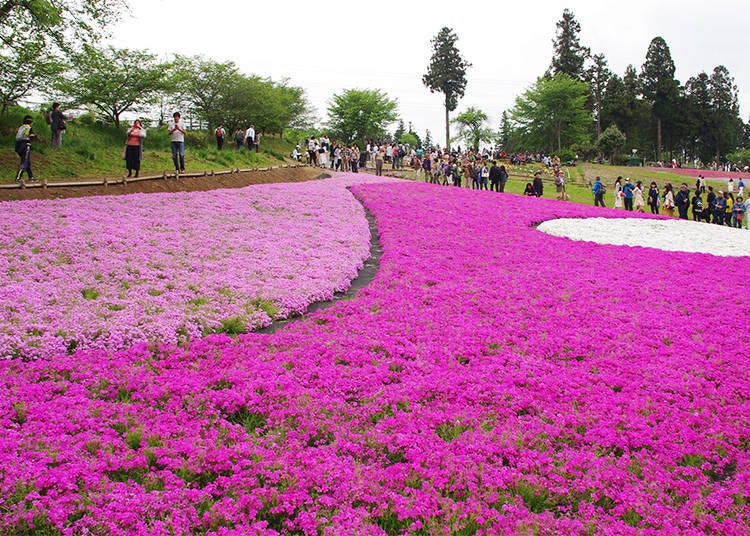
As mentioned earlier, shibazakura is the Japanese name for moss phlox, a low-growing flower whose name literally means “lawn cherry blossom.”
Much like cherry blossoms tint treetops in soft shades of pink and white, shibazakura spreads across the ground in dense clusters of blooms about 10 centimeters tall. When in full bloom, the hillsides look almost like a painted landscape. The flowers are typically at their best for about a month, from mid-April to early May.
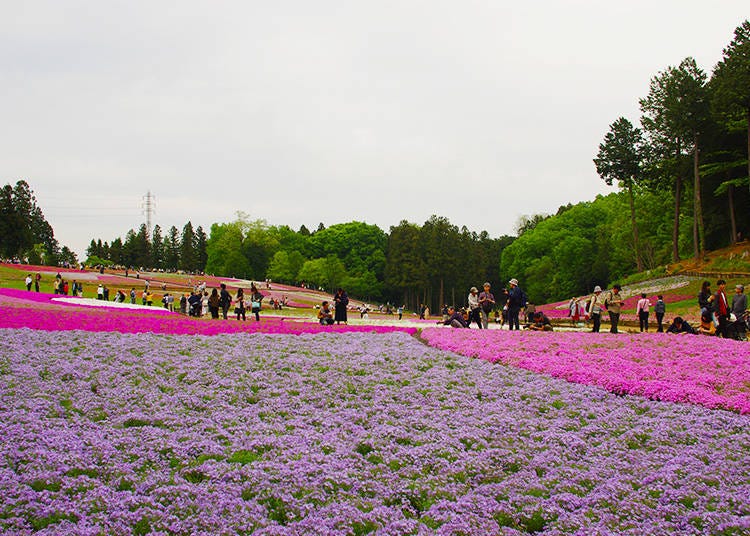
Within Chichibu’s Hitsujiyama Park is Shibazakura-no-oka, or Moss Phlox Hill. The name can be taken literally, as the entire hill is covered in flowers of different seasons.
Every year, the Shibazakura Festival is held during the moss phlox season, drawing in visitors from all over Japan to indulge in the sight, events, and various delicacies from food stalls.
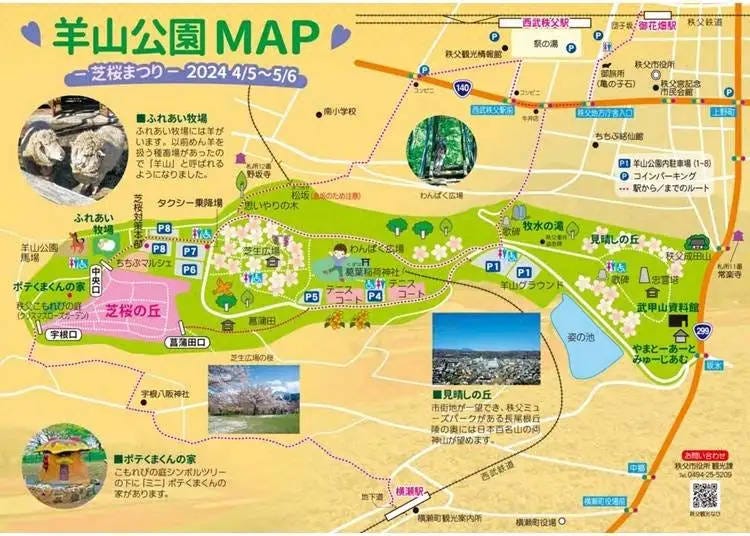
Shibazakura-no-oka spans an area of 17,600 square meters (a little over 4 acres) in total and is the largest shibazakura area in the Kanto area.
While that size may sound intimidating, it is surprisingly easy and relaxing to stroll all-around in about 30 minutes.
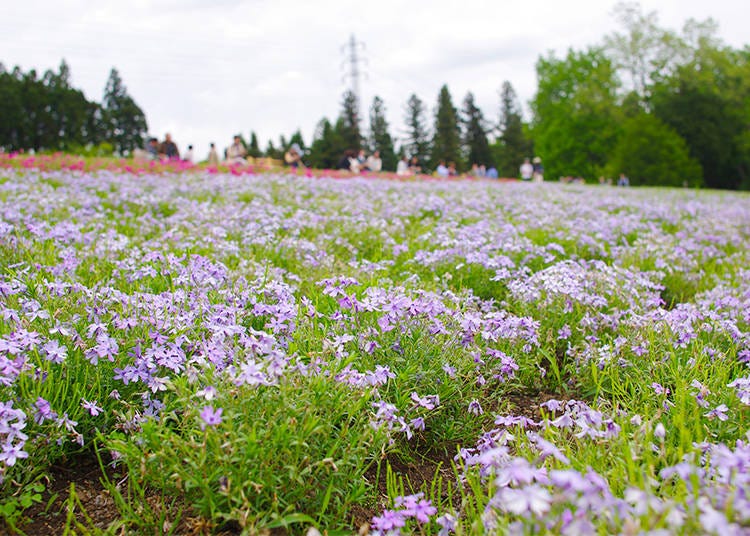
The flowers, planted to create a mosaic of pink, white, and purple, are roughly divided into the northwest slope, the southwest slope, and the east slope.
The northwest slope gets the most sun and is the earliest to bloom, followed by the east slope and finally the southwest slope as the latest.
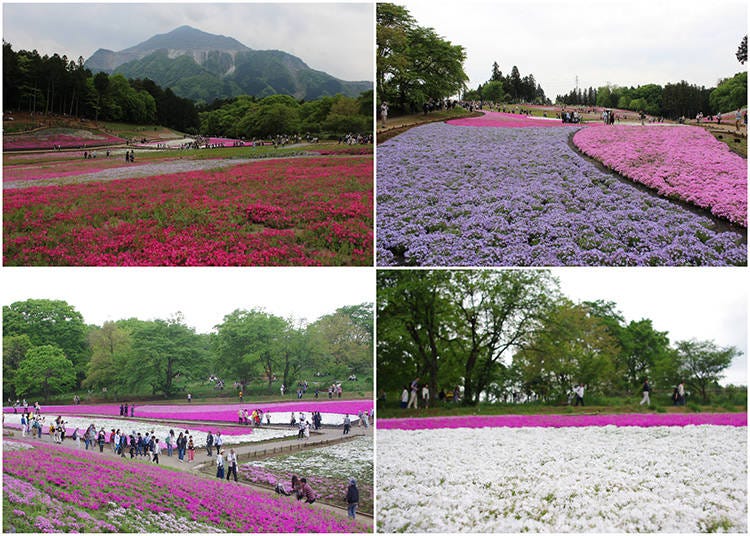
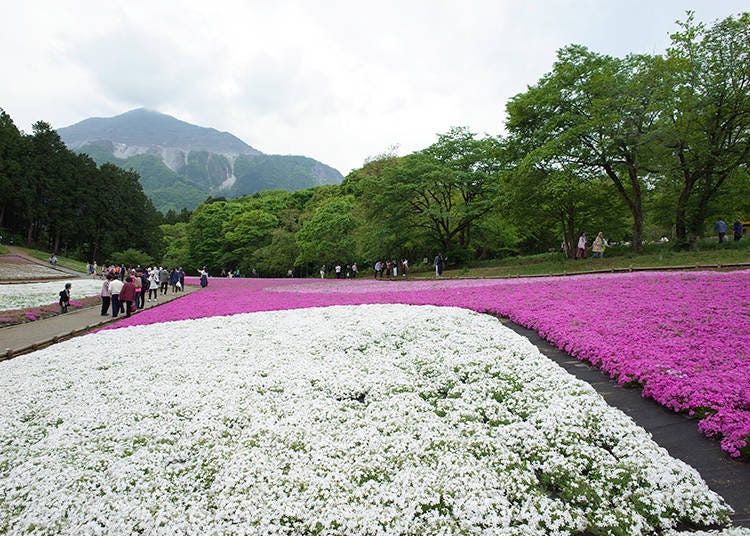
Hitsujiyama Park has three entrances. The Central Entrance is the main one, offering a beautiful view of the moss phlox with the mountain towering majestically in the background.
The Shōbuta Entrance boasts a view of the flowers from below and makes you follow a path in between the moss phlox. The third entrance is called Une Entrance and known for its stunning scenery of pink and white flowers with a stark contrast.
Best views and shibazakura photo spots at Hitsujiyama Park
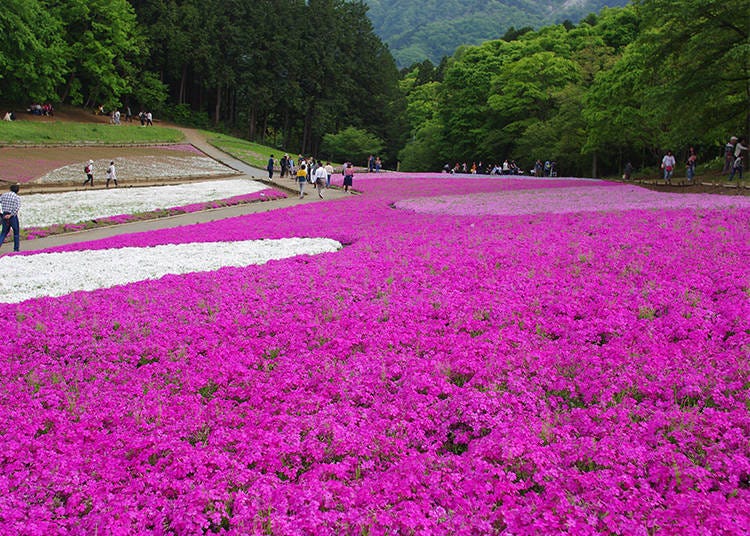
The moss phlox flowers are about 10 centimeters high, so to capture just how wide the colorful carpet is, take a picture from the lowest possible position. Aim your lens slightly upward to capture the unique magnificence of moss phlox at its best.
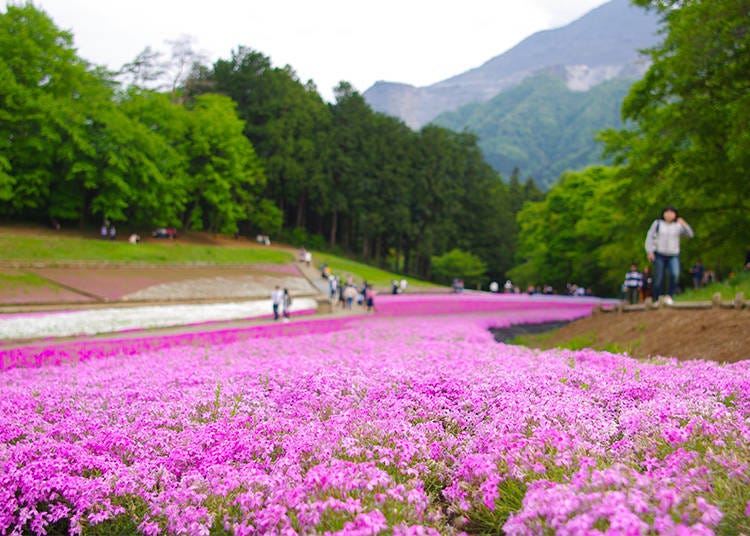
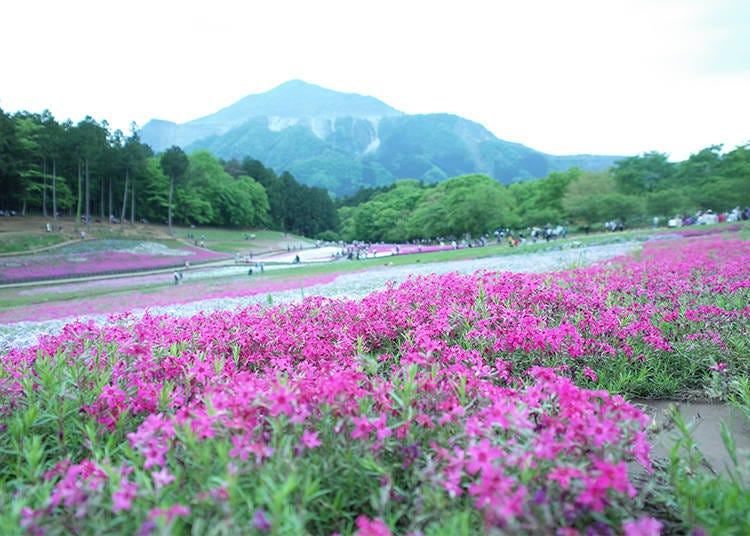
We recommend turning the device upside down if you're using a smartphone so that the camera lens is the bottom half. Even if you have people or yourself in the shot, the lower-than-usual position is still the best choice.
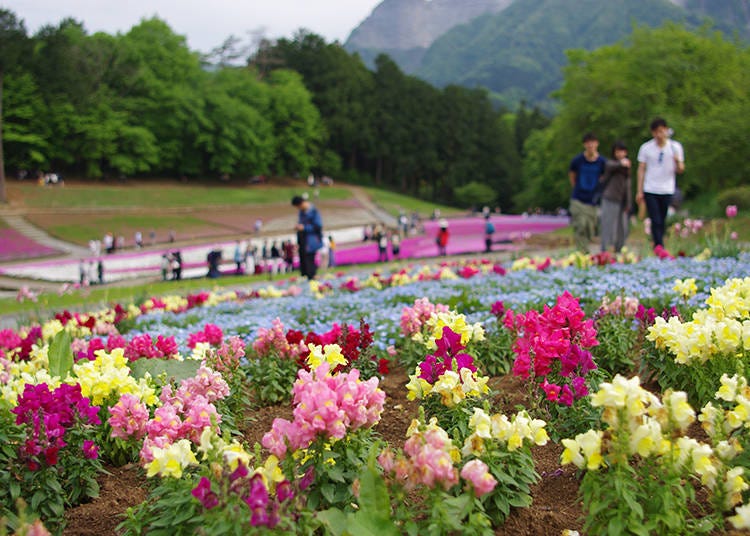
There are also great spots of other flowers with moss phlox in the background, especially at the hill of the Central Entrance.
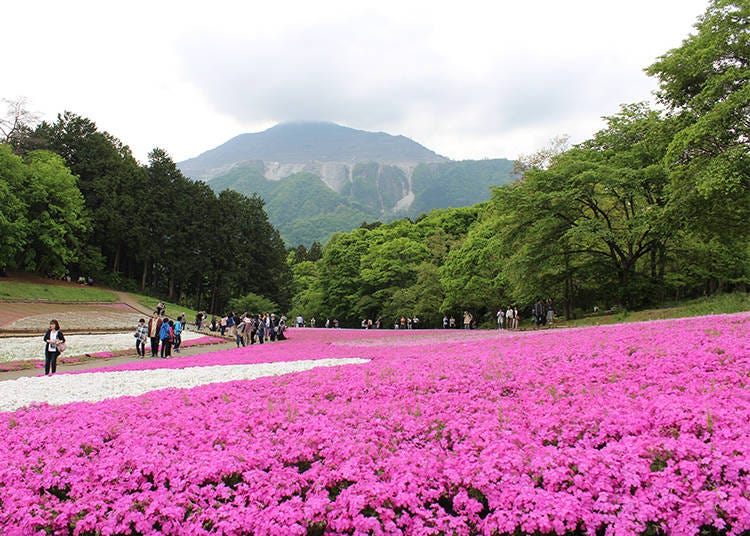
To get Mount Buko in the picture together with the shibazakura, don’t kneel all the way to the ground but find the middle or lower-middle between eye level and ground.
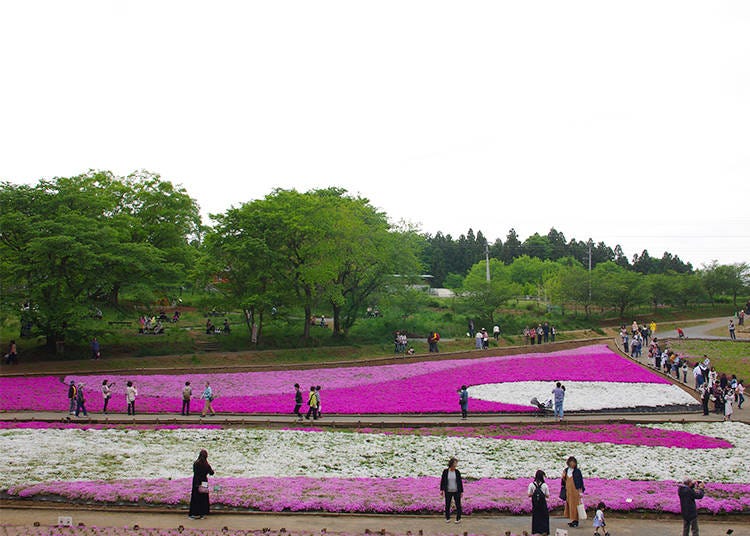
The pictures below were taken from the bottom of the slope at the Central Entrance and from the point where the path from the Shōbuta Entrance crosses. Elevated benches at the east slope offer beautiful views of both the southwest and northwest slopes together.

10 different moss phlox varieties at the park
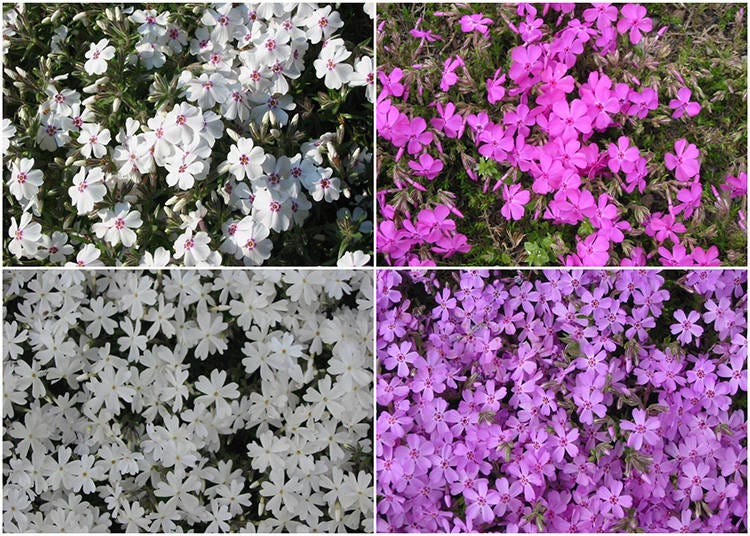
Top, from left to right:
1) Amazing Grace
2) McDaniel's Cushion
Bottom, from left to right:
3) Little Dot
4) Autumn Rose
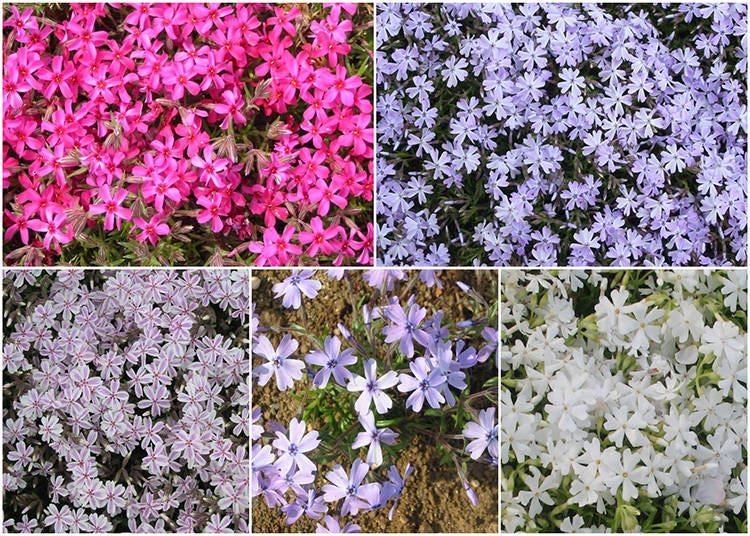
Top, from left to right:
5) Scarlet Flame
6) Emerald Cushion
Bottom, from left to right:
7) Tama-no-nagare
8) Oakington Blue Eye
9) Mont Blanc
With the hills blooming in white, pink, and purple, it’s easy to see that Hitsujiyama Park has more than one kind of moss phlox, but would you have guessed that there are ten in total?
They all vary in color and shape, differences that become obvious and interesting when examining the tiny flowers up close. Only then do you really realize that these spacious, colorful carpets are made up of millions of unique little blossoms.
Unique Heart-Shaped Patterns
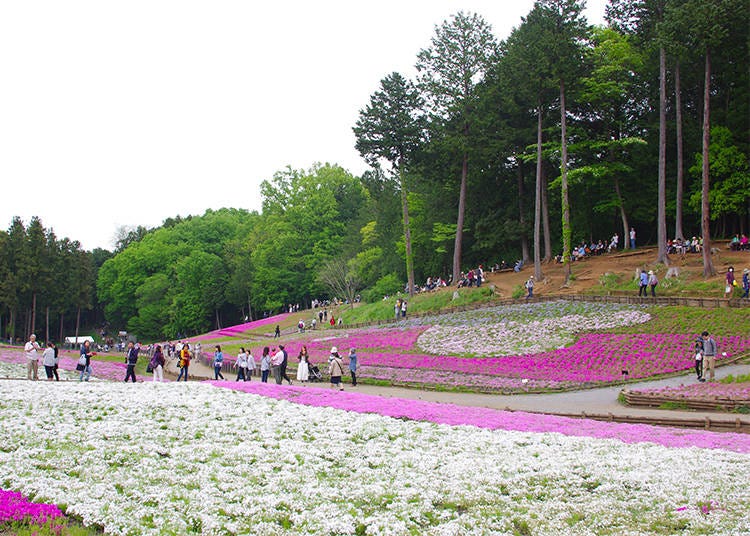
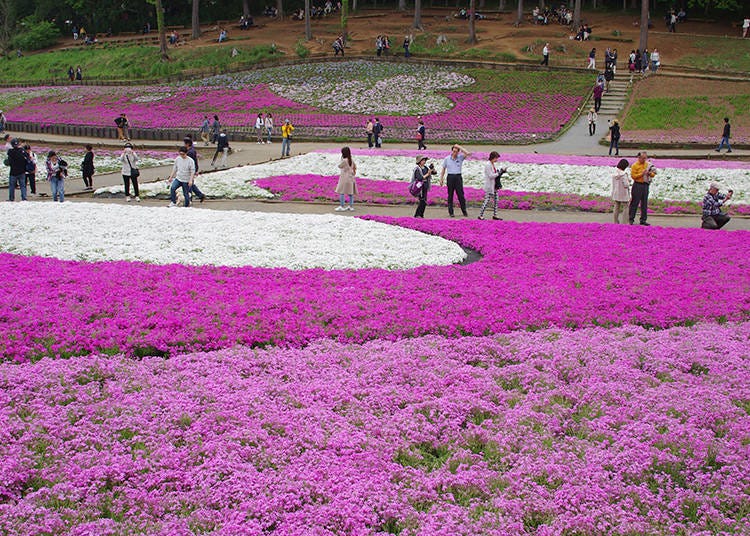
One of the things you’ll immediately notice as you gaze upon Hitsujiyama Park is the beautiful heart-shaped patterns that the moss phlox grows in.
That is unique to Chichibu and can be traced back to the Chichibu Yomatsuri (Night Festival). It’s a beautiful, enigmatic spectacle that features floats decorated with lanterns, carvings, and other ornaments – the entire event is so enticing and wonderfully traditional that it has been registered as a UNESCO Intangible Cultural Heritage.
Hitsujiyama Park’s moss phlox is said to be planted in patterns that are similar to those on the traditional clothes worn for the festival, conveying a feeling of liveliness and joy. The hearts and curves made up of the different moss phlox varieties are the result.
Another reason is that a single moss phlox petal resembles the shape of a heart as well, and on the east slope, you’ll find a large heart entirely out of flowers.

Enjoy Local Foods at the Market
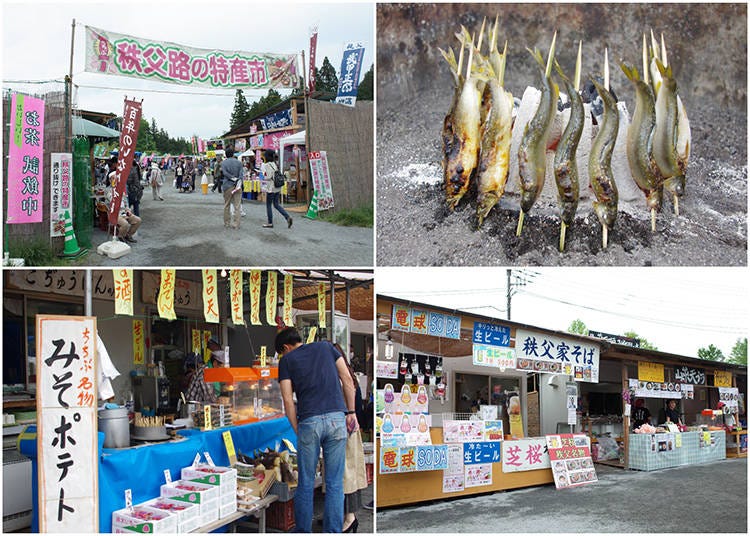
As the Moss Phlox Festival is held, the Chichibu Specialties Market is also being held.
It’s the hot spot for local specialties, including amazing food but also crafts and produce. We especially urge you to try Chichibu’s famous miso potatoes, tempura of local produce, and the waraji katsu, breaded pork cutlet that gets its name for having a unique straw-sandal shape.
Trying the snacks at the different stalls is one of the highlights of visiting Hitsujiyama Park during this time. Some shops with stalls here usually only sell to wholesalers and companies, so you’re in for plenty of hard-to-come-by treats!
From a famous sushi restaurant with a history of 100 years to beautiful products from a Chichibu glass manufacturer, browsing the market is a unique and fun experience that no one should miss out on.

Hitsujiyama Park Beyond the Moss Phlox
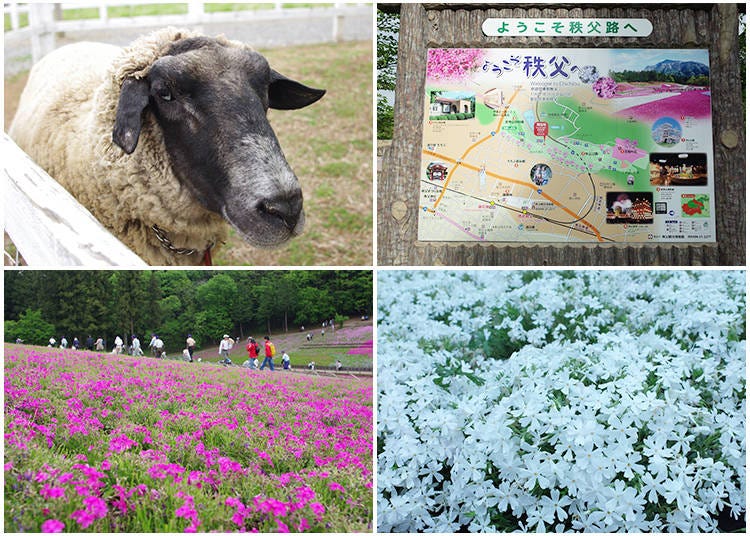
Even if you miss the moss phlox season, Hitsujiyama Park is beautiful all around the year. Cherry blossoms can be admired in spring, while beautiful irises blossom in early summer.
The park overlooks the town of Chichibu and thus offers a stunning sight of a more rural side of Japan, reinforced by the majestic mountains all around. Hitsujiyama actually means “sheep hill,” so naturally, you’ll encounter wooly friends within the park, and the playground is a major highlight for kids.
On the north side opposite Moss Phlox Hill, you’ll find the Buzokan Museum and an art museum, should your heart long for cultural activity. While the scenery alone is well worth the trip to Chichibu’s Hitsujiyama Park, there’s plenty to do and discover!
- Dates: April 3 - May 6, 2026
- Entrance fee: 500 yen (tax included); Free for junior high school students and younger.
-

-
Address
6267, Omiya, Chichibu-shi, Saitama, 368-0023
View Map -
Nearest Station
Seibu-Chichibu Station (Seibu Chichibu Line)
15 minutes on foot
- Phone Number 0494-25-5209
-
Address
6267, Omiya, Chichibu-shi, Saitama, 368-0023

- Area
- Category
*Prices and options mentioned are subject to change.
*Unless stated otherwise, all prices include tax.
Popular Tours & Activities
Recommended places for you

-

Haneda Airport Duty-Free Shopping Guide: What to Buy, How to Save & Where to Eat Before Your Flight
by: Guest Contributor
-

September Events in Kanto: Fun Festivals, Food, and Things to Do
-

Start Your Japan Trip Luggage-Free with SAGAWA’s New Narita Airport (NRT) Service
by: Guest Contributor
-
Fukuoka: 10 Recommended Apartment Hotels for Comfortable Stays in Hakata, Tenjin, and Beyond
by: Yotsuka Hizuki
-

Japan's New GREEN LIFESTYLE TRAIN Connects Tokyo, Yokohama, and a Greener Future
by: Guest Contributor
-
10 Best Nagoya Hotels & Apartment Hotels for Families: Near Legoland & Ghibli Park
by: Yotsuka Hizuki
Inspiration for Accommodations
-

Family-Friendly Hotels with Free Shuttle to Disneyland: Convenient Access for a Magical Stay
-
Top Ranked Hakone Hotels with Mt. Fuji View: Enjoy Stunning Scenery from Your Private Space
-
Convenient Tokyo Hotels with Airport Shuttle: Ideal for Families and Heavy Luggage
-
9 Family-Friendly Hotels with Comfortable Family Rooms in Asakusa
-
10 Open-air bath Onsen Ryokans in Hakone for Ultimate Relaxation
-
Essential Tokyo: The Complete Guide to Ikebukuro Station
-
Healthcare in Japan for Tourists: What to Do When You Get Sick or Injured in Japan
-

Kichijoji – Explore Tokyo’s Top-Rated Stylish Suburb in Half a Day!
-
Admire Tokyo’s Prettiest Cherry Blossoms at Chidorigafuchi Moat
-
Cherry Blossoms in Tokyo 2026: Best Sakura Parks & Where to See Them
-

5 Foreign Residents Share Inside Tips & Favorite Sakura Spots in Tokyo
by: Nina Cataldo
- #best ramen tokyo
- #what to buy in ameyoko
- #what to bring to japan
- #new years in tokyo
- #best izakaya shinjuku
- #things to do tokyo
- #japanese nail trends
- #what to do in odaiba
- #onsen tattoo friendly tokyo
- #daiso
- #best sushi ginza
- #japanese convenience store snacks
- #best yakiniku shibuya
- #japanese fashion culture
- #best japanese soft drinks