



Travel Tohoku for Less in 2026: Why the JR EAST PASS Is a Game Changer
- Written by: Sae Haneda
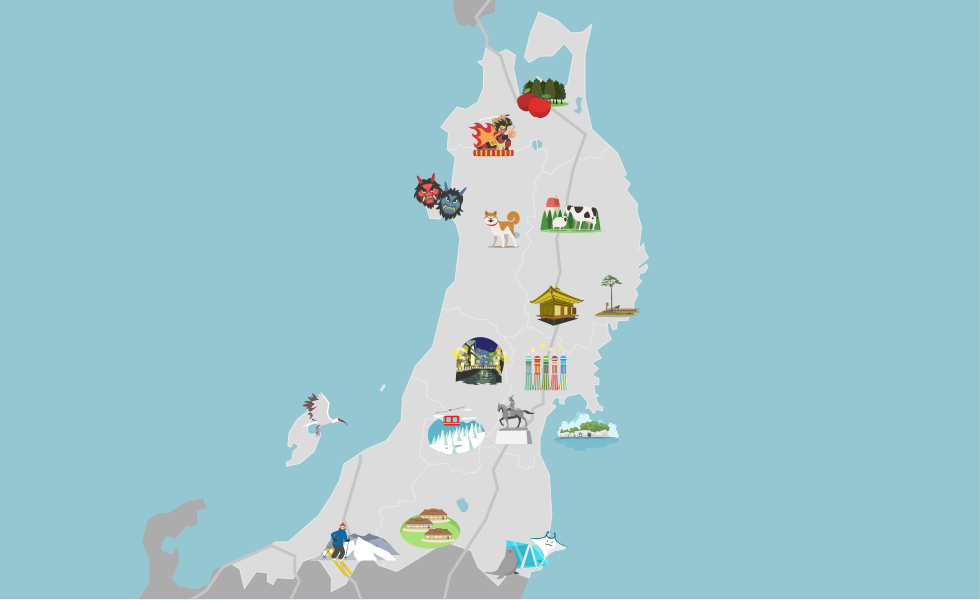
Starting in 2026, traveling across Japan is becoming a bit more challenging when it comes to booking transportation and accommodation. To navigate these changes, why not make the updated JR EAST PASS (35,000 yen) the centerpiece of your East Japan adventure? Covering not only the Tohoku region but also Nagano and Niigata, this pass is arguably the ultimate travel tool. A travel writer and Tohoku enthusiast will show you the best tips to get value far beyond the price tag, including a "smart travel plan" using Sendai as your home base.
(This article may contain affiliate links or coupons. All featured facilities, stores, and products are selected based on our editorial standards)
- Table of Contents
-
- How to Improve Your "Travel Quality" in Japan from 2026 Onward
- Is the 35,000 yen JR EAST PASS Worth It? Comparing It with Regular Ticket Prices!
- (Local Insider Tip) A Smart Solution to Limited Hotel Availability: Base Yourself in Sendai
- Seasonal Tips for Making the Most of the JR EAST PASS in Tohoku
- Make the Journey Part of the Adventure: 4 Scenic Trains You Can Ride with the Pass
- Explore Tohoku with Freedom Using the JR EAST PASS
How to Improve Your "Travel Quality" in Japan from 2026 Onward
Traveling in Japan from 2026 has become more challenging than before in terms of both transportation and accommodation. With the increase in inbound visitors, popular areas are constantly crowded, and due to rising prices and labor shortages, accommodation fees, dining costs, and transportation expenses are all on the rise.
Under these circumstances, traveling to the Tohoku and Shinetsu regions, where attractions are spread out, tends to involve long travel distances. For example, the trip from Tokyo to Aomori is about 675 km by Shinkansen. To be honest, if you buy individual tickets each time, both the expenses and the hassle can easily add up.
That is why I would like to suggest a travel plan that makes the most of the JR EAST PASS, which was updated on March 14, 2026, as the core of your journey around eastern Japan. With this renewal, the Tohoku area and the Nagano/Niigata area have been integrated, allowing you to cover the entire eastern Japan region with this single pass.
While the price is now 35,000 yen, it remains your strongest ally—freeing you from the stress of lining up at crowded ticket machines and dramatically increasing the flexibility of your route.
In this article, I will introduce tips for getting value far beyond the price tag with the new pass, how to choose your accommodation bases wisely, and how to build a travel plan that lets you enjoy spontaneous side trips along the way.
Is the 35,000 yen JR EAST PASS Worth It? Comparing It with Regular Ticket Prices!
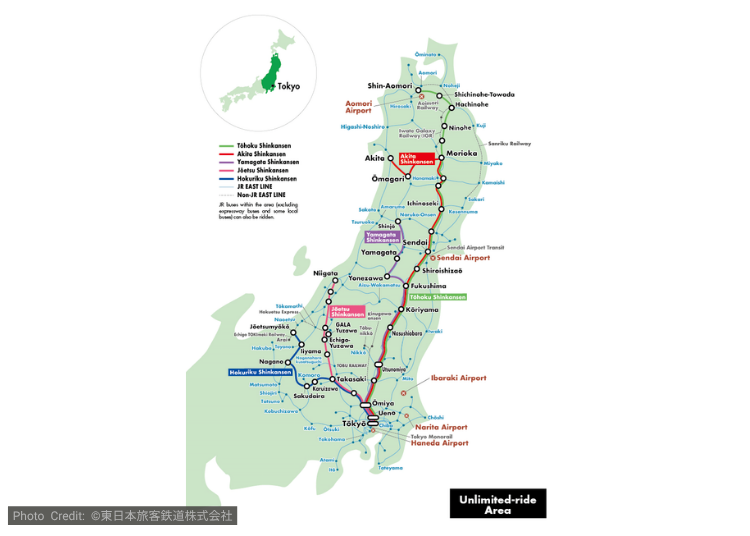
First, let’s calculate just how much value the 35,000-yen JR EAST PASS actually offers.
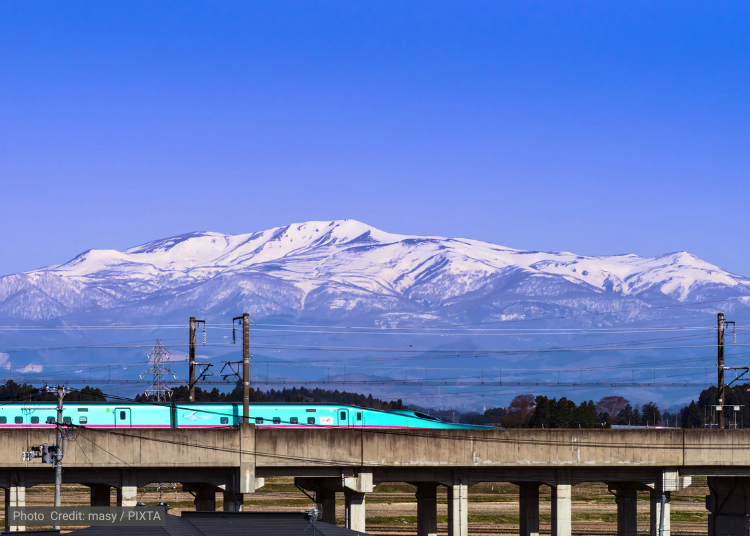
From Tokyo Station to Shin-Aomori Station, the Tohoku Shinkansen "Hayabusa" takes about 3 to 3.5 hours. The regular-season fare is 18,110 yen one way, totaling 36,220 yen for a round trip. In other words, with just one round trip between Tokyo and Shin-Aomori, you have already fully recovered the 35,000-yen cost of the pass and saved an additional 1,220 yen.
Since the pass is valid for five days, you have more than enough time to extend your journey to other cities like Sendai, Morioka, Akita, and Yamagata—or even head over to Nagano and Niigata—on top of that initial round trip.
When you consider that all your travel on JR East lines and partner lines within the covered area is handled by this single pass, it is clear just how great a deal it is.
With Nagano and Niigata Now Included: Discover the New Pass’s Wide-Ranging Coverage

With the renewal on March 14, 2026, the JR EAST PASS has expanded its coverage area beyond the Tohoku region to include Nagano and Niigata as well. This single pass allows you to simultaneously enjoy experiences like visiting Karuizawa or Hakuba, and even sake brewery hopping in Niigata.
For example, the popular resort of Karuizawa is only about 70 minutes from Tokyo via the Hokuriku Shinkansen. The regular-season fare for a reserved seat is 6,130 yen one way (12,260 yen round trip). Furthermore, the pass can be used on the Narita Express connecting Narita Airport to Tokyo Station (3,138 yen one way) and the Tokyo Monorail connecting Haneda Airport to Hamamatsucho in central Tokyo (520 yen one way).
Passes purchased online in advance can be picked up immediately at Narita or Haneda Airport using automatic ticket machines equipped with passport readers, allowing you to start your journey the moment you land in Japan.
The more you ride, the better the value becomes. Since there is no limit on the number of times you can use reserved seats, it is an indispensable tool for long-distance travel. It is also incredibly convenient for short trips, visiting small towns in mountainous areas, or hopping off the train at any local station that catches your eye.
It is not uncommon for small stations in eastern Japan to be unmanned or have limited multilingual support. Having this pass makes it much easier to hop on and off, enabling truly spontaneous and free-spirited travel. For those who want to try "off-the-beaten-path" travel or discover a deeper side of Japan, be sure to ride charming local lines such as the Aoimori Railway, Iwate Galaxy Railway (IGR), and Sanriku Railway.
How Much Can You Save? Check These Model Routes
Now, let me show you two specific examples that I calculated.
- Combining the Aomori Nebuta Festival, Oirase Gorge Nature, and a Resort Stay in Karuizawa
- ・Round trip between Narita Airport and Tokyo (N'EX): 6,276 yen
・Round trip between Tokyo and Shin-Aomori: 36,220 yen
・Round trip between Tokyo and Karuizawa: 12,260 yen - Total Value: 54,756 yen (Save 19,756 yen with the pass!)
- Exploring Tohoku’s Summer Festivals, Morioka’s Local Cuisine, and a City Stay in Sendai
- ・Round trip between Haneda Airport and Tokyo via Hamamatsucho (Monorail & JR): 1,380 yen
・Tokyo to Shin-Aomori (Hayabusa): 18,110 yen
・Shin-Aomori to Morioka (Hayabusa): 6,360 yen
・Morioka to Sendai (Hayabusa): 6,900 yen
・Sendai to Tokyo (Hayabusa): 11,630 yen - Total Value: 44,380 yen (Save 9,380 yen with the pass!)
In both examples, you can comfortably recover the cost of the 35,000-yen pass. If you add short-distance travel and sightseeing stopovers on top of this, you can travel even more economically.
There is also a 10-day, 50,000-yen pass for long-term travelers. With this one, you break even as long as you use more than 5,000 yen per day, so if you want to travel around Japan at a slower pace, it is worth considering the 10-day pass as well (valid for 10 consecutive days from the first day of use).
(Local Insider Tip) A Smart Solution to Limited Hotel Availability: Base Yourself in Sendai
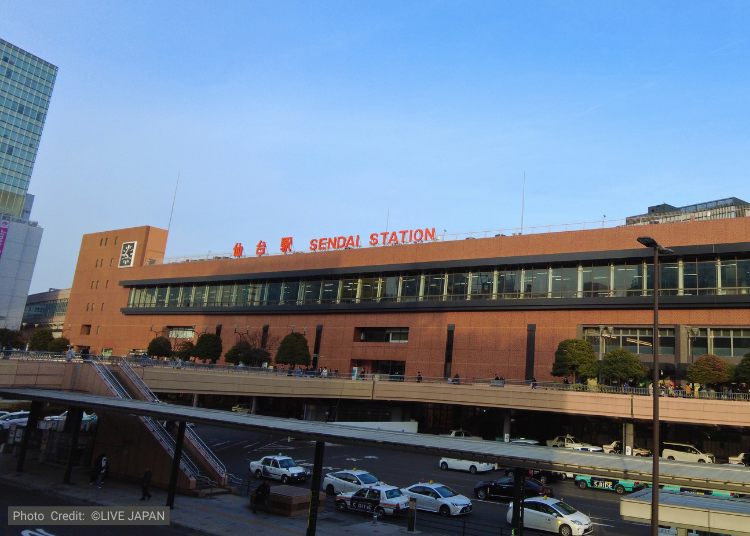
One challenge that often comes up when traveling around the Tohoku region is the shortage of accommodations during peak seasons. In cities like Hirosaki, Aomori, and Akita, the number of visitors during busy periods is very high relative to the city's size. During the summer festivals, cherry blossom season, Year-end/New Year holidays, and Lunar New Year, it is common for room rates to skyrocket or for hotels to be completely sold out.
That is why I recommend staying in Sendai for multiple nights as your base and taking day trips to various locations via Shinkansen. As the largest city in the Tohoku region, Sendai offers a relatively large number of hotel rooms. One of its strengths is the ease of finding international hotel brands and accommodations with multilingual support. With an abundance of dining options as well, basing yourself here allows you to explore all of Tohoku by Shinkansen while eliminating the hassle of constant repacking and moving heavy luggage.
By Shinkansen, even distant areas like Shin-Aomori are accessible from Sendai in as little as 1 hour and 40 minutes. Sendai’s location allows for radiating access to all major cities in Tohoku, making it a huge advantage for efficiently visiting multiple areas from a single stay. It is also a relief to know that you can often return to Sendai late in the evening, even after enjoying local events.
Staying in Sendai dramatically expands your travel options across Tohoku. I recommend securing your hotel in Sendai first, then booking your JR EAST PASS and taking your time to craft the perfect itinerary.
Sendai Station Is Packed with Local Food and Souvenir Options
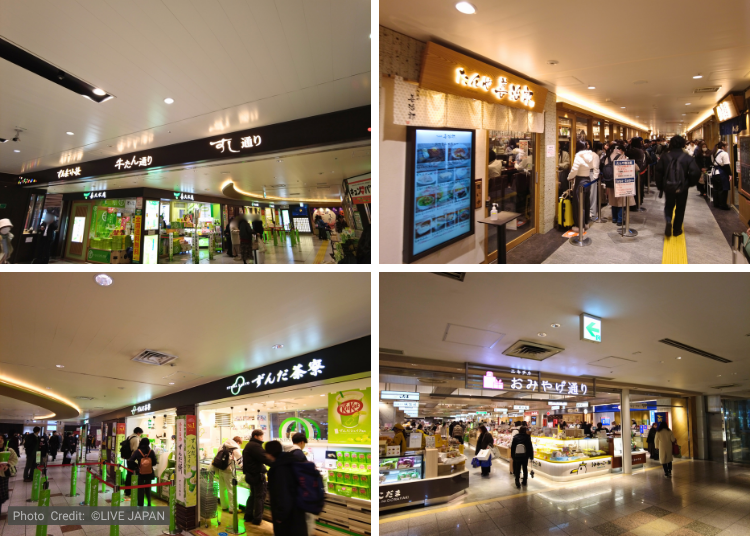
Sendai is also a city with excellent commercial facilities, making it easy to shop and buy souvenirs. While you’re there, be sure to try some of the city’s local specialties, such as gyutan (grilled beef tongue), sasakamaboko (bamboo leaf-shaped fish cake), and zunda mochi (mochi topped or filled with sweet edamame paste).
Inside Sendai Station, there is also Gyutan Dori (Beef Tongue Street), where famous gyutan restaurants are gathered together, so I recommend stopping by right after arriving at the station or while waiting for your connecting Shinkansen.
By the way, among the foods you can enjoy at Sendai Station, my personal favorite is the zunda shake. It is a drink with a gentle sweetness and the flavor of edamame beans.
Zunda mochi and zunda soft serve are also delicious, but the zunda shake, which you can buy in a takeout cup, is especially convenient because you can carry it with you straight to your hotel or onto the Shinkansen.
There are several shops inside the station that sell zunda shakes, which is another nice point because you usually do not have to wait very long to buy one.
Make the Most of Sendai with Convenient Hands-Free Sightseeing Services
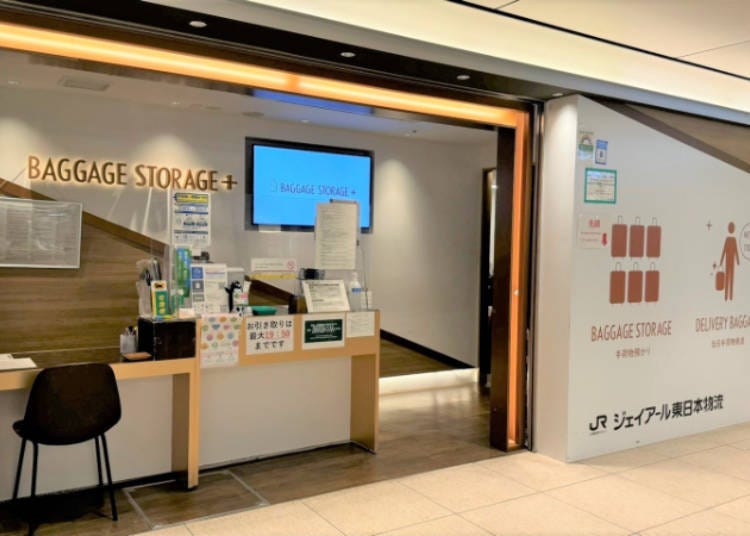
Another service I highly recommend making use of when traveling around eastern Japan with Sendai Station as your base is Hakobyun Quick and the Same-Day Hotel Delivery Service.
BAGGAGE STORAGE+, located at Tokyo Station and Sendai Station, is a baggage counter that combines temporary luggage storage with a range of services that support light and easy travel, including luggage transport by train and hotel delivery.
By completing the procedure at the reception counter in Sendai Station, you can use the following services and more.
Hakobyun Quick Service (shipping only)
A luggage transport service that does not require advance reservation and allows applications for even a single item of luggage up to 30 minutes before the train departs
Same-Day Hotel Delivery Service
A service that delivers luggage checked in at Sendai Station on the same day to hotels in Tokyo’s 23 wards
Temporary Luggage Storage Service
A service that can temporarily store large luggage such as carry-on suitcases that do not fit in coin lockers
With this system, you can leave large suitcases at the station and head out for shopping or sightseeing without carrying them around, with fees varying depending on the size of the luggage.
For example, if you use the Same-Day Hotel Delivery Service from Sendai Station to a hotel in the city, you can leave your luggage at the station and then board a train to go sightseeing in another city.
When you return to Sendai in the evening or at night, you can head straight to your hotel. There is no need to stop by the hotel from the station to drop off your luggage, or to pick it up from a coin locker at the station and carry it yourself, so you can move around much more lightly.
In addition to same-day reception at the counter, advance reservations can also be made online, so be sure to make use of it.
Seasonal Tips for Making the Most of the JR EAST PASS in Tohoku
Traveling in Tohoku is appealing in every season, but when your schedule is limited, unexpected crowds or difficulty finding accommodations can sometimes throw your plans off track.
Many of these common travel frustrations can also be handled much more smartly if you build your trip around the JR EAST PASS, reducing both the hassle of getting around and your transportation costs.
From here, I will introduce common issues that often come up when traveling in Tohoku in spring, summer, autumn, and winter, along with specific ways to solve them.
Chasing Cherry Blossoms in Spring: How to Catch Tohoku at Peak Bloom by Shinkansen
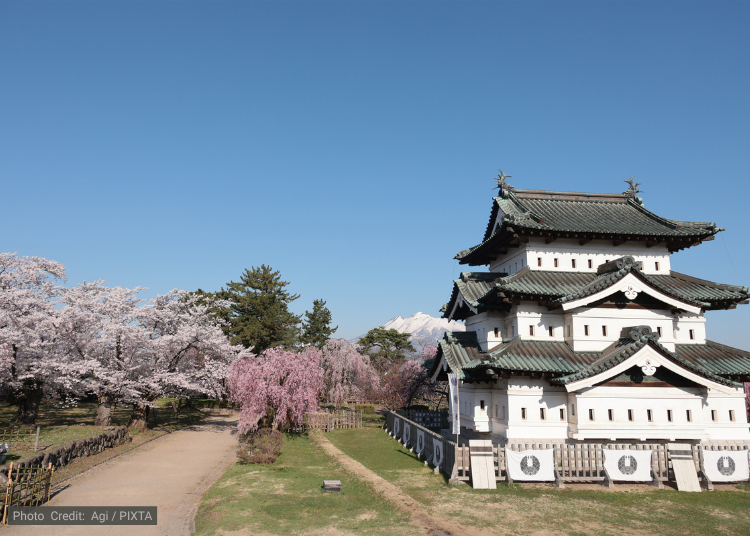
If you are traveling in Japan in spring, one thing you should definitely want to see is cherry blossoms in full bloom.
However, one difficulty is that the timing of the blossoms is hard to predict from year to year. As a general guide, they tend to bloom in late March in Tokyo, early April in Sendai, and around late April in Hirosaki, but this can shift depending on the weather and temperatures.
You may go to a famous cherry blossom spot that you researched in advance, only to end up disappointed because the blossoms are not as far along as you expected, or because they have already fallen.
That is where the JR EAST PASS comes in.
Because it makes it easy to travel across a wide area, you can adjust your destination on any given day according to the blooming conditions during your stay. For example, you can check that day’s bloom updates before heading out and decide between Hirosaki Castle or Morioka Castle Ruins Park depending on whether Shin-Aomori or Morioka is closer to peak bloom.
Being able to travel like this alone can greatly reduce the chances of your spring cherry blossom trip going wrong.
Summer Festivals Without the Hassle: Day Trip Plans by Shinkansen from Sendai and Morioka
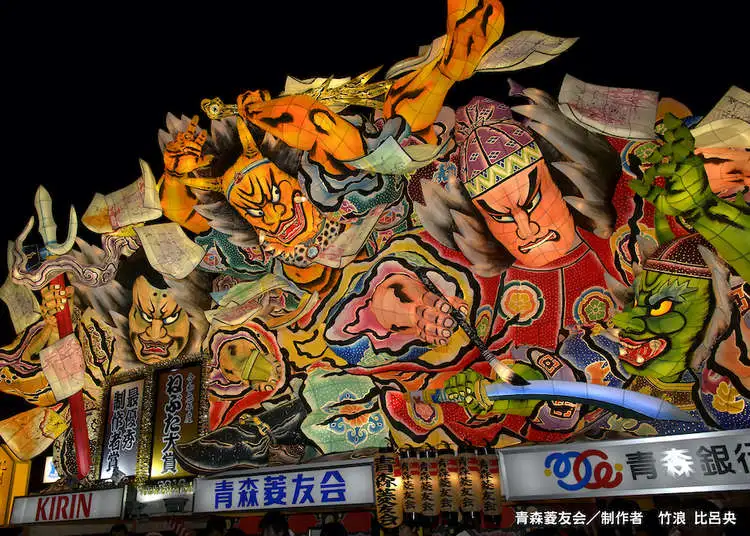
In the Tohoku region in August, some of Japan’s best-known summer festivals are held in quick succession.
Not only from within Japan but from all over the world, huge numbers of visitors gather, making these events extremely crowded, so it is important to plan your trip carefully.
For example, during the Aomori Nebuta Festival, more than 1 million visitors come to a city with a population of less than 300,000, so during the festival period from August 2 to August 7, hotel prices soar, and in some cases rooms are fully booked and cannot be reserved at all.
If you stay in cities with Shinkansen stations such as Hachinohe, Morioka, or Sendai, and use the JR EAST PASS for long-distance travel by Shinkansen, you can avoid the worst of the crowds and travel much more comfortably.
Another great thing is that the Hirosaki Neputa Festival and the Tachineputa Festival in Goshogawara, which are held around the same time, are also easy to combine by moving around within the area. Taking advantage of the five-day validity period to enjoy Aomori’s festivals together is also highly recommended.
That said, during the Nebuta Festival period, the Shinkansen also tends to be crowded. Reserved-seat bookings become available one month before the boarding date at 10:00 a.m. Japan time.
Don’t miss that timing, and make your reservation as quickly as possible. Among Japanese railway enthusiasts and seasoned travelers, making a reservation the moment bookings open is called 10-ji uchi, and tickets during peak periods can become fiercely competitive.
During the Nebuta Festival period, especially if you want to reserve a seat on the last Shinkansen of the day, you should plan to join the 10-ji uchi rush and book as early as possible.
Autumn Foliage: A Smart Strategy for Catching Peak Color
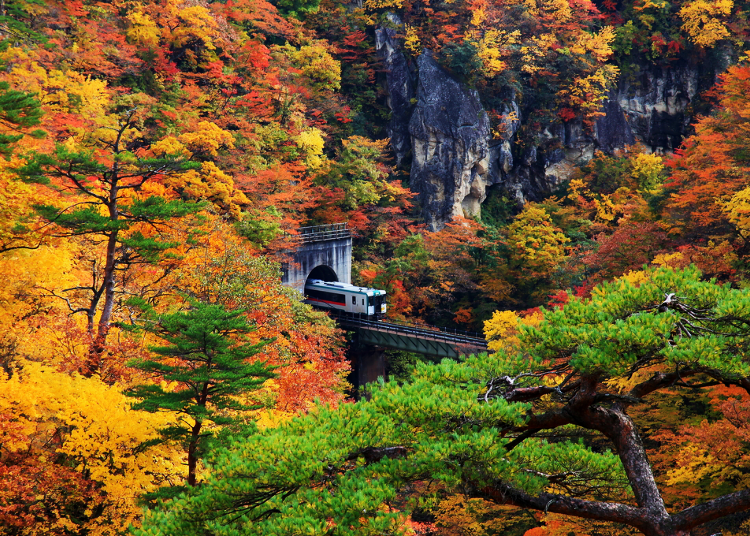
Autumn foliage in the Tohoku region, where mountains and valleys turn brilliant colors, is stunning. Just like cherry blossoms, the period when the leaves are at their very best varies depending on the region and elevation, and it also changes according to that year’s weather conditions.
In a typical year, the best time is early October for Hakkoda Mountains in Aomori, mid to late October for Oirase Gorge in Aomori, late October to early November for Naruko Gorge in Miyagi, and from early November for Chuson-ji Temple in Iwate.
That said, in recent years, temperatures from summer into autumn have often been unstable, and the peak season has increasingly tended to shift. If you use the JR EAST PASS to travel widely by Shinkansen, you will be able to choose the best spot for the time of your visit and find autumn leaves at their peak.
Autumn colors also tend to develop more quickly in places where the cold is stronger. If the leaves in the town you visit have not changed as much as you expected, I also recommend aiming for places that cool down more easily in the mornings and evenings, such as waterfront areas and places along mountain streams.
Winter Snowcapes: Reach Stunning Views Safely with the Shinkansen with Direct Access from the Station
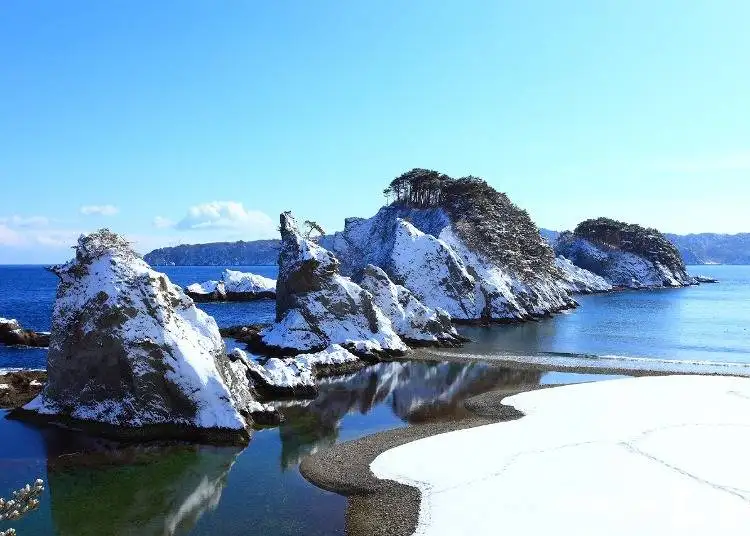
Beautiful snowy scenery and a world of silver-white landscapes are sights you won’t want to miss in Tohoku in winter.
However, areas like Zao, the Hakkoda Mountains, Ginzan Onsen, and Sukayu Onsen are among Japan’s heaviest snowfall regions. Driving long distances in a rental car carries significant risks, and I wouldn't recommend it. Snow-covered and frozen roads are incredibly slippery, and the risk of accidents rises dramatically. Furthermore, traffic jams or vehicles becoming stranded can make travel times unpredictable. If you do use a rental car, the basic rule is to keep it to short distances in areas with less snow and stick to trains for your main travel. For the final leg of your journey, combining a taxi, a local bus, or a shuttle service provided by your accommodation is the safest way to get around.
One more point: your satisfaction on the Tohoku Shinkansen in winter can change depending on your "seat choice." On trains heading from Tokyo toward Aomori (downbound), the seat layout is as follows:
・Left side (Direction of travel): 3-seat row (Seats A, B, C)
・Right side (Direction of travel): 2-seat row (Seats D, E)
Iconic mountains of Tohoku—such as the Nasu Range, the Zao Mountain Range, Mount Iwate, and the Hakkoda Mountains—can be enjoyed from both sides of the train.
From the left side (A seats), there are sections where you can experience closer, more dramatic views of the mountains. On the other hand, from the right side (E seats), there are many stretches where you can take in wide, panoramic views of the mountain ranges across open plains. Overall, the E-seat side tends to offer more consistently scenic views.
If you are traveling as a pair or prefer a quieter and more relaxed seating environment, the D and E seats on the right side are recommended.
Make the Journey Part of the Adventure: 4 Scenic Trains You Can Ride with the Pass

The JR EAST PASS is not only useful for riding the Shinkansen.
In the Tohoku region, there are several sightseeing trains that are not merely a means of transportation, but trains where the ride itself can become a highlight of the trip.
Some representative examples include the following trains.
(Please note that specific usage conditions apply when using the pass on these trains.)
- A restaurant train known as a moving restaurant, where you can enjoy a meal while taking in views of the Sanriku coast. You can enjoy a lunch course and dessert buffet made by a well-known chef using ingredients from Tohoku.
Note: This train is sold exclusively as a travel package including meals. You cannot reserve a seat using the JR EAST PASS alone; a separate reservation and payment via the dedicated website are required.
- A train that runs at a relaxed pace through the lush scenery along the Kamaishi Line, surrounded by the nature of Iwate. One of the pleasures of the trip is buying an Omusubi BOX made with local ingredients and eating it on board.
- There are three services: Aizu SATONO on the Koriyama to Kitakata route, Irodori SATONO on the Sendai to Yamagata route, and Date SATONO on the Sendai to Onagawa route. These sightseeing trains let you experience the rich natural beauty of southern Tohoku. On each route, traditional dishes, local specialties, and regional sake are available for purchase.
- A sightseeing train connecting Niigata, one of Japan’s most famous rice-producing regions, with the Shonai area. Its concept is Niigata’s food, Shonai’s food, and the scenery of the Sea of Japan. You can enjoy dishes from long-established local restaurants and popular Italian restaurants along the route while taking in the beautiful seaside views.
Note: While reserved seats in Cars 1 to 3 can be used with the pass, Car 4 (where meals are served) is reserved for travel packages and cannot be accessed with the pass.
Some of these trains do not have many seats, and depending on the operating date, they may fill up early. If the section is covered by the JR EAST PASS, one advantage is that it becomes easier to include a sightseeing train in your itinerary while keeping transportation costs down.
On the other hand, in many cases, securing a reserved seat is necessary to board, so once your plans are decided, be sure to reserve your seat as early as possible.
The operating days vary by train, but demand is especially high during Japanese holiday periods such as late April to early May, mid-September, and the summer vacation season.
As a general rule, reserved seats go on sale at 10:00 AM one month before the travel date. Reservation methods and deadlines vary depending on the train and the travel product, so it is reassuring to check the official information together with the operating dates in advance.
Spending time on a sightseeing train that moves at a relaxed pace while you take in beautiful nature and coastal scenery will surely become an unforgettable memory of your trip.
Explore Tohoku with Freedom Using the JR EAST PASS

The JR EAST PASS is a highly reliable pass that lets you enjoy a wide range of travel all in one, including the Tokyo Monorail from Haneda Airport and the Narita Express, which you can use as soon as you arrive in Japan, the Shinkansen from Tokyo Station to Tohoku, sightseeing trains, and even evocative local railway lines such as the Aoimori Railway Line, the Iwate Galaxy Railway, and the Sanriku Railway.
With its renewal in March 2026, the pass was expanded to cover not only Tohoku but also the Niigata and Nagano areas, making the way you plan your trip even more flexible.
Its greatest appeal is that you can arrange your trip exactly the way you like, from long-distance travel making full use of the Shinkansen to small, atmospheric stopovers on charming local railway lines.
Because Tohoku is a region where sights and attractions are spread out across a wide area, it remains a destination full of depth, where even repeat visitors and seasoned travelers to Japan can still make new discoveries.
Make the most of the JR EAST PASS and create a free, comfortable journey that is uniquely your own.
For those who want to efficiently visit multiple cities across Tohoku or increase their travel flexibility by reducing the hassle of logistics, this pass is an exceptionally effective choice.

Based in Sapporo, she has been working as a freelance writer since 2015, contributing to travel sites, local media, and major travel agency websites. Her specialties include travel, agriculture, and real estate. She has visited all 47 prefectures of Japan and lived in seven of them, including Tokyo and Hokkaido. Her travels often center on local cuisine, regional railways, hotel stays, and architecture. Favorite foods include French toast, sea urchin rice bowls, and shengjianbao, and her favorite rides are trains and tuk-tuks.
- Area
- Category
*Prices and options mentioned are subject to change.
*Unless stated otherwise, all prices include tax.
Popular Tours & Activities
Recommended places for you
-
Baeren Brewery Co., Ltd.
Other Sightseeing
Morioka, Hiraizumi And Hachimantai
-
Zuiganji Temple
Temples
Sendai And Matsushima
-
Asamushi Onsen
Hot Springs (Onsen) & Bath Houses (Sento)
Aomori, Hirosaki And Hachinohe
-
Matsushima Bay
Landscapes
Sendai And Matsushima
-
Hachimantai Aspite Line
Landscapes
Morioka, Hiraizumi And Hachimantai
-
Ishiguro Samurai House
Historical Places
Surrounding Areas Of Akita
-
Sendai & Miyagi: 10 Recommended Apartment Hotels Perfect for Road Trips and Local Experiences
-

6 Morioka Souvenirs Worth Buying near the Station: An Editor's Picks from Iwate
by: Yukiko Honda
-
Tohoku Just Got Cuter: Meet the New Gotochi Bear × Sanrio Collab
by: Guest Contributor
-
Japan's Best Premium Hot Spring Getaways: Top 10 Luxury Ryokan in Tohoku & Niigata (Perfect for Family Trips & Couples)
-

Top-Booked: Must-Try Sendai Gyutan & Yakiniku in Sendai for First-Time Visitors
by: Guest Contributor
-
Tohoku's Best Value Onsen Ryokan: 10 Hidden Hot Spring Gems from Sendai to Aomori and Niigata
-
10 Best Places to See Fall Leaves in Yamagata Prefecture + When to Enjoy in 2026
by: Guest Contributor
-
Matsushima 1-Day Itinerary: Day Trip to Japan's Magical Pine Islands
by: Guest Contributor
-
Akita Bucket List: 20 Best Things to Do in Akita Prefecture For Tourists (Attractions, Local Foods & Activities)
-
Shopping in Sendai: Best Outlet Malls, Tax-Free Stores & Souvenirs for Tourists
-
Healthcare in Japan for Tourists: What to Do When You Get Sick or Injured in Japan
-

Sendai Umino-Mori Aquarium: Inside Northeast Japan's Largest Aqua Attraction