





Weekend in Wakayama: 2-Day Journey Through Japan's Spiritual Kii Peninsula
- Written by: Hikaru Carolin
Escape the crowds of Kansai and discover Wakayama's Kii Peninsula, where dramatic coastlines, oceanfront resorts, ancient pilgrimage routes, and sacred shrines combine to create one of Japan's most rewarding weekend getaways.
Why Visit the Kii Peninsula
The next time you're planning a trip to Japan's Kansai region, consider venturing beyond Kyoto, Osaka, and Nara to one of the country's most underrated destinations: the Kii Peninsula in Wakayama Prefecture. Here, rugged coastlines, ancient pilgrimage routes, sacred mountain temples, and oceanfront hot springs replace the crowds and fast pace of the major cities. It is a place where spirituality and leisure coexist, making it the perfect destination for a weekend escape.
Over two days, I traveled from the resort town of Shirahama into the spiritual heart of Kumano. The journey began beside the Pacific Ocean and continued through mountain roads, ancient forests, and some of Japan’s most important pilgrimage destinations. What stood out most was how quickly the scenery changed. One moment I was looking over a bright blue coastline, and the next I was surrounded by cedar trees, stone paths, and centuries-old shrines.
This itinerary covers a significant amount of ground. My transportation between several of the Kumano sites was arranged as part of the trip, which made it possible to visit more places than would normally be practical using only public transportation.
For independent travelers, renting a car provides the most flexibility, particularly on the second day. Travelers relying on trains and local buses may want to choose either the Nachi and Shingu area or the Hongu and Nakahechi area rather than trying to cover every stop in a single day.
Getting to Shirahama
Easily accessible from Osaka, Wakayama offers a completely different side of Japan.
To get there, travelers can fly directly into Nanki-Shirahama Airport, which offers convenient domestic connections from Tokyo. Because the airport is close to many of Shirahama’s main attractions, flying makes it possible to begin sightseeing soon after arrival rather than spending much of the first day in transit.
From Osaka, take the JR Kuroshio Limited Express from Shin-Osaka Station to Shirahama Station. The journey takes approximately two and a half hours and gradually transitions from the dense urban scenery of Osaka to mountains, small communities, and views of the Pacific coastline.
Shirahama Station is outside the central resort area, so you will still need to use a local bus, taxi, or rental car to reach the coastline and major attractions. A car is convenient if you are carrying luggage or plan to visit several places in one day, although the primary sights around Shirahama are also connected by local buses.
Day 1: Coastal Wakayama
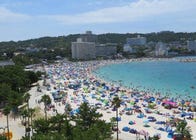
Serving as the gateway to southern Wakayama, Shirahama is best known for its resort atmosphere, oceanfront hot springs, dramatic coastal scenery, and relaxed pace of life. While millions of visitors flock to Japan's Golden Route each year, relatively few international travelers make it this far south, making the region feel refreshingly authentic and uncrowded.
Over the course of two days, I explored the spiritual heart of the Kii Peninsula, from dramatic seaside landscapes to sacred temples and centuries-old pilgrimage sites and traditional Japanese hospitality. This is how to experience one of Japan's most rewarding weekend getaways.
First Stop: Wakayama's Spectacular Sandanbeki Cliffs and Sandanbeki Cave
After arriving in Shirahama, one of the best places to begin your journey is at Sandanbeki Cliffs and Sandanbeki Cave, located within a 10-minute drive from Nanki-Shirahama Airport, and it immediately felt far removed from the crowded streets and buildings of the city. Towering above the Pacific Ocean, the dramatic cliffs immediately create a sense of escape from the busy cities. Standing along the coastline, your view is dominated by the endless blue horizon, with nothing but the sound of crashing waves and ocean winds breaking the silence.
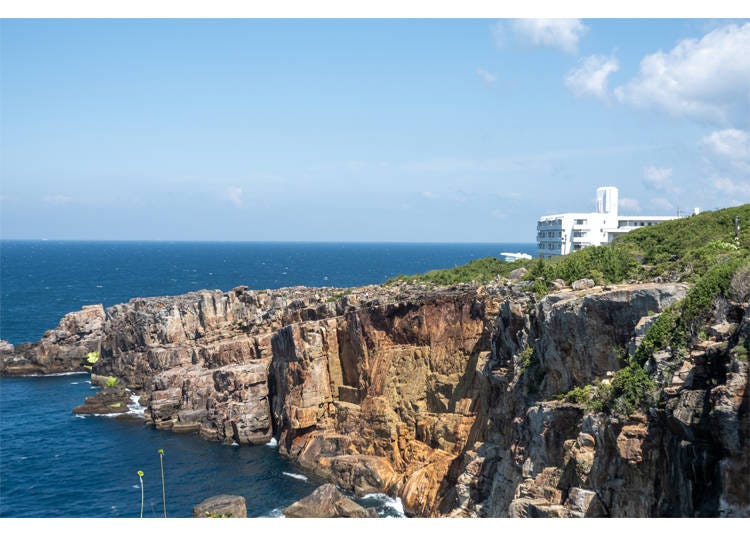
Rising approximately 50 meters (160 feet) above the sea, the Sandanbeki Cliffs were formed over millions of years through a combination of tectonic uplift and coastal erosion. Layers of sedimentary rock that were once buried beneath the ocean were gradually pushed upward, while powerful waves from the Pacific carved the coastline into the rugged cliffs, sea caves, and rock formations visible today. Descending into Sandanbeki Cave offers a closer look at these geological forces, with wave-sculpted cavern walls and seawater continuing to shape the landscape below.
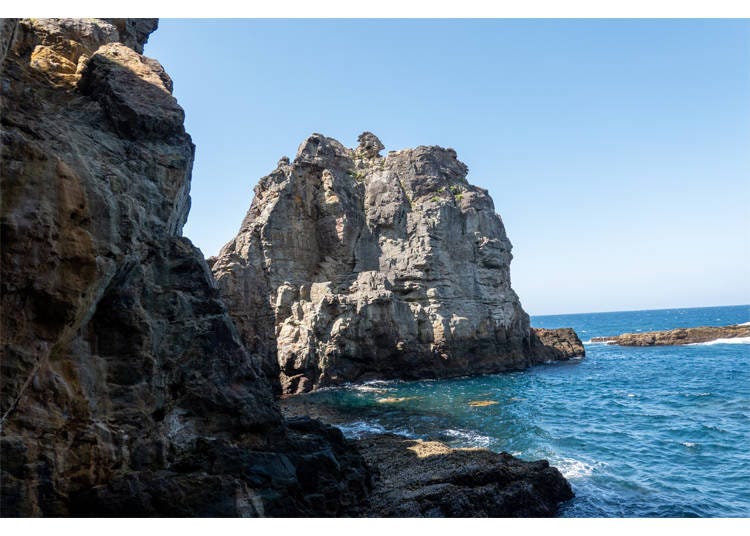
Beyond its natural beauty, Sandanbeki also holds historical significance. Local tradition holds that the cave served as a hidden lookout and refuge for the Kumano naval forces during the Heian Period, allowing them to monitor ships traveling along the Kii Peninsula. Today, the combination of dramatic coastal scenery, fascinating geology, and centuries of history makes Sandanbeki an unforgettable introduction to Wakayama and the natural wonders of the Kii Peninsula.
I would recommend allowing approximately 60 to 90 minutes for the cliffs and cave. Visitors who only want to see the coastal viewpoint may need less time, while those entering the cave and stopping for photographs should plan for at least an hour.
-


-
Address
2927-52, Sandan, Shirahama-cho, Nishimuro-gun, Wakayama, 649-2211
View Map -
Nearest Station
Shirahama Station (JR Kisei Line / JR Kinokuni Line)
27 minutes on foot
- Phone Number 0739-42-4495
-
Address
2927-52, Sandan, Shirahama-cho, Nishimuro-gun, Wakayama, 649-2211
Stay by the Sea at Shirahama Key Terrace Hotel Seamore

If you're planning to spend a night in the Shirahama area, Hotel Seamore is an excellent choice. Nestled along the coastline, the hotel combines resort-style luxury with the natural beauty of the Pacific Ocean.
The oceanfront terrace was the first area that caught my attention. It features an infinity pool, outdoor sauna, and open seating facing the water. The terrace is also used as a wedding venue, but outside of events, it provides a quiet place to sit and watch the horizon. Visiting later in the morning, with the beautiful sunshine and slight breeze creating the perfect setting to unwind.
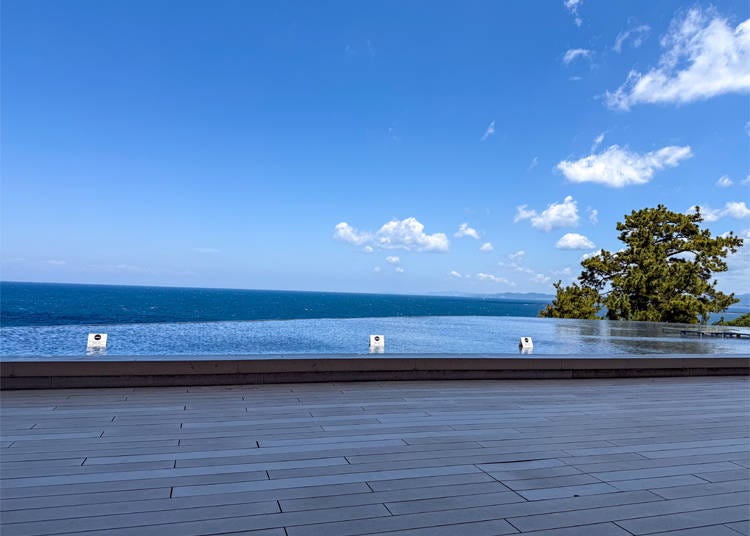
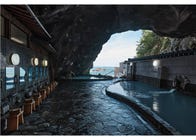
One night here may not be enough to fully experience everything the hotel has to offer. Beyond its stunning views and proximity to the airport and Shirahama station, Hotel Seamore features a karaoke lounge, cigar room, and a large entertainment area equipped with billiards, foosball, a golf simulator, and even an indoor bouldering wall. A unique highlight is the hotel's underwater observatory, where guests can look directly into the waters below and observe marine life on the ocean floor without ever leaving the property.
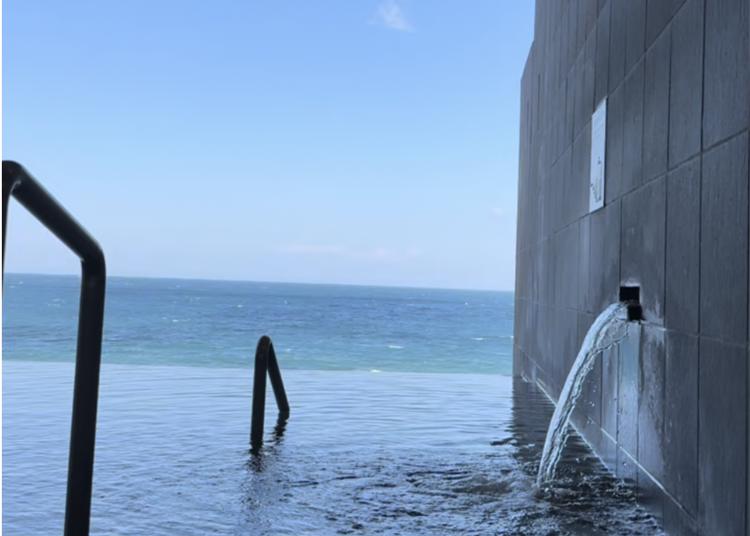
The wellness facilities are equally impressive. The hotel offers a full-size fitness center that far exceeds the typical hotel gym, along with a spa and three floors of ocean-facing hot springs. Guests can also enjoy a hot stone sauna and a unique make-your-own shampoo bar, allowing for a personalized onsen experience.
Travelers staying overnight could easily spend an entire afternoon and evening at the property. For visitors only touring the public facilities or stopping for the terrace, approximately one to two hours should be sufficient, depending on which areas are accessible.
-
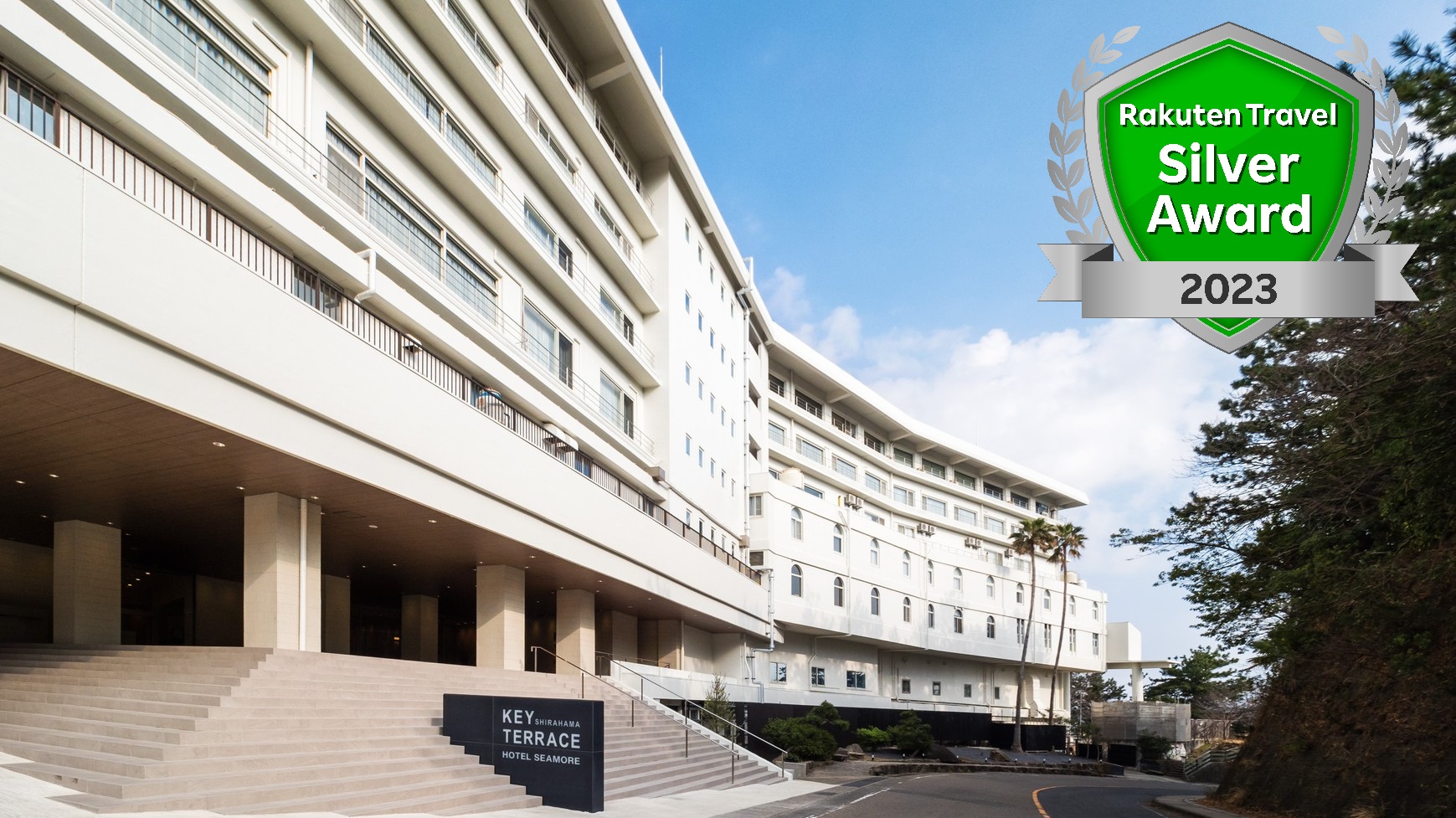 Shirahama Key Terrace Hotel SeamoreSHIRAHAMA KEY TERRACE HOTEL SEAMORE(ホテルシーモア)
- Address 1821 Shirahama-cho, Nishimuro-gun, Wakayama View Map
- Original source: Rakuten Travel
Sample Wakayama's Seafood at Toretore Market
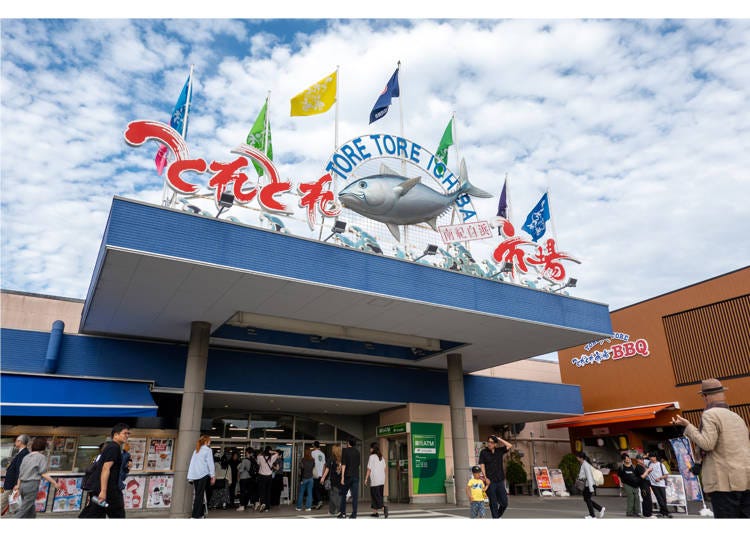
Before leaving Shirahama, make sure to stop by Toretore Market, one of the largest seafood markets in western Japan and a central hub for Wakayama's local specialties. The atmosphere here was much livelier than the quiet coastline. Seafood tanks, food counters, souvenir displays, and groups of visitors filled the market, making it feel like both a working seafood market and a casual local attraction.
The highlight for many visitors is the fresh seafood. and the opportunity to select it yourself and have it prepared on-site. Depending on the vendor and the day’s catch, visitors may find fish, shellfish, sashimi, grilled seafood, and other ready-to-eat dishes. For travelers who are unsure which Wakayama foods to try, the market provides an easy way to sample several items without visiting multiple restaurants.
Beyond seafood, the market carries local sweets, citrus products, packaged foods, seasonings, drinks, and omiyage. This makes it a practical final stop before leaving Shirahama, especially for travelers who want to purchase Wakayama specialties but do not have time to visit several individual shops.
I would allow at least an hour to shop around the market given its size and variety of goods. Some stalls can be more crowded than others, so visitors looking to experience picking and enjoying fresh seafood, or checking out the restaurants and cafes inside the market should plan to spend at least two hours here.
-
TORETORE ICHIBAとれとれ市場
-
Address
2521 Katata, Shirahama, Nishimuro District, Wakayama 649-2201
View Map
-
Address
2521 Katata, Shirahama, Nishimuro District, Wakayama 649-2201
Day 2: The Spiritual Heart of Kumano
Ride the Scenic Kuroshio Train to Kii-Katsuura
To further explore the Kii Peninsula, board the JR Limited Express Kuroshio from Shirahama Station to Kii-Katsuura Station. This scenic journey takes approximately 90 minutes and offers some of the most beautiful coastal views in Wakayama Prefecture. As the train winds along the peninsula's southern coastline, passengers are treated to sweeping views of the Pacific Ocean, dramatic rock formations, secluded beaches, and fishing villages that seem untouched by time.
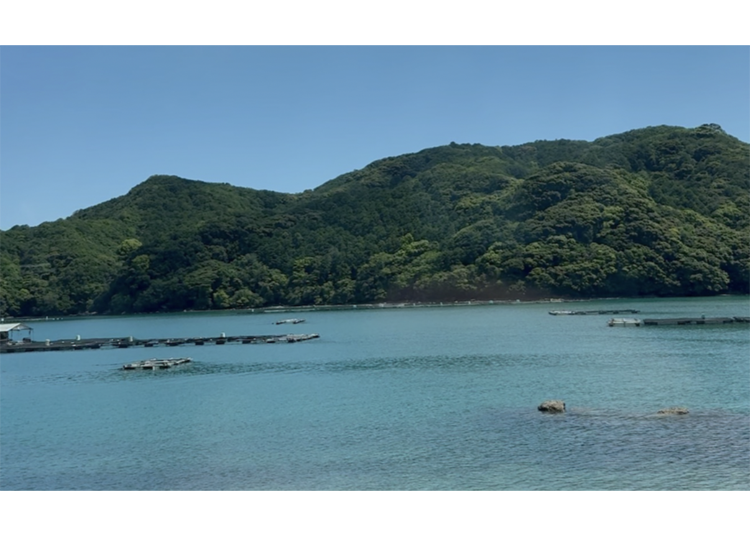
The ride itself becomes part of the experience, offering a glimpse into everyday life in rural Japan. Small towns, harbors, and hillsides pass by the window as the landscape transitions from resort communities to the more remote and spiritual heart of the Kii Peninsula. Compared to Japan's major urban centers, this region feels remarkably unspoiled, with large areas of coastline and forest preserved in their natural state.
For the best scenery, try to sit on the right side of the train when traveling south from Shirahama toward Kii-Katsuura. The ocean views are especially spectacular on this side, making it easy to appreciate why the Kii Peninsula is considered one of Japan's most beautiful regions. By the time you arrive in Kii-Katsuura, you'll already have experienced one of the highlights of the journey through Wakayama.
I recommend purchasing food or drinks before boarding, especially if traveling early in the morning. Travelers should also check whether their Kuroshio service continues directly to Kii-Katsuura, as train schedules and stopping patterns may vary.
Once arriving in Kii-Katsuura, transportation planning becomes especially important. Nachi Falls, Shingu, the Nakahechi route, and Kumano Hongu Taisha are spread across a wide area. Visiting all of them in one day is realistic mainly with a rental car, private driver, or organized tour.
Travelers using public transportation should build a more focused itinerary and carefully check return bus and train times, particularly in the mountain areas where services are available, but may be limited.
Stand Before Japan's Tallest Sacred Waterfall and the Sacred Mountains of Kumano
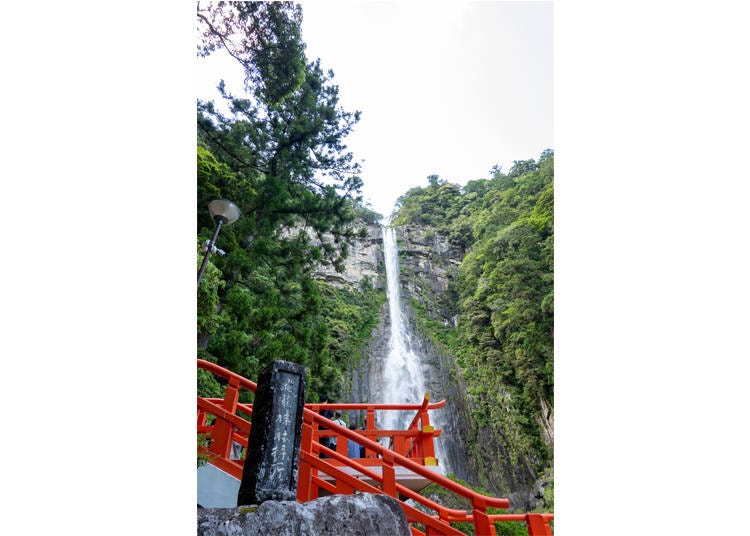
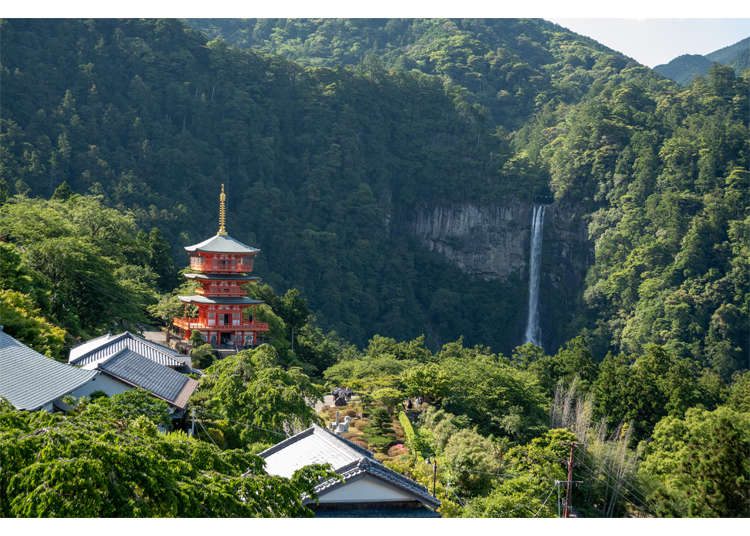
Nachi Falls stands 133 meters high and is regarded as Japan’s tallest single-drop waterfall. Although I had seen photographs before visiting, they did not fully convey the scale of the waterfall against the surrounding forest.The water appears as a long white column cutting through the dark green mountainside. Unlike a waterfall viewed only as a natural attraction, Nachi is treated as a sacred presence, and that spiritual significance can be felt throughout the surrounding shrine and temple complex.
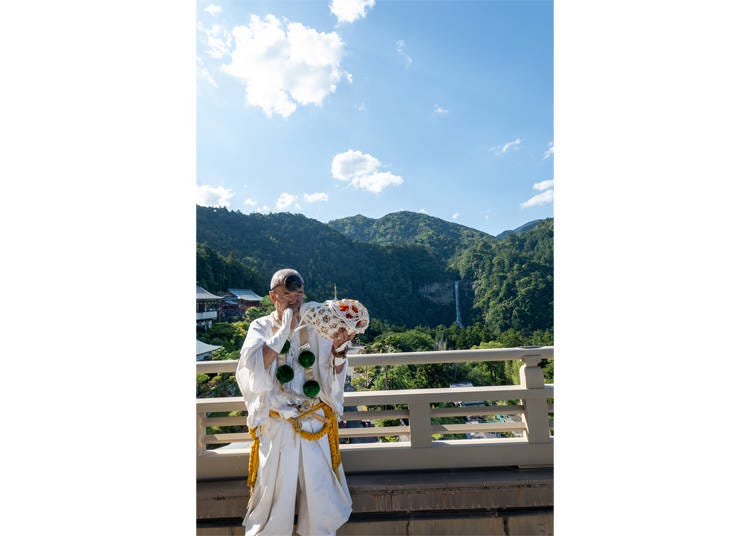
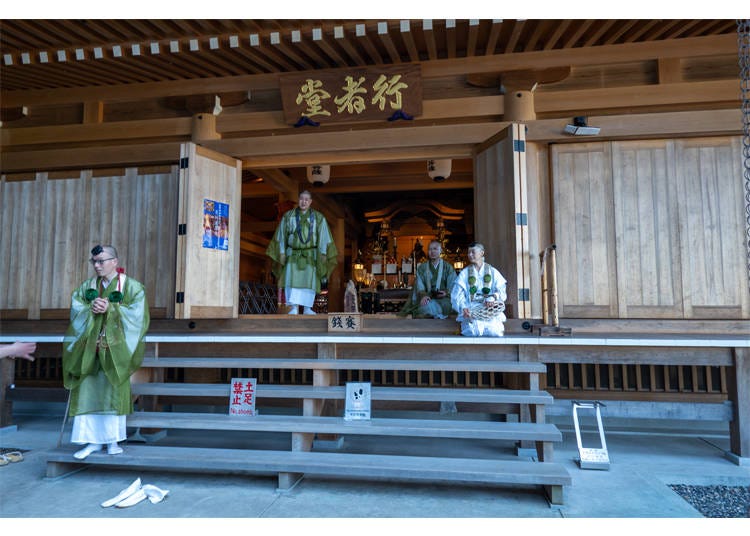
During my visit, I saw Buddhist monks moving through the grounds and heard the sound of the horagai, a conch shell traditionally used by mountain ascetics. The low, resonant sound traveled through the trees and added to the feeling that I had entered a place still connected to living religious traditions rather than a historical site preserved only for tourists.
-

-
Address
Nachisan, Nachikatsuura-cho, Higashimuro-gun, Wakayama, 649-5301
View Map -
Nearest Station
Kiikatsura Station (JR Kisei Line / JR Kinokuni Line)
27 minutes by bus
- Phone Number 0735-55-0321
-
Address
Nachisan, Nachikatsuura-cho, Higashimuro-gun, Wakayama, 649-5301
After seeing the waterfall from below, continue uphill toward Seiganto-ji Temple and Kumano Nachi Taisha. The route involves stairs and sloped paths, so comfortable shoes are important. The climb is manageable for most visitors, but it can feel strenuous in hot or humid weather.
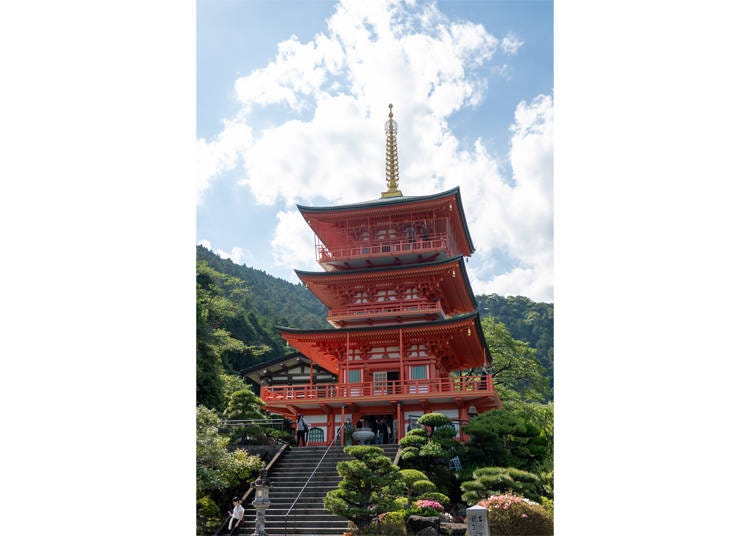
At the top, the three-story pagoda stands against the waterfall, creating one of Wakayama’s most recognizable views. Reaching the viewpoint after climbing through the temple complex made the scene feel more rewarding than simply arriving at a roadside observation area.
The Nachisan area also connects to the Kumano Kodo, the network of ancient pilgrimage routes that links the sacred sites of the Kii Peninsula. Pilgrims have traveled through these mountains for more than a thousand years seeking purification, renewal, and entry into the sacred world of Kumano.
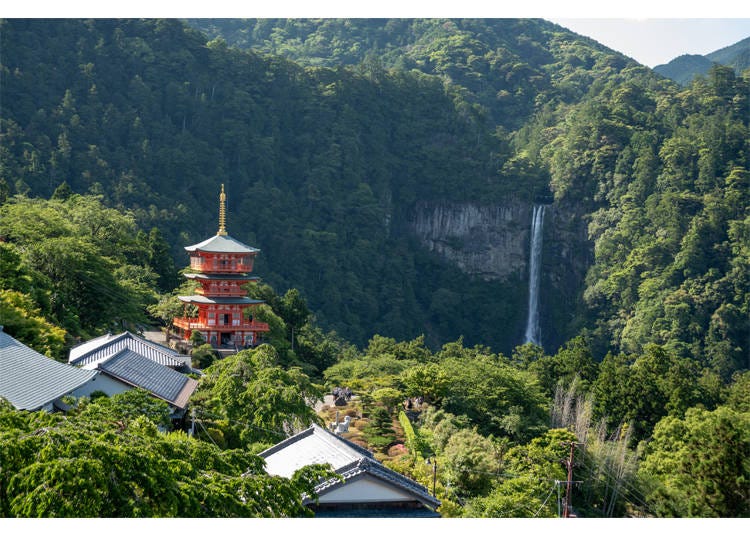
I would recommend allowing at least two to three hours for Nachi Falls and the upper shrine and temple area. I would recommend visiting the falls first given its proximity to the parking area, then hiking up the stairs towards the top of the mountain, stopping at the three-story pagoda along the way before getting to experience the breathtaking view of the temple complex with Nachi Falls in the background.
-
-
Address
8, Nachisan, Nachikatsuura-cho, Higashimuro-gun, Wakayama, 649-5301
View Map -
Nearest Station
Kiikatsura Station (JR Kisei Line / JR Kinokuni Line)
25 minutes by bus
- Phone Number 0735-55-0404
-
Address
8, Nachisan, Nachikatsuura-cho, Higashimuro-gun, Wakayama, 649-5301
Journey along Kumano Kodo: Kumano Hayatama Taisha
Only a 30-minute drive from Nachi Falls, I continued to Kumano Hayatama Taisha in Shingu, one of the three Kumano Grand Shrines and an important destination along the Kumano Kodo pilgrimage routes. Located near the mouth of the Kumano River in Shingu, the shrine has served as a center of worship for well over a thousand years and remains one of the most significant spiritual sites on the Kii Peninsula.
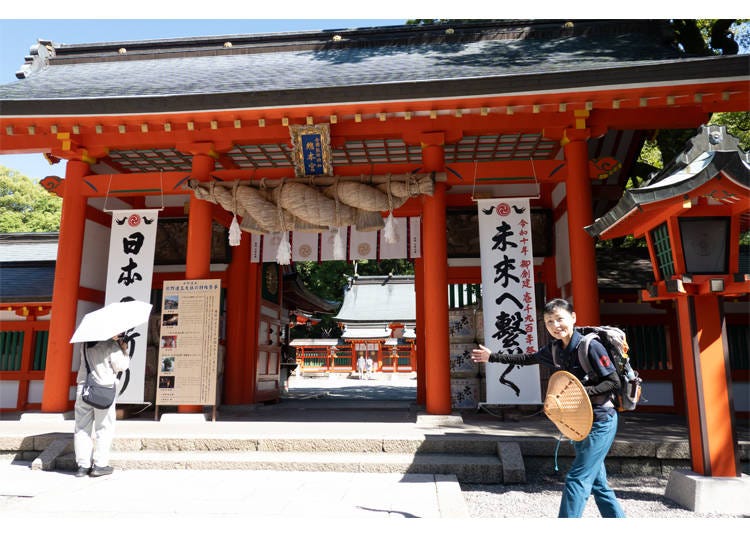
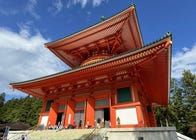
The atmosphere here felt different from Nachi. Rather than being set high on a dramatic mountainside, Hayatama Taisha is more accessible and open, with bright vermilion shrine buildings standing against the surrounding greenery. After the steep paths and expansive views at Nachi, the grounds offered a quieter and more concentrated experience. Walking beneath the entrance gate and into the shrine complex, I was struck by the contrast between the vivid architecture and the calmness of the surrounding trees.
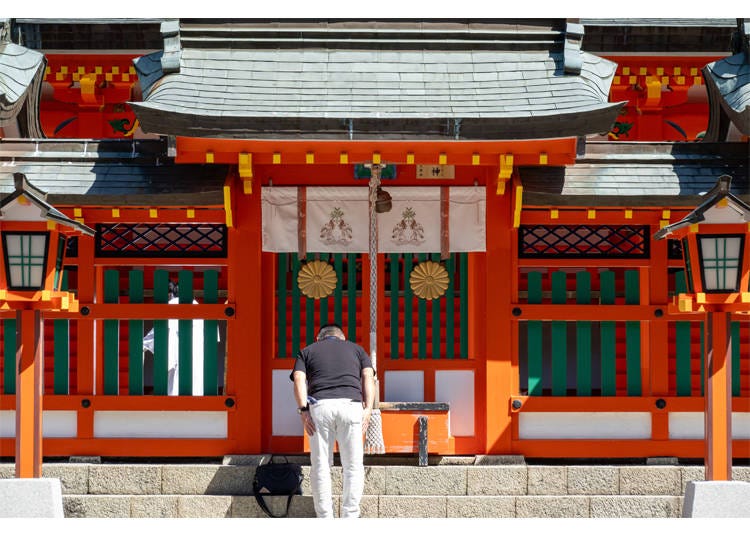
The shrine's bright orange vermilion buildings stand in beautiful contrast to the surrounding greenery, creating a peaceful atmosphere that feels distinct from the mountain temples of Nachi. A visit here offers another perspective on the spiritual history of Kumano and provides a deeper appreciation for the religious traditions that have shaped the Kii Peninsula for centuries.
A visit here does not require as much physical effort as Nachi, making it easier to explore at a slower pace. I would recommend approximately 30 to 45 minutes for the main shrine grounds which should give plenty of time for pictures and to check out souvenirs.
-
-
Address
1, Shinguu, Shinguu-shi, Wakayama, 647-0081
View Map -
Nearest Station
Shingu Station (JR Kisei Line / JR Kinokuni Line)
17 minutes on foot
- Phone Number 0735-22-2533
-
Address
1, Shinguu, Shinguu-shi, Wakayama, 647-0081
Hike Along the Kumano Sankeimichi Nakahechi
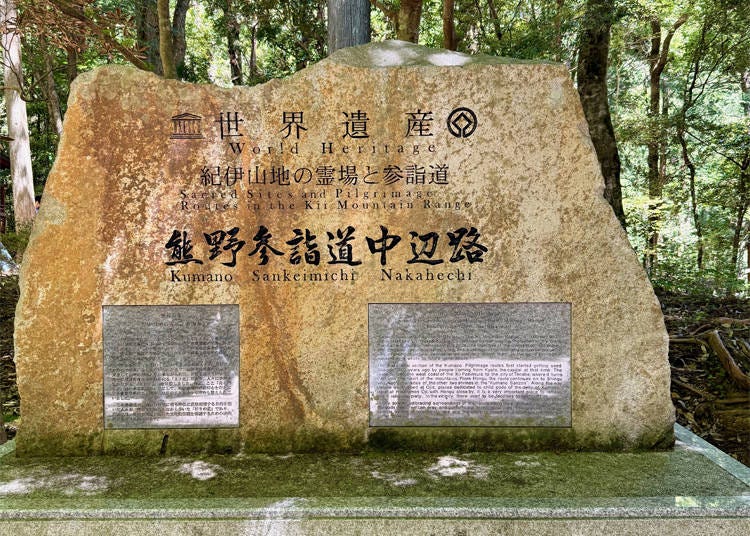
To understand the Kumano Kodo, it is important to walk at least a short portion rather than only visiting its major shrines by vehicle.
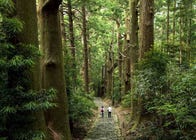
The Nakahechi route became the principal path used by imperial and aristocratic pilgrims traveling toward Kumano during the Heian Period. Today, sections of the route continue through cedar and cypress forests, past small shrines, moss-covered stones, and mountain communities.
From Kumano Hayatama Taisha, it took approximately an hour by car to reach the area where I began my walk. The drive itself was part of the experience, following the river through the mountains and offering scenic views along the way. After arriving at a nearby rest area, I walked about one kilometer to the trailhead before entering the forest.
Once on the trail, the trees muted much of the outside noise. The path felt cool and shaded, and the farther I moved from the road, the easier it became to imagine how isolated and physically demanding the journey must have felt for earlier pilgrims. Even though I walked only a short section, the experience gave me a much stronger appreciation for the scale of the pilgrimage routes and the landscape connecting Kumano’s sacred sites.
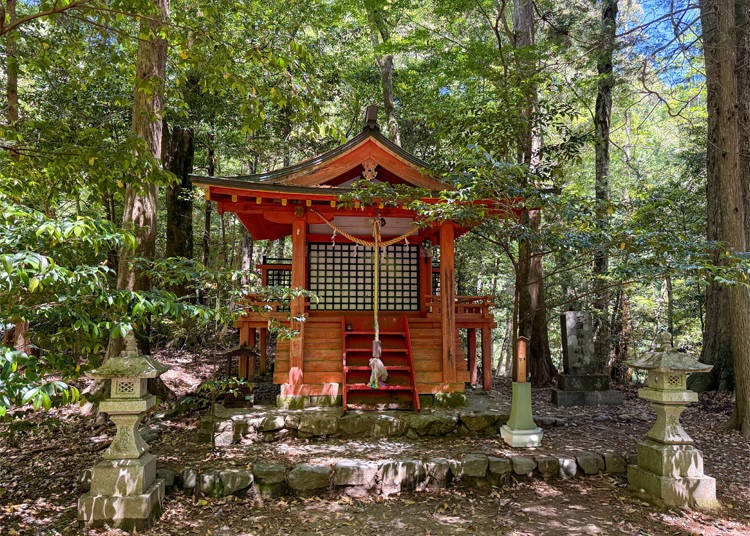
The Nakahechi is not a single short trail but a network of sections with varying distances and levels of difficulty. Travelers should choose a route based on their available time, fitness level, transportation, and weather conditions. For a brief introduction, allow approximately one to two hours, including the walk from the parking area to the trailhead. More serious hikers should arrange transportation, luggage forwarding, and accommodation in advance rather than treating the route as an unplanned stop as it takes approximately 18 hours to walk the entire trail..
Visiting the shrines explains the history and spiritual importance of Kumano, but walking beneath the trees provides a more tangible understanding of the physical journey that connected them.
Kumano Hongu Taisha and the Great Torii Gate
The journey continued toward Kumano Hongu Taisha, another of the three Kumano Grand Shrines and one of the central destinations of the pilgrimage routes.
The approach through the forest created a quiet, reflective atmosphere. Compared with more brightly decorated shrines, the dark wooden buildings of Hongu Taisha felt restrained and closely integrated with the trees surrounding them.
After visiting the main shrine, continue to Oyunohara, the original location of Kumano Hongu Taisha. The shrine once stood on a sandbank where several rivers meet before severe flooding led to its relocation in the late 19th century.
Today, the original site is marked by the Oyunohara Great Torii Gate. Standing approximately 34 meters high, it is the largest torii gate in Japan. Its scale becomes clearer as you approach across the open fields, where the structure rises above the surrounding landscape with mountains visible behind it. The massive structure marks the original site of Kumano Hongu Taisha and serves as a powerful symbol of entry into sacred space. Surrounded by mountains and open countryside, the gate creates an unforgettable contrast between human craftsmanship and the natural landscape.
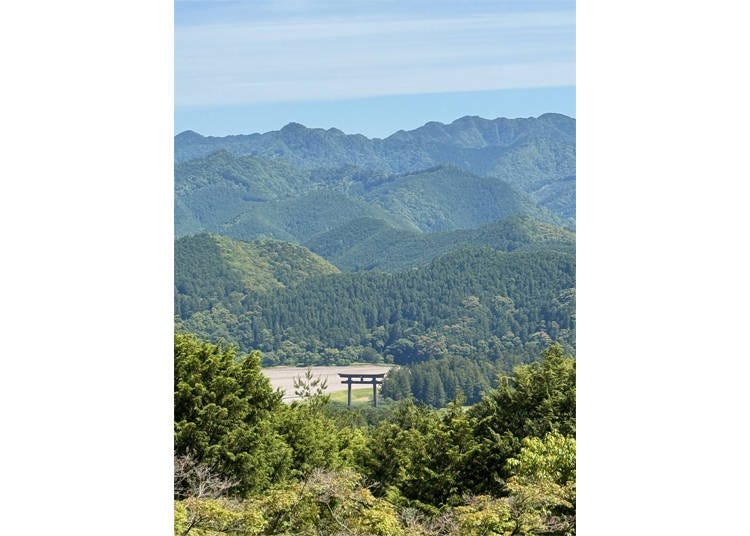
A short distance away lies Kumano Hongu Taisha, one of the three Grand Shrines of Kumano and a central destination of the Kumano Kodo pilgrimage. Nestled among forested hills, the shrine offers a serene atmosphere that encourages visitors to slow down and reflect. Whether you come for the history, spirituality, or simply the scenery, the combination of forest trails, panoramic views, the Great Torii Gate, and Kumano Hongu Taisha makes this area one of the highlights of any journey through the Kii Peninsula.
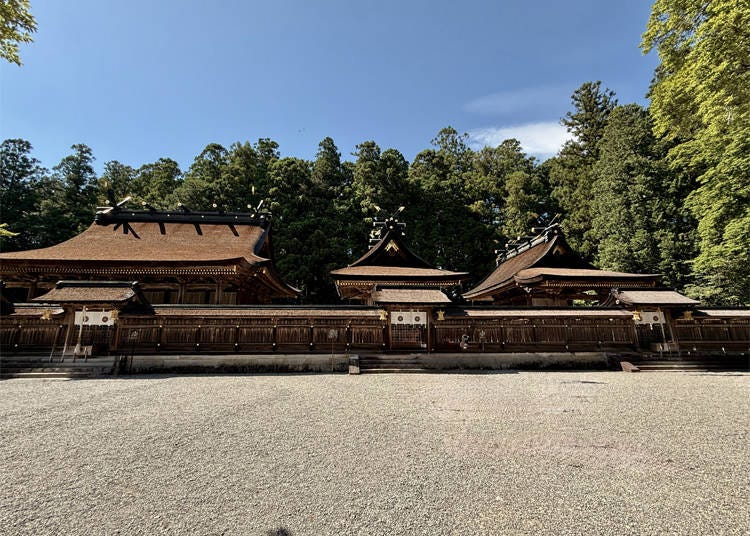
Allow approximately 90 minutes to two hours for Kumano Hongu Taisha and Oyunohara, depending on how much time you spend hiking, praying, taking photographs, and exploring the surrounding area.
Can You Visit All These Places Without a Car?
The short answer is that it is possible to visit the major Kumano sites using public transportation, but not all of them comfortably within the same day.
Nachi Falls is connected to Kii-Katsuura Station by local bus (Kumano Gobo Nankai Bus #31; about 24 minutes), while Kumano Hayatama Taisha is accessible through Shingu Station (about a 20-minute walk). Kumano Hongu Taisha and the Nakahechi trail areas are farther inland and require more careful coordination.
For travelers following this two-day itinerary, I recommend one of the following:
- Rent a car in Shirahama (e.g. Toyota Rent-a-Car or JR Rent-a-Car), Kii-Katsuura (JR Rent-a-Car), or even Wakayama City (e.g. Nippon Rent-a-Car, Orix Rent-a-Car, Toyota Rent-a-Car).
- Join an organized or private tour that includes transportation.
- Focus on Nachi Falls and Shingu for one day, then visit Hongu and the Nakahechi area on a separate day.
- Stay overnight in the Kumano region rather than returning immediately to Osaka or Shirahama.
On my trip, having arranged transportation allowed me to move efficiently between the sites without planning each bus connection. Independent travelers should expect the journey to take longer and avoid building an itinerary that depends on perfectly timed rural bus transfers.
Why Wakayama Is Kansai's Most Rewarding Weekend Escape
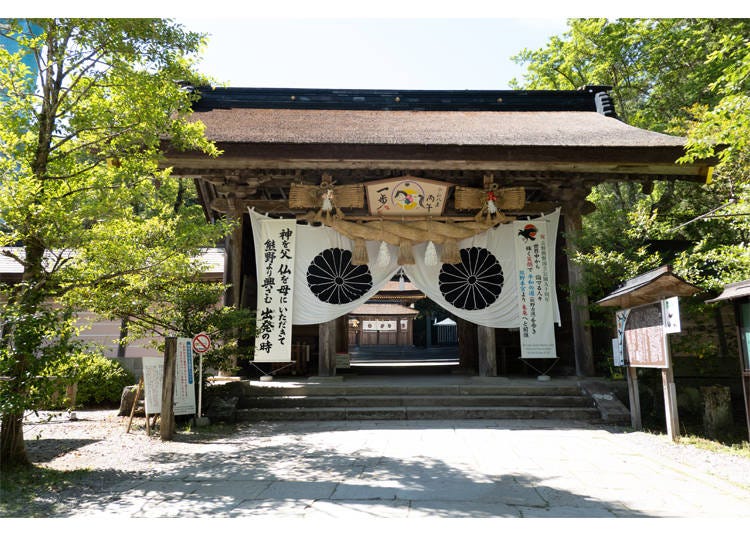
While many travelers focus their Kansai itineraries on Kyoto, Osaka, and Nara, the Kii Peninsula offers a side of Japan that feels worlds away from the crowds. Experiencing the region in person showed me that its appeal comes from the transitions between places: from airport to sea cliffs, from resort town to fishing market, from coastal train to mountain road, and from busy daily life into the quiet forests of Kumano.
The itinerary is ambitious, particularly for travelers relying entirely on public transportation. With a rental car, tour, or carefully planned overnight stay, however, it provides an experience that feels far removed from the standard Kansai route. The remarkable mix of nature and living spiritual traditions across the Kii Peninsula made this an unforgettable journey. The places I visited provide a great starting point, but travelers will find countless scenic viewpoints, small towns, shrines, and trails worth stopping at along the way—many of which I wished I had more time to explore. Follow this itinerary as a guide, but be sure to leave room to slow down, make spontaneous stops, and create your own journey through the region.
For those looking to venture beyond the typical tourist destinations, a weekend in Wakayama is well worth the journey. Rich in natural beauty, spiritual heritage, and authentic local experiences, the Kii Peninsula remains one of Japan's most rewarding and underrated destinations.
- Area
- Category
*Prices and options mentioned are subject to change.
*Unless stated otherwise, all prices include tax.

Popular Tours & Activities
Recommended places for you
-
Abeno Harukas
Landmarks
Shinsekai, Tennouji, Tsuruhashi
-
Kiyomizu-dera Temple
Temples
Gion, Kawaramachi, Kiyomizu-dera Temple
-

Jukuseiniku-to Namamottsuarera Nikubaru Italian Nikutaria Sannomiya
Izakaya
Kobe, Sannomiya, Kitano
-
ISHIDAYA Hanare
Yakiniku
Kobe, Sannomiya, Kitano
-
Goods
Yoshida Gennojo-Roho Kyoto Buddhist Altars
Gift Shops
Nijo Castle, Kyoto Imperial Palace
-
Tenryu-ji Temple
Temples
Arashiyama, Uzumasa
-

Osaka After Dark: The Ultimate Rooftop & Riverside Beer Garden Guide
by: Guest Contributor
-

August Events in Kansai: Fun Festivals, Food, and Things to Do in Kyoto & Osaka
-
Travel Hands-Free from Kansai Airport (KIX) with Yamato Transport’s New Counter
by: Guest Contributor
-
Top-Booked in Japan: Must-Try Sushi in Osaka for First-Time Visitors
by: Guest Contributor
-
10 Recommended Apartment Hotels in Kyoto for Long Stays and Family Trips
by: Yotsuka Hizuki
-
(Summer Exclusive) Kyoto's Kamogawa & Osaka's Kitahama Terraces: 5 Budget-Friendly "Kawadoko" Cafes & Restaurants to Beat the Heat in Style!
by: Guest Contributor
Inspiration for Accommodations
-
Fine Japanese Dining in Kyoto! Top 3 Japanese Restaurants in Kiyamachi and Pontocho Geisha Districts
-
(Video) Walking Tour along Narita Omotesando - Quaint Historical Village near Narita Airport!
by: Victor Gonzalez
-

Why Osaka Tennoji Zoo is So Popular with Foreign Tourists (Guide & Highlights)
-

6 Surprisingly Cheap Things in Japan
-
Kyoto's Hidden Treasures Open This Winter! Enjoy Exclusive Access to 15 Rare Cultural Sites (Jan-Mar 2026)
by: Guest Contributor
-

Kichijoji – Explore Tokyo’s Top-Rated Stylish Suburb in Half a Day!
- #best gourmet Osaka
- #things to do Osaka
- #what to do in kyoto
- #what to bring to japan
- #best gourmet Kyoto
- #new years in Osaka
- #what to buy in nanba
- #Visiting Osaka
- #onsen tattoo friendly arima
- #daiso
- #Visiting Kyoto
- #best japanese soft drinks
- #japanese fashion culture
- #japanese convenience store snacks
- #japanese nail trends