






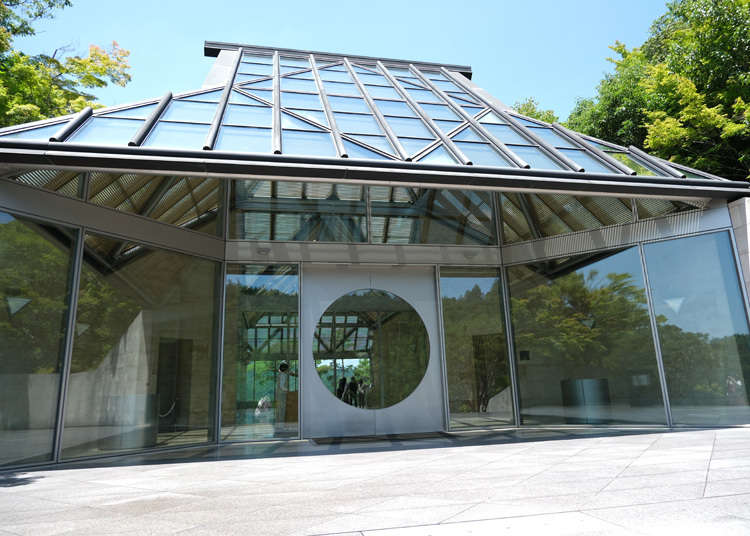
Kansai Hidden Gem: Step Into a Real-Life Shangri-La at MIHO MUSEUM, I.M. Pei's Stunning Mountain Masterpiece
- Written by: Wemmy Chau
If you’re traveling around Kansai and craving a break from the city, MIHO MUSEUM is well worth the detour into the mountains of Shiga. About an hour from Kyoto, this spectacular museum was designed by internationally renowned architect I.M. Pei, best known for the Louvre’s glass pyramid.
I had wanted to visit ever since learning that its design was inspired by the Chinese tale The Peach Blossom Spring, in which a traveler discovers an idyllic world hidden beyond a mountain passage. Seeing it in person, I quickly realized that the museum’s appeal goes far beyond its impressive collection of art from around the world. The real magic lies in the journey itself, as architecture, nature, light, and landscape come together to create a space that feels almost otherworldly.
(Main image credit: Wemmy/LIVE JAPAN)
(This article contains affiliate links.)
- Table of Contents
-
- The Journey In: Through a Dreamlike Tunnel and Suspension Bridge
- Architecture as Art: I.M. Pei’s Masterful Play of Light
- Exploring the Galleries: Treasures from Across the Silk Road
- A Taste of Nature: Dining and Cafés at MIHO MUSEUM
- Take a Piece Home: Stylish Souvenirs from the Museum Shop
- Plan Your Visit: Access, Opening Days & Essential Info
- Set Aside Half a Day for a Peaceful Escape
The Journey In: Through a Dreamlike Tunnel and Suspension Bridge
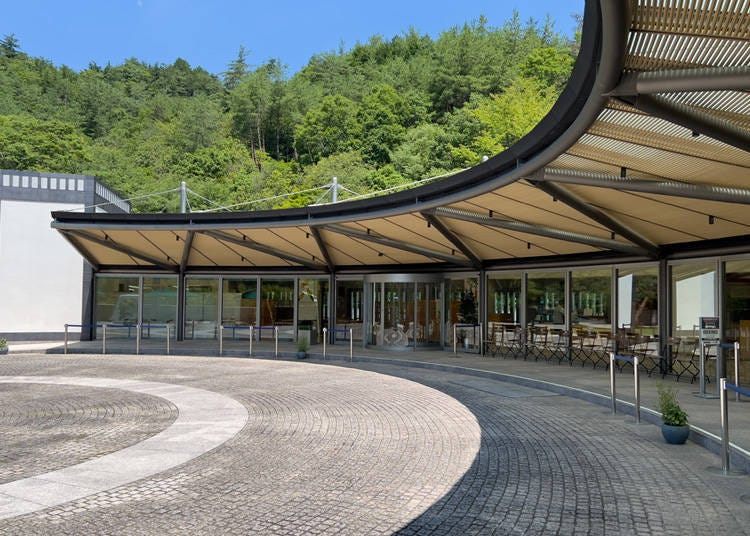
Reaching this hidden “Peach Blossom Spring” is part of the experience. Walking from the reception building toward the main museum, I quickly realized that the approach has been deliberately drawn out, turning the journey itself into something of a ritual.
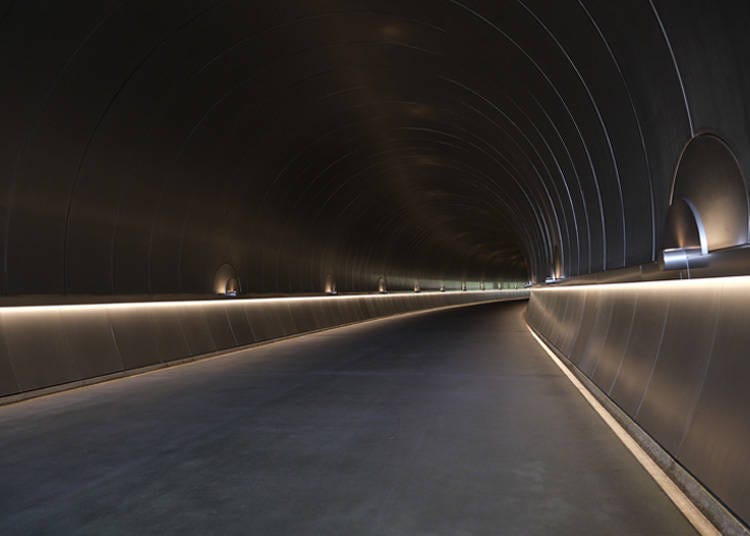
Stepping into the sleek, metallic tunnel, I followed its soft glow deeper into the mountain. With barely a sound around me, it felt less like walking to a museum and more like passing through a portal into another world.
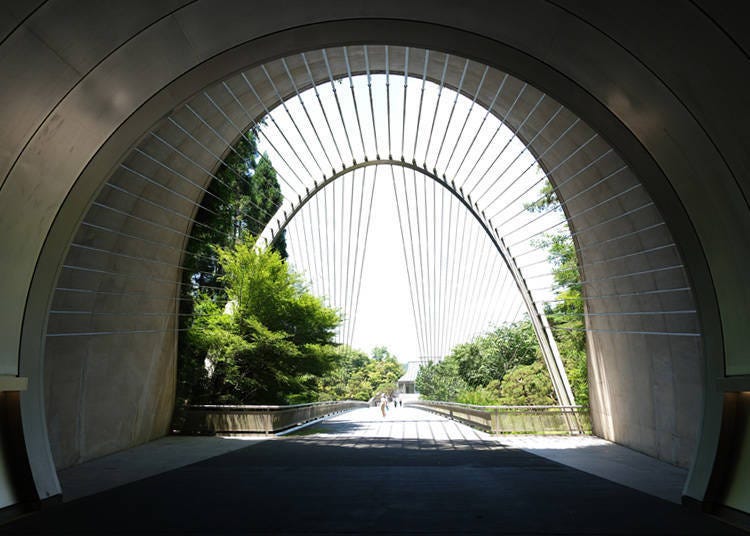
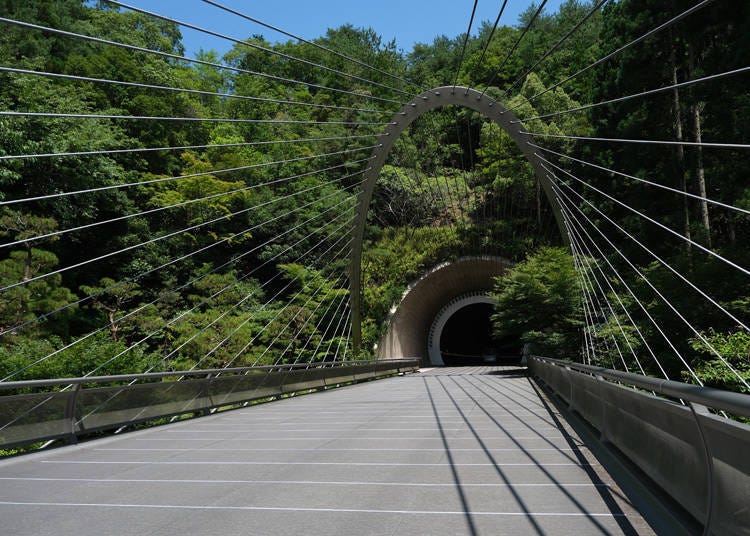
Just as I reached the end of the tunnel, a dramatic cable-stayed bridge came into view, with the museum suddenly revealing itself beyond it like the hidden paradise of The Peach Blossom Spring. The transition from the enclosed tunnel to the wide-open scenery is genuinely striking.
I still remember the moment I first looked out from the tunnel entrance and instinctively reached for my camera. It is easily one of MIHO MUSEUM’s most photogenic spots, and a shot you definitely will not want to miss.
Architecture as Art: I.M. Pei’s Masterful Play of Light
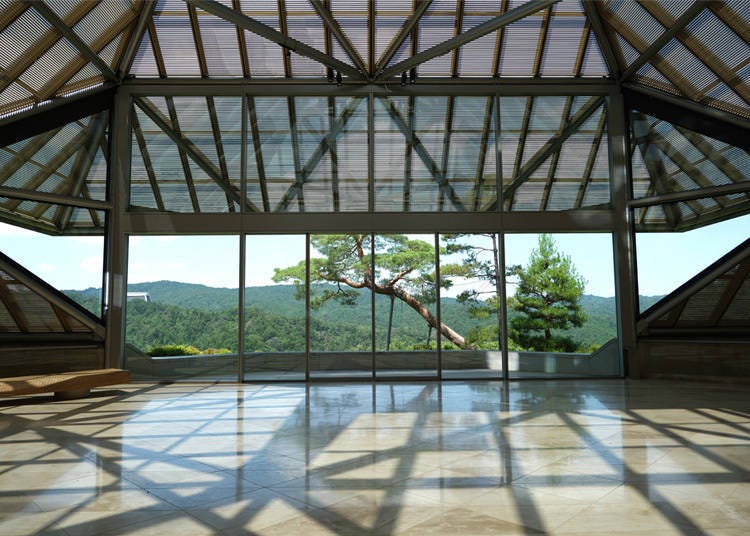
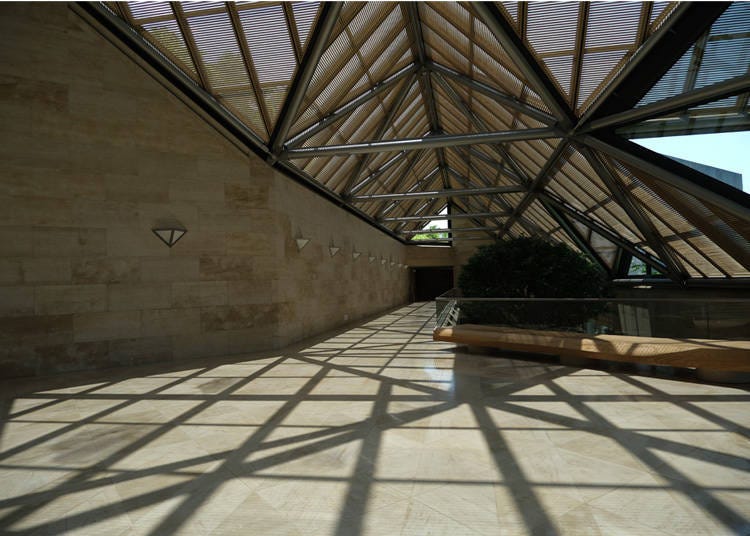
Stepping inside MIHO MUSEUM, I immediately understood why the building itself is considered part of the experience. To preserve the surrounding landscape, I.M. Pei designed roughly 80% of the structure below ground, allowing the museum to sit quietly within the mountains rather than dominate them.
What caught my eye first was the roof. Glass panels and geometric steel framing create a striking sense of openness, while sunlight filters through and washes across the warm, pale limestone below. As the light shifts throughout the day, the entire space seems to change with it.
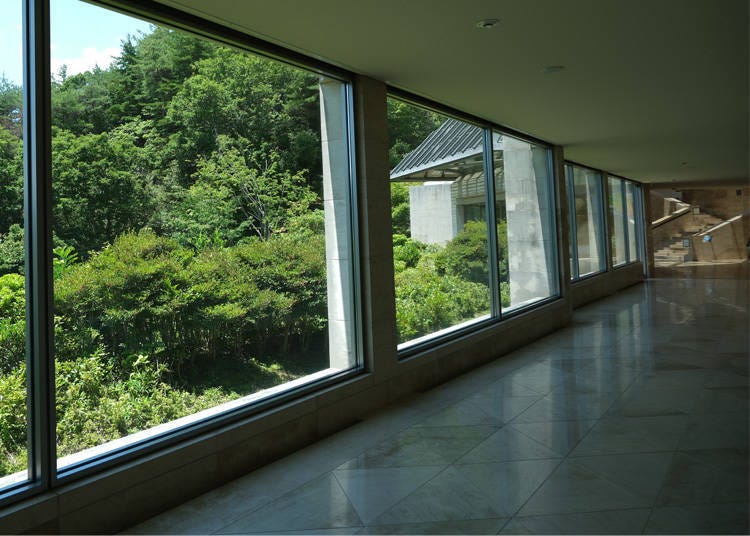
The lobby also makes beautiful use of shakkei, or “borrowed scenery,” framing the greenery outside through expansive windows. After exploring the galleries, I found myself lingering here for a while, simply sitting and taking in the view. Surrounded by light, stone, and forest, it is an unexpectedly peaceful place to slow down.
Exploring the Galleries: Treasures from Across the Silk Road
The galleries are spacious and easy to explore, making it comfortable to take your time and move at your own pace. MIHO MUSEUM’s permanent collection feels almost like a journey along the Silk Road, bringing together ancient art from Egypt, West Asia, Greece, Rome, South Asia, China, and Japan.
Among the highlights are several of the museum’s best-known treasures, including an ancient Egyptian falcon-headed deity, remarkably vivid Roman wall paintings, and a finely detailed standing Buddha from Gandhara. Each offers a fascinating glimpse into the cultures and artistic traditions that once flourished across this vast region.
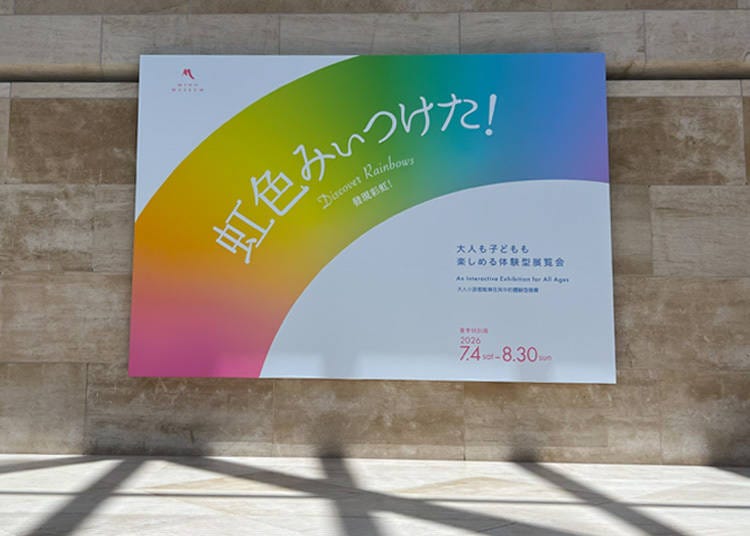
In addition to its permanent collection, MIHO MUSEUM regularly hosts special exhibitions. During my visit, I happened to catch the summer exhibition Niji Miitsuketa! (Found a Rainbow!), running through August 30. If your visit falls within the exhibition period, it is well worth setting aside a little extra time to explore its colorful, playful displays.
One important thing to know is that photography is not permitted inside the exhibition galleries. Rather than reaching for your phone, take the opportunity to slow down and really appreciate these centuries-old works up close. Afterwards, spend some time wandering through the museum’s naturally lit public spaces, where subtle shifts in sunlight continually transform the stone, glass, and surrounding scenery.
A Taste of Nature: Dining and Cafés at MIHO MUSEUM
After exploring the galleries, make time for something to eat. MIHO MUSEUM places a strong emphasis on natural ingredients, particularly produce grown using Shumei Natural Agriculture, a farming method that avoids pesticides and fertilizers.
I tried both of the museum’s dining spots during my visit, and they turned out to be a lovely extension of the experience, with simple, thoughtfully prepared dishes that feel perfectly at home in the museum’s peaceful natural setting.
Pine View Café: Light Bites with a Mountain View
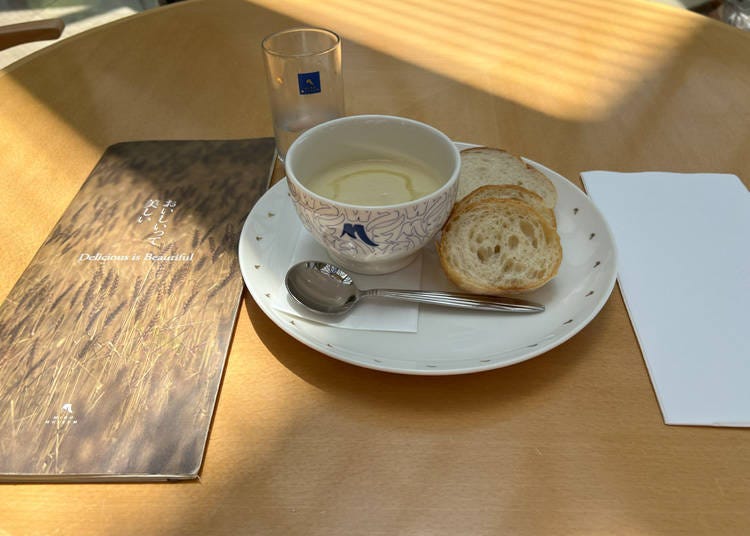
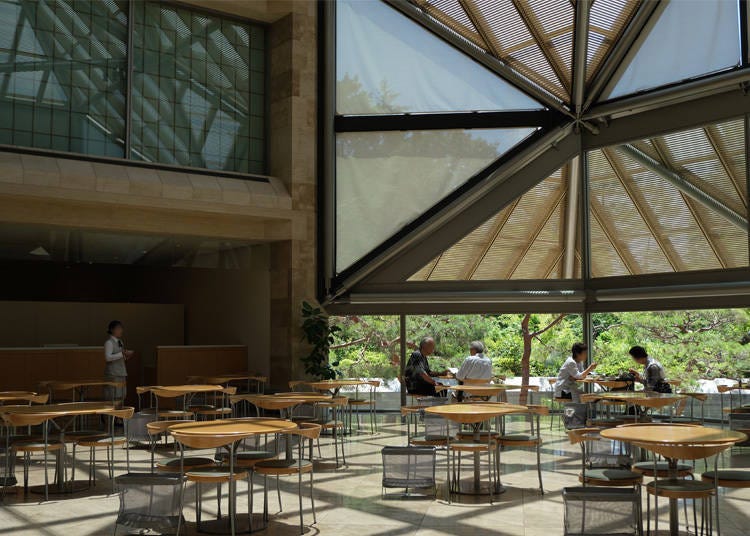
Pine View Café has inviting window seats overlooking the surrounding mountains. I tried the vegetable soup with bread, and the soup was rich, naturally sweet, and packed with the flavor of the vegetables themselves.
Paired with crisp, toasted bread and a view of the greenery outside, it made for a simple but wonderfully satisfying break.
Peach Valley Restaurant: Signature Onigiri Made Simply and Beautifully
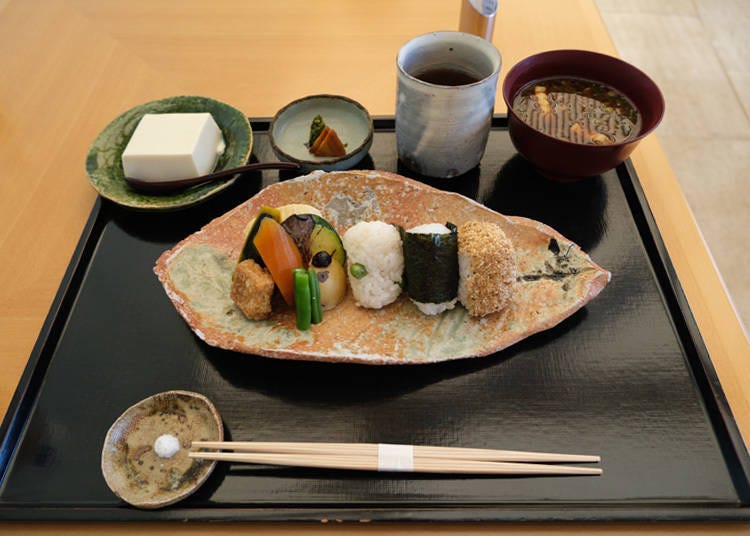
For a proper meal, I highly recommend Peach Valley’s signature Omusubi-zen set. The stars of the meal are freshly shaped rice balls made to order, using rice grown around Japan according to Shumei Natural Agriculture principles.
Served warm and fragrant with natural sea salt from Miyakojima, the set lets you enjoy three different varieties of onigiri, each highlighting the simple sweetness and flavor of the rice itself.
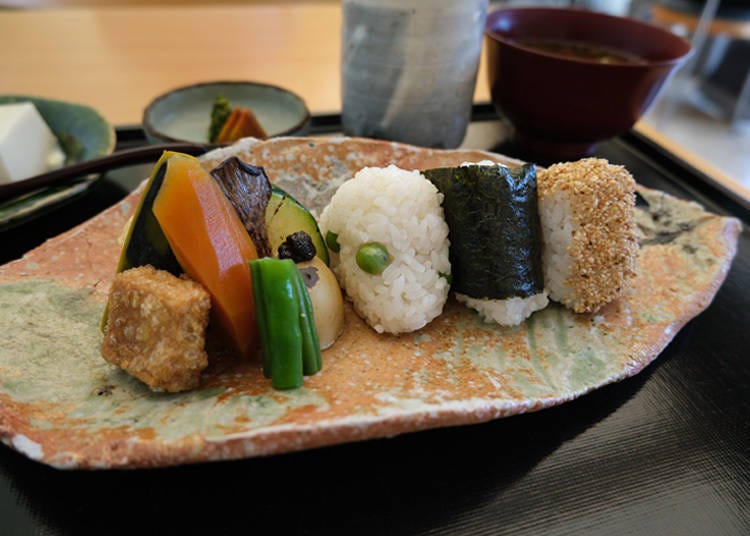
The side dishes are just as thoughtfully prepared. The set comes with seasonal vegetables that highlight their natural flavors, a fragrant miso soup made with ichiban dashi first-brew broth, and the restaurant’s well-known MIHO tofu.
These are all familiar staples of Japanese home cooking, but the quality and simplicity of the ingredients make the meal feel surprisingly special. It is deeply satisfying without being heavy, leaving you pleasantly full and refreshed.
Take a Piece Home: Stylish Souvenirs from the Museum Shop
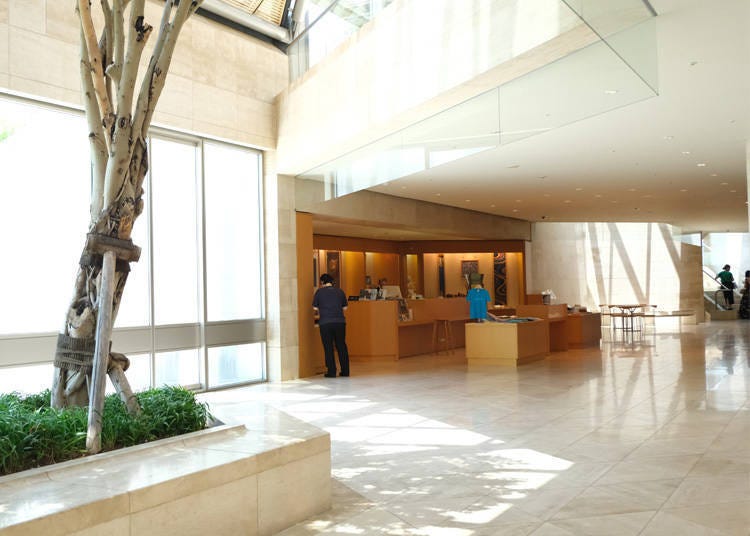
No museum visit is complete without a browse through the gift shop, and MIHO MUSEUM’s is especially well curated. Alongside exhibition-related items, you’ll find a wide range of tasteful original souvenirs that reflect the museum’s distinctive design sensibility.
Look out for stylish stationery, postcards featuring the architecture and collection, minimalist cups and saucers bearing the MIHO MUSEUM logo, versatile T-shirts, art books, music CDs, and more. It is an easy place to find a thoughtful keepsake from your visit.
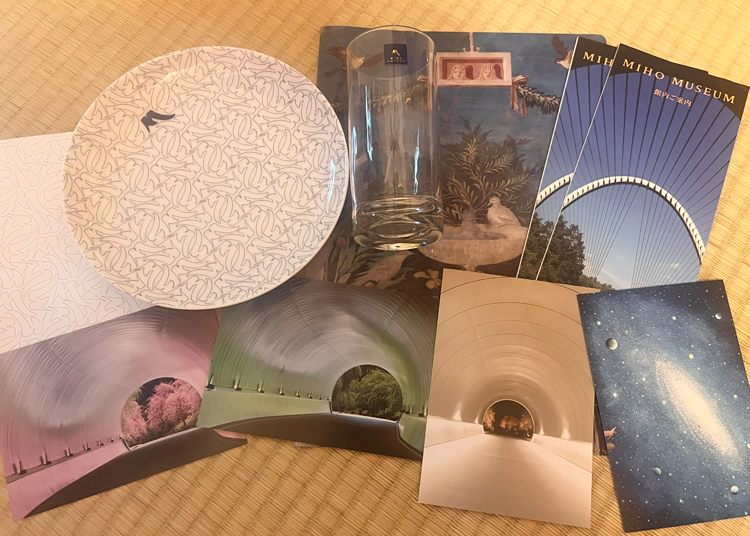
What surprised me most was how reasonably priced many of the items were, despite their beautiful design and high-quality feel. From souvenirs inspired by the museum’s architecture and shifting light to pieces based on its artworks, everything reflects MIHO MUSEUM’s refined aesthetic. I certainly did not leave empty-handed.
You can also pick up foods made using the museum’s favored natural farming methods. They make particularly thoughtful gifts to take home, letting you carry a little of this hidden mountain retreat with you even after your visit.
Plan Your Visit: Access, Opening Days & Essential Info
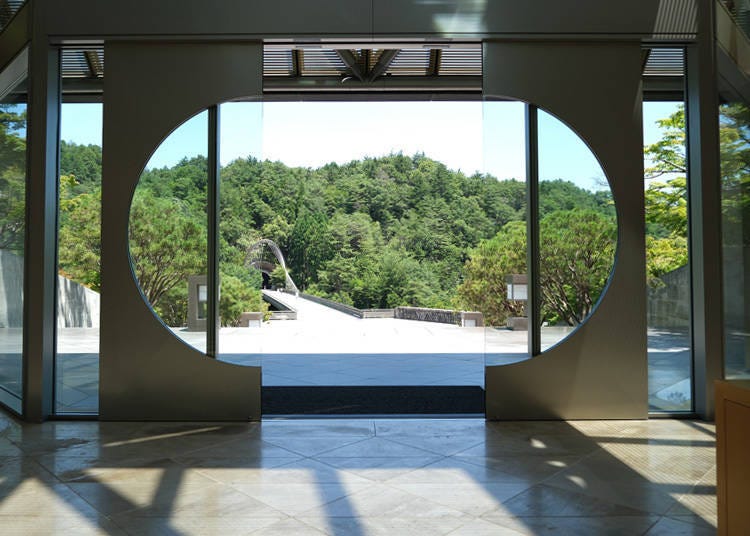
As you might expect from a museum tucked away in the mountains, a little advance planning goes a long way. Here are the key details to know before setting out for MIHO MUSEUM.
- Getting There
- The most common route is to take the JR Biwako Line to Ishiyama Station, then transfer to a Teisan Bus. The bus ride to MIHO MUSEUM takes about 50 minutes.
- Consider a Bus Day Tour
- If you are not driving, a bus day tour through platforms such as Klook or KKday can be a very convenient option. You can skip the hassle of multiple transfers while also visiting other popular destinations around Lake Biwa or Omihachiman, making it an easy way to see more of Shiga in a single day.
- Check Opening Dates Before You Go
- One important thing to know is that MIHO MUSEUM closes for an extended period in winter and may also close between exhibitions. Always check the latest opening calendar on the official website before making the trip, especially since the museum is quite a distance from central Kyoto.
- Excellent Multilingual Support
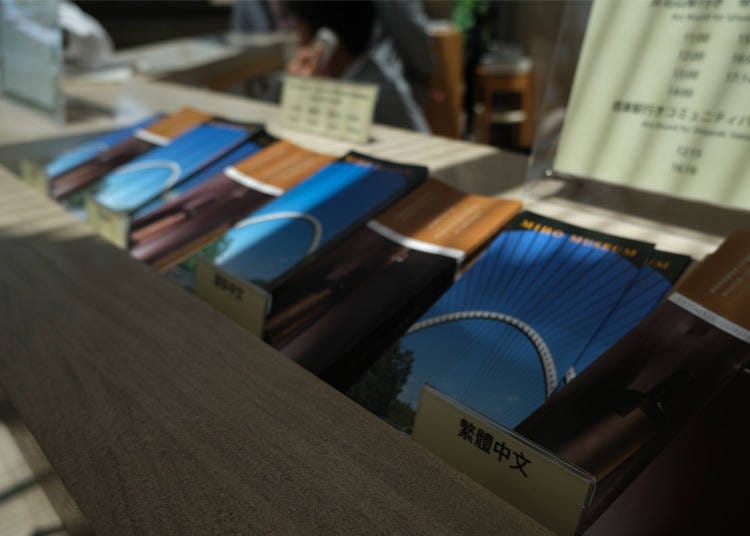
- MIHO MUSEUM is very welcoming to international visitors. Free museum guides are available in English, Traditional and Simplified Chinese, Korean, German, French, Spanish, and Italian.
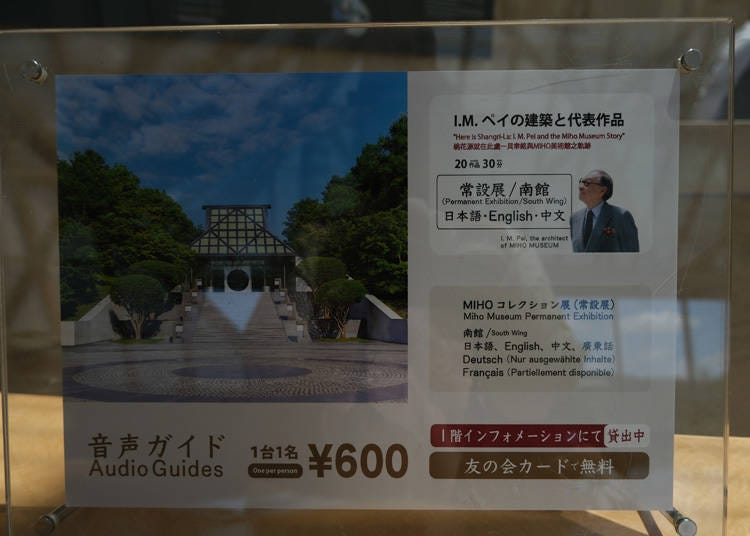
Paid audio guides are also available in Japanese, English, Chinese, German, French, and even Cantonese. With such extensive multilingual support, it is clear that the museum regularly welcomes visitors from around the world.
Set Aside Half a Day for a Peaceful Escape
Sometimes the best part of traveling is simply finding somewhere that lets you slow down. A visit to MIHO MUSEUM feels far removed from the bustle of the city and may completely change the way you think about a museum visit.
Next time you are exploring Kansai, consider setting aside half a day to experience it for yourself. With remarkable architecture, art, and nature coming together in one tranquil setting, MIHO MUSEUM offers a memorable escape that feels every bit as restorative as it is beautiful.
-
MIHO MUSEUMMIHO MUSEUM
-
Address
300 Tashiro Momodani, Shigaraki-cho, Koka City, Shiga Prefecture
View Map
-
Address
300 Tashiro Momodani, Shigaraki-cho, Koka City, Shiga Prefecture
▼ More Articles About Shiga ▼
LIVE JAPAN
Originally from Hong Kong, she graduated from university with a degree in English and Japanese before moving to Chiba, Japan, in 2015. With her 10 years of experience living in Japan, she excels at discovering unique, off-the-beaten-path information that you won't find in typical travel guides. Specializing in art, seasonal scenery, and theme parks, she provides the latest and most useful travel information. She has experience writing for major travel media outlets and regional tourism websites and has also obtained JLPT Level 1 certification. She hopes to offer reliable travel information from a unique Hong Kong perspective.
- Area
- Category
*Prices and options mentioned are subject to change.
*Unless stated otherwise, all prices include tax.

Popular Tours & Activities
Recommended places for you
-
Osaka Aquarium KAIYUKAN
Zoos, Aquariums & Botanical Gardens
USJ, Nanko Port
-
Yodobashi Camera Multimedia Umeda Store
Shopping Malls
Umeda, Osaka Station, Kitashinchi
-
Jukuseiniku-to Namamottsuarera Nikubaru Italian Nikutaria Sannomiya
Izakaya
Kobe, Sannomiya, Kitano
-
ISHIDAYA Hanare
Yakiniku
Kobe, Sannomiya, Kitano
-
Goods
Yoshida Gennojo-Roho Kyoto Buddhist Altars
Gift Shops
Nijo Castle, Kyoto Imperial Palace
-
Tsutenkaku Tower
Landmarks
Shinsekai, Tennouji, Tsuruhashi
-
Missed the Sumo Tournament? 5 Best Shows in Osaka & Kyoto
-
Ad
New Destination! UNIQLO's New Global Flagship Store Comes to Kyoto in November 2026
-
Shopping in Osaka? Tourists Can Now Get Up to 3,000 Yen Off at Namba Stores
by: Guest Contributor
-
How to Ride Trains Like a Local in Kansai: Etiquette, Railway Culture & Historic Stops
by: Guest Contributor
-
Top 3 Bus Tours to Arashiyama & Kinkaku-ji (Amanohashidate Included)
by: Hyungil Kim
-
Travel Hands-Free from Kansai Airport (KIX) with Yamato Transport’s New Counter
by: Guest Contributor
Inspiration for Accommodations
-
Fine Japanese Dining in Kyoto! Top 3 Japanese Restaurants in Kiyamachi and Pontocho Geisha Districts
-
Healthcare in Japan for Tourists: What to Do When You Get Sick or Injured in Japan
-
Hoshinoya Kyoto: This Incredible Japanese Hotel Welcomes You By Boat on a Sakura-Filled River
-
Sightseeing Highlights: Experience the Appeal of Kyoto Geisha Culture
-

Popular Food at Universal Studios Japan
by: WESTPLAN
-
Kichijoji – Explore Tokyo’s Top-Rated Stylish Suburb in Half a Day!
- #best gourmet Osaka
- #things to do Osaka
- #what to do in kyoto
- #what to bring to japan
- #best gourmet Kyoto
- #new years in Osaka
- #what to buy in nanba
- #Visiting Osaka
- #onsen tattoo friendly arima
- #daiso
- #Visiting Kyoto
- #best japanese soft drinks
- #japanese fashion culture
- #japanese convenience store snacks
- #japanese nail trends