





Just a 35-minute drive from Memanbetsu Airport, the Kitami region of eastern Hokkaido is best known today for its vast landscapes, fresh seafood, and agricultural bounty. Yet few visitors realize that this area was once at the center of the global mint industry. At its peak, Kitami produced an astonishing 70% of the world's mint, earning international recognition and helping fuel the region's development.
In this Hokkaido travel feature, we explore the legacy of Kitami Mint, tracing the history of the industry that shaped the region and discovering how mint continues to influence local culture and everyday life today.
*Information in this article is current as of June 2025. Please check the official website for the latest updates before visiting.
The Kitami Region: Accounting for 70% of Global Mint Production
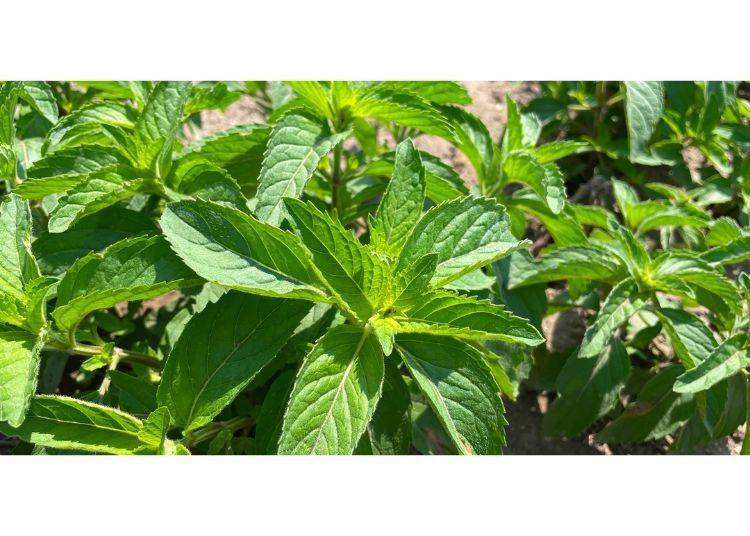
Mint cultivation in the Kitami region began in 1896, when rootstocks were brought from Yamagata Prefecture. At the time, mint was considered a highly valuable cash crop, offering farmers far greater returns than many traditional grains and vegetables. As production expanded, Kitami grew into one of the world's leading centers for mint cultivation, helping shape the region's economy and identity for decades.
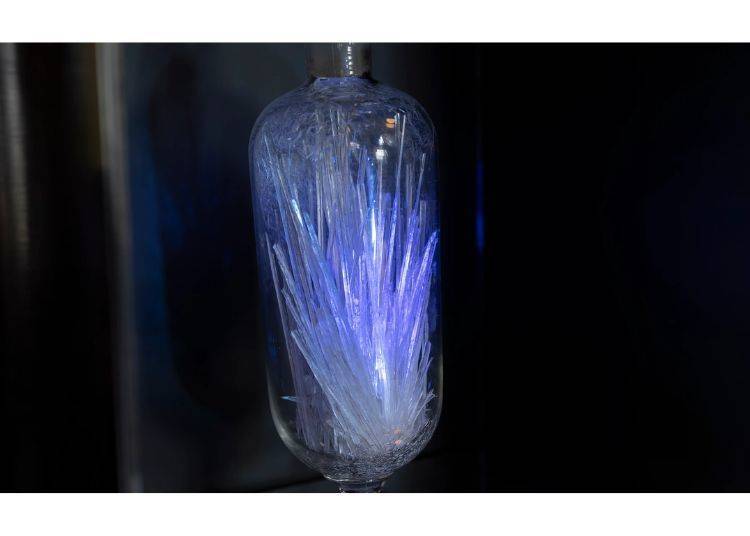
One of the region's most valuable products was menthol crystal, known in Japanese as hakkano. Extracted from Japanese mint grown in Kitami, these crystals were widely used in medicines and other products, creating strong demand both in Japan and overseas.
As demand grew, so did the region's mint fields. By 1939, mint cultivation in the Kitami area had expanded to approximately 20,000 hectares, making it one of the world's leading mint-producing regions. During this period, Kitami earned a reputation as the center of Japan's mint industry and played a significant role in supplying menthol to international markets.
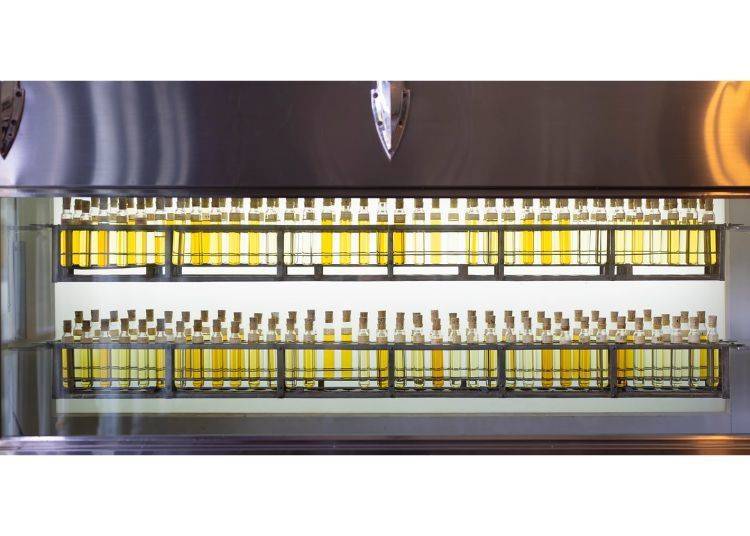
An interesting local story concerns the origin of the Japanese word for mint, "hakka" (薄荷). Before shipment, harvested mint leaves were steamed and processed into concentrated crude mint oil, greatly reducing their weight and making them far easier and cheaper to transport than crops such as grains or vegetables.
According to one popular theory, the characters 薄荷 came to be associated with mint because the processed product was considered a form of "light cargo" (usui ni in Japanese). While the exact origin of the word is debated, the story remains a fascinating glimpse into the important role mint once played in the region's economy.
A Certified Industrial Heritage of Japan: Kitami Mint Commemorative Hall & Mint Distillation Hall
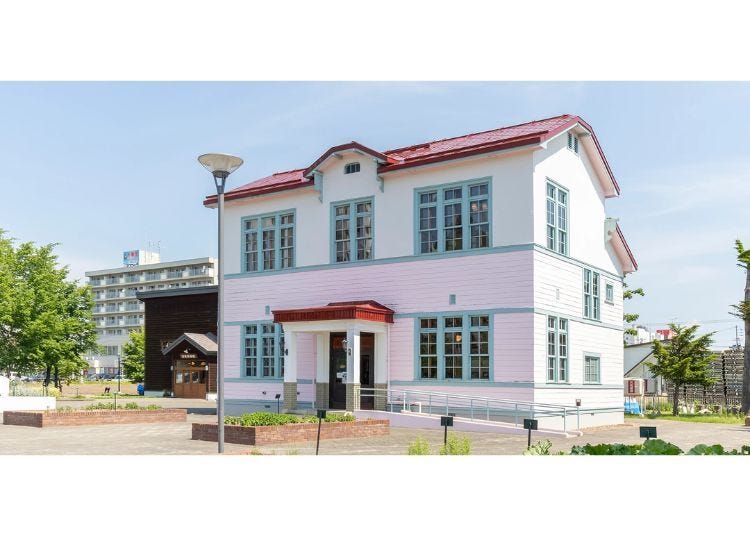
To learn more about Kitami's mint industry, be sure to visit the Kitami Mint Memorial Museum.
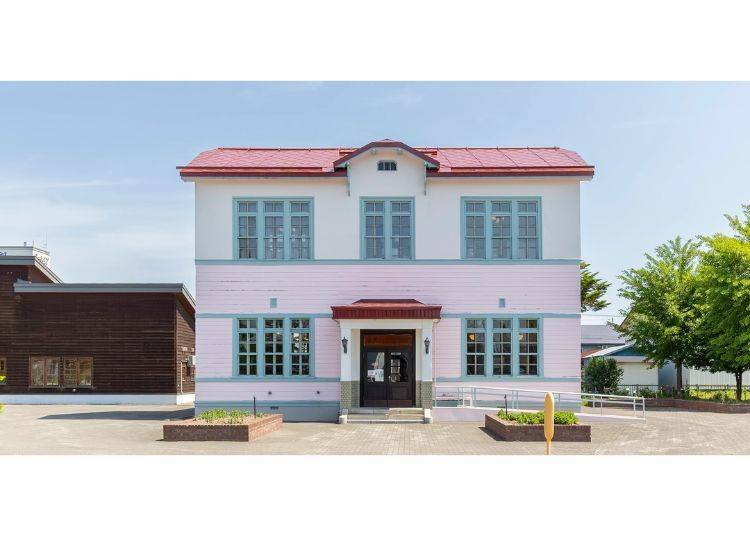
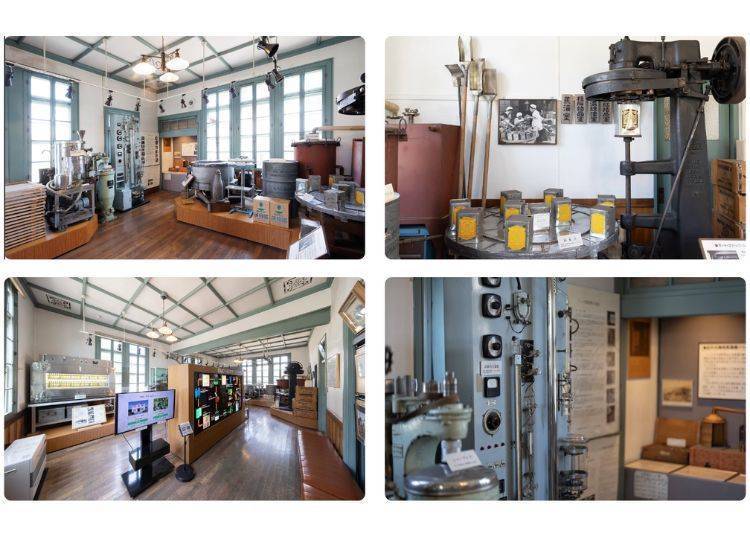
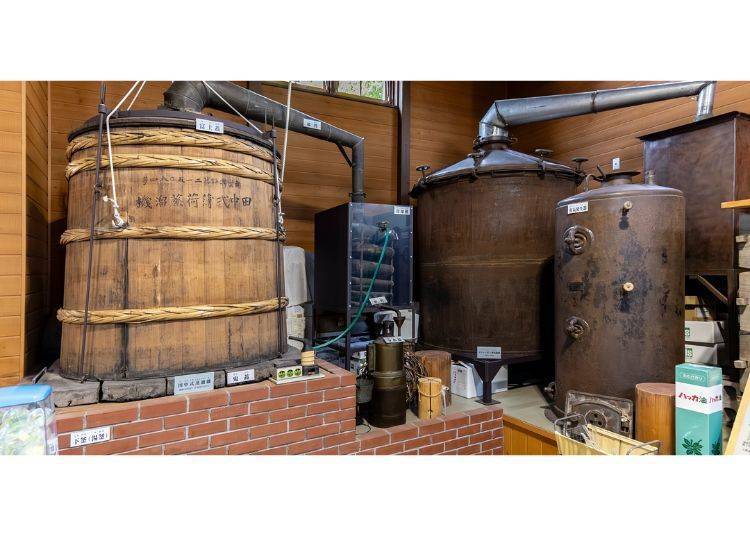
The museum is housed in the former research laboratory of the Hokuren Kitami Mint Factory. After the factory was dismantled in 1983, the building was donated to the city and preserved as a reminder of the region's mint-producing heritage. Today, visitors can view original equipment and exhibits that showcase the scale and significance of the industry. In recognition of its historical value, the building was designated a Heritage of Industrial Modernization by Japan's Ministry of Economy, Trade and Industry in 2007.
One of the museum's highlights is the Tanaka-style Mint Distiller, an innovative machine that helped transform mint production in the Kitami region. Designed to extract oil from mint leaves more efficiently, it could process roughly three times as much material in less time than the older Box-Seiro-style distillers.
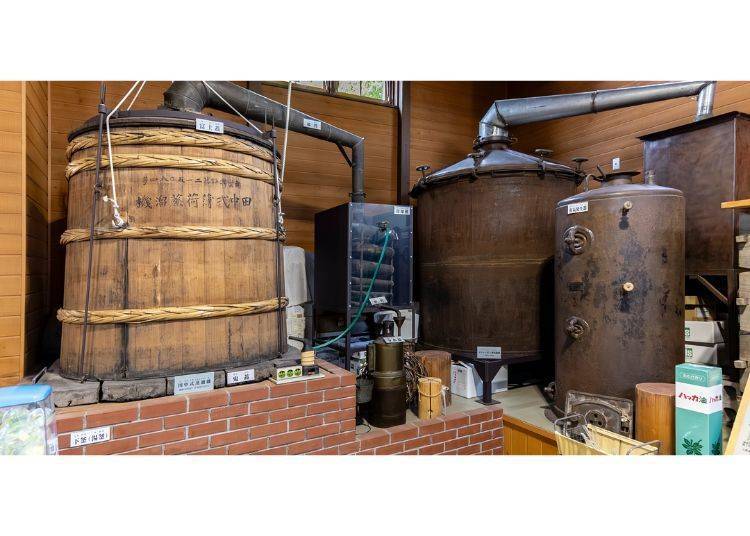
Kazumi Asai, a museum staff member, explains: "The older Box-Seiro-style distillers lost a great deal of steam during the process, which reduced efficiency. The Tanaka-style design improved steam circulation and made the equipment easier to operate, significantly increasing productivity while reducing the physical workload for farmers. It played a major role in the growth of the mint industry."
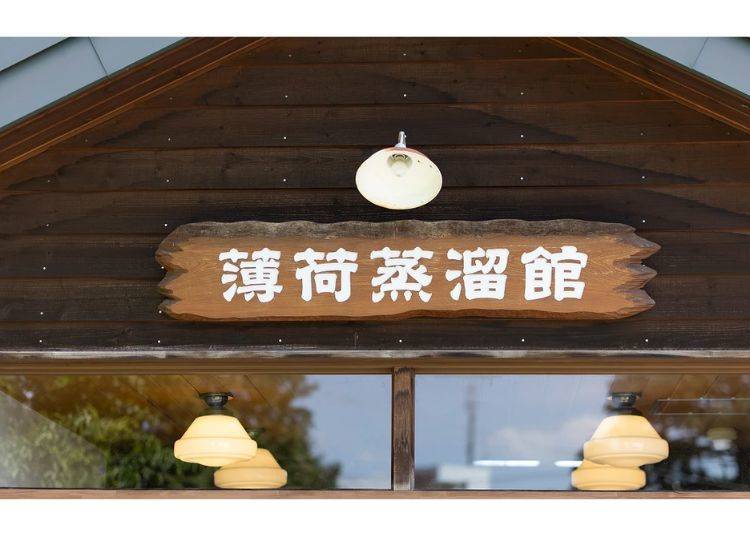
Next door, at the Mint Distillation Hall, visitors can watch a demonstration using a miniature distiller.
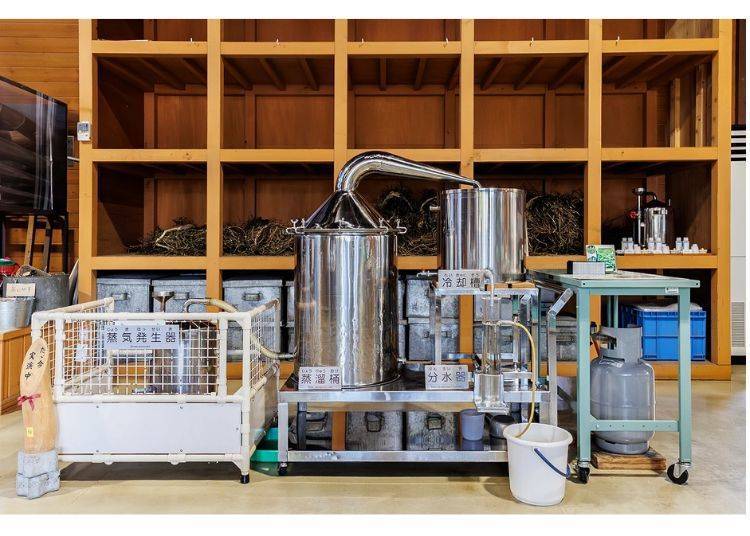
Harvested mint leaves are first dried and then steamed. The resulting vapor is cooled, causing it to separate into essential oil and water. The essential oil collected through this process is known as torioroshi-abura (crude mint oil).
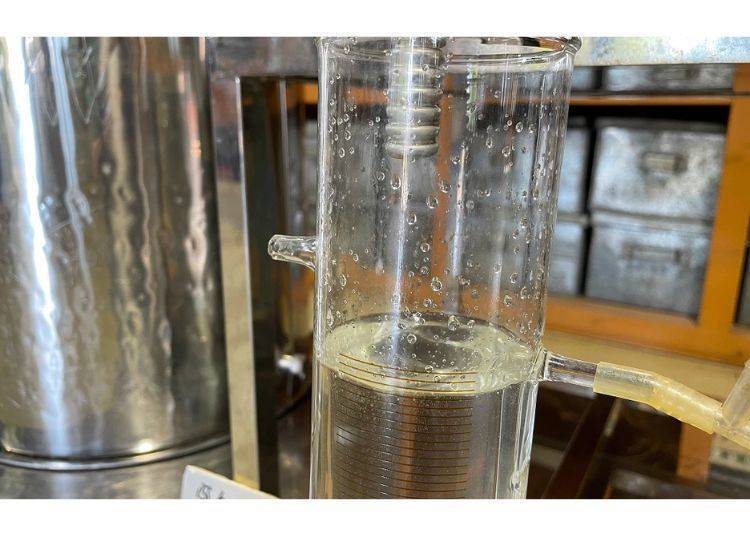
The crude mint oil was then transported to processing plants, where it was refined into menthol crystals and mint oil before being brought to market. These mint products were widely used in daily life as versatile natural ingredients.
Mint: The Ultimate All-Season Versatile Essential
The gift shop inside the Mint Distillation Hall offers a wide range of mint-related products. One of the most popular items is the facility's original Kitami Mint Crude Oil (660 yen for 3 ml), extracted from mint grown on-site.
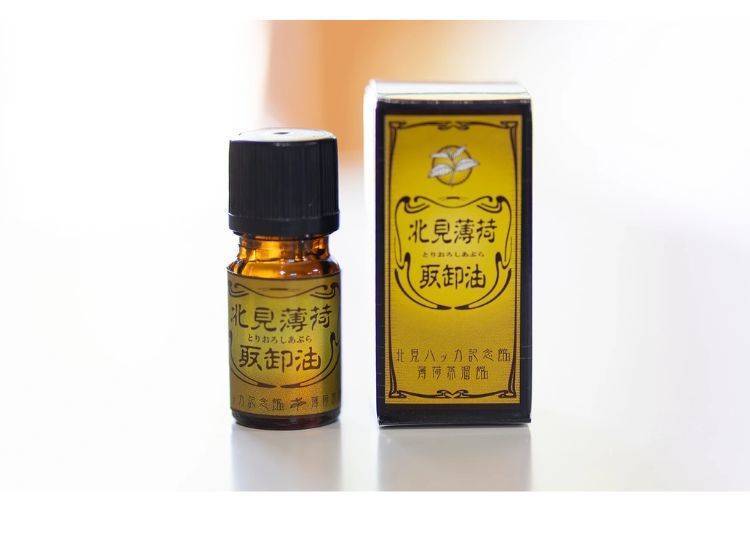
While mint is often associated with summer, it can actually be enjoyed year-round in a variety of ways. Like refined mint oil, crude mint oil can be incorporated into everyday life for its refreshing aroma and versatility.
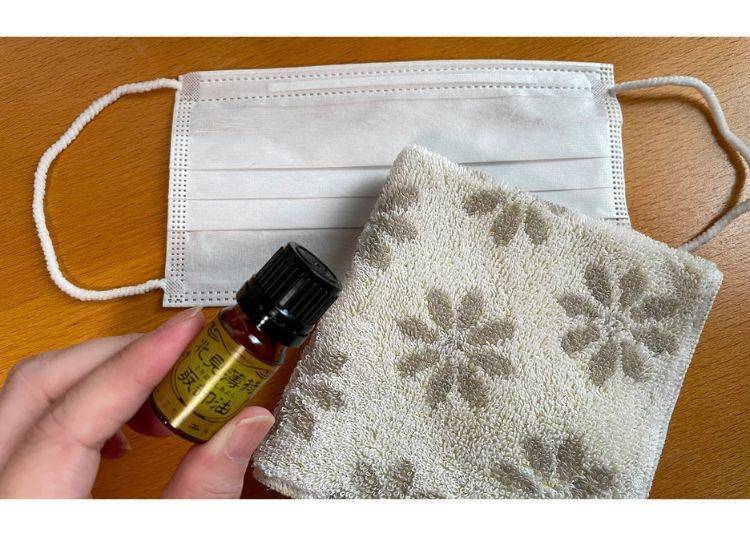
During pollen season, a tiny amount of crude mint oil can be applied to a mask or handkerchief. Taking a deep breath of the refreshing aroma may help make stuffy days feel a little more comfortable.
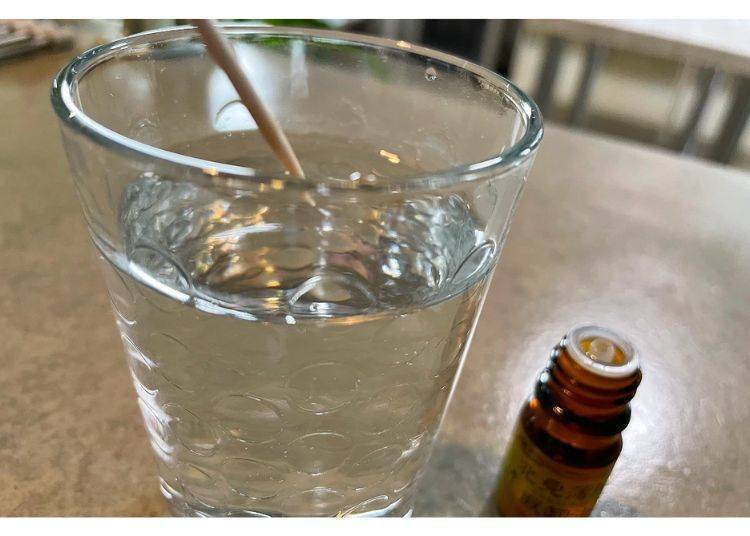
After an indulgent meal, some people add a trace amount of mint oil to water to create refreshing mint water. A few drops can also be added to a warm towel to make a mint compress, which is often used as part of post-exercise relaxation.
The uses don't stop there. Mint oil is commonly used to freshen rooms and shoe cabinets, add a refreshing touch to baths, enhance bedtime relaxation, assist with household cleaning, and even flavor homemade sweets. Some people also add a few drops to flower vases, believing it helps cut flowers stay fresh longer.
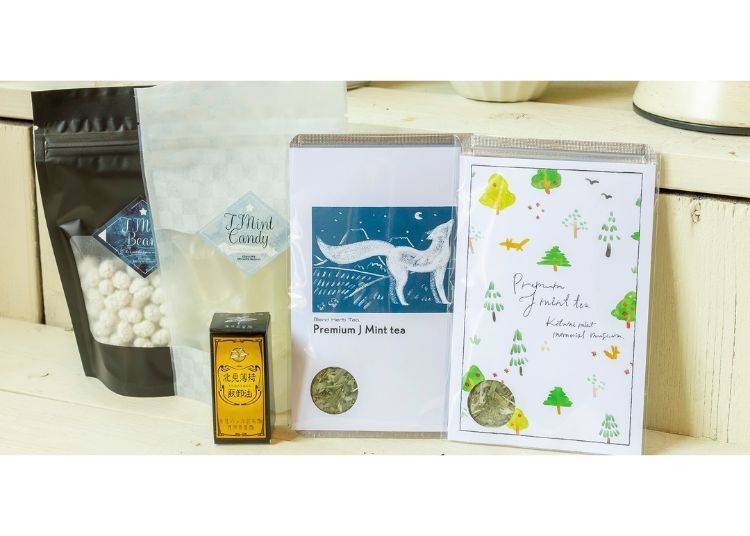
Of course, the shop offers far more than just crude mint oil. You'll also find a wide selection of mint-themed products, including Premium Mint Tea (1,296 yen) and Mint Candies (432 yen), making it easy to bring a little of Kitami's mint heritage home with you. As luck would have it, we visited on June 20, which is celebrated in Japan as "Mint Day."
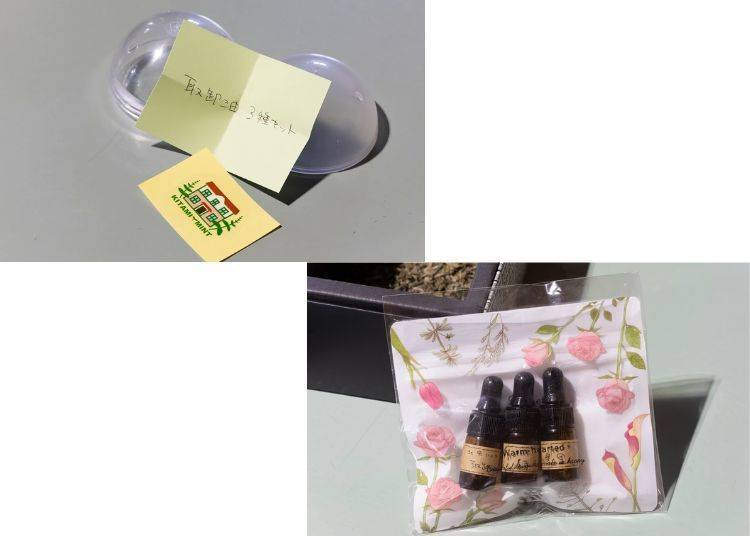
To mark the occasion, visitors who spent 1,000 yen or more in the shop were invited to try a special capsule-toy draw. Lady Luck was on our side, and we walked away with a three-piece set of crude mint oils. It was a fun and fitting end to our journey through the history and enduring legacy of Kitami's world-famous mint industry.
-
Kitami Mint Commemorative Hall & Mint Distillation Hall北見ハッカ記念館・薄荷蒸溜館
-
Address
1-chome 7-28, Minaminakamachi, Kitami City, Hokkaido
View Map
Hours:
May 1 – October 31: 9:30 AM – 5:00 PM
November 1 – April 30: 9:30 AM – 4:30 PM
Closed: Mondays (If Monday is a public holiday, closed the following day), New Year’s Holidays
Admission: Free
Official Website: http://www.kitamihakka.jp/ -
Address
1-chome 7-28, Minaminakamachi, Kitami City, Hokkaido
*All prices listed include consumption tax.
*The information in this article is current as of June 2025. Please check the official website for the latest updates before traveling.
Source & Cooperation: DO Tabi by AIRDO
Reprinted with permission from "DO Tabi," the official travel site of AIRDO.
In Cooperation with: AIRDO Co., Ltd.
Founded to help revitalize Hokkaido’s economy, AIRDO is based in Sapporo and operates 11 routes linking Hokkaido with Honshu and Fukuoka. Guided by its vision of accessible, high-quality travel, it offers a warm, customer-focused flying experience.

"DO Tabi" — A travel curation media operated by AIRDO, the Wings of Hokkaido.
As an airline that knows the local region inside out, we deliver travel inspiration to transform your desire to visit into a memory you are truly glad you made.
It is packed with content that will resonate deeply—not only with those currently planning a trip to Hokkaido, but also with anyone thinking, "I want to go somewhere, but I haven't decided where yet."

- Area
- Category
*Prices and options mentioned are subject to change.
*Unless stated otherwise, all prices include tax.
Popular Tours & Activities
Recommended places for you
-
Appealing
Noboribetsu Onsen
Hot Springs (Onsen) & Bath Houses (Sento)
Noboribetsu / Lake Toya
-
Hokkaido University
Other Architecture
Sapporo / Chitose
-
Appealing
Kanemori Red Brick Warehouse
Shopping Malls
Hakodate
-

Farm Tomita
Other Nature
Furano / Biei / Sounkyo
-
Appealing
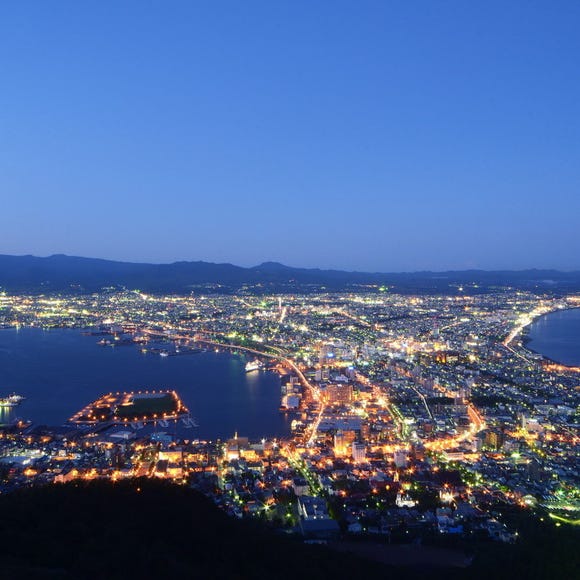
Mt. Hakodate Observatory
Forests & Mountains
Hakodate
-
Appealing
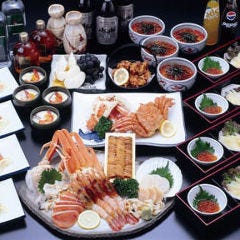
Rukku and Uohei
Izakaya
Sapporo / Chitose
-
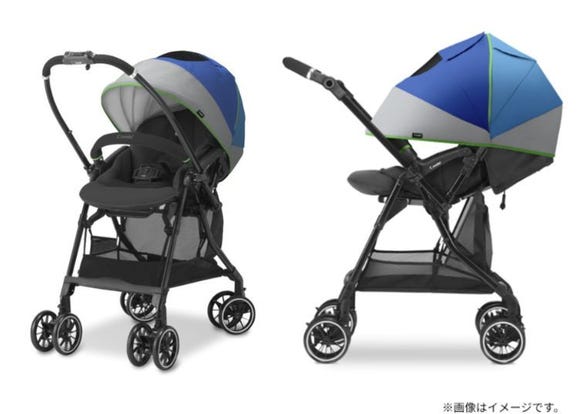
Tokyo Family Travel Just Got Easier Thanks to These Adorable Train Strollers
by: Guest Contributor
-
Ad

Stay on time with the power of light. Celebrate 50 years of history with the Limited Edition CITIZEN Eco-Drive and other must-have models
-
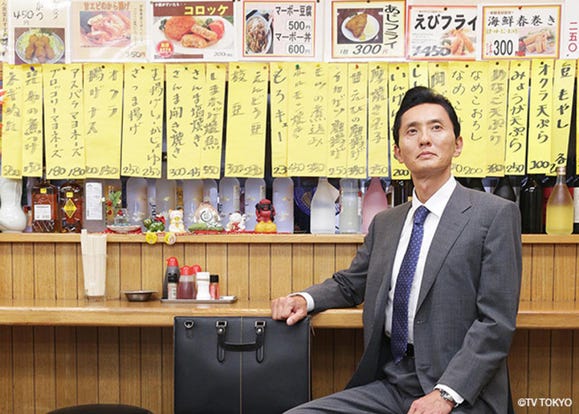
Eat Like Goro! "Taya" in Jujo, Tokyo (Solitary Gourmet Season 2, Epsode 10)
by: Shingo Teraoka
-
Explore Tokyo and Kanagawa to the Fullest! A Seamless Journey with the Odakyu Digital 1-Day All-Line Pass
by: Guest Contributor
-
This Mountain Beer Garden Might Be Tokyo’s Best Summer Experience
by: Guest Contributor
-

Explore Everyday Tokyo in 3 Hours from Haneda Airport! A New Travel Style Using the HANEDALL Digital Pass
by: Guest Contributor
-
Where to Stay in Noboribetsu Onen: 6 Ryokan Hotels in Hokkaido's Spa Wonderland
by: Masakazu Yoshida
-
Brewing Tradition Since 1944: Visiting Kikko Nihon - One of Asahikawa's Longest-Running Soy Sauce Companies
-
6 Most Scenic Spots Around Mount Yotei, Hokkaido: Gorgeous Sunflowers & More!
-
Japan's Bath Culture: Tips You Should Know!
-
(Video) Walking Tour along Narita Omotesando - Quaint Historical Village near Narita Airport!
by: Victor Gonzalez
-

Experience Ainu Culture at Upopoy National Ainu Museum and Park
- #best sushi hokkaido
- #things to do hokkaido
- #best ramen sapporo
- #what to bring to japan
- #new years in tokyo
- #what to buy in ameyoko
- #japanese nail trends
- #what to do in odaiba
- #onsen tattoo friendly tokyo
- #daiso
- #best sweets otaru
- #japanese fashion culture
- #best nature furano
- #japanese convenience store snacks
- #best japanese soft drinks