



Your Suitcase Does NOT Belong on the...! 5 Japan Etiquette Rules Even Repeat Visitors Miss
- Written by: Nemi Lin
Japan is packed with reasons to keep coming back, from shopping and shrines to incredible seasonal scenery. But it’s also a country where personal space, shared spaces, and “reading the room” matter more than many travelers realize.
That means small habits you’d barely think about elsewhere can become unexpected etiquette mistakes at hotels, ryokan, onsen, and on public transportation. So what are the unwritten rules even seasoned Japan travelers sometimes miss? After 10 years of living in Japan, our editor breaks down the ones worth knowing before your next trip.
Wait, That’s a Faux Pas? Japan’s Unwritten Space Etiquette Rules Even Repeat Visitors Miss
Japan Space Etiquette Rule #1: Never Roll Your Suitcase Across Tatami
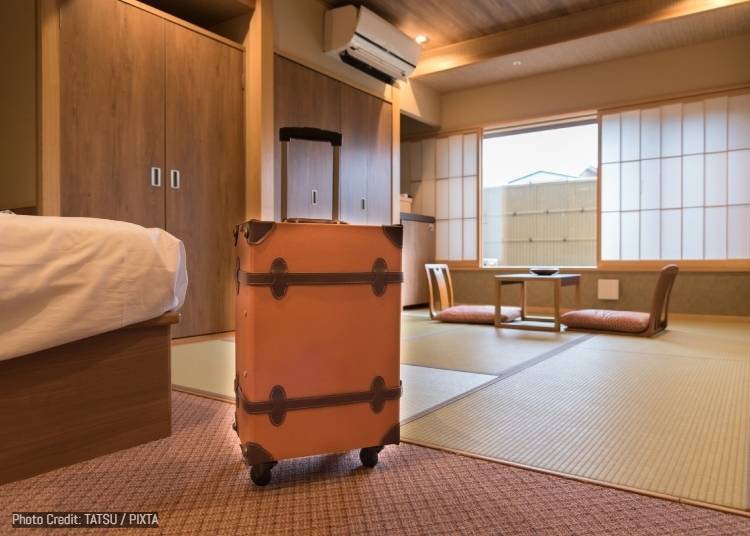
“The first time I stayed at a traditional Japanese inn, I rolled my large suitcase straight into the room, opened it up on the tatami, and started unpacking. A staff member came over to stop me, and I was so embarrassed...” (Woman in her 30s)
Staying at a traditional ryokan is one of those quintessential Japan experiences, complete with the distinctive scent and cozy feel of tatami flooring. But there’s one important rule to remember: never roll a suitcase directly onto the tatami.
Tatami is made from natural rush grass and can be surprisingly delicate. Dirt and grit caught in suitcase wheels can stain the surface, while the weight and rolling motion may damage or scratch the woven fibers, leaving the property with costly repairs.
Instead, leave your suitcase on the wooden entryway or flooring area, or carry it into the room rather than rolling it. If you need to open it on the tatami, place a cloth or protective layer underneath first.
And while we’re here, two more major no-nos: don’t step onto tatami wearing indoor slippers, and definitely don’t poke or damage the paper on shoji sliding doors.
Japan Space Etiquette Rule #2: Don’t Get the Collar Wrong! How to Wear a Yukata Correctly
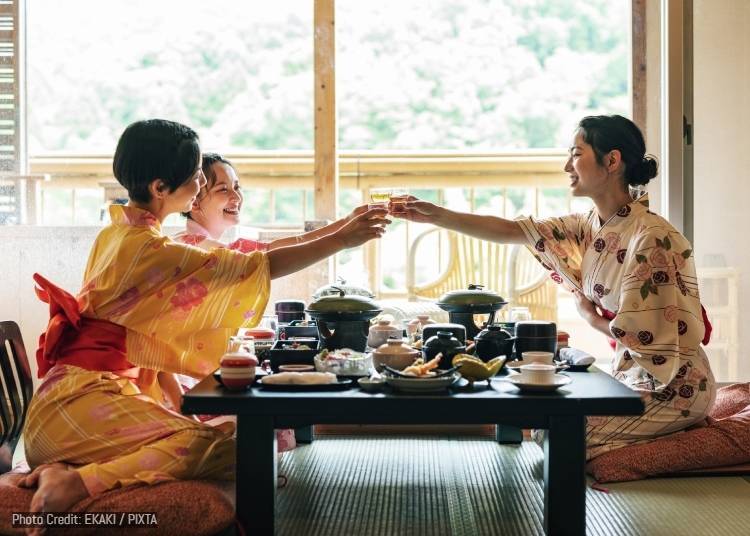
“After soaking in the onsen, I put on the yukata provided by the ryokan and went out to take photos around the hot spring town. Later, a kind passerby told me I’d crossed the collar the wrong way, and I had absolutely no idea what they meant.” (Woman in her 20s)
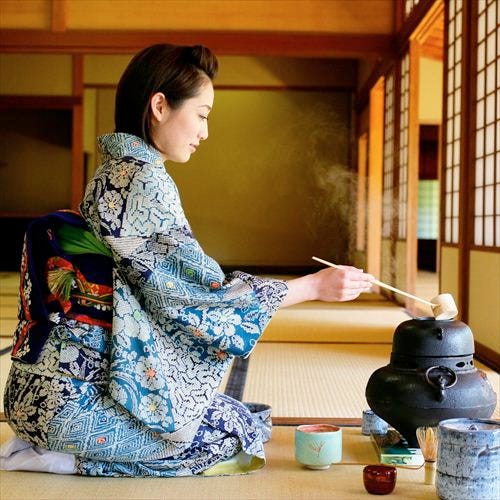
If you rent a kimono in Japan, staff will usually dress you properly. But when you stay at a ryokan and have to put on a yukata yourself, there’s one detail you definitely want to get right: the collar.
For both kimono and yukata, the left side should always overlap the right. An easy way to remember it is that once you’re dressed, you should be able to slip your right hand naturally inside the front of your yukata.
Wearing it the opposite way, with the right side over the left, is traditionally reserved for dressing the deceased. So if you accidentally get it backwards while strolling through an onsen town, don’t be surprised if a hotel staff member or helpful local quickly points it out.
Japan Space Etiquette Rule #3: Watch Your Luggage on the Shinkansen
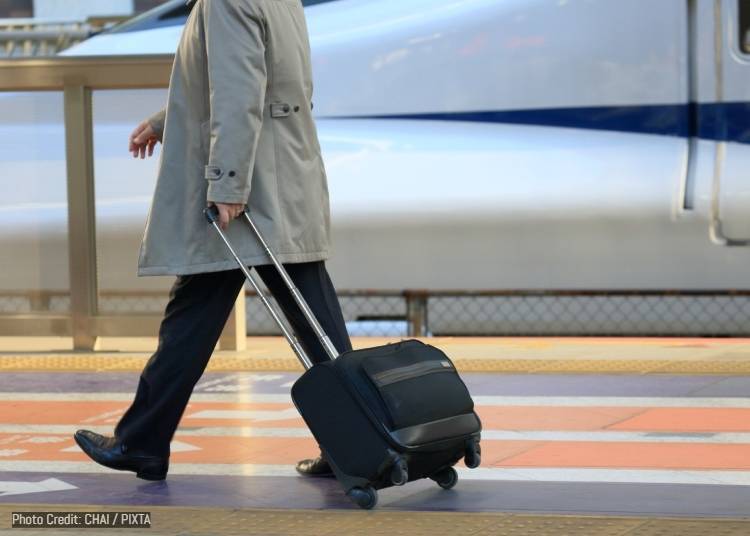
“I saw someone put their suitcase in the space behind the last row of seats on the Shinkansen, so I did the same. Then they called the conductor over and I was told to move my bag. I still had no idea what I’d done wrong.” (Man in his 50s)
In the past, the space behind the last row of seats on Japan’s bullet trains was often treated as a convenient place to leave large luggage. But on the Tokaido, Sanyo, and Kyushu Shinkansen, there are now special rules for oversized baggage.
“Oversized baggage” generally means luggage with total dimensions of 161 to 250 cm when you add together its length, width, and height. The space behind the last row is reserved for passengers who have booked seats with access to the oversized baggage area.
So don’t assume an empty-looking space is free for anyone to use. If you place oversized luggage there without the required reservation, you may be charged an additional 1,000 yen handling fee and asked to move your bag to a designated area.
Before booking your Shinkansen seat, check your suitcase dimensions and select a seat that includes oversized baggage space if necessary. It’s a small step that can save you both money and an awkward conversation onboard.
Japan Space Etiquette Rule #4: Onsen Have Rules Too! The Bathing Etiquette You Need to Know
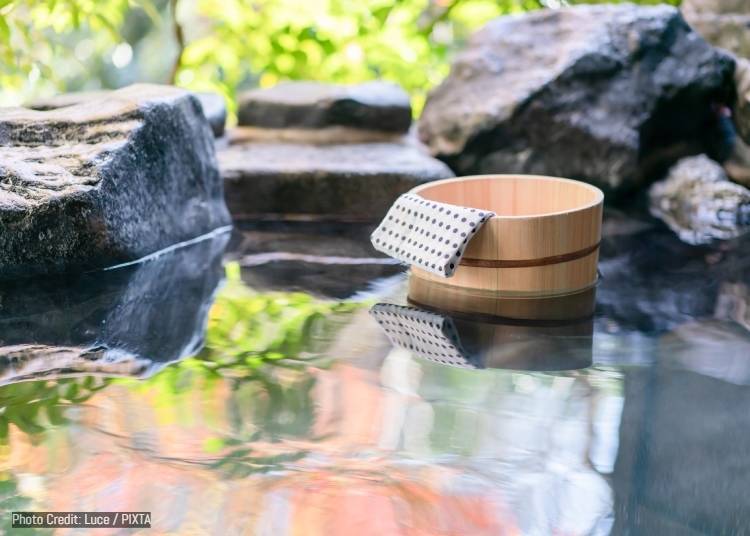
“When I went to an onsen in Japan, I forgot to tie up my hair and noticed quite a few people looking at me. It definitely made me feel a little awkward...” (Woman in her 20s)
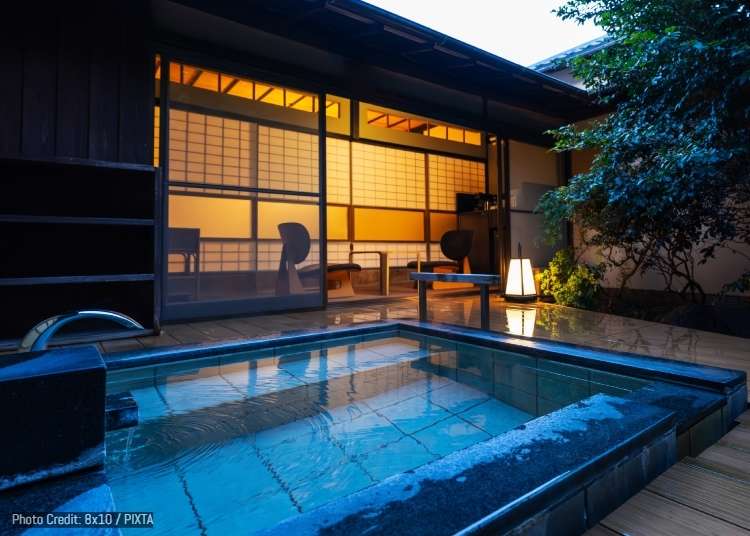
A soak in a Japanese hot spring is one of the best ways to unwind, but Japan’s shared bathing culture comes with a few important rules. Cleanliness and consideration for others are a big part of the experience, so even small details can matter.
If you have long hair, tie it up securely before entering the bath so it doesn’t trail into the water. Towels should also stay out of the bath itself. And before getting in, always wash and rinse your body thoroughly at the shower area first.
One more big rule: phones, cameras, and anything else capable of taking photos should never be used in the changing room or bathing area. Even casually checking your phone can make others uncomfortable. Leave it safely in your locker, switch off, and enjoy the soak.
Japan Space Etiquette Rule #5: Don’t No-Show! Why Being Late Can Cost You Your Reservation
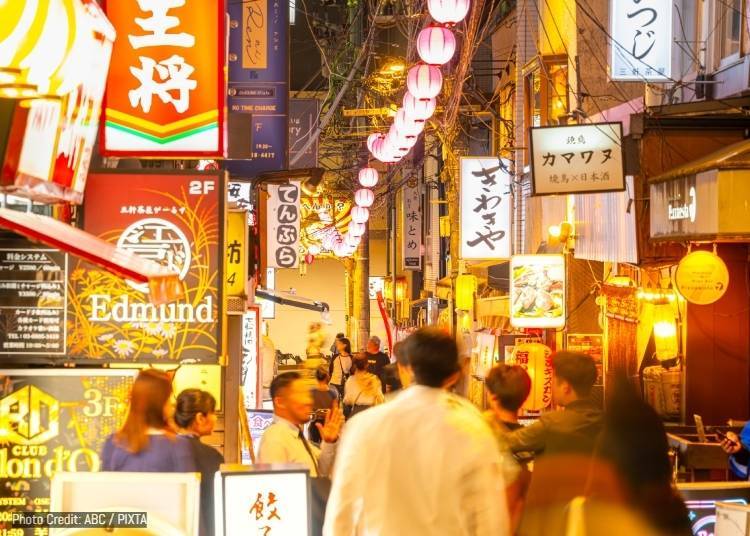
“We booked a popular wagyu restaurant, but got so caught up shopping that we completely lost track of time. We rushed over as soon as we realized, but by the time we arrived, the restaurant had already canceled our reservation...” (Man in his 40s)
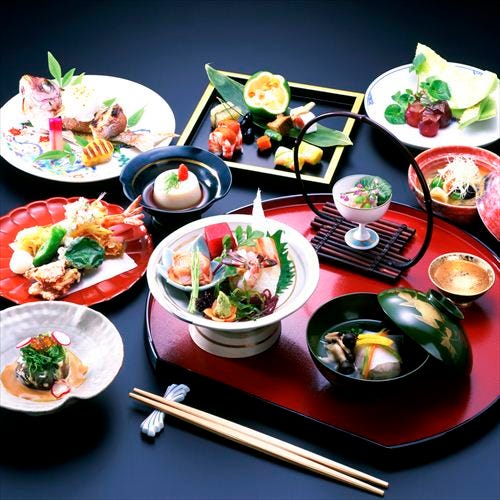
Whether you’ve booked a popular yakiniku spot, a high-end wagyu restaurant, or a kaiseki dinner at a ryokan, there’s one major travel faux pas to avoid in Japan: showing up very late or not showing up at all.
Many Japanese restaurants prepare fresh ingredients and plan service carefully around the exact number of guests and their reservation times. Depending on the restaurant, arriving 10 to 15 minutes late without notice may be treated as a canceled reservation. A no-show or major delay can also leave the restaurant with wasted ingredients and an empty table that could have gone to another guest.
If you know you’re going to be late, contact the restaurant as soon as possible, either by phone or through the reservation platform. And if you can’t make it at all, be sure to cancel properly. Being punctual and communicating early goes a long way toward keeping the experience smooth for both travelers and restaurants.
Master the Etiquette, Master Your Japan Trip!
When traveling abroad, knowing the local customs can save you from awkward moments and make the whole trip feel much smoother. Keep these accommodation and transport etiquette tips in mind, and whether you’re checking into a traditional ryokan or riding the Shinkansen across Japan, you’ll be able to travel with confidence and consideration.


Nemi has been living in Japan since 2015. She attended a Japanese-Chinese translation school in Japan and volunteered as a translator at the Osaka International House Foundation for 2 years. A busy mother, she explores trendy cafes, value-for-money buffets, and captures beautiful moments of cherry blossoms, hydrangeas, and maple leaves in her free time. She often travels with her family during holidays, collecting regional snacks and sampling local puddings. Nemi regularly shares top foodie spots, the best locations for picturesque views, and family-friendly guides to Osaka on her Instagram.
*Prices and options mentioned are subject to change.
*Unless stated otherwise, all prices include tax.
Popular Tours & Activities
Recommended places for you
-
ISHIDAYA Hanare
Yakiniku
Kobe, Sannomiya, Kitano
-
Appealing
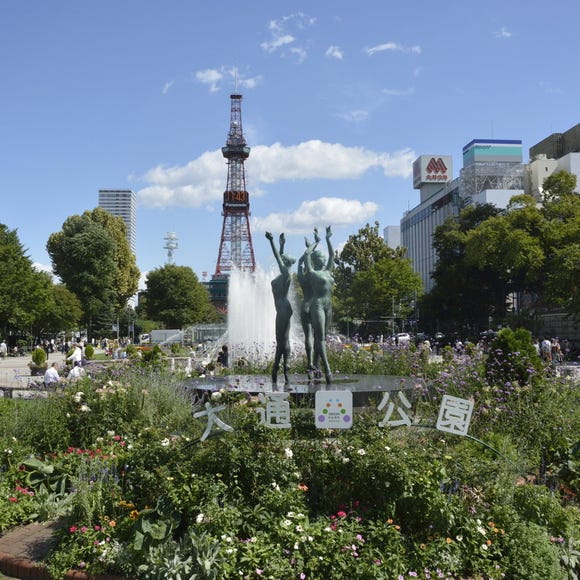
Odori Park
Parks
Sapporo / Chitose
-
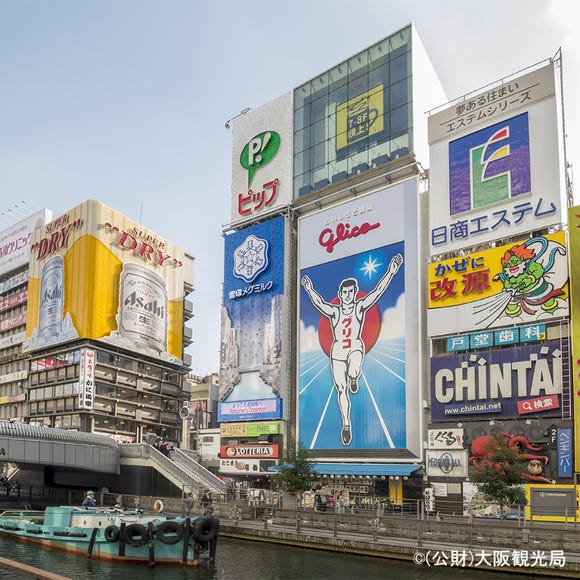
Dotonbori
Other Sightseeing
Namba, Dotonbori, Shinsaibashi
-
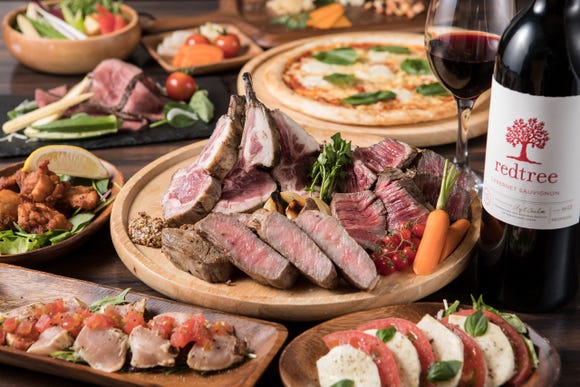
Jukuseiniku-to Namamottsuarera Nikubaru Italian Nikutaria Sannomiya
Izakaya
Kobe, Sannomiya, Kitano
-
Goods
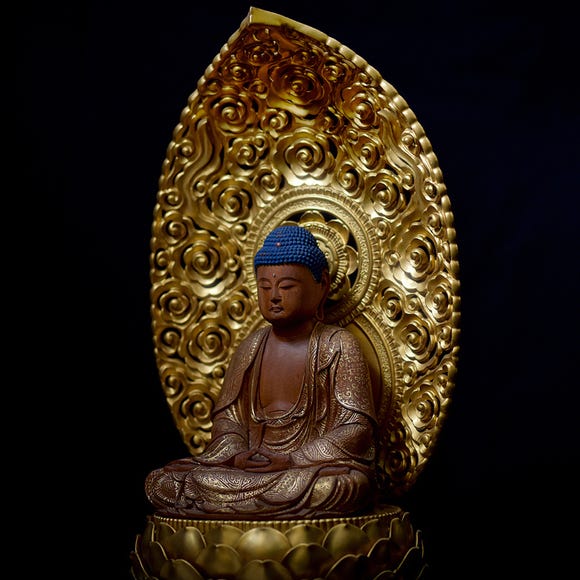
Yoshida Gennojo-Roho Kyoto Buddhist Altars
Gift Shops
Nijo Castle, Kyoto Imperial Palace
-
Appealing
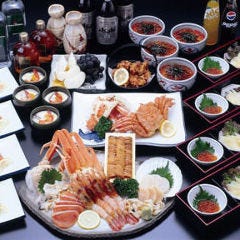
Rukku and Uohei
Izakaya
Sapporo / Chitose
-
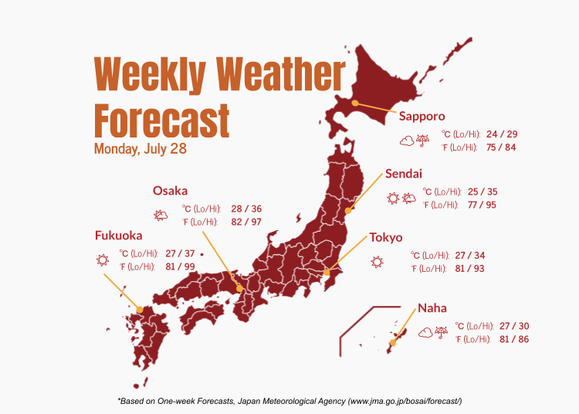
7-Day Japan Weather Forecast: Tokyo, Osaka, Sapporo, Sendai, Fukuoka, Naha – Plan & Pack Smart for Your Trip
-

Daikoku PA Car Meet: What Is JDM, and Why Do Enthusiasts Flock Here?
-
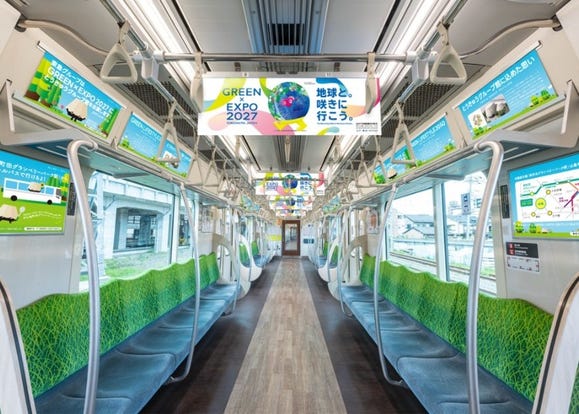
Japan's New GREEN LIFESTYLE TRAIN Connects Tokyo, Yokohama, and a Greener Future
by: Guest Contributor
-
Ad
Pocket WiFi Rental in Japan 2026: Complete Price Comparison & Where to Get the Best Deal
-
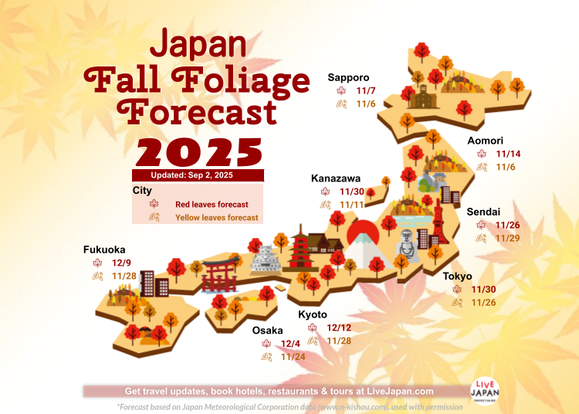
Autumn in Japan 2026: Fall Foliage Forecast & Where to Enjoy the Colorful Leaves (+Tour Info)
-
Haneda Airport Duty-Free Shopping Guide: What to Buy, How to Save & Where to Eat Before Your Flight
by: Guest Contributor
-
10 Best Hotels Near Kyoto Station: Budget-friendly, Perfect for Kyoto Sightseeing
-
Complete Guide to Buying Japanese Medicine in Japan: Phrases and Vocabulary You Need to Know
-

'Stop With the Personal Questions!' - Things That Shocked British People When Visiting Japan
-
So You Think Your Commute Is Tough? Check Out Japan's Top 10 Most Crowded Commuter Trains!
-
5 Popular Shops and Gift Ideas Along Arashiyama Shopping Street
-
'Charming Chaos' - 5 Things That Surprised Foreign Visitors About Tokyo's Akihabara
by: Yuu Sato
- #best sushi japan
- #what to do in odaiba
- #what to bring to japan
- #new years in tokyo
- #best ramen japan
- #what to buy in ameyoko
- #japanese nail trends
- #things to do japan
- #onsen tattoo friendly tokyo
- #daiso
- #best coffee japan
- #best japanese soft drinks
- #best yakiniku japan
- #japanese fashion culture
- #japanese convenience store snacks