




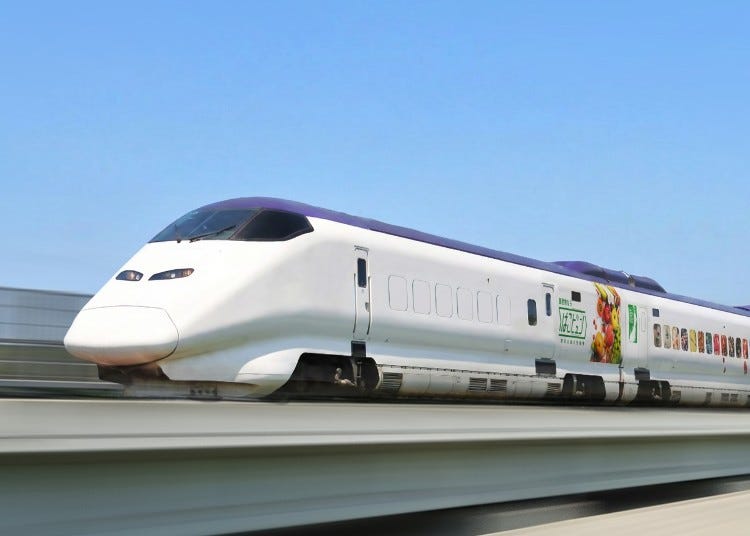
Japan’s Shinkansen is famous for speed, comfort, and reliability. But behind the scenes, it is quietly taking on a new role that most travelers never notice.
JR East is now using the Shinkansen to move cargo, not just people, through a high-speed logistics service called Hako-Bun. And while that might sound like an industry story, it has very real implications for visitors to Japan.
This system is already helping ultra-fresh regional food reach major cities faster, improving product quality, and reducing environmental impact. Starting in 2026, it will go even further with the launch of Japan’s first Shinkansen designed specifically for freight.
From what ends up on your plate to what you can buy at major stations, here’s how Hako-Bun is quietly changing the way Japan travels, shops, and eats.
- Table of Contents
Transforming Japan’s Dining Tables with "Hako-Byun"! The Secret Behind Delivering the Region’s "Peak Freshness" to Tokyo at High Speed.
At its core, Hako-Bun is a high-speed logistics network that uses the Shinkansen to move regional products to major cities faster than ever before, while maintaining a level of quality that traditional transport often struggles to match.
By taking advantage of the Shinkansen’s defining strengths of speed and precise scheduling, JR East has made it possible for peak-season food from across Japan to reach Tokyo on the same day it is harvested or caught. What was once limited by distance and time is now arriving in urban markets almost immediately.
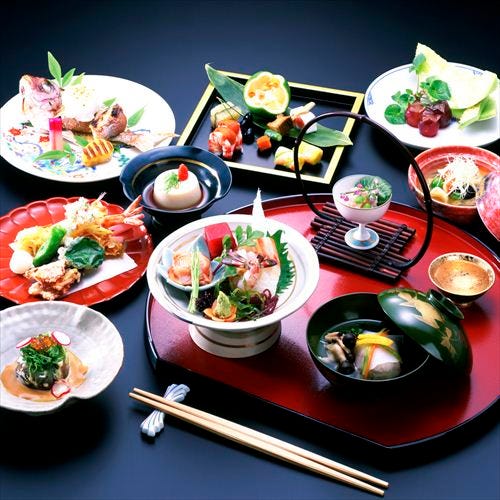
For travelers, this means that even without leaving the city, it is becoming easier to experience regional flavors at their freshest, whether at department stores, specialty shops, or station-area markets.
The Innovative Advantages Brought by Shinkansen Logistics
Why Shinkansen Transport Is Gaining Attention Over Trucks
So why is freight carried by the Shinkansen drawing so much attention compared with traditional truck transport?
1. Freshness Comes First: From the Morning Catch to City Stores
With high-speed Shinkansen transport, seafood caught in the morning and freshly harvested produce from regional areas can reach store shelves in major cities such as Tokyo on the very same day.
According to a seafood retailer using the service, being able to sell regional seafood in Tokyo on the day it is landed adds clear value for customers and has been very well received.
For travelers, this means you do not need to leave the city to enjoy peak-season regional ingredients. Tokyo department stores, specialty food shops, and station-area retailers are increasingly able to offer products that reflect what is truly in season across Japan.
2.Higher-Quality Transport for Delicate and High-Value Goods
Hako-Bun is also being adopted by industries that require strict transport standards, including medical manufacturing, where consistency and handling quality are critical.
Because the Shinkansen offers smooth operation, high speeds, and stable conditions, it can provide a level of transport quality that is difficult to achieve with conventional road freight. Power supplied inside the train also makes temperature-controlled transport possible, allowing refrigerated and other sensitive products to be moved safely.
3.Supporting More Sustainable Travel and Logistics
Compared with commercial freight vehicles such as trucks, the Shinkansen produces significantly lower carbon dioxide emissions when transporting goods.
While travelers enjoy moving around Japan by rail, Hako-Bun is working in parallel to address broader challenges facing the country’s logistics industry, including labor shortages and environmental impact. By shifting some freight from roads to rail, the system helps reduce pressure on long-distance trucking while supporting a more sustainable transport model overall.
March 2026: Japan’s First Dedicated Freight Shinkansen EntersService
The next major step for Hako-Bun arrives in March 2026, with the launch of Japan’s first Shinkansen designed specifically for freight operations.
From March 23, 2026, JR East will begin operating a converted E3 Series train dedicated entirely to cargo transport, marking a significant shift from earlier models that shared passenger space for limited freight use.
Japan’s First Dedicated Freight Shinkansen: The E3 Series Rebuilt for Cargo

JR East is converting a single E3 Series Shinkansen trainset, consisting of seven cars, into a train devoted entirely to freight transport. All passenger seats are being removed, and the floors are being replaced with flat steel plates treated with non-slip coating. This setup allows cargo to be transported safely while still loaded on roll cages.
As a result, the train can carry up to 17.4 tons of freight, or roughly 1,000 boxes, in a single run. This represents a major increase in capacity compared with earlier approaches that used only part of a passenger car on limited services.
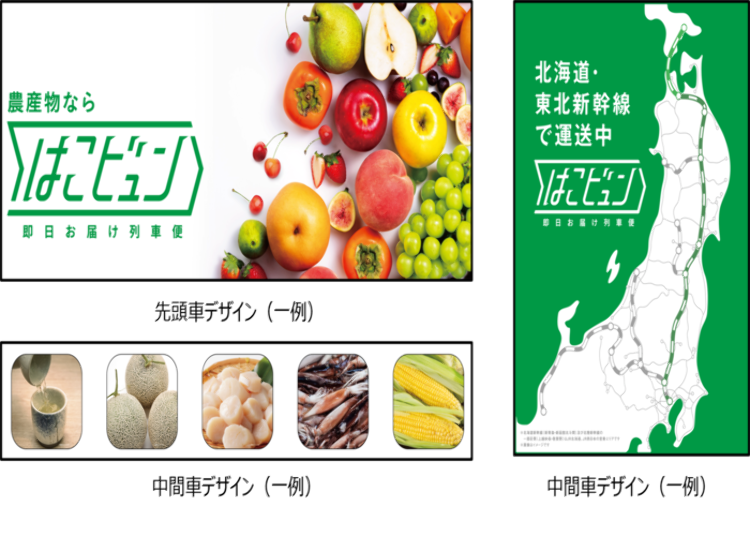
For travelers, this change will be largely invisible at first glance, but it reflects a significant shift in how the Shinkansen is used. The same sleek trains seen racing across the countryside will also be moving large volumes of regional products behind the scenes. The lead car is planned to feature large designs highlighting representative cargo, while intermediate cars will be wrapped with visuals showcasing local products from across Japan, turning the train itself into a moving introduction to regional specialties.
Automation Behind the Scenes: How AGVs Support the System

Another important part of the Hako-Bun system is the introduction of automation to improve efficiency.
Automated Guided Vehicles, or AGVs, are being introduced inside Shinkansen rolling stock centers to handle cargo movement. These vehicles automatically tow roll cages and are designed to move smoothly even along slopes or through narrow internal routes.
By reducing the need for manual handling, this technology helps address labor shortages while improving consistency and safety. Although travelers never see this process, it plays a key role in maintaining the speed and reliability that define Japan’s logistics network.
"Hako-Bun" Goes Global! The Appeal of JAL Collaboration and the "Connected Direct Market"
The evolution of "Hako-Bun" is not limited to Japan.
Connecting Japan’s Regions to the World with JAL de Hako-Bun
From mid-January 2026, JR East will launch a new service called JAL de Hako-Bun in partnership with the JAL Group.
This service combines high-speed Shinkansen transport with international air cargo, creating a one-stop system that moves products from regional Japan to overseas destinations. Goods are first carried quickly by Shinkansen to major airports, then transferred to JAL aircraft for international shipment.
Initial overseas destinations include Singapore, Kuala Lumpur, Taipei, and Hong Kong.
For travelers, this means regional products from Japan will increasingly appear overseas in better condition and closer to their peak season. Even outside Japan, access to fresh, high-quality Japanese food and specialty goods is set to improve as this system expands.
A New Market at Ueno Station Aims to Become a Stop in Its Own Right
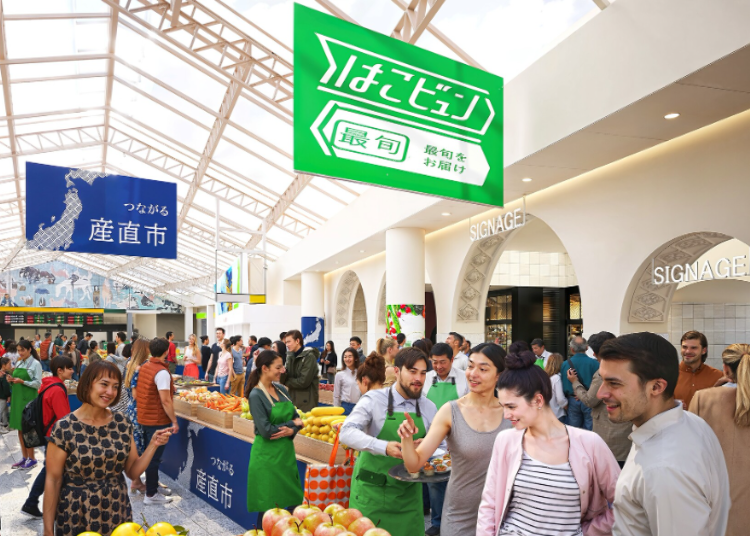
For travelers, one of the most visible outcomes of Hako-Bun will be a new market opening inside one of Tokyo’s busiest transport hubs.
In spring 2026, JR East plans to open a Connected Direct Market at Ueno Station. The market will make use of Hako-Bun’s high-speed logistics to bring in freshly harvested produce and seafood from regional areas, including items caught or picked earlier the same day.
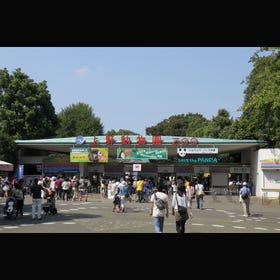
Ueno Station already serves as a major gateway for visitors, with nearby attractions such as museums, Ueno Zoo, and Ameya Yokocho. By adding a market focused on regional, peak-season products, the station itself is positioned to become a place to experience Japan’s food culture, not just pass through it.
For travelers with limited time, this offers an easy way to encounter flavors from areas such as Tohoku and Shinetsu without leaving Tokyo. The market is expected to showcase regional stories through food, making it a natural stop at the beginning or end of a trip.
-

-
Address
13-9 Ueno Park, Taito-ku, Tokyo, 110-8712
View Map -
Nearest Station
Ueno Station (Hokkaido Shinkansen Line / Tohoku Shinkansen Line / Akita Shinkansen Line / Yamagata Shinkansen Line / Joetsu Shinkansen Line / Hokuriku Shinkansen Line / JR Keihin-Tohoku Line / JR Yamanote Line / JR Tohoku Main Line / JR Utsunomiya Line / JR Takasaki Line / JR Joban Line / JR Ueno Tokyo Line / Tokyo Metro Ginza Line / Tokyo Metro Hibiya Line)
10 minutes on foot
- Phone Number 050-5541-8600
-
Address
13-9 Ueno Park, Taito-ku, Tokyo, 110-8712
-

-
Address
8-36, Uenokouen, Taitou-ku, Tokyo, 110-0007
View Map -
Nearest Station
Ueno Station (Hokkaido Shinkansen Line / Tohoku Shinkansen Line / Akita Shinkansen Line / Yamagata Shinkansen Line / Joetsu Shinkansen Line / Hokuriku Shinkansen Line / JR Keihin-Tohoku Line / JR Yamanote Line / JR Tohoku Main Line / JR Utsunomiya Line / JR Takasaki Line / JR Joban Line / JR Ueno Tokyo Line / Tokyo Metro Ginza Line / Tokyo Metro Hibiya Line)
7 minutes on foot
- Phone Number 03-3823-6921
-
Address
8-36, Uenokouen, Taitou-ku, Tokyo, 110-0007
-
-
Address
9-83, Uenokouen, Taitou-ku, Tokyo, 110-8711
View Map -
Nearest Station
Ueno Station (Hokkaido Shinkansen Line / Tohoku Shinkansen Line / Akita Shinkansen Line / Yamagata Shinkansen Line / Joetsu Shinkansen Line / Hokuriku Shinkansen Line / JR Keihin-Tohoku Line / JR Yamanote Line / JR Tohoku Main Line / JR Utsunomiya Line / JR Takasaki Line / JR Joban Line / JR Ueno Tokyo Line / Tokyo Metro Ginza Line / Tokyo Metro Hibiya Line)
5 minutes on foot
- Phone Number 03-3828-5171
-
Address
9-83, Uenokouen, Taitou-ku, Tokyo, 110-8711
How LX Is Shaping a More Connected Way to Experience Japan
JR East’s Hako-Bun initiative and the launch of a dedicated freight Shinkansen represent more than a change in how goods are moved. Together, they point to a broader effort to rethink how regional Japan connects with major cities and with travelers.
By supporting local industries, improving distribution efficiency, and reducing environmental impact, this system helps bring regional food and products closer to where people actually encounter them. For visitors, that translates into better quality, greater variety, and more opportunities to experience Japan’s regional character, even within large urban hubs.
Fast, reliable, and environmentally conscious rail logistics are quietly delivering some of Japan’s best flavors and craftsmanship to places travelers already pass through.
The next time you ride the Shinkansen, it may be worth remembering that it is carrying more than passengers. It is also moving the stories, seasons, and future of Japan’s regions, waiting to be discovered at stations like Ueno and beyond.
(Source/Main Image: PR Times)
- Area
- Category
*Prices and options mentioned are subject to change.
*Unless stated otherwise, all prices include tax.
Popular Tours & Activities
Recommended places for you

-

Seibu Group Launches New Chichibu Adventure Tourism Experience for International Travelers in 2026
by: Guest Contributor
-
Cracked Phone Screen in Japan? Smahospital Repair Guide: Keep Your Data, Fixed in 15 Min, Multilingual Support | Up to 10,000 Yen Off with LIVE JAPAN Coupon
-
Haneda Airport Duty-Free Shopping Guide: What to Buy, How to Save & Where to Eat Before Your Flight
by: Guest Contributor
-

Daikoku Car Meet Guide: How to Visit, Best Times & Rules
-
Just 2 Hours from Tokyo! Escape to Yamanashi's NIPPONIA Kosuge, Where an Entire 700-Person Village Becomes Your Hotel
by: Alice Lee
-
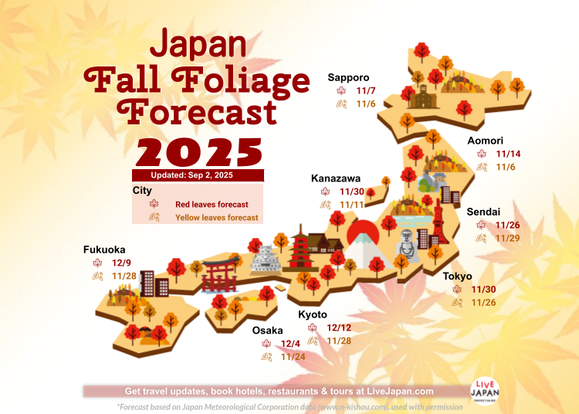
Autumn in Japan 2026: Fall Foliage Forecast & Where to Enjoy the Colorful Leaves (+Tour Info)(Updated Oct 1)
Inspiration for Accommodations
-

Family-Friendly Hotels with Free Shuttle to Disneyland: Convenient Access for a Magical Stay
-
Top Ranked Hakone Hotels with Mt. Fuji View: Enjoy Stunning Scenery from Your Private Space
-
Convenient Tokyo Hotels with Airport Shuttle: Ideal for Families and Heavy Luggage
-
9 Family-Friendly Hotels with Comfortable Family Rooms in Asakusa
-
10 Open-air bath Onsen Ryokans in Hakone for Ultimate Relaxation
-
A Travel Game Changer! Go Hands-Free Between Tokyo and Kyoto with LUGGAGE EXPRESS by JTB and JR Tokai
by: Guest Contributor
-
The past and present of Ginza and Tsukiji
-
Meiji Shrine (Meiji Jingu): Exploring the Sacred Sanctuary of Peace in Bustling Tokyo
-
Ad

Essential Tokyo Nightlife Guide: Safely Navigate a Great Night Out in Central Tokyo with Minato Flag
-
From Cutting-Edge to Traditional: 12 Must-Visit Shops in Tokyo’s Glitzy Ginza
-
Atami 1-Day Itinerary: Exploring Japan's Castle & Hot Springs Resort Town Near Tokyo!
- #best ramen tokyo
- #what to buy in ameyoko
- #what to bring to japan
- #new years in tokyo
- #best izakaya shinjuku
- #things to do tokyo
- #japanese nail trends
- #what to do in odaiba
- #onsen tattoo friendly tokyo
- #daiso
- #best sushi ginza
- #japanese convenience store snacks
- #best yakiniku shibuya
- #japanese fashion culture
- #best japanese soft drinks