





At the southern end of Kyushu, Kagoshima is a land shaped by volcanoes, subtropical islands, hot springs, samurai history, and some seriously good food. Its best-known landmark is Sakurajima, the active volcano rising dramatically across the bay from Kagoshima City, but the prefecture stretches far beyond the city itself. Yakushima's ancient forests, Ibusuki's steaming sand baths, Kirishima's mountain scenery, and dozens of islands all offer very different experiences.
That geographical spread is important when planning a trip. Some of the attractions below are easy to combine from a base in Kagoshima City, while places such as Yakushima, Tanegashima, and Yoron Island are destinations worth building several days of your itinerary around.
Here are the best things to do in Kagoshima, along with tips on where they are, how to fit them into your trip, and what local foods you shouldn't leave without trying.
- Table of Contents
-
- First, understand Kagoshima's main sightseeing areas
- Best things to do in Kagoshima City and Sakurajima
- Best things to do around Ibusuki and Chiran
- Explore Kirishima's hot-spring country
- See one of Japan's great wildlife spectacles in Izumi
- Make time for Yakushima's extraordinary wilderness
- Venture farther into Kagoshima's islands
- What to eat in Kagoshima
- How many days do you need in Kagoshima?
- Sample 3-day Kagoshima itinerary
- Getting to Kagoshima
- When is the best time to visit Kagoshima?
- Where should you stay in Kagoshima?
- Kagoshima travel FAQ
- Discover a different side of southern Japan
First, understand Kagoshima's main sightseeing areas

Kagoshima Prefecture is much larger and more varied than Kagoshima City alone. For most first-time visitors, it helps to think of the prefecture in several distinct areas.
Kagoshima City and Sakurajima: The easiest base for a first visit, with Sengan-en, Shiroyama Observatory, Tenmonkan, and regular ferries to Sakurajima.
Ibusuki and Chiran: South of Kagoshima City, this area combines Ibusuki's famous sand baths with samurai history, gardens, tea fields, and historical sites around Chiran.
Kirishima: A mountainous hot-spring area closer to Kagoshima Airport, best for onsen stays, hiking, and volcanic landscapes.
Northern Kagoshima: Izumi is especially famous in winter, when thousands of cranes migrate to the area.
Yakushima and Tanegashima: Islands south of Kyushu that deserve dedicated time rather than being treated as quick Kagoshima City day trips.
The Amami Islands and Yoron: Farther south again, these subtropical islands are better approached as separate island holidays.
Best things to do in Kagoshima City and Sakurajima
Cross Kagoshima Bay to Sakurajima

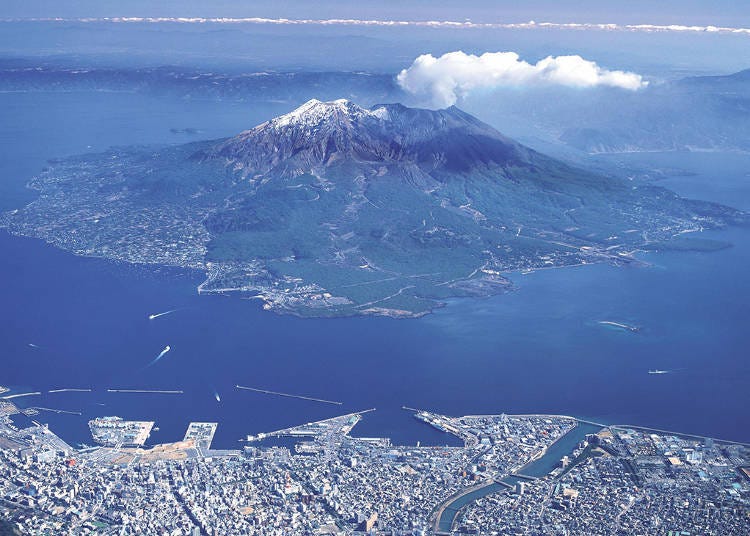
Sakurajima is the unmistakable symbol of Kagoshima. Rising dramatically across Kinko Bay from the city center, this active volcano regularly sends ash and smoke into the sky, yet communities continue to live and farm around it.
Regular ferries make Sakurajima one of the easiest outings from Kagoshima City. Once across the bay, visitors can explore volcanic landscapes, observation points, hot springs, shops, and restaurants on foot, by bicycle, or by bus.
The island's volcanic soil is remarkably fertile and supports several distinctive local products. These include small Sakurajima komikan mandarins and Sakurajima daikon, giant radishes that can grow to extraordinary sizes. Both have become symbols of the island's ability to thrive alongside the volcano.
Several routes around Sakurajima also lead to viewpoints where you can appreciate the volcano from much closer than from Kagoshima City. Rather than simply crossing over for a photograph, allow at least several hours to explore the island and experience the landscape firsthand.
-
Sakurajima桜島
-
Address
Sakurajimaakamizucho, Kagoshima, 891-1420
View Map
-
Address
Sakurajimaakamizucho, Kagoshima, 891-1420
Soak your feet beside the volcano at Sakurajima Yogan Nagisa Park

Close to Sakurajima Ferry Terminal, Sakurajima Yogan Nagisa Park offers one of the easiest ways to experience the island's geothermal activity.
The waterfront park features a free footbath stretching for around 100 meters, making it one of the longest of its kind in Japan. Simply remove your shoes, sit along the edge, and soak your feet in naturally heated water while looking out across Kinko Bay.

Its location is a major part of the appeal. With Sakurajima behind you and the bay spreading out ahead, the footbath makes an especially pleasant place to rest after walking or cycling around the island.
Because it is so close to the ferry terminal, it can easily be incorporated into a half-day or full-day Sakurajima itinerary.
-
Sakurajima Volcanic Shore Park and Footbath桜島溶岩なぎさ公園&足湯
-
Address
1722 Sakurajimayokoyamacho, Kagoshima, 891-1419
View Map
-
Address
1722 Sakurajimayokoyamacho, Kagoshima, 891-1419
Explore Sengan-en, one of Kagoshima's most important historic sights

One major stop every first-time Kagoshima itinerary should include is Sengan-en.
Built in 1658 as a residence of the powerful Shimadzu family, Sengan-en combines a stately home with an expansive Japanese landscape garden. Its most striking design feature is the use of Kinko Bay and Sakurajima as "borrowed scenery," making the volcano appear almost like part of the garden itself.
Beyond ponds, streams, bamboo groves, shrines, and the residence itself, the surrounding Iso area also played an important role in Japan's industrial modernization. This gives Sengan-en considerably more historical depth than a conventional garden visit, particularly for travelers interested in the transition from feudal Japan into the modern era.
The garden is also one of the best places in Kagoshima City to appreciate how deeply Sakurajima shapes the local landscape. Depending on the weather, the volcano can appear almost perfectly framed beyond the trees and Kinko Bay.
Since the opening of JR Sengan-en Station, the area has become particularly convenient to reach from central Kagoshima. The ride from Kagoshima-Chuo Station takes roughly 10 minutes on local trains.
-
Sengan-en仙巌園
-
Address
9700-1 Yoshino-chō, Kagoshima, 892-0871
View Map
-
Address
9700-1 Yoshino-chō, Kagoshima, 892-0871
Combine Sengan-en with Iso Beach

Just beyond Sengan-en, Iso Beach provides another beautiful perspective on Kinko Bay and Sakurajima.
During the warmer months, the beach is popular for swimming and marine activities such as kayaking and paddleboarding. Its relatively calm waterfront setting also makes it suitable for sunbathing, picnics, or simply taking a break beside the sea.
Even outside the swimming season, the shoreline is worth a walk for the views. Sunrise and sunset can be particularly attractive when the changing light falls across the bay and Sakurajima.
Because Sengan-en and Iso Beach sit in the same general area, combining them makes far more sense than visiting the beach as a separate excursion.
-
Iso Beach磯海水浴場
-
Address
9684-2, Yoshino-cho, Kagoshima-shi, Kagoshima 892-0871
View Map
-
Address
9684-2, Yoshino-cho, Kagoshima-shi, Kagoshima 892-0871
See the classic Kagoshima panorama from Shiroyama Observatory

For one of the best views of the city, head to Shiroyama Observatory.
Shiroyama is a 107-meter-high hill in central Kagoshima that once formed part of the grounds around Kagoshima Castle. A roughly 2-kilometer walking promenade leads through surprisingly lush vegetation to an observation point overlooking the city, Kinko Bay, and Sakurajima.
Early morning can be particularly beautiful as the sun rises behind Sakurajima, although the city lights also make the viewpoint appealing after dark.
The combination of Sengan-en, Sakurajima, and Shiroyama gives first-time visitors three very different ways of appreciating Kagoshima's defining landscape.
-
Shiroyama Park Observation Deck城山公園展望台
-
Address
22-13 Shiroyamacho, Kagoshima, 892-0853
View Map
-
Address
22-13 Shiroyamacho, Kagoshima, 892-0853
Eat and explore around Tenmonkan

Tenmonkan is central Kagoshima's main downtown shopping and dining district. Arcades lined with shops, restaurants, cafes, and bars make it an easy place to wander in the evening after sightseeing.
For travelers interested in Kagoshima food, this is also one of the best areas to sample kurobuta pork, seafood, ramen, shochu, and local sweets. Kagoshima City's two principal shopping areas are Tenmonkan and Amu Plaza around Kagoshima-Chuo Station.
Tenmonkan works particularly well as an evening stop, allowing you to keep your daytime itinerary focused on attractions such as Sakurajima or Sengan-en.
-
Tenmonkan Shopping Street天文館本通り
-
Address
17-4 Higashisengokucho, Kagoshima, 892-0842
View Map
-
Address
17-4 Higashisengokucho, Kagoshima, 892-0842
Best things to do around Ibusuki and Chiran
South of Kagoshima City, Ibusuki and Chiran offer a completely different experience from the prefectural capital. Ibusuki is best known for its geothermal sand baths and hot springs, while nearby Chiran is associated with samurai history, landscaped gardens, tea fields, and historic sites.
Both can be visited from Kagoshima City, although spending a night in Ibusuki makes the journey considerably more relaxed.
Get buried in the hot sand at Ibusuki

Of all Kagoshima's hot-spring experiences, Ibusuki's natural sand baths are probably the most distinctive.
Geothermal heat rising beneath the coast warms the sand. After changing into a yukata, you lie down while an attendant uses a shovel to cover your body up to the neck with warm sand.
The combination of the heat and gentle weight of the sand produces an intensely warming sensation quite unlike soaking in an ordinary onsen. Meanwhile, the sound of waves along the nearby coast makes the experience feel distinctly tied to Ibusuki's seaside setting.
Afterward, visitors typically wash off the sand and enjoy a conventional hot-spring bath.
Ibusuki is far enough from central Kagoshima that it is better treated as a substantial day trip or, ideally, an overnight destination where you can enjoy its onsen culture at a slower pace.
-
Ibusuki Beach指宿港海岸
-
Address
5 Chome-25 Yunohama, Ibusuki, Kagoshima 891-0406
View Map
-
Address
5 Chome-25 Yunohama, Ibusuki, Kagoshima 891-0406
Walk through Chiran's preserved samurai district

Chiran provides an excellent historical contrast to Kagoshima's volcanoes and hot springs.
Sometimes nicknamed the "Little Kyoto of Satsuma," Chiran preserves streets lined with stone walls, hedges, former samurai residences, and landscaped gardens. Seven gardens are open to visitors, while the layout of the district still reflects its original defensive design.
The atmosphere is particularly appealing because you aren't simply visiting a single reconstructed house. You can walk through an entire historic neighborhood and get a much clearer sense of how samurai communities in southern Kyushu were organized.
Chiran can be paired with Ibusuki, although trying to cover both thoroughly in a single day requires an early start. Sightseeing buses connect Kagoshima, Chiran, and Ibusuki, making the combination possible for travelers without a rental car.
-
Chiran Samurai Residence Street知覧武家屋敷通り
-
Address
Chiran-chō Kōri, Minamikyushu, Kagoshima 897-0302
View Map
-
Address
Chiran-chō Kōri, Minamikyushu, Kagoshima 897-0302
Discover ancient Buddhist carvings at Kiyomizu Magaibutsu

Kiyomizu Magaibutsu is a fascinating historical and religious site along the Manose River, with more than 200 Buddhist images, symbols, and inscriptions carved directly into a rock wall.
The carvings are remarkably varied. Alongside Buddhist figures are Sanskrit characters and other designs, while some of the flatter carving styles have been compared with artistic traditions found elsewhere in East Asia.
Rather than having been produced all at once, the carvings accumulated over many centuries. They are believed to span several distinct periods, making the rock face something of an outdoor record of changing religious devotion in the region.
The setting also adds to the atmosphere. Rather than entering a conventional temple complex, visitors encounter these centuries-old images embedded directly into the landscape.
It is considerably less famous internationally than Chiran's samurai residences, making it a rewarding addition for travelers exploring southern Kagoshima in greater depth.
-
Kiyomizu Magaibutsu清水磨崖仏
-
Address
Minamikyūshū, Kagoshima 897-0202
View Map
-
Address
Minamikyūshū, Kagoshima 897-0202
Catch Chiran Neputa Matsuri in summer

Visitors traveling in summer may be surprised to encounter a slice of northern Japanese festival culture in southern Kagoshima.
Inspired by the Nebuta Matsuri in Aomori Prefecture, Chiran Neputa Matsuri features enormous illuminated floats shaped like folding fans and decorated with dramatic paintings of warriors.
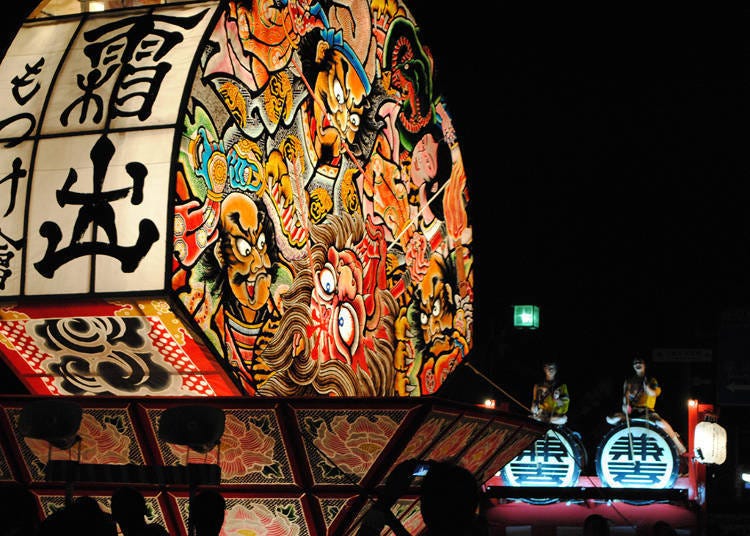
As the glowing floats move through the streets, drums and flutes accompany the procession while spectators cheer and shout, creating a very different atmosphere from Chiran's normally quiet samurai district.
The festival is typically held in late July. Check the latest official schedule before planning your trip, as dates may vary by year.
Explore Kirishima's hot-spring country
North of Kagoshima City, Kirishima is a mountainous area shaped by volcanic activity, forests, hot springs, and hiking trails.
It is especially suited to travelers who want to add a traditional onsen stay to their Kagoshima itinerary. Rather than squeezing Kirishima into a few hours between city attractions, consider spending a night at a ryokan or hot-spring hotel and enjoying the mountain scenery at a slower pace.
Snack and soak at Kirishima Onsen Market
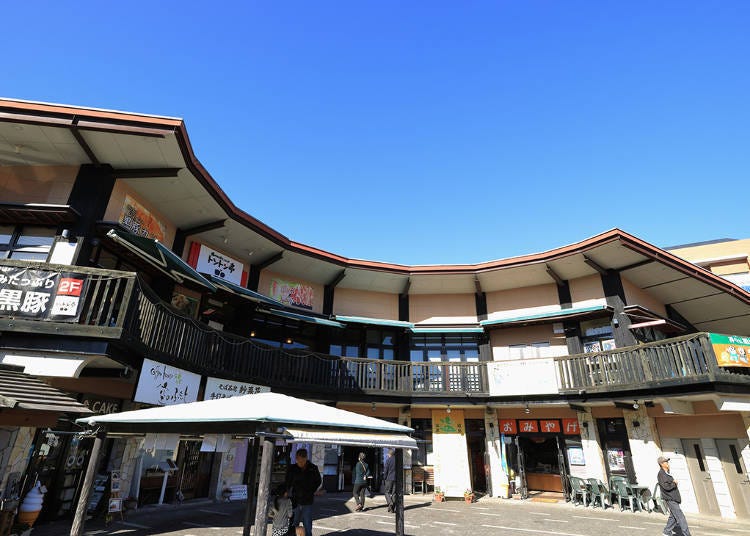
Kirishima Onsen Market makes an easy and enjoyable stop while exploring the hot-spring resort area around Maruo Onsen.
The market sells local produce, handmade bread, snacks, and regional specialties, but the most memorable items are cooked using geothermal steam. Eggs and steamed bean buns emerge piping hot from the area's natural hot-spring heat, making them particularly satisfying on a cool day.
There is also a footbath where visitors can soak their feet before continuing through Kirishima.
The combination of local food and geothermal activity makes the market a useful introduction to the region, especially for travelers who do not have time for a full hot-spring stay.
-
Kirishima Onsen market霧島温泉市場
-
Address
3878-114 Makizonocho Takachiho, Kirishima, Kagoshima 899-6603
View Map
-
Address
3878-114 Makizonocho Takachiho, Kirishima, Kagoshima 899-6603
Step into Japanese mythology at Kirishima Jingu Shrine
Surrounded by forest on the slopes of the Kirishima Mountains, Kirishima Jingu is one of southern Kyushu's most important shrines.
Kirishima features prominently in Japan's ancient mythology. According to stories recorded in the Kojiki, the deity Ninigi no Mikoto, grandson of the sun goddess Amaterasu, descended from the heavens to the Kirishima Mountains. Kirishima Jingu enshrines Ninigi no Mikoto and has long been associated with this legendary "descent of the heavenly grandchild."
The present shrine buildings date to 1715 and are striking for their vivid vermillion lacquer, richly colored carvings, gold ornamentation, and dramatic arrangement up the hillside. The Main Hall, Shinden Hall, and Worship Hall were designated National Treasures in 2022, the first architectural National Treasure designation in Kagoshima Prefecture.
Among the details that helped distinguish the complex are elaborate dragon-carved pillars, an architectural feature associated particularly with southern Kyushu and reflecting cultural influences from places such as the Ryukyu Kingdom and China. Some of the most detailed decorative elements are not normally open for close public viewing, but their presence contributes to the shrine's exceptional architectural significance.
The grounds also contain a towering sacred cedar said to be around 800 years old and approximately 35 meters tall. Together with the forested approach and vermillion buildings, it gives Kirishima Jingu a particularly atmospheric setting.
-
Kirishima Jingu Shrine霧島神宮
-
Address
2608-5 Kirishimataguchi, Kirishima, Kagoshima 899-4201
View Map
-
Address
2608-5 Kirishimataguchi, Kirishima, Kagoshima 899-4201
See thousands of vinegar jars at Fukuyama's kurozu fields

One of Kirishima's more unexpected landscapes can be found in Fukuyama, where rows upon rows of ceramic jars sit outdoors beneath the Kagoshima sun.
Fukuyama has been producing kurozu, or black rice vinegar, using traditional jar-fermentation methods since around the early 19th century. Rice, koji, and water are placed into ceramic jars and left to ferment and mature naturally, with the region's warm climate helping support the process.
At Fukuyama Kurozu's Kakuida brewery alone, roughly 20,000 ceramic jars are spread across four jar fields. The sight of thousands of dark jars arranged in precise rows, with Kinko Bay and Sakurajima visible beyond, makes this far more visually striking than the word "vinegar factory" might suggest.
Visitors can learn about the traditional production process, sample kurozu, and see the jar fields themselves. Kakuida also operates a restaurant overlooking the jars, where kurozu is incorporated into dishes ranging from sauces and drinks to its popular black-vinegar sweet-and-sour pork.
-
Sakamoto Kurozu (Black Vinegar) Tsubobatake Information Center黒酢ガーデン壺畑
-
Address
3075 Fukuyamacho Fukuyama, Kirishima, Kagoshima 899-4501
View Map
-
Address
3075 Fukuyamacho Fukuyama, Kirishima, Kagoshima 899-4501
See one of Japan's great wildlife spectacles in Izumi
Northern Kagoshima becomes one of Japan's most remarkable wildlife destinations each winter as thousands of migratory cranes arrive in Izumi.
The phenomenon is highly seasonal, so this is one Kagoshima experience that is especially worth planning a trip around rather than simply adding to an itinerary at random.
Watch thousands of cranes gather for winter

Every winter, enormous numbers of cranes migrate to Izumi from areas of Siberia, China, and elsewhere in East Asia.
More than 10,000 birds can gather in the region during the season, creating one of Japan's most impressive concentrations of wild cranes.
The Izumi Crane Observation Center offers elevated views across the wintering grounds. Early morning is an especially rewarding time to visit, when large groups of birds begin taking flight around sunrise. If conditions cooperate, watching thousands of cranes spread their wings together can be one of the most memorable wildlife experiences in Kyushu.
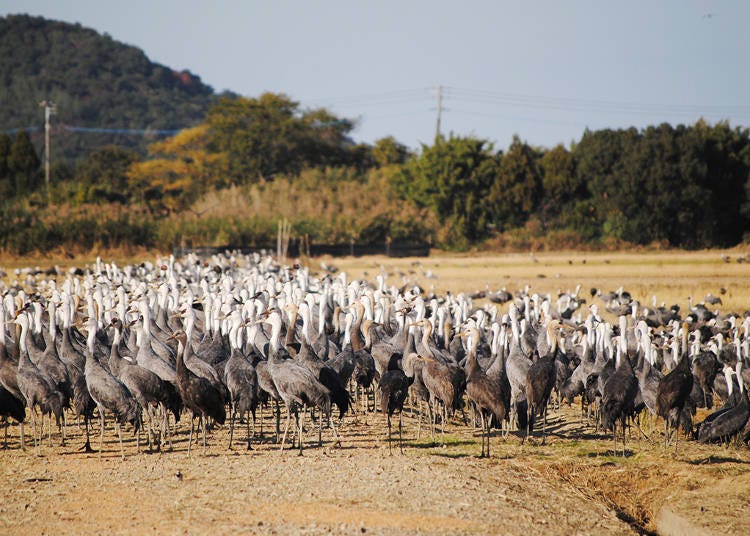
The cranes are generally present from autumn through early spring, with winter offering some of the largest concentrations.
Because Izumi lies well north of Kagoshima City, it works best as part of a northern Kagoshima itinerary rather than as a quick city excursion.
-
Izumi Crane Observation Center出水市ツル観察センター
-
Address
2478-4 Sho, Izumi, Kagoshima 899-0435
View Map
-
Address
2478-4 Sho, Izumi, Kagoshima 899-0435
Make time for Yakushima's extraordinary wilderness
Yakushima is one of Kagoshima Prefecture's great natural destinations and deserves considerably more time than an ordinary day trip.
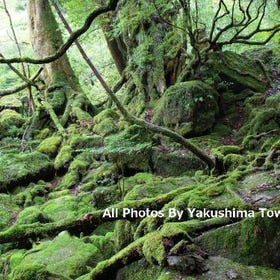
Ancient cedars, moss-covered forests, waterfalls, mountain trails, wild monkeys and deer, sea turtles, and a rugged coastline give the island an atmosphere unlike almost anywhere else in Japan.
For most visitors, spending at least two nights on Yakushima is far more rewarding than attempting a rushed visit from Kagoshima City.
Hike through the ancient forests of Yakushima

Located south of Kyushu, Yakushima is renowned for its ancient Japanese cedar forests and extraordinary biodiversity. Part of the island is designated a UNESCO World Natural Heritage Site, reflecting the unusual range of ecosystems found across its mountains and coastline.
Its most famous resident is Jomon Sugi, an enormous ancient cedar generally believed to be at least 2,000 years old. Reaching it requires a long and demanding hike, making it best suited to prepared walkers.

For something more accessible, Shiratani Unsuikyo Ravine is known for trails passing through lush, moss-covered forest. The scenery is often associated with the mystical forest imagery of Studio Ghibli's Princess Mononoke, although the landscape itself is reason enough to visit.
Yakushima is also home to native monkeys and deer, while sea turtles come ashore on parts of the island during nesting season. Depending on the season and operator, outdoor experiences can include kayaking, snorkeling, diving, and other marine activities.
Because of its mountains and famously wet climate, weather can significantly affect hiking plans. Leave some flexibility in your schedule rather than planning major trails immediately before your return journey.
(Note: Some marine activities operate seasonally. Check availability directly with tour operators before visiting.)
-
Yakushima Island屋久島
-
Address
Yakushima, Kumage District, Kagoshima
View Map
-
Address
Yakushima, Kumage District, Kagoshima
See Senpiro Falls

Senpiro Falls, also written as Sempiro Falls, is one of Yakushima's best-known waterfalls.
Water plunges roughly 60 meters through an enormous granite landscape, framed by broad, smooth rock faces. The name is associated with the immense scale of these cliffs, traditionally said to be broad enough for 1,000 people holding hands.

Visitors can appreciate the scene from an observatory overlooking the valley. From here, the waterfall appears tucked deep within the vast granite terrain, particularly impressive following periods of rain.
Because the viewpoint is relatively easy to access compared with Yakushima's long forest hikes, Senpiro Falls works well as part of a driving itinerary around the southern side of the island.
-
Senpiro Falls千尋の滝
-
Address
Mugio, Yakushima, Kumage District, Kagoshima 891-4202
View Map
-
Address
Mugio, Yakushima, Kumage District, Kagoshima 891-4202
Time your visit to Hirauchi Kaichu Onsen with the tide

Hirauchi Kaichu Onsen is one of Japan's most unusual hot springs.
The natural baths sit among rocks directly beside the ocean, allowing bathers to soak while waves roll nearby. There is one important catch: the pools are only accessible for a few hours around low tide and disappear beneath the sea again as the water rises.
Checking the tide schedule beforehand is therefore essential.
The baths are mixed-gender, and swimsuits are not permitted. This is a rustic, traditional bathing experience rather than a modern spa, so travelers should familiarize themselves with the local rules and etiquette before visiting.
For visitors comfortable with the setting, soaking beside the sea while the tide slowly approaches is one of Yakushima's most distinctive experiences.
-
Hirauchi Kaichu Onsen平内海中温泉
-
Address
Hirauchi, Yakushima, Kumage District, Kagoshima 891-4406
View Map
-
Address
Hirauchi, Yakushima, Kumage District, Kagoshima 891-4406
Venture farther into Kagoshima's islands
Kagoshima Prefecture extends far south of mainland Kyushu through a chain of islands with subtropical scenery, beaches, forests, and distinctive local cultures.
These islands should not be thought of as ordinary Kagoshima City side trips. Tanegashima, Yoron, and the Amami Islands each require additional travel and are best incorporated as separate stays.
Step inside Chikura Cavern on Tanegashima

Tanegashima is best known internationally for its space center, but its coastline also hides remarkable natural formations.
Chikura Cavern, located at Hamada Beach, is an enormous sea cave carved into the coast by centuries of erosion. Local descriptions traditionally say that its cavernous interior is spacious enough to accommodate around 1,000 people.
At low tide, visitors can walk into the cavern and look back toward the sea through its huge rocky openings. The contrast between the dark interior, pale sand, and blue water creates some of the island's most dramatic coastal scenery.
Access is dictated by the tide. As seawater rises, the cavern becomes inaccessible, so check the tide schedule before setting out.
Tanegashima can be reached by air or ferry from mainland Kagoshima, but once there, a rental car is particularly useful for exploring places such as Chikura Cavern.
-
Chikura Cavern千座の岩屋
-
Address
Minami-Tane-cho, Kumage-gun, Kagoshima 891-3702
View Map
-
Address
Minami-Tane-cho, Kumage-gun, Kagoshima 891-3702
Walk across Yurigahama's disappearing sandbar on Yoron Island

Far to the south of mainland Kagoshima, Yoron Island offers white beaches and brilliant blue water more reminiscent of a subtropical resort than the volcanic landscapes around Kagoshima City.
Its signature attraction is Yurigahama, an offshore sandbar that appears only when tide and sea conditions allow. Small boats carry visitors out from the island when the sandbar emerges.
The sand here is also famous for tiny star-shaped grains. According to local tradition, finding and collecting the same number of these "star sands" as your age is said to bring good luck.
Conditions determine whether Yurigahama appears at all, so travelers should check tide forecasts and local boat operations rather than assuming it will be accessible every day.
Yoron itself is far from Kagoshima City and deserves to be treated as a separate island stay rather than a quick excursion.
-
Yurigahama Beach百合ヶ浜
-
Address
Furusato, Yoron, Oshima District, Kagoshima 891-9307
View Map
-
Address
Furusato, Yoron, Oshima District, Kagoshima 891-9307
What to eat in Kagoshima
Food is one of the pleasures of traveling through Kagoshima. Historically known as Satsuma, the region developed a distinctive cuisine influenced by its agricultural abundance, surrounding seas, southern climate, and connections with the Ryukyu Islands.
Along with the dishes below, keep an eye out for Kagoshima beef, local chicken, fresh seafood, sweet potatoes, green tea, and shirokuma shaved ice.
Try kurobuta pork, preferably as shabu-shabu

Kagoshima's kurobuta, or black pork, is one of the prefecture's signature ingredients.
Associated with Berkshire pigs, Kagoshima kurobuta are traditionally fed sweet potatoes, which are said to contribute to the pork's characteristic sweetness and rich flavor.
One of the best ways to appreciate it is shabu-shabu. Thin slices of raw pork are briefly swished through simmering broth at the table until cooked, then dipped into sauce.
Tonkatsu is another popular choice, particularly if you prefer a crisp coating against the pork's tender, juicy interior.
Tenmonkan is one of the easiest areas in Kagoshima City to find restaurants specializing in kurobuta.
Snack on satsuma-age

Satsuma-age is a fried fish cake closely associated with Kagoshima and makes an easy snack while sightseeing.
Fish is minced into a paste, seasoned, shaped, and deep-fried. Depending on the variety, ingredients such as vegetables, squid, or boiled egg may be incorporated into the fish cake.
The dish is thought to have developed under influence from the Ryukyu Islands before becoming established as a Satsuma specialty.
Satsuma-age can be eaten on its own while still warm, served as part of a meal, or purchased as a souvenir from specialty stores and station shops.
Splurge on Kagoshima Kurogyu wagyu
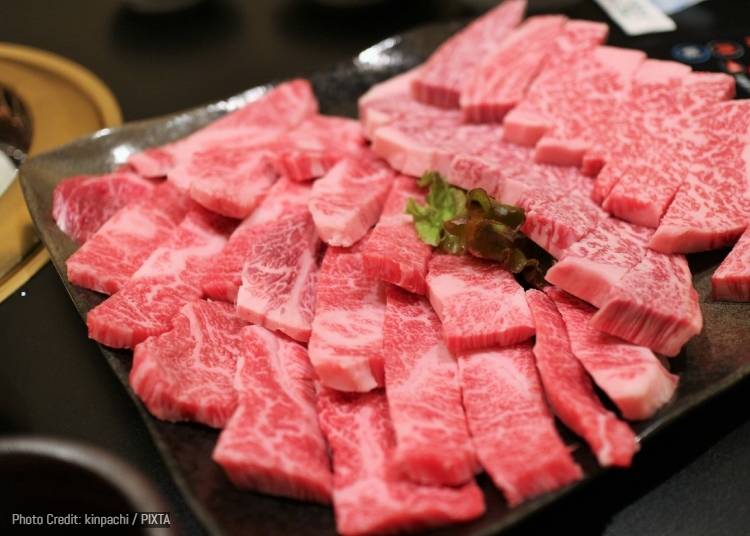
Pork gets much of the attention, but beef lovers should make room for Kagoshima Kurogyu, the prefecture's premium Japanese Black wagyu.
Kagoshima has established itself as one of Japan's leading wagyu-producing regions. At the National Competitive Exhibition of Wagyu, often nicknamed the "Wagyu Olympics" and held once every five years, Kagoshima earned the title of Japan's top wagyu producer for two consecutive competitions. At the most recent event in 2022, Kagoshima cattle placed first in six of nine divisions and also received the Prime Minister's Award and the top carcass award in the beef category.
The meat is prized for its fine marbling, tenderness, and rich flavor. Depending on the restaurant, you may encounter it as steak, yakiniku, shabu-shabu, or sukiyaki.
Try Kagoshima-style torisashi, if you're comfortable eating raw chicken
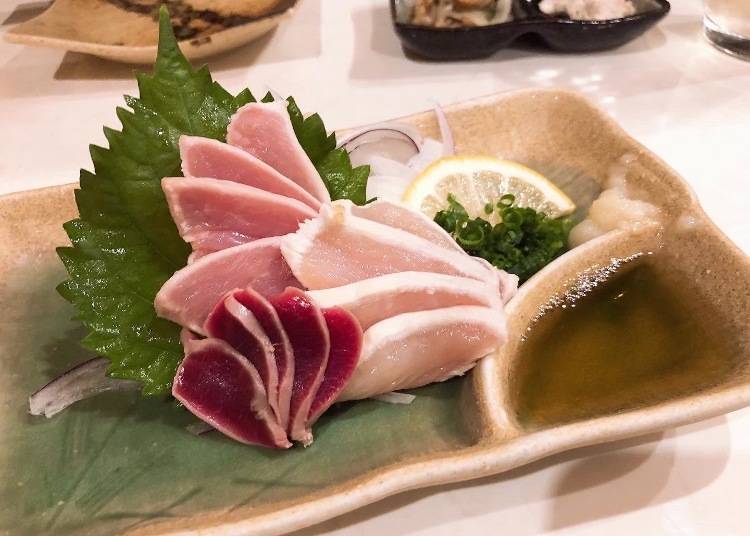
For adventurous diners, torisashi is one of southern Kyushu's most distinctive regional dishes.
Thinly sliced chicken is served sashimi-style, often after the exterior has been lightly seared, and eaten with soy sauce and ginger. Kagoshima's local chicken varieties include Satsuma Jidori, Kuro Satsuma-dori, and Satsuma Waka Shamo, all developed from the region's historic Satsuma chicken.
Torisashi can be difficult to find elsewhere in Japan, making it particularly interesting for repeat visitors eager to explore regional food culture beyond familiar dishes.
As a note, eating raw or insufficiently cooked chicken carries a risk of food poisoning, including Campylobacter infection. Kagoshima Prefecture maintains hygiene standards for chicken intended to be served raw, but even properly handled raw meat is not risk-free.
Travelers who would rather skip raw chicken can still experience Kagoshima's local poultry through charcoal-grilled chicken and other fully cooked preparations.
Compare Kagoshima ramen with other Kyushu styles
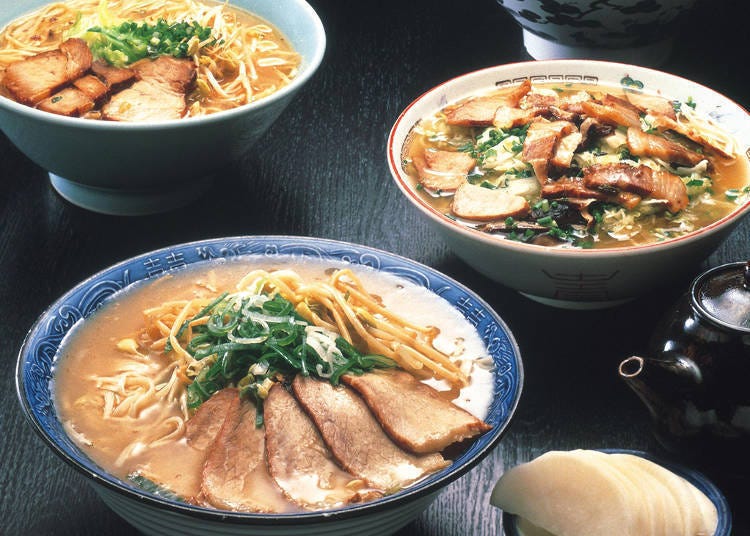
Kyushu is synonymous with tonkotsu ramen, but Kagoshima's version has a character of its own.
Rather than relying solely on an intensely pork-heavy broth, Kagoshima ramen commonly combines pork and chicken bones with ingredients such as vegetables, dried fish, and kelp. Recipes differ considerably between shops, so there is less rigid standardization than with styles such as Hakata ramen.
The result is generally hearty and savory while retaining plenty of variation from restaurant to restaurant.
If your Kyushu itinerary also includes Fukuoka, trying both Kagoshima and Hakata ramen is an easy way to experience how dramatically regional ramen styles can differ.
Drink local sweet-potato shochu
Kagoshima is one of Japan's great shochu regions, particularly for imo shochu made from sweet potatoes.
The prefecture is home to more than 100 distilleries producing a huge range of styles. Shochu can be enjoyed straight, over ice, mixed with cold water, or diluted with hot water, the latter being a particularly popular way to appreciate its aroma.
Visitors curious about Japanese alcohol may find Kagoshima one of the most interesting places in the country to explore beyond sake.
Leave room for local sweets
For something sweet after a day of sightseeing, look for Kagoshima specialties such as sweet-potato confectionery and shirokuma, a colorful local style of shaved ice topped with fruit and other sweets.
Kagoshima-Chuo Station and Tenmonkan are both convenient places to sample local sweets or pick up edible souvenirs before leaving the city.
How many days do you need in Kagoshima?
Kagoshima rewards slower travel. A major mistake is attempting to combine Kagoshima City, Ibusuki, Kirishima, Yakushima, and the southern islands into one short itinerary simply because they are all within the same prefecture.
As a practical rule of thumb:
1 day: Concentrate on Kagoshima City and Sakurajima.
2 days: Spend one day around Kagoshima City and Sakurajima, then use the second for Sengan-en and other city sights, or make a day trip toward Ibusuki.
3 days: Add a dedicated Ibusuki and Chiran day, or spend a night around Kirishima.
5 days or more: A city stay plus one or two regional excursions becomes comfortable.
1 week or more: Add Yakushima or another island without rushing.
Yakushima, Tanegashima, Yoron, and the Amami Islands are best thought of as extensions to a Kagoshima trip rather than attractions to squeeze into spare afternoons.
Sample 3-day Kagoshima itinerary
Day 1: Kagoshima City and Sakurajima
Kagoshima-Chuo Station → ferry to Sakurajima → Yogan Nagisa Park footbath → Sakurajima sightseeing → return to Kagoshima City → Shiroyama Observatory → dinner in Tenmonkan
Day 2: Sengan-en and Kagoshima City
Sengan-en → Iso area and Iso Beach → central Kagoshima sightseeing → shopping around Tenmonkan or Kagoshima-Chuo Station → kurobuta dinner
Day 3: Southern Kagoshima
Chiran Samurai Residence Complex → Chiran sightseeing → Ibusuki sand bath → overnight in Ibusuki or return to Kagoshima City
Travelers more interested in mountains and hot springs could substitute Kirishima for Day 3.
For Yakushima, add at least two additional days rather than attempting to insert it into this itinerary.
Getting to Kagoshima
Kagoshima-Chuo Station is the main railway gateway to the city and the southern terminus of the Kyushu Shinkansen, making Kagoshima easy to combine with cities such as Kumamoto, Fukuoka, and other destinations around Kyushu. You can enjoy savings with the JR Kyushu Rail Pass and with the Japan Rail Pass.
Kagoshima Airport lies outside the city near Kirishima and is connected with Kagoshima City and other parts of the prefecture by bus.
Once in Kagoshima City, trams and buses cover most central attractions. Ferries connect the city with Sakurajima, while JR trains are useful for destinations including the newly accessible Sengan-en area.
A rental car becomes increasingly useful once you venture into rural southern Kagoshima, Kirishima, or the islands. Travelers without a car can still reach major destinations, but should check timetables carefully as services outside the city may be relatively infrequent.
When is the best time to visit Kagoshima?
Kagoshima can be visited year-round, but what you want to do should influence when you go.
Spring: Comfortable for city sightseeing, gardens, walking, and road trips.
Summer: Best suited to beaches, islands, and summer festivals, although conditions can be hot and humid.
Autumn: Another comfortable period for sightseeing, hiking, and hot-spring trips.
Winter: Ideal for onsen trips and the spectacular crane migration around Izumi.
If Yakushima is central to your plans, remember that its mountainous terrain receives considerable rainfall, and hiking conditions can differ significantly from those in Kagoshima City.
Where should you stay in Kagoshima?
For a first visit, Kagoshima City is the most convenient base. Staying near Kagoshima-Chuo Station makes onward transportation easy, while Tenmonkan is better for travelers prioritizing restaurants, nightlife, and an evening atmosphere.
Choose Ibusuki if hot springs and the sand baths are a major priority.
Stay in Kirishima for mountain scenery, hot-spring ryokan, and convenient access to the airport.
For Yakushima, Tanegashima, Yoron, or the Amami Islands, stay on the island itself. These are destinations in their own right, not realistic excursions from a Kagoshima City hotel.
Kagoshima travel FAQ
- Is Kagoshima worth visiting?
- Yes, particularly for travelers interested in volcanic landscapes, hot springs, outdoor activities, regional food, and destinations that generally feel less crowded than Japan's major Golden Route cities.
- What is Kagoshima most famous for?
- Sakurajima is its best-known landmark, but Kagoshima is also famous for Yakushima, Ibusuki's sand baths, Satsuma and samurai history, kurobuta pork, sweet-potato shochu, and its subtropical islands.
- Can you visit Sakurajima as a day trip?
- Yes. Sakurajima is directly across the bay from Kagoshima City and is one of the easiest attractions to explore from the city.
- Can you visit Yakushima as a day trip from Kagoshima?
- Technically some transportation schedules may make very short visits possible, but it is not recommended. Yakushima's main appeal lies in its forests, hiking, waterfalls, coast, and wildlife, so staying at least two nights gives you a much better experience.
Discover a different side of southern Japan
Kagoshima works especially well for travelers who want Japan to feel a little more spacious and adventurous. Within the same prefecture, you can stand beneath an active volcano, be buried in naturally heated sand, walk through a preserved samurai neighborhood, hike among ancient cedar trees, soak in an onsen revealed only by the tide, and finish the day over kurobuta pork and local shochu.
Just don't try to do everything at once. Start with Kagoshima City and Sakurajima, choose one or two mainland areas that match your interests, then give Yakushima or the southern islands the time they deserve. Kagoshima's enormous geographical range is part of what makes it special, and slowing down is the best way to experience it.
- Area
- Category
*Prices and options mentioned are subject to change.
*Unless stated otherwise, all prices include tax.
Popular Tours & Activities
Recommended places for you
-
The Tokyo Station Marunouchi Building
Landmarks
Tokyo Station
-
TOKYO SKYTREE®
Landmarks
Ryogoku / TOKYO SKYTREE(R)
-
Active AKIBA Batting Center
Other Activities
Akihabara
-
Tokyo Metropolitan Government
Landmarks
Shinjuku
-
Shinjuku Gyoen National Garden
Gardens
Shinjuku
-
Kappabashi Street
Old Towns (Shitamachi)
Asakusa
-

The Best Sumo Experiences in Tokyo: Morning Practices vs. Sumo Shows
-
August Events in Kanto: Fun Festivals, Food, and Things to Do
-
10 Best Nagoya Hotels & Apartment Hotels for Families: Near Legoland & Ghibli Park
by: Yotsuka Hizuki
-
Start Your Japan Trip Luggage-Free with SAGAWA’s New Narita Airport (NRT) Service
by: Guest Contributor
-
Ride the Rails, Catch Pokémon: JR East’s Huge Stamp Rally Takes Over Tokyo This Summer
by: Guest Contributor
-
Fukuoka: 10 Recommended Apartment Hotels for Comfortable Stays in Hakata, Tenjin, and Beyond
by: Yotsuka Hizuki
Inspiration for Accommodations
-
Family-Friendly Hotels with Free Shuttle to Disneyland: Convenient Access for a Magical Stay
-
Top Ranked Hakone Hotels with Mt. Fuji View: Enjoy Stunning Scenery from Your Private Space
-
Convenient Tokyo Hotels with Airport Shuttle: Ideal for Families and Heavy Luggage
-
9 Family-Friendly Hotels with Comfortable Family Rooms in Asakusa
-
10 Open-air bath Onsen Ryokans in Hakone for Ultimate Relaxation
-
Tokyo Tsukiji|Tsukiji Area Map & Sightseeing Information
-

Kotori Café – Little Birds and Delicious Desserts
-
Cycle around the stunning Seto Inland Sea; enjoy hands-on activities on a farm
-
5 Recommended Tokyo Bus Tours: Enjoy Nearby Destinations such as Mount Fuji, Hakone, and Shizuoka
-
8 Unfamiliar (But Totally Normal) Customs in Japan!
-
Shinjuku for First-Timers: 30+ Best Things to Do in Tokyo's Entertainment Hub
by: Himanshi Shah
- #best ramen tokyo
- #what to buy in ameyoko
- #what to bring to japan
- #new years in tokyo
- #best izakaya shinjuku
- #things to do tokyo
- #japanese nail trends
- #what to do in odaiba
- #onsen tattoo friendly tokyo
- #daiso
- #best sushi ginza
- #japanese convenience store snacks
- #best yakiniku shibuya
- #japanese fashion culture
- #best japanese soft drinks