






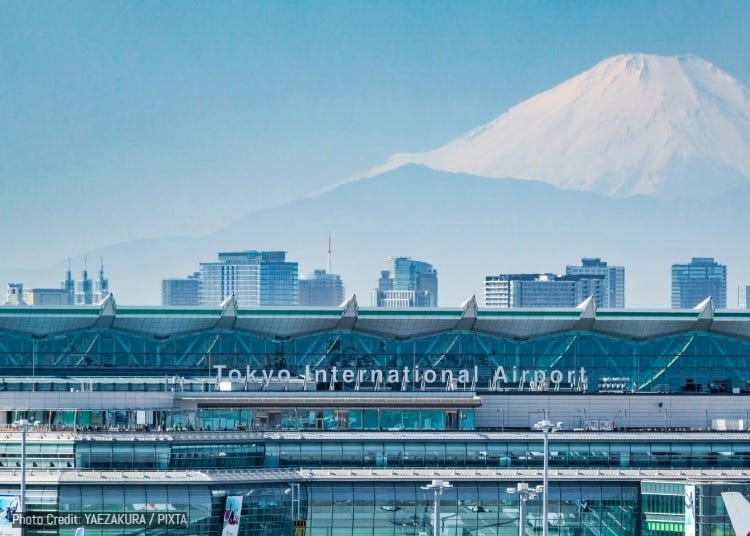
Tokyo Travel Tip: Haneda (HND) or Narita (NRT)? Here's The Most Common Mistake People Make With Tokyo's Two Airports
- Written by: LIVE JAPAN Editor
When booking a flight to Tokyo, have you ever jumped on a great deal without noticing whether the airport code was HND or NRT?
It is one of the most common mistakes first-time visitors make. Tokyo is served by two major international airports: Narita International Airport (NRT) and Haneda Airport (HND). While both handle international flights into the Greater Tokyo area, their locations and transport convenience are very different. Choose the wrong one, and you could easily add up to two extra hours of travel time. In some cases, the cost of getting into the city can even wipe out the money you saved on airfare.
In this guide, we break down the real differences between Narita and Haneda, compare their pros and cons, explain the latest transportation options for 2026, and share what to do if you end up at the “wrong” airport or need to transfer between the two.
(Main image source: PIXTA)
(This article contains affiliate links)
- Table of Contents
-
- At a Glance: The Key Differences Between Haneda (HND) and Narita (NRT)
- Narita Airport: The Hub for International Flights and Budget Airlines
- Haneda Airport: The Most Convenient Choice, Right Next to the City
- Key Guide: Went to the Wrong Airport? How to Transfer Between Narita and Haneda
- Real-World Decision Guide: Which Airport Should You Fly Into Based on Your Hotel Location?
- Don’t Save on Airfare at the Cost of Your Travel Time

At a Glance: The Key Differences Between Haneda (HND) and Narita (NRT)
To really understand the difference between Tokyo’s two main airports, it helps to look beyond the map and focus on two very real factors: time and money. Geographically, the contrast is significant. Narita International Airport may carry Tokyo’s name, but it is actually located in Narita City, Chiba Prefecture, around 60–70 kilometers from central Tokyo. Haneda Airport, on the other hand, sits in Ota Ward, Tokyo, just 15–20 kilometers from the city center. In simple terms, Narita is roughly three times farther away.
That distance has a direct impact on travel time into the city. From Narita to Tokyo Station, even the fastest options such as the Skyliner or the Narita Express usually take around 50 minutes to one hour. From Haneda, trains often reach major transport hubs in just 20–30 minutes. Costs also differ noticeably. Narita’s limited express trains typically cost around 2,500–3,000 yen one way, and even the cheapest highway buses are usually about 1,300 yen. From Haneda, fares on the Keikyu Line or Tokyo Monorail are often in the 500–800 yen range.
That said, Narita has strengths that cannot be ignored. As Japan’s largest international gateway, it offers the widest range of international routes and the highest number of low-cost carrier flights. If you are flying with budget airlines such as Peach or Jetstar, or arriving on a long-haul flight from Europe or North America, chances are you will land at Narita. Airfares into Narita are also often cheaper than those into Haneda.
Haneda, by contrast, excels in convenience. Its proximity to the city makes transfers faster and less tiring, which is a major advantage after a long flight. However, it is mainly served by full-service airlines such as ANA, JAL, Cathay Pacific, and EVA Air. Ticket prices tend to be higher, and during peak hours the immigration area can become quite crowded.
Narita Airport: The Hub for International Flights and Budget Airlines

Narita International Airport has long been Japan’s main international gateway, with one of the country’s most extensive global route networks. If you are flying with low-cost carriers such as Jetstar or Peach, or arriving on long-haul flights from Europe or North America, you will most likely land here. While Narita is located in Chiba Prefecture and farther from central Tokyo, it offers more flight choices and often lower fares, making it a strong option for budget-focused or flexible travelers.
Narita is also well known for its shopping facilities. Inside the terminals, you will find large capsule-toy areas, perfect for turning leftover coins into quirky souvenirs before leaving Japan. It is a small but memorable Narita-only touch.
Despite the distance, access to Tokyo is straightforward thanks to multiple transport options. For speed, the Keisei Skyliner is the fastest choice. Operated by Keisei Electric Railway, it links the airport with Ueno and Nippori in about 41 minutes. All seats are reserved, and the ride is smooth and comfortable, making it ideal if you are staying around Ueno or Asakusa.
If you hold a JR Pass or are heading to areas like Shinjuku, Shibuya, Shinagawa, or Yokohama, the Narita Express by JR East is often the easiest option. The trip to Shinjuku takes around 80 minutes, but the big advantage is a direct ride with no transfers, which is especially helpful when carrying large luggage.
For travelers watching their budget, low-cost highway buses are another excellent option. These buses connect Narita with major hubs such as Tokyo Station for around 1,300 yen one way. Departures are frequent and reservations are not required. While travel time varies with traffic, usually around 65 to 80 minutes, this remains one of the most cost-effective ways to reach the city.
▼ Explore More Articles About Narita Airport ▼
Haneda Airport: The Most Convenient Choice, Right Next to the City
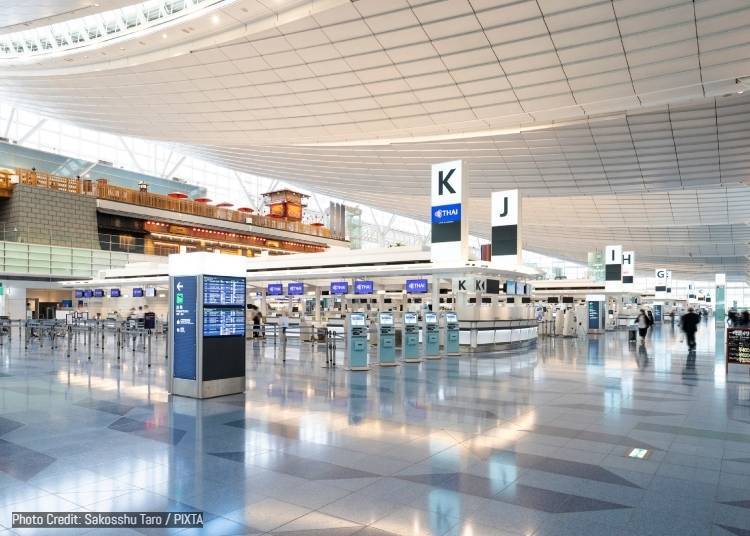
Haneda Airport was once focused mainly on domestic flights, but with a major expansion of international routes, it has become the preferred airport for business travelers and anyone who values speed and efficiency. Its biggest advantage is sheer convenience. From landing to reaching key areas such as Tokyo Station or Shinagawa, travel time is often just 20–30 minutes. It feels less like an airport transfer and more like a short subway ride within Tokyo.
Inside the international terminal, you will find Edo Koji, a beautifully designed street that recreates the look of old Edo-era Tokyo. Lined with traditional-style restaurants and souvenir shops, it offers a quick cultural hit either before departure or right after arrival.
Another major highlight is Haneda Airport Garden, a large commercial complex directly connected to Terminal 3. It includes a luxury hotel and a 24-hour open-air hot spring facility, Izumi Tenku no Yu, where you can soak while watching planes take off and land, and on clear days, even catch views of Mount Fuji. With a wide selection of Japanese specialty shops and restaurants, it is an ideal place to relax, especially if you are arriving late at night or departing early in the morning.
Getting into the city from Haneda is straightforward thanks to two efficient rail options. The Tokyo Monorail runs along Tokyo Bay, offering scenic views before terminating at Hamamatsucho Station, where you can transfer easily to the JR Yamanote Line.
For the fastest route, trains operated by Keikyu Corporation reach Shinagawa Station in as little as 11 minutes, making transfers to the shinkansen for Kyoto or Osaka very easy. Some Keikyu services run directly onto the Toei Asakusa Line, allowing one-seat rides to areas such as Asakusa, Oshiage (Tokyo Skytree), and the eastern side of Ginza without changing trains.
▼ Explore More Articles About Haneda Airport ▼
Key Guide: Went to the Wrong Airport? How to Transfer Between Narita and Haneda
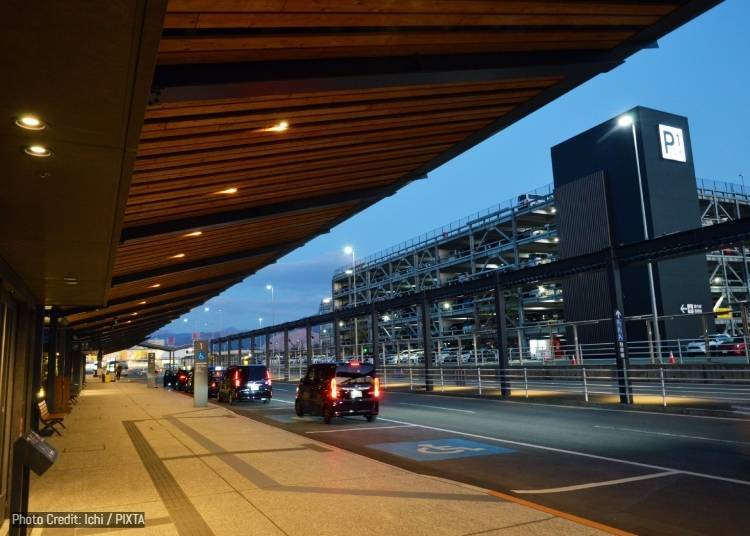
If you realize you have arrived at the wrong airport, or need to transfer between airports, the first thing to do is stay calm. Panicking will not help. What matters most is knowing how much time you have before your next flight departs. Depending on your remaining time and current traffic conditions, the best option can change.
There are three main ways to travel between Narita International Airport and Haneda Airport: limousine buses, trains, and taxis. Here is how each option compares.
The most balanced choice in terms of cost and convenience is the Airport Limousine Bus. One-way fares are around 3,600 yen, with an average travel time of about 1 hour and 15 minutes. Buses stop at all terminals at both airports, and services run frequently, usually every 20–30 minutes. Seats can be reserved online. The biggest advantage is that you do not have to handle your luggage yourself. The downside is that arrival times depend heavily on traffic, so delays are possible during congestion or accidents.
The cheapest option is by train, using the Keisei Narita Sky Access Line. Fares are about 1,810 yen, and the journey takes roughly 1 hour and 40 minutes. Some services run directly between Narita and Haneda with no transfers. However, these direct trains are not very frequent, sometimes only once per hour, so checking the timetable carefully is essential. This option works best if you have enough time to spare.
The final option is a taxi. While taxis offer maximum flexibility, they are extremely expensive. One-way fares typically range from 28,900 to 30,000 yen, not including expressway tolls. Travel time is around 1 hour using highways, but can exceed 2 hours and 40 minutes on local roads. Late-night surcharges apply between 10 PM and 5 AM. Unless the situation is urgent and budget is not a concern, taxis are generally not recommended.
In summary, the limousine bus is usually the first choice thanks to frequent departures and comfort. Trains are suitable if you want to minimize costs and have enough time. Taxis or private transfers should be considered only in true emergencies.
Golden Rules Based on How Much Time You Have Left
If you end up at the wrong airport, your next move should be decided by one thing only: how much time remains before departure. Use the guidelines below to choose the best response based on your situation.
If you have more than 4 hours
When time is on your side, taking an airport express train is the safest and most cost-effective option. Fares are around 1,810 yen, and while the journey takes longer, Japan’s rail system is extremely punctual. For travelers who are not rushed, this is often the most reliable choice with the best overall value.
If you have 2 to 3 hours
At this point, arriving on time becomes the top priority. A taxi is usually the best option. While fares are high, missing your flight and having to buy a new ticket would be far more costly. Most taxis in Japan accept credit cards, so you do not need to worry about having enough cash on hand.
If you have less than 1 hour
It is important to be realistic. Even by taxi, the fastest travel time between the two airports is about 60 minutes, making it nearly impossible to catch your original flight. Contact your airline immediately. Depending on your ticket type, you may be able to change flights without additional fees.
Also ask about the so-called Flat Tire Rule. Some airlines may allow free standby on the next flight if delays were caused by unavoidable circumstances. This is not guaranteed, but it is always worth asking.
If you are flying late at night or early in the morning
For red-eye or early-morning flights, trains may not be running yet or may have already stopped. In these cases, late-night and early-morning buses operate in the Tokyo area, with some routes departing as early as 4 AM. If your flight is outside normal train hours, be sure to check and reserve these bus services in advance to avoid getting stuck in the city.
Real-World Decision Guide: Which Airport Should You Fly Into Based on Your Hotel Location?
Once you understand the transport options and pros and cons of Tokyo’s two airports, the simplest and most reliable way to make a final decision is to work backward from where you are staying. Your hotel location often provides the clearest answer.
Staying on Tokyo’s east side (Ueno, Asakusa, Nippori)
If your hotel is in areas such as Ueno, Asakusa, or Nippori, Narita International Airport is an excellent choice. Thanks to the Keisei Skyliner and Access Express services, you can reach these neighborhoods without complicated transfers, usually within 40–60 minutes. In this case, Narita’s convenience is on par with Haneda.
Staying on Tokyo’s west side (Shinjuku, Shibuya, Ikebukuro)
For hotels in Shinjuku, Shibuya, or Ikebukuro, both airports work well. Narita offers direct access via the Narita Express, which takes around 80 minutes but is comfortable and transfer-free. Haneda Airport is closer, but reaching these areas usually involves one train transfer or a limousine bus. In this scenario, it often makes sense to choose based on flight price and departure time.
Staying in southern Tokyo or Yokohama (Shinagawa, Ginza, Yokohama)
If you are staying in Shinagawa, Ginza, or Yokohama, the answer is clear. Choose Haneda Airport (HND) without hesitation. From Haneda, Keikyu trains reach Shinagawa in about 15 minutes and Yokohama in roughly 25 minutes. This time advantage is decisive and simply cannot be matched by Narita.
Don’t Save on Airfare at the Cost of Your Travel Time
Both Haneda and Narita have their strengths. There is no single “better” choice, only the option that best fits your trip. Narita works well for travelers on a tighter budget, those flying low-cost carriers, or anyone staying around Ueno or Asakusa. Haneda, on the other hand, is ideal for travelers who value time efficiency, business trips, or stays in areas like Shinagawa or Yokohama.
Before booking your next flight to Tokyo, always double-check whether the airport code is HND or NRT, and factor in the time and cost of getting to your hotel. Choosing the wrong airport can drain your energy and eat into valuable sightseeing time on day one. Travel smart, pick the right airport, and let your Tokyo trip start smoothly from the moment you land.
▼ Explore More Articles About Transportation from Narita Airport ▼



The LIVE JAPAN editorial team is a multinational group made up of native editors who have lived in Japan for over five years and Japanese editors who love to travel. Together, we share the best of Japan, offering cultural insights, historical context, event updates, and travel-friendly deals, to support your journey every step of the way.
- Area
- Category
*Prices and options mentioned are subject to change.
*Unless stated otherwise, all prices include tax.
Popular Tours & Activitiess

-
Ad

Enjoy Tokyo's Hidden Gem! Katsushika: Where Anime, Kawaii Culture & Real Tokyo Vibes Meet (2026 Guide)
by: Yohei Kato
-

Snow Peak: Discover the Japanese Outdoor Brand That Became a Global Obsession (and Its Best Stores)
-
Ad

Embrace Japanese Aesthetics and Tradition with the CITIZEN SAKURA Limited Edition and Other Popular Models
-
Ad

Looking for a Top-Tier Japanese Tattoo in Tokyo? KAGEROU in Asakusa Makes It Easy
-
2026 Japan Cherry Blossom Report: Tokyo Beginning Bloom
-
Ad

Vegetarian Dining in Saga: 8 Recommended Restaurants for Pizza, Pasta, and So Much More
-
4 Easiest Ways From Narita Airport to Shinjuku: Best Transport Options Compared
-
Shibuya Crossing: Getting the Best View from the Deck at Magnet by Shibuya109!
-
Narita Airport to Ueno: Skyliner, Keisei Line, or N'EX? Compare Travel Times, Transfers & Fares
-

What to Pack for Japan: 8 Essential Things for a Hassle-Free Trip
-
Exploring Tokyo: 4 Must-Visit Spots around Tokyo Station
-
Japan Relaxes its Multiple-Entry Visa Requirements for Filipinos: What you need to know
- #best ramen tokyo
- #what to buy in ameyoko
- #what to bring to japan
- #new years in tokyo
- #best izakaya shinjuku
- #things to do tokyo
- #japanese nail trends
- #what to do in odaiba
- #onsen tattoo friendly tokyo
- #daiso
- #best sushi ginza
- #japanese convenience store snacks
- #best yakiniku shibuya
- #japanese fashion culture
- #best japanese soft drinks