




Japan Taxi Guide: Apps, Fares, Essential Phrases & Ride-Sharing Updates
- Written by: LIVE JAPAN Editor
When traveling in Japan, trains and buses are usually the go-to options. They are affordable, punctual, and easy to use. But there are moments when things do not go as planned: getting lost in a maze-like subway station, dealing with unexpected train delays, feeling overwhelmed by complicated transfers, heading to a hilltop spot unreachable by bus, or simply carrying too many shopping bags to squeeze onto a crowded train.
That is when taking a taxi becomes the smartest solution. In recent years, taxis in Japan have become more intuitive and convenient than ever. Ride-hailing apps make it easy to book a car without waiting on the street, while in-car translation tools and cashless payment options remove language barriers. If you are unsure about taxi etiquette or worried about metered fares, do not stress. LIVE JAPAN has put together the latest guide to help you ride with confidence.
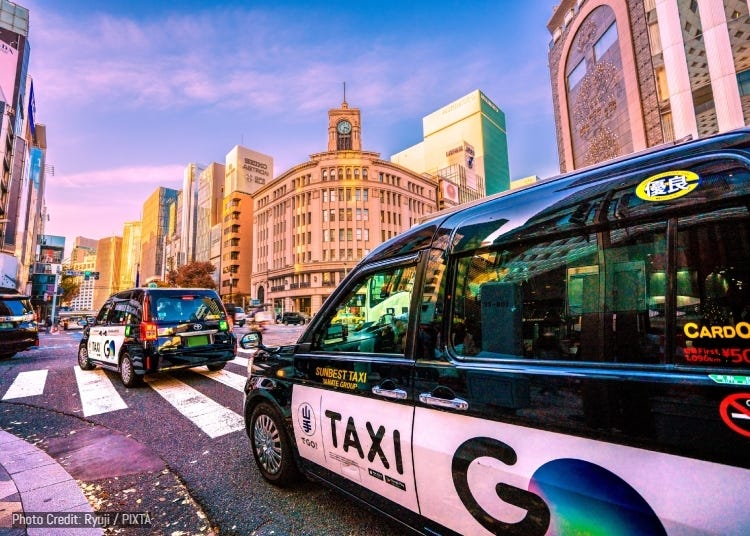
(Main image: PIXTA)
(This page contains affiliate links)
Taxi Basics: Types and How to Spot Them
One of the biggest surprises for first-time riders in Japan is the automatically opening taxi door and the illuminated sign displayed in the front window. Once you understand these features, hailing a taxi on the street becomes much more straightforward and stress-free.
1. Hands Off: Automatic Doors & Taxi Etiquette
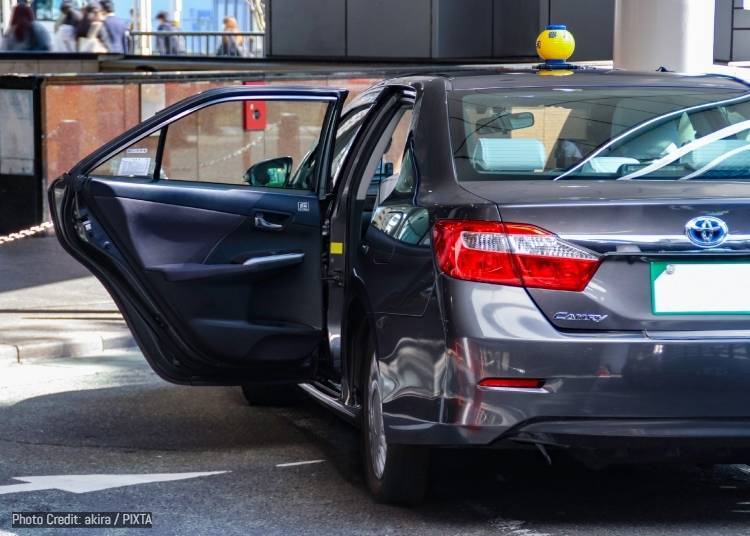
One of the most distinctive features of taxis in Japan is the automatic rear door. After you signal for a ride and the car comes to a complete stop, the left rear door will open automatically, controlled by the driver. Stand slightly back as it opens to avoid being bumped by the outward swing of the door.
Once you are seated, the driver will close the door for you, and will also open it again when you arrive at your destination. In short, let your hands rest. Do not attempt to open or close the rear door yourself, and never slam it, as the mechanism is electronically controlled. The only exception is the front passenger seat, which usually operates manually, so you will need to open and close that door on your own.
2. Passenger Capacity & Handling Large Luggage
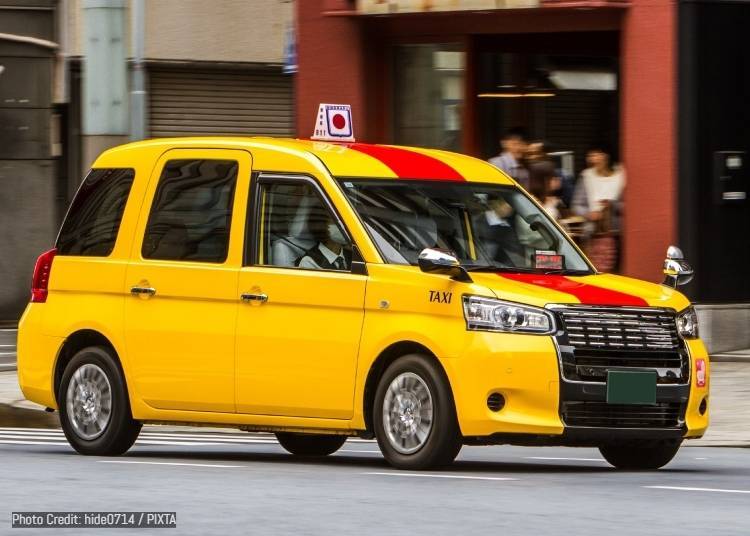
A standard sedan-style taxi in Japan typically seats up to four passengers: three in the back and one in the front passenger seat. If you are traveling as a group of four with multiple suitcases, the driver will usually assist by opening the trunk and loading your luggage.
If the trunk cannot accommodate everything, the driver may suggest switching to a larger, high-roof JPN TAXI or taking two separate taxis. For safety reasons, exceeding the passenger limit is not allowed, and placing large suitcases on passenger seats is generally discouraged.
3. Evolving Taxi Models: From Sedans to JPN TAXI
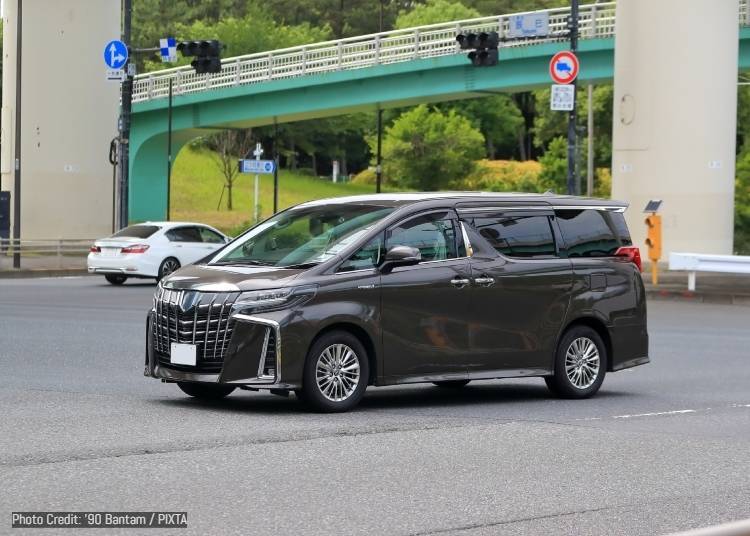
Alongside traditional three-box sedans, you will now see more high-roof Toyota JPN TAXI vehicles on the streets, often in dark blue. These newer models offer a spacious interior and lower step-in height, making them especially convenient for travelers with large suitcases or strollers. The roomy rear seats and easy entry design provide a more comfortable ride overall.
4. Reading the Lights: Know at a Glance if It’s Available
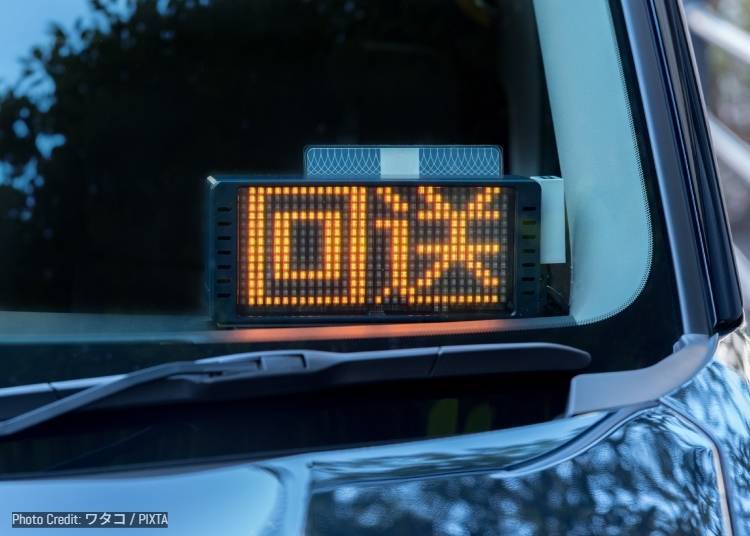
An LED sign displayed on the dashboard in front of the passenger seat indicates the taxi’s current status. Learning these signals helps you quickly tell whether you can hop in.
・“空車” (red): Available. You can hail the taxi.
・“支払 / 賃走” (green): Occupied with passengers.
・“迎車” (orange or yellow): Dispatched via app and on the way to pick someone up. It will not stop for street hails.
・“予約” (yellow): Reserved in advance.
・“回送” (white): Out of service, often heading back to the garage or to refuel.
How to Catch a Taxi in Japan: Practical Tips
There are four main ways to catch a taxi in Japan. Depending on where you are and how urgently you need a ride, you can choose the method that works best for your situation.
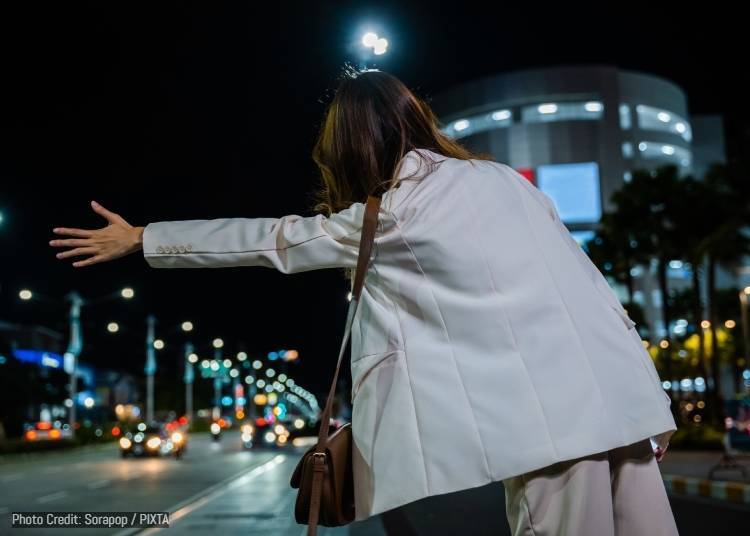
If you see a red “空車” (available) sign lit up in the front window, simply raise your hand from the roadside to hail the taxi. For safety, avoid standing at intersections, bus stops, or narrow streets. Choose a spot with enough space for the car to pull over smoothly.
If the sign shows “迎車” in orange or “予約” in yellow, the taxi has already been dispatched or reserved and is on its way to pick up another passenger. In these cases, it will not stop even if you wave.
2. Taxi Stands: Rules at Stations & Department Stores
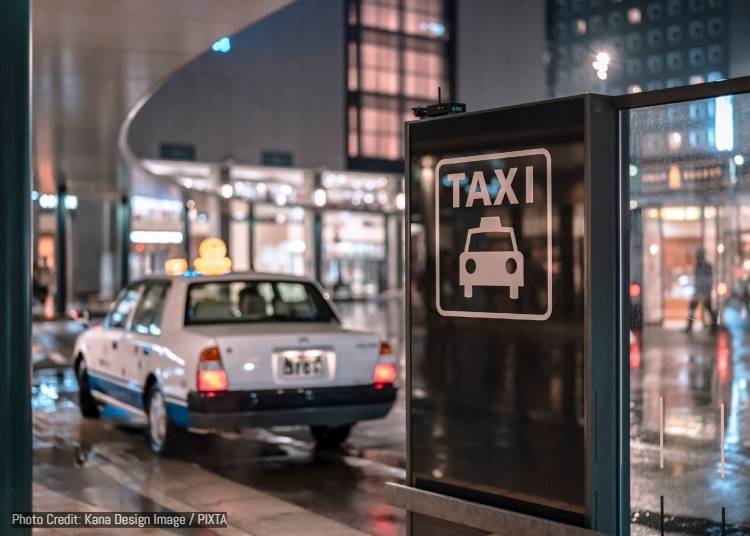
At major station exits, large hotels, and department stores, you will often find designated taxi stands (タクシー乗り場). Taxis line up in order, and passengers are expected to queue as well.
The advantage of using a taxi stand is the steady flow of cars and no additional dispatch fee. However, you are generally required to take the first taxi in line rather than choosing a specific vehicle.
3. Booking by App: Popular Tools & Benefits
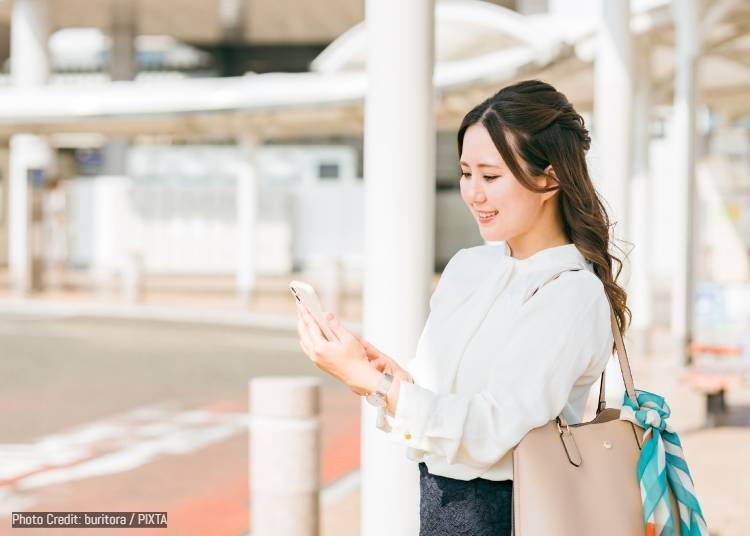
Using a smartphone app has become one of the most common ways to book a taxi. Apps such as GO, S.RIDE, and Uber allow you to set your destination directly on the map, eliminating the need to explain the address in Japanese.
You can also see the estimated arrival time and approximate fare in advance, and link a credit card for cashless payment, making the ride and drop-off process smooth and simple.
4. Ride-Sharing: A Flexible Option at Peak Times
If you cannot find a taxi late at night, early in the morning, or during peak sightseeing seasons such as autumn foliage in Kyoto, consider selecting a ride-sharing option within the app. Under this newer system, licensed private vehicles managed by taxi companies are matched to passengers.
These cars typically do not have automatic doors, so you will need to open and close them yourself. Fares are the same as regular taxis and clearly displayed in the app, making this a convenient alternative when demand is high.
Fares & Payment: No More Meter Surprises
Taxi fares in Japan are known for being transparent and clearly regulated. With the widespread adoption of digital payments, common concerns such as calculating costs or preparing exact change have become far less stressful for travelers.
1. How the Meter Works: Clear and Predictable

Base fare: The starting fare is displayed on the outside of each taxi, such as around 500 yen in Tokyo. This covers an initial set distance.
Distance-based meter: After the base distance is exceeded, the fare increases according to distance traveled and waiting time, such as during traffic congestion.
Late-night surcharge (10 PM to 5 AM): Rides during these hours automatically incur a 20 percent surcharge. The sign on the vehicle will indicate “割増.” This is a nationwide rule, not an arbitrary charge by the driver.
Taxi fares vary slightly by region based on local conditions. Below is a 2026 reference for major travel areas:
Tokyo (23 wards, Mitaka, Musashino):
The base fare is 500 yen for the first 1.096 kilometers. After that, approximately every 255 meters adds 100 yen.
Kansai (Osaka, Kyoto):
Base fares range from about 600 to 660 yen for the first 1.3 to 1.5 kilometers. Afterward, roughly every 240 to 260 meters adds 100 yen.
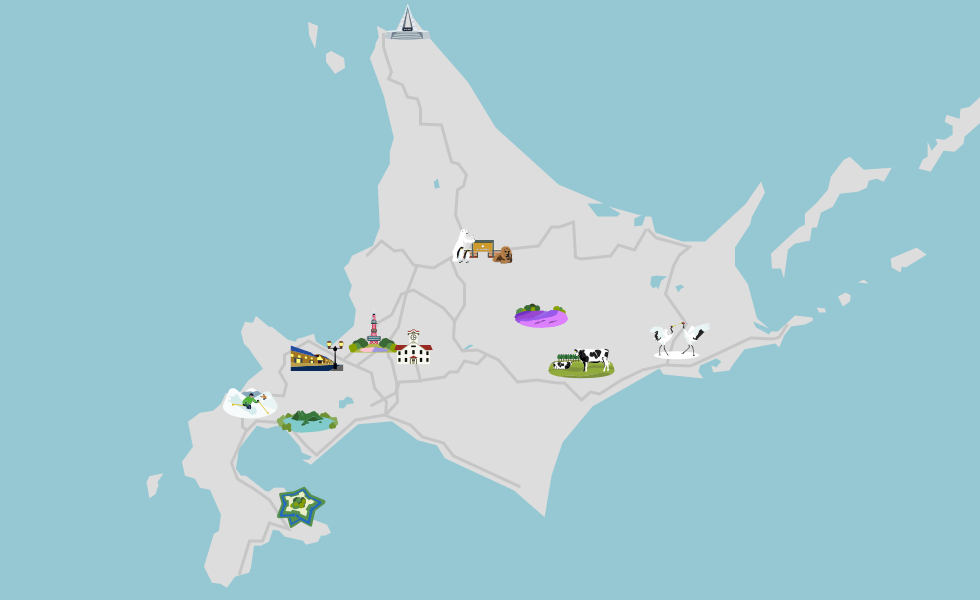
Hokkaido (Sapporo, Hakodate):
Base fares are about 670 to 710 yen for the first 1.2 to 1.4 kilometers. After that, approximately every 270 to 300 meters adds 100 yen.
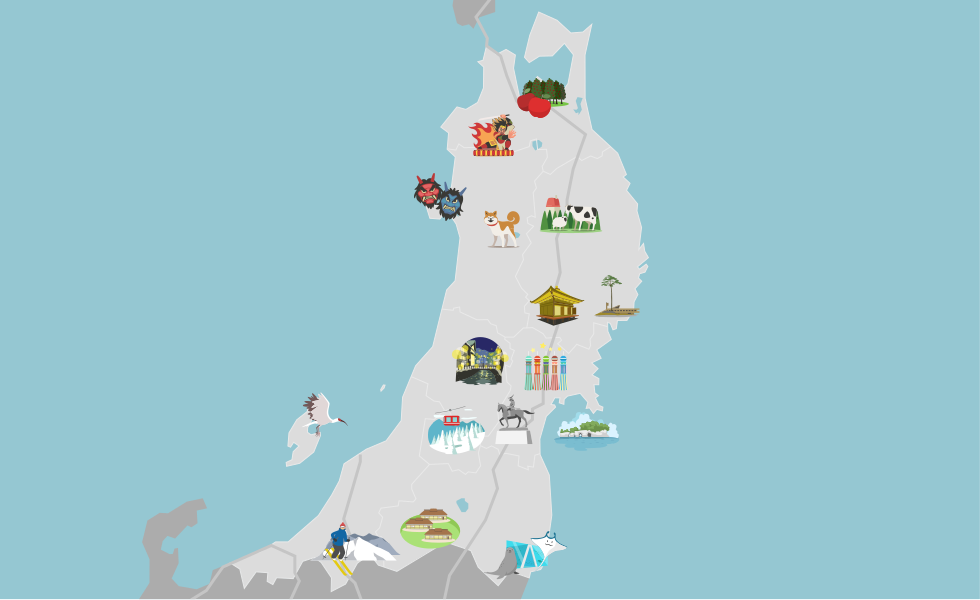
Tohoku (Sendai, Aomori):
Base fares range from about 650 to 700 yen for the first 1.5 kilometers, with roughly every 280 meters adding 100 yen thereafter.
Okinawa:
Okinawa remains one of the most affordable regions, with base fares around 550 to 600 yen for the first 1.75 kilometers, and about every 350 meters adding 100 yen.
Tip: Time-Distance Combined System
Japan uses a time-distance combined fare system. If the vehicle travels below 10 kilometers per hour, such as in heavy traffic in Shinjuku or Gion, the meter will increment approximately every 90 to 100 seconds. During peak congestion, fares may rise more quickly than expected.
2. Multiple Payment Options: No More Loose Change
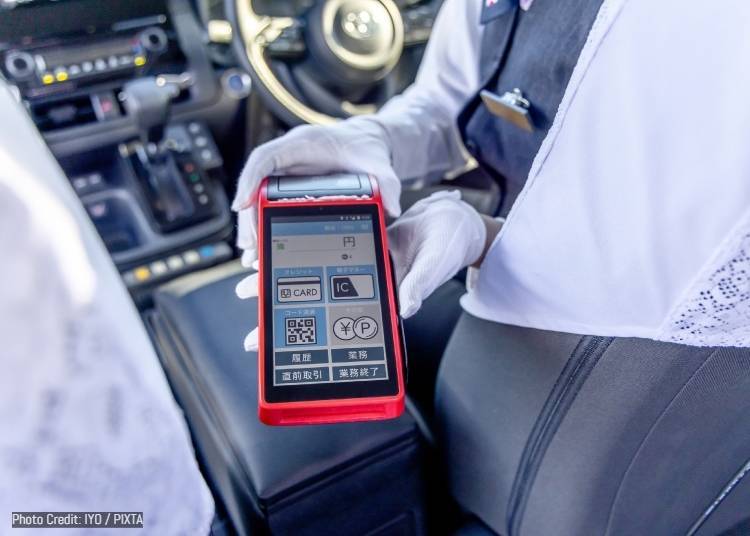
Most taxis in Japan now support fully digital payment systems, so there is no need to fumble with coins at the end of your ride.
Contactless payment: In addition to physical credit cards, rear-seat screens typically support Apple Pay, Google Pay, and transportation IC cards such as Suica and ICOCA.
QR code payments: Services like PayPay, Alipay, and LINE Pay can be completed by scanning the screen in the back seat.
GO Pay cashless option: If you book through an app such as GO and select GO Pay, payment is processed automatically upon arrival. There is no need to take out your phone, and a digital receipt is sent directly to you.
3. Long-Distance Tips: Flat Rates & Charter Services
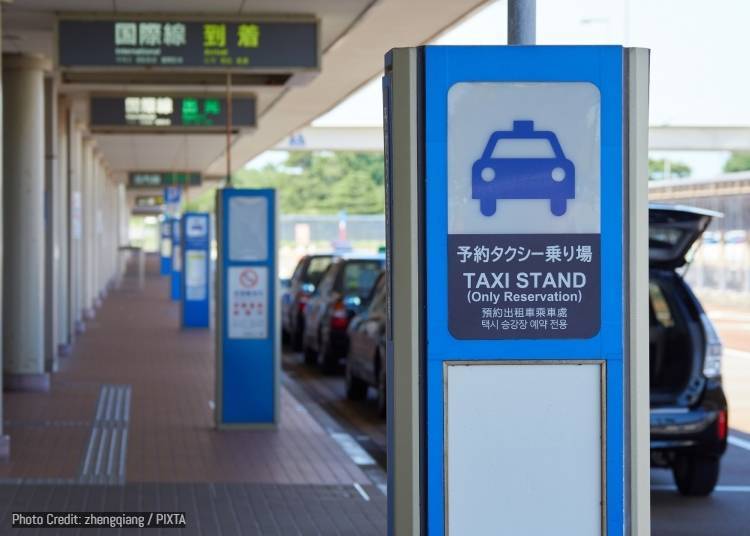
For longer journeys, there are cost-effective options worth considering.
Airport flat fares: Many taxi companies offer fixed rates between city centers and airports. Advance reservation is required, but the benefit is peace of mind, as the fare remains the same even if traffic is heavy.
Sightseeing taxi charters: In areas such as Kyoto and Okinawa, companies offer 3 to 8 hour sightseeing taxi plans. You agree on a fixed price in advance, and the driver can take you to multiple attractions. For families or groups with substantial luggage, this can sometimes be more convenient and economical than navigating multiple train transfers.
Essential Taxi Phrases & Communication Tips

While many taxis now come equipped with translation devices, knowing a few simple Japanese phrases or using your smartphone effectively can make your ride even smoother.
1. When You Get In: Confirming Your Destination
After you enter the taxi, the driver will usually ask, “どちらまで?(Dochira made? / Where to?)”
「(destination name) まで、お願いします。」(xx made, onegaishimasu. / Please take me to xx.)
Tip: If you are heading to a hotel or a lesser-known location, showing the Japanese address or place name on Google Maps is the most reliable method.
「トランクを開けてください。」(Toranku wo akete kudasai. / Please open the trunk.)
This is especially useful when you have large luggage.
2. During the Ride: Requesting a Route
「高速道路を使ってください。」(Kousoku douro wo tsukatte kudasai. / Please use the highway.)
For longer trips, such as to the airport, taking the expressway involves additional toll fees but can save significant time.
「ここで止めてください。」(Koko de tomete kudasai. / Please stop here.)
If you are near your destination or spot a place you would like to visit, you can ask the driver to stop at any time.
3. Paying & Getting Out: Asking for a Receipt
「領収書をください。」(Ryoushuusho wo kudasai. / Please give me a receipt.)
This is important. The receipt includes the taxi number, company name, and contact details. If you leave something behind, it is your best way to track it down.
「お釣りは取っておいてください。」(Otsuri wa totte oite kudasai. / Please keep the change.)
For example, if the fare is 980 yen and you pay 1,000 yen, you can use this phrase to show appreciation. Tipping is not required in Japan, but this small gesture is sometimes appreciated.
4. Tech to the Rescue: Translation Apps as Your Backup
If you do not speak Japanese at all, there is no need to worry. Most taxi rear-seat screens now offer multilingual interfaces, and apps such as DeepL or Google Translate provide voice conversation features. Simply speak into your phone, let it translate into Japanese, and play it for the driver. This method is widely used and perfectly acceptable throughout Japan.
Use Taxis Smartly for a Smoother Japan Trip
Taking a taxi in Japan is no longer synonymous with “expensive.” Instead, it is often a strategic way to save time and travel in comfort. In 2026, with app bookings, ride-sharing options, and widespread cashless payment systems, getting a taxi has never been easier.
As long as you understand the automatic door etiquette, can read the availability lights, and make good use of map tools, taxis can become one of the most efficient and stress-free ways to move around Japan’s cities.
▼ You may also be interested in ▼


The LIVE JAPAN editorial team is a multinational group made up of native editors who have lived in Japan for over five years and Japanese editors who love to travel. Together, we share the best of Japan, offering cultural insights, historical context, event updates, and travel-friendly deals, to support your journey every step of the way.
*Prices and options mentioned are subject to change.
*Unless stated otherwise, all prices include tax.
Popular Tours & Activitiess
Recommended places for you
-
Appealing
Rukku and Uohei
Izakaya
Sapporo / Chitose
-
ISHIDAYA Hanare
Yakiniku
Kobe, Sannomiya, Kitano
-
Goods
Yoshida Gennojo-Roho Kyoto Buddhist Altars
Gift Shops
Nijo Castle, Kyoto Imperial Palace
-
Jukuseiniku-to Namamottsuarera Nikubaru Italian Nikutaria Sannomiya
Izakaya
Kobe, Sannomiya, Kitano
-

Kanzenkoshitsuyakinikutabehodai Gyugyu Paradise Sannomiya
Yakiniku
Kobe, Sannomiya, Kitano
-
Kambei Sannomiyahonten
Yakiniku
Kobe, Sannomiya, Kitano
-
Ad

Enjoy Tokyo's Hidden Gem! Katsushika: Where Anime, Kawaii Culture & Real Tokyo Vibes Meet (2026 Guide)
by: Yohei Kato
-
Ad

Sharing Japan's Secrets of Longevity with the World: "Noage International" Delivers a New Medical Tourism Experience
-
Grand Reopening! The Edo-Tokyo Museum Returns After 4 Years: New Highlights, Interactive Tech, and Limited-Edition Goods
-
No More Getting Lost in Tokyo's Subways! The "Magic Translation Terminal" Appearing at All 171 Stations Will Revolutionize Your Journey
by: Guest Contributor
-

Japan's New Fine Dining Train 'vies' Launches in 2028: A New Era of Gourmet Rail Travel
by: Guest Contributor
-
2026 Japan Cherry Blossom Report: Tokyo at Peak Bloom
-

Beyond the Guidebook: 7 Secret Sightseeing Spots in Harajuku and Omotesando that Only Locals Know!
-
From Seafood to Beef: Why Osaka is in Love with Kuromon Market, the Kitchen of the Town
by: WESTPLAN
-
Tokyo Tourist Attractions: 6 Popular Places to Visit Around Shinjuku!
-
Unique Tokyo Nightlife: Diving Deep Into Shinjuku’s Unmissable Kabukicho!
-
6 Fun Things to Do at Tokyo's World-Famous Tsukiji Outer Market!
-
Shibuya Crossing: Getting the Best View from the Deck at Magnet by Shibuya109!
- #best sushi japan
- #what to do in odaiba
- #what to bring to japan
- #new years in tokyo
- #best ramen japan
- #what to buy in ameyoko
- #japanese nail trends
- #things to do japan
- #onsen tattoo friendly tokyo
- #daiso
- #best coffee japan
- #best japanese soft drinks
- #best yakiniku japan
- #japanese fashion culture
- #japanese convenience store snacks