



Apart from the odd couple of days in January or February Tokyo remains pretty snow-free throughout the winter, which can be a bit disappointing if you are looking forward to a white Christmas during your trip! However, never fear as snow is never far away and it is completely doable to have a fantastic day trip out in the snow.
So whether you have a hankering for making some snow angels, getting into a snowball fight with your kids, or just fancy a lazy day of skiing, areas close to Tokyo have everything you need, and you will still be able to get back to your hotel in the evening for a nice hot drink.
1. Yuzawa – A Skier’s Paradise
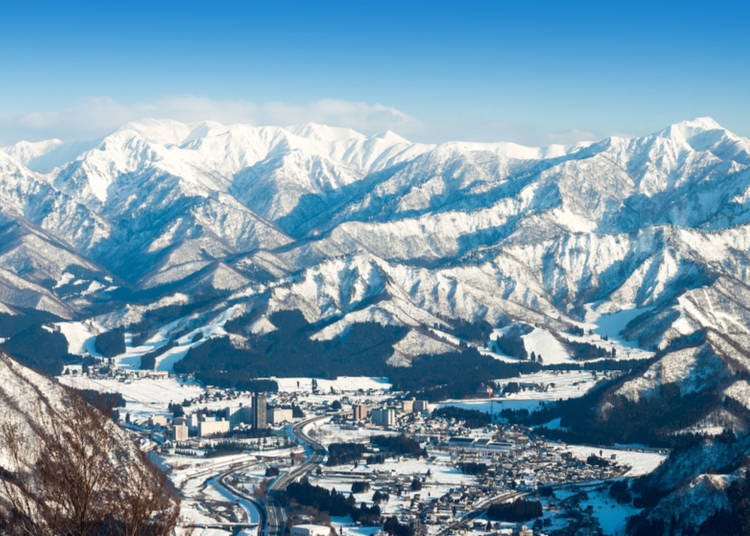
The main reason Tokyoites head to the Yuzawa area is for a spot of skiing or snowboarding; the season starts from mid-December and finishes around early May. You can rent a ski or snowboarding set (skis, ski boots, and ski poles for the ski set, and a snowboard and snowboard boots for the snowboard set) for 6,500 yen for a day (3,500 yen for children aged 12 and under), and pretty soon you will be hitting the slopes!
Gala Yuzawa is not just about snow, though; you can go on a snowmobile sleigh tour for 3,500 yen, experience a guided tour wearing traditional Japanese snowshoes (Kanjiki) for 6,500 yen, or go on a "Moon Bike" trekking adventure for 5,500 yen.
For families, there is a great Snow Enjoyment Park which is absolutely brilliant for kids to play in the snow. To get here, you need to ride a gondola up the mountain; a round-trip ticket costs 3,500 yen for an adult and 1,000 yen for a child (elementary school age).
A great midday activity, which is more for adults, is to visit the Shirataki Sake Brewery, located just a 5-minute walk from Echigo-Yuzawa Station. While formal brewery tours are held only on Fridays, you can visit their modern showroom and taproom, "Flow," which is open daily from 9:30 AM to 4:30 PM. There is no charge for entry and visitors can enjoy tastings, but please keep in mind that you have to be over 20 to drink alcohol.
Gala Yuzawa is actually just one out of about 20 ski resorts in this area, and most of them even have onsen hot springs! After a day in the snow followed by a relaxing, soothing bath in an onsen, you will find yourself nodding off on the train trip back to Tokyo.
2. Mt. Fuji Area – The Iconic Snow-Covered Mountain of Japan
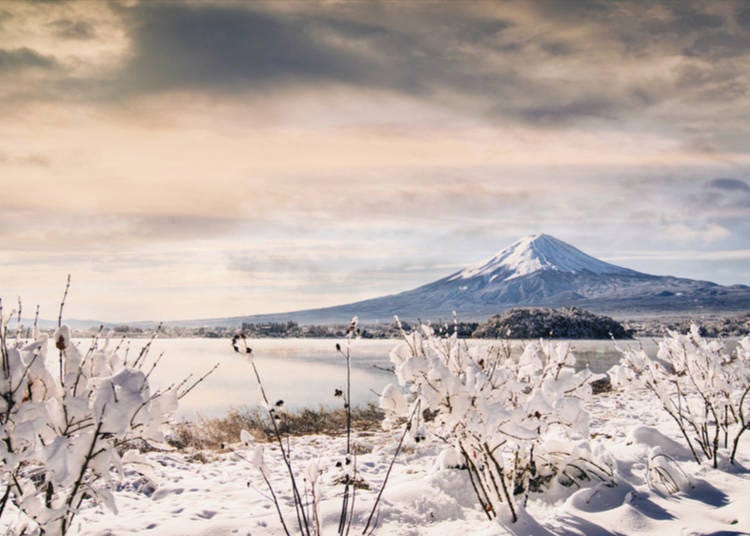
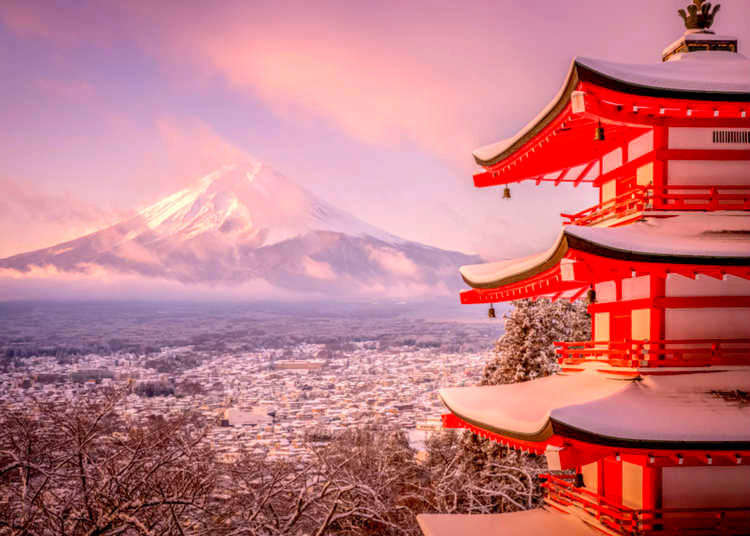
When most people think of Japan and snow, the image that often comes to mind is Mount Fuji. A winter trip to Lake Kawaguchiko lets you combine two classic experiences in one visit. You can admire Japan’s most iconic mountain while also taking in sweeping views of a snow-covered landscape. If the mood strikes, there is even space to dive into the snow and make a snow angel.
Although Mount Fuji itself is closed to climbers during winter, there is still plenty to do around the Five Lakes area. Ice skating and ice fishing are available seasonally, and the Saiko Ice Festival (Juhyo Matsuri) is held at Saiko Wild Bird Forest Park. From Kawaguchiko Station, take the Green Line bus bound for Saiko and get off at the Saiko Yachounomori Park stop.
On the southern slope of Mount Fuji, from early October, you may even encounter a yeti. Not a real one, of course. Snow Resort Yeti is a compact ski slope famous for being the first in Japan to open each season. During the regular season, a day ticket costs 4,300 yen on weekdays and 5,300 yen on weekends and holidays, with children’s tickets priced at 3,300 yen on weekdays and 4,300 yen on weekends. Equipment and clothing rentals are charged separately. Night skiing is also available on select days. Access is by bus from JR Gotemba Station, which costs 1,570 yen one way, though services are relatively infrequent.
Travel and Transport
From Tokyo, a JR Limited Express train such as the Azusa or Kaiji takes around 60 to 70 minutes from Shinjuku to Otsuki. From Tokyo Station, Shinjuku Station can be reached in about 15 minutes on the Chuo Line for 210 yen. The Limited Express fare to Otsuki is approximately 2,360 yen one way, including the reserved seat fee. Alternatively, the JR Chuo Special Rapid takes around 90 minutes and costs 1,340 yen.
From Otsuki, transfer to the Fujikyuko Line for Kawaguchiko Station. The journey takes about 50 minutes and costs 1,770 yen. JR Rail Pass holders can use the pass as far as Otsuki but must pay separately for the Fujikyuko Line. The JR Tokyo Wide Pass, which costs 15,000 yen, covers the entire journey from Tokyo to Kawaguchiko.
Highway buses also run from Tokyo Station or Shinjuku to Kawaguchiko Station for roughly 2,200 yen one way, with a travel time of about two hours. To continue on to Fuji Subaru Line 5th Station, the base of Mount Fuji, take a local bus from Kawaguchiko Station. This takes around 50 minutes and costs 1,700 yen for a one-way ticket or 2,800 yen for a round trip.
3. Hakone – The Land of Onsen!
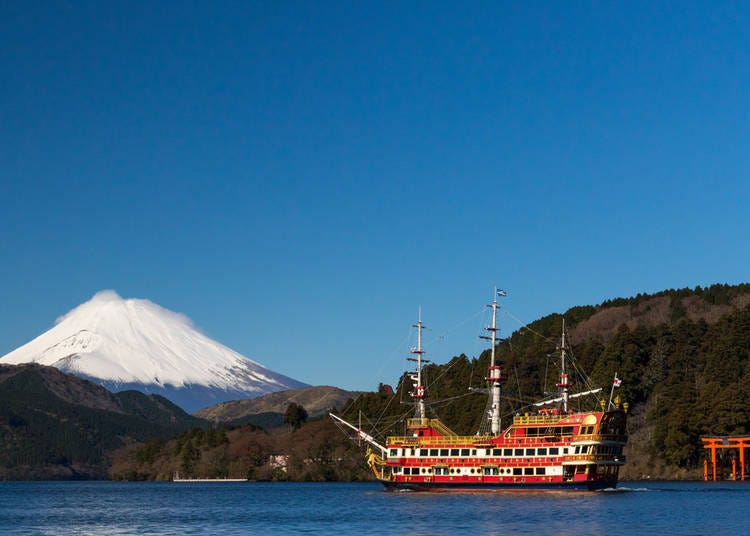
There are plenty of other ways to enjoy snow and views of Mount Fuji while soaking in a relaxing onsen, and Hakone-Yumoto is one of the best places to start. As the main gateway to Hakone, this charming town offers easy access to the entire area. On clear winter days, several spots around Hakone reward visitors with Mount Fuji views, alongside snow-dusted hills and valleys.
If you are simply looking for a day of snow and hot springs, Hakone-Yumoto alone more than delivers. The town itself is beautifully scenic, with gentle hills and a river running through the center. You can enjoy a leisurely walk through the snow and, when the cold sets in, choose from around 40 onsen located near the station. The hot spring water here is known for its quality, making it an excellent place to truly unwind.
For snowy scenery enjoyed from the warmth of your seat, hop on the Hakone Tozan train from Hakone-Yumoto to Gora. The journey takes about 40 minutes and costs 460 yen one way. As the train slowly climbs Mount Hakone, you are treated to beautiful seasonal views. Winter snow is especially striking, though cherry blossoms in spring and vivid foliage in autumn are equally impressive.
From Gora, a cable car climbs steeply up to Sounzan Station. The ride takes around 10 minutes and costs 430 yen one way, or 220 yen for children. At Sounzan, you can step into deeper snow and capture sweeping panoramic views. If that still is not enough, continue onward via the Hakone Ropeway, which descends toward Lake Ashi. This segment offers excellent views of Mount Fuji and the lake, while passing over Owakudani, a dramatic volcanic area filled with steaming vents. The full ropeway journey takes about 30 minutes and costs 2,000 yen one way, or 1,000 yen for children. You may wish to consider getting the Hakone Freepass which is definitely worth it.
Travel and Transport
To reach Hakone-Yumoto from Tokyo, take the Shinkansen to Odawara Station. A reserved seat costs approximately 3,810 yen, and the ride takes about 35 minutes. From Odawara, transfer to the Hakone Tozan Railway for Hakone-Yumoto, which takes around 15 minutes and costs 320 yen.
Alternatively, you can take the JR Tokaido Line from Tokyo Station to Odawara Station and then transfer to the Hakone Tozan Line. This route takes about one hour and 45 minutes in total and costs approximately 1,840 yen one way.
4. Nikko – Traditional Japanese Temples and Shrines Amongst Snowy Mountains
Nikko is a quiet mountain town best known for its temples and shrines, and in winter it takes on an especially dreamlike atmosphere. Nestled among forested hills, Nikko becomes blanketed in snow, with scenery that feels lifted straight from an episode of Mushi-Shi.
Japanese temples and shrines are beautiful in any season, but snow adds an extra layer of calm. The muted landscape and cold air seem to heighten the sense of stillness, leaving the soft crunch of your footsteps in the snow as the only sound as you move from site to site. It is a peaceful, almost meditative experience.
One of the most striking sights is the Shinkyo Bridge, a UNESCO World Heritage site. Its vivid red color stands out dramatically against the surrounding white snow, making it especially photogenic in winter.
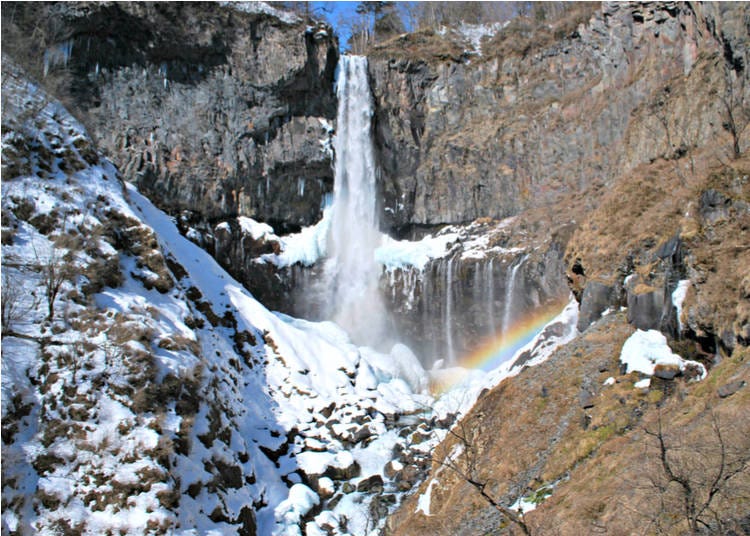
If you have time to explore further, take a bus from Tobu-Nikko Station to Chuzenjiko Onsen. The ride takes about 50 minutes and costs 1,250 yen one way. From there, you can admire Lake Chuzenji, which is breathtaking in winter. Snow-covered mountains frame the lake, and strong winds sometimes spray water onto nearby trees, creating natural “ice art” known as shibuki-gori. Nearby, Kegon Falls becomes equally impressive, with sections of the waterfall freezing into striking blue-tinged ice pillars.
Travel and Transport
The easiest way to reach Nikko from Tokyo Station is to take the Tohoku Shinkansen to Utsunomiya Station, then transfer to the JR Nikko Line for Nikko Station. The total journey takes about 1 hour and 50 minutes and costs roughly 5,480 yen for a reserved seat. If you have time during the transfer, Utsunomiya is famous for gyoza and is well worth a quick stop.
Alternatively, take a JR train from Tokyo to Ueno, then transfer to the Tokyo Metro Ginza Line to Asakusa, which takes about 15 minutes and costs 350 yen. From Asakusa, Tobu Limited Express trains such as the Spacia X or Revaty Kegon run directly to Tobu-Nikko Station. The journey takes around 1 hour and 50 minutes and costs approximately 3,350 yen one way for a standard seat.
- Area
- Category
*Prices and options mentioned are subject to change.
*Unless stated otherwise, all prices include tax.
Popular Tours & Activitiess
Recommended places for you
-
Tsukiji Outer Market
Old Towns (Shitamachi)
Tsukiji
-
Ueno Zoo (Ueno Zoological Gardens)
Zoos, Aquariums & Botanical Gardens
Ueno
-
Naritasan Shinshoji Temple
Temples
Narita
-
Tokyo Metropolitan Government
Landmarks
Shinjuku
-
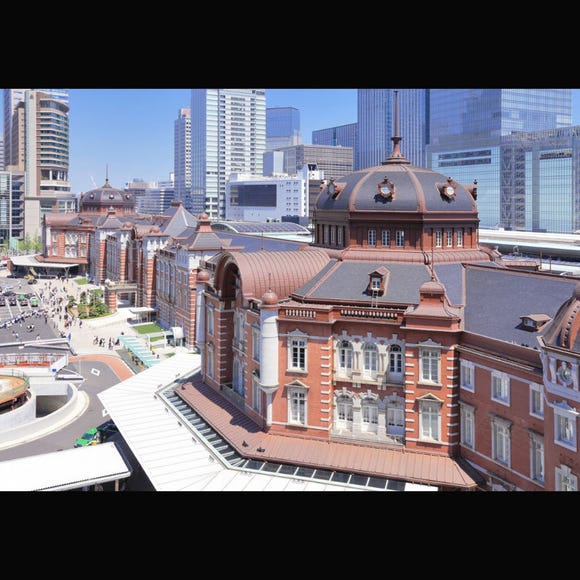
The Tokyo Station Marunouchi Building
Landmarks
Tokyo Station
-
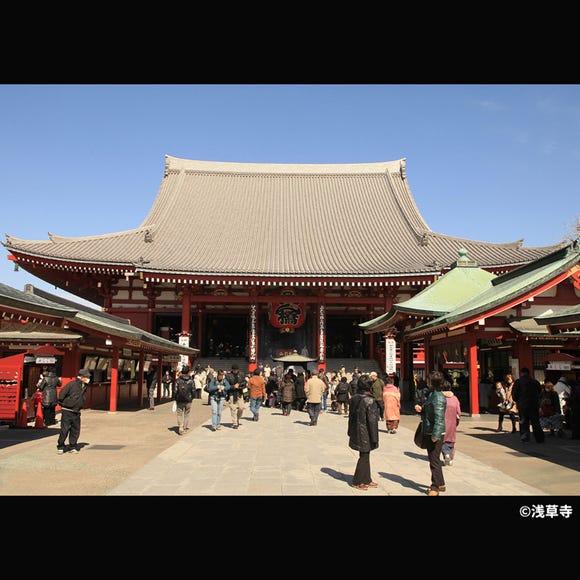
Senso-ji Temple
Temples
Asakusa
-
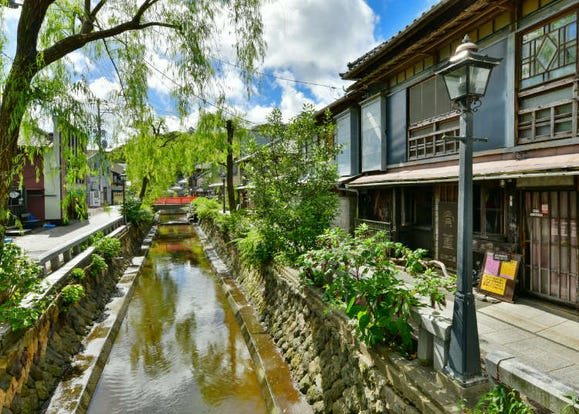
Road Trip Around Izu Peninsula: Stunning Views, Hidden Gems, and Relaxing Hot Springs
by: Hide
-
From Haneda to Monchhichi's Hometown! Scenic Monorail Ride & Katsushika 'Old Downtown' Walk
by: Guest Contributor
-
Legends Return to the Skies! ANA Launches Three “Pokémon Jets” in 2026
by: Guest Contributor
-
Ad
Savor Japanese Sake Culture: A Stroll Along Saijo Sake Brewery Street in Higashihiroshima City, Hiroshima Prefecture
-
The Best of Japan's Flavors and Fun! Don Quijote's New "DONKI MEMORIES" Project is Mind-Blowing
-
At This Zen Hideaway in Shinjuku, Master the Way of Tea with English Guidance, Matcha, and Wagashi This April
by: Guest Contributor
-
Japan's Bath Culture: Tips You Should Know!
-
Osechi Ryori: Japan's Lucky and Traditional New Year's Feast
-
December Events in Tokyo: Fun Festivals, Food, and Things to Do
-
Ikebukuro Station Area Guide: Top 15 Spots When You Escape the Station's Maze!
-
What to Do in Tokyo in January: New Year Events, Food, and Shows
-
10 Important Japanese Phrases to Know Before You Enter a Japanese Convenience Store
by: Teni Wada
- #best ramen tokyo
- #what to buy in ameyoko
- #what to bring to japan
- #new years in tokyo
- #best izakaya shinjuku
- #things to do tokyo
- #japanese nail trends
- #what to do in odaiba
- #onsen tattoo friendly tokyo
- #daiso
- #best sushi ginza
- #japanese convenience store snacks
- #best yakiniku shibuya
- #japanese fashion culture
- #best japanese soft drinks