




Few figures loom as large in Tohoku history as Date Masamune. Rising to power during Japan’s turbulent Sengoku period, roughly the late 15th to late 16th century, he ruled the Sendai domain with bold ambition and unmistakable style. Nicknamed the “One-Eyed Dragon,” Masamune stood out not only for his battlefield prowess, but for the image he carefully crafted.
Clad in jet-black armor and crowned with a dramatic crescent-moon helmet, Masamune became an icon that still resonates today. His striking look and larger-than-life personality have inspired countless TV dramas, anime, and video games, helping keep his legend alive well beyond Sendai.
Now, renewed global interest sparked by an upcoming international drama has brought fresh attention to this charismatic warlord. In this article, we take a closer look at samurai armor from the Sendai domain, with a special focus on the distinctive armor associated with Date Masamune himself.
- Table of Contents
Date Masamune: Who was the One-Eyed Dragon?

Dokuganryū means “One-Eyed Dragon” in Japanese, and it was the famous nickname of Date Masamune. Global interest in Masamune surged after Netflix announced plans for a drama with him as the central figure, introducing this larger-than-life samurai to audiences far beyond Japan.
The series is said to feature dramatized episodes drawn from stories long associated with Masamune’s eccentric reputation. These include accounts of him entering battle dressed in funeral garments, carrying a gold cross, and deliberately answering Toyotomi Hideyoshi’s call to arms later than expected.
Another often-told story claims that Masamune’s mother favored his younger brother as the family heir and even attempted to poison Masamune. According to this account, Masamune ultimately killed his brother to bring a bitter succession dispute to an end.
To better understand what kind of person Date Masamune really was, we spoke with Mr. Sasaki, a curator at Sendai City Museum, where many artifacts related to the Date family are preserved. Before diving into expert insight, let’s start with a brief look at Masamune’s life and historical background.

Date Masamune was born in 1567 in what is now Yonezawa City, Yamagata Prefecture. He proved his ability early, winning his first battle at just 15 years old in 1581. Three years later, at 18, he became the seventeenth head of the Date family. By 1589, when he was only 23, the territory under his control had grown larger than that of any previous Date leader.
At the same time, Japan was moving steadily toward unification under Toyotomi Hideyoshi. Masamune ultimately chose to submit to Hideyoshi and, in 1591, relinquished his base in Yonezawa. He relocated north to the area around present-day Iwadeyama in Miyagi Prefecture, marking a major turning point in his rule.
Following Hideyoshi’s death, Masamune pledged his loyalty to Tokugawa Ieyasu. From his new base in what is now Sendai City, he built Sendai Castle and restored Zuiganji Temple as the Date family’s temple on Matsushima. In doing so, he laid the foundations of the Sendai domain and became its first feudal lord.
Living to the age of 70, Masamune witnessed the rise and fall of countless rival warriors. Few daimyo of his era experienced as many shifts in power firsthand, or left behind a legacy as enduring as the One-Eyed Dragon of Sendai.
A Good Writer and Strict Father

There are various anecdotes about Masamune. However, the two scenarios described earlier have somewhat low credibility due to the lack of records.
According to the curator Mr. Sasaki, Masamune, who had studied under the Zen priest Kosai Souitsu, was extremely diligent. Also, because Masamune had skilled penmanship from a young age, letters from him were considered by some to be prized possessions.
While it was the norm during the Sengoku period to have letters be written on behalf of oneself, out of the 4,500 letters current found to be sent by Masamune, the man himself penned 1,300 of them. As for the unifiers of Japan, it is said that Nobunaga personally wrote 10 out of his 1,500 letters, Hideyoshi 100 out of 5,000, and Ieyasu 30 out of 2,500. From this, it is clear that Masamune had personally penned an overwhelmingly large proportion of his letters.

It is unclear why many of Masamune’s letters had been personally penned, but he had been the type of person to do everything himself, regardless of what the task was. Masamune had ten sons and four daughters.
While he was lenient towards his daughters, he nagged at his sons, especially his eldest son Hidemune and his second son Tadamune, who eventually became the second feudal lord of the Sendai domain. He also left several letters of advice for his sons, including one that reminded them not to recite waka, which is a type of Japanese poetry, in a particular manner.
Even Date Masamune’s Armor is Cool! A Visit to Sendai City Museum to Check Out the Various Gear

Sendai City Museum is a 7-minute walk away from Kokusai Center subway station. Located at the base of Sendai Castle remains, the museum is home to about 97,000 artifacts, including cultural assets contributed by the Date family. Besides Date Masamune’s armor, the armor and weapons that belonged to the Date family’s Sendai domain feudal lords and retainers can also be found there.
Armor and helmets have long since been used in Japan as protective gear in battles and have been altered to adapt with the times, such as the changes from the usage of horses in campaigns to using matchlock guns and spears in infantry warfare. Furthermore, during the Sengoku period, the armor also became a way of displaying one’s power. Because of that, a diverse range of designs for armor and helmets were made for military generals.
Date Masamune's "Kuro Urushi Gomaidō Gusoku"

For many people in Japan, the image most closely associated with Date Masamune is his iconic suit of armor known as Kuro Urushi Gomaidō Gusoku. Designated as an Important Cultural Property, this armor is only displayed to the public for limited periods each year, adding to its mystique. Its appearance is strikingly austere. The deep black lacquer is broken only by the brilliant, gold-colored crescent moon adorning the helmet.
Why Masamune chose black as the dominant color remains uncertain. One theory links it to the loss of his right eye during childhood. Scholars suggest that Masamune, who was deeply familiar with Chinese classical texts, may have been consciously modeling himself after Li Keyong, known in Japan as Ri Kokuyō. Like Masamune, Li Keyong was one-eyed and rose to prominence as a powerful general in northeastern China during the 10th century.
Li Keyong commanded troops whose military attire was standardized in black, a color associated with authority and discipline. He was also famously nicknamed the “One-Eyed Dragon.” It is widely believed that Masamune admired this figure and sought to project a similar image of strength and inevitability, perhaps even nurturing ambitions of unifying Japan under his own rule.
The Spectacular Armor He Received from Toyotomi Hideyoshi

In striking contrast to Masamune’s austere black armor, the flamboyant Gin Iyozane Shiroito Odoshi Dōmarusoku tells a very different story. This suit was bestowed upon Date Masamune by Toyotomi Hideyoshi, and its visual impact could not be more removed from the severity of the Kuro Urushi Gomaidō Gusoku.
Designated as an Important Cultural Property, the armor has weathered over time due to oxidation. Even so, historians believe it would have been dazzling when first worn, thanks to the extensive use of silver foil. In its prime, the armor would have caught the light on the battlefield, making Masamune impossible to miss.
During the Sengoku period, such eye-catching armor was far from unusual. Lavish designs were a deliberate statement, used by powerful warlords to project authority, confidence, and status to both allies and rival generals alike.
Made of Iron, the "Sendai-dō" Weighed More Than 20 Kilograms

The armor shown in the third image belonged to Date Tadamune, Masamune’s heir and the second-generation feudal lord of the Sendai domain. Known as Gomaidō, this type of armor was coated in black lacquer and widely used within the domain. Its construction followed the model established by Masamune himself, with a torso made from five connected iron plates.
Because this style became so closely associated with the region, it later came to be called Sendai-dō. While samurai armor elsewhere often relied on leather and cloth, armor produced in the Sendai domain favored iron for key components such as helmets and shin guards. The result was a notably heavy set. Masamune’s own armor is said to have weighed more than 20 kilograms.
Even so, the five-piece torso design made the armor surprisingly practical. It could be transported more easily to the battlefield than a single solid cuirass, balancing durability with the demands of mobility and logistics in Sengoku-era warfare.
The Flamboyant "Gomaidō Gusoku" That Was Used in a Period of Peace

This armor belonged to Date Yoshimura, the fifth feudal lord of the Sendai domain, who was born into a time of peace. With large-scale warfare a thing of the past, armor had shifted from practical battlefield gear to ceremonial attire, and designs became increasingly ornate and eye-catching.
Even so, key features of the Sendai tradition remained. The five-piece torso construction and iron shin guards continued to be used, preserving the structural lineage established by Masamune. While many helmets from this period feature a bold first-quarter moon, portraits from the era show that feudal lords also wore helmets decorated with the slimmer crescent moon associated with earlier generations.
To protect these fragile historical artifacts from deterioration, they are only displayed for limited periods. The museum’s permanent exhibition also changes seasonally, so visitors are encouraged to check the official website for the latest display information before planning their visit.
-
SENDAI CITY MUSEUM仙台市博物館
-
Address
26, Kawauchi, Sendai Shi Aoba Ku, Miyagi Prefecture, 980-0862
View Map - Phone Number 022-225-3074
・Hours: 9 AM–4:45 PM (last admission at 4:15 PM)
・Closed: Mondays (if Monday is a public holiday, closed the following day)
・Admission: 460 yen -
Address
26, Kawauchi, Sendai Shi Aoba Ku, Miyagi Prefecture, 980-0862
More Armor Further Out at Meiji Village Museum of Miyagi Toyoma Town

The Meiji Village Museum of Miyagi Toyoma Town is a historical museum where visitors can view armor once owned by the Toyoma-Date family, a branch with close ties to the Date family of the Sendai domain. Located in northern Miyagi Prefecture, Toyoma Town is reachable by express bus from Sendai Station. A one-way trip costs 1,400 yen and takes about an hour and a half, making it a realistic side trip for history-minded travelers.
Here, the defining features of Sendai-dō are clearly visible in the Tetsu Kuro Urushi Nuri Gomaidō Gusoku. Some researchers believe this armor was used by Shiroishi Munezane, a retainer who served both Date Masamune and his father, Date Terumune. Others suggest it belonged to Munezane’s heir, Shiroishi Munenao. The helmet is decorated with a cursive form of the Chinese character “nari,” though its exact meaning remains unknown.
Shiroishi Munenao later became the first head of the Toyoma-Date family. Earning the trust of the Sendai Date clan, he was granted the prestigious Date surname, cementing the family’s status within the domain.
In addition to this armor, the museum displays a wide range of Date-related artifacts, including swords and historical documents. For travelers interested in samurai history beyond central Sendai, extending your journey to Toyoma Town offers a deeper look into the legacy of the Date family and its allies.
-
Meiji Village Museum of Miyagi Toyoma Town登米懐古館
-
Address
Sakurakouzi 72-6, Toyomamachi Teraike, Tome Shi, Miyagi Ken, 987-0702, Japan
View Map - Phone Number 0220-52-3578
・Hours: 9 AM–4:30 PM
・Closed: December 28–April 1
・Admission: 400 yen (1,000 yen for a combined ticket with access to six facilities in Toyomamachi) -
Address
Sakurakouzi 72-6, Toyomamachi Teraike, Tome Shi, Miyagi Ken, 987-0702, Japan
Let’s Explore Places Linked to Date Masamune
Sendai Castle Ruins (Aoba Castle Ruins)

A place closely connected with Masamune is the Sendai Castle Ruins (Aoba Castle Ruins), which is a 20-minute walk away from Sendai City Museum. Even though the castle walls have been destroyed by fire, the stone walls and reconstructed Wakiyagura castle tower, as well as the equestrian statue of Masamune, are still sights to behold. A recommendation would be the Aoba Castle Museum, located within the site, where visitors can visualize reconstructed images of the castle walls through the use of CG and VR.
Zuihōden

The next stop is Zuihōden, the mausoleum of the successive heads of the Sendai Date family. A 20-minute walk away from Sendai City Museum, the richly colored, magnificent mausoleum, is definitely worth a visit. Within the museum are restored statues of three Date feudal lords, including Masamune.
We have introduced Date Masamune and his armor in this article, but there are lots of other places in Tohoku where we can learn more about other charismatic warriors as well as their weapons and battle gear.
If you get the chance, be sure to visit these places and re-live the experiences of the warriors who lived in the age of Sengoku!
Text by: SHOE PRESs
- Area
- Category
*Prices and options mentioned are subject to change.
*Unless stated otherwise, all prices include tax.
Popular Tours & Activities
Recommended places for you
-
Akiu Onsen
Hot Springs (Onsen) & Bath Houses (Sento)
Sendai And Matsushima
-
Asamushi Onsen
Hot Springs (Onsen) & Bath Houses (Sento)
Aomori, Hirosaki And Hachinohe
-
Jozenji Street
Other Townscapes
Sendai And Matsushima
-
Lake Tazawa
Rivers, Lakes & Canyons
Surrounding Areas Of Akita
-
Oirase River
Rivers, Lakes & Canyons
Other Surrounding Areas Of Aomori
-
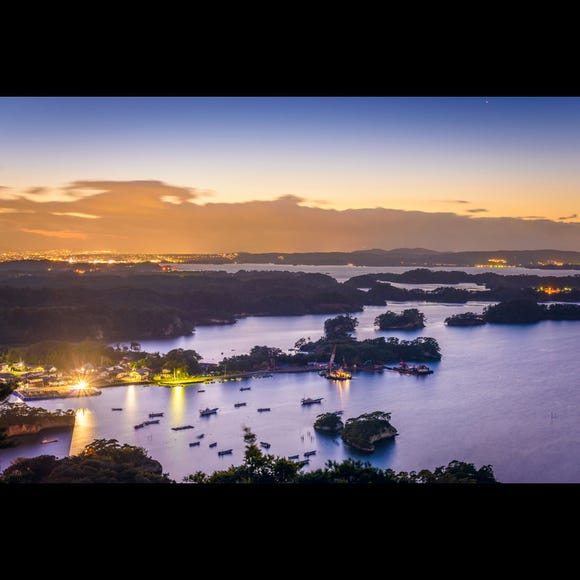
Matsushima Bay
Landscapes
Sendai And Matsushima
-
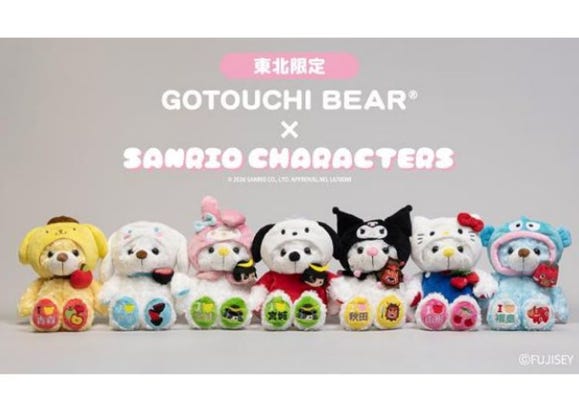
Tohoku Just Got Cuter: Meet the New Gotochi Bear × Sanrio Collab
by: Guest Contributor
-
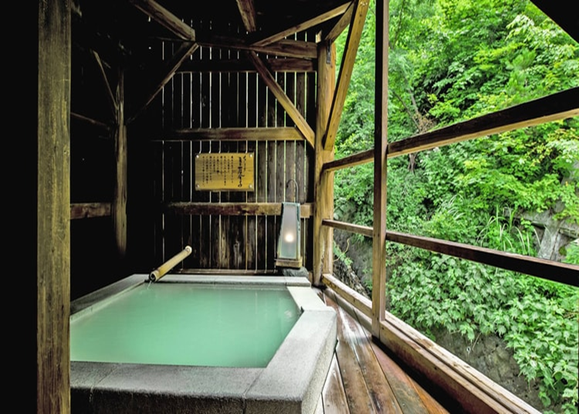
Japan's Best Premium Hot Spring Getaways: Top 10 Luxury Ryokan in Tohoku & Niigata (Perfect for Family Trips & Couples)
-

6 Morioka Souvenirs Worth Buying near the Station: An Editor's Picks from Iwate
by: Yukiko Honda
-

Hotel Mazarium: Stay In the Heart of Morioka at This Atmospheric Hotel
by: Timothy Sullivan
-
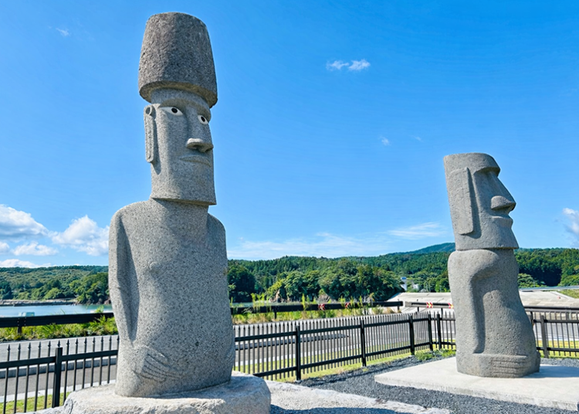
Why Is There a Giant Moai Statue in Japan? A Powerful Story Awaits in Minamisanriku
by: Timothy Sullivan
-
Sendai & Miyagi: 10 Recommended Apartment Hotels Perfect for Road Trips and Local Experiences
-
JR Edition: Visit all of Tokyo in one Day with the Tokyo Metropolitan District Pass!
-
38 Best Things to Do in Sendai & Miyagi: Sightseeing, Food, Shopping & Souvenirs
by: Guest Contributor
-
10 Must-Visit Places for Autumn Leaves in Tohoku: Naruko Gorge, Geibikei Gorge & More (2026)
by: Guest Contributor
-
Aizu-Wakamatsu Sake Crawl: Enjoy the Heart of Fukushima's Sake Culture
-
Japan Travel Guide: The Top 10 Cities You Have to Visit! Where Should You Go in Japan?
-
We Board Japan's 'Setsugekka' Resort Train And Have An Incredible Journey Through The Heartland