



2026 Hokkaido Bear Safety Guide: How to Coexist with Brown Bears & the Latest Sighting Forecasts
- Written by: LIVE JAPAN Editor
Hokkaido's sweeping natural landscapes and rich wildlife have made it one of Japan's most beloved destinations. But stepping into this stunning wilderness also means entering the territory of Japan's largest land mammal — the brown bear (Higuma). In recent years, bear encounters with visitors have become increasingly common. To help you explore Hokkaido with confidence and peace of mind, we've compiled this 2026 bear safety guide using the latest official data from local government agencies and wildlife monitoring networks.
※Photo credit: PIXTA
- Table of Contents
-
- Brown Bear Distribution & Habitats in Hokkaido
- 2025 Brown Bear Encounter Data: A Regional Overview of Hokkaido
- Looking Ahead: Brown Bear Activity Forecast for Hokkaido After June 2026
- Common Bear Encounter Scenarios for Travelers & How to Stay Safe
- Reliable Resources for the Latest Bear Safety Information
- Also Recommended
Brown Bear Distribution & Habitats in Hokkaido
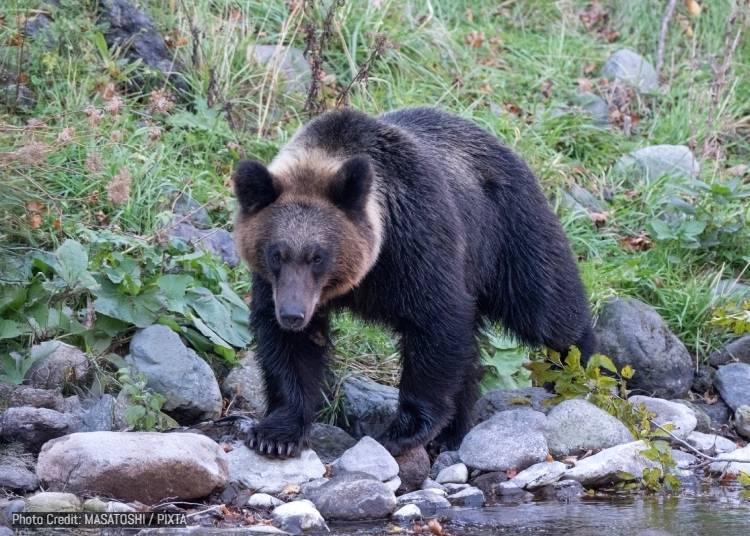
Brown bears are found throughout virtually all of Hokkaido (with the exception of a few remote islands and highly urbanized city centers). As apex predators, adult brown bears can grow up to 2 meters in length and weigh as much as 500 kg.
They are typically active from spring through autumn, hibernating during winter. In recent years, as wildlife conservation awareness has grown and the boundary between bear habitat and human activity zones has become increasingly blurred, bears have been spotted with greater frequency along forest roads, in nature parks, and even at the edges of urban areas such as the outskirts of Sapporo.
2025 Brown Bear Encounter Data: A Regional Overview of Hokkaido
Brown bear activity was significant across all of Hokkaido in 2025. Based on official data from the Hokkaido Prefectural Government and relevant wildlife management agencies, here is a summary of key statistics and characteristics for the four major regions:
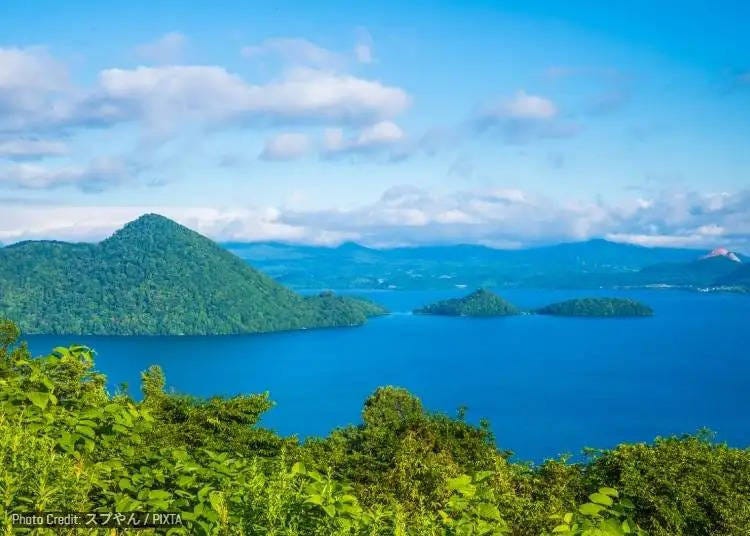
- Sapporo City recorded a staggering 363 bear sightings throughout the year. The Minami Ward (including Jozankei Onsen) accounted for the most reports, followed by Nishi Ward and Chuo Ward (around Maruyama Zoo and the ski jump stadium).
Along the lakeside roads and forest trails near Chitose and Otaru, early morning encounters between bears and vehicles occurred frequently.
- Close calls were frequent around Hakodate's outskirts during spring mountain vegetable foraging and autumn mushroom picking seasons.
Near popular hot spring resort areas such as Noboribetsu and Toya-ko, adult bears crossing roads at night were recorded on multiple occasions.
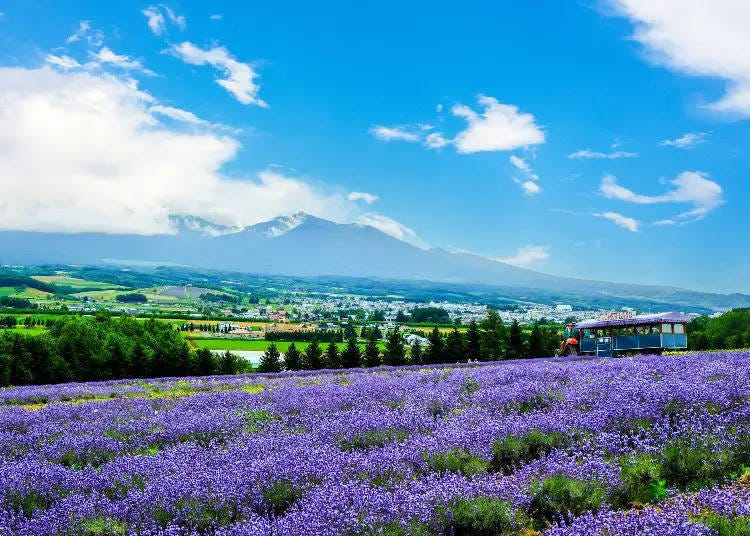
- Hiking trails and mountain climbing routes throughout the Daisetsuzan range (Biei, Furano, Asahikawa) are known hotspots for bear sightings.
Around Wakkanai City, there is a growing trend of bears moving toward residential areas, farms, and coastal zones.
- The Shiretoko Peninsula (Shiretoko Goko Lakes, Rausu) is classified as an "extremely high-risk zone," where self-drive visitors have a notable chance of spotting bears roadside.
In the Obihiro and Kushiro areas, bears frequently descend from the mountains in autumn to raid crops. - Remember never to exit your vehicle to take photos of bears. "Bear jams" (traffic jams caused by tourists stopping to photograph bears) are a massive issue in Hokkaido. Feeding them or lingering for photos habituates them to cars, ultimately leading to the bear being put down.
Key Activity Patterns in 2025
・Dual-Peak Activity Cycle: May–June (spring foraging and breeding season) represents the first peak; September–November (pre-hibernation intensive feeding period) is the most dangerous time of year.
・"Mother Bear with Cubs" Alerts: In the northern and eastern regions, up to 25% of sighting reports involved mother bears with cubs — a combination known to be highly aggressive and protective. Travelers should exercise extreme caution.
Looking Ahead: Brown Bear Activity Forecast for Hokkaido After June 2026
As of late May 2026, Kumamap (Bear Map) data shows 142 reported bear sightings across Hokkaido in the past 30 days, with 41 in just the past 7 days — indicating continuously rising activity levels. Recent sighting reports have come from residential areas in Sapporo's Toyohira Ward, Wakkanai City, Kitahiroshima City, and even near Sunagawa City.
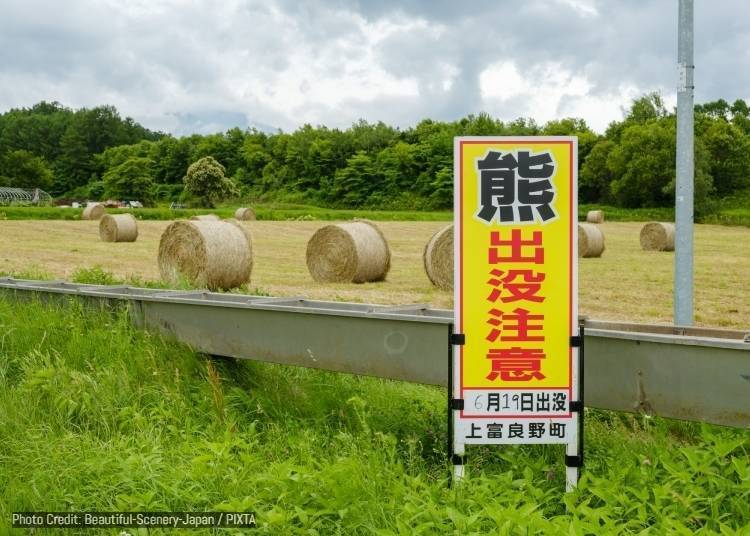
June–July (Breeding Season & Cubs Dispersal Period): As June arrives, brown bears enter their breeding season. Young male bears significantly expand their range in search of mates or territory, increasing the risk of them wandering into human-use areas such as golf courses and campsites. As summer progresses, sighting frequency is expected to keep rising — particularly around Shiretoko, the Daisetsuzan range, and the outskirts of Sapporo.
September–November (Peak Foraging Season): According to the Hokkaido Environment and Lifestyle Department's official advisory and alert records from 2025, these months will be the highest-risk period for bear encounters. Bears descend from the mountains frequently in search of acorns, berries, and agricultural crops. Visitors traveling to eastern Hokkaido (Shiretoko, Kushiro), northern Hokkaido (Wakkanai), and the mountainous central areas should maintain the highest level of alertness.
Common Bear Encounter Scenarios for Travelers & How to Stay Safe
Scenarios Where Encounters Are Most Likely
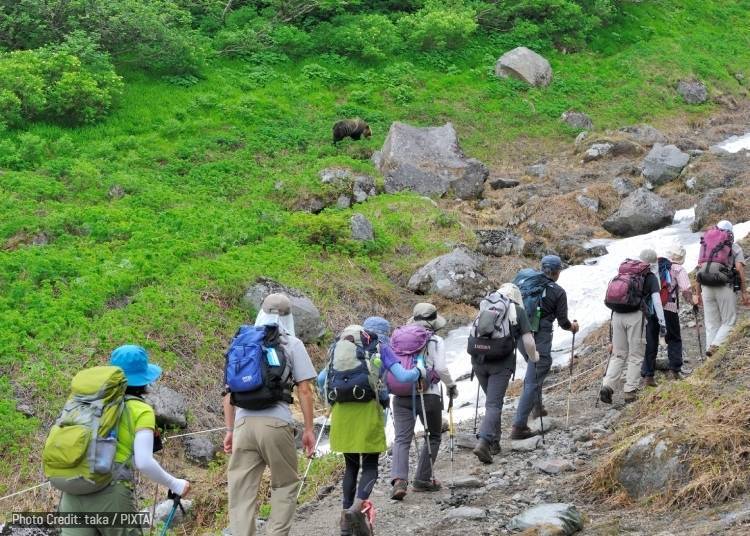
For travelers, bear encounters most commonly occur in the following situations:
・Scenario 1: Hiking, mountain climbing, and nature sightseeing (e.g., Shiretoko Goko Lakes, Daisetsuzan trails, around Jozankei).
・Scenario 2: Driving through mountain roads (recent reports show bears crossing national and prefectural highways with increasing regularity).
・Scenario 3: Early morning or dusk walks in suburban areas.
Essential Bear Safety Tips
Per the official advisory from Biei Town, Hokkaido, please be sure to follow these guidelines:
- Never venture into the forest alone: Go with a group to reduce your risk.
- Make noise to announce your presence: Wear a bear bell (kumayoke suzu) or play a radio and talk loudly when outdoors. Brown bears are naturally cautious animals — if they hear you coming, they will typically avoid you.
- Handle food and garbage responsibly: Never leave food scraps in the wild. Brown bears have an extraordinarily keen sense of smell — once they've tasted human food, they can become dangerously aggressive "problem bears."
- Be mindful of timing: Dawn and dusk are when brown bears are most active. Avoid hiking or walking near forests and field edges during these hours.
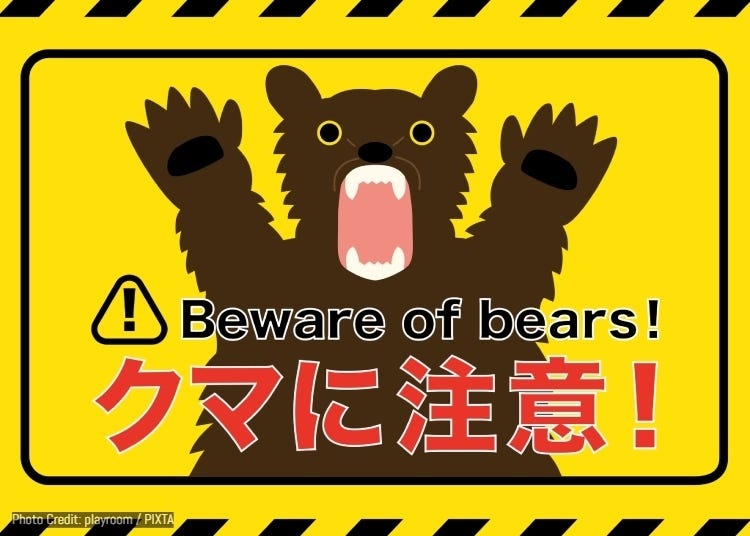
- Watch for warning signs and bear traces: If you see a "Bear Warning" sign, or spot unusual large droppings or oversized tracks on the trail, turn back immediately the way you came.
What to Do If You Encounter a Brown Bear
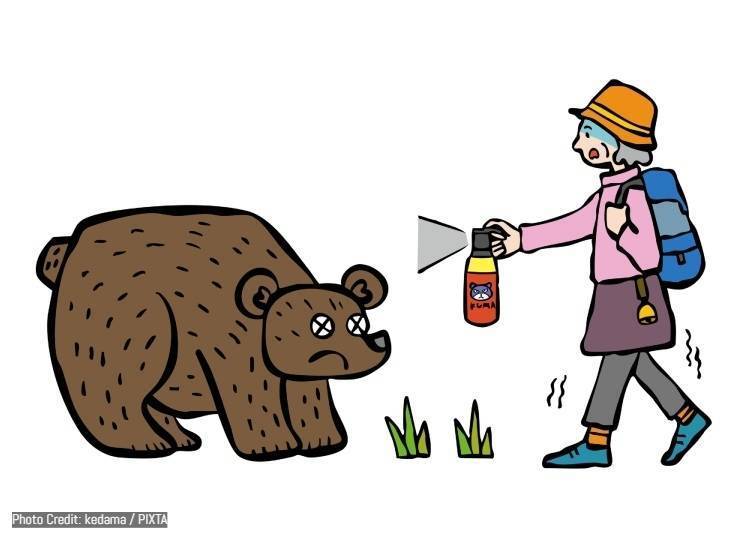
Stay calm — do NOT run! Running triggers the bear's predatory instinct, and you absolutely cannot outrun a brown bear.
・If the bear is far away (and hasn't noticed you): Quietly leave the area the way you came. Do not make sudden loud noises that might startle it.
・If the bear notices you but stays put: Stay calm and speak in a low voice so it recognizes you as human. Stand your ground, slowly wave your arms, and avoid sudden movements or screams, which may trigger a defensive response. Slowly back away while keeping your eyes on the bear. Do not turn your back.
・If the bear approaches: Stay calm and continue speaking in a firm, steady voice. Remember that most bears do not want to attack. Do not scream or make sudden movements, as the bear may interpret them as prey behavior. Slowly raise and wave your arms to appear larger and tell the bear to back away. If it continues to approach, be prepared to use bear spray.
・After the encounter: Once you are safely away from the bear, report the sighting by calling 110 or notifying staff at the park visitor center. This helps authorities monitor bear activity and keep other visitors safe.
If you plan to do deep hiking in high-risk areas such as Shiretoko, it is strongly recommended to carry EPA-approved bear spray (kuma gekitai spray) — available for purchase or rental at local outdoor gear shops — just in case.
If you carry bear spray, make sure it is instantly accessible on your belt (not buried in your backpack), and always check the wind direction before deploying it in short bursts when the bear is within 5 to 10 meters.
Also, bear safety recommendations vary by location, so always follow guidance provided by the park or local authorities.
Reliable Resources for the Latest Bear Safety Information
To ensure a safe trip, we strongly recommend checking the following official and authoritative sources covering all regions of Hokkaido before and during your travels, especially if you are venturing beyond Sapporo.
1. Hokkaido-Wide General Alerts
・Higumap & Kumamap
Intuitive digital maps covering all of Hokkaido. They aggregate bear sighting coordinates from various levels of government, news media, and community reports, with filters for "past 7 days" and "past 30 days" — ideal for road-trippers looking to check safety along their route.
・Hokkaido Prefectural Government: Bear Advisory & Alert System
The official information platform from the Hokkaido Prefectural Government. In years when bear activity is unusually high or food sources are scarce (such as poor acorn harvests), special advisories are issued for the entire prefecture — or specific high-risk areas — providing broad safety guidance.
2. Eastern Hokkaido (Shiretoko Peninsula) — Dedicated Resources
・Shiretoko Foundation (Shiretoko no Higuma)
A must-check website for anyone hiking or sightseeing on the Shiretoko Peninsula (Utoro, Rausu). Given the area's extremely high bear density, the site posts daily updates on specific bear encounter incidents (such as bears approaching vehicles dangerously close) and provides trail closure information.
3. Central Hokkaido (Sapporo Area) — Dedicated Resources
・Sapporo City Brown Bear Sighting Information (Official Website)
Your go-to resource for checking bear activity around popular spots like Jozankei Onsen, Hitsujigaoka Observatory, and Okura Mountain Ski Jump Stadium. The site provides a detailed list of sighting reports, and you can also follow Sapporo City's official LINE account to receive real-time location-based alerts.
As you soak in the breathtaking nature of Hokkaido, bring with you a deep respect for the wild. Prepare thoroughly, and your journey will be all the more safe, rewarding, and unforgettable.
Also Recommended
- Category
*Prices and options mentioned are subject to change.
*Unless stated otherwise, all prices include tax.
Popular Tours & Activities
Recommended places for you
-
Goods
Yoshida Gennojo-Roho Kyoto Buddhist Altars
Gift Shops
Nijo Castle, Kyoto Imperial Palace
-
Appealing
Rukku and Uohei
Izakaya
Sapporo / Chitose
-
ISHIDAYA Hanare
Yakiniku
Kobe, Sannomiya, Kitano
-
Abeno Harukas
Landmarks
Shinsekai, Tennouji, Tsuruhashi
-

Sunflower terminal (Osaka) Terminal 1
Other Sightseeing
USJ, Nanko Port
-
Jukuseiniku-to Namamottsuarera Nikubaru Italian Nikutaria Sannomiya
Izakaya
Kobe, Sannomiya, Kitano
-
Romantic Places in Hokkaido: Where to Honeymoon Across the Seasons
by: Himanshi Shah
-
Obihiro's Beloved 90-Year-Old Sweet Shop and the 'Milk Road' Treat Fans Keep Coming Back For
by: Guest Contributor
-

Hokkaido's Best 10 Budget Onsen Stays (Ryokan & Hotels From 20,000 Yen a Night)
-

10 Recommended Apartment Hotels in Hakodate for Families & Groups
by: Sae Haneda
-
Brewing Tradition Since 1944: Visiting Kikko Nihon - One of Asahikawa's Longest-Running Soy Sauce Companies
-

Why Kitami Mint Once Dominated the Global Market: A Visit to Hokkaido's Mint Museum
-
Tokyo’s Secret Coin Locker Spots: Big Enough for Suitcases!
-
Japan’s Unique Campus Festivals: Unwinding at Two Prestigious Universities in Tokyo!
-
Osaka Koreatown: In Search of the Best Eats in the Korean Roots of Osaka's Tsuruhashi Market
-

Perfect for Families on a Budget! Top 5 Places in Shibuya you Can Enjoy For Free
-

5 Best Hotels Near Universal Studios Japan (Osaka): Top-Rated Places to Stay
by: WESTPLAN
-

3 Best Hotels in Kobe, Japan with Amazing Views of Kobe Bay!
- #best sushi japan
- #what to do in odaiba
- #what to bring to japan
- #new years in tokyo
- #best ramen japan
- #what to buy in ameyoko
- #japanese nail trends
- #things to do japan
- #onsen tattoo friendly tokyo
- #daiso
- #best coffee japan
- #best japanese soft drinks
- #best yakiniku japan
- #japanese fashion culture
- #japanese convenience store snacks