



People often say that Japanese and American cultures are "completely opposite"—but what makes them so different? Let’s take a look at seven unique contrasts between the two.
1. Positive vs. Negative Mindset
Japanese culture places a strong emphasis on “shame culture,” leading people to be modest, cautious, and realistic. This mindset can sometimes come across as a bit “negative.” In contrast, Americans tend to embrace a more positive mentality, possibly rooted in their bold, pioneering history.
2. Shoes On or Off?
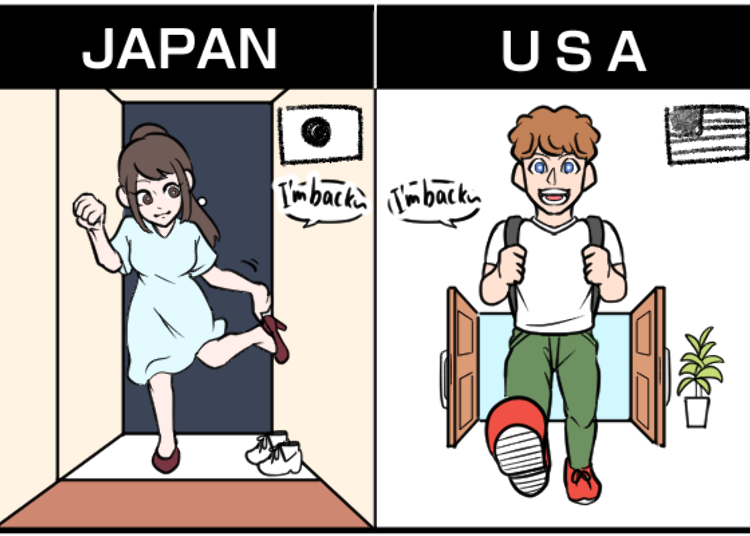
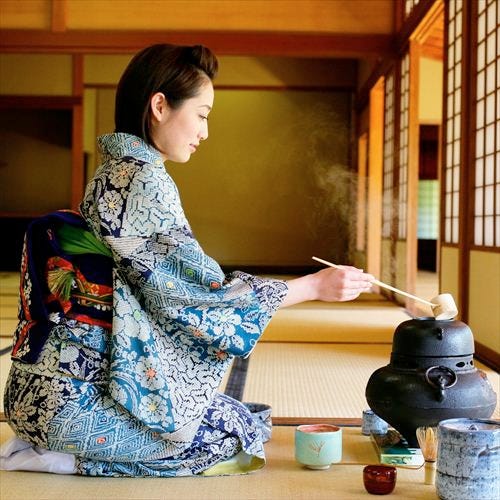
In Japan, it’s customary to take your shoes off when entering a home, especially since traditional tatami mats can easily trap dirt and mud, making cleaning difficult. Plus, futons are laid directly on the floor. Meanwhile, in America, people usually keep their shoes on indoors, as they rarely sit on the floor, and there’s less concern about the cleanliness of indoor floors.
3. Small Houses or Big Houses?
This difference is easy to understand when you consider population density and land area. In Japan, land is limited, so houses are generally smaller. In America, each person has access to a lot more space, which makes larger homes more common.
4. Teamwork vs. Individuality
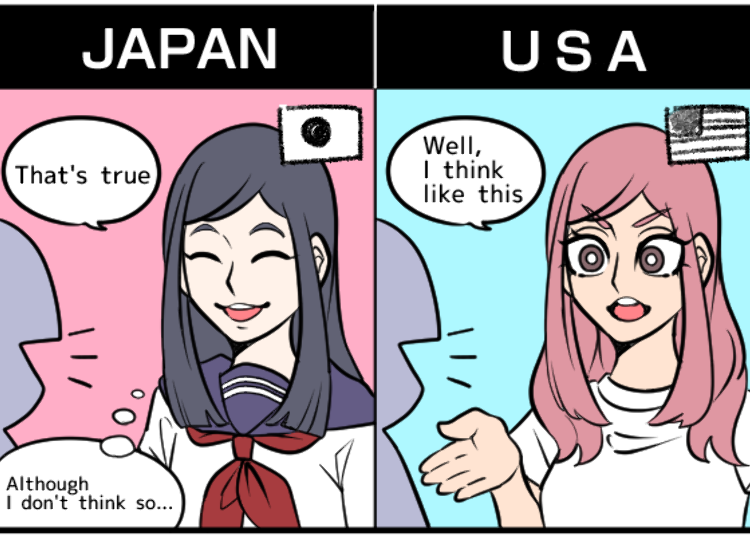
In Japan, there’s a strong focus on harmony and “doing things together.” People might find themselves thinking, “I don’t completely agree, but everyone else does, so I should go along with it.” In America, however, individuality is highly valued, and people are encouraged to express their unique perspectives to be understood by others.
5. Working on Weekends?
Japanese people often feel obligated to respond to work-related calls even on weekends or holidays. This can be frustrating but is expected to maintain workplace harmony. On the other hand, Americans tend to value personal freedom and dislike being bound by work on their days off, so they’re less likely to work on weekends.
6. Eating a Little or Eating a Lot?
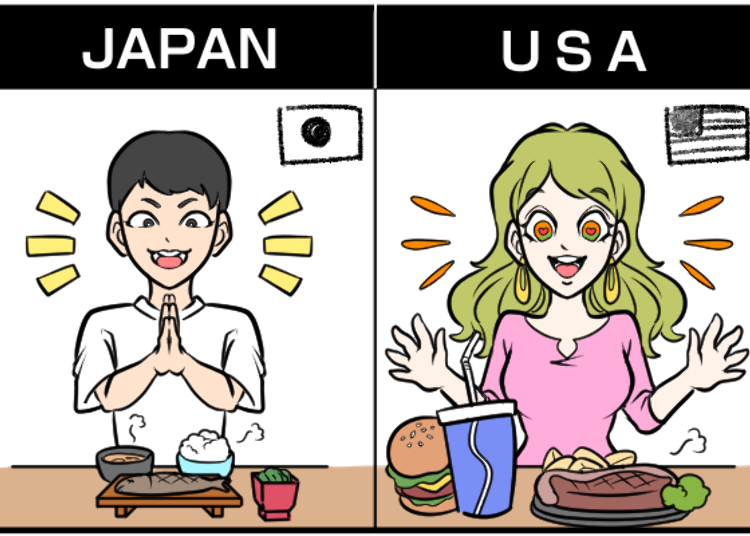
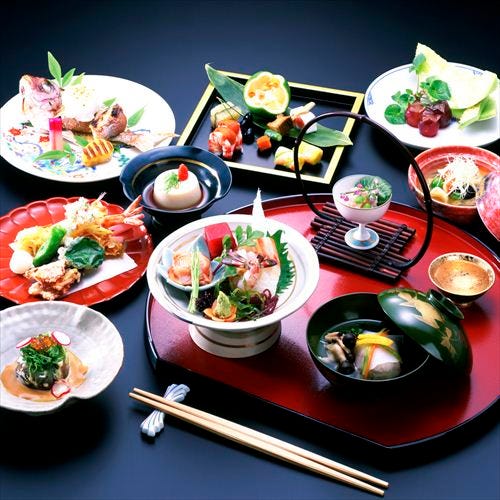
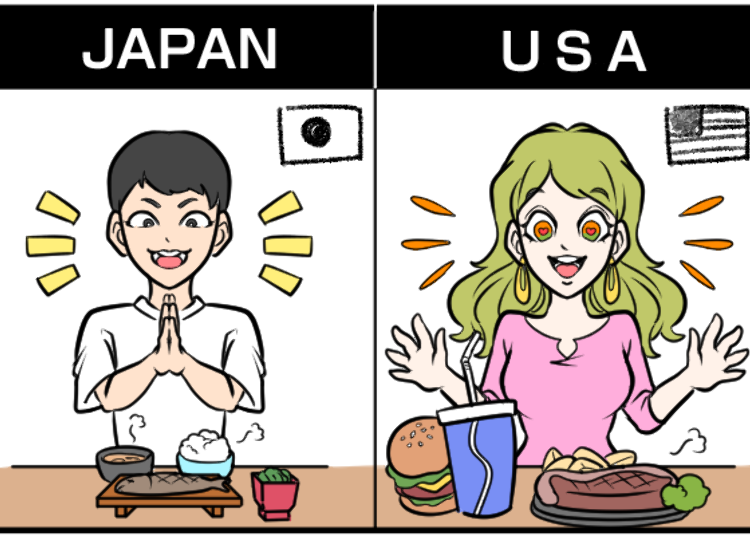
One thing that surprises each culture is how much the other eats at a typical meal! In Japan, it’s seen as polite to finish everything on your plate, and portion sizes are usually smaller. Americans, however, are used to larger portions, and taking home leftovers is common, with “to-go” boxes widely available.
7. Public Affection: Reserved vs. Bold
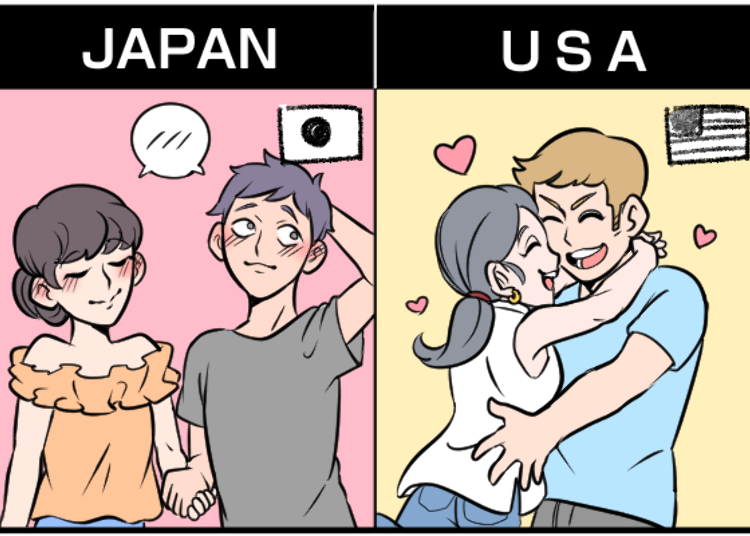
Japanese people are generally cautious about showing affection in public, such as kissing or holding hands, as it may make others around them uncomfortable. Americans, on the other hand, tend to be expressive and show affection freely, often displaying love openly with gestures and body language.
From these cultural traits and traditions, we can see how Japanese and American people differ in their daily lives. Of course, beyond these differences, there are many similarities too! Understanding and accepting each other’s values can help build strong and respectful connections across cultures.
Illustrations courtesy of Manga de Japan
*Prices and options mentioned are subject to change.
*Unless stated otherwise, all prices include tax.
Popular Tours & Activities
Recommended places for you
-
Appealing
Rukku and Uohei
Izakaya
Sapporo / Chitose
-
Goods
Yoshida Gennojo-Roho Kyoto Buddhist Altars
Gift Shops
Nijo Castle, Kyoto Imperial Palace
-
ISHIDAYA Hanare
Yakiniku
Kobe, Sannomiya, Kitano
-
Jukuseiniku-to Namamottsuarera Nikubaru Italian Nikutaria Sannomiya
Izakaya
Kobe, Sannomiya, Kitano
-
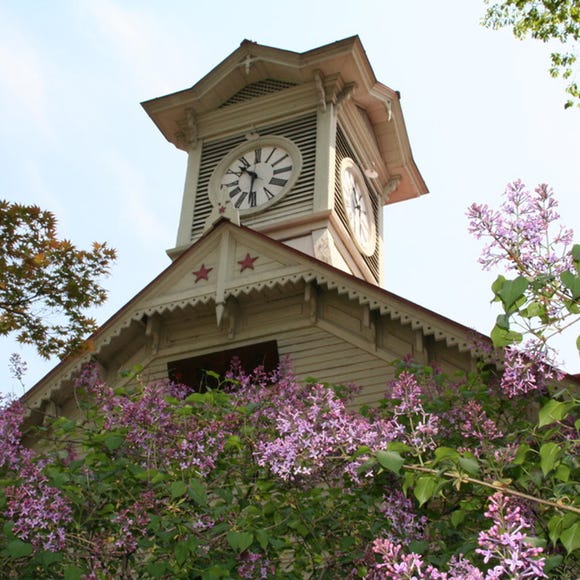
Sapporo Clock Tower
Landmarks
Sapporo / Chitose
-
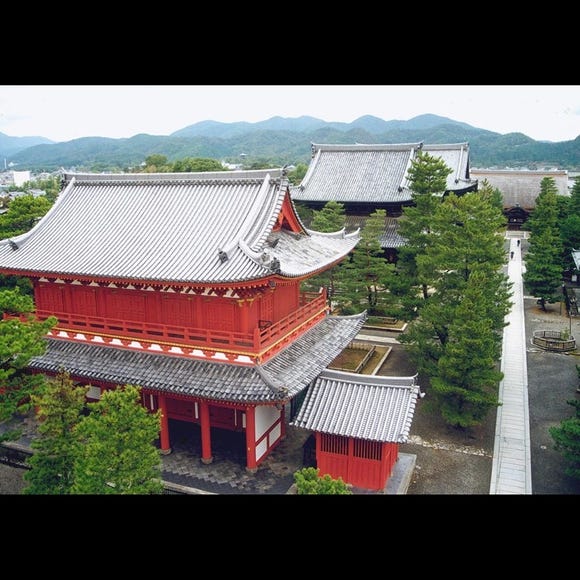
Myoshin-ji Temple
Temples
Arashiyama, Uzumasa
-
ANA’s Chiikawa Jet Is Taking Off—Here’s Everything You Need to Know About Exclusive Goods, In‑Flight Fun & Travel Tips
by: Guest Contributor
-

Best Sumo Shows & Experiences in Tokyo (2026): Prices Compared
-
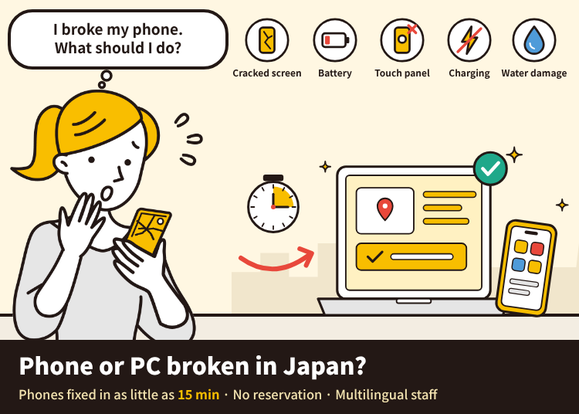
Cracked Phone Screen in Japan? Smahospital Repair Guide: Keep Your Data, Fixed in 15 Min, Multilingual Support | Up to 10,000 Yen Off with LIVE JAPAN Coupon
-
Ad
Do’s and Don’ts: The Complete Guide to Sento Baths! Getting the Full Experience In Ueno’s Famous Kotobuki-yu
-
Autumn in Japan 2026: Fall Foliage Forecast & Where to Enjoy the Colorful Leaves (+Tour Info)(Updated Oct 1)
-

Daikoku Car Meet Guide: How to Visit, Best Times & Rules
-
Complete 1-Day Shibuya Itinerary: Must-do things in Shibuya for first-time visitors
-

Kamui Ski Links Guide (2025-2026): Northern Hokkaido's Largest Resort for Powder, Tree Runs, and Stunning Scenery
by: Hide
-
We Board Japan's 'Setsugekka' Resort Train And Have An Incredible Journey Through The Heartland
-
4 Fun Winter Day Trips From Tokyo: Onsen, Snow & More
by: Guest Contributor
-
8 Unfamiliar (But Totally Normal) Customs in Japan!
-
Kesennuma City Memorial Museum (Ruins of Koyo High School): Telling the Story of the 3/11 Great East Japan Earthquake
- #best sushi japan
- #what to do in odaiba
- #what to bring to japan
- #new years in tokyo
- #best ramen japan
- #what to buy in ameyoko
- #japanese nail trends
- #things to do japan
- #onsen tattoo friendly tokyo
- #daiso
- #best coffee japan
- #best japanese soft drinks
- #best yakiniku japan
- #japanese fashion culture
- #japanese convenience store snacks