








For anyone visiting Japan, few things leave as lasting an impression as navigating its legendary rail network. Connecting bustling metropolitan centers like Tokyo and Osaka to breathtaking regional scenery, Japan’s trains do far more than move passengers from point A to point B—they define the travel experience. But for travelers heading to Japan in the coming years, a major shift is on the horizon.
Spring 2027: A New Chapter in Japanese Railway History
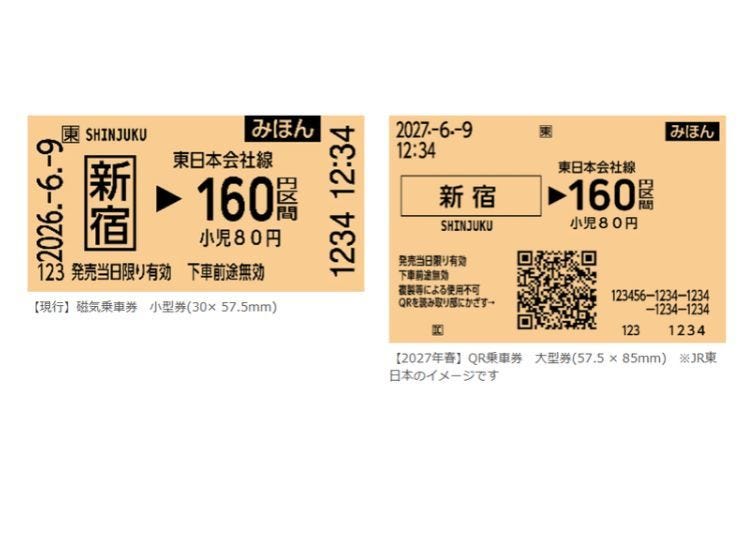
Seven major rail operators, led by East Japan Railway Company (JR East), announced that they will simultaneously begin replacing traditional magnetic paper tickets with "QR Tickets" starting in spring 2027. This marks the rail network's most significant passenger-ticketing overhaul in decades.
The 7 Participating Rail Operators (and What They Mean for Travelers)
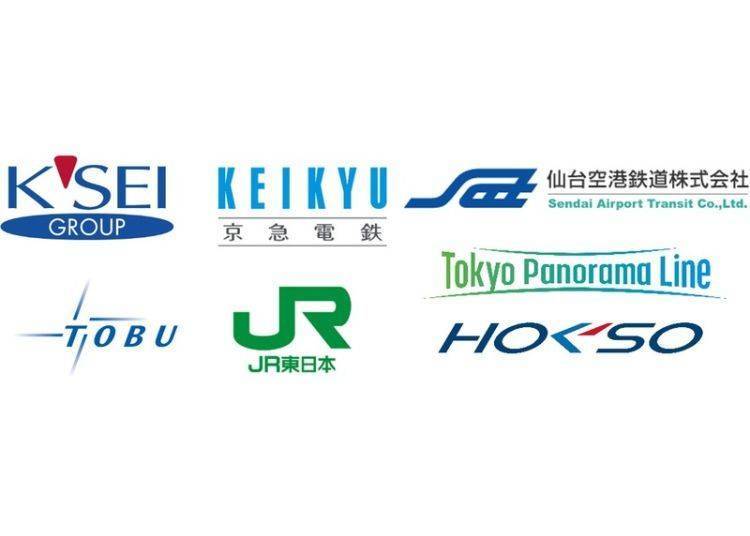
This coordinated rollout brings together seven rail networks that form the backbone of Tokyo’s transit and airport access—the exact lines most international visitors take the moment they land:
・JR East: Japan’s largest railway operator, serving Greater Tokyo, the Tohoku region, and multiple Shinkansen bullet train lines.
・Keisei Electric Railway: Operates the high-speed Skyliner, connecting Narita International Airport directly to downtown Tokyo (Nippori and Ueno).
・Keikyu Corporation: Provides fast, direct access from Haneda Airport to central Tokyo (Shinagawa) and Yokohama.
・Tokyo Monorail: Links Haneda Airport to Hamamatsucho Station in Tokyo, featuring scenic views across Tokyo Bay.
・Tobu Railway: Operates gateway routes from Tokyo’s historic Asakusa district to the UNESCO World Heritage shrines of Nikko and the hot springs of Kinugawa Onsen.
・Hokuso Railway: Operates key transit segments along the northern rail corridor connecting central Tokyo and Narita Airport.
・Sendai Airport Transit: Connects Sendai Airport—the gateway to northern Japan—directly to downtown Sendai Station.
The moment you land, grab your luggage, and purchase your first ticket at the airport station, your journey with this new QR system begins.
Why Switch to QR Tickets Now?
Japan’s railway ticketing has a storied legacy of technical ingenuity. Before the 1980s, station attendants hand-punched rigid cardboard tickets with rhythmic, practiced precision. By the 1990s, Japan introduced automated gates and magnetic paper tickets—a marvel of domestic engineering capable of swallowing a ticket inserted upside-down or diagonally, flipping it, reading the data, and ejecting it in a fraction of a second to keep massive rush-hour crowds moving seamlessly.
So why replace a mechanical system that has operated with near-flawless reliability for over three decades? The shift comes down to two key factors:
Sustainability and Mechanical Reliability
Feeding magnetic tickets through high-speed internal rollers requires thousands of intricate moving parts that demand heavy maintenance and continuous power. QR-equipped gates eliminate the need to physically pull tickets inside the machine altogether. Switching to optical scanners drastically cuts down on mechanical wear and tear, reduces maintenance downtime, and lowers operational energy use, creating a much greener and more reliable infrastructure.
A Universal Standard for International Visitors
From airline boarding passes to metropolitan transit networks worldwide, QR code technology is already second nature to travelers. Scanning a code is universally intuitive, transcending language barriers and eliminating confusion at the turnstile—an essential evolution as Japan modernizes its network to welcome millions of global visitors each year.
How to Use QR Tickets (Step-by-Step)
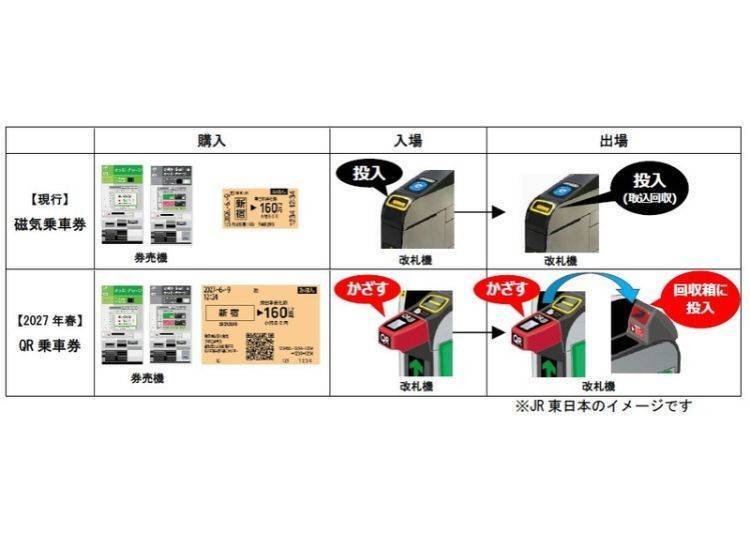
Navigating the new system is straightforward once you know the basic sequence:
Step 1: Collect Your Ticket (Now Credit-Card Sized)
Traditional tickets were notably tiny, but the new QR tickets will measure 57.5 mm × 85 mm (roughly the size of a standard credit card or business card). The larger format makes them much harder to lose in your pockets or bag.
Step 2: Scan to Enter
At your departure station, there is no slot to insert your ticket into. Simply hold the printed QR code over the reader on top of the gate, and the doors will open immediately.
Step 3: Deposit into the Collection Box to Exit
When arriving at your destination, do not scan your ticket a second time. Instead, drop the used QR ticket into the designated collection slot built into the exit gate.
Smart Transit: Choosing Between QR Tickets and IC Cards
Depending on your travel style and how often you visit Japan, this upcoming shift may feel like a major upgrade—or barely noticeable at all. Here is how it breaks down for different travelers.
First-Time Visitors vs. Repeat Visitors
If it is your first time in Japan: You will hardly notice a difference. You simply walk up to a station vending machine, select your destination, and receive a paper ticket with a QR code instead of an old magnetic strip. To you, it will just feel like modern transit at work: scan the code at the gate to enter, and drop it in the slot on your way out.
If you are a repeat visitor: Your main hurdle will simply be muscle memory! Instead of instinctively sliding a tiny ticket into the gate slot, you will need to scan the larger ticket over the optical reader at the entrance and remember to deposit it into the dedicated collection box at your exit gate.
IC Cards (Suica & PASMO): Still the Gold Standard
If you already use a transit IC card—whether a physical card or a digital version in your Apple or Google Wallet—absolutely nothing changes for you. You will continue tapping through the gate reader just as before.
For repeat visitors and anyone planning to travel beyond a single train ride, getting a digital or physical IC card is still the single best transit investment you can make. IC cards offer unbeatable convenience:
Universal bus travel: While the new QR tickets are designed for train station turnstiles, local buses across Japan rely heavily on IC card touch-pads.
Frictionless transfers: Moving between different rail operators (e.g., transitioning from a JR line to the Tokyo Metro) is seamless with an IC card, calculating transfers automatically without buying new tickets.
Everyday spending: You can tap your IC card to pay at convenience stores, vending machines, station lockers, and casual eateries nationwide.
Smarter Digital Bookings (Klook and Online Travel Agencies)
One of the most promising benefits of moving to a unified QR gate infrastructure is what it means for online bookings. As QR scanners become standard equipment across ticket gates, rail operators and third-party booking platforms like Klook will be able to issue direct-entry digital QR tickets, letting you skip the ticket machines entirely and head straight for the train.
What About the JAPAN RAIL PASS?
If you are planning to travel with a nationwide JAPAN RAIL PASS or regional rail pass, keep in mind that pass-handling procedures are currently under review as operators transition to the new gate technology. Official guidelines on how rail passes will be processed under the QR system have not yet been finalized. We will update this guide as soon as JR releases official details.
Looking Ahead: Tech-Forward, Guest-First Travel
Japan’s railways have continually evolved with the times, but their core mission—delivering absolute safety, punctuality, and passenger comfort—has never wavered. The next time you step up to a ticket gate in Japan, the technology in front of you might look a little different, but the underlying spirit of Japanese hospitality remains unchanged. With an IC card in your pocket or a QR ticket in hand, seamless travels await.
(Source/Main Image :PR Times)
- Area
- Category
*Prices and options mentioned are subject to change.
*Unless stated otherwise, all prices include tax.
Popular Tours & Activities
Recommended places for you
-

Ueno Zoo (Ueno Zoological Gardens)
Zoos, Aquariums & Botanical Gardens
Ueno
-
Kappabashi Street
Old Towns (Shitamachi)
Asakusa
-

Hato Bus Tokyo city tours
Adventure Activities
Tokyo Station
-

The Tokyo Station Marunouchi Building
Landmarks
Tokyo Station
-

Ameyoko Shopping Street
Old Towns (Shitamachi)
Ueno
-

Tsukiji Outer Market
Old Towns (Shitamachi)
Tsukiji
-
Don Quijote (Donki) Tax Refund from Nov 1, 2026: No Refund Service Fee
-

Seibu Group Launches New Chichibu Adventure Tourism Experience for International Travelers in 2026
by: Guest Contributor
-
BicCamera Tax Refund 2026: Refund Service Fee 0 Yen
-
Ad
Do’s and Don’ts: The Complete Guide to Sento Baths! Getting the Full Experience In Ueno’s Famous Kotobuki-yu
-

5 Japanese Craft Shops in Shinjuku: From Walls of Kokeshi Dolls to Artisan Teapots
-
5 Stationery Shops in Shinjuku: One Walking Route for Art Supplies, Suica Penguin Gifts, and More
Inspiration for Accommodations
-

Family-Friendly Hotels with Free Shuttle to Disneyland: Convenient Access for a Magical Stay
-

Top Ranked Hakone Hotels with Mt. Fuji View: Enjoy Stunning Scenery from Your Private Space
-
Convenient Tokyo Hotels with Airport Shuttle: Ideal for Families and Heavy Luggage
-

9 Family-Friendly Hotels with Comfortable Family Rooms in Asakusa
-

10 Open-air bath Onsen Ryokans in Hakone for Ultimate Relaxation
-

Tokyo Sightseeing Deals: 1 Day of Unlimited Rides on the Tokyo Skyhop Bus for Under $30!
-
Spending Wonderful Time Alone in Shibuya - Free Cosmetics and a Hundred-Yen Bus!
-

Tokyo Roppongi: 5 Most Amazing Spots at Roppongi Hills and How to Make the Best of Them!
-

Japan's Bath Culture: Tips You Should Know!
-

Explore Tokyo and Kanagawa to the Fullest! A Seamless Journey with the Odakyu Digital 1-Day All-Line Pass
by: Guest Contributor
-

Japan's "Red Arrow" Train Gets a 2028 Redesign by Gundam’s Creator
by: Guest Contributor
- #best ramen tokyo
- #what to buy in ameyoko
- #what to bring to japan
- #new years in tokyo
- #best izakaya shinjuku
- #things to do tokyo
- #japanese nail trends
- #what to do in odaiba
- #onsen tattoo friendly tokyo
- #daiso
- #best sushi ginza
- #japanese convenience store snacks
- #best yakiniku shibuya
- #japanese fashion culture
- #best japanese soft drinks