



Bowing is a fundamental part of Japanese culture, symbolizing respect and politeness. From everyday interactions to formal occasions, understanding the subtle variations in bowing is an important step in mastering Japanese etiquette.
Why do Japanese bow?
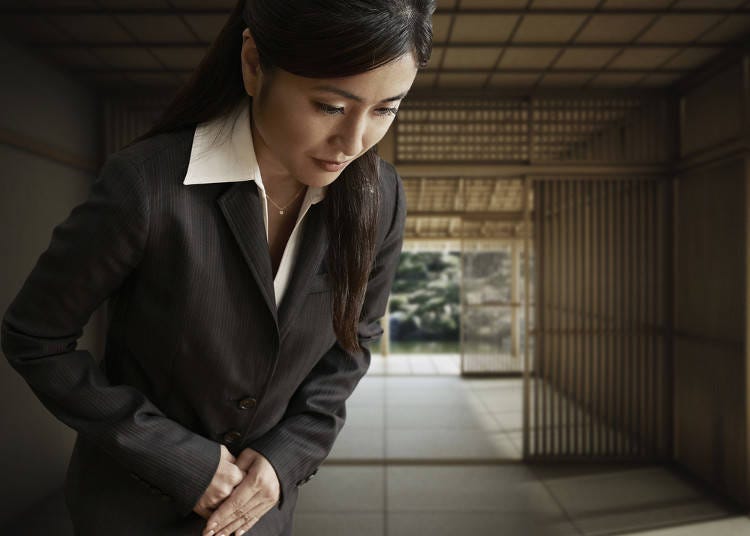
The act of bowing in Japan is thought to have begun around 500 to 800 AD, when Chinese Buddhism was introduced to Japan. Back then bowing was used to portray status, such as when greeting people of higher social status people would lower their heads to show an inferior position to signify that they are not a threat. You can see this in many films and plays set in the past. Just about everyone is expected to bow or kneel to the highest authority like kings and queens.
In modern day Japan, bowing has several different uses. Bowing in Japan is now used to thank, request, congratulate, and apologize to others. It’s become an essential cultural tool that everyone in Japan is taught to execute properly, from children to company workers.
How Japanese bow - and how to bow in Japan

Bowing generally has two stances, sitting and standing. Every bow has three key points – the person’s back should be kept straight and not curved, the person’s legs and hips should remain in the same position when standing, and when bowing one should inhale when bowing and exhale when straightening back up.
Types of bows in Japan
While the essence of a bow generally stays the same, there are all kinds of different kinds of Japanese bows - let’s take a look at them.
1. Eshaku
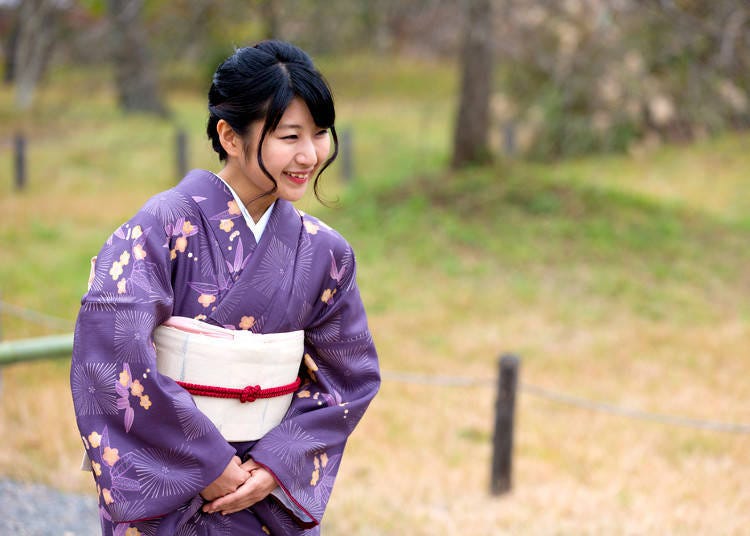
The most casual bow, used among friends or relative, is simply done by by nodding your head slightly. A more formal Japanese bow also called the “greeting bow,” the eshaku is used between people of equal status, like coworkers or friends of friends. It is usually paired with a greeting like "good morning" (ohayo gozaimasu) or after work (otsukaresama desu). This bow is done at an angle of 15 degrees.
2. Senrei
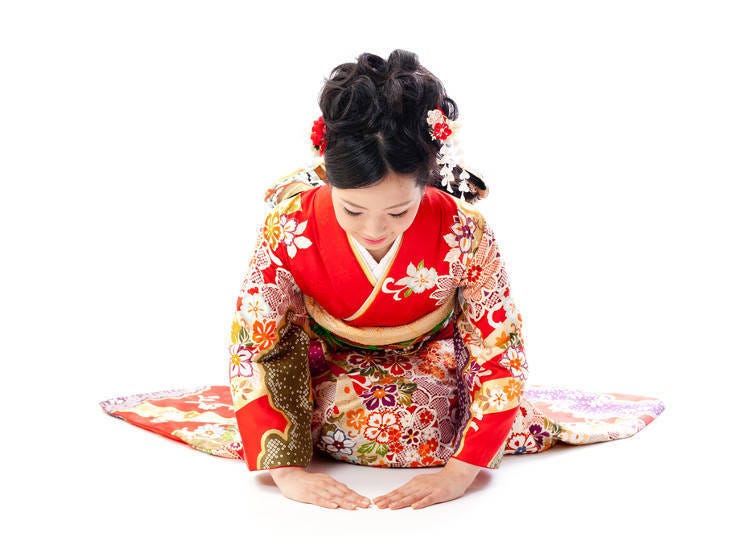
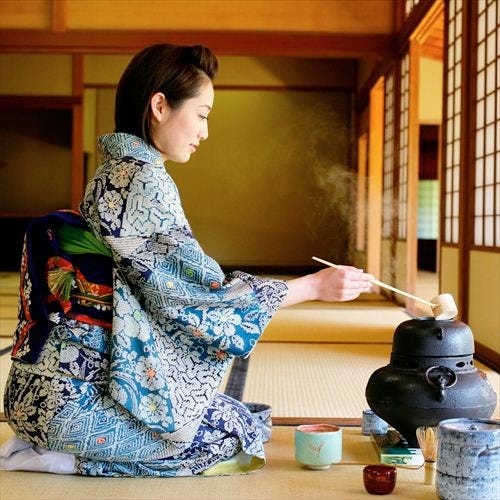
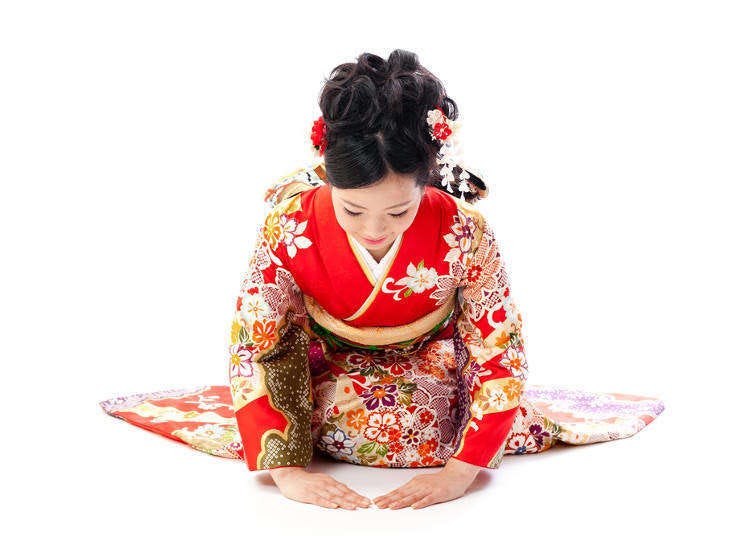
The “polite bow” called senrei is done while sitting and requires a 30 degree bow. It is used in formal and semi-formal occasions. The entire bow should last between two and three seconds, so do not get up again right away.
3. Keirei
Keirei is the most common type of proper Japanese bow, it is done at a 30 degree angle while standing up. Usually used to thank or greet people, such as customers, it is also used when meeting people for the first time.
4. Saikeirei and Shazai
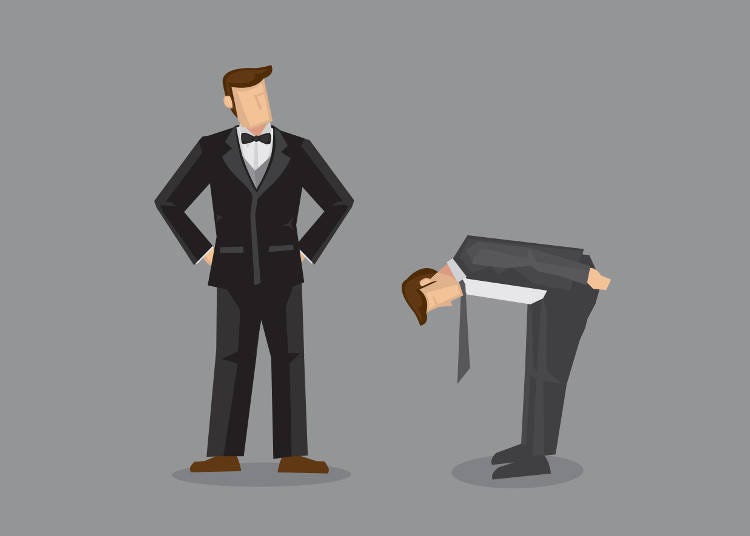
This is a more rare type of bow, reserved for special people like managers, in-laws, or important customers. A bow at a 45 degree angle, saikeirei is used to display profound respect or sincere apologies, held for around 3 seconds.
Finally, the highest and rarest form of bowing, shazai. In this bow, the person bowing bends forward 70 degrees and holds this position for 4 seconds. This bow is usually only seen when companies have to publicly apologize for their errors after having caused trouble to their customers and others.
Mastering the Art of Bowing in Japan
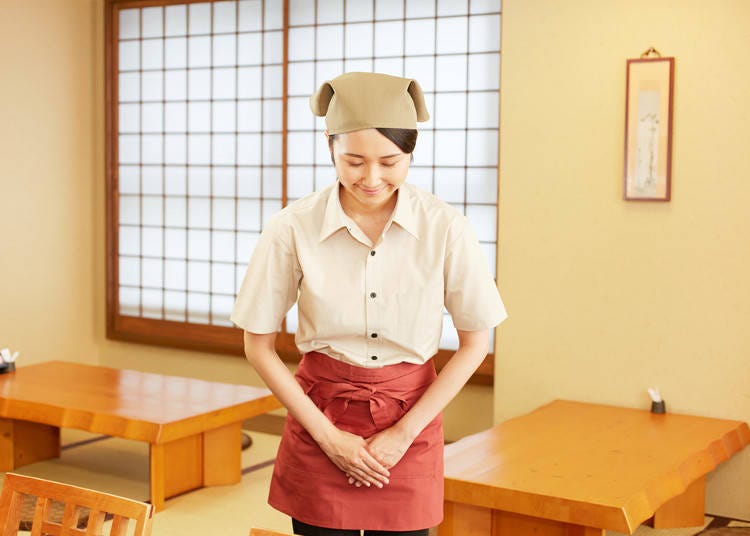
While there are some other forms of bowing, they are mostly reserved for specific religious events. All of these rules may be a lot to take in at once, but the general rule of thumb is: the more formal an event or higher the authority, the lower and longer the bow should be.
Also a side note: Putting your hands in front of your chest when bowing is a common mistake, it’s not used in modern day Japan except in worship.
Bowing is an intrinsic and fundamental part of Japanese society. It’s ingrained to the point where people even bow while on the phone. Politeness and respect is a quality that Japan has expressed throughout its long history.
- Area
*Prices and options mentioned are subject to change.
*Unless stated otherwise, all prices include tax.
Popular Tours & Activities
-
Top 10 Premium Hot Spring Resorts Near Tokyo: Luxury Ryokan & Ocean-View Stays from 30,000 Yen
-
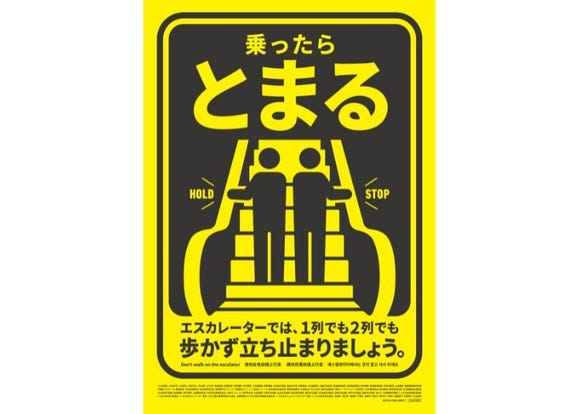
No Walking on Japan's Escalators in 2026? New Manners & How to Ride for Tourists
by: Guest Contributor
-
Start Your Japan Trip Luggage-Free with SAGAWA’s New Narita Airport (NRT) Service
by: Guest Contributor
-
Upgrade Your Japan Travel Experience: How to Master OSHIMAP
by: Guest Contributor
-
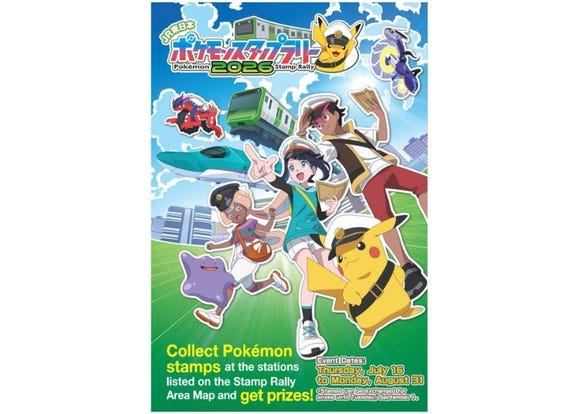
Ride the Rails, Catch Pokémon: JR East’s Huge Stamp Rally Takes Over Tokyo This Summer
by: Guest Contributor
-
Daikoku PA Car Meet: What Is JDM, and Why Do Enthusiasts Flock Here?
Inspiration for Accommodations
-
Family-Friendly Hotels with Free Shuttle to Disneyland: Convenient Access for a Magical Stay
-
Top Ranked Hakone Hotels with Mt. Fuji View: Enjoy Stunning Scenery from Your Private Space
-
Convenient Tokyo Hotels with Airport Shuttle: Ideal for Families and Heavy Luggage
-
9 Family-Friendly Hotels with Comfortable Family Rooms in Asakusa
-
10 Open-air bath Onsen Ryokans in Hakone for Ultimate Relaxation
-

Top 10 Best-Selling Instant Noodles at Japanese Convenience Stores
-
What to Pack for Japan in 2026: 15 Essentials for a Stress-Free Trip
-

The Top 3 Photo Spots in Roppongi
-
Hello Kitty & More! Top 3 Shops in Asakusa for Limited-Edition Character Merch
by: Naho Jishikyu
-
Tokyo Roppongi: 5 Most Amazing Spots at Roppongi Hills and How to Make the Best of Them!
-
Where to Buy Japanese Character Toys: Adorable Moomin, Monchhichi and Astroboy Shops in Asakusa
- #best ramen tokyo
- #what to buy in ameyoko
- #what to bring to japan
- #new years in tokyo
- #best izakaya shinjuku
- #things to do tokyo
- #japanese nail trends
- #what to do in odaiba
- #onsen tattoo friendly tokyo
- #daiso
- #best sushi ginza
- #japanese convenience store snacks
- #best yakiniku shibuya
- #japanese fashion culture
- #best japanese soft drinks